
No products in the cart.
AI SEO NLP Optimization: The Complete Guide to Ranking in the AI Search Era
10
Aug
Aug
AI SEO NLP optimization has fundamentally changed how search engines interpret content and how websites achieve visibility. The days of stuffing keywords into paragraphs are over. Modern search algorithms like Google’s MUM and BERT use Natural Language Processing to understand the meaning behind queries, not just the literal words. For digital marketers and content creators, mastering AI SEO NLP optimization is no longer optional—it is the core requirement for sustainable organic growth. This guide breaks down the mechanics, strategies, and practical steps to align your content with how AI-driven search engines actually think.
What is AI SEO NLP Optimization?
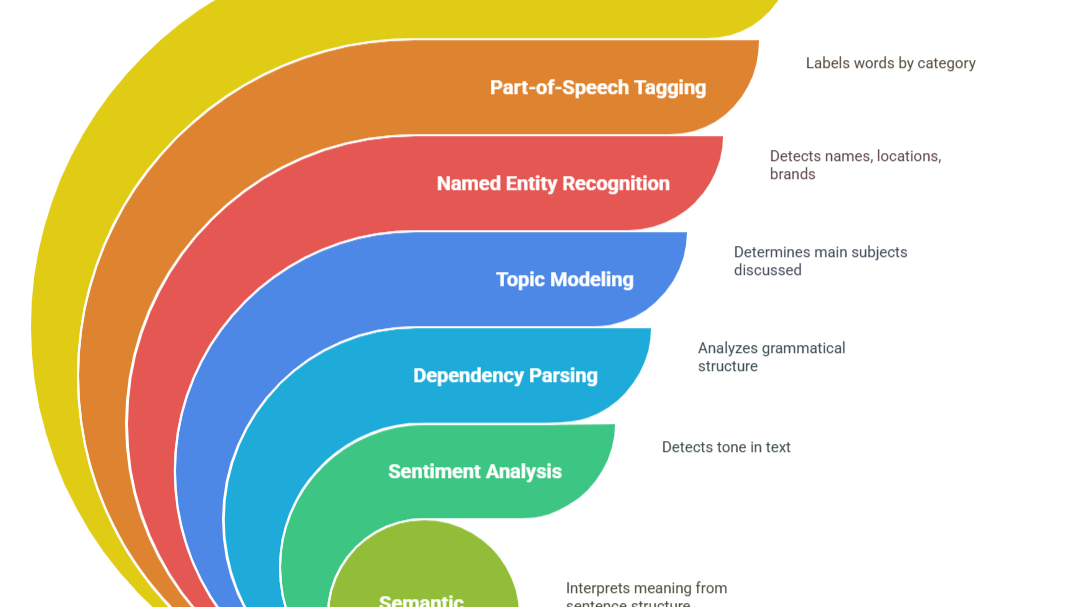
AI SEO NLP optimization refers to the process of structuring and writing content so that artificial intelligence algorithms, powered by Natural Language Processing, can easily understand, categorize, and rank it. Unlike traditional SEO that focused on exact-match keywords, NLP optimization focuses on semantic relevance, entity recognition, and user intent. When you optimize for NLP, you are teaching the search engine’s AI to see your page as the most authoritative answer to a specific question, even if the user phrases that question in a thousand different ways.
This involves analyzing how words relate to each other, understanding context, and identifying the core entities (people, places, concepts) within your text. The goal is to create a semantic map that mirrors the way a human expert would explain a topic, covering subtopics naturally rather than forcing unnatural keyword repetitions.
How NLP Algorithms Understand Your Content
To effectively implement AI SEO NLP optimization, you must understand the underlying technology. Search engines use transformer-based models that process words in relation to all other words in a sentence, rather than one at a time. This allows them to grasp context, disambiguate words with multiple meanings, and understand the sentiment behind a query.
Tokenization and Vectorization
When an AI reads your content, it breaks text into tokens (words or sub-words). It then converts these tokens into vectors—mathematical representations of meaning. Words with similar meanings are placed closer together in a multi-dimensional space. This is why a page about “car maintenance” can rank for “vehicle upkeep” without using the exact phrase.
Entity Recognition and Disambiguation
NLP models identify entities (e.g., “Apple” the company vs. “apple” the fruit) and their relationships. For SEO, this means you must be explicit about what you are discussing. If you write about “Java,” the AI needs context to know if you mean the programming language or the island. Clear definitions and contextual clues are essential for AI SEO NLP optimization.
Semantic Search and Intent Matching
Modern search engines categorize queries into informational, navigational, and transactional intents. NLP optimization requires you to match your content format to the dominant intent. If the query is “how to fix a leaky faucet,” the AI expects step-by-step instructions, not a product sales page. Your content structure must signal the correct intent to the algorithm.
Core Components of an NLP-Optimized Content Strategy
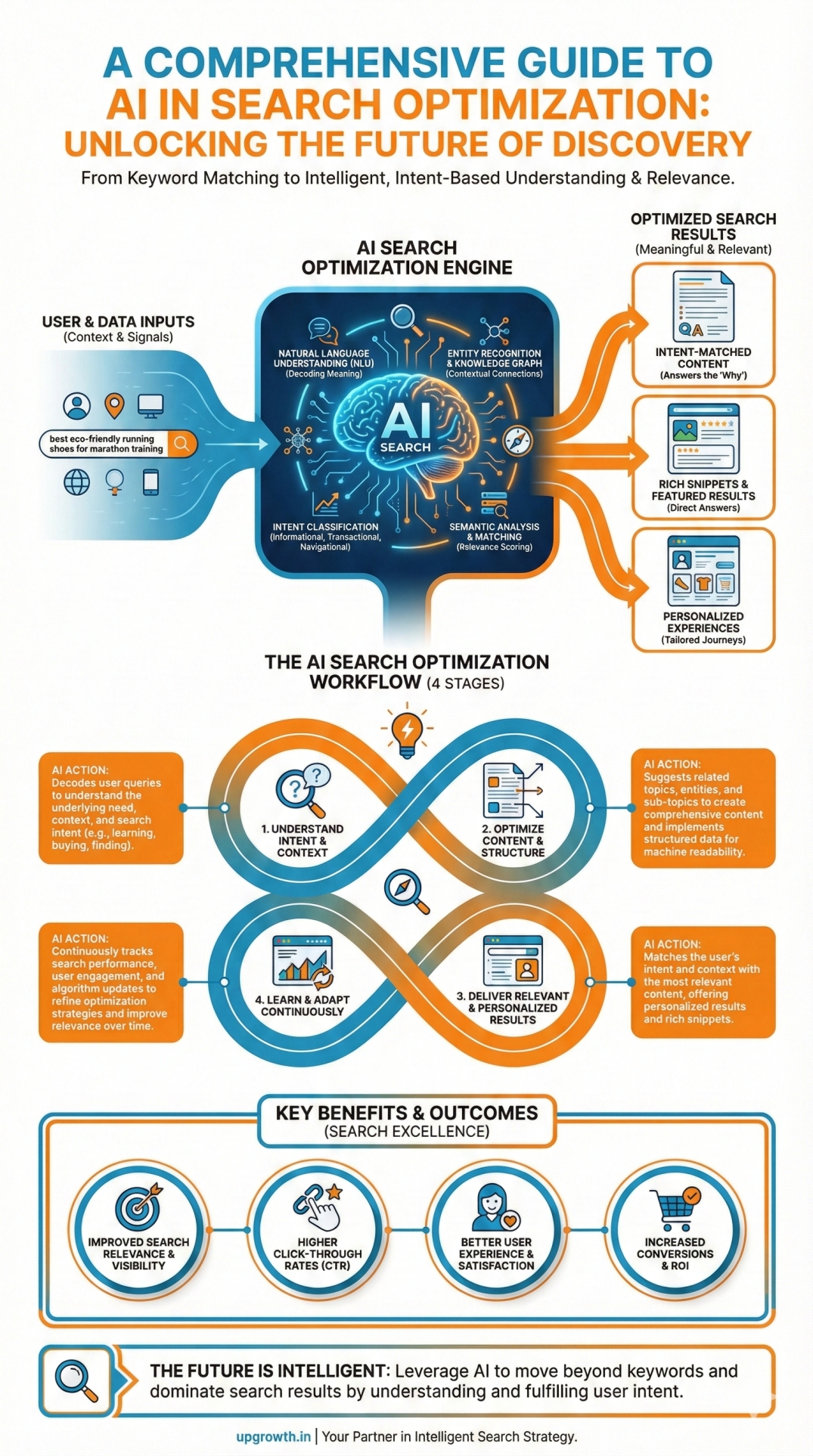
Implementing AI SEO NLP optimization requires a shift from writing for keywords to writing for topics. This involves several distinct components that work together to build topical authority and semantic depth.
Topical Authority and Entity Coverage
Search engines reward content that covers a topic comprehensively. Instead of writing one thin article, you need to create a cluster of content that addresses every facet of the subject. For example, if your main topic is “digital marketing,” your NLP strategy should include subtopics like “email automation,” “social media algorithms,” and “conversion rate optimization.” Each subtopic should link back to the main pillar page, creating a web of semantic relevance.
Natural Language and Readability
AI algorithms penalize unnatural, robotic writing. Your sentences should flow like a conversation with an expert. Use transition words, vary sentence length, and avoid jargon unless it is necessary for the audience. The readability score matters because AI models are trained on human text; if your writing looks like it was generated by a bot, the A
Structured Data and Schema Markup
While NLP helps AI understand the meaning of words, schema markup helps it understand the function of content blocks. Adding FAQPage, HowTo, or Article schema provides explicit signals about the structure of your page. This is a technical layer of AI SEO NLP optimization that ensures the AI doesn’t have to guess which part of your page is the answer.
Practical Guide: How to Optimize Content for AI and NLP
Executing an AI SEO NLP optimization strategy involves a step-by-step process that combines data analysis with creative writing. Below is a practical workflow you can apply to any piece of content.
Step 1: Analyze the SERP with NLP Tools
Before writing, use tools like Surfer SEO, Frase, or MarketMuse to analyze the top-ranking pages for your target keyword. These tools use NLP to extract the key terms, entities, and subtopics that Google considers relevant. You are not copying these terms; you are using them as a blueprint to ensure your content covers the same semantic ground.
Step 2: Map Out User Intent and Questions
Look at the “People Also Ask” boxes and related searches for your keyword. These are direct signals of what the AI thinks users want to know. Create a list of these questions and answer them explicitly within your content. Use H2 and H3 headings that mirror these questions to increase your chances of appearing in featured snippets.
Step 3: Write for the Reader, Not the Bot
Draft your content with a focus on clarity and depth. Use your primary keyword in the first 100 words, but then let the content flow naturally. Include synonyms, related terms, and long-tail variations. For instance, if your keyword is “AI SEO NLP optimization,” naturally include phrases like “semantic search,” “language models,” and “content relevance.”
Step 4: Optimize Headings and Structure
Use a clear hierarchy of headings. Your H1 should contain the main keyword. Your H2s should cover the main subtopics, and H3s should break down those subtopics further. This structure helps the NLP algorithm create a logical outline of your page, making it easier to index and rank.
Step 5: Implement Technical NLP Signals
Add internal links using descriptive anchor text that includes relevant keywords. Ensure your URL structure is clean and descriptive. Use image alt text that describes the image content accurately. These technical elements reinforce the semantic meaning of your page to the AI.
Benefits and Limitations of AI SEO NLP Optimization
Understanding the advantages and potential pitfalls of this approach helps set realistic expectations and guides your strategy.
Key Benefits
- Higher Relevance: Content that aligns with NLP principles ranks better for a wider range of related queries, not just exact matches.
- Improved User Experience: NLP-optimized content is naturally more readable and informative, reducing bounce rates and increasing dwell time.
- Future-Proofing: As search engines become more sophisticated, content built on semantic principles will remain relevant longer than keyword-stuffed pages.
- Featured Snippet Potential: Clear, structured answers to specific questions are more likely to be pulled into position zero.
- Complexity: It requires a deeper understanding of linguistics and search technology than traditional SEO.
- Time-Consuming: Creating comprehensive, authoritative content takes significantly more time than writing short keyword-focused posts.
- Tool Dependency: While not mandatory, NLP optimization tools are often necessary to compete at a high level, which can be costly.
- Measurement Difficulty: It is harder to directly attribute rankings to specific NLP changes compared to simple keyword placement.
Limitations and Challenges
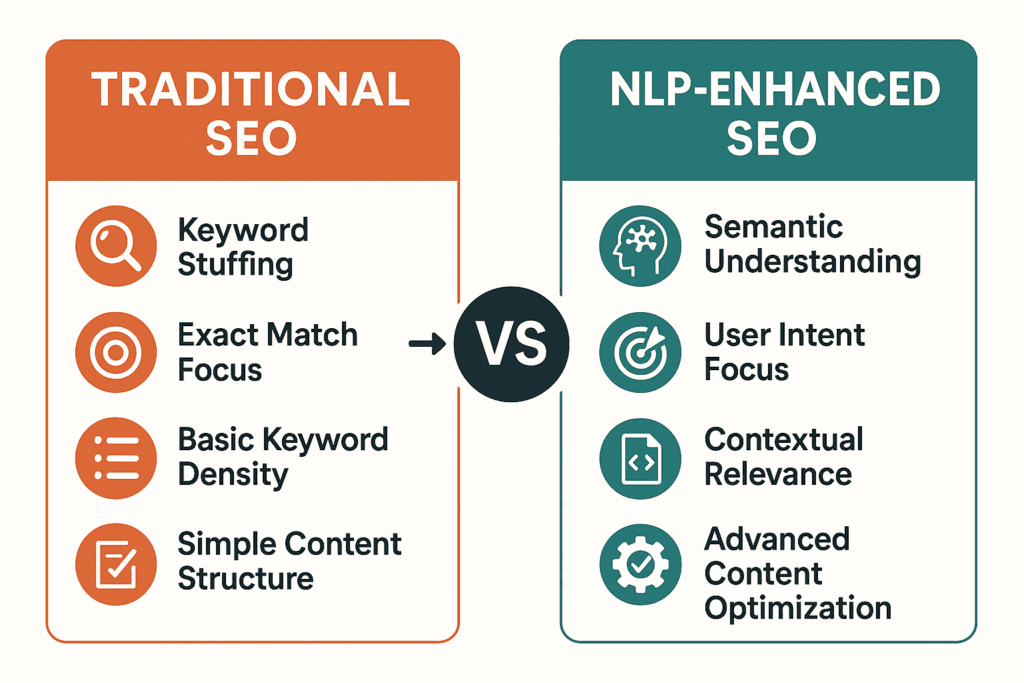
AI SEO NLP Optimization vs. Traditional SEO
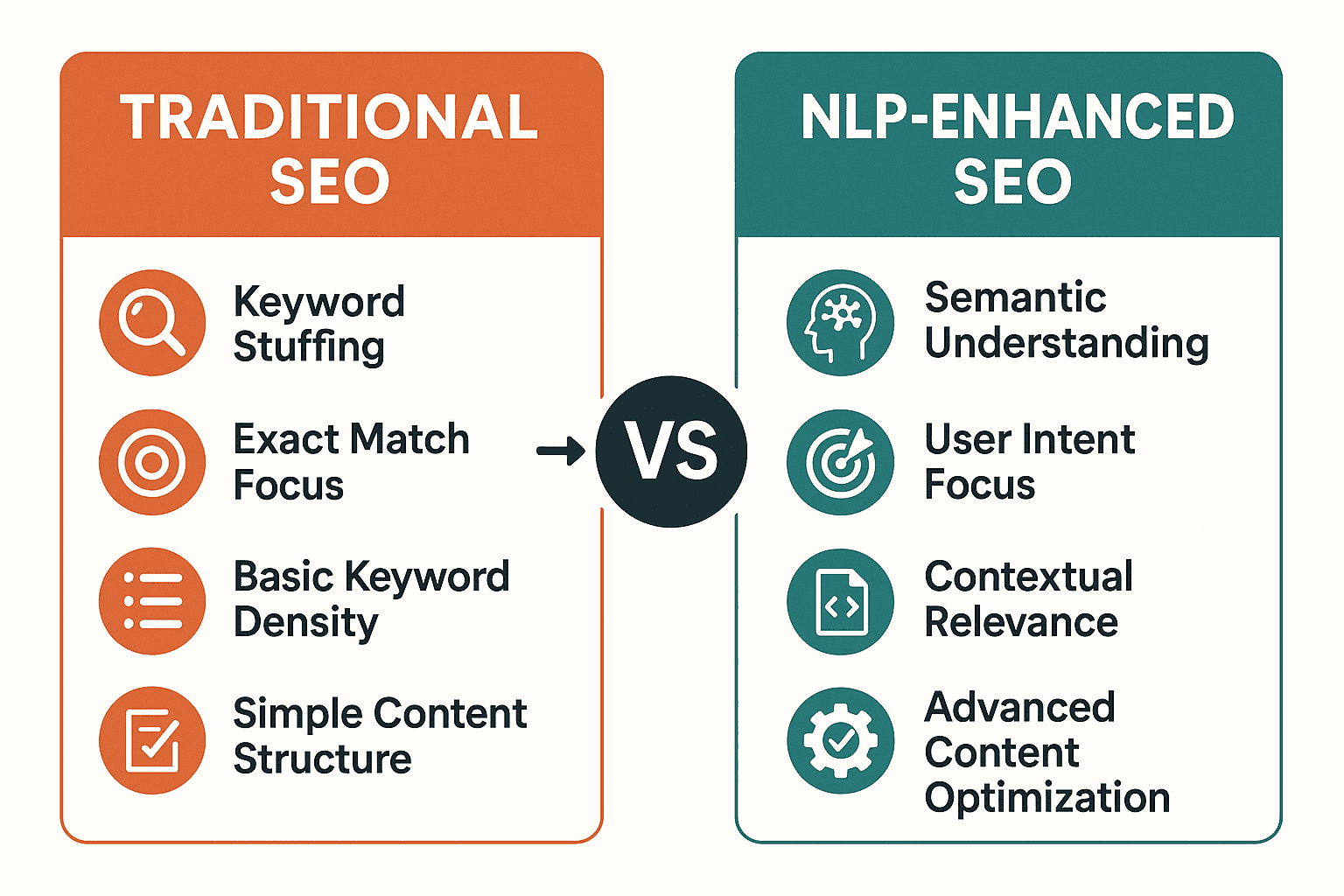
To fully grasp the shift, it is helpful to compare the old methodology with the new AI-driven approach.
| Aspect | Traditional SEO | AI SEO NLP Optimization |
|---|---|---|
| Primary Focus | Exact-match keywords and density | Semantic relevance and entity coverage |
| Content Structure | Short paragraphs, keyword in every section | Comprehensive, hierarchical, question-based headings |
| Understanding Intent | Based on specific keyword modifiers (buy, best, how to) | Based on context, user behavior, and language models |
| Measurement | Rankings for specific terms | Topical authority and visibility across a semantic cluster |
| Writing Style | Often robotic, optimized for crawlers | Natural, human-first, optimized for understanding |
The table illustrates that while traditional SEO was about signaling relevance through repetition, AI SEO NLP optimization is about demonstrating expertise through comprehensive coverage and natural language.
Common Mistakes in AI SEO NLP Optimization
Even with the best intentions, many marketers make critical errors when trying to optimize for NLP. Avoiding these mistakes is just as important as following best practices.
Keyword Cannibalization and Over-Optimization
Creating multiple pages that target the same semantic topic confuses the AI. It doesn’t know which page to rank. Instead of creating separate pages for “NLP SEO” and “NLP optimization,” consolidate them into one authoritative guide. Additionally, forcing the primary keyword into every paragraph triggers spam filters. Use it where it makes sense, and rely on synonyms elsewhere.
Ignoring Contextual Nuance
AI models are sensitive to tone and context. If you are writing about a serious topic like medical advice, using a casual, humorous tone can confuse the algorithm about the nature of your content. Ensure your writing style matches the expected tone of the topic and audience.
Neglecting Entity Relationships
Simply mentioning keywords is not enough. You must explain how concepts relate to each other. For example, if you mention “BERT,” you should also explain that it is a “language model” developed by “Google.” This helps the AI build a knowledge graph around your content.
Focusing Only on Text
NLP is not just about written words. It also processes audio and video transcripts. If you have video content, ensure you provide accurate transcripts and captions. This gives the AI more data to understand your page’s relevance.
Important Notes for Long-Term Success
AI SEO NLP optimization is not a one-time fix. It requires continuous monitoring and adaptation. Search algorithms are updated frequently, and the language models that power them are constantly evolving. What works today may not work in six months.
Focus on building a genuine resource library. The more high-quality, interlinked content you have on a specific topic, the more the A Consistency is key. Regularly update your existing content to reflect new information and search trends. This signals to the AI that your site is active and maintained.
Also, pay attention to user engagement metrics. If users consistently click on your result and stay on the page, the AI interprets this as a positive signal. If they bounce back to the SERP quickly, it may indicate that your content does not match the intent, regardless of how well you optimized for NLP.
Frequently Asked Questions (FAQ)
What is the difference between NLP and NLU in SEO?
NLP (Natural Language Processing) is the broader field of computers understanding human language. NLU (Natural Language Understanding) is a subset that focuses specifically on interpreting the meaning and intent behind the text. In SEO, NLP is used to parse your content, while NLU is used to determine if your content answers the user’s query. Effective AI SEO NLP optimization requires addressing both: making your text parseable and ensuring the meaning is clear.
How does Google use NLP for ranking?
Google uses models like BERT and MUM to understand the context of words in a search query. BERT helps with understanding prepositions and connecting words, while MUM is multimodal and can understand text and images. These models help Google match the intent of the query with the semantic content of web pages, moving beyond simple keyword matching to true language comprehension.
Do I need expensive tools for AI SEO NLP optimization?
While tools like Surfer SEO and Frase provide valuable data, they are not strictly necessary. You can perform basic NLP optimization by analyzing the top-ranking pages, reading the “People Also Ask” section, and writing comprehensive, natural content. However, for competitive niches, these tools provide a significant advantage by revealing semantic gaps in your content compared to competitors.
Can AI-generated content rank well with NLP optimization?
AI-generated content can rank if it is heavily edited and optimized for human readability. Search engines can detect purely automated text that lacks depth and unique insights. To succeed, use AI to generate outlines and drafts, but add personal experience, data, and expert commentary to make the content valuable. The AI must be guided by NLP principles to produce semantically rich output.
How long does it take to see results from NLP optimization?
Unlike quick keyword fixes, NLP optimization is a long-term strategy. It can take several weeks to a few months to see significant ranking changes. This is because the AI needs time to crawl, index, and re-evaluate your content’s relevance. Patience and consistent content improvement are essential.
Conclusion
AI SEO NLP optimization represents the convergence of technology and content strategy. It demands that we write for humans in a way that machines can understand. By focusing on semantic relevance, comprehensive topic coverage, and natural language, you align your website with the future of search. The shift from keyword stuffing to entity-based optimization is not just a trend; it is the new standard. Start by auditing your existing content, identifying gaps in your topical coverage, and rewriting your pages with the principles of NLP in mind. The effort you invest today will build a foundation of authority that pays dividends as AI continues to reshape the digital landscape.
Xem thêm:
- AI White Hat SEO: Mastering Ethical Search Optimization in the Age of Artificial Intelligence
- AI SEO Trends That Will Reshape Search Visibility in 2025 and Beyond
- How to Use AI for SEO: A Complete Guide to Smarter Rankings
- The Rise of AI SEO Experts: Redefining Search Engine Strategy in the Age of Artificial Intelligence
- AI SEO List Generator: The Complete Guide to Automating Content Creation
Bài viết cùng chủ đề:

AI SEO SEO Automation with Make: The Complete Workflow Guide

AI SEO SEO Automation with Zapier: The Complete Workflow Guide

AI SEO SEO Automation with n8n: The Complete Workflow Guide
AI SEO SEO Automation with Gemini: The Complete Guide to Scaling Organic Growth

AI SEO SEO Automation with Claude: The Complete Guide to Scaling Content in 2025

AI SEO SEO Automation with ChatGPT: The Complete Playbook for 2025

AI SEO & SEO Automation for Affiliate Sites: The 2025 Playbook for Passive Income Growth
AI SEO & SEO Automation for Bloggers: The Complete Guide to Scaling Your Content

AI SEO & SEO Automation for Agencies: The Complete 2025 Playbook

AI SEO and SEO Automation for Ecommerce: The Complete Playbook for 2025

AI SEO & SEO Automation for WordPress: The Complete Playbook for 2025
AI SEO SEO Automation Strategy: The Complete Playbook for 2025

Mastering the AI SEO SEO Automation Process: A Complete Guide to Scaling Organic Growth
AI SEO SEO Automation System: The Complete Guide to Scaling Organic Growth in 2025
AI SEO SEO Automation Platform: The Complete Guide to Scaling Organic Growth in 2025
AI SEO SEO Automation Software: The Complete Guide to Scaling Organic Growth in 2025















