No products in the cart.
AI SEO & SEO Automation for Bloggers: The Complete Guide to Scaling Your Content

10
Aug
Aug
The landscape of search engine optimization has shifted dramatically. For bloggers, the days of manually checking keyword density, writing meta descriptions by hand, and guessing at search intent are fading. The new frontier is AI SEO and SEO automation for bloggers, a combination that allows content creators to produce more, rank faster, and analyze data without burning out. This guide breaks down exactly how to leverage these tools, what to automate, and what to keep human, ensuring your blog grows sustainably in a competitive market.
Understanding AI SEO and SEO Automation for Bloggers
AI SEO refers to the use of artificial intelligence to improve how content is optimized for search engines. This includes everything from generating topic clusters to predicting which keywords will drive traffic. SEO automation, on the other hand, involves using software to perform repetitive tasks like rank tracking, internal linking, and reporting. When combined, AI SEO and SEO automation for bloggers creates a workflow where the machine handles the heavy lifting of data analysis and pattern recognition, while the blogger focuses on creativity and authority.
This is not about replacing the writer. It is about augmenting the writer’s ability to understand what the audience wants. A blogger using these tools can analyze thousands of top-ranking pages in seconds, identify gaps in their own content, and receive suggestions for semantic keywords that a human might miss. The result is a more efficient content pipeline that produces higher-quality, more relevant articles.
Why Traditional SEO Methods Are Failing Bloggers
Traditional SEO relied heavily on manual audits and static keyword lists. This approach is becoming less effective for several reasons. First, Google’s algorithms now prioritize user engagement metrics like dwell time and click-through rate, which are harder to optimize manually. Second, the sheer volume of content published daily means that a blogger who publishes once a week with manual optimization is often drowned out by competitors using automated workflows.
Another issue is the complexity of semantic search. Search engines now understand context and synonyms. A blogger writing about “budget travel” needs to naturally include related concepts like “hostels,” “flight deals,” and “travel hacking.” Manually researching these connections for every post is time-consuming. AI SEO tools automate this discovery process, pulling data from the search engine results pages (SERPs) to build a comprehensive content brief in minutes.
Finally, the speed of algorithm updates makes manual tracking nearly impossible. SEO automation provides real-time alerts when rankings fluctuate, allowing bloggers to pivot quickly rather than discovering a drop weeks later.
Core Components of an AI SEO Workflow
Implementing AI SEO and SEO automation for bloggers requires understanding the distinct components that make up a modern workflow. These tools are not a single solution but a stack of technologies that handle different parts of the content lifecycle.
AI-Powered Keyword Research and Clustering
Gone are the days of simply finding a keyword with high volume. AI tools now analyze the search intent behind a query. They categorize keywords into informational, transactional, or navigational clusters. For a blogger, this means you can build a content pillar that targets a broad term like “vegan recipes” and automatically generate a list of supporting long-tail keywords like “high-protein vegan breakfast” or “quick vegan dinner ideas.”
These tools also predict traffic potential based on current SERP features. If a keyword triggers a featured snippet or a “People Also Ask” box, the A This data-driven approach ensures that every piece of content you write has a statistical chance of ranking, rather than relying on gut feeling.
Automated Content Briefs and Outlines
One of the most significant time-savers is the automated content brief. Instead of manually opening the top ten ranking pages and analyzing their structure, an AI tool does this instantly. It extracts the common headings, the average word count, the entities mentioned, and the questions answered. The output is a detailed outline that tells you exactly what to cover to match or exceed the current competition.
This is where SEO automation for bloggers becomes a game-changer. The brief often includes a suggested title, meta description, and URL slug. It also highlights the reading level and tone of the top-ranking content, ensuring your article aligns with user expectations. This process reduces research time from two hours to fifteen minutes.
On-Page Optimization with Real-Time Feedback
As you write, AI-powered editing tools provide real-time feedback. They check for keyword usage in the first 100 words, the presence of LSI keywords in headings, and the readability of your sentences. Some tools even suggest internal links to your older posts based on the current context. This is a form of SEO automation that works in the background, correcting issues before you hit publish.
This immediate feedback loop is invaluable for bloggers who are not SEO experts. It teaches best practices through repetition. Over time, you learn to write naturally with SEO in mind, reducing your reliance on the tool for basic tasks and focusing on more advanced strategies.
Practical Applications: How to Automate Your Blogging Workflow
To truly benefit from AI SEO and SEO automation for bloggers, you need a step-by-step process.
Step 1: Set Up Automated Rank Tracking
Start by connecting your blog to a rank tracking tool. This is the foundation of automation. The tool should track your target keywords daily and send you a weekly digest. This eliminates the need to manually check your positions. More importantly, it provides historical data that helps you identify trends. If a keyword is slowly climbing, you know your content strategy is working. If it is dropping, you can investigate whether a competitor published something new or if your content needs a refresh.
Choose a tool that integrates with Google Search Console. This integration allows the automation software to pull in real user queries, showing you exactly what terms people are using to find your site. This data is gold for generating new content ideas that are already proven to be relevant to your audience.
Step 2: Use AI for Content Ideation and Gap Analysis
Before writing, run a gap analysis. This involves comparing your existing content against that of your top competitors. AI tools highlight topics they cover that you do not. This is a direct roadmap for your editorial calendar. Instead of brainstorming in a vacuum, you are filling proven gaps in the market.
For example, if you run a fitness blog and your competitor has a high-ranking article on “recovery after marathon,” but you do not, the A You can then use the automated content brief tool to generate an outline for that topic, ensuring you cover all the sub-topics that are already ranking.
Step 3: Automate Internal Linking
Internal linking is crucial for SEO but is often neglected due to time constraints. SEO automation tools can now suggest relevant internal links as you write. They analyze your entire blog database and match the current article’s context with older posts. This not only improves site navigation for users but also distributes page authority across your blog, boosting the ranking potential of older articles.
Some advanced tools can even automate the insertion of these links if you approve them. This turns a tedious manual task into a one-click approval process, saving hours each month.
Step 4: Generate Schema Markup Automatically
Structured data, or schema markup, helps search engines understand your content. For bloggers, this often means adding FAQ schema, Article schema, or Recipe schema. Writing this code manually is error-prone. AI SEO tools generate this markup automatically based on your content type. You simply copy and paste the generated code into your CMS, or use a plugin that does it for you. This automation ensures your content is eligible for rich results, which can significantly increase your click-through rate.
Benefits and Limitations of AI SEO for Bloggers
Adopting AI SEO and SEO automation for bloggers comes with a clear set of advantages and some limitations that must be acknowledged to use these tools effectively.
The Key Benefits
- Scalability: You can produce more content without sacrificing quality. The research and technical optimization are handled by the software, freeing up your time for writing and promotion.
- Data-Driven Decisions: You stop guessing and start acting on real data. This reduces the risk of writing content that nobody searches for.
- Consistency: Automation ensures that every post meets your SEO checklist. You no longer forget to add alt text or a meta description on a busy day.
- Competitive Intelligence: You gain insights into your competitors’ strategies, allowing you to outmaneuver them by targeting their weaknesses.
- Lack of Human Nuance: AI can suggest keywords, but it cannot replicate your unique voice or personal experiences. Content that lacks a human touch often fails to build a loyal readership.
- Data Overload: Having access to too much data can be paralyzing. It is easy to spend hours analyzing metrics instead of writing.
- Cost: High-quality AI SEO tools are often subscription-based. For a hobby blogger, this can be a significant expense.
- Generic Output: If you rely too heavily on AI-generated outlines, your content may start to look like everyone else’s. The structure will be sound, but the personality will be missing.
The Limitations to Consider
Comparison: AI SEO Tools vs. Manual SEO Processes
To understand the value proposition, it helps to compare the two approaches side-by-side. The table below highlights the key differences in a typical blogging workflow.
| Aspect | Manual SEO Process | AI SEO & Automation |
|---|---|---|
| Keyword Research | Hours of searching, manual data entry into spreadsheets. | Instant clustering and intent analysis in seconds. |
| Content Brief Creation | Reading 10+ competitor articles and taking notes. | Automated extraction of headings, entities, and questions. |
| On-Page Optimization | Checking keyword density and meta tags manually. | Real-time suggestions while writing, integrated into the editor. |
| Rank Tracking | Weekly manual checks on Google. | Daily automated tracking with email alerts. |
| Reporting | Creating custom reports in spreadsheets. | Automated dashboard with visual graphs and insights. |
| Error Rate | High risk of human error and missed tags. | Low risk, as the software follows a strict checklist. |
This comparison shows that while the initial setup of an automated system requires effort, the long-term efficiency gains are substantial. The manual process is not obsolete, but it is inefficient for bloggers who want to grow beyond a few posts per month.
Common Mistakes and How to Avoid Them
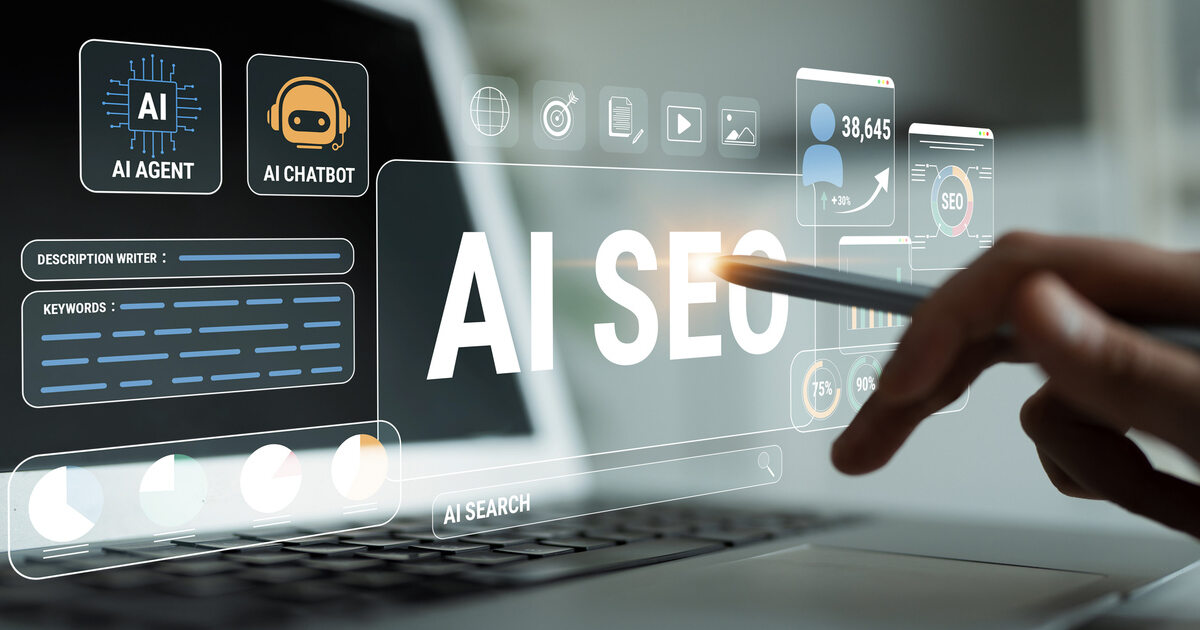
Many bloggers jump into AI SEO and SEO automation for bloggers without a clear strategy, leading to poor results. Here are the most common pitfalls and how to sidestep them.
Mistake 1: Over-Reliance on AI for Writing
Using AI to generate entire articles verbatim often results in generic, low-value content. Google’s spam policies target mass-produced content that lacks original insight. Avoid this by using AI for research and outlining, but writing the final prose yourself. Inject personal anecdotes, unique data points, and your specific point of view.
Mistake 2: Ignoring User Intent
Automation tools might suggest keywords with high volume, but if the intent is transactional and your content is informational, you will fail to rank. Always review the current SERP for your target keyword. If the top results are product pages, writing a blog post is unlikely to win. Use the AI data as a guide, but apply your judgment to match the intent.
Mistake 3: Neglecting Content Refreshes
SEO automation is not a set-and-forget system. Old content decays in rankings as new competitors emerge. Use your automation tools to identify posts that are losing traffic. Set up a schedule to refresh these posts with updated information, new examples, and improved internal links. This is often easier than creating new content and yields faster results.
Mistake 4: Chasing Every Metric
Focusing on vanity metrics like keyword volume without considering difficulty or relevance is a common error. A keyword with 10,000 monthly searches but a domain authority requirement of 80 is useless for a new blog. Use the automation tool’s difficulty score to filter out impossible targets and focus on long-tail opportunities where you can realistically compete.
Important Notes for Long-Term Success
When implementing AI SEO and SEO automation for bloggers, certain principles ensure long-term viability. First, always prioritize the user experience. The goal of SEO is to get the click, but the goal of the content is to keep the reader engaged. Automation should not compromise readability or value.
Second, maintain a human review process. Before publishing, read the article aloud. Does it sound like a robot wrote it? If so, rewrite it. Check the facts. AI tools can hallucinate or pull outdated information. You are responsible for the accuracy of your content.
Third, diversify your traffic sources. Relying solely on Google is risky. Use the time saved by automation to build an email list, engage on social media, or start a YouTube channel. This creates a safety net if your organic traffic dips due to an algorithm update.
Finally, stay updated on the tools themselves. The AI SEO landscape is evolving rapidly. What works today might be obsolete in six months. Subscribe to industry newsletters and participate in communities to stay ahead of the curve.
Frequently Asked Questions
What is the difference between AI SEO and traditional SEO?
Traditional SEO relies on manual analysis of keywords, backlinks, and on-page elements. AI SEO uses machine learning algorithms to automate these processes, analyze vast datasets, and predict search engine behavior. AI SEO is faster and can identify patterns that are invisible to the human eye, such as subtle shifts in user intent or the emergence of new semantic topics.
Will AI SEO replace the need for a human blogger?
No. AI SEO tools are designed to assist, not replace, the human creator. While AI can generate outlines and suggest keywords, it lacks the personal experience, creativity, and emotional intelligence required to build a loyal audience. The most successful bloggers use AI to handle the technical grunt work, freeing up time to focus on storytelling and community building.
How much does SEO automation cost for a blogger?
Costs vary widely. Basic rank tracking tools can start at around $10 to $20 per month. Comprehensive AI SEO platforms that include content briefs, optimization, and competitor analysis typically range from $50 to $150 per month. There are also free tiers available, but they often have limited features. Consider the time saved and the potential traffic increase when evaluating the return on investment.
Can I use free AI tools for SEO automation?
Yes, there are free tools available. Google Search Console is an essential free tool for tracking performance. Some AI writing assistants offer free plans with limited word counts. However, for full SEO automation, including automated internal linking and comprehensive gap analysis, a paid tool is usually necessary. Start with free tools to understand the basics, then upgrade as your blog grows.
How quickly will I see results from AI SEO?
SEO is a long-term game. While automation speeds up the process, it does not bypass Google’s indexing and ranking timelines. You might see improvements in on-page scores immediately, but ranking changes typically take 4 to 8 weeks. For new domains, it can take several months to build the authority needed to rank for competitive terms. Patience and consistency are key.
Conclusion
AI SEO and SEO automation for bloggers is not a passing trend; it is the new standard for content creation. The ability to automate research, optimize in real-time, and track performance without manual effort provides a significant competitive advantage. However, the technology is only as good as the strategy behind it. The bloggers who succeed will be those who use these tools to enhance their unique voice, not replace it. By combining the analytical power of AI with the creativity and empathy of a human writer, you can build a blog that ranks well, resonates with readers, and stands the test of time. Start small, automate one part of your workflow, and scale from there. The future of blogging is efficient, data-driven, and full of potential.
Xem thêm:
- The Ultimate AI SEO Framework: How to Dominate Search Rankings With Intelligent Automation
- The Definitive AI SEO Guide: How to Leverage Artificial Intelligence for Higher Rankings
- AI SEO Internal Linking Strategy: The Complete Guide to Smarter Link Architecture
- AI SEO Gemini Gems: The Complete Guide to Unlocking Hidden Search Potential
- AI SEO Vector Search: The Complete Guide to Semantic Search Optimization
Bài viết cùng chủ đề:

AI SEO SEO Automation with Make: The Complete Workflow Guide

AI SEO SEO Automation with Zapier: The Complete Workflow Guide

AI SEO SEO Automation with n8n: The Complete Workflow Guide
AI SEO SEO Automation with Gemini: The Complete Guide to Scaling Organic Growth

AI SEO SEO Automation with Claude: The Complete Guide to Scaling Content in 2025

AI SEO SEO Automation with ChatGPT: The Complete Playbook for 2025

AI SEO & SEO Automation for Affiliate Sites: The 2025 Playbook for Passive Income Growth

AI SEO & SEO Automation for Agencies: The Complete 2025 Playbook

AI SEO and SEO Automation for Ecommerce: The Complete Playbook for 2025

AI SEO & SEO Automation for WordPress: The Complete Playbook for 2025
AI SEO SEO Automation Strategy: The Complete Playbook for 2025

Mastering the AI SEO SEO Automation Process: A Complete Guide to Scaling Organic Growth
AI SEO SEO Automation System: The Complete Guide to Scaling Organic Growth in 2025
AI SEO SEO Automation Platform: The Complete Guide to Scaling Organic Growth in 2025
AI SEO SEO Automation Software: The Complete Guide to Scaling Organic Growth in 2025
AI SEO SEO Automation Workflow: The Complete Guide to Scaling Organic Growth in 2025