No products in the cart.
Mastering the AI SEO SEO Automation Process: A Complete Guide to Scaling Organic Growth

10
Aug
Aug
The digital marketing landscape has shifted dramatically. Traditional manual optimization methods are no longer sufficient to compete in a world where search engines update their algorithms thousands of times per year. This is where the AI SEO SEO Automation Process becomes a critical competitive advantage. By integrating artificial intelligence with automated workflows, businesses can streamline repetitive tasks, uncover data-driven insights, and scale their organic visibility with unprecedented efficiency. This guide breaks down the entire process, from foundational concepts to advanced implementation strategies.
What is the AI SEO SEO Automation Process?
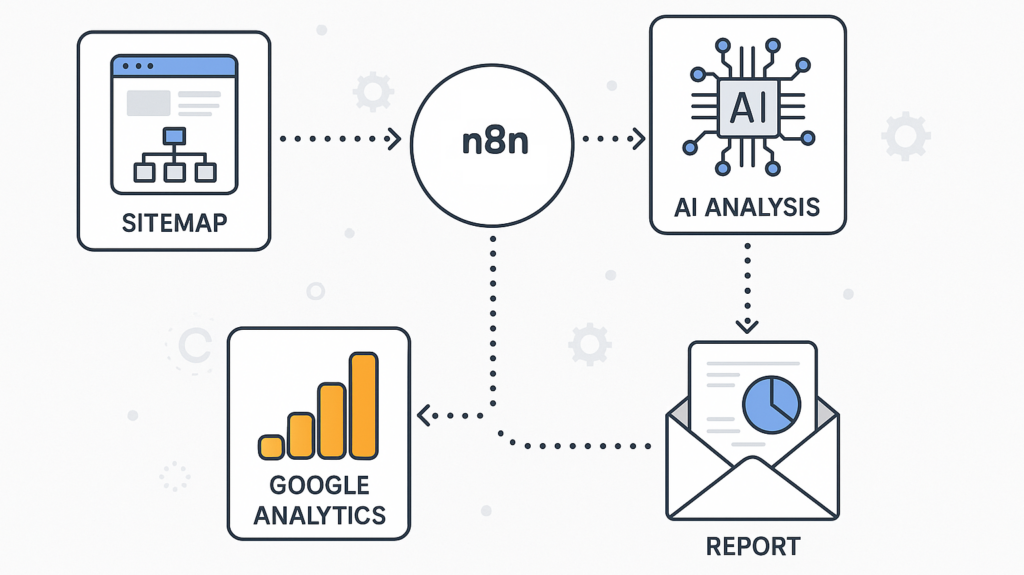
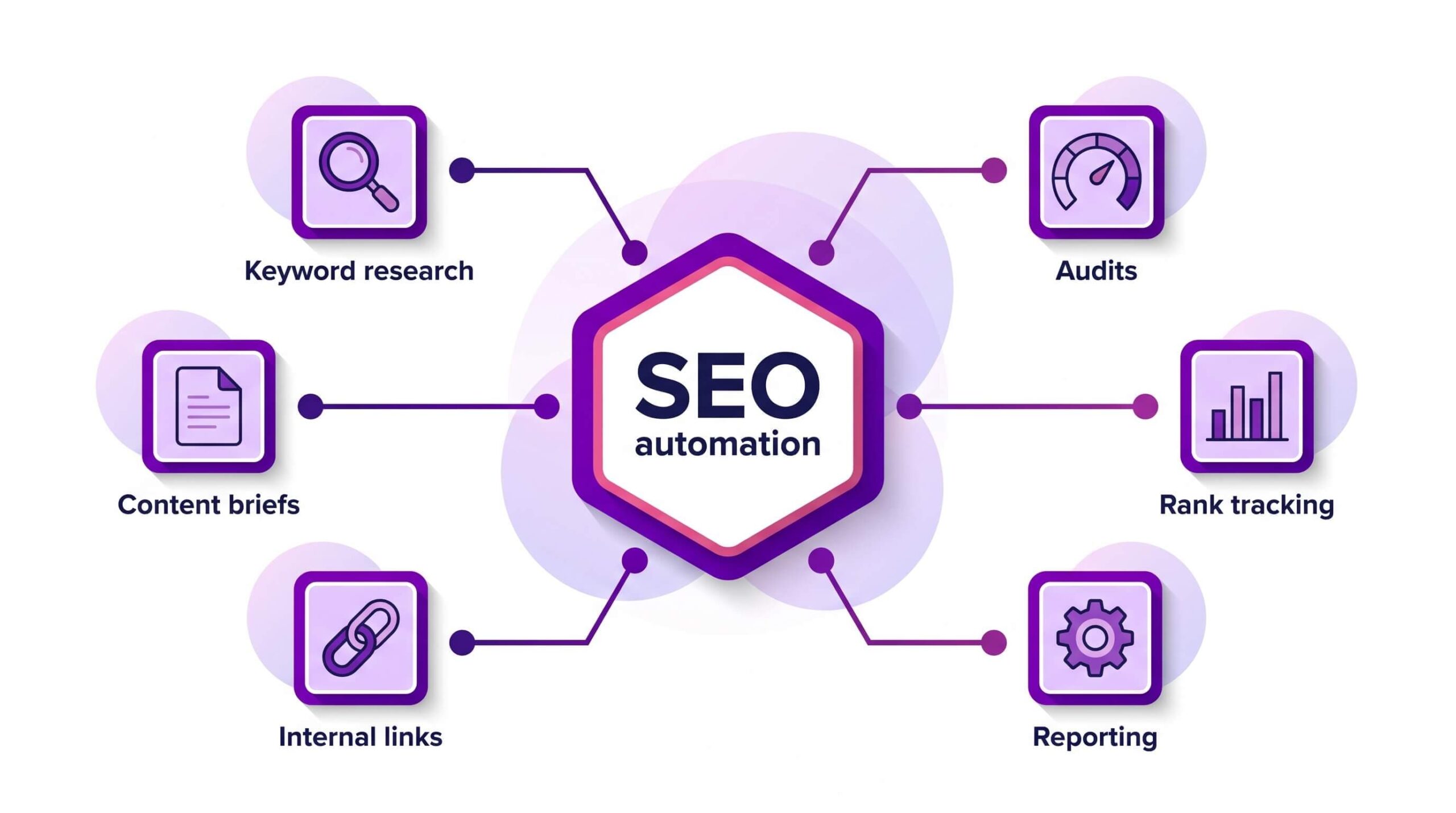
The AI SEO SEO Automation Process refers to the systematic use of artificial intelligence algorithms and software tools to execute, manage, and optimize search engine optimization tasks with minimal human intervention. It combines machine learning, natural language processing (NLP), and robotic process automation (RPA) to handle everything from keyword research and content generation to technical audits and link building.
This process is not about replacing human expertise entirely. Instead, it augments the capabilities of SEO professionals by handling the heavy lifting of data analysis and repetitive execution. The core objective is to create a self-improving system where data flows from analytics tools into AI models, which then generate actionable recommendations or execute changes automatically.
The Core Components of an Automated SEO System
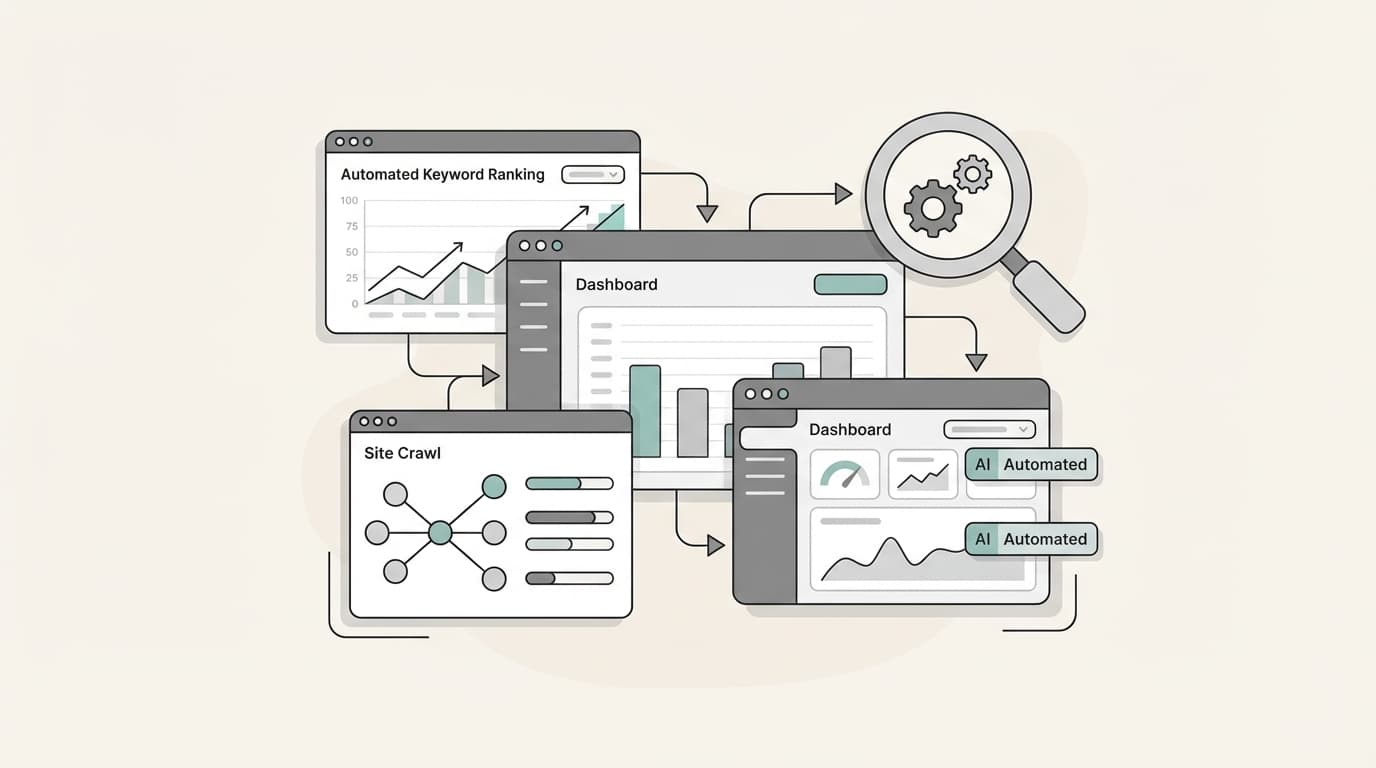
To fully grasp the process, it is essential to understand its building blocks. A robust automation framework typically includes these five layers:
- Data Collection Layer: This involves pulling data from Google Search Console, Google Analytics, backlink databases (Ahrefs, Semrush), and server logs. APIs facilitate the continuous flow of this information.
- Analysis and Insight Layer: AI models process the collected data to identify patterns, anomalies, and opportunities. For instance, detecting a sudden drop in rankings for a set of keywords or identifying content gaps against competitors.
- Decision-Making Layer: Based on the analysis, the system decides on the next best action. This could be adjusting title tags, suggesting internal links, or flagging pages for content refresh.
- Execution Layer: This is where automation tools implement the decisions. It can involve automatically generating meta descriptions, submitting sitemaps, or sending tasks to a content management system (CMS).
- Monitoring and Feedback Loop: The system continuously tracks the results of the executed actions, feeding the performance data back into the analysis layer to refine future decisions.
- Recommended word count based on SERP analysis.
- Suggested headings (H2, H3) that cover the topic exhaustively.
- Entities and LSI keywords to include.
- Questions from “People Also Ask” boxes to answer.
- Speed: Tasks that take days are completed in hours.
- Cost-Efficiency: Reduces the need for large, manual SEO teams for repetitive tasks.
- Data Depth: AI can analyze unstructured data (like user comments or video transcripts) that manual processes ignore.
- Consistency: Ensures that every page meets the same technical and content standards.
- Lack of Human Nuance: AI struggles with brand voice, cultural context, and creative storytelling. Over-automated content often reads as generic and lacks the “experience” signal that Google’s E-E-A-T guidelines prioritize.
- Black Box Algorithms: Sometimes, AI makes decisions that are difficult to explain. This can be problematic when trying to diagnose a sudden drop in rankings.
- Dependency on Data Quality: The output is only as good as the input. If the analytics tracking is broken, the A
Why You Need an AI-Driven SEO Workflow
The sheer volume of data involved in modern SEO makes manual processing inefficient and prone to error. An automated workflow offers distinct advantages that directly impact the bottom line.
Scalability Beyond Human Capacity
A human analyst can realistically review a few hundred keywords per day. An AI system can process millions of keyword variations, search intents, and SERP features in minutes. This allows enterprises with massive websites to maintain comprehensive optimization across every product page, blog post, and category page without expanding their team proportionally.
Real-Time Adaptation to Algorithm Updates
Search engine algorithms are in constant flux. When a core update rolls out, an automated system can immediately analyze which pages were impacted and why. It can then adjust on-page elements or internal linking structures within hours, whereas a manual team might take weeks to identify the issue and implement a fix.
Eliminating Human Error in Repetitive Tasks
Tasks like generating alt text for thousands of images or updating internal anchor text are monotonous. Humans are prone to fatigue and mistakes in these scenarios. AI models, specifically computer vision and NLP, can perform these tasks with consistent accuracy, ensuring that technical SEO fundamentals are never neglected.
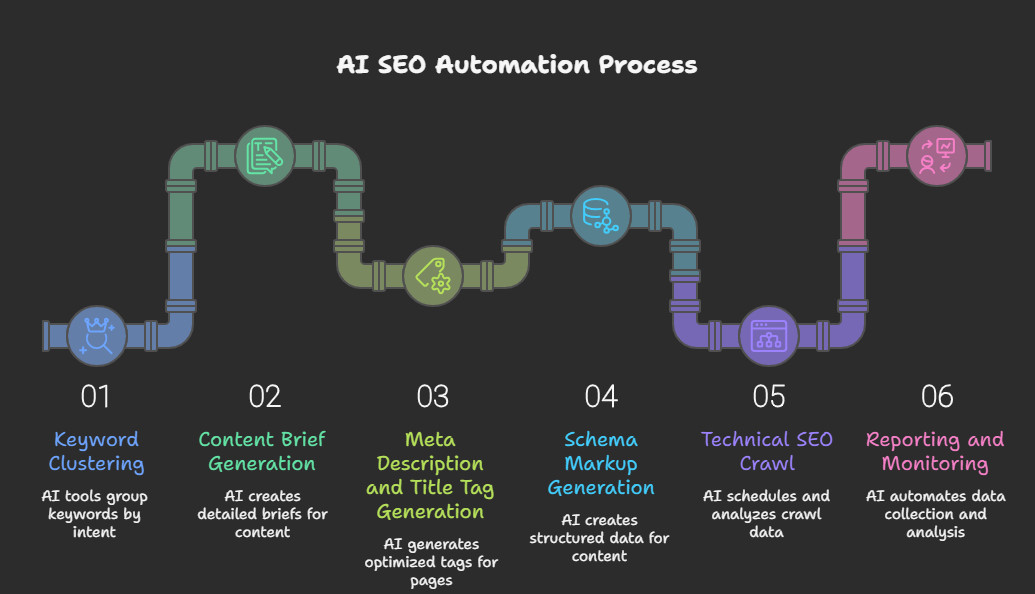
The Step-by-Step AI SEO Automation Process
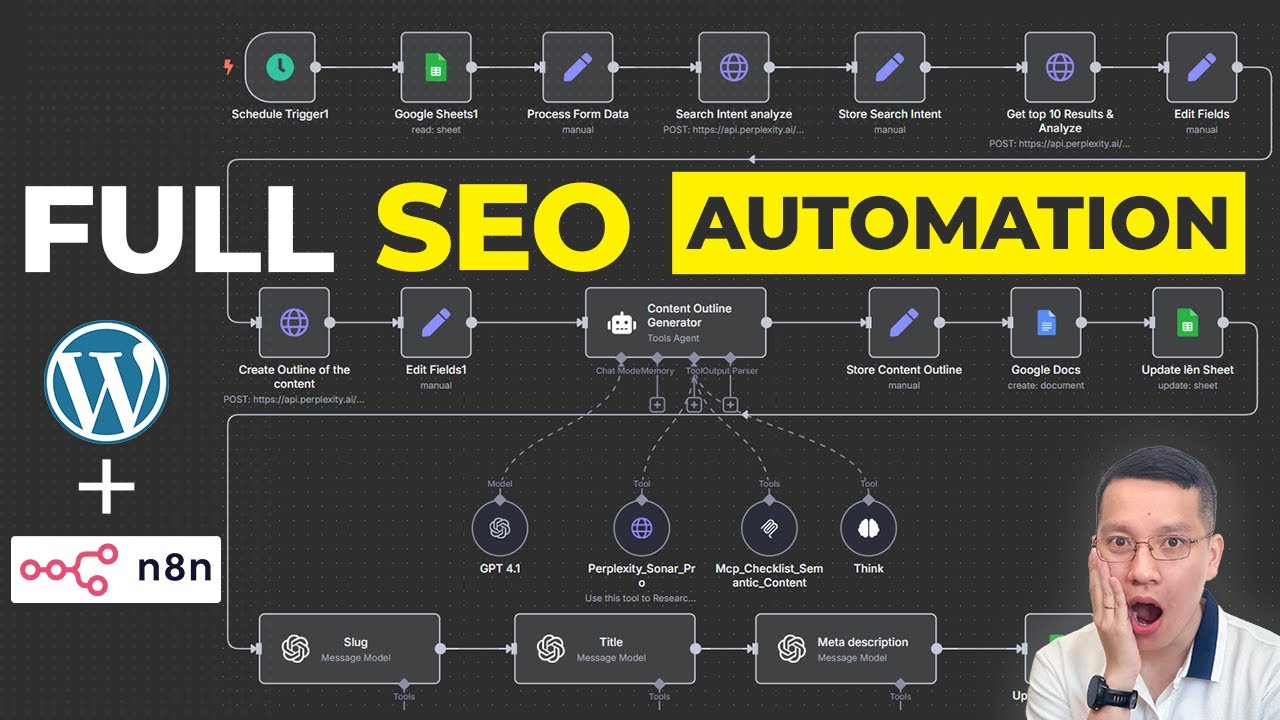
Implementing this process requires a structured approach. Below is a detailed breakdown of how to build and execute an effective automation pipeline.
Step 1: Automated Keyword Clustering and Intent Mapping
The process begins with data ingestion. Instead of manually sorting keywords into spreadsheets, AI tools use semantic analysis to group keywords by search intent (informational, transactional, navigational) and topical relevance. This goes beyond simple exact-match grouping. The AI understands that “best running shoes” and “top sneakers for marathon” belong to the same cluster. The output is a structured map of topics that informs the entire content strategy.
Step 2: AI-Powered Content Brief Generation
Once the keyword clusters are defined, the automation process moves to content creation. AI tools analyze the top-ranking pages for a given cluster to identify common entities, questions, and semantic terms. It then generates a comprehensive content brief that includes:
This brief ensures that human writers or AI writers produce content that is structurally aligned with what Google deems relevant.
Step 3: Automated On-Page Optimization
This stage involves the direct manipulation of HTML elements. Automation tools can dynamically update title tags and meta descriptions based on click-through rate (CTR) data. If a page has a high impression count but low CTR, the system can test multiple title variations automatically. Furthermore, AI algorithms can suggest and even implement internal linking by analyzing the semantic relationship between pages, ensuring that link equity flows to the most important pages.
Step 4: Technical SEO Monitoring and Fixing
Crawling and indexing issues are detected and resolved through automated bots. These bots continuously scan the website for broken links, duplicate content, missing schema markup, and slow-loading pages. When an issue is detected, the system can either fix it directly (e.g., adding a 301 redirect) or create a ticket for the development team with a detailed error log. This proactive approach prevents small technical issues from escalating into ranking penalties.
Step 5: Automated Reporting and Predictive Analysis
The final step is the feedback loop. Automated reporting tools compile data from all channels into a single dashboard. However, the true power of AI lies in predictive analysis. The system can forecast the potential traffic growth of a page based on its current trajectory and the impact of implemented changes. This allows stakeholders to make data-backed decisions about resource allocation rather than relying on historical data alone.
Key Tools for the AI SEO Automation Process
Selecting the right technology stack is crucial. The market offers a range of solutions, each specializing in different parts of the process.
| Tool Category | Examples | Role in Automation |
|---|---|---|
| All-in-One SEO Suites | Semrush, Ahrefs | Provide APIs for keyword data, backlink analysis, and rank tracking that feed into other automation tools. |
| Content Generation & Optimization | Surfer SEO, Frase, Jasper | Automate content briefs, optimize drafts against SERP data, and generate long-form articles. |
| Technical SEO Crawlers | Screaming Frog, Sitebulb | Automate site audits and can be configured to export issues to project management tools. |
| Workflow Automation | Zapier, Make (Integromat) | Connect different SEO tools to trigger actions. For example, when a new blog post is published, automatically submit it to indexing APIs. |
| Custom AI Models | OpenAI API, Google Cloud NLP | Used for bespoke solutions like custom entity extraction or sentiment analysis of search results. |
Benefits vs. Limitations of Automation
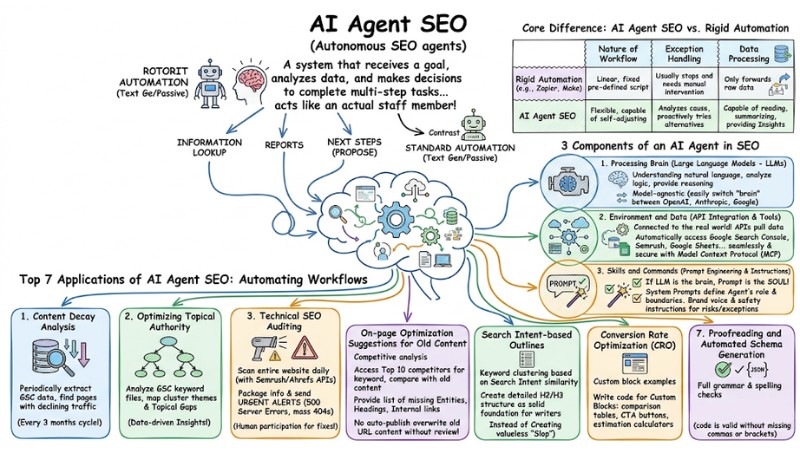
While the advantages are compelling, it is critical to approach automation with a balanced perspective. Understanding the limitations prevents costly mistakes.
The Strategic Benefits
The Critical Limitations
Practical Application: A Guide to Implementation
Transitioning to an automated workflow does not happen overnight. It requires a phased implementation strategy to ensure stability and buy-in from the team.
Phase 1: Audit and Cleanup. Before automating, ensure your tracking is accurate. Fix any broken tags in Google Analytics and verify Search Console property ownership. Clean up your existing content to establish a baseline of quality.
Phase 2: Start with Low-Risk Tasks. Begin by automating reporting and rank tracking. These are read-only tasks that do not affect the live website. This allows the team to trust the data output without fear of breaking anything.
Phase 3: Automate Content Briefs. Implement a tool that generates briefs for your writers. This immediately speeds up the content production pipeline while keeping the human writer in control of the final output.
Phase 4: Implement Dynamic On-Page Elements. Once you are comfortable with the data, automate the testing of title tags and meta descriptions. Use a tool that integrates with your CMS to run A/B tests automatically.
Phase 5: Full Integration. Connect all systems via APIs to create a closed-loop system where insights from one channel automatically trigger actions in another.
Common Mistakes and How to Avoid Them
Many businesses fail to see results from automation due to preventable errors. Here are the most frequent pitfalls.
Mistake 1: Automating Bad Processes
If your current manual process is flawed, automating it will only make you fail faster. You will produce more broken pages and more irrelevant content at a higher speed.
Solution: Document your current workflow. Identify bottlenecks and errors. Fix the process manually first, then introduce automation.
Mistake 2: Ignoring the “Experience” Signal
Publishing 100% AI-generated content without human review violates Google’s spam policies regarding scaled content abuse. This leads to manual actions and loss of rankings.
Solution: Use AI for research, drafting, and optimization, but always have a subject matter expert review and edit the content to add personal experience and unique insights.
Mistake 3: Overlooking Log File Analysis
Most automation focuses on Google Search Console data. However, GSC does not show crawl frequency or server response codes for every bot request. Without log file analysis, you might be wasting crawl budget on low-value pages.
Solution: Integrate a log file analyzer into your automation stack to understand how Googlebot actually interacts with your server.
Important Notes on Quality and Governance
Automation requires governance. You must establish clear guidelines for what the AI is allowed to do autonomously and what requires human approval. For instance, allowing AI to change a meta description is low-risk, but allowing it to delete pages or change the site architecture is high-risk.
Furthermore, the concept of E-E-A-T (Experience, Expertise, Authoritativeness, Trustworthiness) remains paramount. Automated systems can help demonstrate Expertise by ensuring factual accuracy and comprehensive coverage. However, they struggle with first-hand Experience. Ensure your content strategy includes original research, expert quotes, and unique data that cannot be generated by a machine.
Frequently Asked Questions
Will AI SEO automation replace SEO professionals?
No. It replaces the manual execution of tasks, but it increases the demand for strategic thinkers who can interpret AI outputs, set the automation parameters, and make high-level decisions. The role shifts from “doer” to “manager and strategist.”
What is the cost of implementing an AI SEO automation process?
Costs vary significantly. A basic setup using SaaS tools like Semrush and Zapier can cost a few hundred dollars per month. A custom enterprise solution with proprietary machine learning models can cost tens of thousands of dollars. The ROI depends on the scale of your website and the value of the organic traffic you generate.
How long does it take to see results from automation?
Automation speeds up the process, but Google still needs time to crawl and index changes. Typically, you can expect to see initial improvements in technical health within 2-4 weeks. Significant ranking improvements for content-related changes usually take 2-3 months, depending on the competitiveness of your niche.
Is it safe to use AI to generate entire articles?
It is safe only if the content is heavily edited and fact-checked by humans. Publishing raw AI output is considered spam and violates Google’s webmaster guidelines. The best practice is to use AI for the “heavy lifting” of research and drafting, then use human expertise to add value, personal experience, and a unique perspective.
What metrics should I track to measure the success of automation?
Track the efficiency metrics (time saved, tasks completed) alongside the SEO metrics. Look at organic traffic growth, keyword ranking velocity, crawl budget utilization, and the percentage of pages that rank on page one. Also, monitor the reduction in manual error rates for technical issues.
Conclusion
The AI SEO SEO Automation Process is not a futuristic concept; it is a present-day necessity for scaling organic growth in a competitive digital environment. By automating data collection, analysis, and execution, you free up human capital to focus on creative strategy and relationship building—areas where machines cannot compete. The key to success lies in a balanced approach: leverage AI for its incredible speed and data processing power, but maintain strict human governance to ensure quality, brand integrity, and alignment with search engine guidelines. Start small, measure relentlessly, and scale the processes that deliver tangible results.
Xem thêm:
- AI SEO Generative Search Citations: The Complete Playbook for 2025
- AI SEO Optimization: The Complete Guide to Dominating Search with Artificial Intelligence
- AI SEO Content Brief Generator: The Complete Guide to Streamlining Your Content Workflow
- AI Canonical Tags: The Future of Automated SEO Canonicalization
- AI Content Planner: Revolutionize Your Content Strategy with Intelligent Automation
Bài viết cùng chủ đề:

AI SEO SEO Automation with Make: The Complete Workflow Guide

AI SEO SEO Automation with Zapier: The Complete Workflow Guide

AI SEO SEO Automation with n8n: The Complete Workflow Guide
AI SEO SEO Automation with Gemini: The Complete Guide to Scaling Organic Growth

AI SEO SEO Automation with Claude: The Complete Guide to Scaling Content in 2025

AI SEO SEO Automation with ChatGPT: The Complete Playbook for 2025

AI SEO & SEO Automation for Affiliate Sites: The 2025 Playbook for Passive Income Growth
AI SEO & SEO Automation for Bloggers: The Complete Guide to Scaling Your Content

AI SEO & SEO Automation for Agencies: The Complete 2025 Playbook

AI SEO and SEO Automation for Ecommerce: The Complete Playbook for 2025

AI SEO & SEO Automation for WordPress: The Complete Playbook for 2025
AI SEO SEO Automation Strategy: The Complete Playbook for 2025

AI SEO SEO Automation System: The Complete Guide to Scaling Organic Growth in 2025
AI SEO SEO Automation Platform: The Complete Guide to Scaling Organic Growth in 2025
AI SEO SEO Automation Software: The Complete Guide to Scaling Organic Growth in 2025
AI SEO SEO Automation Workflow: The Complete Guide to Scaling Organic Growth in 2025