No products in the cart.
AI SEO & SEO Automation for Agencies: The Complete 2025 Playbook

10
Aug
Aug
The digital marketing landscape has shifted dramatically. Agencies that once relied on manual keyword research, spreadsheet tracking, and tedious reporting are now facing a fork in the road. The integration of AI SEO SEO Automation for Agencies is no longer a luxury—it is a competitive necessity. Clients demand faster results, transparent reporting, and scalable strategies. This comprehensive guide explores how artificial intelligence and automation tools are reshaping agency workflows, from initial audits to final client reports, and provides a practical roadmap for implementation.
Understanding the Core Concepts: AI SEO vs. Traditional SEO

To fully grasp the impact of AI SEO SEO Automation for Agencies, it is essential to distinguish between the two components. Traditional SEO relies heavily on manual analysis, human intuition, and historical data. An SEO specialist might spend hours analyzing backlink profiles or manually tagging URLs. AI SEO, on the other hand, uses machine learning algorithms to predict search intent, generate content briefs, and identify pattern recognition in ranking fluctuations.
SEO automation refers to the software and workflows that eliminate repetitive tasks. This includes automated rank tracking, scheduled reporting, and programmatic content updates. When combined, AI and automation create a synergy that allows agencies to handle ten times the workload without increasing headcount. The result is a leaner operation that delivers higher ROI for clients.
The Evolution of Agency Workflows
Five years ago, an agency might have managed 20 clients with a team of 10. Today, with the right automation stack, that same team can manage 50 clients. The evolution is driven by the need to process vast amounts of data. Google processes billions of searches daily, and the algorithms that determine rankings change thousands of times per year. Manual tracking of these fluctuations is impossible. AI SEO SEO Automation for Agencies bridges this gap by providing real-time insights and predictive analytics.
Why Agencies Must Adopt AI and Automation Now
The urgency to adopt these technologies stems from three primary pressures: client expectations, profit margins, and talent retention. Clients now expect weekly, if not daily, updates on campaign performance. Manual reporting cycles that take a week to compile are obsolete. Automation tools generate live dashboards that clients can access anytime, reducing the back-and-forth communication that drains agency resources.
Profit margins in the agency world are shrinking. The cost of skilled labor continues to rise, yet clients are resistant to fee increases. By implementing AI SEO SEO Automation for Agencies, firms can reduce the hours spent on low-value tasks. This reallocation of human capital toward strategy and creative development directly improves the bottom line. Furthermore, top-tier SEO talent does not want to spend their days copying and pasting data into spreadsheets. Providing them with advanced tools increases job satisfaction and reduces turnover.
Core Components of an AI-Driven SEO Stack
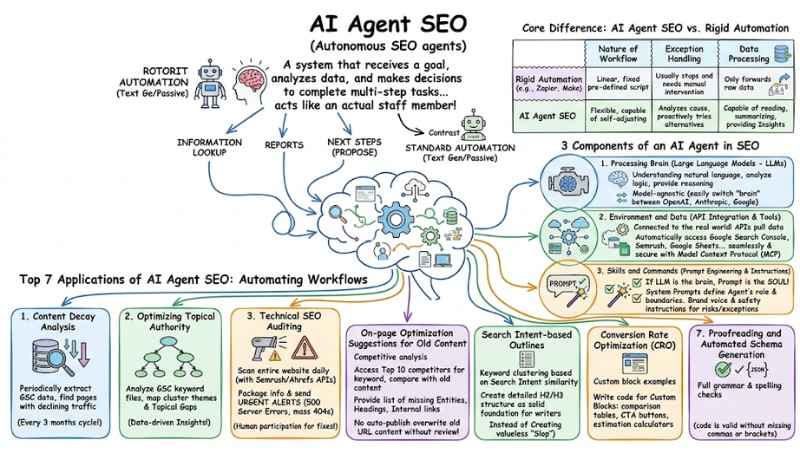
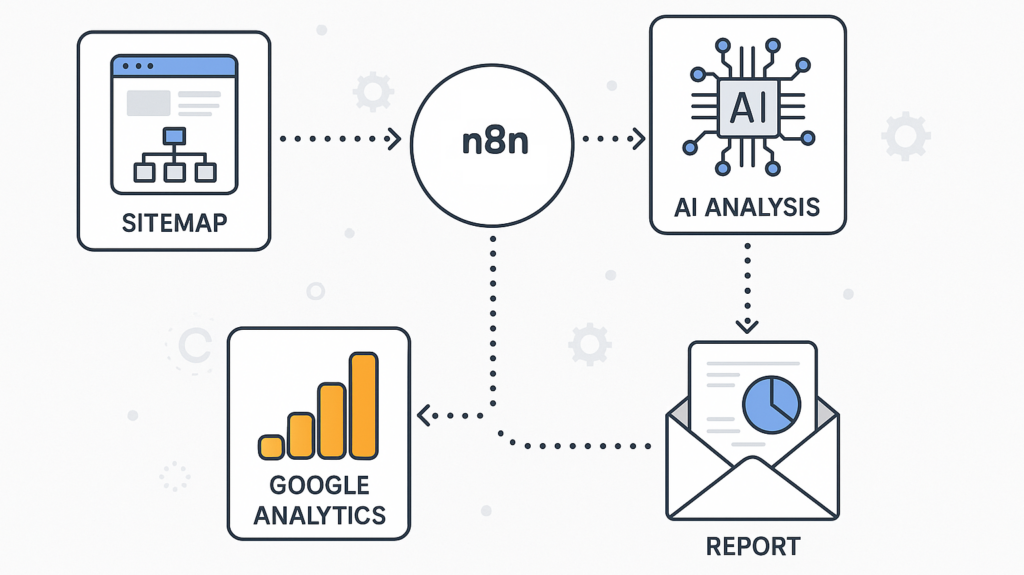
Building an effective automation stack requires understanding the distinct categories of tools available. Each component addresses a specific bottleneck in the SEO lifecycle.
Automated Keyword Research and Clustering
Gone are the days of manually typing keywords into a tool and exporting a CSV file. Modern AI platforms analyze search engine results pages (SERPs) to identify semantic relationships between queries. They automatically cluster keywords into topic groups, suggesting which pages should target which terms. This process, which once took days, now takes minutes. For agencies managing multi-location clients, this automation is critical for scaling local SEO efforts without duplicating content.
AI-Powered Content Generation and Optimization
Content remains the king of SEO, but the production process has been transformed. AI writing assistants can generate drafts for blog posts, product descriptions, and meta tags in seconds. However, the true value lies in optimization. Tools like Surfer SEO or Clearscope use natural language processing to analyze top-ranking pages and provide real-time recommendations for keyword density, related terms, and content structure. This ensures that the content produced by the agency is not only original but also algorithmically aligned.
Technical SEO Auditing and Monitoring
Technical issues such as broken links, slow page speed, and crawl errors can silently kill a website’s rankings. Automated crawlers can now simulate Google’s bots and identify these issues continuously. Instead of running a monthly audit, agencies can set up continuous monitoring that alerts the team the moment a critical error is detected. This proactive approach prevents ranking drops and minimizes downtime.
Automated Link Building and Digital PR
Link building is often the most labor-intensive part of SEO. Automation tools can now identify link prospects by analyzing competitor backlinks and filtering for domain authority and relevance. AI can even draft personalized outreach emails that have higher open rates than generic templates. While the final outreach step often requires a human touch, the research and vetting process is entirely automated.
Dynamic Reporting and Client Dashboards
The reporting phase is where AI SEO SEO Automation for Agencies delivers immediate client satisfaction. Automated reporting tools pull data from Google Analytics, Search Console, and ranking trackers to create visually appealing, white-labeled reports. These reports can be scheduled to send automatically every Monday morning. Clients appreciate the consistency, and the agency saves hundreds of hours annually that were previously spent on data manipulation.
Benefits and Limitations of Full Automation
While the benefits are substantial, a balanced perspective is necessary. Understanding both sides of the coin allows an agency to implement automation strategically rather than blindly.
Key Benefits for Agency Operations
- Scalability: Automation allows agencies to take on more clients without a proportional increase in staff.
- Accuracy: AI eliminates human error in data collection and analysis, leading to more reliable insights.
- Speed: Tasks that took hours are completed in seconds, accelerating the time-to-value for clients.
- Competitive Intelligence: AI tools can monitor competitor movements 24/7, providing alerts on new content, backlinks, or pricing changes.
- Cost Efficiency: Reducing manual labor hours directly reduces operational costs, improving agency profitability.
- Lack of Creativity: AI-generated content can be formulaic and lack the unique voice that builds brand authority.
- Data Dependency: Automation is only as good as the data it receives. If tracking is broken, the A
- Over-Reliance: Blindly following AI recommendations without human oversight can lead to penalties if the algorithm misinterprets guidelines.
- Initial Setup Cost: High-quality enterprise tools are expensive, and the learning curve can be steep for junior staff.
Limitations and Risks to Consider
Comparison: Manual Processes vs. Automated Workflows
To illustrate the impact, consider a typical monthly workflow for a mid-sized client. The table below highlights the time savings achieved through automation.
| Task | Manual Process (Hours) | Automated Process (Hours) | Time Saved |
|---|---|---|---|
| Keyword Rank Tracking | 8 | 1 | 7 |
| Technical Site Audit | 6 | 1 | 5 |
| Content Brief Creation | 4 | 1 | 3 |
| Backlink Analysis | 5 | 1 | 4 |
| Client Report Compilation | 6 | 0.5 | 5.5 |
| Total | 29 | 4.5 | 24.5 |
This example demonstrates that an agency can reclaim over 24 hours per client per month. For an agency with 20 clients, that equates to 490 hours of reclaimed time—roughly three full-time employee equivalents. This is the core value proposition of AI SEO SEO Automation for Agencies.
Practical Implementation Guide: A Step-by-Step Approach
Transitioning to an automated workflow requires a structured plan. Jumping in without a strategy can lead to tool sprawl and confusion. Follow this phased approach to ensure a smooth transition.
Phase 1: Audit Current Workflows
Before purchasing new software, document every process currently performed. Identify tasks that are repetitive, rule-based, and time-consuming. These are the prime candidates for automation. Common examples include meta tag generation, image alt text creation, and rank tracking. Prioritize these tasks for the initial rollout.
Phase 2: Select a Centralized Platform
Rather than using ten different point solutions, consider an all-in-one platform like Semrush, Ahrefs, or SE Ranking. These platforms have integrated AI features that cover keyword research, content optimization, and reporting. Centralizing the stack reduces data silos and simplifies training. Ensure the chosen platform has a robust API for connecting with other tools like Slack or Google Sheets.
Phase 3: Train the Team on AI Outputs
Automation does not replace the need for skilled SEO professionals; it changes their role. The team must learn how to interpret AI recommendations and apply human judgment. For example, an AI might suggest a keyword that is technically relevant but off-brand. The human must veto that suggestion. Invest in training sessions to build confidence in using these tools.
Phase 4: Implement Automated Reporting First
The quickest win for client satisfaction is automated reporting. Set up white-labeled dashboards that pull live data. Schedule weekly email digests. This immediately demonstrates the value of the new system to clients and frees up the account management team to focus on strategic discussions rather than data entry.
Phase 5: Scale Content Production with AI Assistants
Once reporting is stable, move to content production. Use AI to generate outlines and first drafts. Have senior writers edit and refine the output to ensure quality and brand voice. This hybrid approach—AI for speed, human for nuance—is the most effective model for agencies producing high volumes of content.
Common Mistakes Agencies Make with Automation
Even with the best intentions, agencies often stumble during implementation. Recognizing these pitfalls can save significant time and money.
Mistake 1: Automating Broken Processes
If a manual process is inefficient, automating it will only make the inefficiency faster. Before automating, streamline the process itself. For example, if the content approval workflow is convoluted, fix the workflow before adding an AI writing tool.
Mistake 2: Ignoring the Human Element in Content
Publishing AI-generated content without review is a recipe for disaster. Google’s algorithms are sophisticated enough to detect unhelpful, mass-produced content. Always have a human editor review for factual accuracy, tone, and originality. The AI is a tool, not a replacement for editorial judgment.
Mistake 3: Overlooking Data Privacy and Client Confidentiality
Many automation tools process data in the cloud. Agencies must ensure that their chosen vendors comply with GDPR and other data protection regulations. Sharing client login credentials with third-party tools requires explicit consent. Failing to manage this can lead to legal liabilities and loss of trust.
Mistake 4: Failing to Customize Reports
While automation saves time, sending a generic, templated report to all clients is a mistake. Each client has unique KPIs and business goals. Take the time to configure the dashboard to highlight the metrics that matter most to each specific client. This personalization is what separates a valuable report from a data dump.
Important Notes on AI Search and Future Trends
The rise of generative AI search engines (like Google’s Search Generative Experience and Perplexity) is changing how users interact with search results. This shift has significant implications for agencies. The concept of “zero-click searches” is growing, where users get answers directly on the SERP without clicking through to a website. Agencies must adapt their strategies to focus on entity optimization and structured data to appear in these AI-generated summaries.
Furthermore, the importance of E-E-A-T (Experience, Expertise, Authoritativeness, and Trustworthiness) is increasing. AI algorithms are getting better at evaluating the quality of content based on these signals. Agencies must use automation to monitor brand mentions and online reviews, as these contribute to the overall authority of a domain. The future of AI SEO SEO Automation for Agencies lies in predictive analytics—using AI to forecast algorithm updates and user behavior shifts before they happen.
Frequently Asked Questions (FAQ)
What is the difference between AI SEO and SEO automation?
AI SEO uses machine learning to analyze data and make predictions, such as identifying content gaps or predicting keyword difficulty. SEO automation refers to the software that performs repetitive tasks automatically, such as generating reports or sending alerts. They are often used together, with AI providing the intelligence and automation providing the execution.
Will AI SEO automation replace the need for human SEO experts?
No. AI and automation handle data processing and repetitive tasks, but they lack the strategic thinking, creativity, and relationship-building skills of human experts. The role of the SEO professional shifts from manual execution to strategic oversight, data interpretation, and client communication. The human is still responsible for the final decisions and the overall campaign direction.
How much does it cost to implement SEO automation tools?
Costs vary widely depending on the size of the agency and the number of clients. Entry-level tools like SE Ranking or Mangools start around $50-$100 per month. Mid-tier platforms like Semrush or Ahrefs range from $100 to $500 per month. Enterprise-level solutions with custom APIs and dedicated support can cost thousands of dollars per month. Most agencies find that the time savings justify the investment within the first few months.
What are the best AI SEO tools for small agencies?
For small agencies with limited budgets, a combination of tools is often best. Google Search Console and Google Analytics are free and essential. For keyword research, Ubersuggest offers a low-cost entry point. For content optimization, tools like Surfer SEO or Frase offer pay-as-you-go plans. For reporting, Looker Studio (formerly Google Data Studio) is free and can be connected to various data sources.
How do I convince my clients to accept automated reporting?
Clients are often skeptical of automation, fearing it means less human attention. Frame the automation as an enhancement, not a replacement. Emphasize that automation provides real-time data, which means faster identification of issues and opportunities. Show them a sample dashboard and highlight the transparency. Most clients will appreciate the increased frequency of updates and the ability to check performance at any time.
Conclusion: The Future is Automated and Intelligent
The adoption of AI SEO SEO Automation for Agencies is not a fleeting trend; it is the new standard for operational excellence. Agencies that embrace these technologies will enjoy higher profit margins, happier clients, and a more engaged workforce. Those that resist will find themselves unable to compete on price, speed, or results. The path forward is clear: integrate AI-driven insights into every stage of the SEO lifecycle, from discovery to reporting. By doing so, agencies can focus on what truly matters—delivering measurable business growth for their clients while building a sustainable, scalable agency model for the future.
Xem thêm:
- AI SEO Heading Structure: The Complete Guide to Optimizing Headings for Search Engines
- AI SEO Content Performance: The Complete Guide to Measuring and Maximizing Results
- AI Paragraph Generator: The Complete Guide to Writing Faster, Smarter, and Better in 2025
- AI SEO Voice Assistants: The Complete Guide to Voice Search Optimization in 2025
- AI SEO for News Websites: The Complete Playbook for 2025 and Beyond
Bài viết cùng chủ đề:

AI SEO SEO Automation with Make: The Complete Workflow Guide

AI SEO SEO Automation with Zapier: The Complete Workflow Guide

AI SEO SEO Automation with n8n: The Complete Workflow Guide
AI SEO SEO Automation with Gemini: The Complete Guide to Scaling Organic Growth

AI SEO SEO Automation with Claude: The Complete Guide to Scaling Content in 2025

AI SEO SEO Automation with ChatGPT: The Complete Playbook for 2025

AI SEO & SEO Automation for Affiliate Sites: The 2025 Playbook for Passive Income Growth
AI SEO & SEO Automation for Bloggers: The Complete Guide to Scaling Your Content

AI SEO and SEO Automation for Ecommerce: The Complete Playbook for 2025

AI SEO & SEO Automation for WordPress: The Complete Playbook for 2025
AI SEO SEO Automation Strategy: The Complete Playbook for 2025

Mastering the AI SEO SEO Automation Process: A Complete Guide to Scaling Organic Growth
AI SEO SEO Automation System: The Complete Guide to Scaling Organic Growth in 2025
AI SEO SEO Automation Platform: The Complete Guide to Scaling Organic Growth in 2025
AI SEO SEO Automation Software: The Complete Guide to Scaling Organic Growth in 2025
AI SEO SEO Automation Workflow: The Complete Guide to Scaling Organic Growth in 2025