No products in the cart.
AI SEO and SEO Automation for Ecommerce: The Complete Playbook for 2025

10
Aug
Aug
The ecommerce landscape has shifted dramatically. Ranking on page one of Google no longer depends solely on keyword density or backlink volume. It now hinges on how quickly and accurately you can analyze search intent, optimize thousands of product pages, and adapt to algorithm updates. This is where AI SEO and SEO automation for ecommerce becomes the definitive competitive advantage. By leveraging machine learning and automated workflows, online stores can scale their organic visibility without exponentially increasing their headcount or budget. This guide breaks down the exact strategies, tools, and processes that separate thriving digital storefronts from those stuck on page three.
What is AI SEO and SEO Automation for Ecommerce?
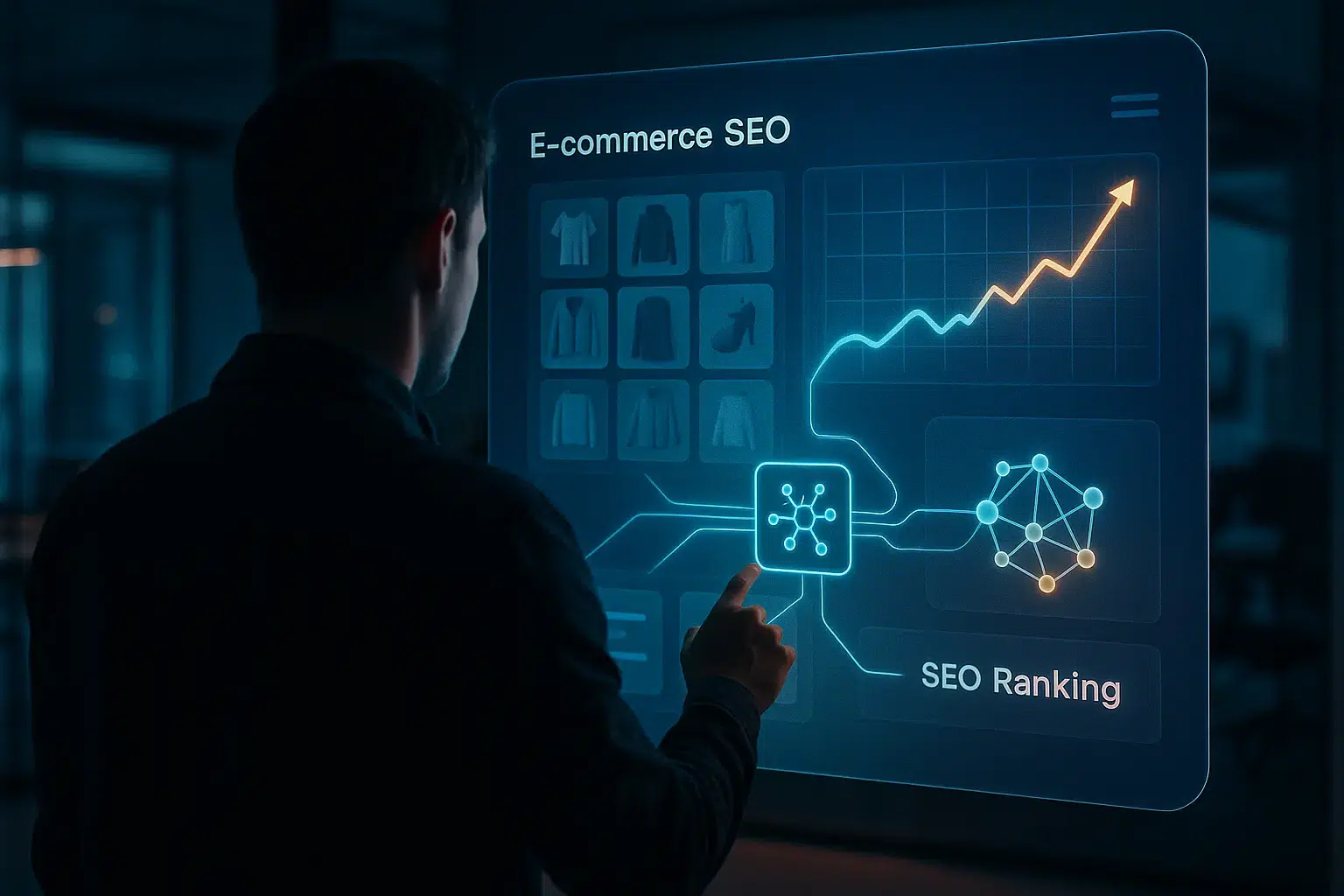
AI SEO refers to the application of artificial intelligence, specifically natural language processing (NLP) and machine learning, to improve a website’s search engine rankings. For ecommerce, this means using algorithms to understand user queries, predict content performance, and generate or optimize product descriptions at scale. SEO automation, on the other hand, involves using software to perform repetitive tasks—like generating meta tags, building internal links, or submitting sitemaps—without manual intervention.
When combined, AI SEO and SEO automation for ecommerce creates a system that not only executes tasks faster but also makes intelligent decisions based on data patterns. A typical example is an AI tool that analyzes thousands of search queries for a specific product category, identifies the common semantic themes, and then automatically rewrites the category description to include those themes. This process, which would take a human team weeks, is completed in minutes.
Why Traditional Ecommerce SEO is Failing
The old playbook of “write a 500-word description, stuff it with keywords, and get links” is obsolete. Google’s algorithms, particularly the Helpful Content Update and the integration of MUM (Multitask Unified Model), now prioritize expertise, experience, authoritativeness, and trustworthiness (E-E-A-T). For ecommerce sites with hundreds or thousands of SKUs, maintaining this level of quality manually is impossible.
Another critical failure point is the “thin content” problem. Many online stores use manufacturer-provided descriptions, which are duplicated across thousands of other retailers. Google penalizes this duplication. Furthermore, search intent has evolved. Users now ask conversational queries like “best waterproof hiking boots for narrow feet” rather than just “hiking boots.” Traditional SEO tools struggle to map these long-tail variations to specific product attributes. AI SEO and SEO automation for ecommerce solves this by analyzing the relationship between product specifications and the language used in real user queries.
Core Components of an AI-Driven Ecommerce SEO Strategy
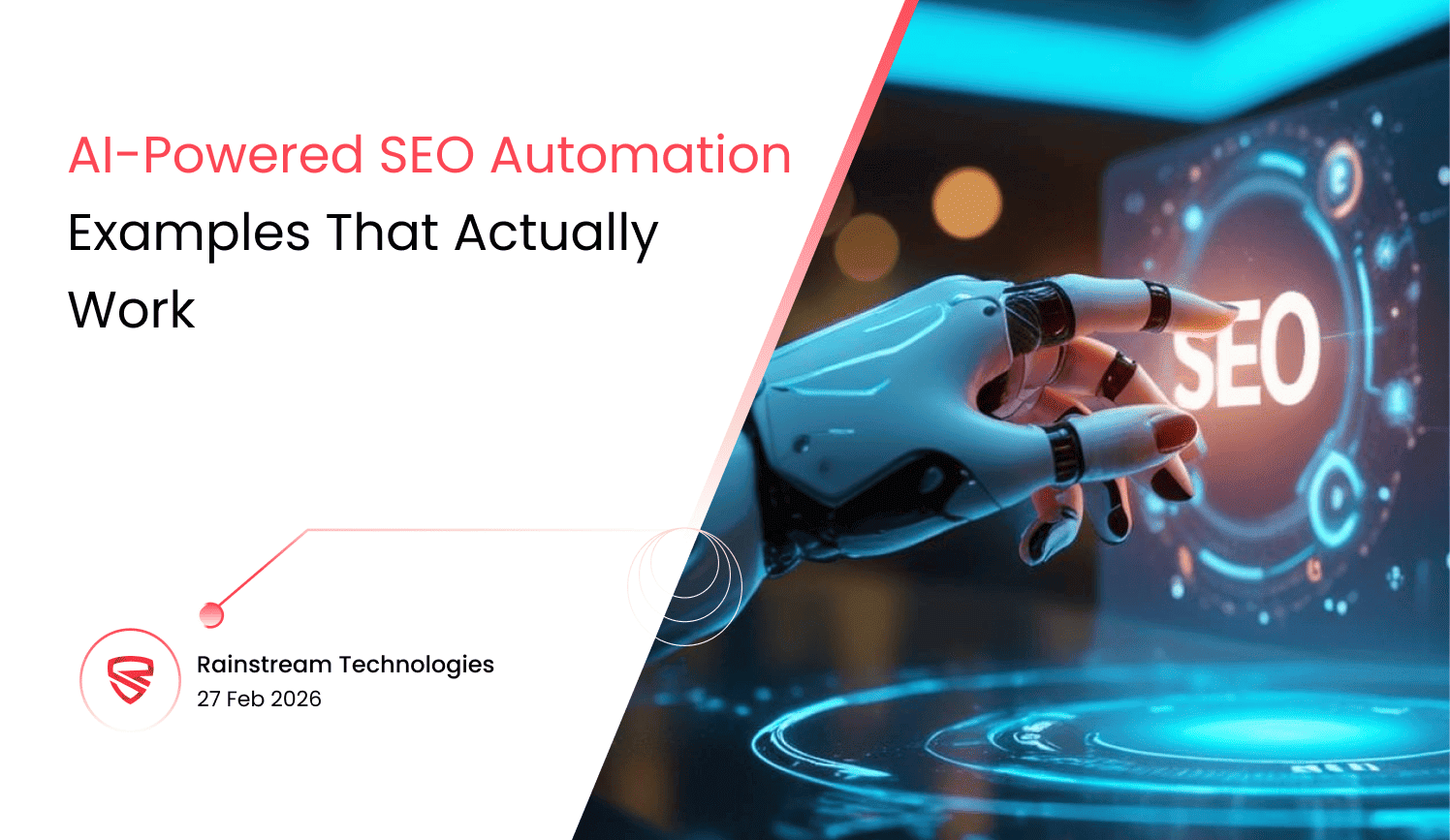
Implementing AI SEO and SEO automation for ecommerce is not a single action but a layered strategy. Below are the core components that form the foundation of a successful system.
Automated Keyword Clustering and Intent Mapping
Instead of targeting individual keywords, AI algorithms group keywords into clusters based on search intent. For example, “buy cotton t-shirt,” “white cotton tee,” and “organic cotton shirts” are clustered under the transactional intent for “cotton t-shirts.” The AI then assigns these clusters to specific product or category pages. This automation ensures that every page targets a family of related terms, not just one phrase, which improves topical authority.
Dynamic Product Description Generation
AI tools like ChatGPT, Jasper, or specialized ecommerce platforms can generate unique product descriptions that incorporate specific attributes (size, material, color) and automatically include secondary keywords. The key is to use AI as a base and then apply a human review layer for brand voice. For large catalogs, this automation reduces the cost per page from $50 to nearly zero, while eliminating duplicate content penalties.
Automated Technical SEO Audits and Fixes
Crawling a site with 10,000 products takes time. AI-powered crawlers can simulate Googlebot, identify broken links, missing alt text, slow-loading pages, and schema markup errors, and then prioritize them by impact. Some advanced platforms integrate with the CMS to auto-fix issues like redirect chains or generate canonical tags without human input.
Predictive Analytics for Content Gaps
AI can analyze your current rankings, competitor performance, and search trend data to predict which topics or product categories will gain traction in the next quarter. This allows ecommerce managers to create content or stock inventory ahead of the demand curve. This is a proactive approach, unlike traditional reactive SEO.
Top Tools for AI SEO and SEO Automation for Ecommerce
Choosing the right technology stack is crucial. The market is crowded, but certain platforms stand out for their specific ecommerce integrations.
| Tool Category | Example Tools | Primary Function |
|---|---|---|
| Content Generation | Jasper, Copy.ai, Writesonic | Generate product descriptions, meta titles, and blog posts at scale. |
| Technical SEO Automation | Botify, Lumar (formerly Deepcrawl), Screaming Frog | Crawl large sites, identify technical issues, and automate log file analysis. |
| Keyword Intelligence | Clearscope, MarketMuse, Surfer SEO | Use NLP to analyze top-ranking pages and suggest semantic keywords for optimization. |
| All-in-One Platforms | Semrush, Ahrefs (with AI features) | Provide keyword research, rank tracking, and AI writing assistance in one dashboard. |
| Ecommerce Specific | Shopify Magic, Algolia (for site search) | Automate on-page elements and improve internal search relevance. |
When selecting tools, prioritize those that offer API access. This allows you to connect the AI tool directly to your product feed, enabling real-time updates to meta data whenever inventory changes.
Step-by-Step Guide to Implementing SEO Automation
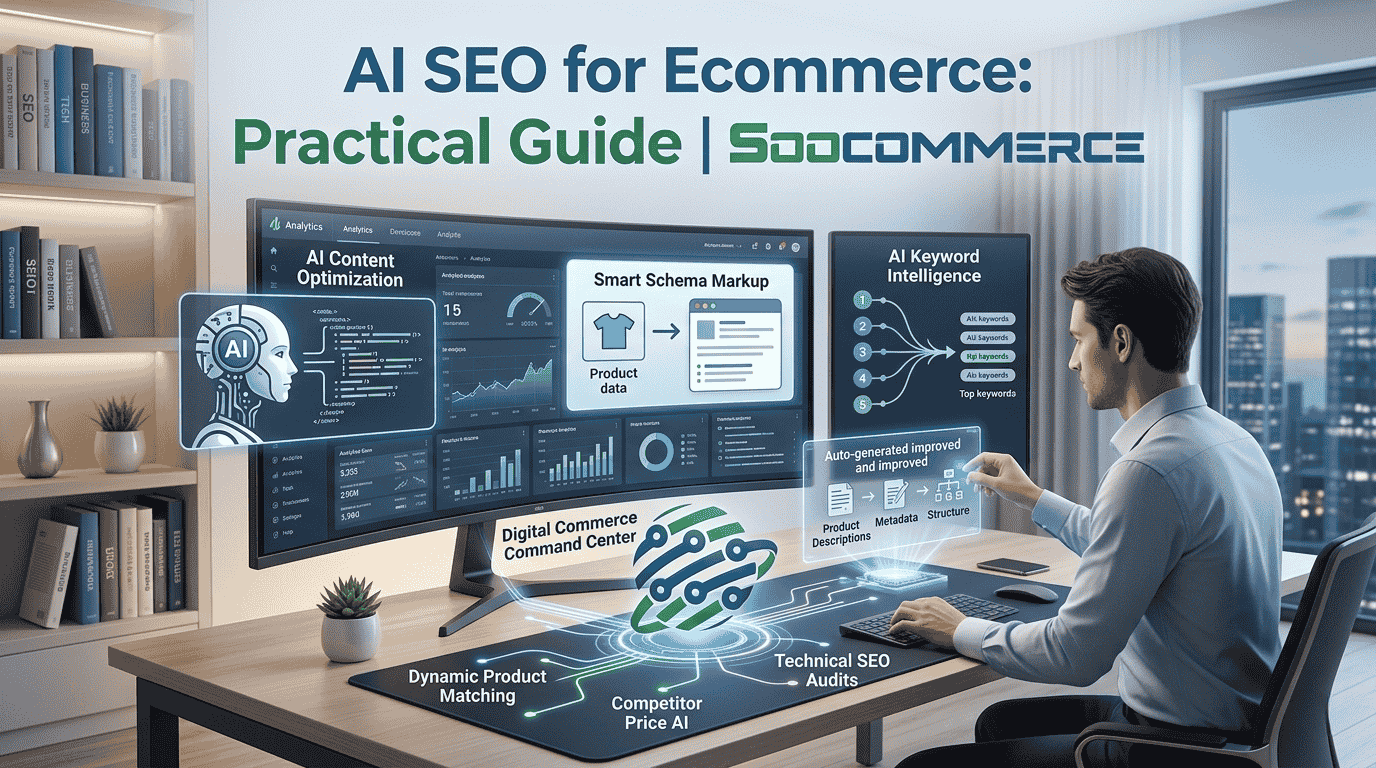
Transitioning to an automated workflow requires a structured approach.
Step 1: Audit Your Current Digital Asset Structure
Before automating, you must clean up your data. Ensure your product feed contains consistent attributes (e.g., “Material,” “Color,” “Size”). If your data is messy, the A Standardize your naming conventions and fill in missing attributes for your top 20% of products first, as these will drive the most revenue.
Step 2: Map Search Intent to Product Stages
Create a matrix that matches your product categories to the three main intent types: Informational (blog posts), Commercial (category pages), and Transactional (product pages). Your automation should be configured differently for each. For example, transactional pages need schema markup for price and availability, while informational pages need FAQ schema.
Step 3: Generate and Optimize Meta Data in Bulk
Use an AI writing tool connected to your product feed. Input the product name, key features, and target keyword. Instruct the AI to generate three variations of the title tag (under 60 characters) and meta description (under 155 characters). Use a spreadsheet to manage these outputs and upload them via a bulk editor like Shopify’s CSV import or a custom API script.
Step 4: Automate Internal Linking with AI
Internal links pass authority and help crawlers discover pages. Manually linking 5,000 products is impossible. Use an automation script that identifies high-authority “pillar” pages and automatically links them to relevant “cluster” product pages based on shared attributes. For instance, a “Men’s Running Shoes” category page should automatically link to all product pages with the attribute “Sport: Running.”
Step 5: Implement Continuous Monitoring
SEO is not a set-and-forget task. Set up automated weekly reports that track keyword position changes, crawl errors, and Core Web Vitals. Use AI tools that alert you when a page drops by more than 5 positions so you can investigate immediately. This proactive monitoring is the hallmark of a mature automation strategy.
Benefits of AI SEO and SEO Automation for Ecommerce
The advantages of adopting this technology extend beyond just saving time. The strategic benefits impact the bottom line directly.
- Scalability: You can manage a catalog of 100,000 products with the same team size as a store with 1,000 products.
- Cost Efficiency: Reduces the need for large content writing teams and expensive freelance contracts for basic copywriting.
- Improved Click-Through Rates (CTR): AI can A/B test meta descriptions automatically, showing the version that historically gets the highest CTR.
- Faster Time-to-Market: New product launches can be fully optimized for SEO within hours of the product being added to the inventory system.
- Competitive Intelligence: AI tools can monitor competitor pricing and content changes, automatically adjusting your on-page copy to highlight your unique selling points.
Limitations and Risks to Manage

Despite the hype, AI is not a magic bullet. There are significant limitations that ecommerce managers must acknowledge to avoid penalties.
Lack of Brand Voice: AI-generated content often sounds robotic and generic. If you are a luxury brand, the AI might produce copy that sounds too casual. This requires a strict human review process for all “hero” pages (homepage, top-level categories).
Hallucination and Inaccuracy: Large language models can invent facts. If your product has specific technical specifications, the AI might generate incorrect measurements. Always cross-reference AI output with your verified product database.
Algorithm Dependency: Google’s algorithms change frequently. An automation strategy that works today might be considered spammy tomorrow. Relying too heavily on automation without understanding the “why” behind the actions can lead to catastrophic ranking drops.
Data Privacy: Using AI tools requires sending your product data to third-party servers. Ensure your chosen vendor is GDPR compliant and has robust security protocols to protect your proprietary data.
AI SEO vs. Traditional SEO: A Comparative Analysis
Understanding the difference helps in setting realistic expectations and allocating budgets correctly.
| Aspect | Traditional SEO | AI SEO & Automation |
|---|---|---|
| Keyword Research | Manual analysis of spreadsheets and search volumes. | Real-time clustering and predictive trend analysis. |
| Content Creation | Human writers, slow, expensive, prone to inconsistency. | AI drafts, human edits, fast, scalable. |
| Technical Audits | Monthly manual crawls using desktop software. | Continuous cloud-based crawling with auto-fix capabilities. |
| Adaptability | Reactive; changes made after ranking drops. | Proactive; predicts shifts in user behavior. |
| Cost Structure | High labor costs (writers, analysts, developers). | High software costs, lower labor costs. |
The table illustrates that AI is not replacing the SEO expert; it is replacing the mundane tasks. The expert now focuses on strategy, brand messaging, and interpreting the AI’s output.
Common Mistakes and How to Avoid Them
Many ecommerce brands fail to see results from automation because they make critical errors during implementation. Here are the most frequent pitfalls.
Mistake 1: Automating Without a Strategy
Jumping straight into bulk generation without defining your target audience or keyword architecture leads to a site full of irrelevant content. Solution: Spend 2-3 weeks on strategy and data cleanup before turning on any automation.
Mistake 2: Ignoring User Experience (UX)
AI can optimize for search engines, but if the page loads slowly or the product images are poor, the bounce rate will kill your rankings. Solution: Use AI to analyze user behavior heatmaps and automate the removal of low-performing products from the index.
Mistake 3: Duplicate Content from AI
If you use the same prompt for 500 products, the A Solution: Include unique data points in every prompt—like specific SKU numbers, unique color names, or proprietary measurements—to force the AI to create distinct content.
Mistake 4: Neglecting the Human Review Layer
Publishing AI content without proofreading risks grammatical errors and factual inaccuracies that damage trust. Solution: Implement a workflow where AI drafts, a junior editor reviews for accuracy, and a senior manager approves high-value pages.
Important Notes for Long-Term Success
To sustain the benefits of AI SEO and SEO automation for ecommerce, consider these strategic notes.
First, focus on structured data. Schema markup is the language that AI understands best. Automating the implementation of Product, Offer, and Review schema ensures that Google can parse your content without guessing. Second, prioritize mobile-first indexing. Google primarily uses the mobile version of your site for ranking. Ensure your automation scripts check for mobile usability issues, not just desktop. Third, build a feedback loop. The AI should learn from your wins and losses. If a specific type of generated content ranks well, feed that data back into the system to refine future prompts.
Finally, do not forget the human element. E-E-A-T is built on experience. Showcase real customer reviews, user-generated photos, and expert buying guides. AI can help you aggregate this content, but the authenticity must come from your actual customers.
Frequently Asked Questions
Is AI SEO automation suitable for small ecommerce stores?
Yes, but with caveats. Small stores with under 500 products can benefit from automating meta descriptions and technical audits. However, the cost of enterprise-level AI platforms might be prohibitive. Start with free or low-cost tools like Google’s free structured data testing tool and basic ChatGPT prompts to automate small tasks before investing in premium software.
Will Google penalize AI-generated content?
Google does not penalize content based on how it is produced, but it penalizes content that is unhelpful or spammy, regardless of whether a human or AI wrote it. If the AI-generated content provides value, answers the query, and is factually accurate, it will rank. Always apply a human review to ensure quality and originality.
How long does it take to see results from SEO automation?
Technical fixes like broken links and meta tags can show improvements in crawlability within 2-4 weeks. However, content-related changes, such as new category descriptions, may take 2-3 months to reflect in rankings. The compounding effect of automation usually becomes visible after the first full quarter of implementation.
What is the difference between AI SEO and traditional SEO tools?
Traditional tools (like classic versions of Ahrefs or Moz) provide data—they tell you what keywords you rank for and who links to you. AI SEO tools interpret that data and take action. For example, a traditional tool tells you a page is slow; an AI tool suggests the specific image compression needed and automatically applies it.
Can AI handle link building for ecommerce?
AI can assist with link building by identifying prospects, generating personalized outreach emails, and analyzing competitor backlink profiles. However, the actual relationship building and negotiation still require human interaction. AI automates the research and communication drafting, but it cannot attend a meeting or build a genuine partnership.
Conclusion
The integration of AI SEO and SEO automation for ecommerce is no longer a futuristic concept; it is the current standard for competitive growth. The ability to process vast amounts of data, generate unique content at scale, and instantly fix technical errors provides an undeniable edge. However, success depends on a balanced approach. The technology handles the heavy lifting of scale and speed, while human expertise provides the strategic direction, brand authenticity, and quality control. By implementing the structured workflow outlined in this guide—starting with data cleanup, moving to intent mapping, and then layering in automation—your ecommerce business can achieve sustainable organic growth. The future of search is intelligent, and your store must be too.
Xem thêm:
- AI SEO Content Architecture: The Complete Blueprint for Scalable Organic Growth
- How to Generate Meta Tags with AI: Streamline SEO and Boost Click-Through Rates
- AI SEO Alt Text Generator: The Complete Guide to Automated Image Optimization
- AI SEO for Google Business Profile: The Complete Guide to Ranking in 2025
- AI SEO Site Structure: The Complete Guide to Building an AI-Ready Website Architecture
Bài viết cùng chủ đề:

AI SEO SEO Automation with Make: The Complete Workflow Guide

AI SEO SEO Automation with Zapier: The Complete Workflow Guide

AI SEO SEO Automation with n8n: The Complete Workflow Guide
AI SEO SEO Automation with Gemini: The Complete Guide to Scaling Organic Growth

AI SEO SEO Automation with Claude: The Complete Guide to Scaling Content in 2025

AI SEO SEO Automation with ChatGPT: The Complete Playbook for 2025

AI SEO & SEO Automation for Affiliate Sites: The 2025 Playbook for Passive Income Growth
AI SEO & SEO Automation for Bloggers: The Complete Guide to Scaling Your Content

AI SEO & SEO Automation for Agencies: The Complete 2025 Playbook

AI SEO & SEO Automation for WordPress: The Complete Playbook for 2025
AI SEO SEO Automation Strategy: The Complete Playbook for 2025

Mastering the AI SEO SEO Automation Process: A Complete Guide to Scaling Organic Growth
AI SEO SEO Automation System: The Complete Guide to Scaling Organic Growth in 2025
AI SEO SEO Automation Platform: The Complete Guide to Scaling Organic Growth in 2025
AI SEO SEO Automation Software: The Complete Guide to Scaling Organic Growth in 2025
AI SEO SEO Automation Workflow: The Complete Guide to Scaling Organic Growth in 2025