No products in the cart.
AI SEO & SEO Automation for Affiliate Sites: The 2025 Playbook for Passive Income Growth

10
Aug
Aug
Running an affiliate site in 2025 without leveraging AI SEO and SEO automation for affiliate sites is like sailing a speedboat with the anchor down. The digital landscape has shifted dramatically, and manual keyword research, content drafting, and link building simply cannot keep pace with the volume required to dominate niche markets. This comprehensive guide breaks down exactly how to integrate artificial intelligence into your workflow, automate the mundane tasks, and scale your affiliate revenue without sacrificing content quality or Google’s trust.
Understanding AI SEO and SEO Automation for Affiliate Sites
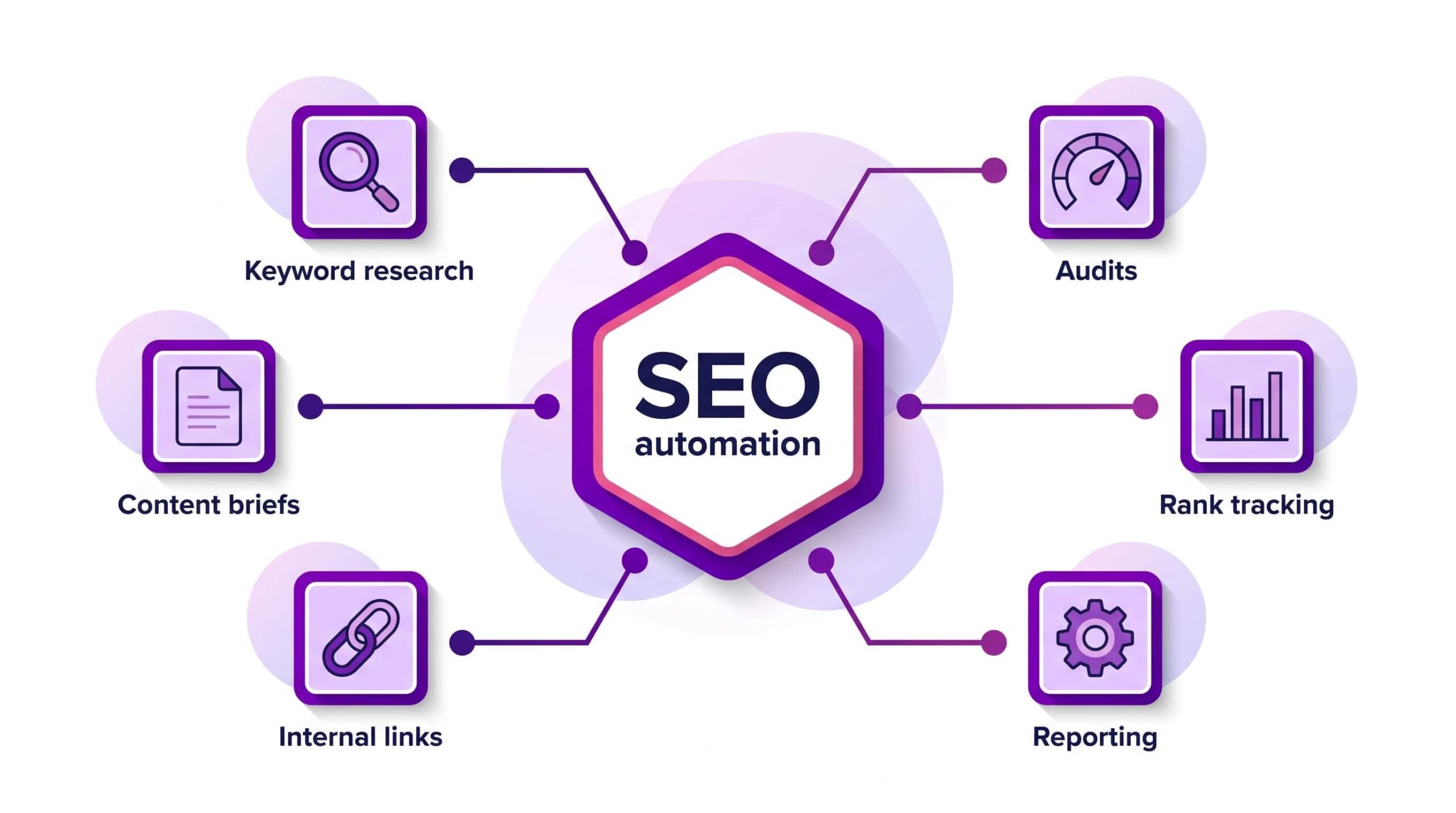
AI SEO refers to the use of machine learning algorithms and natural language processing to analyze search engine data, predict ranking factors, and generate or optimize content. SEO automation, on the other hand, involves using software tools to perform repetitive tasks like rank tracking, internal linking, and report generation. When combined, these technologies create a powerful system that handles the heavy lifting of an affiliate marketing business.
For affiliate sites, this means moving from a “write and pray” model to a data-driven approach. You are no longer guessing what your audience wants; you are using AI to analyze search intent, identify content gaps, and automatically structure articles that are primed for ranking. The goal is to free up your time to focus on strategy, relationship building, and product testing, rather than spending hours on spreadsheets and CMS edits.
The Core Components of an Automated SEO Workflow
To truly harness the power of automation, you need to understand the pipeline. A typical automated workflow for an affiliate site includes four distinct phases: research, creation, optimization, and monitoring. Each phase has specific tools and AI models that can replace manual effort.
- Research Phase: AI tools scrape SERPs, analyze competitor backlinks, and cluster keywords by intent. This replaces manual brainstorming and spreadsheet sorting.
- Creation Phase: LLMs (Large Language Models) draft outlines, write initial drafts, and generate meta descriptions. Human editors then refine the output for accuracy and voice.
- Optimization Phase: Automation scripts check for keyword density, readability, internal link opportunities, and schema markup. They suggest real-time edits before publishing.
- Monitoring Phase: Rank trackers and analytics bots alert you to drops or spikes in traffic, allowing for rapid adjustments to underperforming posts.
- Drafting: Instruct your AI writer to create a draft based on that brief. Include specific instructions to add tables, bullet points, and short paragraphs.
- Human Editing: This is non-negotiable. You must add personal experience. If you are reviewing a coffee maker, mention the specific noise level you observed. Add a photo of the machine on your counter. This “experience” signal is what separates you from pure AI spam.
- Automated Formatting: Use a plugin like RankMath to automatically set your meta title, description, and schema markup based on the content type.
- Scalability: You can manage a site with 1,000+ articles without hiring a massive team.
- Speed: Content can be published in hours, not weeks, allowing you to capitalize on trending topics quickly.
- Data-Driven Decisions: AI analyzes thousands of data points to make recommendations, reducing the risk of human bias.
- Cost Efficiency: Reduces the cost per article significantly, improving your profit margins.
- Lack of True Experience: AI cannot test products. It cannot tell you if a laptop gets too hot or if a mattress is too firm. This is a critical ranking factor for affiliate content.
- Risk of Duplication: If thousands of sites use the same AI tool with the same prompts, the output will be similar. This creates a “content sameness” problem that Google is actively fighting.
- Technical Glitches: Automation scripts can break. APIs change, plugins conflict, and you might end up with broken internal links or missing schema.
Why Traditional Affiliate SEO is Failing
The old methods of affiliate SEO—writing 2,000-word listicles and buying expired domains—are losing effectiveness. Google’s Helpful Content Update and the March 2024 Core Update specifically targeted low-value, mass-produced content. This is where AI SEO and SEO automation for affiliate sites becomes a necessity rather than a luxury.
Search engines are now prioritizing “experience” signals. They want to see first-hand testing, unique data, and authentic opinions. Automation allows you to scale the collection of this data. For example, instead of manually testing 50 products, you can use automated scraping to gather user reviews from Reddit and Amazon, then feed that data into an AI model to generate a unique summary that no other site has.
Furthermore, the cost of manual content production is prohibitive. Hiring freelance writers to produce 20 articles a month can cost thousands of dollars. AI-assisted workflows reduce this cost by up to 70%, allowing you to reinvest those savings into link acquisition or proprietary tools.
Top AI Tools for Affiliate SEO Automation
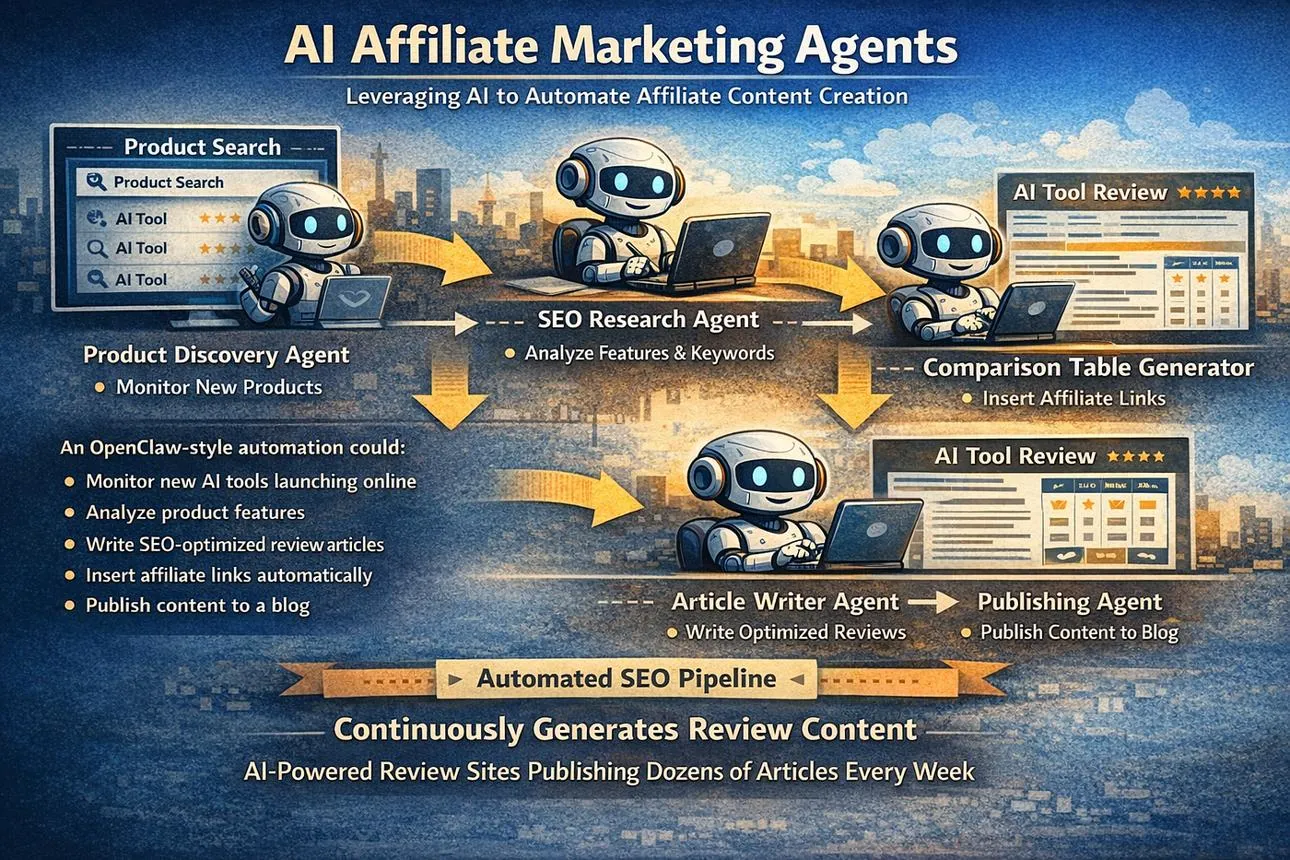
Choosing the right tech stack is critical. The market is flooded with options, but a few stand out for their specific utility in affiliate marketing. Below is a breakdown of the most effective categories and leading tools.
Content Generation and Optimization
For drafting and rewriting, tools like Surfer SEO and Frase are industry standards. They integrate directly with Google’s NLP model (BERT) to analyze top-ranking pages. They provide a content score that predicts your ability to rank based on the terms you include.
For pure generative writing, GPT-4 based tools like Jasper or Copy.ai are excellent for producing product roundups and “best of” lists. However, the output requires heavy human editing to add personal experience and avoid AI detection. The key is to use these tools for the “grunt work” of writing—intros, FAQs, and technical specs—while you focus on the unique value proposition.
Rank Tracking and Reporting
Automation is useless without measurement. Tools like Ahrefs and Semrush offer API access, allowing you to pull ranking data into a custom dashboard. You can set up automated weekly reports that show which keywords are moving up or down, eliminating the need to manually check your positions.
More advanced setups use Python scripts to connect these APIs to Google Sheets or Looker Studio. This creates a live, real-time view of your entire affiliate portfolio. If a page drops from position 3 to position 8, you get an immediate alert, allowing you to refresh the content before you lose significant traffic.
Internal Linking Bots
Internal linking is a tedious but vital SEO task. Automation tools like Link Whisper scan your entire site and suggest relevant internal links based on keyword matching. With a single click, you can add contextual links to your affiliate posts, improving crawlability and distributing link equity more effectively.
This is a perfect example of SEO automation for affiliate sites that saves hours of manual work. A site with 500 posts might have 10,000 potential internal link opportunities. Finding and adding those manually would take weeks, but the bot does it in an afternoon.
How to Automate Keyword Research for Affiliate Niches
Keyword research is the foundation of any successful affiliate site. Automation here involves using AI to identify “money keywords” that have high commercial intent but low competition. Manual research often misses these because they are buried in long-tail variations.
Start by using a tool like Keyword Insights AI. This platform uses AI to cluster thousands of keywords into topical groups. Instead of targeting “best running shoes” (which is impossible to rank for), the A This allows you to create one comprehensive guide that ranks for dozens of related terms.
Additionally, you can automate the analysis of the “People Also Ask” boxes. Using Python and the Google Search API, you can scrape these questions for thousands of seed keywords. This provides a never-ending list of content ideas that are directly sourced from user queries, ensuring your content matches real search intent.
Creating Content at Scale with AI: The Hybrid Model
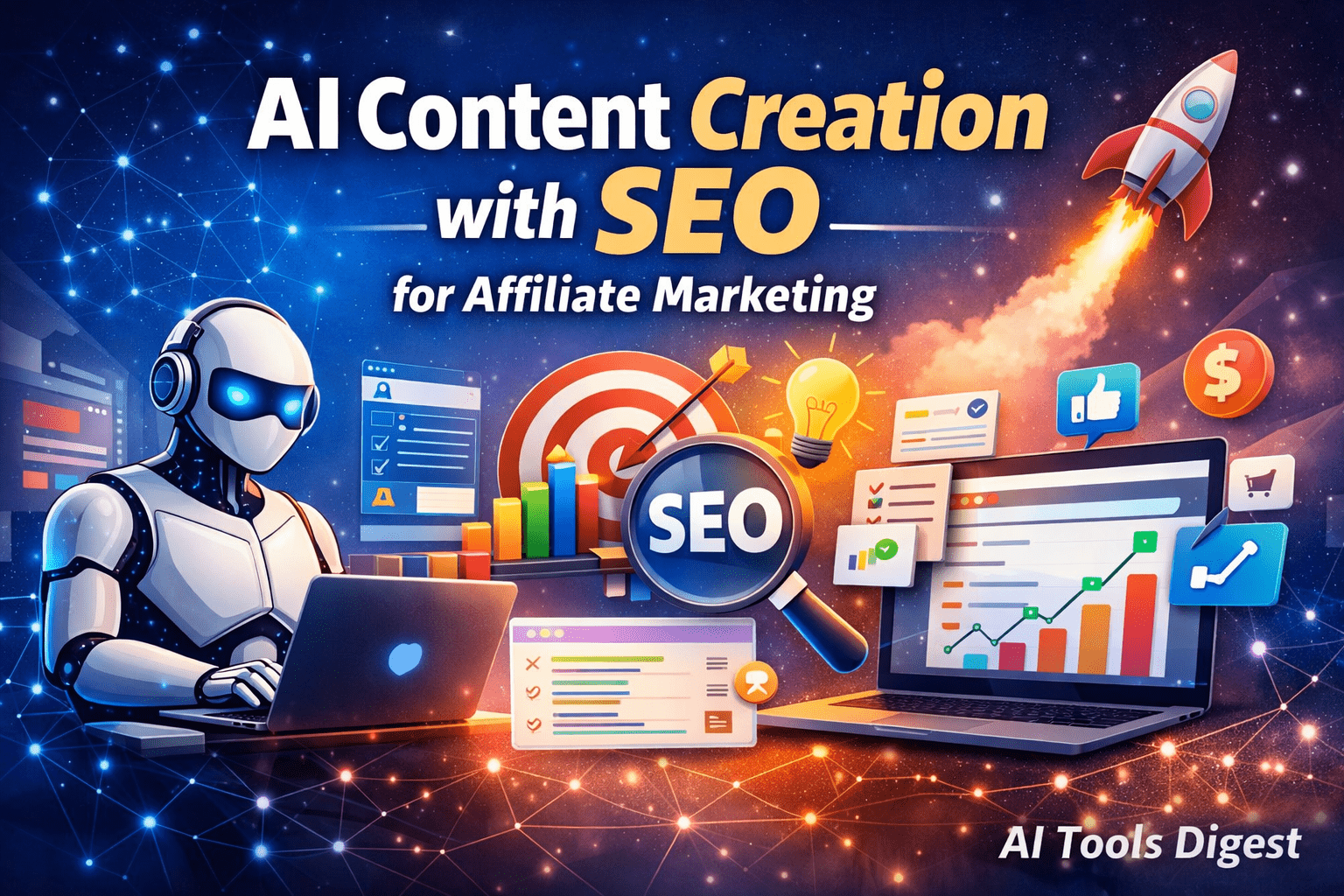
The most successful affiliate sites in 2025 use a hybrid model: AI generates the skeleton, and humans add the muscle. This approach ensures you get the speed of automation without the “robotic” feel that Google penalizes.
The AI extracts the subtopics, common questions, and word count.
This process allows you to publish 10-15 high-quality articles per week with a small team, whereas manual writing would limit you to 2-3.
Automating On-Page SEO for Affiliate Posts
On-page SEO involves optimizing title tags, headers, image alt text, and URL structures. This is highly repetitive and perfect for automation. Many WordPress plugins now offer “bulk edit” features that allow you to apply changes across hundreds of posts simultaneously.
For example, you can use a script to automatically add your primary keyword to the H2 tags of all your posts. You can also automate the compression of images and the generation of descriptive alt text using computer vision AI. This not only improves SEO but also boosts page speed, which is a ranking factor.
Another critical element is schema markup. For affiliate sites, “Product” and “Review” schema is essential for rich snippets. Automation tools can detect if you are reviewing a product and automatically inject the correct JSON-LD code, ensuring you are eligible for star ratings in the SERPs.
Link Building Automation: White Hat Strategies
Link building is the most difficult part of SEO to automate safely. Google’s spam policies are strict, and automated link schemes can result in a manual penalty. However, you can automate the outreach process without automating the link acquisition itself.
Tools like Pitchbox or Ninja Outreach allow you to create automated email sequences. You can scrape a list of bloggers in your niche, import them into the tool, and send personalized emails at scale. The AI can even customize the first line of the email based on the recipient’s recent blog post.
For digital PR, you can use HARO (Help a Reporter Out) automation. Services like Connectively (formerly HARO) send daily queries. You can set up filters to only receive queries related to your niche, and use AI to draft a quick response that you then review and send. This is a legitimate way to earn high-authority backlinks without manual searching.
Benefits and Limitations of Full Automation
It is crucial to understand that automation is not a “set and forget” solution. There are significant benefits, but also serious limitations that can harm your site if ignored.
The Benefits
The Limitations
Common Mistakes in AI SEO Automation
Many affiliate marketers fail because they make critical errors when implementing automation. Avoiding these pitfalls will save you from a Google penalty and wasted budget.
Mistake 1: Publishing Unedited AI Content. This is the fastest way to lose rankings. Google’s systems are sophisticated enough to detect low-effort AI text. Always run content through a human editor and a plagiarism checker.
Mistake 2: Ignoring Search Intent. Automation tools often optimize for keywords, not intent. If you write a “best of” article for a keyword that actually has “how-to” intent, your bounce rate will skyrocket, and Google will demote your page.
Mistake 3: Over-Optimizing Anchor Text. Automated internal linking tools can overdo it. Using the exact match anchor text for every link looks unnatural. You need to diversify your anchor text to include branded, generic, and naked URLs.
Mistake 4: Neglecting E-E-A-T. Automation cannot build your author bio, your “About Us” page, or your social proof. You must manually build your brand’s authority through genuine engagement and transparent disclosures.
Important Notes on Google’s Stance on AI Content
Google’s official stance is that they do not penalize AI content if it is helpful and demonstrates E-E-A-T. However, they have explicitly stated that they will penalize “scaled content abuse”—which is the mass production of content regardless of how it is made.
This means that using AI SEO and SEO automation for affiliate sites is acceptable, but using it to spam thousands of useless pages is not. You must maintain a high standard of quality. Always ask yourself: “Does this page provide unique value that cannot be found elsewhere?” If the answer is no, do not publish it.
Furthermore, you must ensure your affiliate disclosures are clear. The FTC requires you to disclose your affiliate relationships. Automation can help you add these disclosures to every post automatically, ensuring compliance.
Practical Guide: Setting Up Your First Automated Workflow
Ready to implement this?
Step 1: Choose Your Stack. Start with a WordPress site, the RankMath SEO plugin, and a subscription to a tool like Surfer SEO or Frase.
Step 2: Automate Keyword Clustering. Use a tool like Keyword Insights to generate 50-100 long-tail keywords related to your niche. Let the AI cluster them into 5-10 topics.
Step 3: Generate Outlines. For each cluster, use your AI writing tool to generate a detailed outline. Review the outline and add your personal angle or unique data points.
Step 4: Draft and Edit. Have the AI write the first draft. Then, spend 30-45 minutes editing each article. Add personal anecdotes, product photos, and specific test results.
Step 5: Automate Publishing. Use the WordPress REST API to schedule posts. You can write a simple script that publishes a new post every day at 9 AM.
Step 6: Monitor with Alerts. Set up Google Search Console and connect it to a tool like Looker Studio. Create a dashboard that alerts you when impressions drop by more than 20% for any given page.
Comparison: Manual SEO vs. Automated SEO
To understand the value proposition, consider the following comparison of a typical month of work for a mid-sized affiliate site (50 posts).
| Metric | Manual SEO | AI SEO & Automation |
|---|---|---|
| Time to Research Keywords | 40 hours | 5 hours |
| Time to Write 10 Articles | 80 hours | 20 hours (editing only) |
| Cost per Article | $150 – $300 | $30 – $50 (AI + editing) |
| Internal Linking | 10 hours | 1 hour (bot-assisted) |
| Error Rate | High (human fatigue) | Low (consistent algorithms) |
This table clearly illustrates that automation is not just about saving money; it is about reallocating your most valuable resource—time—toward strategic growth activities like building backlinks and networking.
Frequently Asked Questions
Is AI-generated content bad for affiliate SEO?
No, AI-generated content is not inherently bad. The issue is the quality and the lack of human oversight. If you use AI to generate a draft and then add unique personal experience, data, and high-quality images, it can rank just as well as human-written content. The problem arises when you publish raw AI output without editing, as this often lacks depth and originality.
What is the best AI tool for affiliate marketing?
T For content optimization, Surfer SEO is highly regarded. For drafting, GPT-4 based tools like Jasper or Claude are popular. For keyword research, Ahrefs remains the industry standard. The best approach is to combine these tools into a cohesive workflow rather than relying on one.
Can I fully automate my affiliate site?
Technically, you can automate the content creation, publishing, and reporting. However, you cannot automate the “trust” factor. You need to manually build relationships with your audience, respond to comments, and test products. A fully automated site with no human touch will struggle to build the authority needed to rank for competitive keywords.
How does Google detect AI content?
Google does not specifically “detect” AI content. Instead, they use machine learning classifiers to identify content that is unhelpful or lacks E-E-A-T. They look at user engagement metrics (bounce rate, dwell time) and compare your content to other top-ranking pages. If your content is repetitive, shallow, or factually incorrect, it will be demoted regardless of whether it was written by a human or an AI.
Will SEO automation replace the need for SEO experts?
No, it will change the role of the SEO expert. Instead of manually performing audits and writing meta tags, the expert will manage the AI tools, interpret the data, and make strategic decisions. The human element is still required for critical thinking, creative strategy, and understanding the nuances of user psychology.
Conclusion
AI SEO and SEO automation for affiliate sites is no longer a futuristic concept; it is the current standard for competitive growth. The marketers who embrace this technology will outpace their competitors by producing more relevant content, faster, and at a lower cost. However, the key to success lies in the balance between automation and human insight.
Do not view AI as a replacement for your expertise, but as a force multiplier. Use it to handle the data-heavy, repetitive tasks that drain your energy, and reserve your cognitive power for the creative and strategic elements that truly drive affiliate sales—building trust, testing products, and connecting with your audience. By implementing the strategies outlined in this guide, you can build a scalable, profitable affiliate business that thrives in the age of artificial intelligence.
Xem thêm:
- AI SEO for Digital Agencies: The Complete Playbook for Scaling Client Results
- AI SEO Entity Relationships: The Complete Guide to Semantic Search Dominance
- AI SEO Keyword Strategy: The Complete Guide to Future-Proof Search Rankings
- DeepSeek SEO: The Ultimate Guide to AI-Powered Search Optimization in 2025
- AI SEO Articles: How to Rank With Intelligent Content Creation
Bài viết cùng chủ đề:

AI SEO SEO Automation with Make: The Complete Workflow Guide

AI SEO SEO Automation with Zapier: The Complete Workflow Guide

AI SEO SEO Automation with n8n: The Complete Workflow Guide
AI SEO SEO Automation with Gemini: The Complete Guide to Scaling Organic Growth

AI SEO SEO Automation with Claude: The Complete Guide to Scaling Content in 2025

AI SEO SEO Automation with ChatGPT: The Complete Playbook for 2025
AI SEO & SEO Automation for Bloggers: The Complete Guide to Scaling Your Content

AI SEO & SEO Automation for Agencies: The Complete 2025 Playbook

AI SEO and SEO Automation for Ecommerce: The Complete Playbook for 2025

AI SEO & SEO Automation for WordPress: The Complete Playbook for 2025
AI SEO SEO Automation Strategy: The Complete Playbook for 2025

Mastering the AI SEO SEO Automation Process: A Complete Guide to Scaling Organic Growth
AI SEO SEO Automation System: The Complete Guide to Scaling Organic Growth in 2025
AI SEO SEO Automation Platform: The Complete Guide to Scaling Organic Growth in 2025
AI SEO SEO Automation Software: The Complete Guide to Scaling Organic Growth in 2025
AI SEO SEO Automation Workflow: The Complete Guide to Scaling Organic Growth in 2025