No products in the cart.
AI SEO SEO Automation Strategy: The Complete Playbook for 2025

10
Aug
Aug
The digital marketing landscape has shifted dramatically. Search engines now process billions of queries daily, and the algorithms that rank those results are more sophisticated than ever. For businesses and marketers, keeping pace with manual SEO tasks is no longer viable. This is where an AI SEO SEO Automation Strategy becomes essential. It is the process of using artificial intelligence and automated workflows to handle repetitive, data-heavy, and time-consuming SEO tasks, allowing human experts to focus on creative strategy and high-level decision-making. This guide provides a comprehensive roadmap for implementing this strategy effectively, from foundational concepts to advanced execution.
Understanding the Core of AI SEO Automation
An AI SEO SEO Automation Strategy is not about replacing human judgment. It is about augmenting it. The core premise involves leveraging machine learning algorithms to analyze vast datasets, predict outcomes, and execute tasks at a speed and scale that is impossible for humans alone. This includes everything from keyword clustering and content generation to technical audits and link building outreach.
The value proposition is clear. Manual SEO processes are often slow, prone to error, and limited by human capacity. Automation addresses these issues by providing consistent, data-driven insights. It enables continuous optimization, ensuring that your website adapts to algorithm updates and user behavior changes in near real-time. The goal is to create a self-improving system that drives organic growth efficiently.
The Difference Between Automation and AI
It is crucial to distinguish between simple automation and true AI integration. Basic automation follows a set of pre-defined rules. For example, a script that automatically generates meta descriptions based on a template is automation. AI, on the other hand, learns from data. An AI system can analyze thousands of top-ranking pages to understand the patterns in successful meta descriptions, then generate unique, context-aware copy for each new page. A robust strategy combines both, using automation for execution and AI for intelligence.
Why a Modern Strategy Requires AI and Automation
The sheer volume of data involved in SEO makes manual management obsolete. Consider a large e-commerce site with 100,000 product pages. Manually optimizing title tags, checking for broken links, and analyzing search intent for each page would take months. An AI-driven approach can complete this analysis in hours. This speed is a competitive advantage.
Furthermore, search engines are moving towards semantic understanding and user intent. AI tools are uniquely suited to interpret these nuances. They can analyze natural language patterns, identify topic clusters, and understand the relationships between entities. This allows for the creation of content that answers questions comprehensively, which is a key ranking factor. The strategy ensures that your SEO efforts are aligned with how modern search engines actually work.
Key Components of an Effective AI SEO Automation Strategy
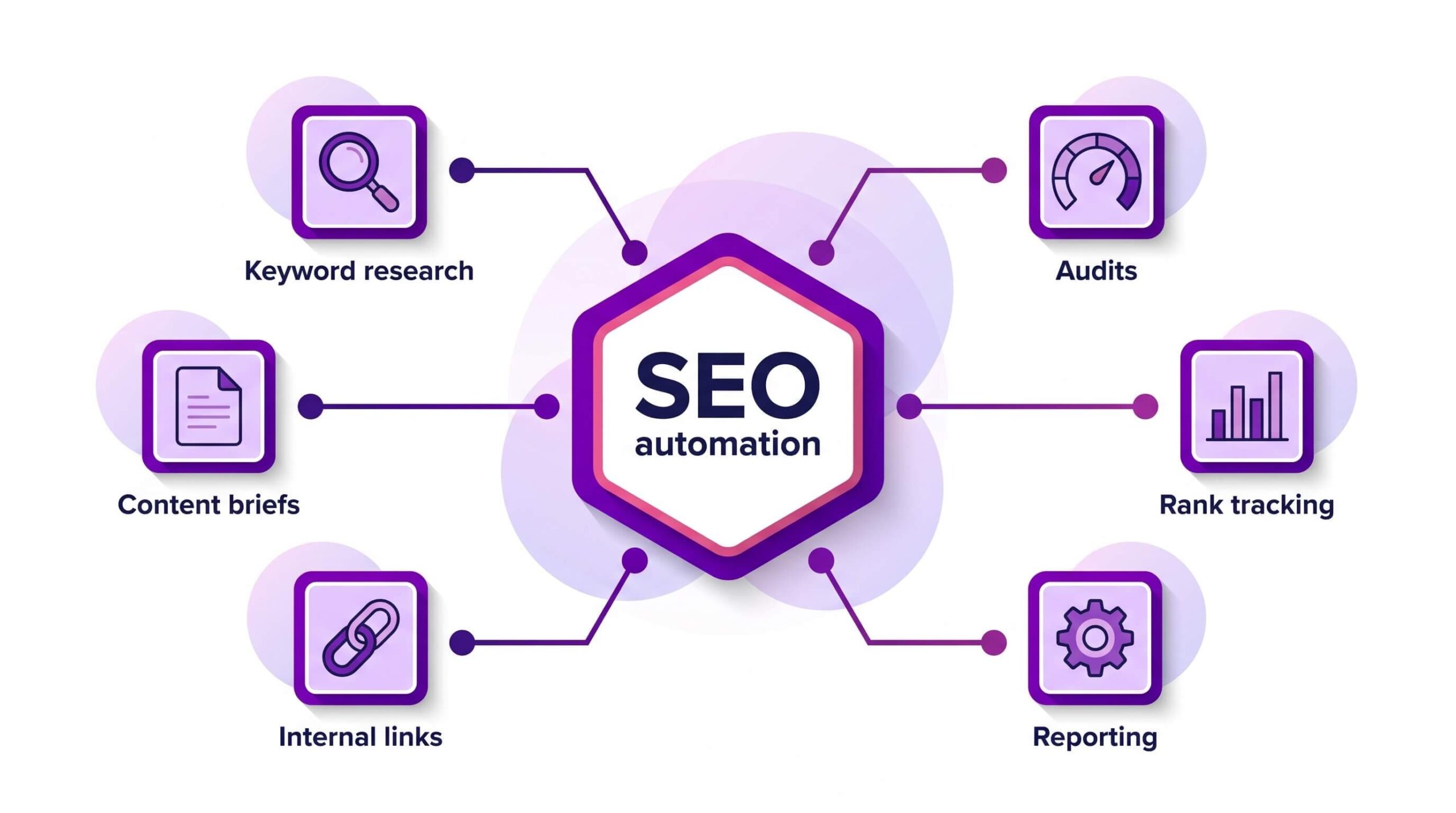
Implementing this strategy requires a structured approach. It is not a single tool but a combination of processes and technologies. Below are the critical components that form the backbone of a successful implementation.
Automated Keyword Research and Clustering
Traditional keyword research involves manually entering terms into a tool and compiling lists. AI takes this further by analyzing search engine results pages (SERPs) to understand the intent behind a query. It can group thousands of keywords into topical clusters based on semantic similarity. This helps in creating content silos that establish topical authority, which is a significant ranking signal.
- Intent Mapping: AI classifies keywords into informational, navigational, or transactional categories.
- Gap Analysis: Automated tools identify keywords your competitors rank for that you do not.
- Predictive Analysis: Some platforms use historical data to predict the future volume and value of specific keywords.
- Scalability: Handle thousands of tasks simultaneously without increasing workload.
- Efficiency: Reduce the time spent on repetitive tasks by up to 80%.
- Data-Driven Decisions: Base strategies on comprehensive data analysis rather than intuition.
- Consistency: Ensure that SEO best practices are applied uniformly across the entire website.
- Real-Time Adaptation: Quickly adjust to algorithm updates and market changes.
- Lack of Creativity: AI cannot replicate the unique human perspective, storytelling, and emotional connection that top-tier content requires.
- Data Dependency: The quality of AI output is directly tied to the quality of the input data. Poor data leads to poor results.
- Implementation Cost: High-end AI tools and platforms can be expensive, which may be a barrier for small businesses.
- Risk of Over-Optimization: Relying too heavily on automation can lead to content that feels robotic and lacks authenticity, which can harm user engagement.
- Ignoring Human Oversight: Publishing AI-generated content without review leads to factual errors and brand damage. Always have a human editor approve final output.
- Focusing on Quantity over Quality: Using AI to produce hundreds of low-quality articles is a negative strategy. Search engines penalize thin, unhelpful content. Focus on creating comprehensive, valuable resources.
- Neglecting User Intent: Automation should not override the need to understand your audience. Ensure your AI tools are configured to target user needs, not just keywords.
- Lack of Integration: Using disconnected tools that do not share data creates silos. Choose a platform that centralizes your data for a unified view.
- Setting and Forgetting: SEO is dynamic. Automated systems need regular monitoring to ensure they are still aligned with current best practices and algorithm updates.
AI-Powered Content Creation and Optimization
Content is the vehicle for SEO, and AI is the engine. AI writing assistants can generate drafts, outlines, and even full articles based on specific prompts and data inputs. However, the real power lies in optimization. AI tools can analyze your existing content against top-ranking competitors and provide specific recommendations for improving relevance, readability, and keyword usage. They can also automate the generation of meta tags, alt text, and schema markup.
The process involves feeding the AI data about your target audience and the search intent. The AI then produces content that is not only optimized for keywords but also designed to engage the reader. This does not eliminate the need for human editors. Instead, it allows them to focus on adding unique insights, brand voice, and factual accuracy, rather than spending hours on the initial drafting phase.
Technical SEO Audits and Monitoring
Technical issues like broken links, slow page speed, and crawl errors can severely impact rankings. An AI SEO SEO Automation Strategy includes continuous monitoring of these elements. Automated crawlers can simulate how Googlebot interacts with your site, identifying issues that might be missed by manual checks. These systems can also prioritize issues based on their potential impact on rankings, allowing you to fix the most critical problems first.
Automated monitoring extends to log file analysis. By analyzing server logs, AI can understand how search engine bots are actually crawling your site. It can identify crawl budget waste, such as bots spending too much time on low-value pages, and suggest adjustments to your internal linking structure or robots.txt file.
Automated Link Building and Digital PR
Link building is often considered the most difficult part of SEO. Automation can streamline the outreach process. AI tools can identify potential link prospects by analyzing your competitors’ backlinks and filtering for relevance and authority. They can also automate the personalization of outreach emails, increasing the likelihood of a positive response.
While the actual acquisition of a link requires human interaction, the process of finding prospects, verifying contact information, and sending initial emails can be fully automated. This allows a small team to manage a large-scale link building campaign that would otherwise require a significant increase in headcount.
Benefits and Limitations of Automation
Adopting this strategy offers significant advantages, but it is not without its challenges. Understanding both sides is critical for setting realistic expectations and avoiding common pitfalls.
Primary Benefits
Key Limitations
Comparison: Manual SEO vs. AI Automation
To fully appreciate the value of an AI SEO SEO Automation Strategy, it is helpful to compare it directly with the traditional manual approach. The table below highlights the key differences in various SEO disciplines.
| SEO Task | Manual Approach | AI Automation Approach |
|---|---|---|
| Keyword Research | Hours spent compiling lists from various tools. | Instant clustering and intent analysis of millions of keywords. |
| Content Creation | Writing drafts from scratch, which takes days. | AI generates outlines and drafts in minutes, ready for human refinement. |
| Technical Audit | Manual crawling and checking for errors. | Continuous, automated monitoring with prioritized issue lists. |
| Reporting | Manually compiling data into spreadsheets. | Automated dashboards with real-time data and insights. |
| Link Outreach | Finding prospects and writing individual emails. | Automated prospect identification and personalized email generation. |
The table demonstrates that while the manual approach is time-consuming and limited in scale, the automated approach offers speed and depth. However, the manual approach still holds value in areas requiring human judgment, such as final content approval and relationship building with influencers.
Practical Implementation: A Step-by-Step Guide
Transitioning to an automated workflow requires a clear plan.
Step 1: Audit Your Current Workflow
Identify the tasks that consume the most time and are the most repetitive. These are the primary candidates for automation. Common examples include meta tag generation, image alt text creation, and rank tracking.
Step 2: Select the Right Tools
T Choose tools that integrate well with your existing tech stack. Look for platforms that offer APIs, allowing you to connect different parts of your workflow. Key categories include AI content platforms, technical SEO crawlers, and rank tracking software.
Step 3: Start with a Pilot Project
Do not try to automate everything at once. Choose a single, well-defined process, such as automating the generation of title tags for a specific section of your website. Monitor the results closely to ensure the output quality meets your standards.
Step 4: Train Your Team
Your team needs to understand how to work with AI, not against it. Provide training on how to prompt AI tools effectively and how to review and edit AI-generated output. The goal is to create a human-in-the-loop system where AI handles the heavy lifting and humans ensure quality.
Step 5: Scale and Iterate
Once the pilot project is successful, expand automation to other areas. Continuously review the performance data to refine your processes. The strategy is not a set-and-forget solution; it requires ongoing adjustment and optimization.
Common Mistakes and How to Avoid Them
Many businesses fail to see results from automation due to common implementation errors. Being aware of these pitfalls can save you time and resources.
Important Notes on Data and Ethics
When implementing an AI SEO SEO Automation Strategy, data privacy and ethical considerations are paramount. Ensure that your tools are compliant with regulations like GDPR and CCPA. Be transparent with your audience about the use of AI in content creation, especially if it involves personalization.
Additionally, be wary of the “black box” problem. Some AI systems are so complex that it is difficult to understand why they make certain recommendations. It is important to use tools that provide explainable insights, so you can trust the data driving your decisions. The goal is to use AI to enhance your expertise, not to blindly follow its suggestions.
Frequently Asked Questions
What is the difference between AI SEO and traditional SEO?
Traditional SEO relies on manual research, manual content creation, and manual technical audits. AI SEO uses machine learning algorithms to automate these tasks, analyze data at scale, and provide predictive insights. It is a more efficient and data-driven approach to the same fundamental goals of improving search visibility.
Will AI replace SEO professionals?
No, A It will change their roles. The focus will shift from executing repetitive tasks to strategic planning, data interpretation, and creative content direction. Professionals who learn to leverage A
How much does it cost to implement AI SEO automation?
The cost varies widely. Basic tools can start at a few hundred dollars per month, while enterprise-level platforms can cost thousands. The return on investment is often high, as automation reduces labor costs and increases efficiency. It is best to start with a small budget and scale up as you see results.
Is AI-generated content penalized by Google?
Google’s official stance is that it penalizes spammy, low-quality content, regardless of whether it is written by a human or an AI. AI-generated content that is helpful, original, and demonstrates E-E-A-T (Experience, Expertise, Authoritativeness, Trustworthiness) will not be penalized. The key is to use AI as a tool to create high-quality content, not to mass-produce thin articles.
What are the best AI tools for SEO automation?
T Popular categories include AI writing assistants like Jasper and Copy.ai, technical SEO platforms like Screaming Frog and Sitebulb, and all-in-one SEO suites like Semrush and Ahrefs, which are integrating AI features. It is recommended to trial a few options to find the best fit for your workflow.
Conclusion
The implementation of an AI SEO SEO Automation Strategy is no longer a luxury; it is a necessity for staying competitive in the digital landscape. It empowers businesses to scale their efforts, make data-driven decisions, and adapt quickly to the ever-changing search environment. By automating the mundane and leveraging AI for intelligence, you free up your team to focus on what truly matters: creating exceptional user experiences and building a powerful brand.
The path forward involves a balanced approach. Combine the efficiency of automation with the irreplaceable value of human creativity and judgment. Start small, measure your results, and continuously refine your processes. The future of SEO belongs to those who can harness the power of AI to work smarter, not harder. This strategy is the key to unlocking that potential and achieving sustainable organic growth.
Xem thêm:
- AI SEO Content Decay: The Hidden Threat to Your Search Rankings and How to Fix It
- AI SEO Product Schema: The Complete Guide to Structured Data That Ranks
- AI SEO Ranking Factors: The Complete Guide to Ranking in the Age of Machine Learning
- Unlocking the Power of AI Natural Language Processing: A Deep Dive into Intelligent Text Analysis
- AI Shopify SEO: The Ultimate Guide to Dominating Search Rankings with Artificial Intelligence
Bài viết cùng chủ đề:

AI SEO SEO Automation with Make: The Complete Workflow Guide

AI SEO SEO Automation with Zapier: The Complete Workflow Guide

AI SEO SEO Automation with n8n: The Complete Workflow Guide
AI SEO SEO Automation with Gemini: The Complete Guide to Scaling Organic Growth

AI SEO SEO Automation with Claude: The Complete Guide to Scaling Content in 2025

AI SEO SEO Automation with ChatGPT: The Complete Playbook for 2025

AI SEO & SEO Automation for Affiliate Sites: The 2025 Playbook for Passive Income Growth
AI SEO & SEO Automation for Bloggers: The Complete Guide to Scaling Your Content

AI SEO & SEO Automation for Agencies: The Complete 2025 Playbook

AI SEO and SEO Automation for Ecommerce: The Complete Playbook for 2025

AI SEO & SEO Automation for WordPress: The Complete Playbook for 2025

Mastering the AI SEO SEO Automation Process: A Complete Guide to Scaling Organic Growth
AI SEO SEO Automation System: The Complete Guide to Scaling Organic Growth in 2025
AI SEO SEO Automation Platform: The Complete Guide to Scaling Organic Growth in 2025
AI SEO SEO Automation Software: The Complete Guide to Scaling Organic Growth in 2025
AI SEO SEO Automation Workflow: The Complete Guide to Scaling Organic Growth in 2025