No products in the cart.
AI SEO SEO Automation with ChatGPT: The Complete Playbook for 2025

10
Aug
Aug
The digital marketing landscape has shifted dramatically, and the convergence of artificial intelligence and search engine optimization has created a new paradigm. AI SEO SEO automation with ChatGPT is no longer a futuristic concept; it is the operational standard for teams that want to scale their organic growth without exponentially increasing their workload. This guide breaks down exactly how to leverage ChatGPT for technical audits, content pipelines, and link-building outreach, moving beyond basic prompt tricks to build a fully automated SEO workflow that drives measurable results.
Understanding the Core of AI SEO SEO Automation with ChatGPT
At its heart, AI SEO SEO automation with ChatGPT involves using large language models to execute repetitive, data-heavy, or pattern-based SEO tasks that previously required manual hours. This is not about replacing human strategists. Instead, it is about augmenting their capacity. The technology excels at parsing large datasets, generating variations of content, and structuring information, which allows SEO professionals to focus on high-level strategy, brand voice, and user intent analysis.
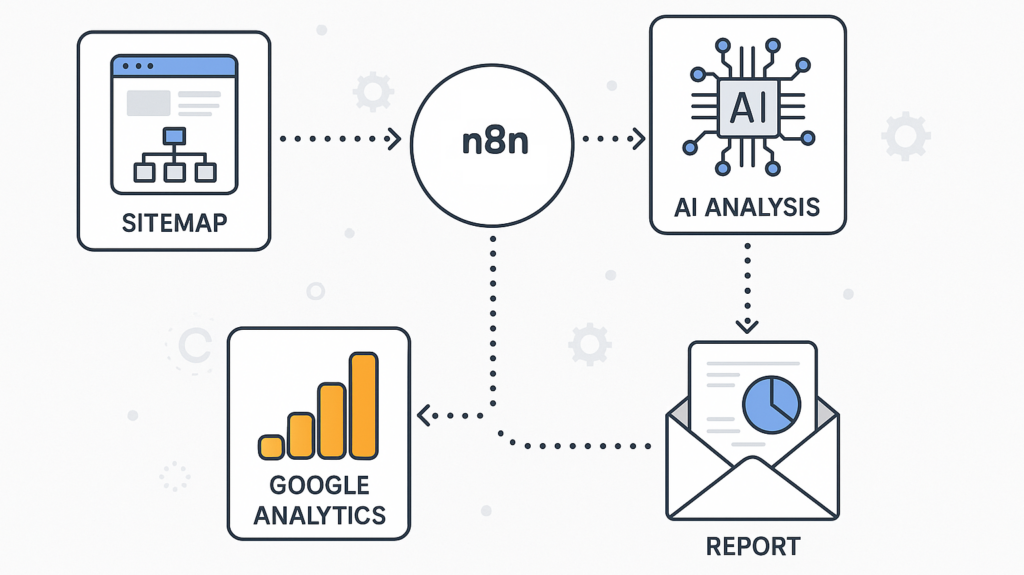
The true power lies in the integration layer. While ChatGPT itself is a conversational interface, its API and the rise of no-code automation platforms (like Zapier or Make) allow it to plug directly into your SEO stack. This means you can automate the flow of data from Google Search Console into ChatGPT for analysis, then push the generated recommendations directly to your project management tool. This creates a closed-loop system where data informs content, content informs rankings, and rankings feed back into the data.
The Difference Between Assistance and Full Automation
Many marketers confuse simple content generation with true automation. Using ChatGPT to write a blog post is assistance. AI SEO SEO automation with ChatGPT is the process of creating a system where the AI handles the entire lifecycle of a task. For example, a fully automated system might:
- Pull the top 50 underperforming pages from your CMS.
- Instruct ChatGPT to identify the search intent gap for each URL.
- Generate a revised meta description and H1 tag for each page.
- Send the revised metadata back to the CMS for human approval.
- Suggested title tags with character limits.
- Primary and secondary keywords to include.
- Suggested H2 and H3 subheadings.
- Questions that the content must answer to qualify for featured snippets.
This distinction is critical. The former saves you an hour; the latter saves you a full workweek and ensures consistency across your entire domain.
Building the Automated Content Pipeline
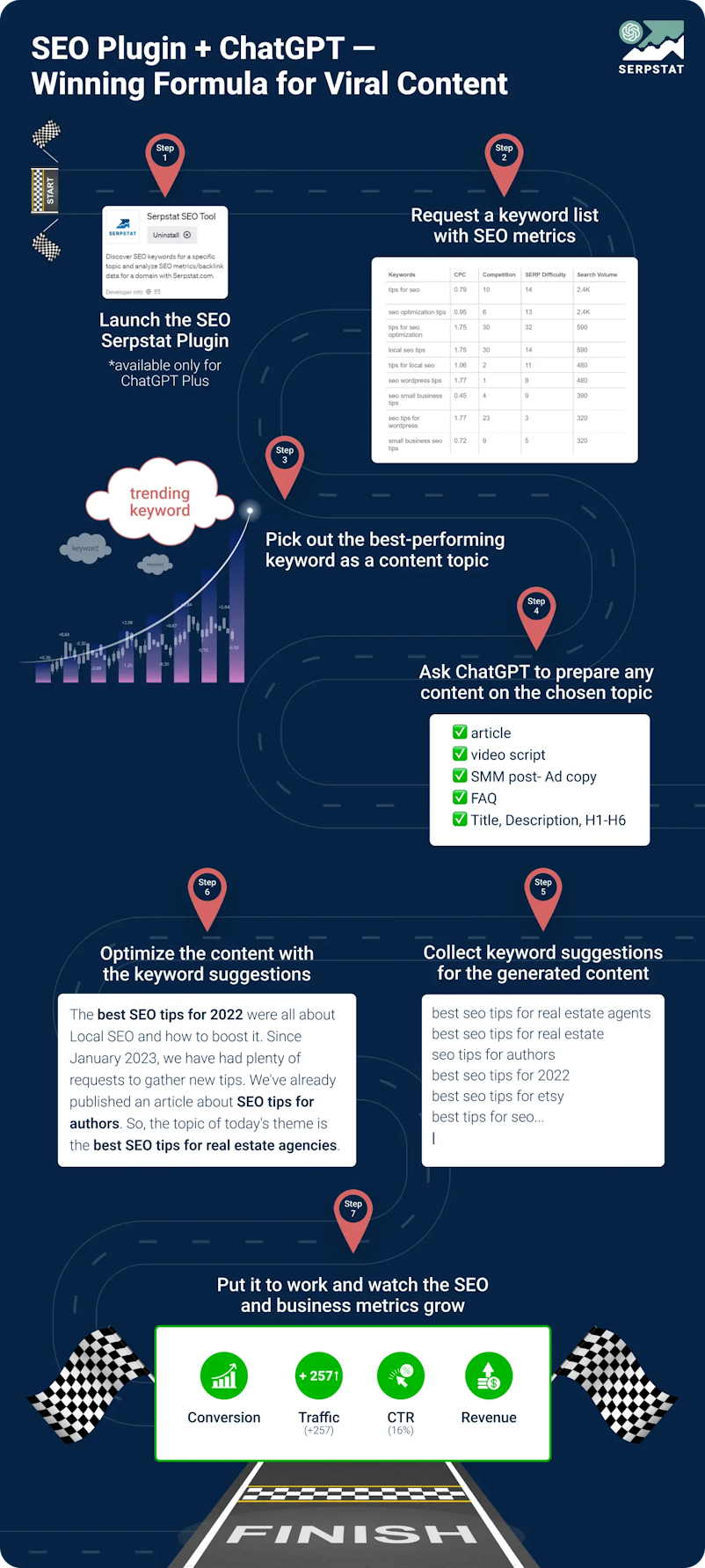
Content creation remains the most popular use case for AI in SEO, but the approach must be structured to avoid the pitfalls of generic, low-value output. The goal is to use ChatGPT as a research assistant and first-draft generator, not as the final author. A robust automated pipeline involves several distinct stages that can be chained together.
Keyword Clustering and Brief Generation
Instead of asking ChatGPT to “write about SEO,” you should feed it raw keyword data. You can export a list of 100 keywords from your favorite tool and use a prompt that instructs the AI to group them by search intent (Informational, Commercial, Transactional) and topical relevance. The output is a structured content brief that includes:
This automation ensures that your writers are not starting from a blank page. They are starting with a data-driven blueprint that aligns with what the search engine expects to see for that query.
Content Generation and Human Refinement
Once the brief is approved, ChatGPT can generate the first draft. The key to making this work for E-E-A-T (Experience, Expertise, Authoritativeness, Trustworthiness) is to inject unique data points, proprietary research, and personal experience into the prompt. For instance, if you are writing about “email marketing statistics,” you should not let the AI invent numbers. You should provide the verified statistics in the prompt and ask the AI to weave them into the narrative.
The human editor then focuses on adding the “Experience” layer—anecdotes, specific case studies, and nuanced opinions that the AI cannot generate. This hybrid approach allows you to produce content at scale while maintaining the quality signals that Google uses to rank pages.
Technical SEO Automation with ChatGPT
Technical SEO is often the most tedious aspect of optimization, but it is also where AI SEO SEO automation with ChatGPT shines brightest. The AI can analyze log files, crawl data, and source code to identify issues that are not immediately visible to the naked eye.
Schema Markup Generation
Writing JSON-LD schema can be repetitive, especially for large e-commerce sites with thousands of products. ChatGPT can generate the schema code for you. You simply provide the product name, price, availability, and review rating, and the AI outputs the correct JSON-LD format. This can be automated further by using a spreadsheet where you paste the product data and a macro that sends it to the API, returning the schema ready to paste into your CMS.
Log File Analysis Interpretation
While ChatGPT cannot crawl your server, it can interpret the data you feed it. If you export your server logs and summarize the most frequent crawl paths, you can ask ChatGPT to identify patterns. It can flag pages that are consuming crawl budget without generating traffic, or it can suggest internal linking structures based on how the bot navigates your site. This turns raw, unstructured log data into actionable technical recommendations.
Automating SEO Reporting and Analysis
Reporting is a necessary evil that consumes hours of billable time. AI SEO SEO automation with ChatGPT can transform your reporting process from a manual data-pulling exercise into an automated narrative generation system. By connecting your analytics tools to the AI, you can generate executive summaries that explain the “why” behind the numbers.
Generating Actionable Insights from GSC Data
Google Search Console data is rich but overwhelming. You can automate a weekly workflow where the system exports your top 20 pages by impressions, along with their click-through rates and average positions. ChatGPT then analyzes this data to identify pages that are “stuck” in positions 8-12 (where CTR drops off). The output is a prioritized list of pages that need title tag optimization or content refresh, complete with suggested new titles designed to improve CTR.
Competitor Gap Analysis
You can paste the top-ranking content from a competitor into ChatGPT and ask it to compare the structure and topics covered against your own content. The A This allows you to systematically close content gaps across your entire site, ensuring that you are covering the full breadth of a topic better than your competitors.
Link Building and Digital PR Automation

Outreach is a numbers game, but personalization is the key to conversion. ChatGPT allows you to scale personalization without sacrificing quality. The AI can analyze a prospect’s website and recent articles to generate a personalized icebreaker that references their specific work.
Automated Outreach Sequence Creation
You can feed ChatGPT a list of target domains and their recent blog posts. The A This is far more effective than a generic template. Furthermore, you can automate the follow-up process. If a prospect does not respond in three days, the system can trigger a follow-up email that references the original pitch but adds a new angle or data point.
Comparing Traditional SEO vs. AI-Powered SEO
To understand the value proposition, it is helpful to compare the traditional workflow against the automated one. The table below highlights the key differences in time investment and output quality.
| Task | Traditional SEO (Manual) | AI SEO SEO Automation with ChatGPT |
|---|---|---|
| Keyword Research | 2-3 hours of manual sorting in Excel | 10 minutes of prompt engineering and data import |
| Content Brief Creation | 1 hour per article | 5 minutes per article (batch processed) |
| Meta Data Optimization | Editing each page in the CMS individually | Bulk generation of titles/descriptions via API |
| Reporting | 4 hours per month compiling slides | Automated narrative generation in minutes |
| Personalization | Limited to top 10 prospects | Scalable to 100+ prospects with unique angles |
The table illustrates that the primary benefit is not necessarily “better” output, but rather “faster” output that allows for more iterations. In SEO, speed is a competitive advantage. If you can publish and optimize 10 pages in the time it takes a competitor to do 2, you will win the majority of the traffic.
Common Mistakes and How to Avoid Them
Despite the power of these tools, many teams fail to see results because they make critical errors in their automation strategy. Understanding these pitfalls is essential for success.
Treating AI Output as Final Product
The most common mistake is publishing AI-generated content without human review. This leads to factual errors, brand voice inconsistencies, and a lack of original insight. The fix is to implement a strict editorial workflow where AI drafts are always reviewed by a subject matter expert who adds unique commentary and verifies all claims.
Ignoring Context and Nuance
ChatGPT does not know your business history, your unique selling proposition, or your target audience’s pain points unless you tell it. Feeding it generic prompts yields generic content. You must provide extensive context in every prompt, including your brand guidelines, competitor analysis, and specific data points.
Over-Optimizing for Keywords
While the goal is to rank, stuffing keywords into AI-generated text can trigger spam filters. The A Focus on covering the topic comprehensively rather than repeating the same phrase.
Important Notes on AI Detection and Quality
Search engines have stated that they focus on the quality of content, not how it is produced. However, they also have sophisticated systems to detect spammy, mass-produced content. The key is to ensure that your AI-assisted content is genuinely helpful. This means adding original research, proprietary data, and expert commentary that cannot be found elsewhere.
Another critical note is the risk of hallucination. ChatGPT can generate plausible-sounding but completely false statistics or quotes. You must implement a verification step in your automation workflow. If the AI provides a statistic, the system should flag it for manual verification before publication. Never allow the AI to generate numbers without a source.
Frequently Asked Questions
Can ChatGPT fully replace an SEO specialist?
No. ChatGPT is a tool that excels at data processing and content generation, but it lacks the strategic judgment, industry experience, and relationship-building skills of a human specialist. It automates tasks, not the profession. A specialist uses ChatGPT to amplify their output, not to be replaced by it.
What is the best way to start with AI SEO automation?
Start with a single, repetitive task that takes up the most time. For most teams, this is either meta description generation or content brief creation. Build a simple workflow using a spreadsheet and the ChatGPT API. Once you have mastered that process, expand to more complex tasks like reporting and competitor analysis.
Will Google penalize my site for using AI-generated content?
Google penalizes spammy, low-quality content regardless of whether it is written by a human or a machine. If the AI content is accurate, original, and provides value to the user, it will not be penalized. The focus should always be on the quality of the final product, not the method of creation.
How do I ensure my AI-generated content ranks for featured snippets?
To optimize for featured snippets, instruct ChatGPT to format answers in a specific way. Ask for a direct answer in the first sentence (40-60 words), followed by a bulleted list or a short paragraph. Ensure that the answer is contained within a clear HTML structure (like an H3 followed by a paragraph) so that search engines can easily parse it.
What are the limitations of using ChatGPT for SEO?
The primary limitations include a lack of real-time data (the model has a knowledge cutoff), the inability to access your private analytics without API integration, and the risk of generating generic content if prompts are not detailed. Additionally, it cannot perform actual technical actions like editing your robots.txt file or fixing server errors; it can only provide the code or instructions for you to implement.
Conclusion
AI SEO SEO automation with ChatGPT represents a significant shift in how digital marketing teams operate. The ability to automate research, content generation, technical audits, and reporting allows professionals to focus on the creative and strategic elements that drive true competitive advantage. The key to success lies in building robust workflows that combine the speed of AI with the judgment of human experts. By avoiding the common pitfalls of generic output and unverified data, you can build a scalable SEO engine that consistently delivers results. The future of SEO is not about working harder; it is about working smarter with intelligent automation at your side.
Xem thêm:
- AI SEO Competitor Content Analysis: The Complete Playbook for 2025
- AI Grammar Checker: Transform Your Writing with Intelligent Error Detection
- AI SEO Content Writer: The Complete Guide to Automated SEO Copywriting
- AI SEO for Publishers: The Complete Playbook for Sustainable Traffic Growth
- AI SEO Content Gap Analysis: The Complete Guide to Outranking Your Competitors in 2025
Bài viết cùng chủ đề:

AI SEO SEO Automation with Make: The Complete Workflow Guide

AI SEO SEO Automation with Zapier: The Complete Workflow Guide

AI SEO SEO Automation with n8n: The Complete Workflow Guide
AI SEO SEO Automation with Gemini: The Complete Guide to Scaling Organic Growth

AI SEO SEO Automation with Claude: The Complete Guide to Scaling Content in 2025

AI SEO & SEO Automation for Affiliate Sites: The 2025 Playbook for Passive Income Growth
AI SEO & SEO Automation for Bloggers: The Complete Guide to Scaling Your Content

AI SEO & SEO Automation for Agencies: The Complete 2025 Playbook

AI SEO and SEO Automation for Ecommerce: The Complete Playbook for 2025

AI SEO & SEO Automation for WordPress: The Complete Playbook for 2025
AI SEO SEO Automation Strategy: The Complete Playbook for 2025

Mastering the AI SEO SEO Automation Process: A Complete Guide to Scaling Organic Growth
AI SEO SEO Automation System: The Complete Guide to Scaling Organic Growth in 2025
AI SEO SEO Automation Platform: The Complete Guide to Scaling Organic Growth in 2025
AI SEO SEO Automation Software: The Complete Guide to Scaling Organic Growth in 2025
AI SEO SEO Automation Workflow: The Complete Guide to Scaling Organic Growth in 2025