No products in the cart.
AI SEO SEO Automation with Zapier: The Complete Workflow Guide

10
Aug
Aug
AI SEO SEO automation with Zapier represents the most significant shift in digital marketing operations since the introduction of machine learning algorithms. Marketing teams waste an average of 12.5 hours per week on repetitive SEO tasks that could be fully automated. This guide examines how combining artificial intelligence with Zapier’s no-code automation platform creates a system that handles keyword research, content optimization, rank tracking, and reporting without manual intervention. The integration of AI-powered tools with Zapier triggers and actions transforms fragmented SEO workflows into streamlined, self-executing processes.
Understanding AI SEO SEO Automation with Zapier

AI SEO SEO automation with Zapier refers to the practice of connecting artificial intelligence tools—such as GPT-based content generators, natural language processing APIs, and machine learning analytics platforms—with Zapier’s automation engine to execute SEO tasks automatically. Zapier acts as the connective tissue between AI services and the tools marketers already use daily, including Google Sheets, WordPress, Slack, and SEMrush.
The core value proposition lies in event-driven automation. When a specific trigger occurs—a new blog post publishes, a keyword ranking drops, or a competitor publishes content—Zapier initiates a sequence of AI-powered actions. These actions might include generating meta descriptions, analyzing content readability, suggesting internal links, or drafting complete article outlines.
The Architecture of an AI SEO Automation Stack
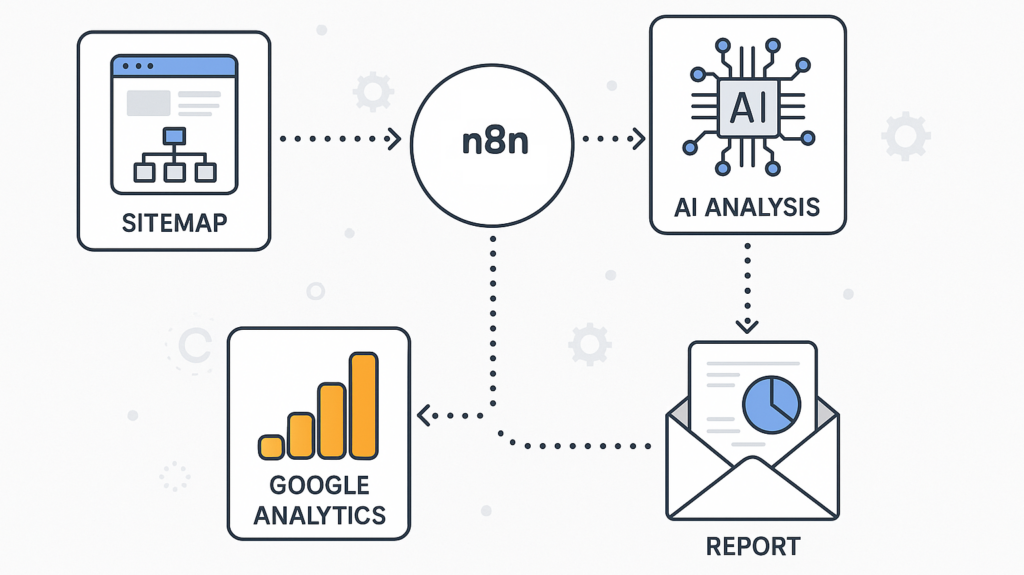
A typical AI SEO automation stack consists of three layers. The first layer includes data sources: Google Search Console, Google Analytics, Ahrefs, or custom spreadsheets. The second layer comprises AI processing engines: OpenAI’s GPT models, Claude, or specialized SEO AI tools like Surfer SEO or Frase. The third layer consists of output destinations: CMS platforms, reporting dashboards, email clients, or project management tools.
Zapier’s role is to monitor the first layer for changes, route data to the second layer for AI processing, and deliver results to the third layer. This architecture enables continuous optimization cycles that would be impossible to maintain manually.
Core Components of AI SEO Automation
Successful AI SEO SEO automation with Zapier requires understanding the fundamental building blocks that make up an effective workflow. Each component serves a distinct purpose in the automation ecosystem.
Trigger Events in SEO Workflows
Triggers are the starting points for any Zap. Common SEO-related triggers include new rows in Google Sheets, scheduled times for recurring tasks, new form submissions, or webhook events from SEO platforms. For example, a Zap can monitor a Google Sheet containing target keywords and trigger whenever a new keyword is added.
Another powerful trigger involves RSS feeds. When a competitor publishes new content, the RSS feed updates, triggering an AI analysis of that content. This competitive intelligence feeds directly into your content strategy without any manual checking.
AI Processing Actions
The AI processing layer is where the intelligence happens. Zapier connects to AI APIs through HTTP request actions or native integrations. Common AI actions include:
- Generating SEO titles and meta descriptions from content
- Extracting key topics and entities from competitor articles
- Creating content briefs based on search intent analysis
- Rewriting or expanding existing content sections
- Classifying content by topic relevance and search stage
- Generating FAQ sections based on related search queries
These actions use natural language processing models that understand context, search intent, and semantic relevance. The output quality depends heavily on the prompt engineering embedded in the Zap configuration.
Output and Distribution Channels
Once AI processes the data, the final step involves delivering results to the appropriate destination. This could mean updating a WordPress post with a new meta description, sending a Slack notification to the content team, creating a task in Asana, or appending data to a Google Sheet for further analysis.
The distribution layer ensures that AI-generated insights reach the people and systems that need them, creating a closed-loop system where insights lead to actions, and actions generate new data for the next automation cycle.
Practical AI SEO Automation Workflows
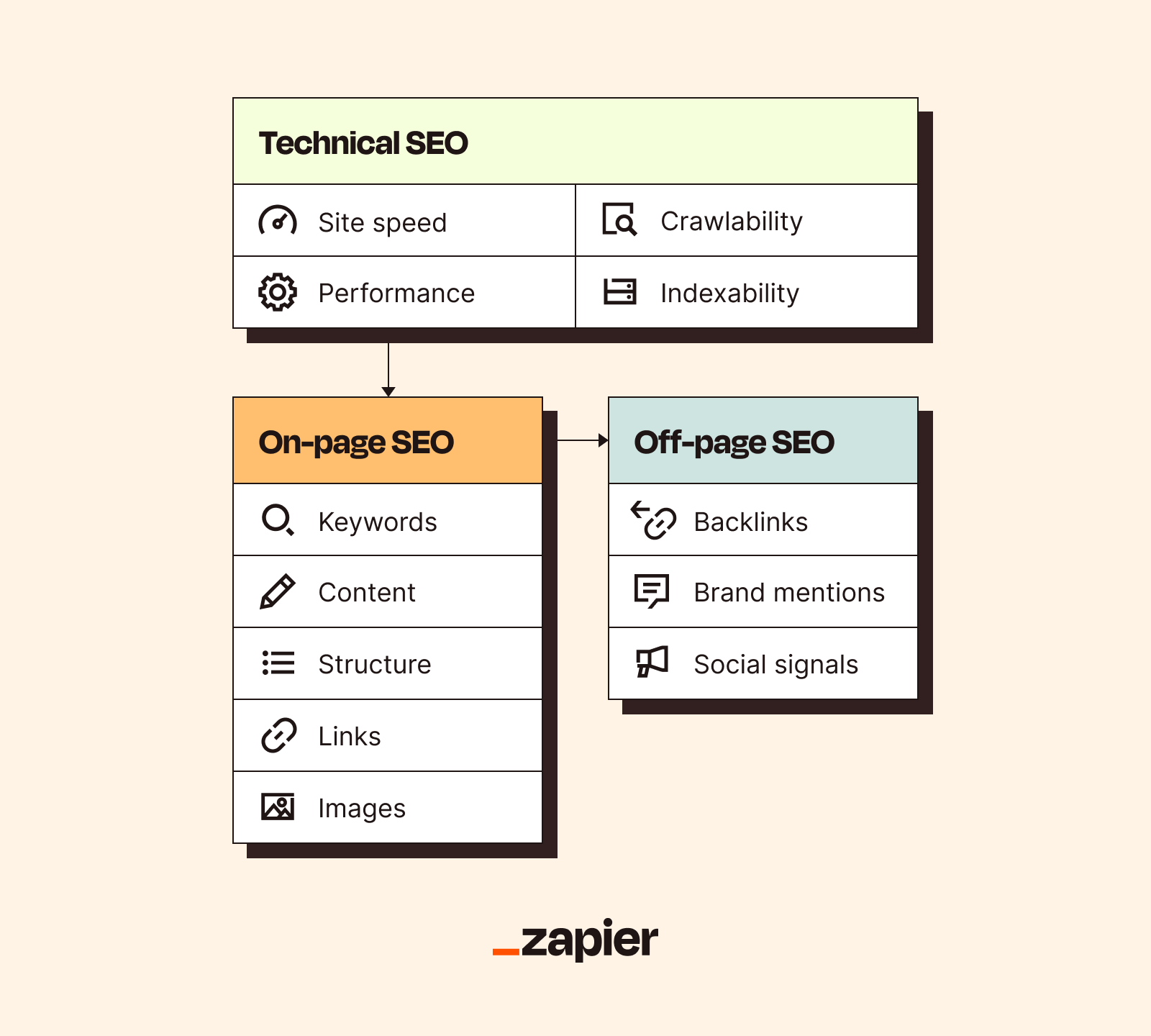
Implementing AI SEO SEO automation with Zapier requires practical, replicable workflows. The following examples represent proven automation patterns that deliver measurable results.
Automated Keyword-to-Content Pipeline
This workflow starts with a keyword research spreadsheet. When a marketer adds a new keyword with search volume data, Zapier triggers an AI action that generates a complete content brief. The brief includes suggested headings, semantic keywords, search intent analysis, and competitor gap insights.
The AI-generated brief then routes to a project management tool like Trello or ClickUp, where it creates a task assigned to a content writer. Simultaneously, the system logs the brief in a content calendar spreadsheet. This automation reduces the time from keyword discovery to content assignment from hours to minutes.
Automated Content Optimization Loop
After publishing a blog post, the optimization loop begins. A scheduled Zap runs weekly, pulling performance data from Google Search Console for specific URLs. The AI analyzes impressions, clicks, average position, and compares this data against the content’s target keywords.
When the AI detects declining rankings or missed opportunities, it generates specific recommendations: adding a section about a related topic, updating the title tag, improving internal linking, or refreshing outdated statistics. These recommendations create tasks in the CMS or project management tool, ensuring continuous content improvement.
Automated Rank Tracking and Alerting
Rank tracking automation connects an SEO platform like SEMrush or Ahrefs to Zapier. When a keyword ranking changes significantly—either positive or negative—the AI analyzes the context. For ranking drops, it examines competitor pages that overtook your position and generates a brief analysis of what changed.
The system sends a notification to the relevant team member with the AI-generated analysis and recommended actions. For ranking improvements, it logs the success and identifies patterns that could be replicated across other content.
Automated Internal Linking Suggestions
Internal linking remains one of the most tedious SEO tasks. An automation workflow can handle this by connecting the CMS to an AI processing engine. When a new post publishes, the AI analyzes the content and identifies key entities and topics.
It then searches existing content for related posts and generates anchor text suggestions. The workflow creates a task for a human editor to review and approve the suggested links before implementation. This balances automation efficiency with editorial quality control.
Benefits of AI SEO Automation
The advantages of implementing AI SEO SEO automation with Zapier extend beyond simple time savings. Organizations that adopt these workflows report substantial improvements across multiple dimensions.
Time Efficiency and Resource Allocation
Automation eliminates repetitive tasks that consume hours of manual labor. A content team managing 50 posts per month might spend 20 hours on meta descriptions alone. Automation reduces this to near zero, freeing team members for strategic work that requires human judgment and creativity.
The time savings compound across all SEO activities: keyword research, content briefs, competitor analysis, reporting, and technical audits. Teams can redirect these hours toward high-impact activities like link building, content promotion, and user experience optimization.
Consistency and Scalability
Manual processes suffer from inconsistency. Different team members write meta descriptions differently, apply varying standards for content briefs, and interpret ranking data subjectively. AI automation applies the same standards to every task, ensuring consistent quality across all content.
Scalability becomes achievable because automation does not tire or slow down. Whether processing 10 keywords or 10,000, the system maintains the same speed and quality. This enables aggressive content strategies without proportional increases in operational overhead.
Data-Driven Decision Making
AI automation generates structured data from every workflow. Each automated task produces logs, outputs, and performance metrics. Over time, this data reveals patterns about what works and what does not, enabling more informed strategic decisions.
For example, analyzing AI-generated content briefs against actual ranking performance can identify which brief structures produce the best results. This feedback loop continuously improves the automation prompts and overall content strategy.
Limitations and Challenges
While powerful, AI SEO SEO automation with Zapier has inherent limitations that require careful consideration and mitigation strategies.
AI Output Quality Variability
AI models produce variable quality depending on prompt clarity, data quality, and model capabilities. Poorly designed prompts generate generic or inaccurate recommendations. The automation amplifies these errors across many tasks, potentially damaging SEO performance.
Mitigation requires investing time in prompt engineering, establishing human review checkpoints for critical outputs, and continuously monitoring AI-generated content for quality issues. Automation should handle volume, but human judgment remains essential for final approvals.
Integration Complexity
Building sophisticated automation workflows requires understanding both the technical capabilities of Zapier and the specific features of each connected tool. API limitations, rate limits, and data format mismatches create implementation challenges.
Organizations often underestimate the initial setup time and ongoing maintenance requirements. Zaps break when APIs change, tools update their interfaces, or data structures evolve. A dedicated automation manager or agency partner may be necessary for complex implementations.
Data Privacy and Security Concerns
Automation involves moving data between multiple platforms, potentially including sensitive business information. AI processing of proprietary content or strategic plans raises confidentiality concerns. Third-party AI APIs may retain data for model training, creating compliance risks.
Organizations must review the data handling policies of every tool in the automation stack, implement appropriate data anonymization where possible, and ensure compliance with relevant regulations like GDPR or CCPA.
Comparison: Manual SEO vs AI SEO Automation
Understanding the differences between traditional manual SEO processes and AI-powered automation helps organizations make informed adoption decisions.
| Aspect | Manual SEO Process | AI SEO Automation with Zapier |
|---|---|---|
| Speed | Hours to days per task | Seconds to minutes per task |
| Consistency | Varies by individual | Uniform across all tasks |
| Scalability | Limited by team capacity | Virtually unlimited |
| Cost | High labor costs | Tool subscription costs |
| Quality Control | Human judgment | Requires human oversight |
| Data Analysis | Manual interpretation | AI-driven pattern recognition |
| Adaptability | Slow to change | Rapid iteration possible |
The comparison reveals that automation excels in speed, consistency, and scalability, while manual processes offer superior contextual judgment and creative flexibility. The optimal approach combines both, using automation for repetitive tasks and human expertise for strategic decisions.
Step-by-Step Implementation Guide
Implementing AI SEO SEO automation with Zapier follows a structured methodology that maximizes success while minimizing disruption.
Step 1: Audit Existing SEO Workflows
Begin by documenting all current SEO processes. Identify which tasks are repetitive, rule-based, and time-consuming. Prioritize automation candidates based on frequency, time investment, and potential for error reduction. Common candidates include meta description generation, rank tracking reports, and content brief creation.
Map the data flow for each candidate process. Understand where data originates, what transformations occur, and where results are delivered. This mapping forms the blueprint for your Zap configurations.
Step 2: Select AI Tools and Integrations
Choose AI services that align with your specific needs. OpenAI’s GPT-4 offers general-purpose text generation and analysis. Specialized tools like Surfer SEO provide content optimization scores. Frase excels at content briefs and SERP analysis. Consider factors like API cost, output quality, and integration availability.
Verify that your chosen tools have Zapier integrations or support webhook connections. Most modern AI platforms offer API access that can be connected through Zapier’s Webhook or HTTP Request actions.
Step 3: Design and Build Your First Zaps
Start with a simple, high-value workflow. For example, create a Zap that triggers when a new row is added to a keyword tracking spreadsheet. The Zap sends the keyword data to an AI API with a prompt requesting a content brief. The response then creates a task in your project management tool.
Test the Zap thoroughly with sample data before activating it. Verify that the AI output meets your quality standards and that the data flows correctly to the destination. Iterate on the prompt design based on test results.
Step 4: Establish Quality Control Checkpoints
Automation does not eliminate the need for human review. Build checkpoints into your workflows where AI outputs require approval before implementation. For content briefs, a senior editor reviews and approves before assignment. For meta descriptions, a content manager reviews before publishing.
These checkpoints prevent low-quality AI outputs from damaging your SEO performance while still capturing the efficiency gains of automation.
Step 5: Monitor, Measure, and Optimize
Track the performance of your automation workflows. Measure time saved, output quality, and impact on SEO metrics. Review Zapier’s task history for errors or bottlenecks. Analyze whether AI-generated recommendations lead to improved rankings and traffic.
Continuously refine your prompts and workflows based on performance data. As AI models improve and new tools emerge, update your automation stack to leverage these advancements.
Common Mistakes and How to Avoid Them
Organizations implementing AI SEO automation frequently encounter predictable pitfalls. Recognizing these mistakes early prevents wasted effort and suboptimal results.
Over-Automation Without Human Oversight
The most common mistake involves automating tasks that require nuanced judgment without establishing review processes. AI-generated content published without human editing risks damaging brand reputation and search rankings. Avoid this by implementing mandatory approval workflows for any customer-facing output.
Establish clear guidelines for what can be fully automated versus what requires human review. Content that is factual, data-driven, and low-risk can be fully automated. Content that represents your brand voice or makes strategic claims requires human oversight.
Neglecting Prompt Engineering
AI output quality depends almost entirely on prompt quality. Generic prompts like “write a meta description” produce generic results. Effective prompts include context, specific requirements, examples, and constraints.
Invest time in developing detailed prompt templates for each automation workflow. Test multiple prompt variations and measure output quality. Document successful prompts and create a prompt library for your organization.
Ignoring Data Quality Issues
Automation amplifies existing data problems. If your keyword data contains duplicates, outdated information, or incorrect metrics, the AI generates recommendations based on flawed inputs. Clean your data sources before connecting them to automation workflows.
Implement data validation steps within your Zaps. Use filters to exclude incomplete records, format data consistently, and verify that critical fields contain expected values before sending to AI processing.
Failing to Account for API Costs
AI API usage costs accumulate quickly, especially for high-volume workflows. Generating content briefs for thousands of keywords or analyzing every competitor post can generate significant monthly expenses. Monitor API usage and set budget alerts.
Optimize costs by using less expensive models for simple tasks, implementing caching to avoid redundant API calls, and batching requests where possible. Regularly review your automation workflows to identify cost reduction opportunities.
Important Notes for Successful Implementation
Several key considerations influence the long-term success of AI SEO automation initiatives.
Start Small and Scale Gradually
Resist the urge to automate everything at once. Begin with one or two high-impact workflows, prove their value, and then expand. This approach minimizes risk, allows for learning and adjustment, and builds organizational confidence in the automation strategy.
Each successful automation creates a template that can be adapted for other workflows. Document your implementation patterns and share them across the organization to accelerate adoption.
Maintain Human Expertise
Automation should augment, not replace, human SEO expertise. Team members need to understand the fundamentals of SEO to effectively evaluate AI outputs, design prompts, and make strategic decisions. Invest in ongoing training and skill development.
The most effective SEO teams combine AI automation with deep human understanding of search intent, user experience, and content strategy. Automation handles the execution; humans provide the vision.
Stay Current with Platform Changes
Both AI technology and SEO best practices evolve rapidly. Zapier regularly updates its platform, AI models improve their capabilities, and search engine algorithms change. Dedicate time to staying informed about these developments.
Subscribe to relevant newsletters, participate in professional communities, and regularly review your automation workflows for optimization opportunities. What works today may be suboptimal in six months.
Frequently Asked Questions
What is the difference between AI SEO and traditional SEO?
Traditional SEO relies on manual analysis, manual content optimization, and human judgment for tasks like keyword research and content creation. AI SEO uses machine learning algorithms and natural language processing to automate these tasks, analyze data at scale, and generate data-driven recommendations. AI SEO can process thousands of data points simultaneously, identify patterns humans might miss, and execute repetitive tasks much faster than manual methods.
How much does AI SEO automation with Zapier cost?
Costs vary based on the tools selected and usage volume. Zapier offers free plans with limited tasks, with paid plans starting around $20 per month for higher volumes. AI API costs depend on the provider and usage, with OpenAI charging per token processed. Specialized SEO AI tools typically cost between $50 and $200 per month. A basic automation setup might cost $100-300 per month, while enterprise-scale implementations can reach thousands of dollars.
Can AI SEO automation replace human SEO specialists?
No, AI automation cannot fully replace human SEO specialists. While automation excels at repetitive tasks, data processing, and pattern recognition, humans provide strategic thinking, creative problem-solving, brand understanding, and relationship building. The most effective approach combines AI automation for execution with human expertise for strategy and oversight. SEO specialists who embrace AI tools become more productive and valuable to their organizations.
What are the best AI tools for SEO automation?
Several AI tools work well with Zapier for SEO automation. OpenAI’s GPT-4 excels at content generation and analysis. Surfer SEO provides content optimization scores and recommendations. Frase creates content briefs and analyzes SERP data. Clearscope offers content optimization for target keywords. MarketMuse provides content planning and optimization insights. The best choice depends on your specific workflow requirements and budget.
How do I ensure AI-generated content ranks well on Google?
AI-generated content ranks well when it meets Google’s quality standards: providing genuine value, demonstrating expertise, and satisfying search intent. Use AI to generate drafts and outlines, but have human experts review and enhance the content. Ensure the content includes original insights, real data, and unique perspectives that AI cannot generate independently. Follow Google’s E-E-A-T guidelines by demonstrating experience, expertise, authoritativeness, and trustworthiness in your content.
What SEO tasks should not be automated?
Tasks requiring deep strategic judgment, creative thinking, or relationship building should remain manual. These include developing overall content strategy, building backlinks through outreach, establishing brand voice and positioning, handling crisis communications, and making final decisions on major content investments. Automated recommendations should always be reviewed by humans before implementation in these areas.
Conclusion
AI SEO SEO automation with Zapier represents a fundamental shift in how digital marketing teams operate. The integration of artificial intelligence with no-code automation platforms enables unprecedented efficiency, scalability, and data-driven decision-making. Organizations that successfully implement these workflows gain significant competitive advantages through faster execution, consistent quality, and the ability to process vast amounts of data.
The path to successful implementation requires thoughtful planning, investment in prompt engineering, and a balanced approach that combines automation with human expertise. Starting with high-value workflows, establishing quality control checkpoints, and continuously optimizing based on performance data creates a foundation for long-term success.
As AI technology continues to advance and search engine algorithms become more sophisticated, the importance of automation in SEO will only grow. Organizations that embrace this evolution now position themselves for sustained visibility and growth in an increasingly competitive digital landscape. The time to build your AI SEO automation infrastructure is now, and the workflows outlined in this guide provide a practical starting point for that journey.
Xem thêm:
- AI SEO AI Search Discovery: The Complete Guide to Winning Generative Search
- AI SEO Statistics 2025: Data-Driven Insights Every Marketer Must Know
- AI SEO People Also Ask Generator: The Complete Guide to Unlocking PAA Insights
- AI SaaS SEO: The Ultimate Guide to Dominating Organic Growth in 2025
- AI SEO JavaScript SEO: The Complete Guide to Modern Search Optimization
Bài viết cùng chủ đề:

AI SEO SEO Automation with Make: The Complete Workflow Guide

AI SEO SEO Automation with n8n: The Complete Workflow Guide
AI SEO SEO Automation with Gemini: The Complete Guide to Scaling Organic Growth

AI SEO SEO Automation with Claude: The Complete Guide to Scaling Content in 2025

AI SEO SEO Automation with ChatGPT: The Complete Playbook for 2025

AI SEO & SEO Automation for Affiliate Sites: The 2025 Playbook for Passive Income Growth
AI SEO & SEO Automation for Bloggers: The Complete Guide to Scaling Your Content

AI SEO & SEO Automation for Agencies: The Complete 2025 Playbook

AI SEO and SEO Automation for Ecommerce: The Complete Playbook for 2025

AI SEO & SEO Automation for WordPress: The Complete Playbook for 2025
AI SEO SEO Automation Strategy: The Complete Playbook for 2025

Mastering the AI SEO SEO Automation Process: A Complete Guide to Scaling Organic Growth
AI SEO SEO Automation System: The Complete Guide to Scaling Organic Growth in 2025
AI SEO SEO Automation Platform: The Complete Guide to Scaling Organic Growth in 2025
AI SEO SEO Automation Software: The Complete Guide to Scaling Organic Growth in 2025
AI SEO SEO Automation Workflow: The Complete Guide to Scaling Organic Growth in 2025