
No products in the cart.
AI Marketing Automation: The Definitive Guide to Smarter, Faster Growth
29
Jul
Jul
AI marketing automation is reshaping how brands attract, engage, and convert customers. Instead of relying on static rules and manual guesswork, companies now deploy intelligent systems that learn from data, predict behaviors, and execute campaigns with minimal human intervention. From personalized email sequences that adapt in real time to chatbots that qualify leads around the clock, artificial intelligence has moved from a buzzword to a core operational layer. Understanding how AI marketing automation works—and where it delivers genuine impact—separates teams that scale profitably from those stuck in repetitive tasks.
What Is AI Marketing Automation?
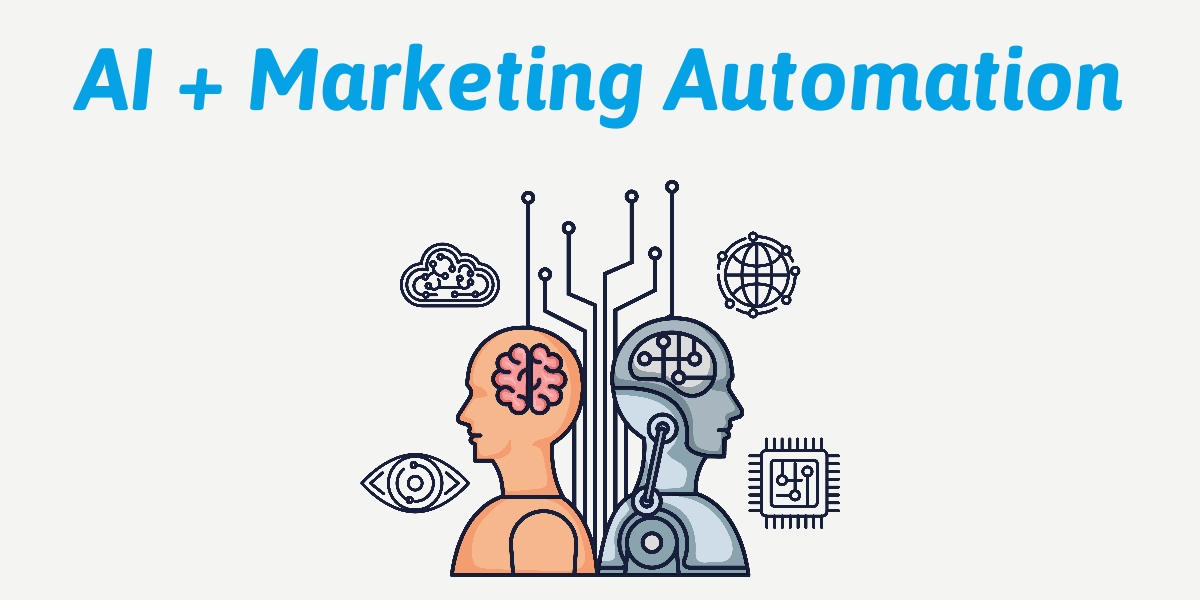
AI marketing automation combines artificial intelligence technologies with marketing automation platforms to analyze data, make predictions, and execute marketing actions automatically. Traditional automation follows predetermined rules—if a user clicks a link, send a follow-up email. AI-powered systems go much further. They ingest vast amounts of customer data, identify hidden patterns, segment audiences dynamically, and optimize messaging in real time. Machine learning, natural language processing, and predictive analytics are the engines under the hood. The result is a system that continuously improves its own performance, delivering the right content to the right person at the right moment, often at a scale impossible to manage manually.
At its core, AI marketing automation solves the complexity problem. Modern customers interact across websites, apps, social media, email, and paid ads. Without AI, stitching together these touchpoints into a coherent journey demands huge human effort. AI does the stitching, surfaces insights, and acts on them automatically. It can be embedded in customer relationship management (CRM) systems, email service providers, ad platforms, and content management systems. The goal is not to remove marketers but to elevate their role from operators to strategists.
How AI Marketing Automation Actually Works
Understanding the mechanics demystifies the hype. AI marketing automation flows through a cycle of data collection, analysis, decision-making, and action. First, the system gathers structured and unstructured data: website visits, purchase history, email engagement, social signals, support tickets, and even external data like weather or economic indicators. Machine learning models then process this data to identify segments, predict churn risk, forecast lifetime value, or determine the next best action for each individual.
These models are not static. They continuously learn from outcomes—an email was opened, a product was purchased, a chat session led to a sale. Reinforcement learning and supervised models adjust parameters automatically. The marketing automation engine then executes campaigns based on these insights: triggering a personalized push notification, shifting ad budget toward higher-converting audiences, or adapting a website’s hero image to match a visitor’s predicted preference. The entire loop happens in milliseconds, at scale, across thousands of customers simultaneously.
Key Components of AI Marketing Automation
- Predictive analytics: Algorithms forecast future actions, such as likelihood to purchase or unsubscribe, enabling proactive interventions.
- Natural language processing (NLP): Powers sentiment analysis on social mentions, generates copy variations, and drives conversational AI in chatbots.
- Dynamic content optimization: Automatically tests and serves the best headline, image, or offer per user based on real-time behavioral data.
- Intelligent lead scoring: Moves beyond static point systems to assess engagement depth and buying signals using machine learning, surface truly sales-ready leads.
- Cross-channel orchestration: Coordinates messaging across email, SMS, push, web, and ads so individuals experience a unified brand narrative.
- Audit your data infrastructure: Assess data sources, quality, and connectivity. Invest in a customer data platform (CDP) or a robust CRM that unifies identifiers. Clean, de-duplicated, consent-compliant data is non-negotiable.
- Define high-impact use cases: Start where AI can show quick wins—perhaps predictive lead scoring, email send-time optimization, or cart abandonment sequences with dynamic product recommendations. Avoid boiling the ocean.
- Select the right technology: Evaluate platforms like Salesforce Marketing Cloud Einstein, HubSpot’s AI features, Marketo Engage, Klaviyo (with predictive analytics), or specialized tools like Blueshift or Optimove. Prioritize native AI capabilities over add-ons that may require heavy customization.
- Build skill and process readiness: Train the marketing team on interpreting AI outputs and managing exception handling. Create a governance framework for model oversight, bias checks, and fallback procedures.
- Run controlled pilots: Test AI-driven campaigns against a control group using holdout methodology. Measure incremental lift, not just absolute performance. Document learnings before scaling.
- Scale and continuously optimize: Expand to additional channels and use cases as confidence grows. Regularly refresh models with new data, and sunset underperforming automations.
The Tangible Benefits of AI Marketing Automation
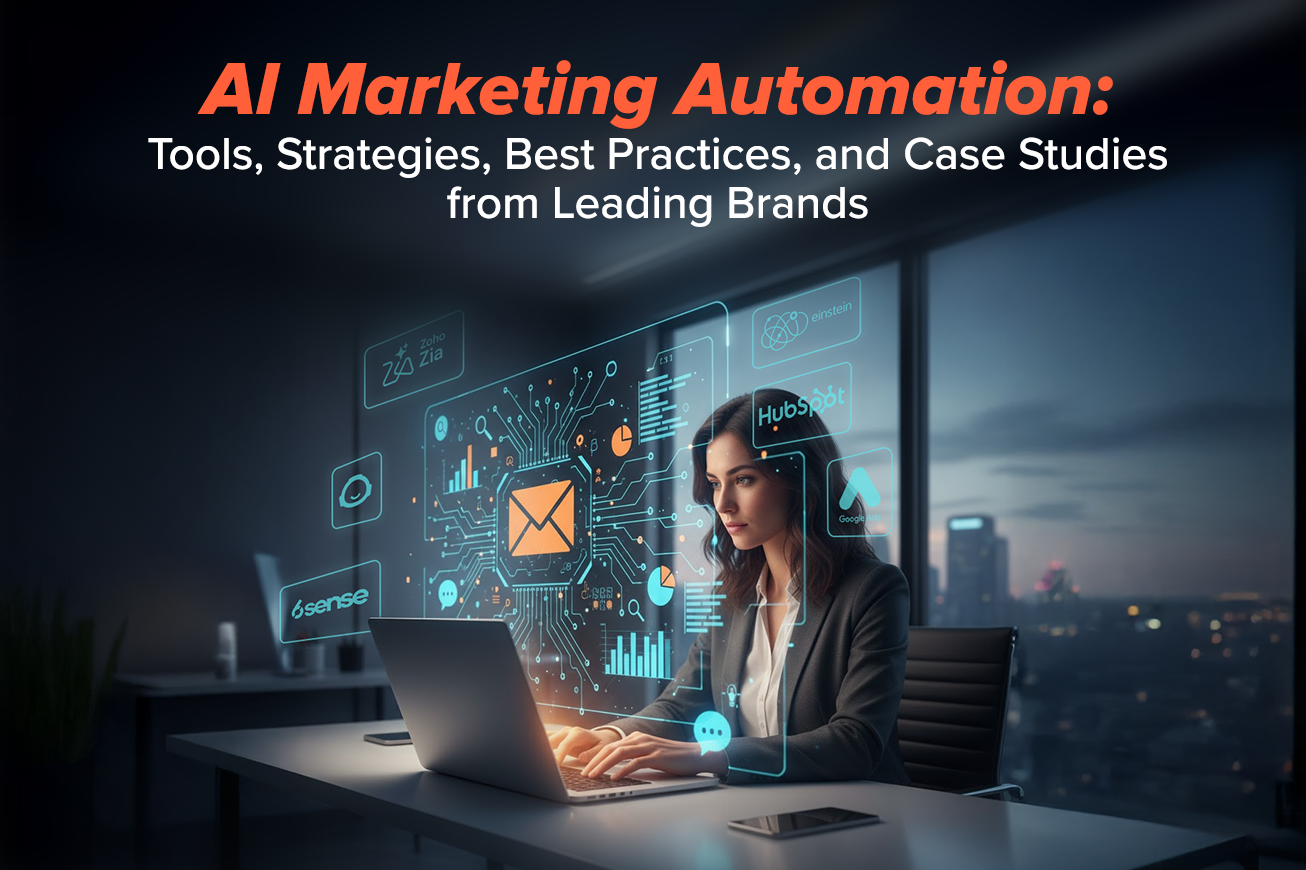
Businesses that adopt AI marketing automation often see measurable lifts in efficiency and revenue. The most immediate gain is time savings. Repetitive tasks like list segmentation, A/B test analysis, and campaign scheduling shift from hours of manual work to near-instant automated processes. Marketing teams can then focus on creative strategy, messaging framework, and building genuine relationships rather than wrestling with spreadsheets.
Personalization at scale is another dramatic benefit. Research from McKinsey shows that personalization can deliver five to eight times the ROI on marketing spend and lift sales by 10% or more. AI makes hyper-personalization viable across millions of customers. A fashion retailer, for instance, can deliver completely individualized product grids on its homepage, each tailored to a shopper’s style, size, and price sensitivity, all automatically updated. Without AI, that level of granularity is a pipe dream.
Improved customer retention is equally powerful. Predictive churn models identify at-risk accounts early, triggering automatic win-back offers or personalized outreach from a customer success team. AI also enhances lead nurturing by delivering content based on real engagement signals rather than static drip schedules. Engagement increases, and so does conversion. Finally, AI-driven budget allocation across advertising channels can reduce cost per acquisition by 15% to 30% in many industries, according to data from Salesforce and others.
Common Limitations and Challenges
AI marketing automation is not a magic wand. Data quality is the single biggest bottleneck. If customer records are fragmented, duplicated, or incomplete, even the most advanced algorithms produce misleading outputs. Organizations must invest in data hygiene, identity resolution, and unified customer profiles before expecting transformative results. Without clean, connected data, AI simply automates bad decisions faster.
Skill gaps represent another hurdle. Many marketing teams lack the data science expertise to configure, interpret, and govern AI models. Vendor solutions have become more user-friendly, but understanding model bias, overfitting, and the importance of holdout testing remains critical. Trust also becomes an issue when marketers cannot explain why the AI recommended a certain action. The “black box” problem can lead to hesitation, especially in regulated industries.
Cost and integration complexity can stall adoption. Enterprise-grade AI marketing platforms often require significant investment and months of integration with existing tech stacks. Smaller businesses may find the upfront burden prohibitive, even if long-term ROI is positive. Privacy regulations like GDPR and CCPA add another layer of caution. Automatically processing personal data at scale demands robust consent management and transparent data usage policies, or brands risk fines and reputational damage.
AI Marketing Automation vs. Traditional Marketing Automation
To see the leap forward, compare the two approaches directly. Traditional automation relies on fixed rules, manual segmentation, and static logic. AI marketing automation uses adaptive models that learn and improve over time. The table below highlights the critical differences.
| Aspect | Traditional Marketing Automation | AI Marketing Automation |
|---|---|---|
| Decision logic | Rule-based, if-then statements | Machine learning models, continuous adaptation |
| Segmentation | Manual, based on predefined criteria | Dynamic, behavioral micro-segments |
| Personalization | Basic merge tags, segment-level content | 1:1 content, product, channel, and timing |
| Testing & optimization | Manual A/B tests, human analysis | Automated multivariate and bandit testing |
| Lead scoring | Static point assignments | Predictive scoring based on behavioral patterns |
| Scalability | Limited by human capacity | Scales across millions of interactions |
Real-World Applications of AI Marketing Automation
The theory becomes clear when examining concrete use cases. Across industries, AI marketing automation is powering specific functions that drive revenue and customer loyalty.
Email Marketing Reinvented
AI transforms email from batch-and-blast to individualized conversations. Instead of a single newsletter sent to a segment, the system can automatically choose the best subject line, preview text, product images, and send time for each recipient. A travel company might use AI to detect that a subscriber has been browsing beach destinations. The next email automatically features a personalized package with dynamic pricing, sent on a Tuesday morning because that individual historically opens emails at that time. Open rates and click-through rates often jump 20-40% with such tactics.
Intelligent Chatbots and Conversational Marketing
Modern chatbots powered by NLP and generative AI do far more than answer FAQs. They qualify leads 24/7, book meetings, recommend products based on conversation context, and even detect sentiment to escalate to a human agent when frustration spikes. A B2B software company can use an AI chatbot to ask qualifying questions, then route high-intent visitors directly to the sales team’s calendar. This shortens the sales cycle and captures leads that would otherwise bounce.
Dynamic Advertising and Media Buying
Programmatic advertising already uses AI to bid on ad impressions, but AI marketing automation takes it further. Creative assets can be dynamically assembled by AI—changing headline, background image, call-to-action button—based on what each viewer is most likely to respond to. Lookalike modeling becomes infinitely more precise. Ad platforms continuously shift budget to the best-performing audiences and placements without human intervention, improving return on ad spend while the campaign is still running.
Website and E-Commerce Personalization
E-commerce sites leverage AI marketing automation to display the most relevant products, categories, and offers the moment a visitor lands. A returning customer sees a homepage curated with items matching their style and past purchases. For a new visitor, the system uses IP and referral data to infer location and interests, then adjusts hero banners accordingly. Product recommendations deeply integrate collaborative filtering and real-time behavior, lifting average order value and conversion rate significantly. Major retailers like Amazon and Zalando have built their entire CRO strategy around these AI-powered recommendation engines.
Predictive Customer Retention
Subscription businesses and banks use AI to continuously calculate churn probability for each customer. When the risk exceeds a threshold, the automation triggers a personalized retention offer—maybe a discount, a feature tutorial, or a call from an account manager. A streaming service might predict that a user has run out of content they enjoy, then automatically surface a hyper-relevant new show via push notification before the cancellation thought solidifies. Retaining a customer is always cheaper than acquiring a new one, and AI makes it proactive.
How to Implement AI Marketing Automation Step by Step
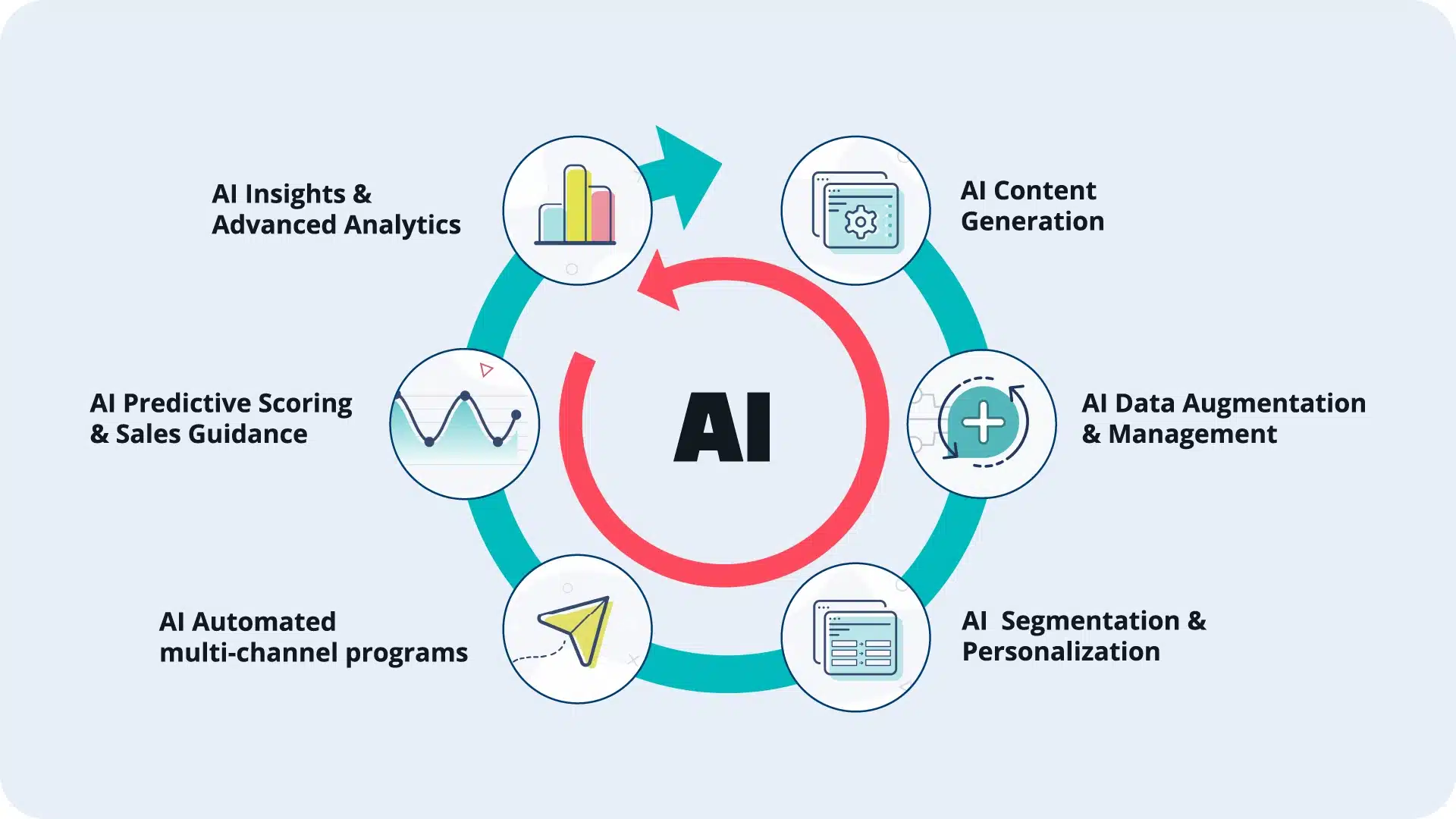
A successful rollout requires strategy, not just software. Jumping in without a clear plan leads to wasted resources. Follow these steps to build a foundation that delivers results.
Common Mistakes and How to Avoid Them
Even well-intentioned teams fall into traps that undermine AI marketing automation efforts. Awareness prevents costly setbacks.
Mistake 1: Automating a broken process. If your current nurture sequences have weak content and poor segmentation, adding AI only magnifies the flaws. Fix the fundamentals first. AI enhances good marketing; it does not rescue bad marketing.
Mistake 2: Over-relying on black-box algorithms. Marketers who abdicate all judgment to AI lose the creative spark that builds authentic brand connections. Maintain human oversight for brand voice, sensitive messaging, and crisis moments. Set guardrails—for example, never let AI automatically publish social posts during a PR incident.
Mistake 3: Ignoring privacy and consent. With tightening data regulations, using AI to process personal data without proper legal basis can be catastrophic. Work closely with legal and compliance teams to ensure opt-in flows, data minimization, and transparent processing records.
Mistake 4: Expecting overnight transformation. AI models need training data and time to learn. Early results may be underwhelming. Patience, iteration, and a steady measurement framework are essential. Set realistic timelines with stakeholders.
Mistake 5: Neglecting the human customer experience. Hyper-automation that feels robotic drives customers away. Use AI to enable more relevant, timely human touches—such as alerting a sales rep when a lead revisits the pricing page multiple times—rather than replacing every interaction with a machine.
Important Notes for Long-Term Success
Sustaining value from AI marketing automation goes beyond launch. Treat AI models like living assets. Monitor for model drift—when data patterns shift and predictions weaken, which happens frequently in volatile markets. Set up automated alerts for performance degradation and schedule quarterly model reviews. Data privacy landscapes keep evolving, so stay ahead of regulatory changes. Embed ethical AI principles from the start: fairness, transparency, accountability. Regularly audit if models inadvertently discriminate against demographic groups or reinforce bias.
Also, foster a culture where marketing, data science, and IT collaborate seamlessly. Silos kill AI initiatives. A cross-functional team with shared KPIs ensures that the technology aligns with business goals and technical realities. Finally, keep the customer at the center. Every automation should add value to the individual, not just the company’s metrics. When done right, AI marketing automation makes marketing feel more human, not less.
Frequently Asked Questions
What is the difference between AI marketing automation and marketing AI?
AI marketing automation refers specifically to the use of artificial intelligence to automate marketing processes and workflows—like sending emails, scoring leads, and serving dynamic content based on real-time data. Marketing AI is a broader term that includes any AI application in marketing, such as generating creative content, analyzing sentiment, or forecasting market trends, which may not be directly tied to automated execution. In practice, the two overlap heavily, but automation emphasizes action without human intervention.
Can small businesses afford AI marketing automation?
Yes. Many platforms now offer AI features at accessible price points. HubSpot’s marketing hub includes AI content assistants and predictive lead scoring in its starter tier. Mailchimp offers AI-driven send-time optimization and product recommendations even on lower plans. Standalone tools like Seventh Sense for email send-time optimization are affordable and integrate with existing systems. Small businesses should start with one high-impact use case, such as email automation, and expand as they see ROI.
How does AI marketing automation handle data privacy?
Reputable platforms are built with privacy regulations in mind. They provide consent management tools, data encryption, and features that honor opt-out requests automatically across channels. However, the ultimate responsibility lies with the marketing team. Companies must ensure they have proper legal bases for processing personal data, maintain transparent privacy policies, and regularly audit AI models for compliance with GDPR, CCPA, and similar laws. Working with legal counsel during implementation is a best practice.
Does AI marketing automation replace marketers?
No, it shifts their focus. Repetitive execution tasks become automated, freeing marketers to concentrate on strategy, creative direction, analytics interpretation, and building genuine customer relationships. The human touch remains essential for brand voice, cultural context, and emotional intelligence—areas where AI still falls short. Marketers who embrace AI as a tool become more valuable, not less.
What are the best tools for AI marketing automation?
The best tool depends on your business size, channels, and goals. For enterprise, Salesforce Marketing Cloud Einstein and Adobe Marketo Engage offer deep AI capabilities across channels. Mid-market companies often find strong AI features in HubSpot Marketing Hub and ActiveCampaign. E-commerce businesses frequently choose Klaviyo or Omnisend for predictive product recommendations. A customer data platform like Segment or mParticle can serve as the data layer that feeds AI across multiple tools.
Conclusion
AI marketing automation is no longer a futuristic concept—it is the operating standard for brands that want to compete on relevance and efficiency. By uniting predictive intelligence with real-time execution, businesses can deliver deeply personalized experiences at massive scale while liberating their teams from drudgery. The journey requires clean data, thoughtful implementation, and an unwavering commitment to customer trust. Start with concrete, measurable use cases, learn fast, and scale what works. When the technology serves a clear human need, the result is marketing that feels less like an interruption and more like a thoughtful, helpful conversation.
Xem thêm:
- AI SEO Content Promotion: The Complete Guide to Scaling Your Reach in 2025
- AI SEO Database Optimization: The Complete Guide to Smarter Data-Driven Rankings
- AI SEO Gemini Gems: The Complete Guide to Unlocking Hidden Search Potential
- AI SEO and SEO Automation for Ecommerce: The Complete Playbook for 2025
- AI SEO KPIs: The Definitive Guide to Measuring the Impact of Artificial Intelligence on Search Visibility
Bài viết cùng chủ đề:

AI SEO SEO Automation with Make: The Complete Workflow Guide

AI SEO SEO Automation with Zapier: The Complete Workflow Guide

AI SEO SEO Automation with n8n: The Complete Workflow Guide
AI SEO SEO Automation with Gemini: The Complete Guide to Scaling Organic Growth

AI SEO SEO Automation with Claude: The Complete Guide to Scaling Content in 2025

AI SEO SEO Automation with ChatGPT: The Complete Playbook for 2025

AI SEO & SEO Automation for Affiliate Sites: The 2025 Playbook for Passive Income Growth
AI SEO & SEO Automation for Bloggers: The Complete Guide to Scaling Your Content

AI SEO & SEO Automation for Agencies: The Complete 2025 Playbook

AI SEO and SEO Automation for Ecommerce: The Complete Playbook for 2025

AI SEO & SEO Automation for WordPress: The Complete Playbook for 2025
AI SEO SEO Automation Strategy: The Complete Playbook for 2025

Mastering the AI SEO SEO Automation Process: A Complete Guide to Scaling Organic Growth
AI SEO SEO Automation System: The Complete Guide to Scaling Organic Growth in 2025
AI SEO SEO Automation Platform: The Complete Guide to Scaling Organic Growth in 2025
AI SEO SEO Automation Software: The Complete Guide to Scaling Organic Growth in 2025















