
No products in the cart.
AI Parasite SEO: How to Leverage Artificial Intelligence and High-Authority Platforms for Lightning-Fast Rankings
29
Jul
Jul
AI Parasite SEO merges the speed of artificial intelligence with the brute force of high-domain authority websites. This controversial technique lets marketers publish AI-generated content on platforms like Medium, LinkedIn, or Quora and rank for competitive keywords within hours — often without building a single backlink. As search engines get smarter, the blend of advanced language models and third-party trust signals has turned parasite SEO into a high-stakes game where the right execution can deliver explosive traffic, while missteps invite swift deindexation.
What Is AI Parasite SEO?
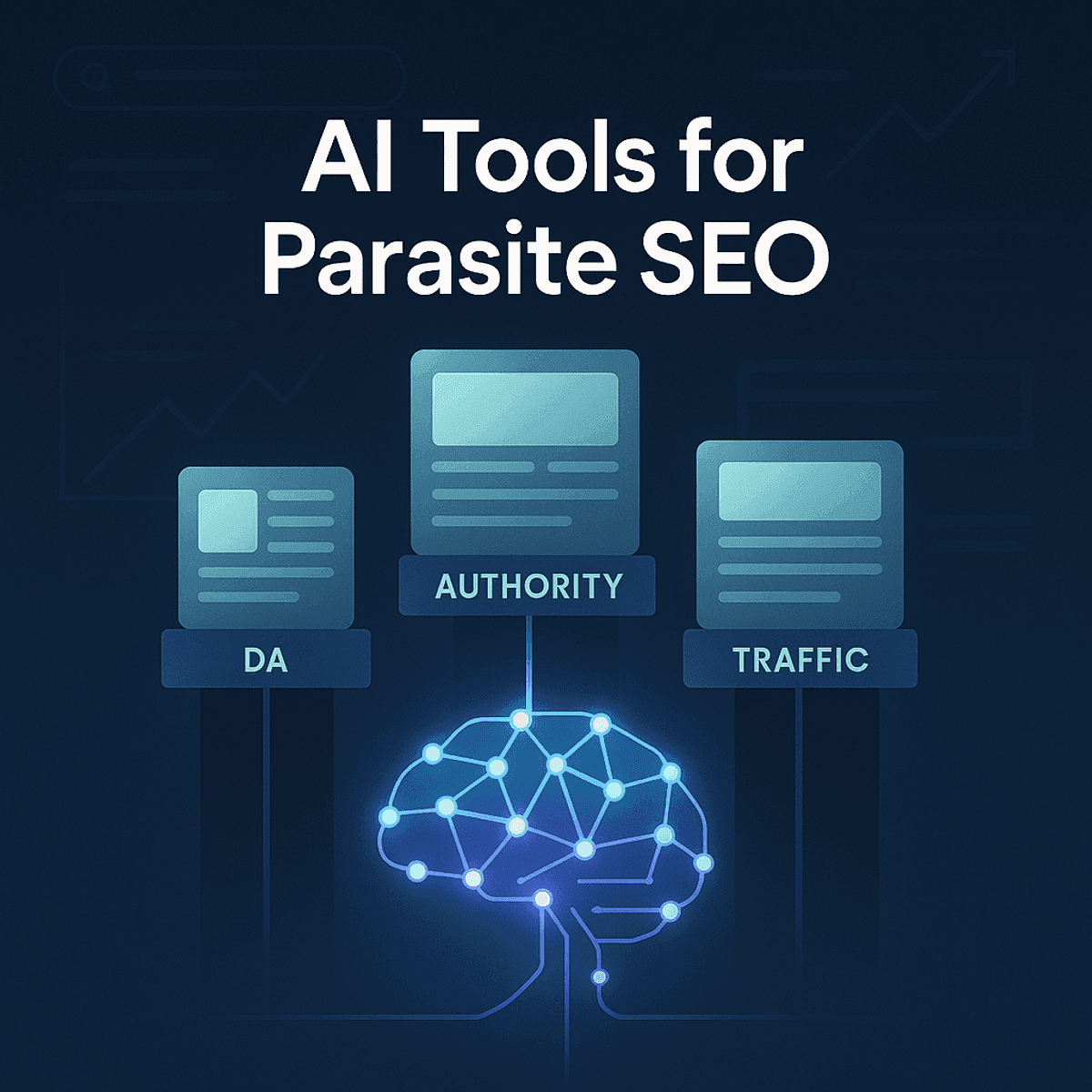
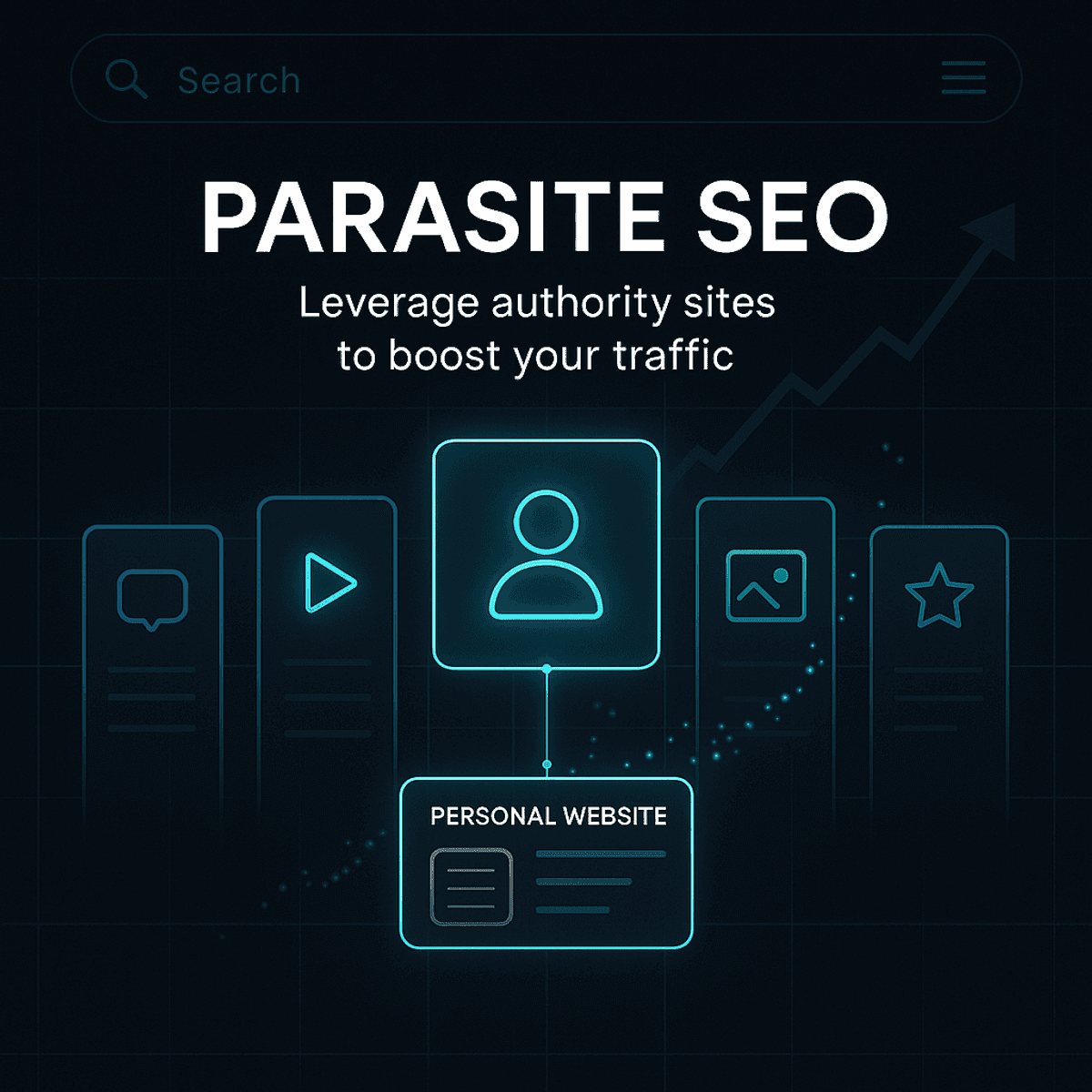
AI Parasite SEO is the practice of creating and optimizing content using artificial intelligence tools, then hosting it on a third-party website with massive domain authority (DA) to rank quickly in Google. Rather than waiting months for a new domain to gain trust, you “parasite” off the host’s established backlink profile and search engine credibility. The AI component automates research, writing, and on-page optimization, allowing operators to scale campaigns across dozens of hosts and thousands of keywords with minimal manual effort.
The term “parasite SEO” has been around for years, but AI injects a whole new level of lethality. Instead of a single writer hacking together a Medium post, a properly tuned AI pipeline can generate hundreds of targeted, semantically optimized articles in the time it takes a traditional team to outline one. This combination of algorithmic content and borrowed authority is what makes AI Parasite SEO both incredibly powerful and deeply polarizing within the SEO community.
The Core Mechanism of Parasite SEO
At its core, parasite SEO exploits Google’s tendency to rank high-DA domains for long-tail queries — even when the page itself is low quality or newly published. Sites like YouTube (DA 100), Microsoft.com, or GitHub often push fresh content to page one within minutes because of their immense topical authority and clean crawl budgets. When you piggyback on such a domain, you bypass the grueling authority-building phase that plagues new websites. The host’s trust transfers partially to your page, giving it a temporary ranking boost that can last days or months.
Google’s algorithms do not inherently penalize parasite pages unless they violate specific spam policies. A well-constructed parasite page that reads like genuine user-generated content can survive for years, collecting leads and affiliate revenue. The key is mimicking the natural usage patterns of the platform — which is precisely where AI excels, as it can generate human-like content at scale.
How AI Supercharges Parasite SEO
Artificial intelligence transforms parasite SEO from a scrappy manual tactic into a fully-fledged programmatic strategy. Large language models (LLMs) can analyze a platform’s content guidelines, mimic its tone, and generate articles that pass both editorial review and algorithmic quality checks. AI can also ingest SERP data to identify keyword gaps — queries where high-DA sites rank with thin content — and then produce comprehensive posts designed to outrank them instantly.
Natural language processing tools enable automatic semantic optimization. Instead of manually inserting related entities and LSI keywords, an AI writer can weave them into the text in a way that aligns with Google’s knowledge graph. Further, AI can generate schema markup, meta descriptions, and internal linking structures tailored to each parasite host. This level of automation allows a single operator to manage hundreds of pages simultaneously, turning parasite SEO into a high-volume, data-driven channel.
The Evolution of Parasite SEO: From Manual Spam to AI-Powered Assets
Parasite SEO originally relied on manual content creation and guest posting on free platforms. Early practitioners would spin articles and stuff them with keywords on WordPress.com, Blogger, or Weebly subdomains. Google’s Panda and Penguin updates crushed most of these tactics, forcing a shift toward higher-quality parasite hosts like LinkedIn Articles, Medium, and Reddit. Today, the integration of AI has refined the approach further — creating content that is virtually indistinguishable from expert human writing.
The modern AI Parasite SEO stack uses a combination of large language models, SERP scrapers, and platform emulation scripts. An operator might use a tool like ChatGPT with custom prompts to generate a 2,000-word buyer’s guide, then have a fine-tuned model rewrite it in the exact voice of a LinkedIn Pulse article. The result is a page that fits the host’s ecosystem so perfectly that even platform moderators struggle to flag it as promotional. This evolution has forced search engines to constantly update their detection models and deindex entire sections of sites when abuse becomes rampant.
Benefits of AI Parasite SEO
- Instant Rankings: High-DA parasite pages can appear on page one in under 24 hours, drastically compressing the time-to-traffic compared to traditional SEO.
- Massive Scale: AI enables the production of hundreds of localized or niche-specific articles per day, opening endless keyword opportunities across multiple platforms.
- Low Initial Investment: Many parasite hosts are free or offer low-cost membership tiers. Eliminating the cost of backlinks and domain purchasing makes this an attractive testing ground.
- Risk Isolation: Because the parasite pages reside on third-party domains, any penalty or deindexation affects only the host page — not your main money site.
- Data-Driven Iteration: AI tools can A/B test titles, intros, and CTAs at scale, quickly revealing which content patterns drive the highest organic traffic and conversions.
- Over-optimized Anchor Text: Aggressively linking back to a commercial site with exact-match anchors triggers an obvious spam footprint across any platform.
- Publishing at Unnatural Velocity: Creating 50 AI posts in a single day from a brand-new account is a fluorescent red flag for both the host and Google.
- Zero Human Editing: Fully raw AI content often contains repetitive phrasing, factual hallucinations, and a detectable statistical watermark that leads to deindexation.
- Ignoring Platform Nuances: A corporate tone on Reddit or a meme-filled post on LinkedIn won’t survive. AI prompts must be tuned to the exact cultural context of the host.
- Using Only One AI Model: Relying solely on a single LLM creates a homogenous linguistic fingerprint. Rotating between different models and mixing in manual rewrites diversifies your output.
Limitations and Risks of AI Parasite SEO
AI Parasite SEO is not a set-and-forget tactic. The very factors that make it powerful also introduce substantial risks. Google regularly updates its algorithms to detect and suppress “site reputation abuse,” a category that includes parasite content published solely to manipulate rankings. When a major update hits, entire categories of parasite pages can be removed from the index overnight, erasing accumulated traffic and any associated revenue streams.
Platforms themselves are becoming more vigilant. LinkedIn, Medium, and other hosts now deploy AI content detectors and behavioral analysis to identify automated posting. Accounts that publish too frequently or with suspiciously high linguistic polish get shadowbanned or terminated. Beyond the obvious technical risks, t If customers or partners discover that your authoritative “guides” are AI-generated content living on borrowed authority, the trust damage can spill over to your main business.
Moreover, AI-generated parasite content often lacks genuine subject-matter expertise and first-hand experience — two pillars of Google’s E-E-A-T framework. Pages that fail to demonstrate real-world credibility may rank initially but drop quickly as user engagement signals deteriorate. Relying solely on AI Parasite SEO as a traffic source leaves you vulnerable to algorithmic shifts and host policy changes that are entirely outside your control.
AI Parasite SEO vs. Traditional SEO: A Side-by-Side Comparison
| Factor | AI Parasite SEO | Traditional SEO (Owned Site) |
|---|---|---|
| Time to First Ranking | Hours to days | 3-12 months |
| Initial Investment | Low (AI tools + minimal hosting) | High (domain, hosting, content, backlinks) |
| Scalability | Extremely high with AI content pipelines | Limited by writing capacity and budget |
| Control Over Content | Low — host can delete or deindex pages anytime | Full control |
| Long-Term Stability | Unpredictable; highly susceptible to updates | Stable if built with white-hat practices |
| Brand Building | Minimal — authority stays with host | Directly boosts brand equity |
| Risk of Penalty | High — both from Google and host platforms | Low to medium (if guidelines are followed) |
| E-E-A-T Alignment | Difficult to demonstrate real expertise | Stronger when authored by genuine experts |
Step-by-Step Guide to Implementing AI Parasite SEO
Careful execution separates a profitable AI parasite campaign from a quick deindexation. The following steps assume you are operating as an advanced user who understands the legal and ethical boundaries of each platform. Every action should be calibrated to appear organic and value-driven.
Step 1: Identify High-Authority Parasite Hosts
Not all high-DA sites are equal parasite hosts. The ideal platform allows easy content creation, has strong topical relevance in your niche, and historically ranks well for informational or commercial queries. Some of the most used parasite hosts include LinkedIn Articles, Medium, Quora Spaces, GitHub Pages, Reddit, Behance, and certain Web 2.0 properties like Tumblr. Conduct a SERP analysis: search your target keyword and note which third-party domains appear in the top 10 without traditional link building. That list forms your candidate pool.
Beyond raw DA, evaluate the platform’s moderation policies. Sites that automatically inject nofollow tags on all outbound links will offer less direct link equity to your money site, but they can still funnel referral traffic. Look for hosts that allow a reasonable degree of commercial intent — LinkedIn Pulse and Medium, for instance, are quite tolerant of soft-sell content if it provides genuine value. Document each host’s content guidelines, allowed media types, and typical audience expectation before you generate a single word.
Step 2: Generate AI-Powered Content That Ranks
Start by feeding your AI tool a detailed brief that includes primary keyword, search intent, target audience, and a list of semantically related entities scraped from the current top-ranking pages. Use a capable LLM to produce a long-form draft that exceeds the average word count of competing parasite pages. Instruct the AI to incorporate real statistics, case study references, and a distinct authorial voice — dry, repetitive text is a hallmark of low-quality AI content that gets flagged quickly.
Post-generation, a refinement step is mandatory. Use an AI detector to assess the draft’s probability of being labeled as AI-generated. Manually edit any sections that sound unnatural, and inject personal anecdotes or niche-specific experiences that a language model could not fabricate. This human layer is critical for beating both platform-level AI content checks and Google’s increasing emphasis on experience. Rinse and repeat this process until the text reads like a subject-matter expert wrote it casually for that specific platform.
Step 3: Optimize On-Page Elements with AI
Your AI toolkit can now optimize the headline, meta description, URL slug, and internal linking. Generate multiple title tags that balance click-through appeal with exact keyword inclusion, then select the one closest to the platform’s editorial style. For example, a LinkedIn title often uses a “How I Achieved X in Y Days” format, while Medium headlines prefer curiosity gaps. Build internal links to other existing parasite pages on the same host where relevant, reinforcing topical clusters and mimicking a natural content portfolio.
Use AI to create a baseline set of header tags (H2, H3) that structure the content for featured snippets. Include a concise summary box within the first two paragraphs for platforms that allow it — this increases the likelihood of being pulled into the “People also ask” section. If the host supports custom HTML or embed codes, programmatically generate FAQ schema and breadcrumb markup. Even on restrictive editors, pay close attention to image alt text and file names, which can be AI-optimized at scale to capture additional image search traffic.
Step 4: Deploy and Monitor Performance
Publish the content during the platform’s peak editorial activity window if moderation queue times are a concern. Immediately after publishing, request indexing via Google Search Console (using the URL inspection tool for the specific property) or use a rank tracking tool ping. Monitor ranking movement, organic clicks, and time-on-page through analytics wherever the platform permits. AI can again assist by correlating content features (sentence length, keyword density, readability scores) with ranking volatility across your entire parasite portfolio.
Be prepared to refresh the content within the first week. Many AI parasite pages experience an initial spike in rankings that decays unless engagement signals are strong. Update the article with new data points, user comments, or a supplementary AI-generated video embed. This activity signals freshness and can extend the ranking life of your parasite assets significantly. If a page fails to gain traction within 14 days, reassess the host’s compatibility with that keyword vertical and pivot your efforts to a more receptive platform.
Common Mistakes That Get Your AI Parasite Pages Deindexed

Important Notes on Ethics, Sustainability, and E-E-A-T
AI Parasite SEO lives in a grey area of search engine guidelines. Google’s official spam policies explicitly consider content created solely for ranking manipulation — especially when distributed across sites with no authentic association to the author — as abuse. The “site reputation abuse” policy, enforced since 2024, specifically targets third-party content that exploits a host site’s ranking signals. While enforcement is still developing, the direction is clear: parasite pages that lack genuine editorial oversight and user value are being systematically removed.
For the practitioner who cares about long-term digital brand building, the most sustainable approach is to treat AI Parasite SEO as a supplementary traffic channel, not a replacement for owned assets. Build your parasite pages with real value — cite up-to-date research, disclose author credentials that can be verified, and avoid outright fabrication. When possible, use AI to enhance human expertise rather than to simulate it entirely. This hybrid model aligns better with the E-E-A-T framework and reduces the risk of catastrophic ranking collapse during a broad algorithm update.
Frequently Asked Questions
What is AI Parasite SEO and how does it work?
AI Parasite SEO is a ranking strategy where marketers use artificial intelligence to generate optimized content and publish it on high-domain-authority external platforms like Medium or LinkedIn. The page borrows the host’s trust and backlink profile to rank rapidly in Google, often within hours, without needing the marketer’s own site to have established authority.
Is AI Parasite SEO a black hat technique?
It falls into a grey-to-black hat spectrum. While some practitioners use it to produce genuinely helpful content on authoritative platforms, the tactic fundamentally manipulates search rankings by exploiting third-party domains. Google’s evolving spam policies increasingly classify large-scale AI-powered parasite campaigns as spam that violates site reputation guidelines.
Which platforms are best for AI Parasite SEO?
Effective parasite hosts include LinkedIn Articles, Medium, Quora Spaces, GitHub Pages, Reddit profiles, and certain video platforms like YouTube. The best host depends on your niche; for B2B content, LinkedIn is often preferred, while informational queries may find traction on Medium or niche forums with strong domain authority.
How quickly can I rank using AI Parasite SEO?
Results vary, but many AI-optimized parasite pages begin appearing in the top 10 search results within 24 to 72 hours of publication — significantly faster than building a new site. However, these rankings are often volatile and may drop after the initial “freshness boost” unless the page accrues strong engagement signals.
Can AI Parasite SEO hurt my main website?
Directly, no, because the parasite pages live on external domains and penalties typically remain isolated to those hosts. Indirectly, exposure as an operator of massive spam parasite campaigns can damage your brand’s reputation and may cause Google to scrutinize your owned properties more closely if a clear connection is established.
Building a Smarter AI Parasite SEO Strategy That Lasts
AI Parasite SEO is a powerful weapon for those who understand its dual nature. Used sparingly with a focus on quality, it can inject immediate organic traffic into a new product launch or lead generation funnel. Abused at scale with pure machine-written fluff, it becomes a fast track to algorithmic irrelevance. The future lies in blending AI’s raw productive capacity with an authentic human editorial layer — creating pages that both search engines and real readers can trust. Deploy this tactic with eyes wide open, treat each parasite page as a real content asset, and you may find the window to fast rankings stays open far longer than the skeptics predict.
Xem thêm:
- AI SEO AI Citation Building: The Complete Guide to Automated Local Search Dominance
- LLM Optimization: The Complete Guide to Boosting Speed, Accuracy, and Cost Efficiency
- AI SEO SEO Automation with n8n: The Complete Workflow Guide
- AI SEO for Crypto: The Complete Guide to Dominating Search in 2025
- AI SEO SOP: The Definitive Guide to Systemizing Your Search Growth Workflow
Bài viết cùng chủ đề:

AI SEO SEO Automation with Make: The Complete Workflow Guide

AI SEO SEO Automation with Zapier: The Complete Workflow Guide

AI SEO SEO Automation with n8n: The Complete Workflow Guide
AI SEO SEO Automation with Gemini: The Complete Guide to Scaling Organic Growth

AI SEO SEO Automation with Claude: The Complete Guide to Scaling Content in 2025

AI SEO SEO Automation with ChatGPT: The Complete Playbook for 2025

AI SEO & SEO Automation for Affiliate Sites: The 2025 Playbook for Passive Income Growth
AI SEO & SEO Automation for Bloggers: The Complete Guide to Scaling Your Content

AI SEO & SEO Automation for Agencies: The Complete 2025 Playbook

AI SEO and SEO Automation for Ecommerce: The Complete Playbook for 2025

AI SEO & SEO Automation for WordPress: The Complete Playbook for 2025
AI SEO SEO Automation Strategy: The Complete Playbook for 2025

Mastering the AI SEO SEO Automation Process: A Complete Guide to Scaling Organic Growth
AI SEO SEO Automation System: The Complete Guide to Scaling Organic Growth in 2025
AI SEO SEO Automation Platform: The Complete Guide to Scaling Organic Growth in 2025
AI SEO SEO Automation Software: The Complete Guide to Scaling Organic Growth in 2025















