
No products in the cart.
LLM Optimization: The Complete Guide to Boosting Speed, Accuracy, and Cost Efficiency

29
Jul
Jul
Large language models have transformed how businesses handle text, code, and conversational AI, but their enormous size and computational demands create significant deployment hurdles. LLM optimization directly addresses these challenges by applying a set of techniques that reduce latency, lower memory consumption, and maintain high output quality without requiring a complete retraining of the model. In the first months of 2025, engineering teams report that optimized models can cut inference costs by up to 60 percent while preserving over 95 percent of the original accuracy. This guide walks through every proven method, from quantization and pruning to advanced prompt caching and retrieval-augmented generation, giving you a clear roadmap to make large language models practical at scale.
What Is LLM Optimization?
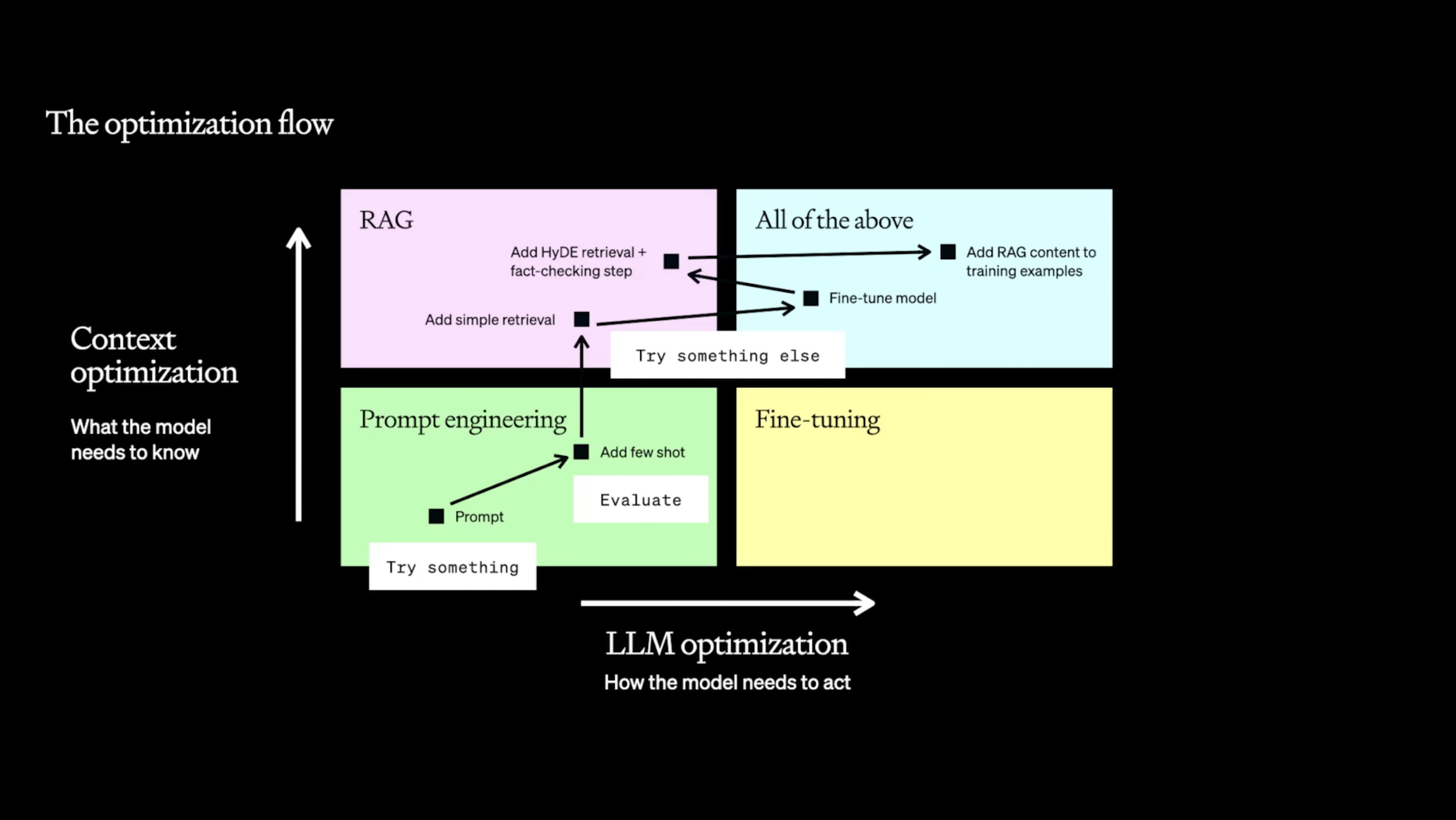
LLM optimization refers to the systematic process of modifying, compressing, or orchestrating a large language model so it runs faster, consumes fewer resources, and delivers reliable results under real-world constraints. Unlike traditional software optimization that focuses on code efficiency, LLM optimization targets the massive weight matrices, attention mechanisms, and token generation pipelines that define transformer-based architectures.
The concept emerged from the need to move models like GPT-4, Llama 3, and Claude out of research labs and into production environments where every millisecond of latency and every megabyte of GPU memory counts. Optimization does not mean making the model “smaller” in a simplistic way. It involves cleverly retaining the model’s learned representations while discarding redundancies that contribute little to downstream task performance.
In practice, LLM optimization touches several layers of the stack: the model weights themselves, the inference runtime, the prompting strategy, and even the surrounding data retrieval system. A well-optimized deployment can serve thousands of requests per minute on modest hardware, while an unoptimized one might struggle to handle a dozen concurrent users on a top-tier GPU instance. This makes optimization a core competency for MLOps teams and AI product managers.
Why LLM Optimization Matters
Without LLM optimization, organizations quickly encounter three pain points that cancel out the benefits of generative AI. First, inference costs spiral out of control. Running a 70-billion-parameter model on cloud GPUs can cost several dollars per hour, and at scale, that translates into unsustainable monthly bills. Optimization cuts the required compute by half or more, making unit economics viable.
Second, user experience suffers from high latency. Most users expect a conversational AI to respond within a couple of seconds. A raw 175-billion-parameter model can take five to ten seconds to generate a single paragraph, which feels broken in a chat interface. Optimized models routinely deliver the same output in under two seconds, matching human conversation rhythm.
Third, deployment flexibility expands dramatically. Optimized models can run on edge devices, mobile phones, and on-premises servers where GPU memory is limited. This opens up use cases in healthcare, finance, and manufacturing where data cannot leave a secure facility. Overall, optimization turns LLMs from experimental toys into reliable, cost-effective enterprise tools.
Key Techniques in LLM Optimization

Modern LLM optimization is not a single method but a combination of strategies that target different bottlenecks. The most effective deployments stack multiple techniques, achieving compounding improvements. Below is a breakdown of the core families of optimization methods that every practitioner should understand.
1. Model Compression
Model compression reduces the physical size of the neural network while preserving as much performance as possible. It works by identifying and removing weights or computations that add minimal value. The three dominant approaches are:
- Quantization: Converts high-precision 32-bit floating-point weights into lower-precision formats like 8-bit integers or even 4-bit representations. GPTQ and AWQ are widely adopted quantization algorithms that can shrink a model by a factor of four with negligible accuracy loss. Quantization is the first step for most production deployments because it directly reduces memory bandwidth and speeds up matrix multiplications.
- Pruning: Sets a portion of model weights to zero based on their magnitude or contribution to the loss function. Unstructured pruning removes individual weights, while structured pruning removes entire neurons, attention heads, or layers. Structured pruning is preferable for inference speedups because it creates sparse patterns that hardware accelerators can exploit efficiently.
- Knowledge Distillation: Trains a smaller “student” model to mimic the behavior of a large “teacher” model. The student learns from both the original training data and the soft output distributions of the teacher, capturing nuanced patterns that direct training might miss. Distillation can produce a compact model that rivals the original on specific tasks while being an order of magnitude smaller.
- KV-Cache Optimization: The key-value cache stores attention states for previously generated tokens to avoid recomputation. Techniques like Multi-Query Attention and Grouped-Query Attention reduce the cache size dramatically, lowering memory requirements during decoding. PagedAttention, introduced by vLLM, manages this cache dynamically, almost eliminating memory fragmentation and enabling near-perfect memory utilization.
- Speculative Decoding: A small draft model generates candidate tokens quickly, and the large model verifies them in parallel. When the verification rate is high, this method delivers a 2x to 3x speedup without any change to the output distribution because the large model acts as the final arbiter.
- Continuous Batching: Traditional static batching waits for all requests in a batch to complete before moving to the next. Continuous batching, used in frameworks like TensorRT-LLM and vLLM, dynamically adds new requests as earlier ones finish, keeping the GPU saturated and dramatically improving throughput under variable traffic.
- Prompt Compression: Long context windows are expensive. Prompt compression techniques summarize or prune the input text before sending it to the model, preserving only the most relevant information. LLMLingua and similar tools can compress prompts by up to 20x while retaining answer quality.
- Few-Shot and Chain-of-Thought Optimization: Carefully selecting and ordering in-context examples can reduce the need for lengthy system instructions. Research shows that choosing diverse, representative examples cuts token count and improves accuracy simultaneously.
- Structured Output Formats: Constraining the model to output valid JSON, XML, or a domain-specific grammar eliminates verbose free text and reduces post-processing overhead. Tools like guidance and lm-format-enforcer enforce these constraints at the token level, saving both generation time and downstream parsing errors.
- LoRA (Low-Rank Adaptation): Inserts small trainable adapter matrices into the transformer layers while freezing the original weights. LoRA fine-tuning requires orders of magnitude less GPU memory than full fine-tuning and produces tiny adapter files that can be swapped at runtime to serve multiple custom behaviors from a single base model.
- QLoRA: Combines 4-bit quantization with LoRA, enabling fine-tuning of massive models on a single consumer GPU. This democratizes customization and is widely used for creating specialized coding, legal, or medical assistants.
- Instruction Tuning and DPO: Post-training optimization via instruction tuning aligns the model with human preferences using curated datasets. Direct Preference Optimization (DPO) simplifies this further by eliminating the need for a separate reward model, directly optimizing the policy from preference pairs. This improves control and reduces refusals or hallucinations in production.
- Baseline Measurement. Before any change, record exact metrics: tokens per second, time to first token, end-to-end latency, GPU memory usage, and accuracy on your specific task. Use a benchmark suite like HELM or a custom evaluation set that mirrors real user queries. Without a baseline, you cannot quantify improvement or catch regressions.
- Start with Quantization. Apply 8-bit or 4-bit quantization to the base model. For Llama-family models, use the AWQ or GPTQ algorithm. Measure the accuracy and latency change. In most cases, the drop in accuracy is within 1-2 percent, which is negligible for summarization, chat, or content generation. If the task demands high numerical precision, stay at 8-bit or consider mixed-precision approaches.
- Profile the Inference Pipeline. Use tools like NVIDIA Nsight or PyTorch Profiler to identify whether the bottleneck is in prefill (processing the input prompt) or decode (generating tokens). If prefill dominates, focus on prompt compression and prefix caching. If decode dominates, apply KV-cache optimizations and speculative decoding.
- Apply Attention Optimizations. Switch to a model variant that uses Grouped-Query Attention or Multi-Query Attention if available. Deploy with a serving engine like vLLM that implements PagedAttention and continuous batching. This step alone can double throughput under load.
- Optimize the Prompt. Shorter prompts with clear instructions reduce prefill time. Use automatic prompt compression tools to shrink retrieved documents before feeding them into the context. Test multiple few-shot example arrangements to find the most token-efficient setup. Record the average input token count per request.
- Fine-Tune with LoRA. For domain-specific tasks, train a LoRA adapter on 100–1,000 high-quality examples. The adapter makes the model’s output more concise and accurate, which indirectly reduces generation length and post-processing effort. Swap adapters at runtime for different use cases.
- Monitor and Iterate. LLM optimization is not a one-shot process. User queries shift over time, model updates are released, and hardware evolves. Set up a dashboard tracking latency, cost per request, and a quality score (e.g., automated evaluation with GPT-4 as a judge). Run periodic A/B tests to validate new optimization techniques on a percentage of traffic.
- Optimizing Without a Task-Specific Metric. A model can become faster while its answers become useless for your particular use case. Always measure optimization success using an accuracy metric tied to your business outcome, not just perplexity or a generic benchmark. Run a human evaluation or use an LLM judge calibrated to your criteria.
- Over-Quantizing for Sensitive Tasks. 4-bit quantization works well for conversational text but can severely degrade performance on tasks requiring precise numerical reasoning, such as financial calculations or code generation involving numeric operations. Test thoroughly with task-relevant examples before committing to a quantized model in production.
- Ignoring the Prefill Phase. Teams often obsess over generating tokens faster while the initial prompt processing takes 70 percent of the total latency for long-document use cases. Use prefix caching, where the attention states for common system prompts or document headers are precomputed and reused, cutting prefill time dramatically.
- Naively Applying Pruning. Unstructured pruning can produce a smaller model file but no actual speedup on modern hardware because the sparsity pattern is irregular. If you need inference acceleration, stick to structured pruning or stick with quantization and efficient serving instead.
- Neglecting Prompt Caching at the Infrastructure Level. Many API providers offer prompt caching that stores the attention state of a prefix and reuses it across requests. Failing to design prompts with a consistent prefix means missing out on a 50–90 percent cost reduction for repeat queries. Make your system prompt and initial context as stable as possible.
- Assuming One Optimization Technique Is Enough. The best results come from combining methods: a 4-bit quantized model served with continuous batching, LoRA adapters, and a compressed prompt can easily achieve 10x higher throughput than the original model while maintaining quality. Stack techniques, but measure after each addition.
- Hardware-Aware Decisions. Optimization choices should align with the target hardware. NVIDIA GPUs with Tensor Cores benefit differently from quantization than Apple Silicon with its unified memory architecture. Test on the exact instance type you plan to use, because overheads from data movement can differ significantly across cloud providers.
- Model Choice as the First Optimization. A 7-billion-parameter model fine-tuned on your data often outperforms a generic 70-billion-parameter model on narrow tasks at a fraction of the cost. Before investing in complex optimization pipelines, evaluate whether a smaller, purpose-built model meets your requirements.
- Security and Compliance Impact. Optimization methods like quantization and pruning can subtly alter model outputs. In regulated industries, document these changes and validate that optimized models still comply with fairness, bias, and explicability standards. Retain the full-precision model for audit trails when necessary.
- Keeping Up with Ecosystem Changes. The LLM optimization landscape evolves monthly. Tools like TensorRT-LLM, vLLM, and llama.cpp receive frequent updates that deliver free performance improvements. Subscribe to release notes and plan a quarterly optimization review cycle to incorporate upstream gains without major rework.
2. Efficient Inference and Serving
Even a compressed model can run inefficiently if the serving infrastructure is not tuned. Inference optimization focuses on reducing the time per token generation and maximizing throughput on available hardware.
3. Prompt Engineering and Optimization
LLM optimization extends beyond model weights; how you prompt the model can slash token usage and improve consistency. Prompt optimization treats the input as a tunable parameter.
4. Fine-Tuning and Adaptation
Rather than using a giant general-purpose model for every task, parameter-efficient fine-tuning (PEFT) methods adapt a foundation model to a narrow domain with minimal resource expenditure.
LLM Optimization vs. Traditional NLP Optimization: A Practical Comparison
Understanding how LLM optimization differs from earlier NLP pipeline optimization helps teams avoid misplaced expectations. The table below highlights the key contrasts.
| Aspect | Traditional NLP Optimization | LLM Optimization |
|---|---|---|
| Scale | Models with millions of parameters; feasible on CPUs | Models with billions of parameters; require GPUs/TPUs |
| Primary Bottleneck | Feature engineering, training data curation | Inference latency, GPU memory bandwidth, KV-cache size |
| Optimization Focus | Algorithmic efficiency, rule-based pruning | Weight compression, attention mechanism redesign, serving infrastructure |
| Deployment Target | CPU servers, simple API endpoints | GPU clusters, edge TPUs, mobile NPUs |
| Typical Techniques | TF-IDF reduction, embedding caching, model distillation | Quantization, speculative decoding, continuous batching, prompt compression |
| Impact of a 5% Error Increase | Often unacceptable for structured parsing tasks | Frequently acceptable for creative or fuzzy-matching tasks if cost/latency gains are large |
The fundamental shift is that traditional NLP optimization rarely contended with memory bandwidth as the primary constraint, whereas LLM optimization revolves around it. This explains why techniques like quantization and KV-cache management are central to modern optimization efforts.
How to Implement LLM Optimization: A Step-by-Step Guide
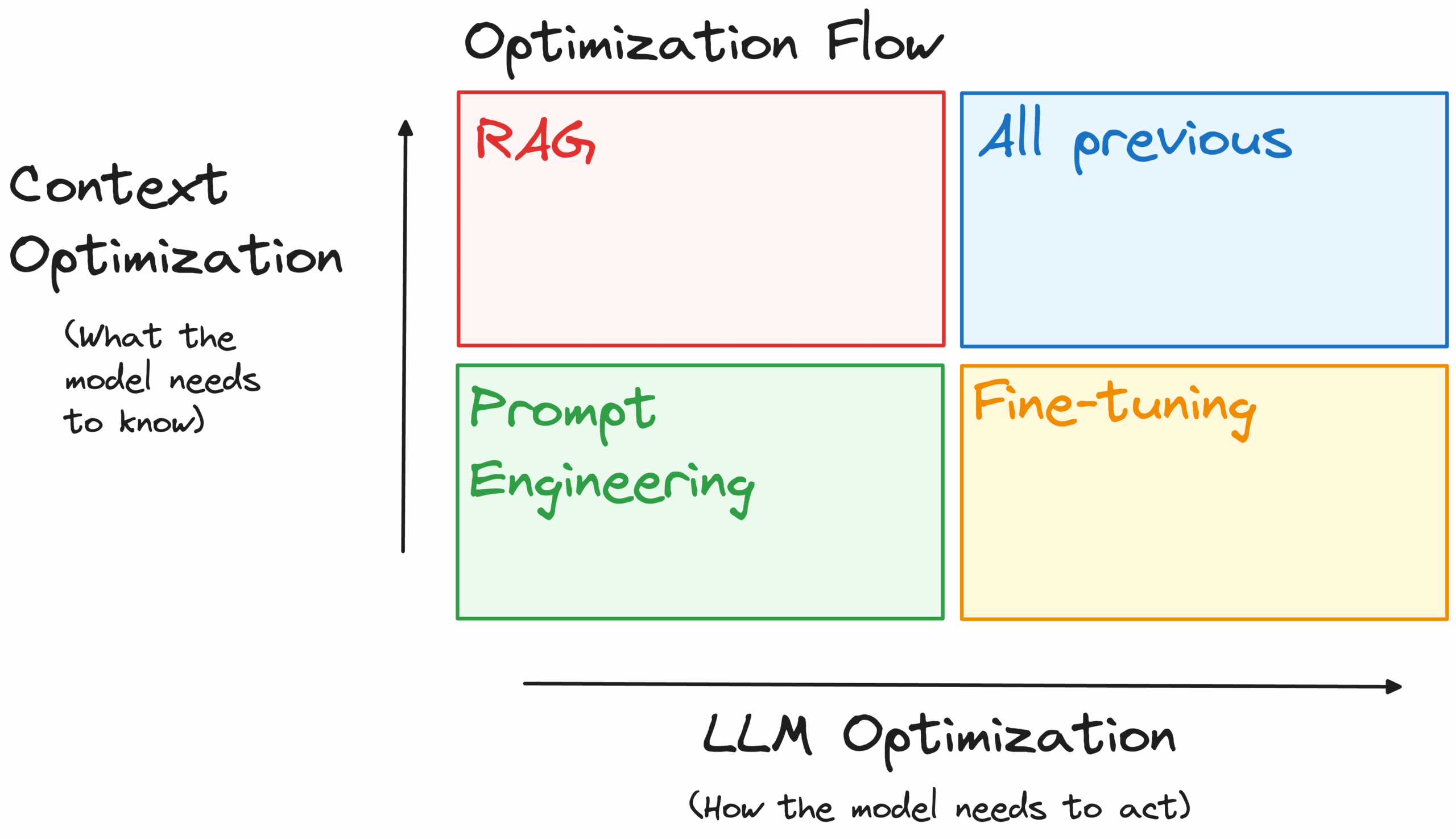
Moving from theory to practice requires a structured approach. The following sequence has been validated across multiple production deployments and minimizes the risk of degrading model quality unexpectedly.
Common Mistakes in LLM Optimization and How to Avoid Them
Even experienced teams fall into traps that undermine the benefits of LLM optimization. Recognizing these pitfalls in advance can save weeks of debugging and significant cost.
Important Notes for Successful LLM Optimization
Beyond the technical playbook, several strategic considerations determine whether an optimization effort yields lasting value. Keep these points in mind when planning and budgeting for LLM deployments.
Frequently Asked Questions About LLM Optimization
What exactly is LLM optimization and why is it needed?
LLM optimization is the process of reducing the computational and memory demands of large language models while preserving their output quality. It is needed because raw models are too slow and expensive for most production use cases, with inference costs reaching thousands of dollars per month for moderate traffic. Optimization techniques like quantization, efficient serving, and prompt compression slash those costs and improve latency.
Does quantization always reduce model accuracy?
No. When applied correctly using algorithms like AWQ or GPTQ, 8-bit quantization typically causes less than a 0.5 percent accuracy drop on standard benchmarks. Even 4-bit quantization often stays within 1–2 percent of the original performance. The key is to calibrate the quantization process on a representative dataset from your application domain to preserve the most important weight distributions.
Which LLM optimization technique gives the fastest speedup?
For immediate latency gains without any model modification, prompt optimization and continuous batching deliver the fastest results. Adding speculative decoding can further double generation speed. However, the more dramatic throughput improvements come from combining 4-bit quantization with PagedAttention-based serving, which can increase throughput by 5x to 10x over a vanilla Hugging Face pipeline.
Can I optimize an LLM without any GPU programming knowledge?
Yes. Many tools abstract away the low-level complexity. llama.cpp and Ollama allow you to run quantized models on consumer hardware with a simple command. Managed services like Fireworks AI, Together AI, and Replicate offer optimized inference endpoints that automatically apply quantization, continuous batching, and prompt caching behind the scenes. You can achieve production-grade optimization without writing CUDA code.
What is the role of prompt engineering in LLM optimization?
Prompt engineering directly impacts token costs and generation time. By compressing long prompts, reusing cached prefixes, and constraining output formats, you can reduce input tokens by up to 50 percent and output tokens by 30 percent. This not only cuts latency but also lowers per-request pricing on pay-per-token APIs, making it a critical component of any LLM optimization strategy.
Conclusion

LLM optimization is no longer an optional deep dive for researchers; it is a fundamental requirement for any team deploying generative AI at scale. By combining quantization, efficient inference engines, smart prompt design, and parameter-efficient fine-tuning, organizations can achieve the trifecta of low cost, fast response times, and high-quality output. The field continues to advance rapidly, with new breakthroughs in speculative decoding, hardware-aware kernels, and automated compression pipelines appearing every quarter. The teams that institutionalize a repeatable optimization process will be the ones that unlock the full potential of large language models inside real products, delivering AI experiences that feel instant, accurate, and economically sustainable.
Xem thêm:
- AI SEO AI Overview Optimization Strategy: The Complete Playbook for 2025
- AI SEO Writing: The Complete Guide to Ranking Smarter with Machine Assistance
- AI SEO Silo Structure: The Complete Guide to Building Topically Authoritative Websites
- AI SEO Tutorial: How to Master Search Rankings with Artificial Intelligence
- AI SEO for WordPress: A Complete Strategy to Automate and Dominate Search Rankings
Bài viết cùng chủ đề:

AI SEO SEO Automation with Make: The Complete Workflow Guide

AI SEO SEO Automation with Zapier: The Complete Workflow Guide

AI SEO SEO Automation with n8n: The Complete Workflow Guide
AI SEO SEO Automation with Gemini: The Complete Guide to Scaling Organic Growth

AI SEO SEO Automation with Claude: The Complete Guide to Scaling Content in 2025

AI SEO SEO Automation with ChatGPT: The Complete Playbook for 2025

AI SEO & SEO Automation for Affiliate Sites: The 2025 Playbook for Passive Income Growth
AI SEO & SEO Automation for Bloggers: The Complete Guide to Scaling Your Content

AI SEO & SEO Automation for Agencies: The Complete 2025 Playbook

AI SEO and SEO Automation for Ecommerce: The Complete Playbook for 2025

AI SEO & SEO Automation for WordPress: The Complete Playbook for 2025
AI SEO SEO Automation Strategy: The Complete Playbook for 2025

Mastering the AI SEO SEO Automation Process: A Complete Guide to Scaling Organic Growth
AI SEO SEO Automation System: The Complete Guide to Scaling Organic Growth in 2025
AI SEO SEO Automation Platform: The Complete Guide to Scaling Organic Growth in 2025
AI SEO SEO Automation Software: The Complete Guide to Scaling Organic Growth in 2025















