
No products in the cart.
AI SEO SOP: The Definitive Guide to Systemizing Your Search Growth Workflow

31
Jul
Jul
An AI SEO SOP is no longer a luxury for forward-thinking marketing teams; it is the operational backbone of any scalable organic growth strategy in 2025. As search engines evolve toward AI-driven ranking models and zero-click results, relying on manual, ad-hoc optimization tasks is a recipe for stagnation. This guide breaks down exactly what an AI SEO SOP is, why it matters, and how to build one that delivers measurable results. You will learn the core components, the step-by-step implementation process, and the critical mistakes that derail even the most sophisticated workflows.
What is an AI SEO SOP?
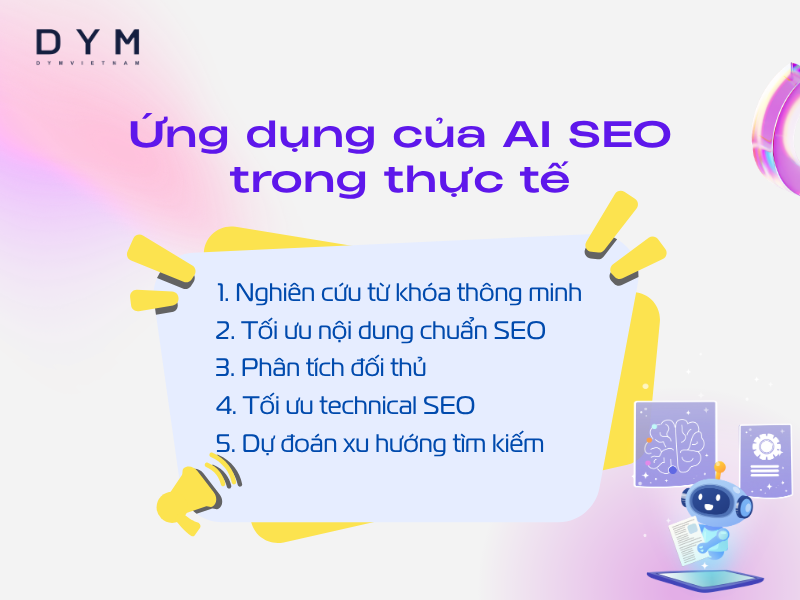
An AI SEO SOP (Standard Operating Procedure) is a documented, repeatable workflow that integrates artificial intelligence tools into every stage of the search engine optimization process. Unlike a traditional SEO checklist, an AI SEO SOP defines the exact prompts, validation steps, and human review gates required to leverage machine learning for keyword research, content creation, technical audits, and performance analysis. The goal is not to replace human expertise but to augment it with speed and data processing capabilities that are impossible manually.
The core nature of this concept revolves around automation with accountability. A true AI SEO SOP specifies which tasks are fully automated, which require human approval, and how the outputs are measured against business KPIs. It transforms AI from a random experimentation tool into a predictable, quality-controlled production system. This distinction is critical because using ChatGPT or similar tools without a defined process leads to inconsistent output, factual errors, and wasted budget.
Why You Need a Formalized AI SEO SOP
The modern search landscape is defined by volatility. Google’s core updates, the rise of generative engine optimization (GEO), and the integration of AI Overviews have made it impossible to rely on “best practices” alone. A formalized AI SEO SOP provides the stability needed to navigate these shifts. It ensures that every team member, from junior writers to senior strategists, follows the same validated workflow, reducing the risk of publishing low-quality or outdated content.
Furthermore, an AI SEO SOP is essential for scaling operations. If you manage a single blog, you can survive without one. But if you are managing a content portfolio of 500 pages or a multi-location enterprise site, the only way to maintain quality and velocity is through a documented system. It allows you to onboard new staff faster, delegate tasks with clarity, and audit your own processes for continuous improvement. Without this structure, your AI usage remains fragmented and its ROI nearly impossible to track.
Core Components of an Effective AI SEO SOP

Building a robust AI SEO SOP requires more than just a list of tools. It requires a clear architecture that defines inputs, processes, and outputs. Below are the five non-negotiable components that every high-performing system must include.
1. Input Data Standardization
Before any AI tool can produce useful output, it needs clean, structured input. Your SOP must define exactly what data is fed into the system. This includes the target keyword, the search intent (informational, transactional, navigational), the target audience persona, and the primary competitor URLs. Standardizing this input ensures that the AI does not hallucinate or drift off-topic. For example, your SOP should specify a mandatory field for “primary keyword” and “secondary entity” that must be filled before any generation begins.
2. Prompt Engineering Templates
The quality of AI output is directly proportional to the quality of the prompt. Your AI SEO SOP must include a library of pre-tested prompt templates for different tasks. A prompt for a meta description is different from a prompt for a technical schema audit. These templates should be stored in a shared workspace (like Notion or Google Docs) and updated quarterly based on performance data. The SOP should also include negative prompts—instructions on what the AI should avoid, such as “do not use passive voice” or “do not include unverified statistics.”
3. Human Review Checkpoints
AI is a powerful accelerator, but it is not a replacement for editorial judgment. A critical component of your SOP is the definition of mandatory human review gates. For content, this means a fact-checking step where a human verifies all claims, statistics, and quotes against primary sources. For technical SEO, this means a developer must approve any schema markup or code changes generated by AI before deployment. The SOP should clearly state who is responsible for each checkpoint and what the escalation process is if errors are found.
4. Output Validation Metrics
How do you know if the AI-generated output is actually good? Your SOP must define the specific metrics used to validate output before publication. For content, this could include a readability score (e.g., Flesch Reading Ease), a keyword density check, and a factual accuracy score. For technical tasks, it could be a crawl error rate or a page speed score. By codifying these metrics, you remove subjectivity from the review process and make it easy for any team member to approve or reject a piece of work.
5. Feedback Loop and Version Control
An AI SEO SOP is a living document. It must include a mechanism for capturing feedback from the team and the performance data from search engines. If a piece of content generated by the SOP fails to rank after 60 days, the SOP should have a defined process for analyzing why and updating the prompts or workflow accordingly. Version control is essential here; you need to track changes to the SOP over time to understand which modifications led to better outcomes.
Step-by-Step Guide to Implementing Your AI SEO SOP
Implementing this system requires a phased approach. Trying to automate everything at once will lead to chaos. The following steps provide a practical roadmap for rolling out your AI SEO SOP, from initial audit to full-scale deployment.
Phase 1: Audit Your Current Workflow
Start by mapping out your existing SEO process. Identify every task that is currently manual, repetitive, and time-consuming. Common candidates for AI integration include keyword clustering, content brief generation, internal linking suggestions, and meta tag creation. Document the current time spent on each task and the typical error rate. This baseline data will help you prioritize which parts of the workflow to automate first.
Phase 2: Select and Configure Your AI Stack
Choose the AI tools that fit your specific needs. For content generation, tools like Claude or GPT-4 are common. For technical audits, specialized platforms like Screaming Frog with AI integrations or Semrush’s AI features are useful. Your SOP should not be tied to a single vendor; it should be flexible enough to accommodate new tools. Configure the tools with your brand voice guidelines and SEO rules before you start the pilot phase.
Phase 3: Pilot with a Small Content Cluster
Do not roll out the SOP across your entire site immediately. Select a small cluster of 5-10 pages that are strategically important but not critical to your revenue. Run these pages through the new AI SEO SOP, documenting every step. Measure the output quality against your validation metrics. This pilot phase is where you will discover gaps in your prompts and identify where human intervention is still necessary.
Phase 4: Train Your Team and Document Exceptions
Your team needs to understand not just how to use the tools, but why the SOP exists. Provide training sessions that walk through the entire workflow, emphasizing the human review checkpoints. During this phase, encourage team members to document any edge cases or exceptions they encounter. These exceptions will become the “troubleshooting” section of your SOP, making it more robust for future use.
Phase 5: Scale and Monitor Performance
Once the pilot is successful, scale the SOP to other content clusters and technical tasks. However, scaling does not mean “set and forget.” You must monitor the performance of the pages produced under the SOP. Track rankings, organic traffic, and engagement metrics on a weekly basis. If a page underperforms, the feedback loop component of your SOP should trigger a revision process.
Benefits and Limitations of Using an AI SEO SOP

Understanding the trade-offs is essential for setting realistic expectations. The table below outlines the primary advantages and the inherent limitations you will face when implementing this system.
| Aspect | Benefits | Limitations |
|---|---|---|
| Speed | Reduces content production time by up to 70% by automating drafting and research. | Speed can lead to overproduction of mediocre content if validation gates are weak. |
| Consistency | Ensures every piece of content follows the same structural and tonal guidelines. | Can lead to a lack of unique human insight or original thought if prompts are too rigid. |
| Scalability | Allows you to manage thousands of pages without proportionally increasing headcount. | Requires significant upfront investment in prompt engineering and system setup. |
| Data Processing | Can analyze vast datasets (e.g., competitor backlinks, SERP features) in minutes. | AI models can misinterpret nuanced data or miss context that a human expert would catch. |
| Cost Efficiency | Reduces the cost per article or audit compared to fully manual processes. | High API costs can escalate if the SOP lacks proper usage limits and monitoring. |
Practical Application: Building an AI-Powered Content Brief
To illustrate how the AI SEO SOP works in practice, consider the task of creating a content brief. In a manual process, this takes 2-3 hours. With an AI SEO SOP, it takes 30 minutes. The SOP dictates that you first input the target keyword and the top 3 ranking URLs into your AI tool. The prompt template instructs the AI to extract the common subtopics, the average word count, the types of media used, and the search intent signals from those URLs.
The AI then outputs a draft brief that includes a suggested outline, related keywords, and semantic entities to cover. The human reviewer then checks this brief against their own knowledge of the audience. They might add a specific case study or a unique data point that the AI missed. This combined output—AI efficiency plus human expertise—is the core value proposition of the SOP. The final brief is then stored in the project management tool, and the writer uses it to create the draft.
Common Mistakes and How to Avoid Them

Many teams fail to see results from their AI SEO efforts because they make predictable errors during implementation. Recognizing these pitfalls is the first step to avoiding them.
- Treating AI Output as Final: Publishing AI-generated text without human editing is the fastest way to lose search rankings. Always enforce a mandatory human editing and fact-checking step.
- Ignoring Search Intent: Using AI to generate content that does not match the user’s intent for the target keyword. Your SOP must include a step to verify intent before generation.
- Lack of Prompt Maintenance: Using the same prompts for months without updating them. Search trends and AI capabilities change; your prompts must evolve.
- No Performance Tracking: Failing to tie the AI-generated content to actual ranking data. If you do not measure it, you cannot improve it.
- Over-Automation of Technical Tasks: Allowing AI to make direct changes to your website’s code or robots.txt without a human developer reviewing the logic. This can cause catastrophic crawl errors.
- Ignoring E-E-A-T Signals: AI cannot generate real-world experience. Your SOP must include a step for adding original quotes, proprietary research, or author bios with credentials.
Important Notes on Quality Control and Brand Safety
When implementing an AI SEO SOP, brand safety must be a top priority. AI models can generate biased, offensive, or factually incorrect content. Your SOP must include a strict moderation layer that checks for these issues before anything goes live. This is not just about SEO; it is about protecting your reputation. Ensure that your prompts explicitly forbid the generation of medical, legal, or financial advice unless you have verified experts reviewing the content.
Additionally, be aware of the limitations regarding proprietary data. If you feed your internal sales data or customer lists into a public AI model, you risk a data breach. Your SOP should define which data is allowed to be used in AI tools and which must remain in secure, offline environments. Always use enterprise-grade API versions of AI tools that offer data privacy guarantees rather than free consumer versions.
Frequently Asked Questions (FAQ)
What is the difference between an AI SEO SOP and a regular SEO checklist?
A regular checklist is a static list of tasks to complete. An AI SEO SOP is a dynamic workflow that specifically defines how AI tools are used to complete those tasks, including the specific prompts, validation metrics, and human review gates. It is a system for managing the interaction between humans and machines, not just a list of things to do.
How long does it take to see results from an AI SEO SOP?
Typically, you can expect to see operational efficiency gains (faster production times) within the first two weeks. However, ranking improvements in search engines usually take 60 to 90 days. The SOP does not change the fundamental physics of Google’s crawling and indexing process; it only makes your production process faster and more consistent.
Can a small business use an AI SEO SOP effectively?
Yes, but the scale of the SOP should match the business size. A small business with a single website can use a simplified version of the SOP, focusing mainly on content generation and basic keyword research. The core principles of input standardization and human review apply regardless of team size, but the complexity of the technical audit components can be reduced.
Will an AI SEO SOP replace the need for human SEO experts?
No. The SOP actually increases the value of human experts. It removes the tedious, repetitive tasks, allowing experts to focus on strategy, creative ideation, and complex problem-solving. The human is responsible for designing the SOP, validating the AI’s output, and making the final strategic decisions. The AI is a tool, not the strategist.
What are the best AI tools to include in an AI SEO SOP?
The best tools depend on your specific needs. For content generation, GPT-4 or Claude are industry standards. For keyword clustering and SERP analysis, tools like Ahrefs or Semrush with AI features are effective. For technical audits, specialized crawlers with AI-assisted issue detection are useful. The key is to choose tools that offer API access so you can integrate them into your automated workflow.
Conclusion
The implementation of a structured AI SEO SOP is the defining factor between teams that are merely using AI and teams that are scaling with AI. It transforms chaotic experimentation into a disciplined, data-driven production system. By standardizing inputs, codifying prompts, and enforcing human review checkpoints, you create a workflow that consistently produces high-quality, ranking-ready content and technical optimizations. The future of search is AI-driven, and your operational procedures must reflect that reality. Start by auditing your current process, build a simple pilot SOP, and iterate based on performance data. The teams that master this operational discipline today will own the search results of tomorrow.
Xem thêm:
- AI SEO Navigation: The Complete Guide to Smarter Site Architecture in 2025
- AI Conclusion Generator: Generate Powerful Closing Paragraphs in Seconds
- AI SEO Heading Generator: The Complete Guide to Higher Rankings in 2025
- AI SEO Community: The Ultimate Hub for Modern Search Professionals
- The Ultimate Guide to AI SEO Chrome Extensions: Work Smarter, Rank Higher
Bài viết cùng chủ đề:

AI SEO SEO Automation with Make: The Complete Workflow Guide

AI SEO SEO Automation with Zapier: The Complete Workflow Guide

AI SEO SEO Automation with n8n: The Complete Workflow Guide
AI SEO SEO Automation with Gemini: The Complete Guide to Scaling Organic Growth

AI SEO SEO Automation with Claude: The Complete Guide to Scaling Content in 2025

AI SEO SEO Automation with ChatGPT: The Complete Playbook for 2025

AI SEO & SEO Automation for Affiliate Sites: The 2025 Playbook for Passive Income Growth
AI SEO & SEO Automation for Bloggers: The Complete Guide to Scaling Your Content

AI SEO & SEO Automation for Agencies: The Complete 2025 Playbook

AI SEO and SEO Automation for Ecommerce: The Complete Playbook for 2025

AI SEO & SEO Automation for WordPress: The Complete Playbook for 2025
AI SEO SEO Automation Strategy: The Complete Playbook for 2025

Mastering the AI SEO SEO Automation Process: A Complete Guide to Scaling Organic Growth
AI SEO SEO Automation System: The Complete Guide to Scaling Organic Growth in 2025
AI SEO SEO Automation Platform: The Complete Guide to Scaling Organic Growth in 2025
AI SEO SEO Automation Software: The Complete Guide to Scaling Organic Growth in 2025















