
No products in the cart.
AI SEO AI Search Audit: The Complete Guide to Future-Proofing Your Rankings
10
Aug
Aug
The digital landscape has shifted dramatically. Traditional SEO metrics like backlinks and keyword density no longer guarantee visibility. Today, search engines use machine learning to interpret user intent, and your content must be optimized for both humans and algorithms. This is where an AI SEO AI Search Audit becomes essential. This process uses artificial intelligence to analyze your website’s performance across traditional search engines and AI-powered platforms like ChatGPT, Perplexity, and Google’s Search Generative Experience (SGE). By conducting this audit, you identify gaps that standard tools miss, ensuring your brand remains visible in the new era of discovery.
What is an AI SEO AI Search Audit?
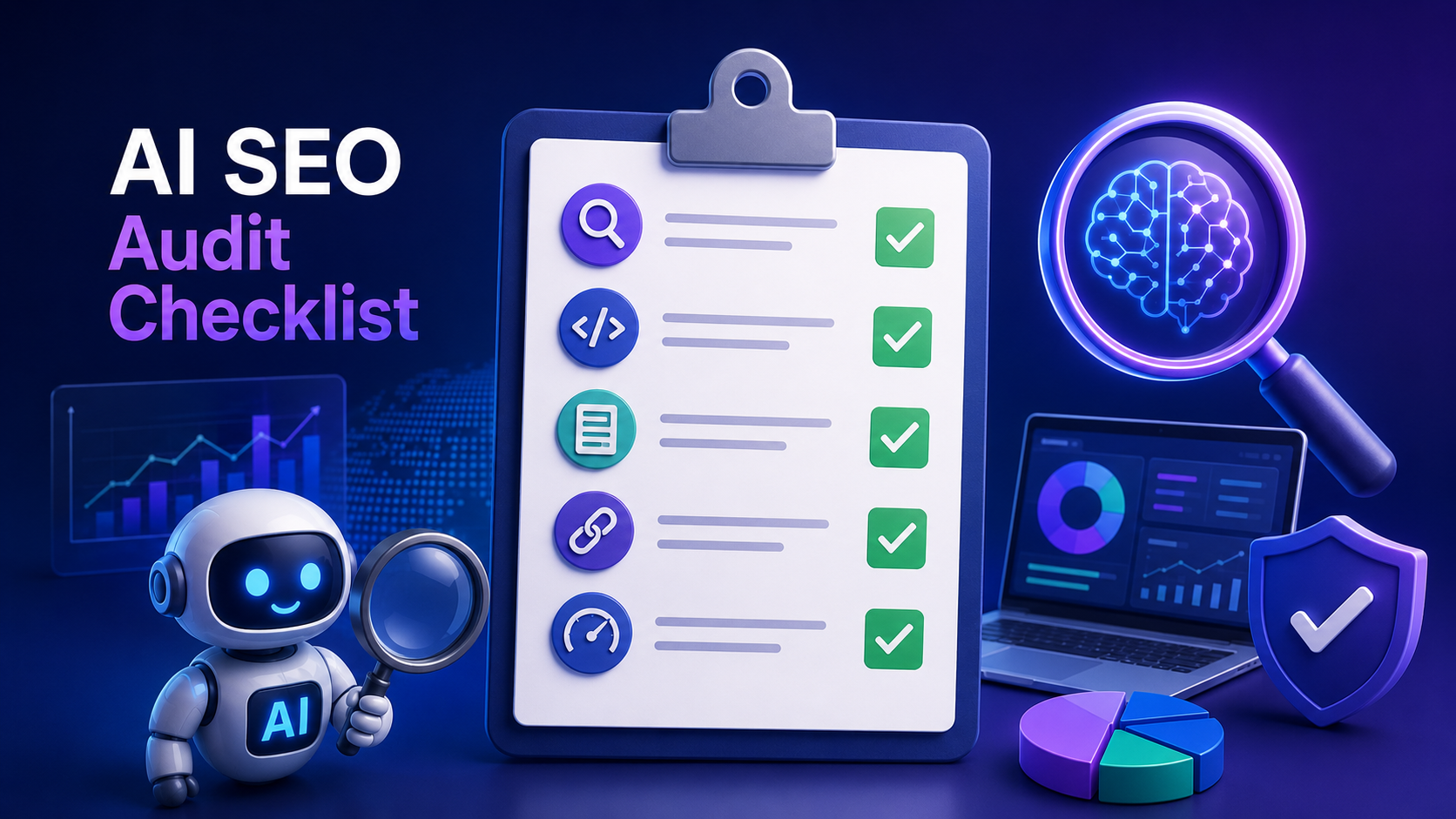
An AI SEO AI Search Audit is a comprehensive analysis of your digital footprint using machine learning algorithms. It evaluates how well your content aligns with the ranking factors of both classic search engines and generative AI models. Unlike a traditional audit that checks meta tags and broken links, this audit focuses on semantic relevance, entity matching, and content authority.
The core purpose is to answer a critical question: “If a user asks an AI chatbot for a recommendation, does my brand get mentioned?” The audit examines your site’s structure, schema markup, and topical depth to determine if you are a trusted source for AI systems. It also analyzes your content’s readability and factual accuracy, as AI models prioritize clear, authoritative information.
The Shift from Keywords to Entities
Traditional SEO relied on matching exact phrases. AI search, however, understands concepts. It uses natural language processing (NLP) to identify entities—people, places, products, and ideas—and their relationships. An AI audit checks whether your content clearly defines these entities and connects them logically. For example, if you sell running shoes, the audit checks if your content correctly associates “cushioning,” “pronation,” and “marathon training” as related concepts, not just random keywords.
Why Traditional Audits Fail in the AI Era
Standard SEO tools measure metrics like page speed, domain authority, and keyword rankings. While these are still important, they do not tell the full story. AI models do not “rank” pages in a list; they synthesize information from multiple sources to generate a single answer. If your content is not structured for extraction, the A
Furthermore, traditional audits often miss the quality of your internal linking structure from an AI perspective. They look at link equity, but AI looks at context. A link from a page about “nutrition” to a page about “running shoes” is semantically strong. A link from “contact us” to “running shoes” is weak. The AI audit evaluates this contextual relevance to improve your chances of being cited.
Core Components of an AI SEO AI Search Audit
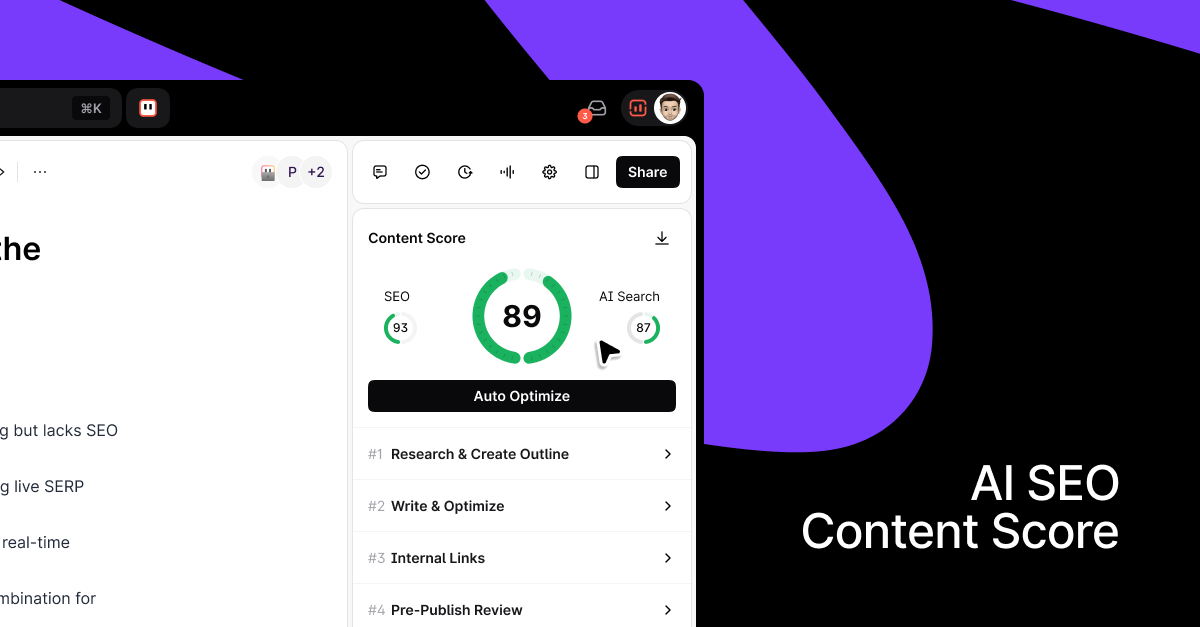
To conduct a thorough audit, you must examine several layers of your website. Each component provides data that helps you align with AI algorithms.
1. Content Depth and Semantic Coverage
AI models favor comprehensive content that covers a topic exhaustively. The audit analyzes your existing articles to identify “content gaps.” For instance, if you have a guide on “coffee brewing,” but you do not mention “water temperature” or “grind size,” the AI considers your content incomplete. The audit uses NLP to map out all related subtopics and compares them against your current output.
- Entity Density: Checks if you use consistent names for products and services.
- Contextual Vocabulary: Ensures you use synonyms and related terms naturally.
- Answer Extraction: Tests if your content provides direct, concise answers to common questions.
- Increased Referral Traffic: When AI chatbots cite your content, they include a link. This drives high-quality, targeted traffic to your site.
- Brand Authority: Being mentioned by AI models positions you as a thought leader in your industry.
- Competitive Edge: Most businesses are still using traditional SEO. By optimizing for AI, you get ahead of the curve.
- Improved User Experience: The changes you make for AI (clearer structure, better content) also improve the experience for human readers.
- Ignoring User Intent: Focusing on keywords without understanding the “why” behind the search.
- Over-Optimizing for Bots: Writing content that sounds robotic and unnatural, which turns off human readers.
- Neglecting Existing Content: Only creating new content and failing to update old posts with new data and entities.
- Hiding Data in Images: Putting key statistics in infographics without providing an HTML text alternative.
- Inconsistent NAP: Having different business names, addresses, or phone numbers across the web, which confuses AI entity resolution.
2. Technical Infrastructure for AI Crawlers
AI search engines use different crawlers than Googlebot. They often rely on rendered HTML and structured data. The audit verifies that your site does not block these crawlers via robots.txt. It also checks your schema markup (JSON-LD) to ensure you have properly tagged your business type, reviews, and FAQs. This structured data helps AI understand exactly what your page is about without guessing.
3. Authority and Trust Signals
AI models are trained to avoid misinformation. They prioritize sources with high authority. The audit evaluates your off-page signals, but with a twist. It looks at the quality of the domains linking to you, not just the quantity. It also checks for the presence of author bios, credentials, and citations. If your content lacks verifiable authorship, the AI may discount your expertise.
How to Perform an AI SEO AI Search Audit: Step-by-Step
You do not need to be a data scientist to run this audit. By following a structured process, you can gather actionable insights and improve your AI visibility.
Step 1: Analyze Your AI Visibility
Start by manually testing your brand and key products on major AI platforms. Ask ChatGPT, Claude, and Google’s SGE specific questions related to your niche. Note whether your brand appears in the responses. If it does not, that is your baseline. Use tools like “ChatGPT for Search” or “Perplexity API” to automate this process at scale, but manual testing gives you the qualitative context you need.
Step 2: Audit Your Content Structure
Review your top 20 pages. Check if they follow a clear hierarchy (H1, H2, H3). Ensure that your paragraphs are short and that you use bullet points for lists. AI models love structured data. Break down complex processes into numbered steps. This makes it easier for the AI to extract and quote your information.
Step 3: Evaluate Your Entity Clarity
Use NLP tools to analyze your text. Identify the main entities you are targeting. Are you consistently referring to your product by the same name? Do you define acronyms on first use? The audit should flag any ambiguity. For example, if you write “Apple” but mean the fruit, and your page is about technology, the A Clarify your entities with precise language and schema markup.
Step 4: Check for Citation Potential
AI models often cite sources that are easy to parse. Check if your content includes statistics, quotes, or unique data points. If you have proprietary research, present it in a table or a chart. The audit checks if this data is easily accessible in the HTML, not hidden in an image or a PDF that the AI cannot read.
Benefits of a Regular AI Search Audit

Investing time in this audit yields significant returns. It moves your strategy from reactive to proactive, ensuring you are ready for the future of search.
Limitations and Challenges of AI Audits
While powerful, this audit process has limitations. AI algorithms are proprietary and constantly changing. What works today may not work tomorrow. T Unlike Google Search Console, which gives you specific data, AI platforms often provide no feedback on why they chose a particular source. This means you must rely on educated guesses and continuous testing.
Another challenge is the “black box” nature of AI. You cannot see the exact algorithm. The audit provides insights based on patterns, but it cannot guarantee a citation. It is a tool for optimization, not a guarantee of results.
AI SEO vs. Traditional SEO: A Comparison
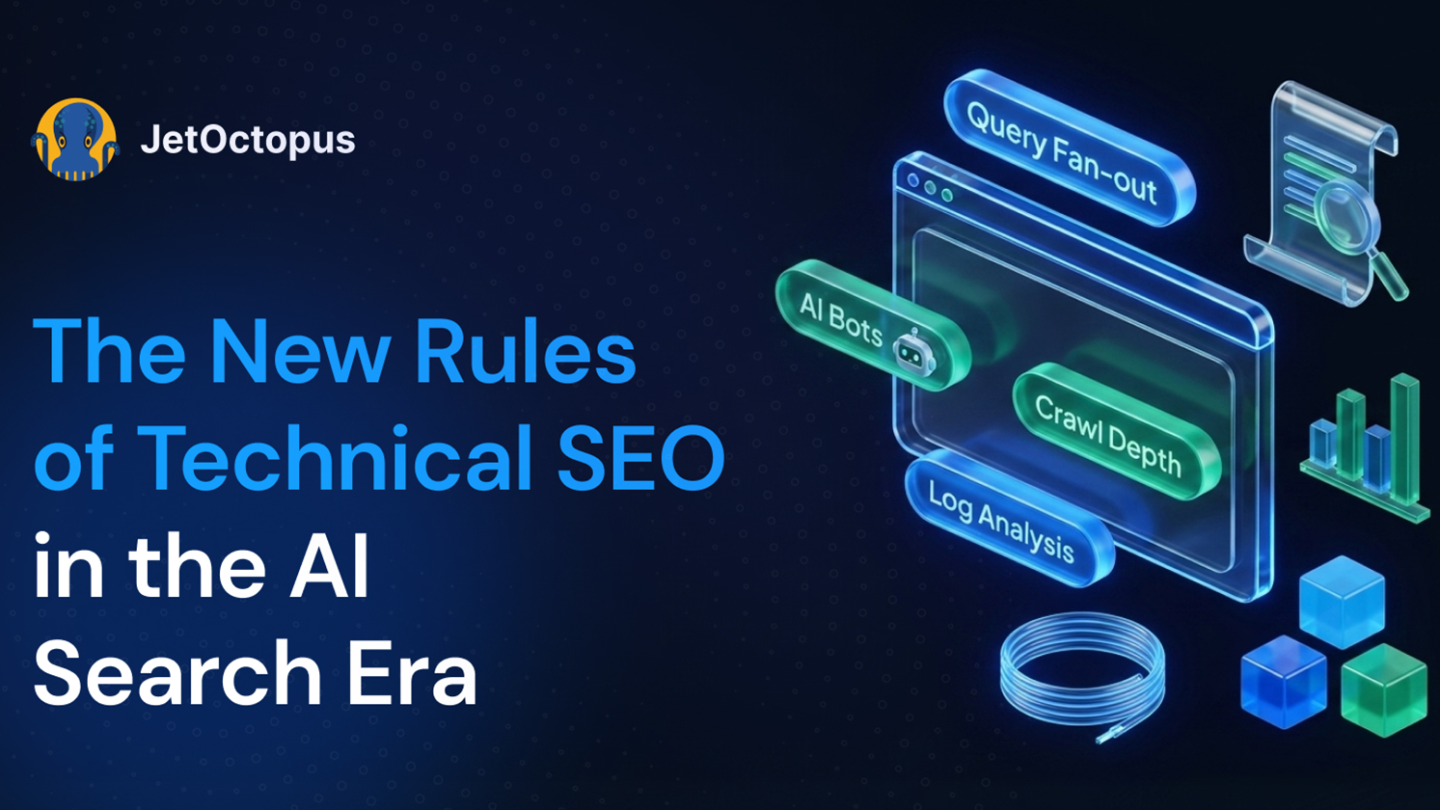
Understanding the differences helps you allocate resources effectively. The table below highlights the key distinctions between the two approaches.
| Aspect | Traditional SEO | AI SEO |
|---|---|---|
| Primary Focus | Keyword rankings and backlinks | Entity understanding and semantic relevance |
| Content Style | Optimized for specific search queries | Comprehensive, covers entire topic clusters |
| Success Metric | Click-through rate and page views | Brand mentions in AI-generated answers |
| Technical Needs | Fast loading, mobile-friendly | Structured data, crawlable content for AI bots |
| User Intent | Matching keywords to queries | Understanding the context behind the query |
Practical Applications: Where to Start
Begin by auditing your “Money Pages”—the pages that drive revenue. These are your product pages, service descriptions, and high-value blog posts. Ensure these pages have clear definitions, FAQs, and schema markup. Next, create a “source page” that acts as a central hub of facts about your company. This page should include your history, your mission, and your unique selling points. AI models often look for this type of “About” information to verify credibility.
Consider implementing a “Programmatic SEO” strategy. Use AI tools to generate variations of your core content for different subtopics. This expands your semantic coverage, making it more likely that an A However, ensure that this content is high-quality and not just spun text, as AI models are good at detecting low-value content.
Common Mistakes in AI Search Optimization
Many marketers make errors when trying to optimize for AI. Avoiding these pitfalls will save you time and resources.
Important Notes for Your AI Strategy
Do not abandon traditional SEO. It is still the foundation. The AI audit is an enhancement, not a replacement. Focus on building a strong brand presence. AI models often cite well-known brands by default. The more mentions you have across the web (PR, social media, directories), the more likely the A
Also, monitor your competitors. See what content they are publishing that gets cited by AI. Use that as a benchmark for your own content creation. Finally, be patient. AI search is still evolving. The audit helps you build a resilient strategy that will pay off as these technologies become more mainstream.
Frequently Asked Questions
What is the difference between an AI SEO audit and a regular SEO audit?
A regular audit focuses on technical health, backlinks, and keyword rankings. An AI SEO audit focuses on semantic relevance, entity clarity, and how well your content can be extracted and synthesized by generative AI models. It checks if your content is structured for “answer engines” rather than just “search engines.”
How often should I run an AI Search Audit?
You should run a full audit quarterly. However, you should monitor your AI visibility monthly. Since AI algorithms update frequently, a quarterly review allows you to adjust your strategy without overreacting to minor fluctuations. Continuous monitoring of your brand mentions in AI chats is also recommended.
Do I need special tools to perform this audit?
While specialized tools are emerging, you can start with free methods. Use Google’s NLP API to analyze your content. Use ChatGPT itself to ask it what it knows about your brand. For advanced analysis, tools like Clearscope, MarketMuse, and Surfer SEO are adding AI visibility features. These tools help identify content gaps and entity optimization opportunities.
Will optimizing for AI hurt my Google rankings?
No. The principles of AI SEO—clear structure, authoritative content, and good user experience—align perfectly with Google’s E-E-A-T guidelines. By improving your content for AI, you make it more useful for humans, which generally improves your Google rankings as well. The two strategies are complementary, not conflicting.
Can small businesses benefit from AI Search Audits?
Absolutely. Small businesses often have a niche focus. AI models love niche expertise. By clearly defining your local area and your specific services, you can become the go-to source for AI recommendations in your region. The audit helps you highlight your unique value proposition in a way that algorithms can understand.
Conclusion
The rise of AI search is not a threat to SEO; it is an evolution. The AI SEO AI Search Audit is your roadmap for navigating this change. By shifting your focus from simple keywords to comprehensive entities, you ensure your content is not just visible, but also cited. The process requires a commitment to clarity, accuracy, and depth. It challenges you to become a true authority in your niche. Start by auditing your core pages, fixing your entity signals, and creating content that answers questions directly. The future of search is conversational, and with a proper audit, your brand will be part of that conversation. Embrace the change, and you will find that the new search landscape offers unprecedented opportunities for growth and visibility.
Xem thêm:
- AI SEO Moz: The Complete Guide to Moz’s AI-Powered SEO Tools in 2025
- AI SEO Orphan Pages: The Hidden Ranking Killer and How to Fix It
- AI SEO Multi Agent Systems: The Complete Guide to Autonomous Search Optimization
- AI Outreach: The Ultimate Guide to Automating and Personalizing Your Sales Engagement
- AI SEO Keyword Opportunities: The Complete Guide to Finding High-Impact Keywords in 2025
Bài viết cùng chủ đề:

AI SEO SEO Automation with Make: The Complete Workflow Guide

AI SEO SEO Automation with Zapier: The Complete Workflow Guide

AI SEO SEO Automation with n8n: The Complete Workflow Guide
AI SEO SEO Automation with Gemini: The Complete Guide to Scaling Organic Growth

AI SEO SEO Automation with Claude: The Complete Guide to Scaling Content in 2025

AI SEO SEO Automation with ChatGPT: The Complete Playbook for 2025

AI SEO & SEO Automation for Affiliate Sites: The 2025 Playbook for Passive Income Growth
AI SEO & SEO Automation for Bloggers: The Complete Guide to Scaling Your Content

AI SEO & SEO Automation for Agencies: The Complete 2025 Playbook

AI SEO and SEO Automation for Ecommerce: The Complete Playbook for 2025

AI SEO & SEO Automation for WordPress: The Complete Playbook for 2025
AI SEO SEO Automation Strategy: The Complete Playbook for 2025

Mastering the AI SEO SEO Automation Process: A Complete Guide to Scaling Organic Growth
AI SEO SEO Automation System: The Complete Guide to Scaling Organic Growth in 2025
AI SEO SEO Automation Platform: The Complete Guide to Scaling Organic Growth in 2025
AI SEO SEO Automation Software: The Complete Guide to Scaling Organic Growth in 2025















