
No products in the cart.
AI SEO Orphan Pages: The Hidden Ranking Killer and How to Fix It
31
Jul
Jul
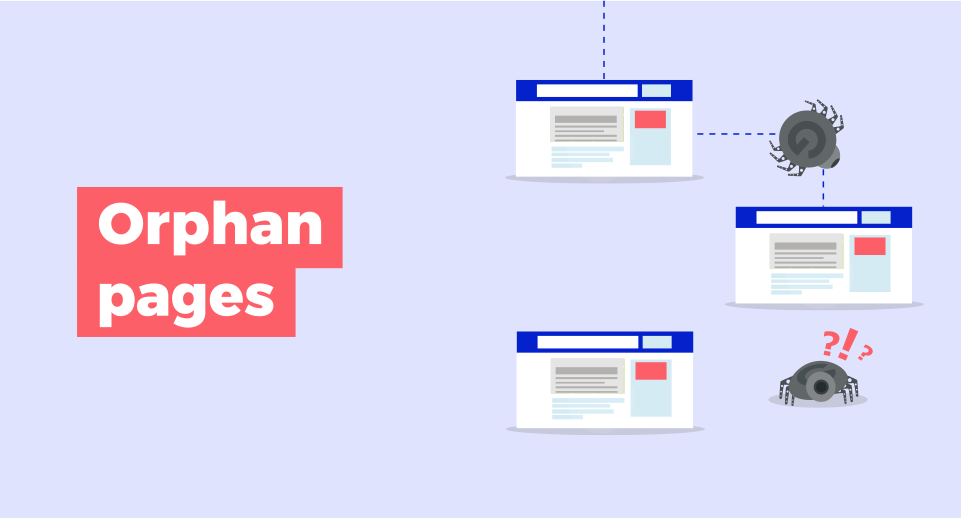
In the rapidly evolving landscape of search engine optimization, a silent threat is undermining website authority and organic visibility: AI SEO orphan pages. These are pages generated or existing within your site structure that have no internal links pointing to them, making them invisible to both search engine crawlers and users. As artificial intelligence reshapes content production at scale, the volume of orphan pages has exploded, creating a critical technical SEO challenge. Understanding what these pages are, why they occur, and how to systematically eliminate them is no longer optional—it is a fundamental requirement for maintaining crawl efficiency, consolidating link equity, and ensuring your best content actually ranks.
What Exactly Are AI SEO Orphan Pages?
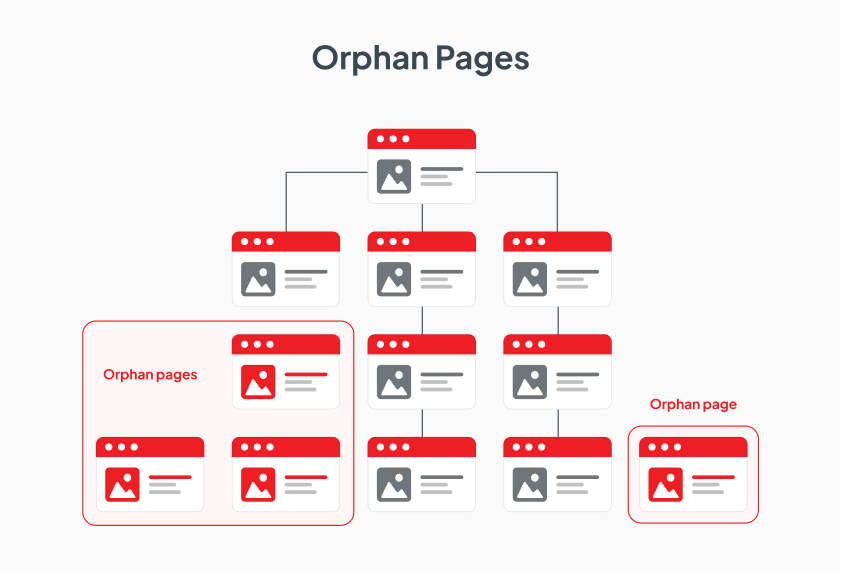
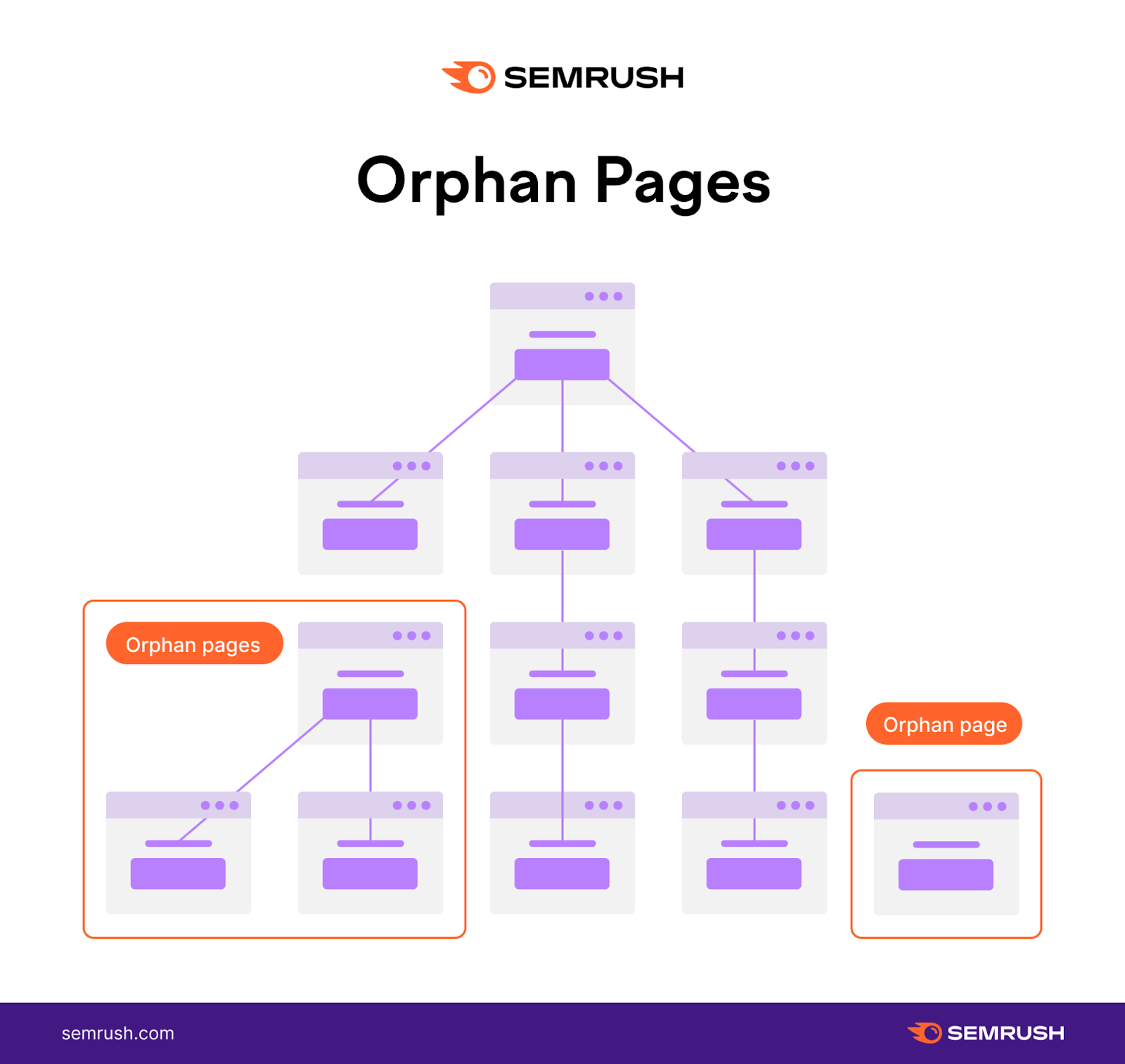
An orphan page is any URL on your domain that is not linked to from any other page on your website. While a sitemap can technically list these URLs, the absence of internal links means search engine bots often fail to discover them during routine crawls. When you introduce AI-generated content into this equation, the problem compounds. AI tools can rapidly produce hundreds of product descriptions, blog posts, or landing pages, but if your content management system or publishing workflow fails to automatically interlink these new assets, they become digital islands.
The core issue with AI SEO orphan pages is not just discoverability. It is the wasted crawl budget. Search engines allocate a specific number of pages to crawl on your site during each visit. If bots spend time crawling orphaned, low-value AI pages, they may miss your high-priority money pages. Furthermore, orphan pages accumulate no internal link equity, meaning they have virtually zero chance of ranking for competitive keywords, rendering your AI content investment completely futile.
Why AI Amplifies the Orphan Page Problem
Traditional content teams manually review and link every new page. AI content generation disrupts this workflow. Marketing teams often use AI to produce bulk drafts, schedule them for publication, and move on to the next task. The crucial step of contextual internal linking is frequently skipped because the sheer volume of output makes manual curation impractical. Additionally, AI-generated pages often target long-tail keywords that are highly specific. Without a clear topical map, editors struggle to find relevant anchor text, leading to pages being published without any inbound links from the rest of the site.
Another contributing factor is the use of AI for programmatic SEO. This involves creating thousands of templated pages based on data feeds. If the underlying template lacks a dynamic internal linking module, every single generated page becomes an orphan. The result is a massive index bloat where your site’s overall quality score suffers, and search engines may begin to distrust the entire domain, not just the orphaned URLs.
How to Identify AI SEO Orphan Pages in Your Architecture
Finding these hidden pages requires a combination of analytics data and crawling tools. You cannot rely on site search alone. The most effective method involves comparing your server logs or analytics data against your sitemap and crawl data.
Using Google Analytics and Search Console
Start by exporting a list of all URLs that have received at least one pageview in the last 90 days from Google Analytics. This represents pages that real users have accessed, often via direct URL entry or external links. Next, export your full sitemap from Google Search Console. Any URL present in the sitemap but absent from the analytics data is a potential orphan. However, this method misses pages that were never indexed. For a complete picture, you need a crawler.
Leveraging Screaming Frog and Sitebulb
Tools like Screaming Frog SEO Spider can crawl your entire site by following internal links. After the crawl, navigate to the “Orphan Pages” report. This report cross-references your sitemap URLs with the crawled URLs. Any URL in the sitemap that was not found during the crawl is flagged as an orphan. For AI-generated content, you should run this crawl weekly, as new AI pages are published frequently. Sitebulb offers a similar feature with a visual “Orphaned Pages” dashboard, making it easier to present the issue to stakeholders.
The Direct Impact of Orphan Pages on AI SEO Performance
The presence of orphan pages does not just affect those specific URLs; it degrades the performance of your entire site. Search engines use internal links to understand the relationship between content and to distribute PageRank. When a significant portion of your site is disconnected, the crawl graph becomes fragmented. This fragmentation signals to Google that your site architecture is poorly maintained, which can reduce the crawl frequency of your entire domain.
For AI-generated content specifically, the impact is twofold. First, the AI content itself is often thin or derivative. Without internal links providing context, search engines cannot determine which page is the authoritative source for a given topic. This leads to keyword cannibalization where multiple orphan pages compete for the same terms, diluting your ranking potential. Second, orphan pages do not contribute to your site’s topical authority. They are dead weight, increasing your index size without increasing your relevance, which lowers your overall domain rating.
Step-by-Step Guide to Fixing and Preventing Orphan Pages
Fixing this issue requires a structured approach that combines technical audits with editorial oversight. The process is not a one-time cleanup but an ongoing operational discipline.
Step 1: Audit and Categorize
Run your crawler and export the list of orphan pages. Categorize them into three buckets: high-value content, low-value content, and duplicates. High-value pages are those with substantial text, unique insights, or commercial intent. Low-value pages are thin AI-generated posts with no unique data. Duplicates are pages that serve the same purpose as an existing indexed page.
Step 2: Implement a Linking Strategy
For high-value orphan pages, you must manually add internal links. Do not just link from the homepage. Instead, find semantically related pillar pages and add contextual links within the body text. For example, if you have an orphan AI-generated article about “best CRM for small business,” link it from your main “CRM Software” category page and from a related blog post about “sales automation tools.” Use descriptive anchor text that includes the target keyword.
Step 3: Consolidate or Remove Low-Value Pages
For low-value AI pages that offer no unique value, you have two options. The first is to 301 redirect them to a relevant, authoritative page on the same topic. This consolidates any minimal link equity and removes the page from the index. The second option is to delete the page entirely and ensure it returns a 404 status code. After deletion, update your XML sitemap to remove the URL. Never leave a deleted page returning a 200 status code, as this creates a soft 404.
Step 4: Automate Prevention with CMS Rules
To prevent future orphan pages, modify your content publishing workflow. If you use WordPress, install a plugin that automatically suggests internal links based on content similarity. Alternatively, create a rule that requires an editor to manually select at least three internal links before the publish button becomes active. For programmatic AI SEO, ensure your template includes a dynamic “Related Articles” block that pulls URLs from a central database based on shared taxonomy terms.
Common Mistakes When Handling AI SEO Orphan Pages
Many SEO professionals make critical errors when attempting to clean up orphan pages, often causing more harm than good. One frequent mistake is bulk redirecting all orphan pages to the homepage. This creates a poor user experience and confuses search engines about the relevance of the homepage. Another mistake is ignoring the crawl budget aspect. If you have 10,000 orphan pages, simply adding links to all of them is not feasible. You must prioritize and prune aggressively.
A third mistake is failing to update the internal linking structure after removing content. If you delete an orphan page that was the only page linking to another orphan page, you have simply moved the orphan status. Always re-crawl the site after any cleanup to verify that no new orphans have been created. Finally, do not rely solely on XML sitemaps for discovery. While sitemaps help, Google has stated that a page with no internal links is less likely to be indexed, even if it is in the sitemap.
Comparing Orphan Pages vs. Crawl Depth vs. Pagination
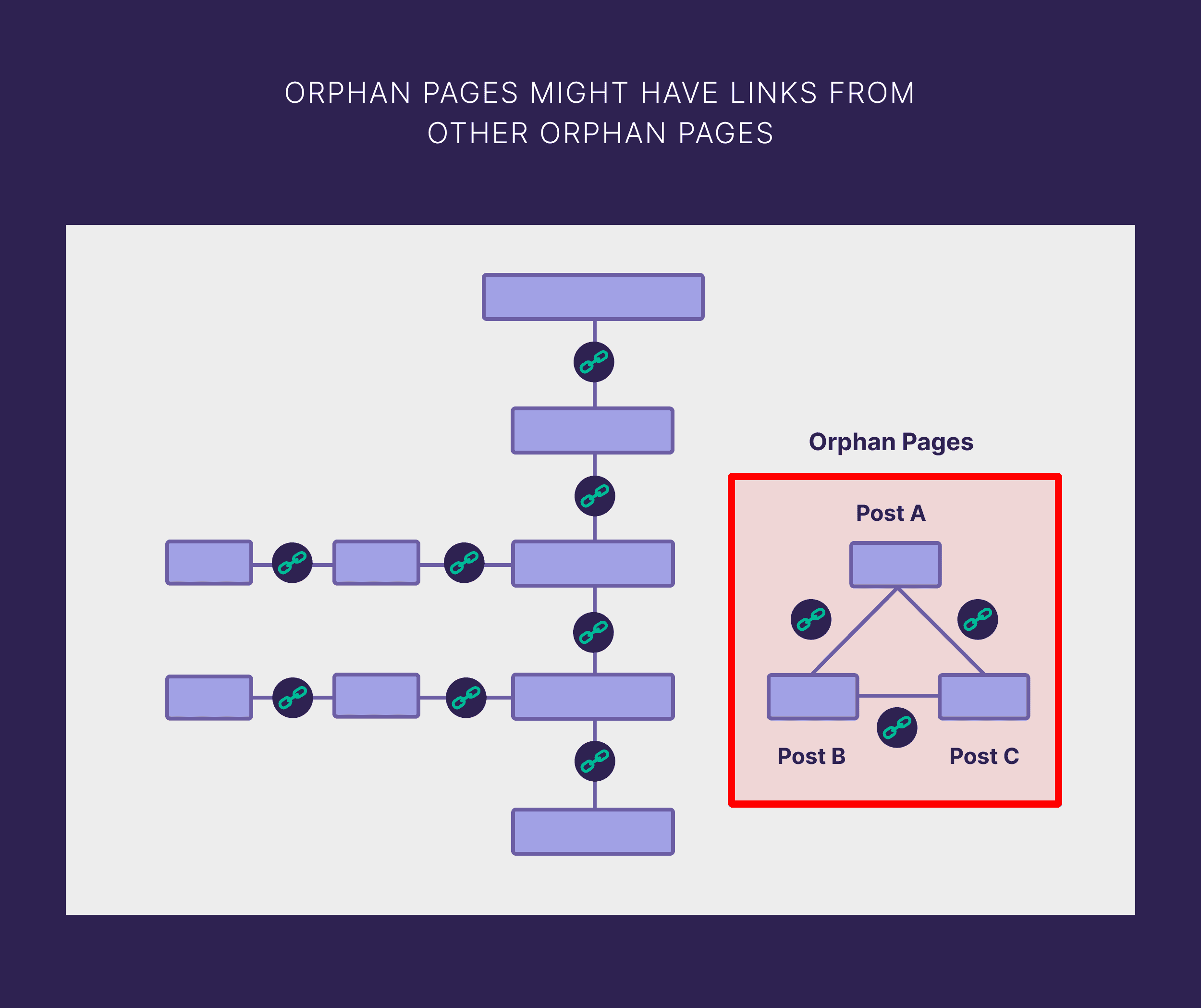
It is essential to distinguish orphan pages from other technical SEO concepts that are often confused. Crawl depth refers to the number of clicks required to reach a page from the homepage. A page at depth 5 is not an orphan; it is just deep. Pagination involves splitting content across multiple URLs, but these URLs are typically linked via “Next” and “Previous” buttons, making them non-orphans. The table below clarifies the differences:
| Concept | Definition | Internal Links | SEO Impact |
|---|---|---|---|
| Orphan Page | URL with zero inbound internal links | None | High risk of non-indexation |
| Deep Page | URL requiring 4+ clicks from homepage | Yes, but limited | Lower priority, but crawlable |
| Pagination | Series of URLs for list content | Yes, via rel=next/prev | Manageable with proper tags |
Understanding these distinctions helps you allocate resources correctly. Fixing orphan pages is a critical priority, while optimizing crawl depth is a secondary enhancement.
Benefits of a Clean Internal Linking Structure
Eliminating AI SEO orphan pages yields immediate and long-term benefits. The most obvious is improved crawl efficiency. Search engines will spend less time discovering dead ends and more time indexing your valuable content. This leads to faster indexing of new AI-generated posts, which is crucial for time-sensitive keywords. Additionally, a clean structure ensures that PageRank flows evenly throughout your site, boosting the authority of your cornerstone content.
User experience also improves significantly. Orphan pages are often inaccessible to users unless they have the direct URL. By integrating these pages into your navigation and contextual links, you provide users with a logical path to discover related information. This increases time on site, reduces bounce rate, and signals to search engines that your content is valuable and interconnected. For AI content, this is particularly important because it helps establish topical clusters, which are a strong ranking factor.
Important Notes for AI Content Workflows
When using AI to generate content at scale, you must build orphan page prevention into the prompt and publishing pipeline. Instruct the AI to generate a list of suggested internal links based on a provided URL list. However, do not blindly trust the AI’s suggestions. AI models often hallucinate URLs or suggest links to pages that do not exist. Always have a human editor verify the links before publication.
Furthermore, consider the ratio of AI-generated pages to human-edited pages. A site that is 90% AI-generated with no manual curation is a high-risk target for algorithmic penalties, regardless of orphan status. Use AI for drafts and data aggregation, but ensure a human reviews the content for factual accuracy, tone, and internal linking. This aligns with Google’s E-E-A-T guidelines, which prioritize experience, expertise, authoritativeness, and trustworthiness. A page that is orphaned and clearly AI-generated with no byline or editorial review will struggle to rank.
Frequently Asked Questions
Can an XML sitemap help index orphan pages?
Yes, an XML sitemap can help search engines discover orphan pages, but it does not guarantee indexing. Google treats sitemaps as a hint, not a directive. Pages with no internal links are often deprioritized because they lack contextual relevance. It is always better to fix the internal linking structure than to rely solely on sitemaps.
How often should I audit for orphan pages?
For sites that publish AI content daily, a weekly audit is recommended. For smaller sites with manual publishing, a monthly audit is sufficient. The key is to run the audit after any major content update or site migration. Regular auditing prevents the problem from growing out of control.
What is the difference between an orphan page and a dead end page?
A dead end page is a page that has no outbound links to other pages on your site. An orphan page has no inbound links. A page can be both an orphan and a dead end, but they are distinct issues. Dead end pages trap users, while orphan pages hide from users and search engines.
Should I delete all low-quality AI orphan pages?
Not necessarily. If the page has any external backlinks, you should 301 redirect it to a relevant page to preserve that link equity. If it has zero backlinks and zero traffic, deleting it is the cleanest option. Always check the URL in Google Search Console for manual actions or impressions before deletion.
Does internal linking from orphan pages help?
No. An orphan page cannot pass link equity because it has no inbound links to receive equity in the first place. The only way to help an orphan page is to link to it from a non-orphan page. Once it receives an internal link, it is no longer an orphan and can then pass value to other pages.
Conclusion
AI SEO orphan pages represent a significant and growing challenge in modern search optimization. The speed and scale of AI content generation have outpaced traditional internal linking practices, leaving many websites with a fragmented architecture that undermines their authority. The solution is not to abandon AI content but to implement rigorous technical audits and editorial workflows that ensure every published page is integrated into the site’s link graph. By prioritizing orphan page detection, categorizing content value, and automating prevention mechanisms, you can protect your crawl budget, consolidate link equity, and ensure that your AI investments contribute to your search rankings rather than detracting from them. Regular audits and a commitment to clean information architecture will keep your site healthy, visible, and competitive in an increasingly crowded digital ecosystem.
Xem thêm:
- Perplexity SEO: How to Rank in AI‑Powered Search Engines and Get Cited
- AI SEO Link Reclamation: The Complete Guide to Recovering Lost Backlinks in 2025
- AI SEO Trends 2026: The Strategies That Will Define Search Next Year
- AI SEO Rich Result Testing: The Complete Guide to Automated SERP Validation
- AI SEO UX Optimization: The Complete Guide to Merging Search Engines and User Experience
Bài viết cùng chủ đề:

AI SEO SEO Automation with Make: The Complete Workflow Guide

AI SEO SEO Automation with Zapier: The Complete Workflow Guide

AI SEO SEO Automation with n8n: The Complete Workflow Guide
AI SEO SEO Automation with Gemini: The Complete Guide to Scaling Organic Growth

AI SEO SEO Automation with Claude: The Complete Guide to Scaling Content in 2025

AI SEO SEO Automation with ChatGPT: The Complete Playbook for 2025

AI SEO & SEO Automation for Affiliate Sites: The 2025 Playbook for Passive Income Growth
AI SEO & SEO Automation for Bloggers: The Complete Guide to Scaling Your Content

AI SEO & SEO Automation for Agencies: The Complete 2025 Playbook

AI SEO and SEO Automation for Ecommerce: The Complete Playbook for 2025

AI SEO & SEO Automation for WordPress: The Complete Playbook for 2025
AI SEO SEO Automation Strategy: The Complete Playbook for 2025

Mastering the AI SEO SEO Automation Process: A Complete Guide to Scaling Organic Growth
AI SEO SEO Automation System: The Complete Guide to Scaling Organic Growth in 2025
AI SEO SEO Automation Platform: The Complete Guide to Scaling Organic Growth in 2025
AI SEO SEO Automation Software: The Complete Guide to Scaling Organic Growth in 2025















