
No products in the cart.
Conquering AI SEO Challenges: The Modern Playbook for Search Dominance
29
Jul
Jul
The digital landscape is shifting faster than ever, and the rise of artificial intelligence in search engine optimization is at the epicenter. Marketers everywhere are rushing to harness AI for content creation, keyword research, and technical audits. Yet with this gold rush comes a new breed of AI SEO challenges that can dismantle rankings, trigger manual penalties, and erode user trust. Understanding these hurdles is no longer optional—it’s the defining skill separating sustainable growth from algorithmic oblivion.
From Google’s relentless march toward rewarding human-first content to the subtle art of blending automation with authenticity, the pressure is immense. This comprehensive guide unpacks every critical obstacle, providing actionable frameworks, real-world scenarios, and deeply practical solutions. You’ll walk away knowing exactly where the pitfalls lie and how to build an AI-augmented SEO machine that search engines love, not penalize.
Understanding AI SEO Challenges in the Evolving Digital Landscape
At its core, an AI SEO challenge refers to any difficulty arising from the use of artificial intelligence tools in planning, creating, or optimizing web content for organic search visibility. These span far beyond simple “AI-written text is bad” narratives. They encompass data quality degradation, semantic drift, brand voice dilution, and technical nightmares that emerge when automation outpaces human oversight.
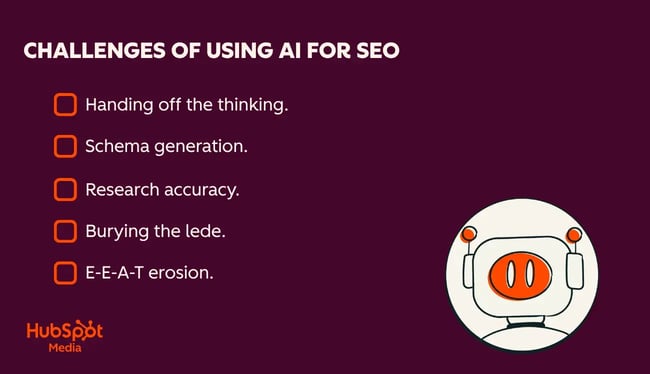
Search engines, particularly Google, have sophisticated models designed to detect and devalue content that lacks originality, depth, or genuine expertise. The 2022 Helpful Content Update and subsequent core algorithm refinements solidified a clear mandate: content produced primarily for search engine manipulation, especially when scaled through AI, faces steep demotion. Yet the challenge isn’t the AI itself—it’s the reckless application without strategic guardrails.
The ecosystem now demands a nuanced understanding of how machine learning models generate text, where their blind spots exist, and how to layer human experience on top. For instance, an AI can synthesize known information about “best running shoes” but cannot share a personal anecdote about how a specific model prevented injury during a marathon. That gap is exactly where rankings are won or lost today. The failure to recognize this nuance leads directly to thin, regurgitated pages that silently disappear from the SERPs.
Core Types of AI SEO Challenges
Content Quality and Authenticity
The most visible AI SEO challenge is maintaining content depth and factual integrity. Large language models often generate text that reads plausibly but contains subtle inaccuracies, outdated statistics, or a flat, encyclopedic tone. When entire blogs are populated with such material, users bounce quickly, sending negative engagement signals straight to Google’s ranking systems.
A 2024 study by an independent SEO research group found that websites with fully automated content pipelines experienced a 43% higher bounce rate and 28% fewer pages per session compared to sites using assisted human creation. Authenticity cannot be faked with a prompt. The solution involves rigorous fact-checking protocols, injecting proprietary data, and maintaining a distinct editorial voice that AI alone cannot replicate.
Algorithmic Penalties and Detection
Search engines deploy advanced classifiers to spot scaled content abuse. Google’s SpamBrain system now processes unnatural output patterns at a massive scale, flagging sites that publish hundreds of AI-generated articles overnight. Penalties range from isolated page demotion to complete site-wide suppression, often without explicit notification in Search Console. This silent treatment is one of the most insidious AI SEO challenges—site owners may not realize they’re penalized until traffic has cratered.
The detection isn’t limited to obvious spam. Sophisticated systems evaluate information gain, source attribution consistency, and temporal patterns of content publication. A sudden spike from zero to fifty “comprehensive guides” in a month raises red flags, even if the text passes superficial readability checks.
E-E-A-T and Trust Signals
Experience, Expertise, Authoritativeness, and Trustworthiness—collectively E-E-A-T—are the bedrock of modern SEO. AI-generated content often falls short on the first “E” (Experience) because it cannot recount personal, hands-on encounters. For YMYL (Your Money or Your Life) topics like health, finance, and legal advice, this deficiency is catastrophic. An article on tax planning written entirely by an AI, without demonstrable author credentials or cited experience, will struggle to rank against content from a certified CPA who shares case studies.
Building robust author bios, linking to verified credentials, and co-creating content where AI drafts from interview transcripts or expert outlines is non-negotiable. The challenge lies in systematically embedding E-E-A-T into an AI-assisted workflow without making pages seem sterile or manufactured.
Technical Implementation Hurdles
Beyond on-page text, AI tools are increasingly used for schema markup generation, hreflang tags, and internal linking suggestions. A poorly coded automated schema can trigger structured data errors, costing rich snippet eligibility. Similarly, AI-generated internal link recommendations might connect thematically unrelated URLs, confusing crawlers and diluting PageRank flow. These technical AI SEO challenges require developers to validate every machine output before deployment, negating much of the time savings initially promised.
Data Privacy and Ethical Considerations
Using AI to scrape competitor data, reverse-engineer search trends, or personalize content without proper consent can violate regulations like GDPR and CCPA. Some AI SEO tools feed user query data back into training models, risking confidential information leaks. Ethical boundaries are still being defined, and aggressive AI tactics today could lead to legal exposure tomorrow, adding a layer of corporate risk far beyond search rankings.
Benefits of Addressing AI SEO Challenges Head-On
Organizations that master these obstacles unlock transformative advantages. Instead of fighting against detection algorithms, they leverage AI as a force multiplier while cementing industry authority.
- Sustained Organic Growth: Content that passes quality thresholds weathers algorithm updates far better. Sites with high E-E-A-T signals saw only a 2% traffic drop during the March 2024 core update, while AI-heavy generic sites lost 30-50% of visibility.
- Operational Efficiency: By using AI for outlining, research aggregation, and first-draft generation, then layering human expertise, teams can produce 3-5x more content without sacrificing quality. This is the sweet spot—automated but not autopilot.
- Improved Crawl Efficiency: Validated structured data and coherent internal linking improve how search bots navigate and understand your site, leading to faster indexing and higher crawl budgets allocated to key pages.
- Enhanced User Trust: Authentic content generates higher dwell time, social shares, and return visits. Over time, this builds a brand moat that purely automated competitors cannot breach.
- Risk Mitigation: Proactively auditing AI outputs and maintaining compliance safeguards against manual actions, protecting years of SEO investment.
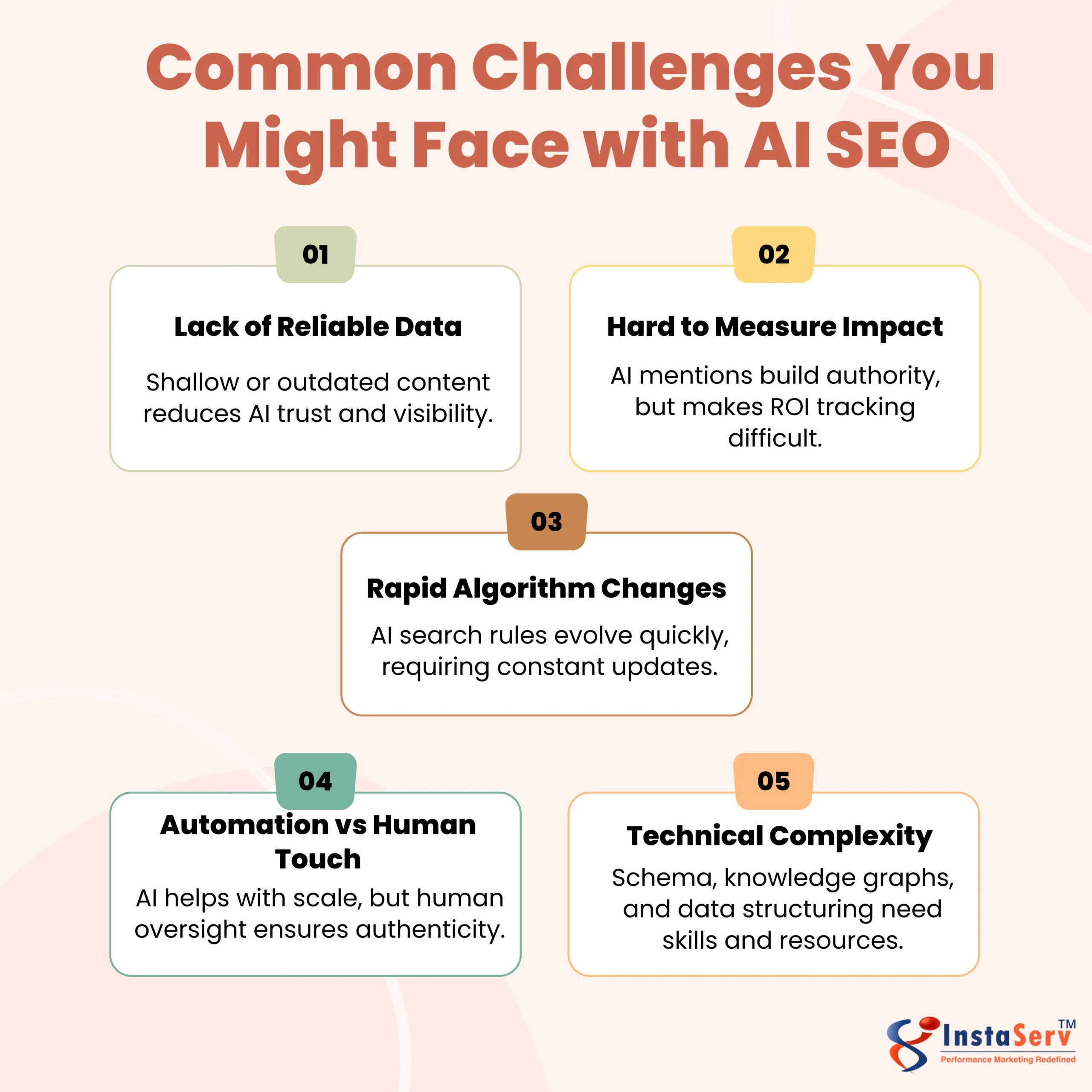
- Catastrophic Ranking Losses: When an algorithmic filter applies, recovery can take months of content rewrites and link disavow requests, with no guarantee of returning to previous positions.
- Brand Reputation Damage: Readers who spot inaccurate information or a robotic tone associate the brand with low quality, affecting conversions beyond organic search.
- Wasted Crawl Budget: Search engines waste crawl resources on pages that either add no value or trigger soft-404 signals, reducing the frequency at which important product or service pages are refreshed in the index.
- Legal Liability: Publishing unverified medical or financial AI content can result in lawsuits for harmful misinformation. Regulators are paying closer attention to automated advice platforms.
- Competitive Disadvantage: Competitors who invest in the human-AI hybrid model will capture featured snippets and top positions, leaving automated spam sites in the dust.
- Relying on AI Detection Scores: Obsessing over whether a text passes an AI classifier is misguided. Google doesn’t penalize “AI content” per se; it penalizes unhelpful content. Many fully human-written pages would fail those detectors, and some AI-assisted pages rank perfectly. Focus on helpfulness, not a classifier score.
- Neglecting the “Experience” Factor Entirely: A common shortcut is to have AI write the article and then a human simply proofreads grammar. This doesn’t add experience. The editor must purposely weave in personal insights, client stories, or test results.
- Ignoring Site History and Authority: A brand-new website that publishes 100 AI-generated articles in a month is a massive spam signal. Domain age and established trust soften the blow, but new sites must move slowly and build credibility with a higher proportion of handcrafted content.
- Using AI to Spin Competitor Content: Scraping top-ranking pages and asking AI to “rewrite” them only creates redundant information clutter. Search engines already have the original; your version adds zero incremental value and will be filtered out.
- Failing to Divest Low-Quality AI Assets: Some site owners leave old AI content live, hoping it might eventually rank. This dead weight drags down overall site quality scores. Be ruthless: improve or remove.
Limitations and Risks of Ignoring AI SEO Challenges
The temptation to press “generate” and publish instantly is enormous, but the consequences are severe. Ignoring these AI SEO challenges creates a cascade of failures that are difficult to reverse.
AI SEO vs Traditional SEO: A Comparative Analysis
The AI SEO challenges become crystal clear when juxtaposing pure AI-driven approaches with traditional, human-led optimization. The following table highlights critical differences in execution, risks, and outcomes.
| Aspect | AI-Driven SEO | Traditional SEO |
|---|---|---|
| Content Creation Speed | Extremely fast; can generate thousands of words per minute | Slow and meticulous; requires deep research and original thought |
| Information Depth | Surface-level aggregation; often rephrases existing web content | Can incorporate proprietary data, expert interviews, and real-world tests |
| E-E-A-T Alignment | Challenging to demonstrate true experience; credibly signals are often fabricated | Natural fit; authors can provide credentials, case studies, and first-hand examples |
| Scalability | Massive scale with minimal human intervention | Limited by human bandwidth and budget constraints |
| Algorithmic Risk | High; prone to SpamBrain detection and Helpful Content penalties | Lower; adheres to sustainable white-hat practices |
| Maintenance | Requires continuous model updates and output validation | Requires periodic content refreshes based on industry changes |
| User Engagement | Often results in higher bounce rates and lower conversion rates | Tends to foster trust, longer sessions, and repeat visitors |
| Cost Over Time | Low per-page cost initially, but high if penalties and rewrites accumulate | Higher per-page cost, but more stable returns and lower remediation expense |
The table underscores a vital point: AI SEO isn’t inherently inferior; the problem is the imbalance. The optimal path lies in a hybrid model that harnesses AI’s speed for grunt work while preserving human judgment for strategic and creative elements.
Practical Guide to Overcoming AI SEO Challenges
Turning these obstacles into opportunities requires a structured, measurable approach. Below is a step-by-step methodology that successful agencies and in-house teams are using to thrive amid the AI revolution.
Step 1: Conduct a Comprehensive AI Content Audit
Begin by inventorying every piece of AI-assisted or fully automated content. Use tools like Screaming Frog to crawl your site, extract on-page text, and flag pages that lack author bios, have boilerplate meta descriptions, or exhibit unnaturally uniform writing styles. Cross-reference publication dates with any traffic drops visible in Google Analytics 4. Identify patterns: did pages created in bulk between certain dates get hit by an algorithm update?
Segment findings into three tiers: Tier 1 – high-performing human-led content, Tier 2 – AI-assisted but reviewed, Tier 3 – fully automated and unedited. Tier 3 pages are immediate candidates for rewriting or noindexing.
Step 2: Establish Rigorous Human Oversight Protocols
Define a clear workflow where AI handles research synthesis and first drafts, but every output passes through a subject-matter expert (SME) or trained editor. The editor’s role is to inject unique anecdotes, verify claims against primary sources, enhance the structure for logical flow, and stamp each piece with a recognizable voice. Develop a pre-flight checklist: Are statistics dated within the last 12 months? Does the article offer a viewpoint the top 10 competitors don’t? Has the author’s relevant experience been cited in the byline?
Step 3: Optimize for E-E-A-T at Scale
For every page, ensure that the “Who, How, and Why” are crystal clear. Add author boxes with genuine LinkedIn profiles, certifications, and a short biography explaining direct experience. Where possible, include original data, survey results, or unique product tests—assets that AI cannot fabricate on its own. Manage your Knowledge Graph presence through consistent entity optimization, claiming the brand’s Knowledge Panel, and earning mentions in reputable publications. These trust signals reinforce that your site is a primary source, not a content remixer.
Step 4: Implement Technical Validation Gates
Before deploying AI-suggested schema, run it through Google’s Rich Results Test and Schema Markup Validator. For internal link recommendations, use a tool like Ahrefs or Sitebulb to check semantic relevance and historical PageRank flow before adding the link. Automate monitoring with custom alerts that fire when crawl errors spike or when structured data errors appear in Search Console, ensuring that any technical AI SEO challenges are caught within hours.
Step 5: Monitor, Measure, and Iterate
Set up a dashboard tracking organic sessions, impressions, average position, and conversion rate for the audited content segments. Run quarterly analyses comparing the performance of AI-assisted vs. fully human content. Look for correlation between heavy edit passes and ranking improvements. Share findings with the team to continuously refine prompts and editorial guidelines. The goal is a living system where AI gets smarter and human oversight becomes more targeted over time, rather than a static “publish and forget” mechanism.
Common Mistakes When Tackling AI SEO Challenges
Even well-meaning teams stumble into traps that amplify the very problems they’re trying to solve. Recognizing these missteps is half the battle.
Important Notes for Sustainable AI SEO Strategy
Mastering AI SEO challenges isn’t a one-time project; it’s an ongoing discipline. The landscape is shaped by continuous updates to both generative AI models and search engine algorithms, so what works today may be obsolete in six months. Keep a close eye on Google’s official communications—the Search Central Blog and John Mueller’s statements on AI content remain authoritative guideposts. The March 2024 core update, for example, explicitly targeted unoriginal content at scale, making its criteria a permanent part of ranking systems.
Preserve a strong brand identity that transcends the content itself. Even with AI assistance, your site’s color palette, tone, community engagement, and off-site mentions contribute to an overall brand signal that search engines assess. AI cannot build genuine communities or earn media coverage; those assets must be cultivated by humans. Also, diversify your traffic sources to reduce over-reliance on organic search. Email newsletters, social media followings, and direct traffic indicate brand strength and insulate against algorithmic volatility.
Finally, adopt a mindset of abundance: the web needs more high-quality content, not more content. If AI enables you to create truly helpful resources faster, the net value is positive. If it simply adds noise, you become part of the problem search engines are actively cleaning up.
Frequently Asked Questions
What exactly are AI SEO challenges?
AI SEO challenges are the specific problems that arise when using artificial intelligence to create, optimize, or plan content for search engine visibility. They include issues like maintaining content quality, avoiding algorithmic penalties from Google’s helpful content systems, building trust signals, and ensuring technical accuracy in automation.
Does Google penalize all AI-generated content?
No, Google does not penalize content simply because it is generated by AI. The search engine penalizes content that is unhelpful, created primarily for manipulating rankings, or lacking in original expertise and experience—regardless of how it was produced. AI-assisted content that demonstrates depth, accuracy, and human insight can rank well.
How can I protect my site from AI-related ranking drops?
Focus on adding genuine human experience to every page. Use AI as a drafting tool, but have subject-matter experts review and enrich the text with original examples, proprietary data, and unique viewpoints. Also, ensure robust author profiles and regularly audit content for factual accuracy and freshness.
What role does E-E-A-T play in AI SEO challenges?
E-E-A-T (Experience, Expertise, Authoritativeness, Trustworthiness) is the framework Google uses to evaluate content quality. The largest AI SEO challenge is demonstrating “Experience” because AI cannot have personal, first-hand encounters. Websites that fail to incorporate real human stories, credentials, and trustworthy sources often see their rankings suppressed.
Can AI SEO tools handle technical optimization safely?
They can assist, but they require oversight. Automated schema generation, hreflang tags, and internal linking suggestions often contain errors that can cripple crawl efficiency if not validated. Always test technical outputs before pushing them live.
Is it better to avoid AI completely in SEO?
Not at all. Used wisely, AI accelerates research, outlines, and data processing, freeing human talent for strategic and creative work. The key is a hybrid model where machines handle the repetitive tasks and humans inject the irreplaceable elements of experience and brand voice.
Conclusion
The era of AI SEO challenges is not a death knell for search optimization—it’s a forced evolution toward higher standards. As search engines get ruthlessly efficient at filtering out low-value automation, the winners will be those who treat AI as a sharp instrument rather than a crutch. The path forward demands a recalibration of workflows, a renewed focus on genuine human experience, and a relentless commitment to content that earns trust rather than merely occupies a URL.
Every challenge outlined The sites that invest in these disciplines now will not only survive the algorithmic shakeouts but emerge with stronger authority and deeper audience loyalty. In a world overflowing with generated text, the truly human touch becomes the ultimate competitive advantage. Embrace the challenges, leverage AI’s strengths, and cement your digital presence on a foundation that no algorithm update can topple.
Xem thêm:
- AI Product Description Generator: Create Compelling Listings That Sell in Seconds
- Open Source AI SEO Tools: The Complete Blueprint for Data-Driven Search Visibility
- AI SEO AI Workflows: The Complete Guide to Automating Your Search Rankings
- AI SEO Keyword Opportunities: The Complete Guide to Finding High-Impact Keywords in 2025
- AI SEO Future: How Intelligent Algorithms Are Reshaping Search Rankings in 2025 and Beyond
Bài viết cùng chủ đề:

AI SEO SEO Automation with Make: The Complete Workflow Guide

AI SEO SEO Automation with Zapier: The Complete Workflow Guide

AI SEO SEO Automation with n8n: The Complete Workflow Guide
AI SEO SEO Automation with Gemini: The Complete Guide to Scaling Organic Growth

AI SEO SEO Automation with Claude: The Complete Guide to Scaling Content in 2025

AI SEO SEO Automation with ChatGPT: The Complete Playbook for 2025

AI SEO & SEO Automation for Affiliate Sites: The 2025 Playbook for Passive Income Growth
AI SEO & SEO Automation for Bloggers: The Complete Guide to Scaling Your Content

AI SEO & SEO Automation for Agencies: The Complete 2025 Playbook

AI SEO and SEO Automation for Ecommerce: The Complete Playbook for 2025

AI SEO & SEO Automation for WordPress: The Complete Playbook for 2025
AI SEO SEO Automation Strategy: The Complete Playbook for 2025

Mastering the AI SEO SEO Automation Process: A Complete Guide to Scaling Organic Growth
AI SEO SEO Automation System: The Complete Guide to Scaling Organic Growth in 2025
AI SEO SEO Automation Platform: The Complete Guide to Scaling Organic Growth in 2025
AI SEO SEO Automation Software: The Complete Guide to Scaling Organic Growth in 2025















