
No products in the cart.
AI Product Description Generator: Create Compelling Listings That Sell in Seconds
29
Jul
Jul
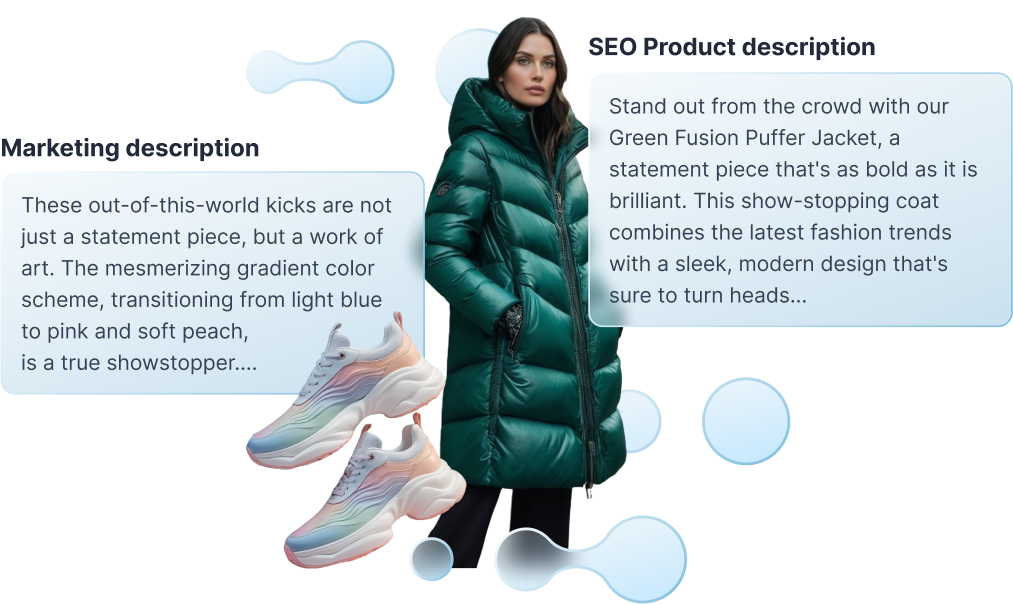
An AI product description generator turns hours of copywriting into a matter of seconds. For e‑commerce managers, dropshippers, and marketing teams, the tool automatically crafts unique, SEO‑friendly product summaries from just a keyword or a product name. Instead of staring at a blank page, you feed the generator basic details – material, color, size, benefits – and receive a polished paragraph ready for your Shopify store, Amazon listing, or social media ad. The technology behind these generators relies on advanced language models that understand context, tone, and buyer psychology, making every description persuasive and consistent across your entire catalog.
What Is an AI Product Description Generator?
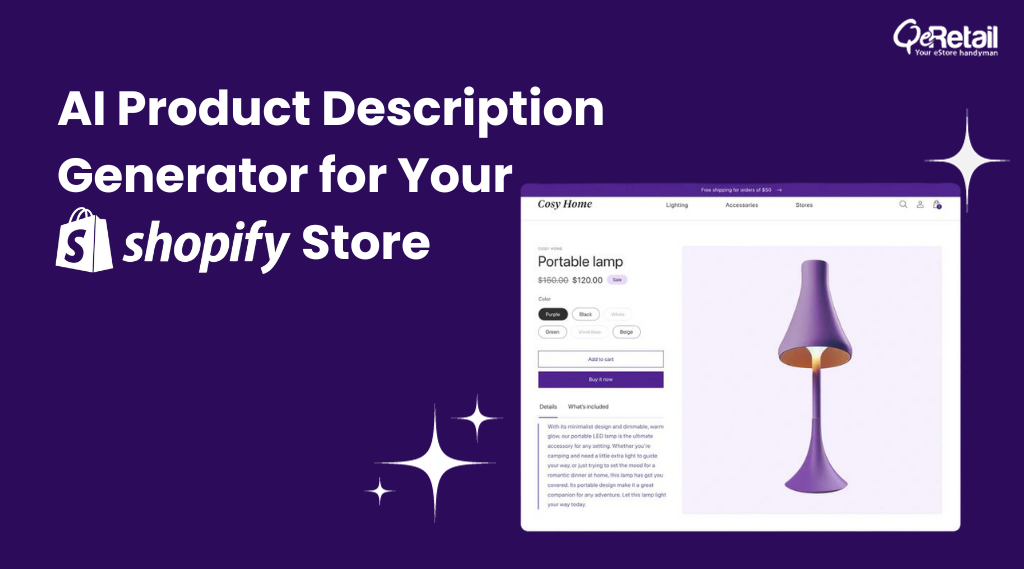
An AI product description generator is software that uses natural language processing (NLP) and machine learning to write product descriptions automatically. The core engine has been trained on millions of product pages, advertisements, and human‑written copy, so it can mimic the style that converts browsers into buyers. You simply input attributes like the product name, category, key features, and perhaps a desired tone of voice. The AI then predicts the most relevant words and structures them into a coherent, benefit‑driven description.
Unlike simple template‑based fill‑in‑the‑blank tools, a true AI generator understands semantics. It can differentiate between a casual fashion accessory and a professional B2B tool, adapting vocabulary and sentence rhythm accordingly. This matters because product copy directly impacts search ranking, click‑through rates, and ultimately, revenue. When every second counts in a crowded marketplace, an AI product description generator eliminates writer’s block and ensures no product goes live with weak, duplicate, or generic text.
How AI Product Description Generators Work
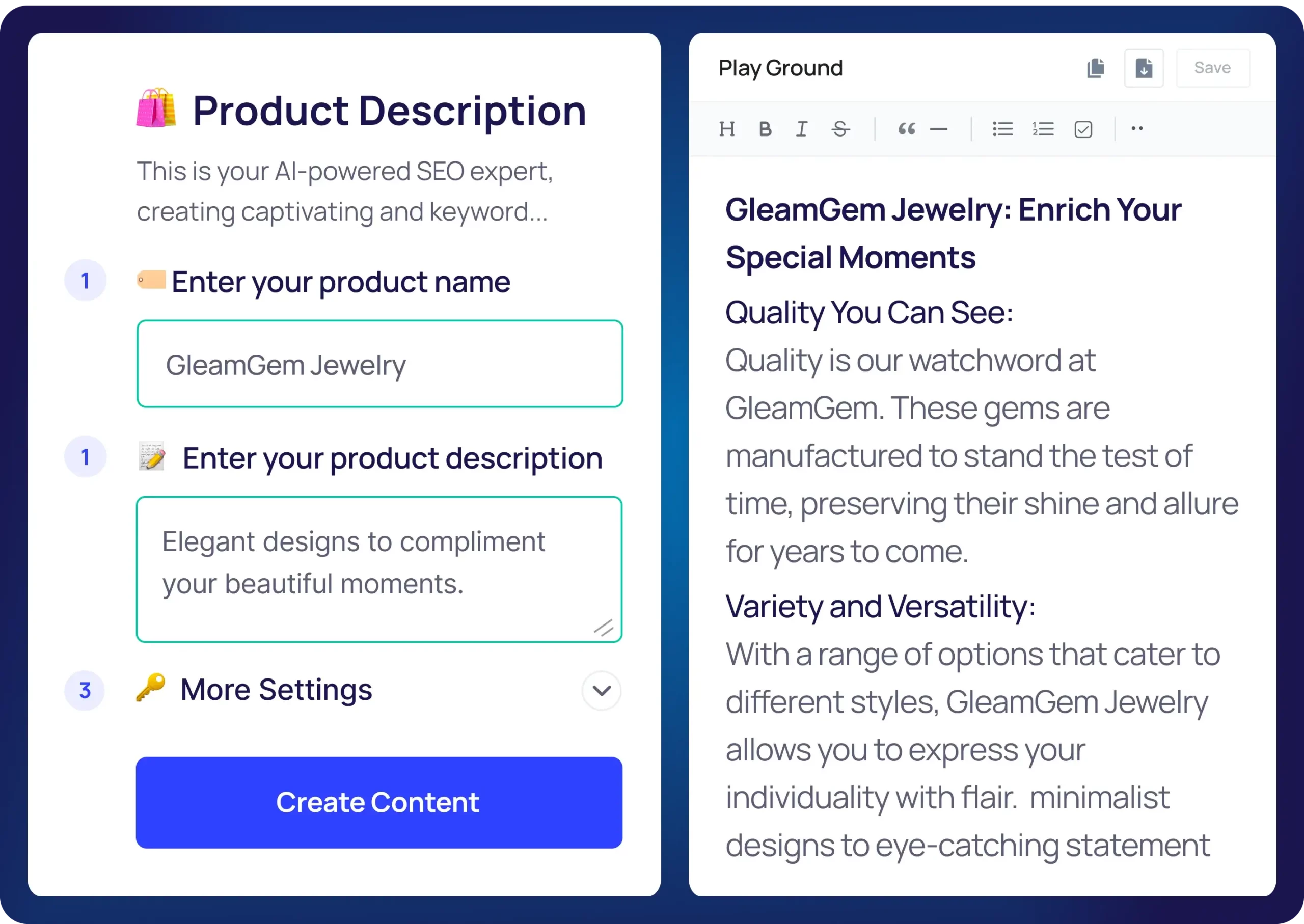
Modern generators run on large language models similar to those behind popular AI assistants. The process typically follows three stages: input processing, content generation, and refinement. In the first stage, you provide seed data: a title, bullet points of specifications, target audience, and desired length. The platform encodes this information into a format the model can analyze. Next, the trained neural network scans its knowledge base to retrieve patterns, phrases, and factual relationships that match your input. It then constructs a paragraph – or several variations – optimized for readability and persuasion.
The output generation incorporates several linguistic techniques. Subject lines and opening hooks are designed to capture attention. Benefit statements are woven into feature descriptions so the shopper immediately understands “what’s in it for me.” The tool also respects constraints such as character limits for meta descriptions or mobile‑friendly snippet lengths. After generation, many platforms offer a built‑in editor or a one‑click rewrite function to fine‑tune the result, maintaining the human touch while saving enormous time.
Key Components of a High‑Quality Generator
- Training Data Diversity: The model must be exposed to product data across niches – electronics, fashion, home goods, books, and more – to avoid formulaic output.
- Tone Customization: Sliders or dropdowns for formal, friendly, luxury, or technical tones let the description match your brand voice.
- Keyword Integration: The system should naturally embed your primary and secondary keywords without forcing them, preserving readability for both humans and search engines.
- Bulk Generation: Enterprise plans allow uploading a CSV file of hundreds of products and receiving descriptions for all of them in minutes.
- Plagiarism Check: Because e‑commerce penalties for duplicate content are severe, built‑in originality verification adds a layer of protection.
Benefits of Using an AI Product Description Generator
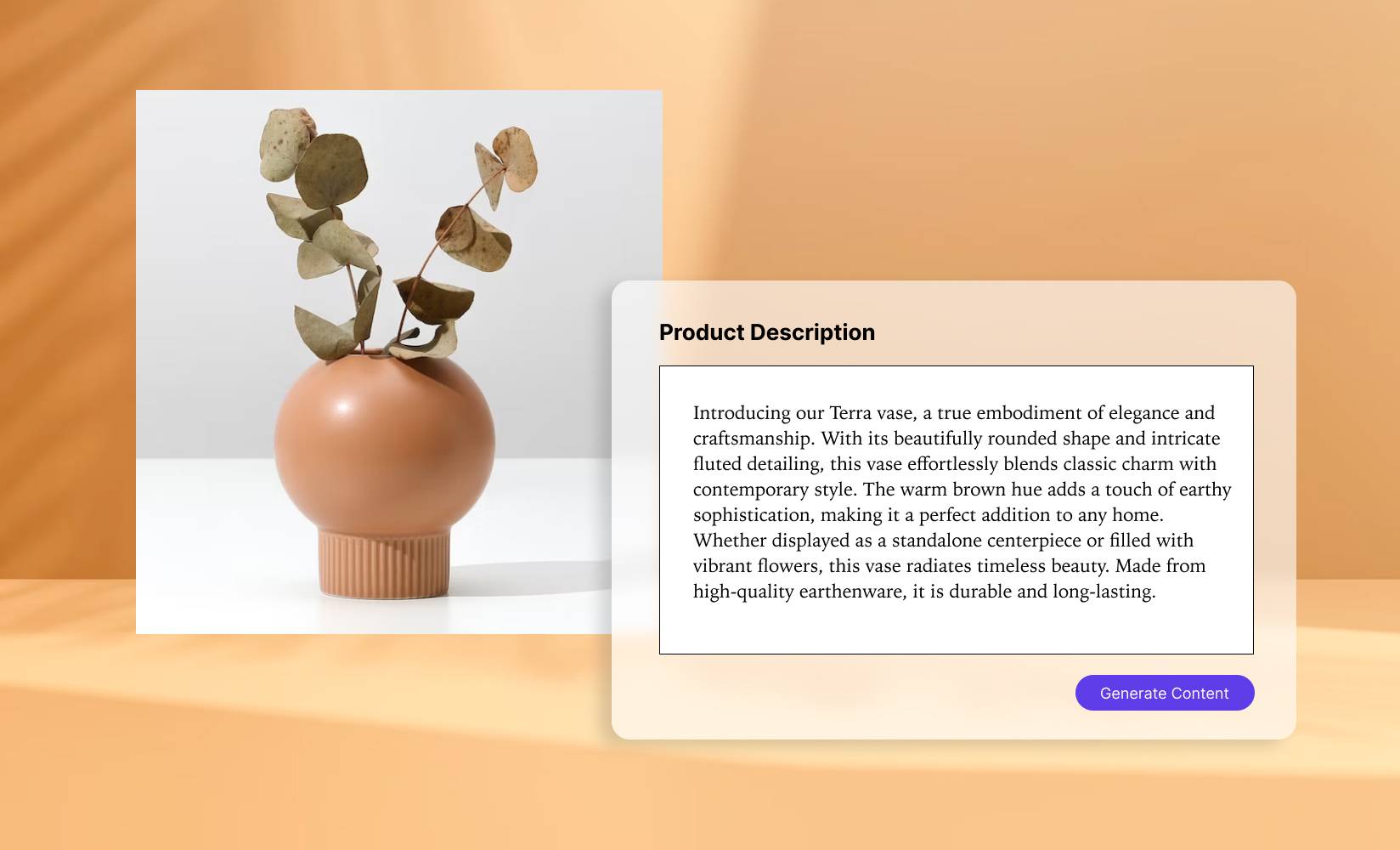
The most immediate benefit is speed. A human copywriter might craft three to five unique descriptions per hour. An efficient AI product description generator can produce over 50 in the same time frame. For stores with thousands of SKUs, the time saved translates directly into faster time‑to‑market. Instead of delaying a product launch because descriptions aren’t ready, you can populate your catalog in a single afternoon.
Consistency across all product pages is another major advantage. When multiple team members write descriptions, subtle differences in style, terminology, or formatting creep in. The AI enforces a uniform brand tone for every listing, which reinforces brand recognition and professionalism. Shoppers scanning from one product to the next feel a sense of reliability even if they don’t consciously notice it.
SEO Advantage
Search engines rank product pages based on unique, relevant content. AI generators are trained to incorporate LSI (Latent Semantic Indexing) keywords – related terms that give context. For a “leather wallet,” the AI might naturally mention “RFID blocking,” “bifold design,” “stitch detailing,” and “minimalist accessory.” This semantic richness helps the page rank for long‑tail queries without keyword stuffing. Moreover, unique descriptions prevent the internal duplicate content penalty that many store owners accidentally trigger by copying the same manufacturer‑supplied blurb across multiple variations.
Cost Efficiency
Hiring a full‑time copywriter or agency can cost thousands of dollars per month. For startups and small businesses, an AI product description generator often provides the most cost‑effective path to professional copy. Subscription plans for leading generators start at a fraction of the cost of a single freelancer, and the output scales infinitely. The tool essentially pays for itself when you calculate the hours reclaimed and the potential uplift in conversion rates from improved copy.
Limitations and When Human Editing Is Still Necessary
No AI is perfect. Generators occasionally produce factual inaccuracies, especially when dealing with highly technical specifications. If you sell industrial equipment or electronics with precise measurements, you must verify every number. The AI might also struggle with creative storytelling for luxury goods that require a sense of heritage or emotional poetry. While tone sliders help, truly evocative copy that makes someone fall in love with a brand often still needs a human touch.
Another limitation is cultural nuance. Idioms, humor, and region‑specific references can land awkwardly if the model hasn’t been fine‑tuned for a particular locale. This is particularly critical for international stores selling to markets with distinct cultural values. A best practice is to treat the generated text as a high‑quality first draft, then have a native speaker or brand expert review and polish the final version.
AI Product Description Generator vs. Manual Copywriting vs. Templates
| Criteria | AI Product Description Generator | Manual Copywriter | Template‑Based Tool |
|---|---|---|---|
| Speed (per 100 products) | Under 30 minutes | 25–40 hours | 2–4 hours (manual input) |
| Uniqueness | High, with semantic variation | High, if writer is skilled | Low to medium, often repetitive |
| SEO Optimization | Built‑in LSI keyword integration | Dependent on writer’s SEO knowledge | Minimal; basic placeholders |
| Cost at Scale | $20–$500/month subscription | $500–$5,000+ per project | Often free or low‑cost one‑time |
| Brand Consistency | Excellent, once tone is set | Varies with individual writers | Consistent but dull |
| Creative Storytelling | Functional, needs refinement | Can be exceptional | Very limited |
The table highlights that for most mid‑sized e‑commerce operations, the AI product description generator delivers the best balance of speed, SEO value, and cost. Only when extreme creativity or highly technical precision is required does a human writer pull ahead.
Practical Guide: How to Generate Descriptions That Convert
Using a generator effectively requires more than just throwing in a product name. Start by crafting a detailed product brief. For each item, list the top three benefits, the material, color variations, dimensions, and the ideal customer scenario. The richer the input, the more targeted the AI output. Many platforms also let you insert your brand’s unique value proposition – free shipping, 30‑day returns, handmade craftsmanship – so the description ends with a clear call to action.
Next, choose the tone carefully. If your audience is Gen Z, a playful, emoji‑friendly tone might be appropriate; for corporate buyers, stick to professional and jargon‑free language. Run a small batch of five descriptions and review them for accuracy and flow. Make small adjustments to the prompt until you’re satisfied, then scale up. Always integrate your primary keyword, “AI product description generator,” where it feels natural – for example, in a meta description or in a blog post comparing tools, but within the product copy itself, the focus should remain on the product’s features and benefits.
Using the AI for Multi‑Platform Optimization
Different marketplaces have different requirements. Amazon bullet points are short and benefit‑oriented; Etsy descriptions benefit from a story‑driven approach; Google Shopping feeds need strict pixel‑perfect character limits. A quality AI product description generator allows you to create platform‑specific variants from the same source data. You can generate a long‑form page for your Shopify store, a compact version for an Instagram caption, and a bulleted list for Amazon – all with consistent messaging.
Common Mistakes and How to Avoid Them
A frequent pitfall is blindly trusting the AI without proofreading. Even top models sometimes mix up color names or invent plausible‑sounding but incorrect features. Always fact‑check against your actual inventory spreadsheet. Another mistake is ignoring the emotional hook. The generator might produce a technically accurate description that reads like a spec sheet. Add one sentence that ties the product to a feeling or a lifestyle – this small edit dramatically improves conversion.
Many users also forget to optimize the product title and meta description together with the body copy. The AI can generate those elements, but they must be coherent as a set. A disjointed title and body cost you clicks. Finally, don’t overlook mobile readability. Blocks of text that look fine on desktop become intimidating on a smartphone. Use the AI’s outline or short‑form option to keep paragraphs under three lines and incorporate white space.
Important Notes for Enterprise and Multi‑Language Stores
If you operate a global store, look for a generator that supports translation and localization, not just literal translation. Localization adapts idioms, measurements, and cultural references so a description resonates in French, Japanese, or Portuguese just as well as it does in English. Some enterprise AI product description generators maintain a glossary of approved brand terms, preventing creative liberties that could confuse customers.
API access is another consideration for large catalogs. Connecting your product information management (PIM) system directly to the generator’s API means new products are described the moment they are entered into the database. This closed‑loop system minimizes human effort and ensures descriptions are never a bottleneck in your supply chain. Always check the provider’s data privacy and terms – your proprietary product details should never be used to train public models.
Frequently Asked Questions
Can an AI product description generator write fully unique content for every product?
Yes. The underlying language model constructs each description from scratch based on input parameters and its training. It does not simply swap words in a template. To ensure uniqueness, reputable generators include a built‑in plagiarism checker. However, it is wise to review close variants (e.g., different sizes of the same shirt) and possibly add a distinguishing sentence manually to avoid even accidental overlap.
Is AI‑generated copy bad for SEO?
Not if done correctly. Google’s guidelines reward helpful, original content regardless of how it was created. AI-generated product descriptions that are unique, well‑structured, and contain relevant LSI keywords perform well in search rankings. The danger arises when descriptions are thin, duplicated across sites, or stuffed with keywords. Use the AI as a draft and then enhance with first‑hand details like real customer use cases, exact sizing information, or warranty terms to demonstrate expertise.
How do I choose the best AI product description generator for my store?
Prioritize platforms that offer a free trial so you can test output quality with your own products. Evaluate the tone customization, bulk generation capabilities, and integration options (e.g., Shopify app, API). Look at user reviews on third‑party sites to gauge reliability and support responsiveness. The “best” generator is the one that matches your catalog size, niche, and budget while delivering consistent, brand‑aligned copy.
Will AI replace human copywriters entirely?
AI handles the repetitive, high‑volume work that makes up the bulk of e‑commerce copy. For brand storytelling, high‑emotion campaigns, and ultra‑technical explanations, human writers remain invaluable. The trend points to a collaborative model: AI produces the first draft, humans refine and add creative flair. This partnership allows copywriters to focus on strategy and emotion instead of manual, product‑by‑product authoring.
Can I use an AI product description generator for non‑e‑commerce content?
Absolutely. Many generators can write social media ads, email product highlights, video scripts, and even category page introductions. As long as the core task involves describing a product’s features and benefits in a persuasive way, the AI adapts. For completely unrelated content like technical whitepapers, a specialized writing tool might be more appropriate.
Conclusion
An AI product description generator is no longer a futuristic luxury; it is a practical necessity for any e‑commerce business aiming to scale. From slashing time spent on copy to providing a unified voice across thousands of SKUs, the tool empowers teams to focus on product development, customer service, and growth. The key lies in treating the generated text as a powerful starting point – verifying facts, injecting personality, and optimizing for the platform where it will live. When used thoughtfully, the AI product description generator becomes an extension of your brand’s voice, turning every product listing into a high‑converting salesperson that works 24/7.
Xem thêm:
- AI SEO Long Tail Keyword Research: The Complete Guide to Smarter Rankings
- AI SEO AI Search Discovery: The Complete Guide to Winning Generative Search
- Mastering AI SEO Keyword Variations: The Complete Guide to Smarter Search Rankings
- AI SEO for SaaS: The Complete Strategy to Dominate Search in 2025
- AI SEO Competitor Traffic: The Complete Playbook for Outranking Rivals in 2025
Bài viết cùng chủ đề:

AI SEO SEO Automation with Make: The Complete Workflow Guide

AI SEO SEO Automation with Zapier: The Complete Workflow Guide

AI SEO SEO Automation with n8n: The Complete Workflow Guide
AI SEO SEO Automation with Gemini: The Complete Guide to Scaling Organic Growth

AI SEO SEO Automation with Claude: The Complete Guide to Scaling Content in 2025

AI SEO SEO Automation with ChatGPT: The Complete Playbook for 2025

AI SEO & SEO Automation for Affiliate Sites: The 2025 Playbook for Passive Income Growth
AI SEO & SEO Automation for Bloggers: The Complete Guide to Scaling Your Content

AI SEO & SEO Automation for Agencies: The Complete 2025 Playbook

AI SEO and SEO Automation for Ecommerce: The Complete Playbook for 2025

AI SEO & SEO Automation for WordPress: The Complete Playbook for 2025
AI SEO SEO Automation Strategy: The Complete Playbook for 2025

Mastering the AI SEO SEO Automation Process: A Complete Guide to Scaling Organic Growth
AI SEO SEO Automation System: The Complete Guide to Scaling Organic Growth in 2025
AI SEO SEO Automation Platform: The Complete Guide to Scaling Organic Growth in 2025
AI SEO SEO Automation Software: The Complete Guide to Scaling Organic Growth in 2025















