
No products in the cart.
AI SEO AI Workflows: The Complete Guide to Automating Your Search Rankings
31
Jul
Jul
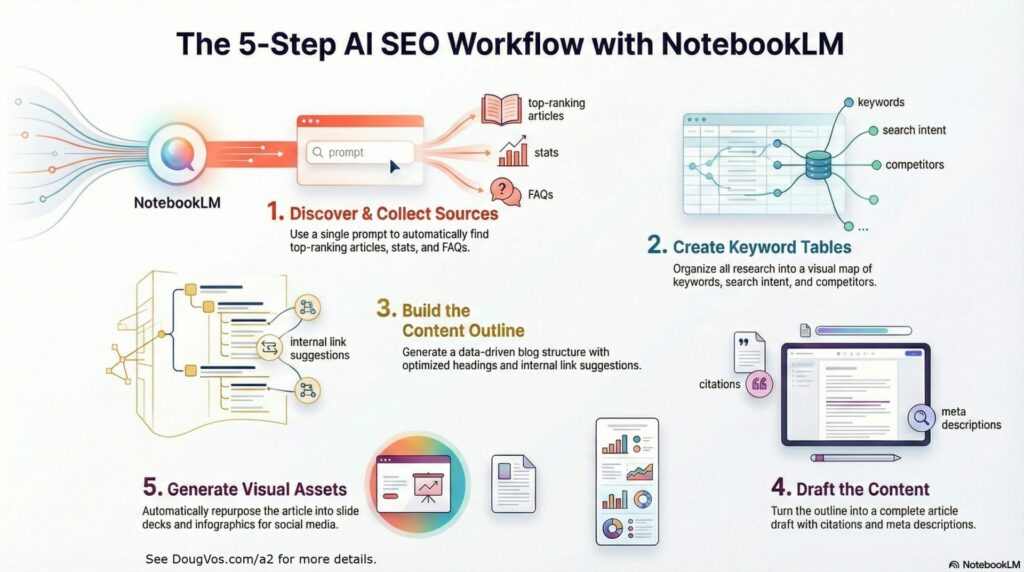
The digital marketing landscape has shifted dramatically. Search engines now prioritize helpful, authoritative content, and the tools to create it have evolved. AI SEO AI workflows represent the convergence of artificial intelligence and search engine optimization, transforming how businesses research, create, and optimize their online presence. This guide breaks down everything you need to know about building these systems, from foundational concepts to advanced implementation strategies that drive measurable results.
What Are AI SEO AI Workflows?
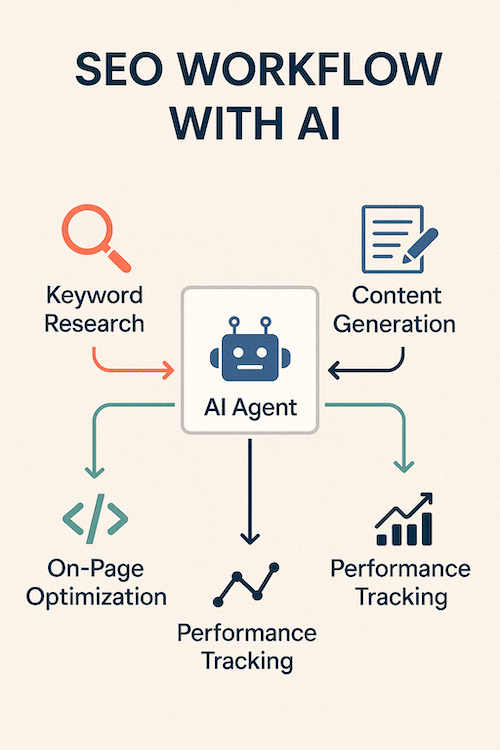
AI SEO AI workflows are structured processes that leverage artificial intelligence to automate and enhance search engine optimization tasks. These workflows combine machine learning models, natural language processing, and automation tools to handle repetitive tasks, generate insights, and scale content production without sacrificing quality.
Unlike traditional SEO, which relies heavily on manual analysis and guesswork, AI-powered workflows use data-driven algorithms to identify patterns, predict trends, and execute optimizations at scale. A typical workflow might include keyword clustering, content brief generation, draft creation, internal linking suggestions, and performance monitoring—all orchestrated through AI tools.
The Core Components of an AI-Driven SEO System
Building an effective AI SEO workflow requires understanding its fundamental building blocks. These components work together to create a seamless pipeline from research to results.
- Data Collection Layer: Gathers search queries, competitor data, and user behavior signals from sources like Google Search Console, Ahrefs, or Semrush.
- Analysis Engine: Uses AI models to interpret data, identify content gaps, and predict ranking opportunities.
- Content Generation Module: Employs large language models to produce drafts, outlines, and meta descriptions based on analyzed data.
- Optimization Tools: Automates on-page elements like title tags, headers, and schema markup.
- Monitoring System: Tracks rankings, traffic, and engagement metrics to feed insights back into the workflow.
- Input target topic and primary keyword into the AI research tool
- AI analyzes top-ranking pages and extracts common patterns
- System generates a content brief with suggested headings, word count, and semantic keywords
- Writer uses the brief to create content, assisted by AI drafting tools
- AI optimization tool reviews the draft and suggests on-page improvements
- Content is published and monitored by ranking trackers
- Performance data feeds back into the system for future optimization
- Focus on E-E-A-T: Google’s guidelines emphasize Experience, Expertise, Authoritativeness, and Trustworthiness. Use AI to support these qualities, not replace them. Include author bios, cite credible sources, and showcase real-world experience.
- Maintain a Human Touch: AI can generate text, but it cannot replicate genuine human emotion, storytelling, or unique perspectives. Infuse your content with personal anecdotes and insights that only you can provide.
- Prioritize User Experience: AI optimization should never compromise readability. Ensure your content is well-structured, easy to scan, and provides immediate value to the reader.
- Stay Updated on AI Developments: The field of AI is evolving rapidly. New models and tools are released frequently, offering improved capabilities. Dedicate time to learning about these advancements and testing how they can benefit your workflows.
- Combine AI with Human Creativity: The best results come from a partnership between AI’s analytical power and human creativity. Use AI to handle data-heavy tasks, freeing up your time for strategic thinking and creative content development.
Why Traditional SEO Methods Fall Short
Manual SEO processes are slow, inconsistent, and limited by human capacity. A single content audit can take days, and keyword research often relies on outdated spreadsheets. More importantly, search engines have become sophisticated at detecting thin content and keyword stuffing, punishing sites that don’t provide genuine value.
AI SEO AI workflows address these shortcomings by processing vast amounts of data in seconds. They can analyze thousands of search results to determine what actually ranks, then generate content that matches user intent with precision. This shift from reactive to proactive optimization is critical in a landscape where Google updates its algorithms hundreds of times per year.
Key Benefits of Implementing AI SEO Workflows

Organizations that adopt AI-driven SEO processes report significant improvements across multiple metrics. The advantages extend beyond simple time savings, touching on accuracy, scalability, and strategic insight.
Unmatched Scalability for Content Production
Creating 100 high-quality articles per month manually requires a large team and substantial budget. AI workflows can generate comprehensive drafts, outlines, and briefs in a fraction of the time. This allows small teams to compete with enterprise-level content operations. For example, a marketing agency using AI workflows can produce client reports, content calendars, and optimization recommendations simultaneously.
Data-Backed Decision Making
AI algorithms excel at identifying correlations that humans might miss. They can analyze which content formats perform best for specific keywords, what tone resonates with target audiences, and how competitor strategies evolve over time. This intelligence enables SEO professionals to make informed decisions rather than relying on intuition.
Consistent On-Page Optimization
Maintaining consistent optimization across hundreds of pages is challenging. AI workflows ensure every title tag, meta description, and header follows best practices. They can also automatically suggest internal links based on semantic relevance, improving site architecture and crawlability.
Real-Time Adaptation to Algorithm Changes
When Google updates its ranking algorithms, AI systems can quickly analyze the impact on your site and adjust strategies accordingly. This agility is impossible with manual processes that take weeks to implement changes.
Limitations and Challenges to Consider
While AI SEO AI workflows offer immense potential, they are not without drawbacks. Understanding these limitations helps you implement them effectively without falling into common traps.
| Challenge | Impact | Mitigation Strategy |
|---|---|---|
| Content Quality Control | AI-generated text can lack nuance or factual accuracy | Implement human review stages for all published content |
| Data Dependency | Poor input data leads to poor output recommendations | Regularly audit and clean your data sources |
| Tool Integration Complexity | Connecting multiple AI tools can create technical bottlenecks | Use platforms with native integrations or API-first architecture |
| Cost of Advanced Tools | Premium AI SEO software can be expensive for small businesses | Start with free tiers and scale as ROI becomes clear |
How to Build Your First AI SEO Workflow

Implementing an AI-driven SEO process doesn’t require a complete overhaul of your existing strategy. Start with a focused approach that targets your most critical pain points, then expand as you see results.
Step 1: Define Your Objectives and KPIs
Before selecting tools, clarify what you want to achieve. Are you looking to increase organic traffic, improve keyword rankings, or reduce content production time? Establish specific, measurable goals such as “increase organic sessions by 30% in six months” or “reduce content brief creation time from 4 hours to 30 minutes.”
Step 2: Choose the Right AI Tools
The market offers a wide range of AI SEO tools, each with unique strengths. For keyword research and clustering, tools like Surfer SEO or Clearscope provide data-driven insights. For content generation, platforms like Jasper or Copy.ai integrate with SEO data to produce optimized drafts. For technical SEO audits, tools like Screaming Frog combined with AI analysis can identify issues at scale.
Step 3: Map Out the Workflow Sequence
Define the step-by-step process from initial research to final publication. A typical workflow might look like this:
Step 4: Integrate with Your Existing Tech Stack
Your AI workflow should connect seamlessly with your CMS, analytics tools, and project management software. Use APIs or middleware like Zapier to automate data transfer between systems. This eliminates manual data entry and ensures all teams work with the same information.
Step 5: Establish Quality Control Checkpoints
AI is a powerful assistant, but it cannot replace human judgment entirely. Set up review stages where editors verify factual accuracy, brand voice consistency, and overall readability. Create a checklist that includes checking for outdated statistics, verifying claims, and ensuring the content provides unique value beyond what AI generated.
Practical Applications of AI SEO Workflows
AI workflows are not theoretical concepts—they are being used successfully across industries to achieve tangible results. Here are some real-world applications that demonstrate their versatility.
Automated Content Clustering and Topic Authority
Building topical authority requires creating comprehensive content clusters around core subjects. AI can analyze your existing content, identify gaps, and suggest new articles that strengthen your topical relevance. For instance, a fitness website might use AI to discover that its “nutrition” cluster lacks content on “meal prep for athletes,” prompting the creation of targeted articles that capture additional search traffic.
Dynamic Internal Linking Suggestions
Internal links help search engines understand your site structure and distribute authority. AI algorithms can analyze your entire site to recommend relevant internal links based on semantic similarity. This not only improves crawlability but also enhances user experience by guiding visitors to related content they might find valuable.
Predictive Performance Analytics
Advanced AI workflows can predict how changes to your content might impact rankings before you publish. By analyzing historical data and current SERP features, these systems can estimate the potential traffic for a given keyword and suggest optimizations to maximize visibility.
Automated Competitor Gap Analysis
Understanding what your competitors are doing well is crucial for staying ahead. AI tools can continuously monitor competitor content, backlink profiles, and keyword strategies, alerting you to new opportunities or threats. This real-time intelligence allows you to adapt your strategy quickly rather than reacting months later.
Common Mistakes When Implementing AI SEO Workflows
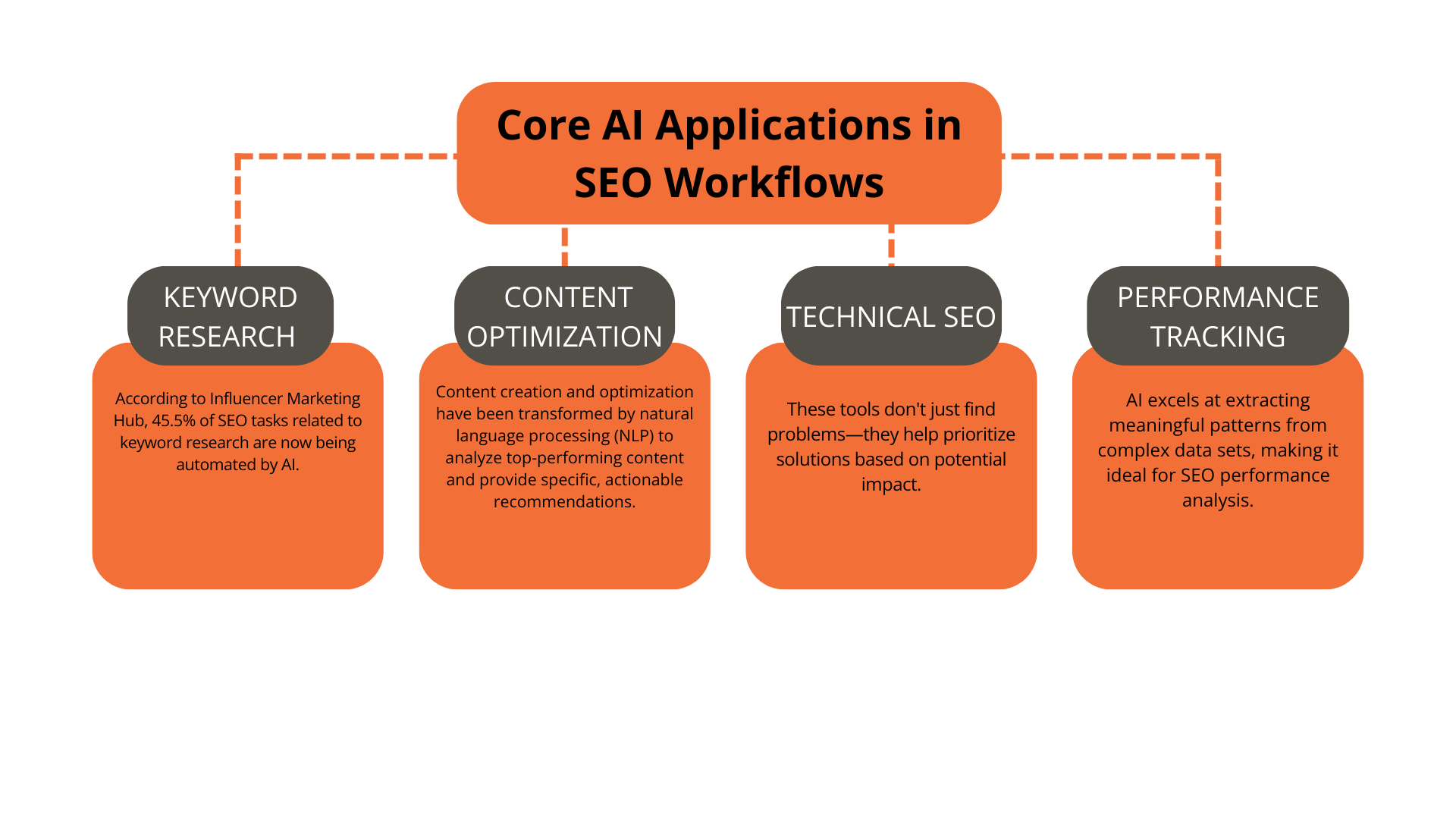
Many businesses fail to realize the full potential of AI SEO because they make avoidable errors during implementation. Recognizing these pitfalls helps you navigate the learning curve more smoothly.
Over-Reliance on AI-Generated Content Without Editing
Publishing AI-generated text without human review is a recipe for disaster. Search engines can detect low-quality, repetitive content, and users will quickly lose trust in your brand. Always treat AI output as a first draft that requires human refinement, fact-checking, and the addition of unique insights.
Ignoring User Intent in Favor of Keyword Volume
AI tools can identify high-volume keywords, but not all high-volume keywords are worth targeting. Some may have commercial intent while others are purely informational. Failing to align content with user intent leads to high bounce rates and poor engagement metrics, which negatively impact rankings.
Neglecting Technical SEO Fundamentals
AI workflows cannot fix a site with broken technical foundations. If your site has slow loading times, poor mobile responsiveness, or crawl errors, no amount of AI optimization will help. Ensure your technical SEO is solid before investing heavily in AI-driven content strategies.
Lack of Continuous Monitoring and Adjustment
AI workflows are not set-and-forget systems. They require ongoing monitoring to ensure they are performing as expected. Regularly review your analytics to identify patterns, adjust your prompts and parameters, and stay updated on new AI capabilities that could enhance your processes.
Important Notes for Maximizing AI SEO Effectiveness
To get the most out of your AI SEO AI workflows, keep these best practices in mind. They represent the collective wisdom of SEO professionals who have successfully integrated AI into their operations.
Frequently Asked Questions About AI SEO AI Workflows
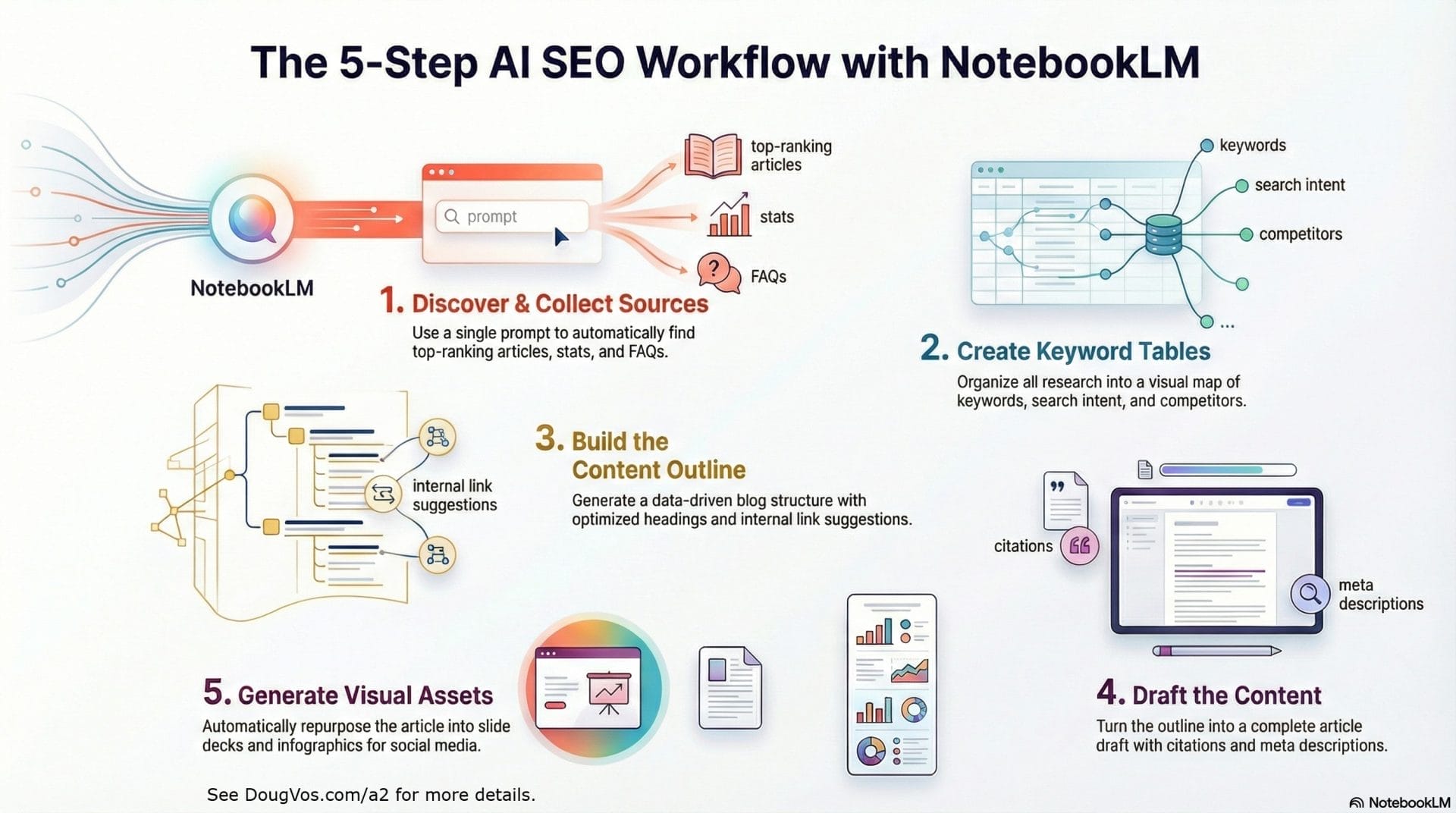
What is the difference between AI SEO and traditional SEO?
Traditional SEO relies on manual research, analysis, and optimization performed by human experts. AI SEO uses machine learning algorithms to automate these processes, analyze larger datasets, and generate insights at scale. While traditional methods are still valuable, AI SEO offers significant advantages in speed, accuracy, and scalability.
Can AI completely replace human SEO professionals?
No, AI cannot completely replace human SEO professionals. While AI excels at data analysis, pattern recognition, and content generation, it lacks the strategic thinking, creativity, and contextual understanding that humans bring. The most effective approach is a hybrid model where AI handles repetitive tasks and humans focus on high-level strategy and quality control.
How much does it cost to implement AI SEO workflows?
The cost varies widely depending on the tools you choose and the scale of your operations. Basic AI writing assistants can cost around $20-50 per month, while comprehensive SEO platforms with AI features range from $100 to $500 per month. Enterprise-level solutions can cost thousands of dollars. Many tools offer free trials or limited free tiers, allowing you to test before committing.
What are the best AI tools for SEO in 2025?
Several tools stand out for their AI capabilities. Surfer SEO offers excellent content optimization features. Clearscope provides robust keyword and content intelligence. Jasper and Copy.ai are popular for content generation. For technical SEO, tools like Sitebulb and Screaming Frog have integrated AI features. The best choice depends on your specific needs and budget.
How do I measure the ROI of AI SEO workflows?
Measure ROI by tracking key performance indicators such as organic traffic growth, keyword ranking improvements, conversion rates, and time saved on content production. Compare these metrics against your baseline before implementing AI workflows. Calculate the cost of your AI tools and human resources, then determine if the gains justify the investment.
Is AI-generated content penalized by Google?
Google does not penalize AI-generated content simply because it was created by AI. However, Google does penalize low-quality content that fails to provide value to users, regardless of whether it was created by humans or AI. The key is to ensure your AI-generated content is accurate, helpful, and meets the same quality standards as human-written content.
Conclusion
AI SEO AI workflows represent a fundamental shift in how digital marketing operates. By automating data analysis, content generation, and optimization tasks, these systems empower businesses to scale their SEO efforts while maintaining quality and relevance. The key to success lies in viewing AI as a powerful assistant rather than a complete replacement for human expertise.
Start small by identifying one area of your SEO process that could benefit from automation. Implement a pilot workflow, measure the results, and refine your approach based on data. As you become more comfortable with the technology, expand its application across your entire content strategy. The businesses that embrace this transformation now will be well-positioned to dominate search rankings in the years ahead.
The future of SEO is intelligent, automated, and data-driven. By building robust AI workflows today, you create a sustainable competitive advantage that adapts to the ever-changing search landscape. Take the first step, experiment with the tools available, and discover how AI can elevate your search performance to new heights.
Xem thêm:
- AI SEO Product Schema: The Complete Guide to Structured Data That Ranks
- How to Scale SEO with AI: The Ultimate Guide to Automating Organic Growth
- WP Trove AI Writer Review: The Ultimate AI Content Tool for WordPress
- AI SEO Keyword Mapping: The Complete Guide to Smarter Content Planning
- AI SEO for Fashion: The Complete Guide to Dominating Search in 2025
Bài viết cùng chủ đề:

AI SEO SEO Automation with Make: The Complete Workflow Guide

AI SEO SEO Automation with Zapier: The Complete Workflow Guide

AI SEO SEO Automation with n8n: The Complete Workflow Guide
AI SEO SEO Automation with Gemini: The Complete Guide to Scaling Organic Growth

AI SEO SEO Automation with Claude: The Complete Guide to Scaling Content in 2025

AI SEO SEO Automation with ChatGPT: The Complete Playbook for 2025

AI SEO & SEO Automation for Affiliate Sites: The 2025 Playbook for Passive Income Growth
AI SEO & SEO Automation for Bloggers: The Complete Guide to Scaling Your Content

AI SEO & SEO Automation for Agencies: The Complete 2025 Playbook

AI SEO and SEO Automation for Ecommerce: The Complete Playbook for 2025

AI SEO & SEO Automation for WordPress: The Complete Playbook for 2025
AI SEO SEO Automation Strategy: The Complete Playbook for 2025

Mastering the AI SEO SEO Automation Process: A Complete Guide to Scaling Organic Growth
AI SEO SEO Automation System: The Complete Guide to Scaling Organic Growth in 2025
AI SEO SEO Automation Platform: The Complete Guide to Scaling Organic Growth in 2025
AI SEO SEO Automation Software: The Complete Guide to Scaling Organic Growth in 2025















