
No products in the cart.
AI SEO Compression: The Complete Guide to Slimming Down Your Content for Higher Rankings
31
Jul
Jul
In the fast-paced world of search engine optimization, the concept of AI SEO Compression has emerged as a critical strategy for digital marketers and content creators. This approach involves using artificial intelligence to streamline, condense, and optimize web content without sacrificing its core value or search relevance. As search engines evolve to prioritize user experience and semantic relevance, the ability to deliver precise, high-quality information in a compact format has become a competitive advantage. This comprehensive guide explores the mechanics, benefits, and practical applications of AI SEO Compression, offering a roadmap for implementing this technique to boost organic visibility and engagement.
What is AI SEO Compression?
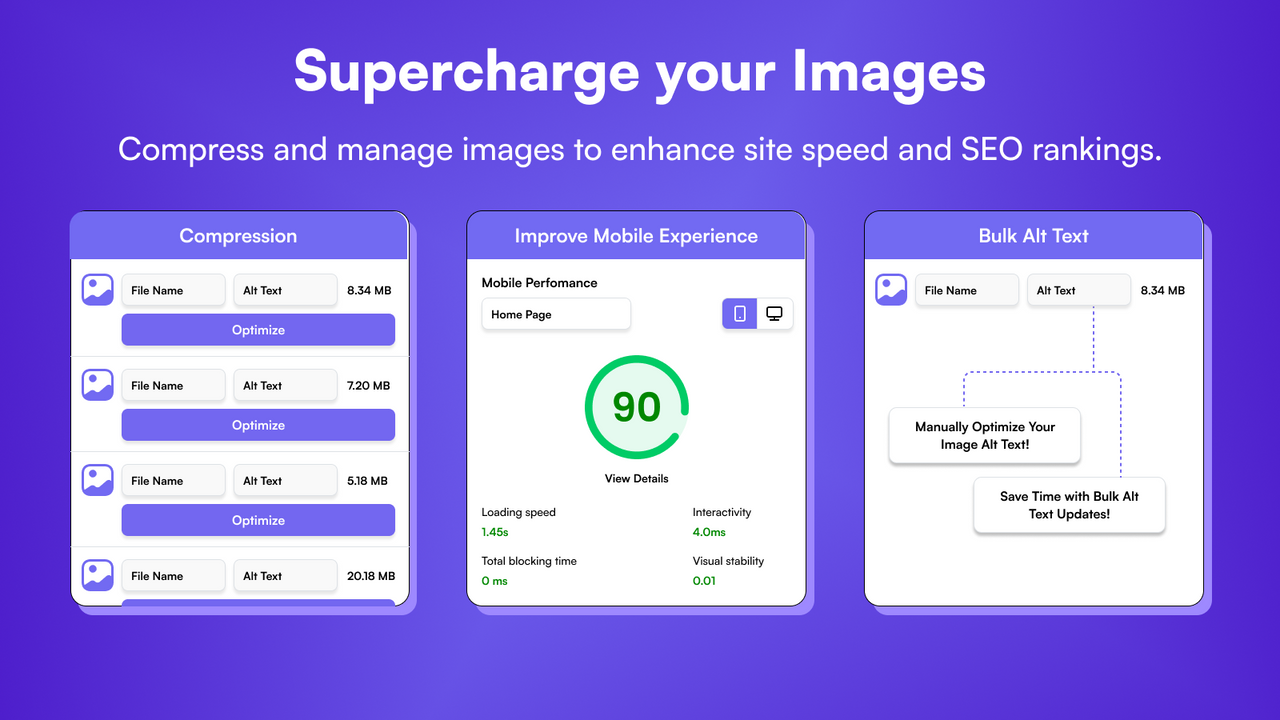
AI SEO Compression refers to the process of leveraging machine learning algorithms and natural language processing (NLP) to reduce the redundancy and fluff in digital content while preserving its semantic richness and keyword targeting. Unlike traditional manual editing, which relies on human judgment, AI-driven compression analyzes vast datasets to identify patterns, extract core concepts, and restructure sentences for maximum clarity and brevity. The goal is not merely to shorten text but to enhance its “information density”—the ratio of valuable insights to total word count—which search engines increasingly reward.
This technique operates on multiple levels. At the surface, it removes filler words, redundant phrases, and repetitive arguments. At a deeper level, it reconfigures the content architecture, merging overlapping sections and prioritizing high-impact statements. The result is a leaner, more authoritative piece of content that aligns with Google’s emphasis on helpful, people-first content, as outlined in its core updates. For SEO professionals, mastering this process means creating pages that load faster, retain readers longer, and signal expertise more effectively.
The Core Mechanics: How AI Compression Works
Understanding the underlying technology helps demystify how AI SEO Compression achieves its results. The process typically involves several sophisticated steps, each powered by distinct AI models and techniques.
Semantic Analysis and Entity Extraction
AI systems begin by parsing the content to identify key entities—people, places, concepts, and products—and their relationships. Using models like BERT or GPT, the system understands context, not just keywords. For example, in a sentence about “apple,” the AI determines whether it refers to the fruit or the tech company based on surrounding terms. This semantic map allows the algorithm to preserve the most critical information while discarding peripheral details.
Redundancy Detection and Removal
Long-form content often suffers from repetition. A human writer might explain a concept in three different ways to ensure clarity, but for SEO, this can dilute the main message. AI algorithms calculate sentence similarity using cosine similarity or Jaccard indices. When two sentences convey the same meaning with different words, the system flags them for potential removal or merging. This step is crucial for reducing word count without losing informational value.
Sentence Restructuring and Summarization
After identifying redundant parts, the AI applies abstractive summarization techniques. Instead of simply extracting existing sentences (extractive summarization), it generates new, concise sentences that capture the essence of multiple original ones. This is where the “compression” becomes truly intelligent. The AI might combine a three-sentence explanation into a single, dense sentence that retains all necessary context and keywords.
Keyword Density Optimization
While the primary goal is compression, the AI simultaneously ensures that primary and secondary keywords remain intact and naturally distributed. It recalculates keyword density, ensuring that the compressed version still targets the intended search queries. The algorithm can also suggest semantic keyword variations to maintain topical authority, even as the text becomes shorter.
Key Benefits of AI SEO Compression
Adopting AI SEO Compression offers tangible advantages that extend beyond simple word count reduction. These benefits directly impact both user experience and search engine rankings.
- Improved Page Speed: Smaller HTML files load faster, which is a confirmed ranking factor, especially for mobile users. Compressed content reduces server response time and bandwidth usage.
- Enhanced User Engagement: Users prefer concise, scannable content. A compressed article that delivers answers quickly reduces bounce rates and increases time on page, as readers are more likely to consume the entire piece.
- Higher Information Density: Search engines like Google use NLP to assess content quality. High-density content that provides substantial value per word is often deemed more authoritative and relevant.
- Better Core Web Vitals: Compression contributes to improved Largest Contentful Paint (LCP) and Cumulative Layout Shift (CLS) scores, which are part of Google’s page experience signals.
- Cost Efficiency for AI Content: For teams using AI generation tools, compression reduces token usage, lowering API costs while maintaining output quality.
- Audit Your Existing Content: Use analytics tools to identify pages with high bounce rates, low dwell time, or excessive word counts relative to competitors. Prioritize pages that rank on page two of Google, as they have the most potential for improvement.
- Select the Right AI Tool: Choose a platform that offers semantic analysis and abstractive summarization. Popular options include Jasper, Copy.ai, and specialized APIs like OpenAI’s GPT-4 with custom prompts. Ensure the tool allows you to set a target word count or compression ratio.
- Define Compression Parameters: Set rules for the AI. Specify which keywords must remain untouched, which sections are mandatory, and the desired tone (professional, casual, technical). Provide the AI with examples of your brand’s voice.
- Run the Compression Process: Input the raw text and let the AI generate the compressed version. Review the output for factual accuracy. AI can sometimes hallucinate or drop critical data points, so human oversight is non-negotiable.
- Validate SEO Elements: Check that the title tag, meta description, and header tags (H1, H2) are preserved or improved. Ensure the primary keyword appears in the first 100 words and that LSI keywords are still present.
- Test and Deploy: Before publishing, run the compressed content through a readability tool like Hemingway or Grammarly. Ensure the text scores well for grade level and clarity. Then, update the live page and monitor rankings for 2-4 weeks.
- Over-Compression Leading to Thin Content: Reducing word count too aggressively can strip away necessary context, making the page look like doorway content to Google. Avoid compressing below 50% of the original length unless the source was exceptionally verbose.
- Losing Brand Voice: AI models often default to a neutral tone. If your brand is quirky or authoritative, the compressed text may feel generic. Always inject brand-specific phrases manually after compression.
- Ignoring User Intent: Compression might remove conversational elements that answer long-tail queries. Ensure that the final version still addresses the “why” and “how” questions, not just the “what.”
- Neglecting Structured Data: Compression focuses on visible text, but schema markup is equally important. Ensure that FAQPage or HowTo structured data is not lost during the content update.
- Skipping A/B Testing: Publishing compressed content without testing can harm rankings if the original was performing well. Run a split test on high-traffic pages to compare engagement metrics.
AI SEO Compression vs. Traditional Content Trimming
It is essential to distinguish AI-driven compression from simple manual editing. While both aim to reduce length, the methodologies and outcomes differ significantly. The table below highlights these differences.
| Aspect | AI SEO Compression | Traditional Trimming |
|---|---|---|
| Method | Algorithmic analysis of semantics and context | Human judgment based on writing intuition |
| Speed | Processes thousands of words in seconds | Time-consuming, requiring multiple passes |
| Consistency | Applies uniform rules across all content | Varies based on editor’s fatigue and bias |
| Keyword Handling | Automatically preserves and rebalances keywords | Risk of accidentally removing target phrases |
| Scalability | Easily scales to entire websites | Limited by human bandwidth |
| Output Quality | Generates new, fluent sentences | Often leaves awkward transitions after cuts |
Traditional trimming often results in choppy paragraphs and lost nuance. AI compression, on the other hand, rewrites the content holistically, ensuring that the final output reads naturally and maintains a logical flow. This makes it a superior choice for large-scale content audits and site migrations.
Practical Applications: Where to Use AI SEO Compression

The versatility of AI SEO Compression makes it applicable across various content types and digital assets. Implementing it strategically can yield significant improvements in site-wide performance.
Blog Posts and Articles
For long-form blog posts that have accumulated fluff over time, AI compression can tighten the prose. A 3,000-word article might be reduced to 2,000 words while retaining all key points, statistics, and actionable advice. This is particularly useful for updating legacy content to meet modern SEO standards without starting from scratch.
Product Descriptions and Category Pages
E-commerce sites often suffer from thin or duplicated content. AI compression can transform verbose, generic descriptions into concise, unique value propositions. It ensures that each product page delivers essential information—features, benefits, specifications—in a scannable format that boosts conversion rates and reduces crawl budget waste.
Meta Descriptions and Title Tags
While not full articles, meta descriptions require extreme compression. AI tools can analyze the page content and generate compelling, keyword-rich meta descriptions that fit within the 155-character limit. This directly improves click-through rates from search engine results pages (SERPs).
Internal Linking Anchor Text
Compression applies to link context as well. AI can suggest shorter, more descriptive anchor text that improves link equity distribution and helps search engines understand the target page’s topic faster.
Step-by-Step Guide to Implementing AI SEO Compression
To harness the power of AI SEO Compression, follow this structured workflow. This process ensures that you maintain quality control while leveraging automation for efficiency.
Common Mistakes and How to Avoid Them
Even with advanced AI, mistakes can occur during the compression process. Being aware of these pitfalls helps you maintain content integrity.
Important Notes on AI SEO Compression and Search Engine Guidelines
Google’s spam policies explicitly target content that provides little value, regardless of how it is produced. AI SEO Compression, when done correctly, aligns with Google’s guidelines because it improves the user experience. However, there are nuances to consider.
First, compression should not be used to hide information. If a topic requires 2,000 words to explain thoroughly, compressing it to 800 words would be detrimental. The goal is to remove fluff, not substance. Second, ensure that the compressed content is not duplicated across multiple pages. AI tools can generate similar outputs for similar inputs, leading to canonicalization issues. Always add unique insights, examples, or data points to each page.
Finally, transparency matters. While you do not need to disclose AI usage to readers, you must ensure that the content meets the E-E-A-T (Experience, Expertise, Authoritativeness, Trustworthiness) standards. Compressed content should still cite sources, include author bios, and provide verifiable data. AI compression is a tool for refinement, not a replacement for genuine expertise.
Measuring the Impact of AI SEO Compression
To determine if your compression efforts are paying off, track specific key performance indicators (KPIs) over time. The table below outlines the metrics to monitor and the expected trends.
| Metric | Baseline (Before) | Target (After Compression) | Tool to Measure |
|---|---|---|---|
| Average Page Load Time | 4.5 seconds | Under 2.5 seconds | Google PageSpeed Insights |
| Bounce Rate | 65% | Below 50% | Google Analytics |
| Organic Click-Through Rate | 2.1% | Above 3.5% | Google Search Console |
| Keyword Ranking (Top 10) | 15 keywords | 25+ keywords | SEMrush or Ahrefs |
| Time on Page | 1 minute 20 seconds | 2+ minutes | Google Analytics |
Monitor these metrics monthly. If you see improvement in load time but a decline in rankings, the compression may have removed too much semantic context. In that case, revert to the original and apply a less aggressive compression ratio.
Frequently Asked Questions (FAQ)
Does AI SEO Compression affect the readability of my content?
Yes, but typically in a positive way. AI compression removes complex sentence structures and redundant clauses, which often results in a lower Flesch Reading Ease score. The content becomes more accessible to a broader audience, which is beneficial for both users and search engines.
Can AI SEO Compression help with voice search optimization?
Absolutely. Voice search queries are typically longer and more conversational. Compressed content that focuses on direct answers and concise explanations is more likely to be featured in voice search results. AI compression helps isolate the core answer to a query, making it easier for search engines to extract and use as a featured snippet.
Is AI SEO Compression considered black-hat SEO?
No, it is a white-hat technique when used ethically. It does not involve hiding text, cloaking, or keyword stuffing. It simply makes content more efficient and user-friendly. As long as the compressed content provides genuine value and matches user intent, it complies with Google’s Webmaster Guidelines.
How much content can I compress without losing SEO value?
T For example, a 1,500-word article can be safely compressed to 900-1,200 words. Anything beyond 50% risks losing critical context. The key is to focus on removing redundant examples and filler phrases rather than cutting entire sections.
What is the best AI tool for SEO compression?
The best tool depends on your budget and technical skill. For enterprise-level needs, tools like Surfer SEO and Frase offer content optimization features that include compression. For more granular control, using GPT-4 with a custom prompt that specifies “compress this text to 70% length while keeping all key entities and keywords” yields excellent results. Always review the output manually.
Conclusion
AI SEO Compression represents a paradigm shift in how we approach content optimization. It moves beyond the outdated practice of keyword stuffing and embraces the modern reality of semantic search and user experience. By leveraging artificial intelligence to distill content to its most potent form, businesses can achieve faster load times, higher engagement, and improved search visibility. The key to success lies in balance—compressing enough to eliminate friction, but retaining enough depth to demonstrate authority. As search algorithms continue to evolve, the ability to deliver precise, high-value information efficiently will become the defining trait of top-ranking pages. Implementing AI SEO Compression today positions your digital assets for sustained success in an increasingly competitive landscape.
Xem thêm:
- AI SEO BI Reports: The Complete Guide to Data-Driven Search Optimization
- AI SEO Ecommerce Keyword Research: The Complete Playbook for 2025
- AI SEO Keyword Categorization: The Complete Guide to Smarter Search Strategy
- AI SEO Search Experience: The Complete Guide to Winning in the New Search Era
- AI SEO Maintenance: The Complete Guide to Sustaining Search Rankings in 2025
Bài viết cùng chủ đề:

AI SEO SEO Automation with Make: The Complete Workflow Guide

AI SEO SEO Automation with Zapier: The Complete Workflow Guide

AI SEO SEO Automation with n8n: The Complete Workflow Guide
AI SEO SEO Automation with Gemini: The Complete Guide to Scaling Organic Growth

AI SEO SEO Automation with Claude: The Complete Guide to Scaling Content in 2025

AI SEO SEO Automation with ChatGPT: The Complete Playbook for 2025

AI SEO & SEO Automation for Affiliate Sites: The 2025 Playbook for Passive Income Growth
AI SEO & SEO Automation for Bloggers: The Complete Guide to Scaling Your Content

AI SEO & SEO Automation for Agencies: The Complete 2025 Playbook

AI SEO and SEO Automation for Ecommerce: The Complete Playbook for 2025

AI SEO & SEO Automation for WordPress: The Complete Playbook for 2025
AI SEO SEO Automation Strategy: The Complete Playbook for 2025

Mastering the AI SEO SEO Automation Process: A Complete Guide to Scaling Organic Growth
AI SEO SEO Automation System: The Complete Guide to Scaling Organic Growth in 2025
AI SEO SEO Automation Platform: The Complete Guide to Scaling Organic Growth in 2025
AI SEO SEO Automation Software: The Complete Guide to Scaling Organic Growth in 2025















