
No products in the cart.
AI SEO Content Generator: Elevate Your Rankings with Smart Automation
29
Jul
Jul
Creating content that ranks on Google and actually holds a reader’s attention has never been more demanding. An AI SEO Content Generator steps into that gap — a tool trained to produce articles, product descriptions, and landing pages that are not just readable but structurally aligned with modern search engine expectations. These platforms blend natural language generation with real-time SEO data, helping marketers scale output without losing sight of keyword intent, topic depth, or user experience. The result is a dramatic shift in how teams approach content production, one that prioritizes strategic oversight while automation handles the heavy lifting of drafting and on-page optimization.
What Is an AI SEO Content Generator?

At its core, an AI SEO Content Generator is a software platform that uses large language models (LLMs) and natural language processing to create written content with built‑in search engine optimization. Unlike generic AI writing tools, these generators are fine‑tuned to incorporate semantic keywords, header hierarchies, internal linking suggestions, and readability parameters from the very first draft. They pull data from SERP analysis, competitor benchmarks, and keyword databases to shape an article’s structure before a single paragraph is written.
Most solutions go beyond simple text generation. They integrate with SEO suites like Surfer, Semrush, or Ahrefs, so the content aligns with target keyword clusters and matches top‑ranking page attributes such as average word count, image count, and topic coverage. This tight coupling removes much of the guesswork that used to slow down editors and writers.
How an AI SEO Content Generator Works Under the Hood
The workflow of a robust AI SEO Content Generator can be broken down into distinct stages, each grounded in data and machine learning models. Grasping this process helps users understand why the output feels comprehensive — and where human attention remains essential.
- Topic and keyword analysis: The generator ingests a primary keyword and, using semantic databases, maps out related terms, questions, and entities. It builds a topical map that mirrors what Google’s Knowledge Graph expects to see.
- SERP scraping and competitor research: It examines the top 10 or 20 results for the target query, extracting common headings, content length, featured snippet patterns, and frequently covered subtopics.
- Outline construction: Based on the collected insights, the tool creates a content brief with H2 and H3 headings. This outline guarantees the article addresses every angle that high‑ranking competitors do, while leaving room for unique insights.
- Draft generation: The LLM writes the body text under each heading, weaving in related keywords, synonyms, and natural language variations. Some generators run multiple passes to ensure consistent tone and fact coherence.
- On‑page SEO scoring: Many generators assign a content score — a real‑time metric that evaluates keyword density, LSI term usage, paragraph length, and readability. This score tells editors how close the draft is to the threshold needed for ranking.
- Plagiarism and originality checks: Built‑in or integrated plagiarism scanners flag duplicate segments, encouraging the user to paraphrase or rewrite until the content is unique enough for indexing.
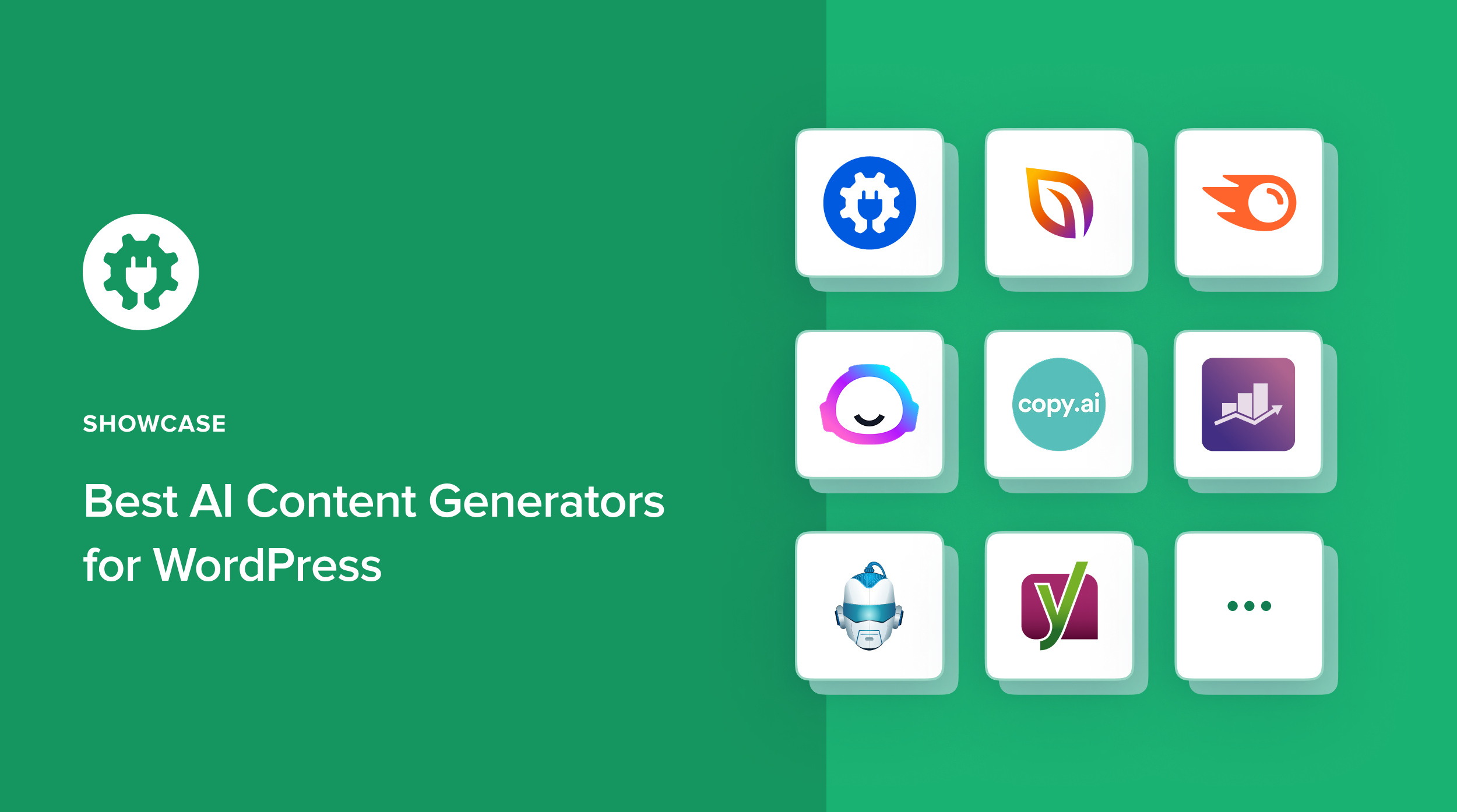
- Standalone writing assistants: Platforms like Jasper and Copy.ai focus on generating blog posts, ad copy, and product descriptions directly inside their own editor. They often include basic SEO templates but require external tools for keyword research.
- SEO‑integrated generators: Surfer AI, Frase, and NeuronWriter are built with SEO scoring at their core. They generate content inside an editor that displays SERP data, keyword density trackers, and structure recommendations side‑by‑side.
- All‑in‑one marketing platforms with AI writing: Semrush’s ContentShake AI and Writesonic offer generation plus distribution, claiming to handle the full content lifecycle from ideation to publishing and performance tracking.
- Open‑source and self‑hosted solutions: For enterprises that cannot send proprietary data to third‑party servers, open‑source models fine‑tuned on internal documents serve as a private AI SEO Content Generator, though they require significant machine learning expertise.
- Scaling content without diluting quality: A single team can produce 10 well‑researched articles per week instead of 3. The AI drafts the initial 2000‑word piece in minutes, leaving editors to refine, fact‑check, and layer in unique examples.
- Consistent on‑page SEO discipline: Humans forget to add alt text, ignore internal linking, or stuff keywords. A generator, guided by an integrated content score, prompts the writer to meet all structural requirements before marking a task complete.
- Laser focus on search intent: By analyzing the SERP, the AI identifies whether the query demands a listicle, a step‑by‑step tutorial, or a comparison table. The draft automatically adheres to that format, improving the chance of capturing a featured snippet.
- Cost efficiency: For startups and mid‑sized businesses, hiring a full‑time SEO writer for every niche is expensive. A subscription to an AI SEO Content Generator costs a fraction of that salary while delivering first drafts around the clock.
- Multilingual expansion: Many generators support 20+ languages. A business can take an English pillar page and quickly generate localized versions that retain keyword strategy, slashing the time needed for global content marketing.
- Hallucinations and factual errors: Even advanced models sometimes invent statistics, quote non‑existent studies, or misattribute claims. Every data point and expert statement must be verified against credible, primary sources.
- Generic, shallow tone: Without careful prompting and human editing, AI prose defaults to safe, middle‑of‑the‑road language. This can dilute a brand’s voice and fail to convey deep industry expertise — a direct hit to E‑E‑A‑T signals.
- Over‑optimization penalties: Chasing a perfect content score can lead to keyword stuffing. An article that mechanically repeats the main keyword and its LSI variations will read unnaturally, and Google’s algorithms are sophisticated enough to flag it.
- Copyright and originality gray areas: While plagiarism checkers catch verbatim copying, the line between inspiration and derivative work is thin. Unique angles, proprietary data, and personal anecdotes remain a human responsibility.
- Google’s evolving stance on AI content: Google’s official guidance says it cares about content quality, not how content is produced. Yet, purely AI‑generated, unedited pages that offer no original value can be classified as spam. Human oversight is not optional; it is mandatory.
- Define the content brief manually: Before touching the AI, nail down the primary keyword, target audience, search intent, and the unique angle that makes your article different from the top 10 results. Input garbage prompts, get garbage output.
- Conduct your own keyword research: Use dedicated tools (Ahrefs, Semrush, Google Keyword Planner) to build a list of primary and secondary keywords. Feed this into the generator rather than relying on its internal suggestions, which may be generic.
- Generate an outline first: Most generators have a “generate outline” feature. Review and adjust it. Combine AI‑suggested headings with the subtopics you know your audience needs. This hybrid outline becomes the blueprint for the draft.
- Produce the draft in sections: Generate content section by section rather than asking for the full article at once. For each H2, provide a short context note: “Explain the three most common pricing models for SaaS, include a real-world example for each.” This keeps the output focused.
- Fact‑check aggressively: Treat every statistic, brand name, and date as suspect until you confirm it with a primary or authoritative secondary source. This step is non‑negotiable for YMYL (Your Money or Your Life) topics.
- Inject original data and experiences: After the AI draft is clean, add proprietary survey results, client success stories, screenshots, expert quotes, or personal observations. This is the layer that makes the content undeniably human and valuable to readers.
- Optimize beyond the content score: Use the generator’s scoring as a guide, but also manually review title tags, meta descriptions, URL slugs, image file names, and schema markup. No AI tool covers all these perfectly out of the gate.
- Run a final human edit for voice and flow: Read the entire piece aloud. Cut robotic transitions, add context where the AI assumed knowledge, and ensure the introduction hooks the reader within the first three sentences.
- Publishing unedited AI drafts: This is the fastest way to populate a site with thin, error‑ridden pages. Google may not penalize AI content per se, but it does demote low‑quality material regardless of how it was created.
- Ignoring search intent shifts: A generator may build an informational guide for a keyword that has a strong transactional intent. Always verify the dominant intent manually by looking at the SERP — are the top results product pages, how‑to articles, or listicles?
- Over‑relying on a single content score: Scores from tools like Surfer or Frase are helpful proxies, not absolute truths. A high score does not guarantee that the content is engaging, accurate, or trustworthy. Use it as a minimum bar, then push beyond.
- Neglecting internal linking strategy: The AI may include generic links, but it does not understand your site’s architecture. Manually add context‑rich internal links that guide users and spread link equity.
- Chasing volume at the expense of topical authority: An AI SEO Content Generator can quickly fill a blog with hundreds of posts. But if those posts cover scattered topics without depth, the site will lack the authority signals needed to rank for competitive keywords.
- Transparency is a brand asset, not a liability: You are not required to disclose AI use, but many brands now add a note like “Drafted with AI assistance, verified by our editorial team”. This builds trust and signals accountability.
- E‑E‑A‑T must be demonstrated by humans: Experience, Expertise, Authoritativeness, and Trustworthiness cannot be faked by an algorithm. Author bios with real credentials, cited sources, and clear contact information remain critical ranking factors.
- Regular performance audits are mandatory: Track the organic traffic, bounce rate, and conversion metrics of AI‑assisted pages. If a page plateaus, update it with fresh statistics, new internal links, and a stronger unique perspective — the AI can help draft the update, but the strategy shift must be human‑led.
- Model updates change output behavior: The same generator can produce different quality levels as the underlying LLM is updated or as the SEO integration partner changes its scoring algorithm. Keep a style guide and editorial checklist to maintain consistency across batches.
- Never feed confidential data into public models: If using a cloud‑based generator, avoid pasting sensitive customer information, unreleased product specs, or proprietary financial data. Look for enterprise plans that contractually guarantee data privacy and opt‑out of model training.
Key Technologies Driving These Generators
Behind the intuitive dashboard, several AI subfields converge. Understanding them helps teams decide which tool fits their niche.
| Technology | Role in an AI SEO Content Generator |
|---|---|
| Large Language Models (GPT‑4, Claude, PaLM) | Produce human‑like text, generate multiple tone variations, and complete paragraphs based on prompts and outlines. |
| Natural Language Processing (NLP) | Extract entities, understand query intent, and ensure the writing matches the search intent (informational, transactional, navigational). |
| Semantic Search and Vector Embeddings | Identify related concepts and LSI keywords that the live draft should include, moving beyond exact‑match keywords. |
| Content Scoring Algorithms | Compare the draft against top‑ranking pages in real time and provide actionable recommendations for improvement. |
| Reinforcement Learning from Human Feedback (RLHF) | Refine outputs so they avoid harmful, misleading, or overly generic phrasing, making them more aligned with editorial standards. |
Types of AI SEO Content Generators

Not every tool works the same way. Classifying them by functionality helps a content team decide where to invest.
Benefits of Using an AI SEO Content Generator
The strongest argument for adopting these tools is time savings, but t When used correctly, the generator becomes a force multiplier for entire marketing departments.
Limitations and Risks That Cannot Be Ignored
No tool is a magic wand. Blind reliance on an AI SEO Content Generator can backfire, damaging both rankings and brand trust. Being aware of these pitfalls is the first step toward using the technology responsibly.
Comparison: AI SEO Content Generator vs. Human SEO Writer
Rather than framing this as a battle, the most productive view is a partnership. The table below illustrates where each excels and where they complement one another.
| Criteria | AI SEO Content Generator | Human SEO Writer |
|---|---|---|
| Speed (first draft) | 2–5 minutes for a 2000‑word article | 4–8 hours, depending on research depth |
| Keyword integration | Automatically places primary and semantic keywords according to SERP patterns | Needs careful planning; susceptible to overuse or underuse |
| Factual accuracy | Frequently introduces errors; requires thorough checking | Can cite firsthand experience and verified sources |
| Unique insights & storytelling | Limited to training data; cannot provide personal case studies | Can weave in original interviews, anecdotes, and industry secrets |
| Scalability | Extremely high; one tool can generate unlimited drafts | Constrained by the writer’s capacity and budget |
| Emotional connection | Often flat; requires human editing to add empathy and brand personality | Can naturally adapt tone to audience pain points and aspirations |
Practical Guide: How to Use an AI SEO Content Generator Effectively

Getting the most out of these tools demands a disciplined workflow. The generator is not a replacement for a content strategist; it is the strategist’s most productive assistant.
Common Mistakes When Using an AI SEO Content Generator
Even experienced marketers slip into these traps. Recognizing them prevents a promising content strategy from turning into a recovery project.
Important Notes for Long‑Term Success
Content generated by AI lives in a delicate balance. These foundational principles keep the strategy sustainable and aligned with Google’s ever‑changing guidelines.
Frequently Asked Questions About AI SEO Content Generators
Can Google detect AI-generated content?
Google’s systems can identify patterns typical of purely machine‑generated text, but detection is not the sole ranking factor. The search engine emphasizes the usefulness, originality, and trustworthiness of the content. If an AI draft is substantially edited by human experts and provides unique value, its origin becomes irrelevant to rankings. Deliberate spam produced in bulk to manipulate results, however, is targeted aggressively regardless of whether it was written by a human or a machine.
Is content from an AI SEO Content Generator good for SEO?
Yes, when used as a foundation rather than the final product. A generator can produce a structurally sound article that covers all expected subtopics and uses keywords naturally. That strong skeletal draft saves hours of work. The SEO value comes from the human layer added next: verified facts, fresh insights, personal experience, and a compelling brand voice. Without that layer, the content may be indexed but rarely earns the backlinks, dwell time, and social signals needed for strong rankings.
How do I make AI-generated content undetectable?
The goal should not be deception but quality. To remove the mechanical stamp of AI, edit the draft heavily: vary sentence length, replace generic phrases with industry‑specific terminology, add anecdotes, and restructure paragraphs. Read the copy aloud and smooth out any awkward rhythms. Injecting unique data points and citing real studies also signals to both readers and algorithms that the page offers substantial, human‑verified information.
What is the best AI SEO Content Generator for small businesses?
T For businesses that need an all‑in‑one solution with built‑in SEO scoring, platforms like Frase or Surfer AI deliver strong value. Those that require more creative long‑form writing alongside SEO integration often prefer Jasper or Copy.ai with their respective Surfer integration add‑ons. The best approach is to try the free trials, run the same content brief through each, and measure which output requires the least editing while scoring highest on content quality metrics.
Will an AI SEO Content Generator replace human writers?
It replaces certain repetitive tasks — first drafts, keyword stitching, and basic optimization — but not the strategic, empathetic, and analytical core of content creation. Writers who leverage these tools become more productive and can focus on high‑level storytelling, audience research, and original investigations. In competitive niches, the human element is precisely what distinguishes a page that ranks for years from one that quickly fades from the index.
Conclusion
An AI SEO Content Generator is no longer a fringe experiment. It has matured into a staple of modern content operations, capable of slashing production time and tightening on‑page optimization to a degree manual efforts rarely match. The technology effortlessly maps semantic keywords, adapts to search intent, and scores content against live SERP data. But the true power lies in the interplay between machine efficiency and human judgment. The brands that thrive treat the generator as a highly capable draftsperson, while reserving the roles of editor, fact‑checker, and strategic director for their people. In that collaboration, content scales without losing its soul — and search engines reward the outcome.
Xem thêm:
- AI SEO Mangools: The Complete Guide to Smarter Keyword Research and Rank Tracking
- AI SEO LocalBusiness Schema: The Complete Guide to Smarter Local Rankings
- AI SEO: The Complete Guide to Dominating Search with Artificial Intelligence
- AI SEO Forums: The Hidden Hubs Where Search Strategy Gets Rewired by Machine Intelligence
- AI SEO Content Creation: The Complete Playbook for Ranking in 2025
Bài viết cùng chủ đề:

AI SEO SEO Automation with Make: The Complete Workflow Guide

AI SEO SEO Automation with Zapier: The Complete Workflow Guide

AI SEO SEO Automation with n8n: The Complete Workflow Guide
AI SEO SEO Automation with Gemini: The Complete Guide to Scaling Organic Growth

AI SEO SEO Automation with Claude: The Complete Guide to Scaling Content in 2025

AI SEO SEO Automation with ChatGPT: The Complete Playbook for 2025

AI SEO & SEO Automation for Affiliate Sites: The 2025 Playbook for Passive Income Growth
AI SEO & SEO Automation for Bloggers: The Complete Guide to Scaling Your Content

AI SEO & SEO Automation for Agencies: The Complete 2025 Playbook

AI SEO and SEO Automation for Ecommerce: The Complete Playbook for 2025

AI SEO & SEO Automation for WordPress: The Complete Playbook for 2025
AI SEO SEO Automation Strategy: The Complete Playbook for 2025

Mastering the AI SEO SEO Automation Process: A Complete Guide to Scaling Organic Growth
AI SEO SEO Automation System: The Complete Guide to Scaling Organic Growth in 2025
AI SEO SEO Automation Platform: The Complete Guide to Scaling Organic Growth in 2025
AI SEO SEO Automation Software: The Complete Guide to Scaling Organic Growth in 2025















