
No products in the cart.
AI SEO Content Creation: The Complete Playbook for Ranking in 2025
10
Aug
Aug
AI SEO content creation has transformed how digital marketers approach search rankings. The integration of artificial intelligence into content workflows is no longer experimental; it is a standard practice for teams aiming to scale production without sacrificing quality. This guide examines the mechanics, benefits, and strategic implementation of AI-driven content pipelines, offering a clear roadmap for leveraging these tools effectively.
Understanding AI SEO Content Creation
AI SEO content creation refers to the use of machine learning algorithms and natural language processing to generate, optimize, and distribute content designed to rank high on search engine results pages. Unlike traditional writing, this process involves a symbiotic relationship between human oversight and automated generation. The AI handles data analysis, keyword clustering, and draft generation, while humans provide strategic direction, factual verification, and brand voice refinement.
The core value proposition lies in efficiency. A task that once took a human writer eight hours can now be completed in minutes. However, the output is only as good as the input. The technology requires precise prompts, clear guidelines, and a robust review process to produce content that resonates with both search engines and human readers.
The Evolution from Traditional to AI-Driven Workflows
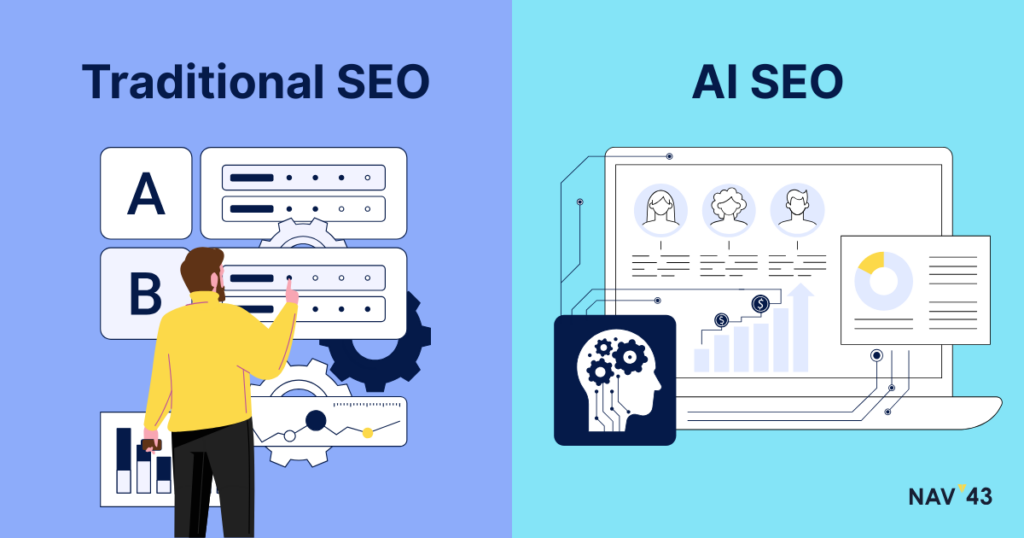
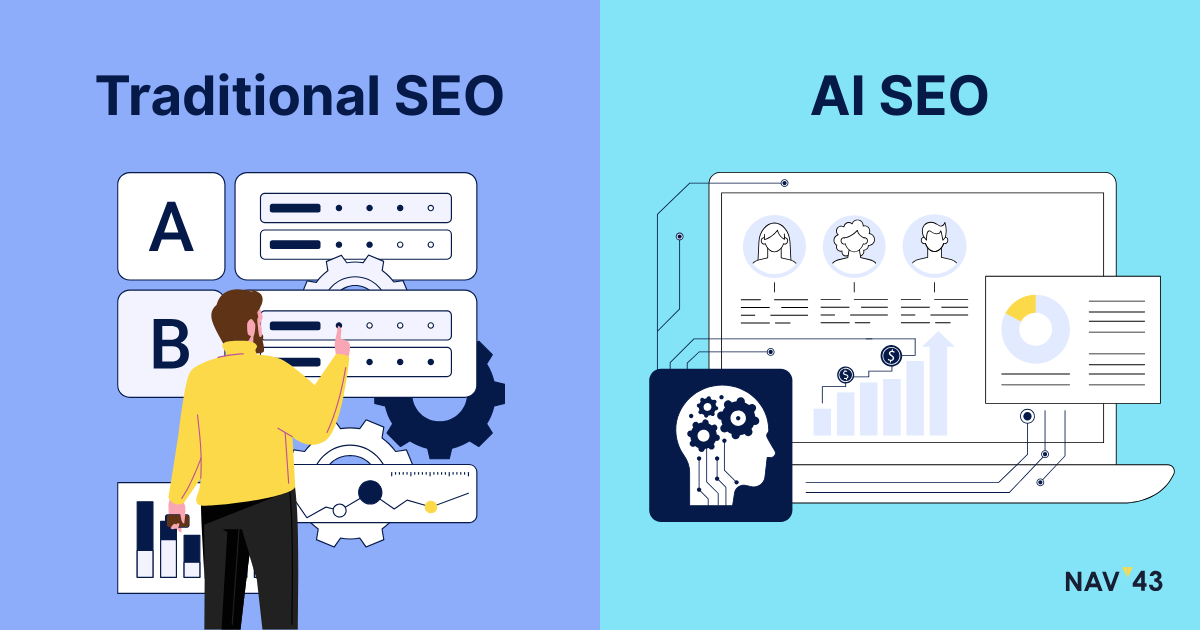
Traditional content creation relied heavily on manual keyword research, competitor analysis, and a writer’s intuition. This approach was time-consuming and often inconsistent. The shift to AI SEO content creation introduces a data-first methodology. Algorithms can process millions of search queries instantly, identifying semantic relationships and user intent patterns that would take a human analyst weeks to uncover.
Modern AI tools do not just write; they predict. They analyze top-ranking pages, assess content gaps, and suggest structural improvements. This evolution has shifted the role of the content creator from a pure writer to a strategist and editor. The human now curates the data, sets the parameters, and polishes the final product.
How AI SEO Content Creation Works
The technical process behind AI SEO content creation involves several distinct stages. Understanding these stages helps in setting realistic expectations and building effective workflows.
Data Ingestion and Keyword Analysis
The process begins with feeding the AI system a set of seed keywords. The system then expands these into a comprehensive list of long-tail variations and related terms. It analyzes search volume, competition level, and user intent for each term. This data forms the foundation of the content strategy, ensuring that every piece of content targets a specific, viable search demand.
Content Structuring and Outlining
Once the keywords are defined, the AI generates a structural outline. This includes suggested headings, subheadings, and the logical flow of information. The outline is based on an analysis of current top-ranking content for the target query. The AI identifies what topics are covered, what questions are answered, and where gaps exist. This ensures the new content is comprehensive and competitive.
Draft Generation and Semantic Enrichment
The AI then writes the initial draft. It uses natural language generation to create coherent paragraphs that incorporate the target keywords naturally. Advanced models go beyond simple keyword insertion; they use semantic analysis to include related concepts and entities. This helps search engines understand the context and depth of the content, improving the chances of ranking for a wider range of related queries.
On-Page Optimization and Technical SEO
AI tools also handle technical on-page elements. They generate meta titles, meta descriptions, and alt text for images. They can suggest internal linking structures and calculate optimal keyword density. Some advanced platforms even analyze readability scores and suggest adjustments to improve user engagement metrics, which are indirect ranking factors.
Key Benefits of Implementing AI in Content SEO

The adoption of AI SEO content creation brings tangible advantages to marketing teams. These benefits extend beyond simple time savings, impacting overall business performance.
- Scalability: Produce hundreds of data-backed articles in the time it takes to manually write one. This allows brands to dominate topic clusters and establish topical authority quickly.
- Cost Efficiency: Reduce reliance on large writing teams for initial drafts. The cost per word drops significantly, freeing up budget for distribution and promotion.
- Data-Driven Decisions: Eliminate guesswork. Every topic, heading, and keyword is chosen based on real-time search data, not intuition.
- Consistency: Maintain a uniform tone, style, and structure across all content. This builds brand recognition and trust with the audience.
- Speed to Market: Publish content on trending topics while they are still relevant. This is crucial for news sites and fast-moving industries.
- Improved SERP Analysis: AI can continuously monitor search engine results pages and alert you to ranking fluctuations, allowing for rapid adjustments to strategy.
- Publishing Unedited AI Output: This is the most common mistake. Raw AI text is often repetitive, lacks depth, and contains errors. Publishing it damages your site’s credibility and user experience.
- Keyword Stuffing: AI can generate content that over-optimizes for keywords, making it unreadable. Search engines penalize this practice. Focus on semantic relevance over exact-match repetition.
- Ignoring User Intent: Generating content for keywords without understanding why the user is searching. If the intent is transactional, an informational article will not rank well.
- Lack of Original Data: Relying solely on AI to generate content without adding any original insights, quotes, or data. This results in “thin” content that offers no competitive advantage.
- Neglecting E-E-A-T: Failing to include author bios, citations, and evidence of expertise. Google’s quality raters look for these signals to assess trustworthiness.
- Not Setting Clear Guidelines: Using generic prompts without specific instructions on tone, audience, or structure leads to generic, off-target content.
Limitations and Challenges of AI Content
While the benefits are substantial, it is critical to acknowledge the limitations. Blind reliance on AI without human intervention can lead to significant problems.
Lack of Original Research and Experience
AI models are trained on existing data. They cannot conduct interviews, perform original experiments, or provide first-hand experience. This limits their ability to produce truly unique insights or break news. Content that relies solely on AI generation often ends up as a rephrasing of existing information, which offers little value to readers who have already seen the same data elsewhere.
Factual Inaccuracies and Hallucinations
Large language models can generate plausible-sounding but completely incorrect information. This is known as hallucination. In the context of SEO, publishing false information damages credibility and can lead to manual penalties from search engines. Every statistic, quote, and claim generated by AI must be verified by a human expert before publication.
Quality and Brand Voice Dilution
AI tends to produce generic, neutral prose. Without careful prompting and editing, the content lacks the personality and unique perspective that differentiates a brand. This results in content that is technically correct but emotionally flat, failing to build a connection with the audience.
AI SEO Content Creation vs. Human Writing: A Comparison
To understand the optimal workflow, it is helpful to compare the strengths and weaknesses of each approach.
| Factor | AI-Generated Content | Human-Written Content |
|---|---|---|
| Speed | Extremely fast (minutes per draft) | Slow (hours to days per draft) |
| Cost | Low marginal cost per piece | High cost per word |
| Originality | Limited; based on training data | High; based on experience and research |
| Accuracy | Risk of hallucination; requires verification | Generally reliable if the writer is an expert |
| Brand Voice | Generic; requires heavy editing | Authentic; naturally aligned with brand |
| Scalability | Unlimited | Limited by team size |
| SEO Data Integration | Native; automatically uses keyword data | Manual; requires separate research |
The most effective strategy is not choosing one over the other, but creating a hybrid workflow. AI handles the heavy lifting of research and drafting, while humans focus on strategy, fact-checking, and adding unique value.
Practical Guide: Implementing an AI SEO Content Workflow
Implementing AI SEO content creation requires a structured approach. The following steps outline a proven process for integrating AI into your content operations.
Step 1: Define Your Content Pillars and Target Clusters
Start with a clear content strategy. Identify the main topics (pillars) that are relevant to your business. For each pillar, define a cluster of subtopics. This provides the AI with a clear framework for what content to generate. Use tools like Google Search Console and keyword research platforms to validate demand for these topics.
Step 2: Select the Right AI Tools
There are various AI writing tools available, each with different strengths. Some are better for long-form blog posts, while others excel at product descriptions or ad copy. Choose tools that integrate with your existing SEO platforms. Look for features like SERP analysis, content optimization scores, and the ability to train the AI on your brand guidelines.
Step 3: Craft Detailed Prompts and Briefs
The quality of the output is directly proportional to the quality of the input. Provide the AI with a comprehensive brief. Include the target keyword, secondary keywords, target audience, desired tone, and specific points to cover. The more context you provide, the more relevant the generated draft will be.
Step 4: Human Review and Fact-Checking
This is the most critical step. An editor must review every AI-generated draft. Verify all facts, statistics, and claims. Check for plagiarism and ensure the content aligns with your brand voice. This step transforms generic AI output into high-quality, trustworthy content.
Step 5: Optimize and Publish
After the human review, run the content through an SEO optimization tool. Check for keyword placement, internal linking opportunities, and readability. Ensure the meta data is compelling. Publish the content and monitor its performance in search results.
Step 6: Analyze and Iterate
Use analytics to track how the content performs. Look at rankings, organic traffic, and engagement metrics. Use this data to refine your prompts and briefs for future content. AI SEO content creation is an iterative process; continuous improvement is key to long-term success.
Common Mistakes in AI SEO Content Creation

Many teams fail to see results from AI content due to avoidable errors. Recognizing these pitfalls is the first step to avoiding them.
Important Notes on Google’s Stance on AI Content
Google’s official position is that it does not penalize content for being generated by AI. The search engine’s focus is on content quality, regardless of how it is produced. The Google Search Essentials guidelines state that content should be created for people, not for search engines. This means that AI-generated content that is helpful, reliable, and people-first will rank well. Conversely, AI content created solely to manipulate rankings, regardless of its value, will be penalized.
The key takeaway is that the “how” matters less than the “why” and “what”. If you use AI to scale the production of genuinely useful content, you are safe. If you use it to spam low-quality pages, you will be caught. The emphasis on E-E-A-T (Experience, Expertise, Authoritativeness, Trustworthiness) means that human oversight is not just recommended; it is essential for building the trust signals that lead to high rankings.
Frequently Asked Questions (FAQ)
Is AI SEO content creation worth it for small businesses?
Yes, it is highly beneficial. Small businesses often lack the budget for large content teams. AI tools level the playing field, allowing them to produce a high volume of optimized content that competes with larger competitors. The key is to focus on local SEO keywords and niche topics where the AI can be trained on specific local knowledge.
Can Google detect AI-written content?
Google can detect patterns associated with AI generation, but it does not use this detection to penalize content. The algorithms are designed to identify quality, not the method of production. If the content is high-quality and meets user needs, it will rank. If it is low-quality, it will not, regardless of whether a human or AI wrote it.
What is the best AI tool for SEO content?
T Popular options include Jasper, Copy.ai, and Writesonic for general generation. For more SEO-specific features like SERP analysis and content optimization, tools like Surfer SEO and Frase are often used in conjunction with writing tools. A combination of a writing tool and an optimization tool is the most effective setup.
How do I ensure AI content is original?
AI models generate text based on probabilities, so the output is rarely a direct copy of existing content. However, it can be similar in structure and phrasing. To ensure originality, run the final draft through a plagiarism checker like Copyscape. More importantly, add your own unique insights, examples, and data to the draft to make it distinct.
Will AI replace SEO content writers?
A Writers who adapt to using AI as a tool will become more efficient and valuable. The demand for editors, strategists, and subject matter experts who can guide AI and verify its output will increase. The role shifts from typing to thinking and curating.
Conclusion
AI SEO content creation is a powerful methodology that, when executed correctly, delivers significant competitive advantages. It enables scale, efficiency, and data-driven precision that manual processes cannot match. However, it is not a magic bullet. The technology requires skilled human oversight to ensure accuracy, maintain brand integrity, and provide the unique value that builds trust with audiences.
The future of SEO lies in this hybrid approach. By combining the analytical power of AI with the creative and critical thinking of human experts, businesses can build content ecosystems that rank well and genuinely serve their users. The tools are available; the strategy is now the differentiator.
Xem thêm:
- AI SEO Search Entity Optimization: The Complete Guide to Future-Proof Rankings
- AI SEO Reporting Workflow: The Complete Guide to Automated Insights
- AI SEO for SaaS: The Complete Strategy to Dominate Search in 2025
- Unlock Endless Authentic Feedback: A Deep Dive Into the AI Review Generator
- AI SEO Behavioral Analytics: The Complete Guide to Understanding User Intent
Bài viết cùng chủ đề:

AI SEO SEO Automation with Make: The Complete Workflow Guide

AI SEO SEO Automation with Zapier: The Complete Workflow Guide

AI SEO SEO Automation with n8n: The Complete Workflow Guide
AI SEO SEO Automation with Gemini: The Complete Guide to Scaling Organic Growth

AI SEO SEO Automation with Claude: The Complete Guide to Scaling Content in 2025

AI SEO SEO Automation with ChatGPT: The Complete Playbook for 2025

AI SEO & SEO Automation for Affiliate Sites: The 2025 Playbook for Passive Income Growth
AI SEO & SEO Automation for Bloggers: The Complete Guide to Scaling Your Content

AI SEO & SEO Automation for Agencies: The Complete 2025 Playbook

AI SEO and SEO Automation for Ecommerce: The Complete Playbook for 2025

AI SEO & SEO Automation for WordPress: The Complete Playbook for 2025
AI SEO SEO Automation Strategy: The Complete Playbook for 2025

Mastering the AI SEO SEO Automation Process: A Complete Guide to Scaling Organic Growth
AI SEO SEO Automation System: The Complete Guide to Scaling Organic Growth in 2025
AI SEO SEO Automation Platform: The Complete Guide to Scaling Organic Growth in 2025
AI SEO SEO Automation Software: The Complete Guide to Scaling Organic Growth in 2025















