
No products in the cart.
AI SEO LocalBusiness Schema: The Complete Guide to Smarter Local Rankings
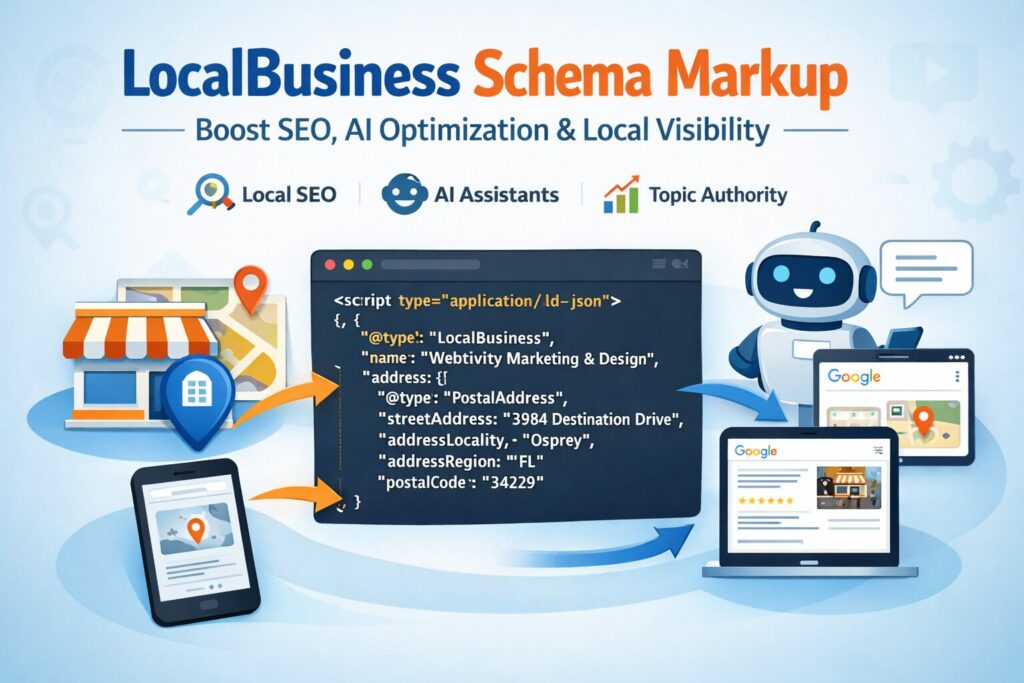
10
Aug
Aug
AI SEO LocalBusiness Schema represents the intersection of structured data and machine learning optimization for local search. As search engines increasingly rely on artificial intelligence to interpret and rank content, implementing LocalBusiness Schema correctly has become a critical factor for local businesses aiming to dominate their service areas. This guide explores how AI-powered search algorithms process schema markup, why LocalBusiness Schema matters more than ever, and how to implement it strategically for maximum visibility.
Understanding AI SEO LocalBusiness Schema

LocalBusiness Schema is a structured data vocabulary defined by Schema.org that helps search engines understand specific details about a business, including its name, address, phone number, operating hours, and service area. When combined with AI-driven search algorithms, this markup enables search engines to interpret and display business information with remarkable accuracy in local search results, knowledge panels, and voice search responses.
AI SEO LocalBusiness Schema refers to the practice of optimizing this structured data specifically for how artificial intelligence systems process, categorize, and rank local business information. Search engines like Google use machine learning models to parse schema markup, cross-reference it with other signals, and determine relevance for local queries.
The Role of AI in Processing Schema Markup
Modern search engines employ neural networks and natural language processing to understand the semantic relationships between different data points within schema markup. This means that simply adding LocalBusiness Schema to a website is no longer sufficient. The markup must be accurate, complete, and contextually aligned with the business’s actual operations to pass AI-driven quality assessments.
Google’s AI systems, including the RankBrain algorithm and the more recent MUM (Multitask Unified Model), analyze schema data alongside user behavior signals, review patterns, and geographic relevance. These systems can detect inconsistencies between schema markup and actual business information, which can result in manual actions or reduced visibility.
Why LocalBusiness Schema Matters for AI Search
Search engines use structured data to create rich results, including knowledge panels, local packs, and enhanced listings. With AI-powered search becoming the norm, the importance of accurate, comprehensive schema markup has grown exponentially. AI systems rely on structured data to train their models and improve their understanding of local business entities.
When LocalBusiness Schema is implemented correctly, AI algorithms can quickly identify a business’s primary category, geographic focus, and unique attributes. This enables search engines to match the business with highly relevant queries, even when the user’s search terms do not exactly match the business’s website content.
How AI Interprets LocalBusiness Schema
AI systems process LocalBusiness Schema through several layers of analysis. First, they extract the core entity information, including business type, location, and contact details. Next, they compare this information against other data sources, such as Google Business Profile, review platforms, and directory listings. Finally, they assess the contextual relevance of the schema markup in relation to the page content and overall website structure.
This multi-layered analysis means that schema markup must be consistent across all platforms. Discrepancies between schema data and other citations can confuse AI algorithms, leading to lower trust scores and reduced local ranking performance.
Key Components of AI SEO LocalBusiness Schema
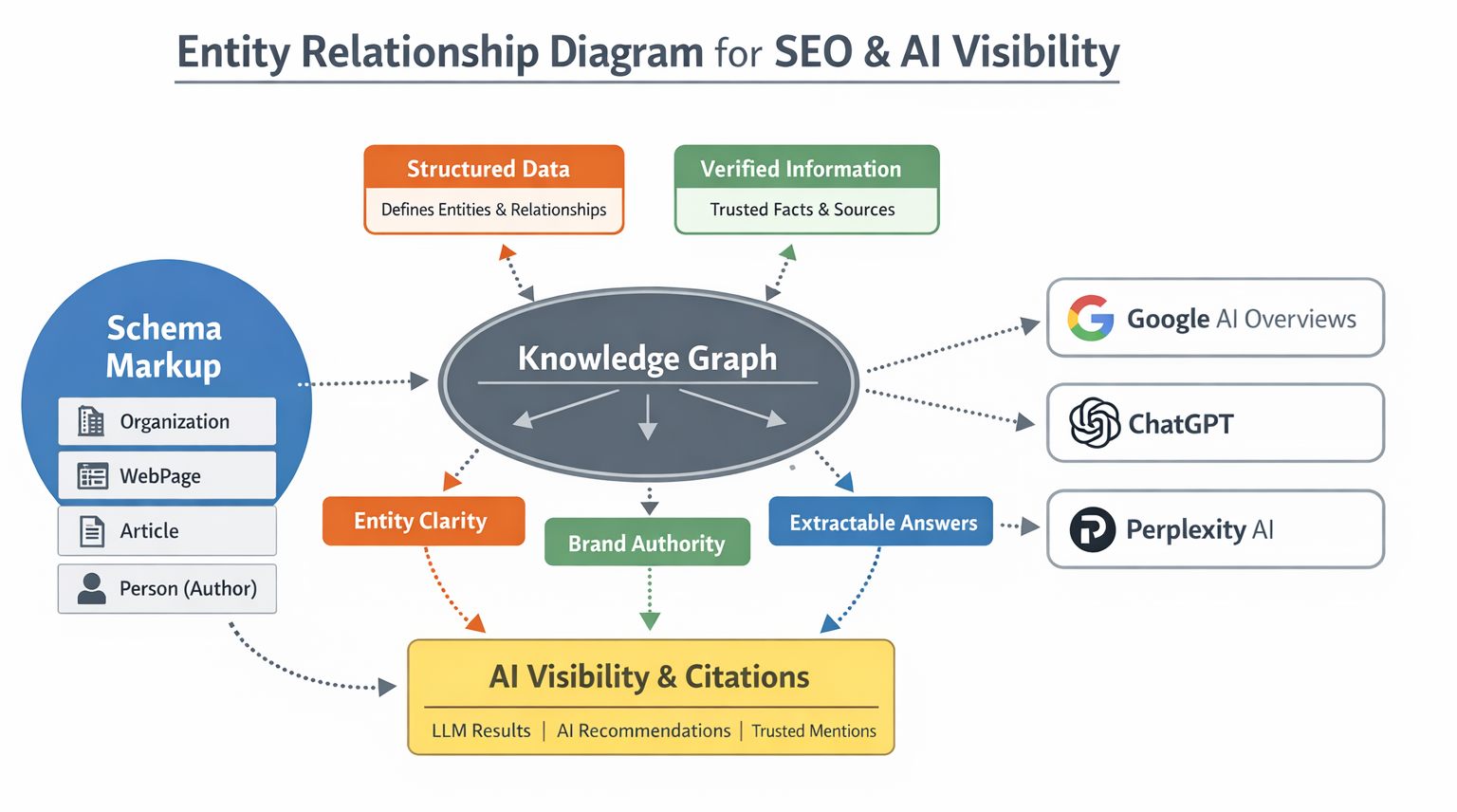
To optimize for AI-driven local search, your LocalBusiness Schema must include several essential properties. Each component contributes to the overall understanding of your business entity.
Core Business Information
The foundation of any LocalBusiness Schema implementation includes the business name, address, and phone number (NAP). These elements must match exactly what appears on your website, Google Business Profile, and all other online citations. AI systems use this information to establish entity identity and trust.
- Business Name: Use the official registered name exactly as it appears on legal documents
- Street Address: Include the complete physical address with correct postal codes
- Phone Number: Use a local phone number with the correct country and area codes
- Latitude and Longitude: Provide precise geographic coordinates for map-based searches
- Opening Hours: Specify regular hours for each day of the week
- Special Hours: Include holiday hours and temporary closures
- Service Area: Define the geographic region where services are offered
- Payment Methods: List accepted payment options for transaction-related queries
- Identify the most specific LocalBusiness subtype that matches your business
- Gather all accurate business information, including NAP, hours, and service area
- Create the JSON-LD script with all required properties
- Place the script in the head section of your homepage or contact page
- Validate the markup using Google’s Rich Results Test
- Monitor performance in Google Search Console
- Rich Results Report: Monitor which schema types are being recognized and any errors detected
- Search Appearance: Track impressions and clicks for pages with schema markup
- Local Pack Performance: Measure visibility in the local pack for target keywords
- Voice Search Queries: Analyze query data for conversational, question-based searches
Operational Details
AI systems analyze operating hours, service availability, and seasonal variations to determine when a business is most relevant for user queries. This information helps search engines display accurate availability in local results and voice search responses.
Business Classification
Accurate categorization helps AI systems match your business with relevant search queries. The Schema.org vocabulary includes numerous subtypes under LocalBusiness, such as Restaurant, DentalClinic, or PlumbingService. Selecting the most specific subtype improves semantic understanding.
For businesses that operate in multiple categories, the additionalType property can be used to specify secondary classifications. However, the primary type should always reflect the main service or product offering.
Implementing AI SEO LocalBusiness Schema
Proper implementation requires careful attention to technical details and content alignment. The schema markup should be placed on the website using JSON-LD format, which is the recommended approach by Google for structured data implementation.
Step-by-Step Implementation Guide
Begin by accessing your website’s HTML files or content management system. If using a CMS like WordPress, you can utilize SEO plugins that support schema markup, or you can manually add JSON-LD code to your theme files.
JSON-LD Example Structure
While the exact code structure varies based on business type, the fundamental properties remain consistent. The schema should include @context, @type, name, address, geo, openingHours, and telephone properties at minimum. Additional properties like priceRange, image, and sameAs can enhance the data richness.
For multi-location businesses, each location requires its own schema markup. The main business entity can be marked as an Organization, with each location represented as a separate LocalBusiness entity linked through the department or subOrganization properties.
Benefits of AI-Optimized LocalBusiness Schema
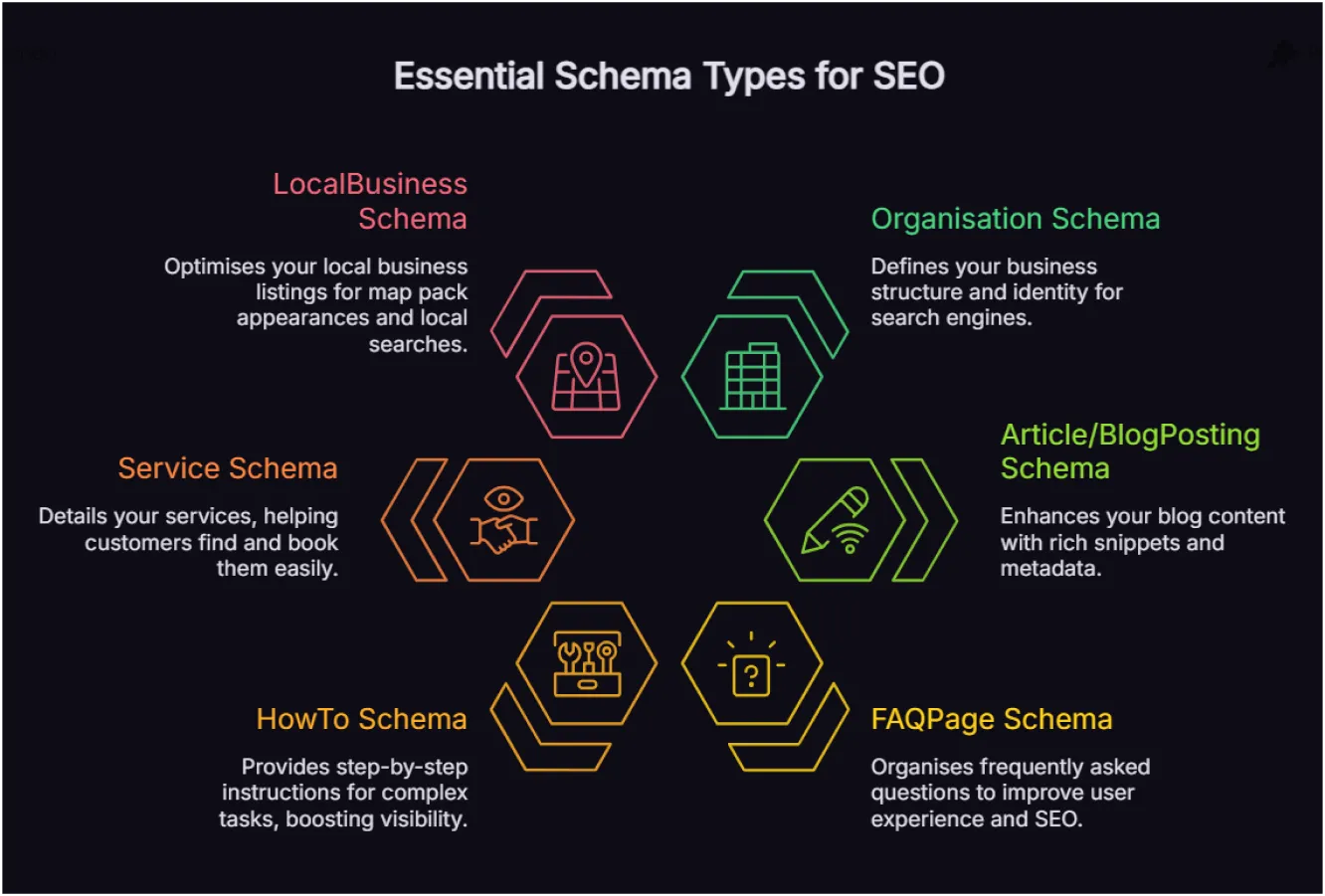
Implementing schema markup with AI optimization in mind delivers measurable benefits for local search performance. These advantages extend beyond basic rich results to include improved entity understanding and voice search optimization.
Enhanced Search Visibility
Websites with properly implemented LocalBusiness Schema are more likely to appear in local pack results, knowledge panels, and rich snippets. AI systems prioritize structured data when determining which results to display for location-based queries.
Voice Search Optimization
Voice assistants like Google Assistant and Siri rely heavily on schema markup to answer local queries. When users ask for business information through voice search, the AI extracts answers directly from structured data. Accurate schema ensures your business information is available for these queries.
Improved Click-Through Rates
Rich results generated from schema markup typically display more information than standard listings, including star ratings, price ranges, and operating hours. This additional information makes your listing more attractive to users, leading to higher click-through rates.
Common Mistakes in AI SEO LocalBusiness Schema
Many businesses make critical errors when implementing LocalBusiness Schema, which can negatively impact their AI-driven search performance. Understanding these mistakes helps avoid costly penalties.
Inconsistent NAP Information
One of the most common errors is using different business names, addresses, or phone numbers across various platforms. AI systems cross-reference schema data with other sources, and inconsistencies create confusion that reduces trust signals.
Overusing Schema Markup
Some websites implement schema markup for every possible property, including irrelevant or false information. AI algorithms can detect spammy schema practices and may issue manual penalties. Only include properties that accurately represent your business.
Ignoring Subtype Specificity
Using the generic LocalBusiness type instead of a specific subtype limits the AI’s ability to understand your business category. A restaurant should use the Restaurant type, while a law firm should use LegalService. Generic types provide less semantic context.
AI SEO LocalBusiness Schema vs Traditional Schema
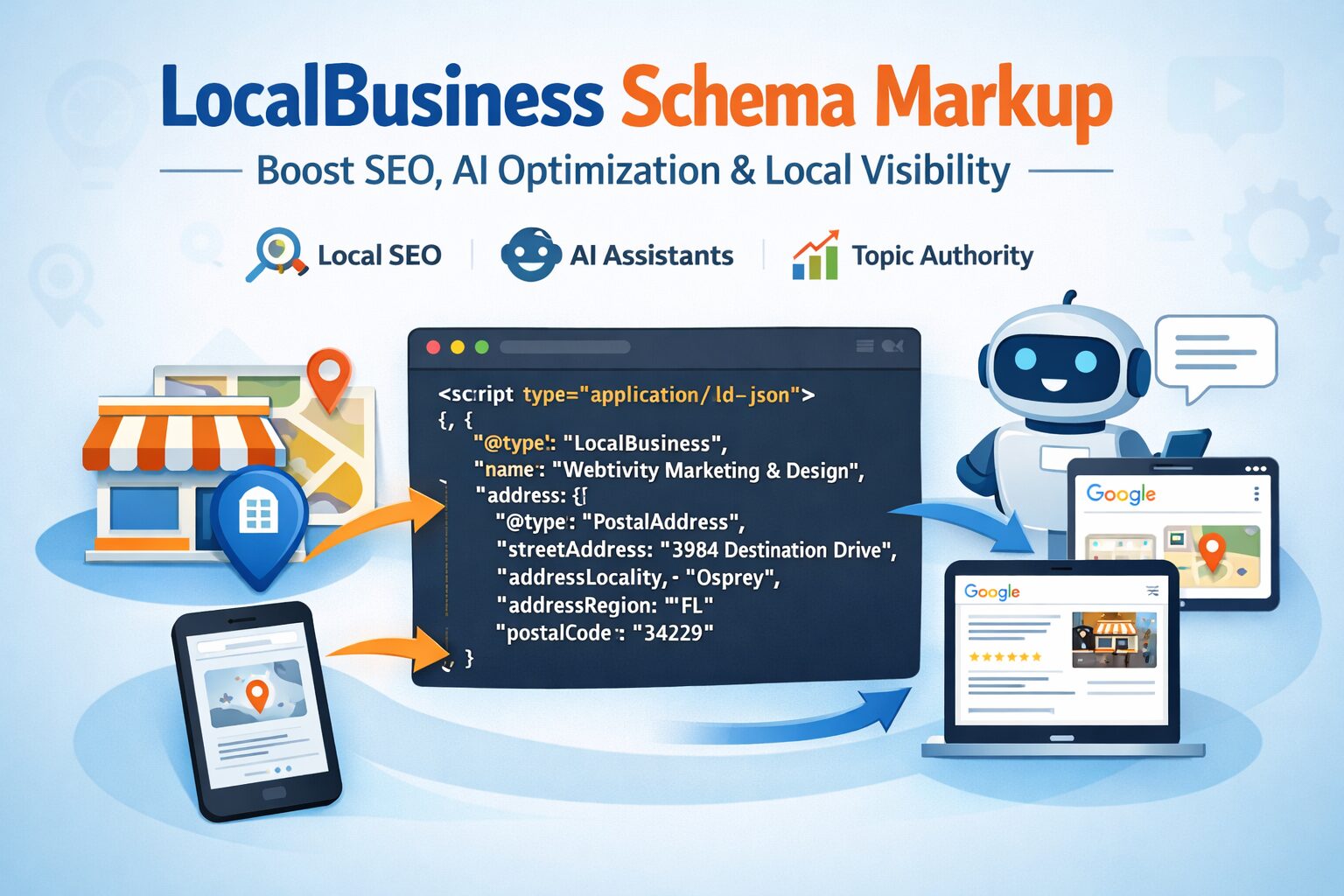
Traditional schema implementation focused on providing basic information to search engines. AI-optimized schema goes further by considering how machine learning models interpret and use the data for ranking decisions.
| Aspect | Traditional Schema | AI-Optimized Schema |
|---|---|---|
| Data Accuracy | Basic NAP information | Comprehensive, cross-verified data |
| Contextual Relevance | Limited to page content | Aligned with entity-wide signals |
| User Intent Matching | Keyword-based matching | Semantic and behavioral matching |
| Voice Search Readiness | Often overlooked | Optimized for conversational queries |
| Update Frequency | Static implementation | Dynamic updates based on business changes |
Practical Applications for Different Business Types
LocalBusiness Schema applies differently across various industries. Each business type has unique properties that enhance AI understanding and search performance.
Restaurants and Food Services
Restaurants should include menu information, cuisine type, and reservation details in their schema. The servesCuisine property helps AI match the restaurant with cuisine-specific queries. Additionally, acceptsReservations and menu properties provide valuable information for users and search engines alike.
Professional Services
Law firms, accounting practices, and consulting agencies benefit from including areaServed, priceRange, and knowsAbout properties. These additional data points help AI systems understand the scope of services and geographic coverage, improving matches for specialized queries.
Retail and E-commerce
Physical retail stores should combine LocalBusiness Schema with Product schema for items available in-store. The availableAtOrFrom property connects products to specific locations, enabling AI to answer inventory-related queries accurately.
Measuring the Impact of AI SEO LocalBusiness Schema
Tracking the effectiveness of schema implementation requires monitoring specific metrics in Google Search Console and other analytics platforms. These measurements reveal how AI systems are processing your structured data.
Key Performance Indicators
Regular monitoring allows businesses to identify issues early and adjust their schema strategy accordingly. If rich results are not appearing, validation errors or incomplete data are likely culprits.
Future Trends in AI SEO LocalBusiness Schema
The relationship between AI and structured data continues to evolve. Search engines are developing more sophisticated methods for analyzing schema markup, and businesses must stay ahead of these changes.
Natural language processing advancements will enable search engines to understand more complex business relationships and service offerings. Schema markup will need to become more detailed and context-aware to remain effective. Additionally, the integration of AI-generated content with structured data will create new opportunities for local search optimization.
Important Notes for Implementation
Before implementing LocalBusiness Schema, verify that your business has a physical location or clearly defined service area. Virtual businesses and those operating without a physical presence may not qualify for LocalBusiness schema and should use ProfessionalService or other appropriate types instead.
Keep schema markup updated whenever business information changes. Moving locations, changing phone numbers, or updating operating hours requires immediate schema updates to maintain consistency across all platforms.
Work with developers or SEO professionals who understand both technical implementation and AI search requirements. Improperly implemented schema can cause more harm than good, leading to penalties and reduced visibility.
Frequently Asked Questions
What is AI SEO LocalBusiness Schema?
AI SEO LocalBusiness Schema is structured data markup optimized for how artificial intelligence systems in search engines process and rank local business information. It combines Schema.org vocabulary with AI-driven search optimization strategies to improve local search visibility, voice search performance, and rich result appearance.
How does LocalBusiness Schema affect AI search rankings?
LocalBusiness Schema provides AI algorithms with structured, unambiguous data about a business. This enables search engines to accurately match the business with relevant local queries, understand entity relationships, and display rich results. Properly implemented schema improves entity trust and relevance signals that AI systems use for ranking.
What is the difference between LocalBusiness and Organization schema?
LocalBusiness schema is a subtype of Organization schema that includes location-specific properties like address, geo coordinates, and opening hours. Organization schema is broader and applies to any organization, while LocalBusiness is specifically designed for businesses with physical locations or defined service areas.
Can I use LocalBusiness Schema for multiple locations?
Yes, multi-location businesses should implement separate LocalBusiness schema for each location. Each location requires its own address, phone number, and operating hours. The main organization can be marked with Organization schema, with each location linked through the department or subOrganization properties.
How often should I update my LocalBusiness Schema?
Update your schema immediately whenever business information changes, including address, phone number, hours, or service offerings. Regular audits every few months are recommended to ensure accuracy and consistency with other online citations and Google Business Profile data.
Does LocalBusiness Schema help with voice search?
Yes, voice search assistants rely heavily on structured data to answer local queries. When users ask for business information through voice search, AI systems extract answers from schema markup. Accurate and comprehensive schema increases the likelihood of being featured in voice search responses.
Conclusion
AI SEO LocalBusiness Schema represents a fundamental shift in how businesses must approach local search optimization. The days of simply adding basic schema markup are over. Modern AI-powered search engines demand accurate, comprehensive, and contextually relevant structured data that aligns with all other business signals across the web.
Businesses that invest in properly optimized LocalBusiness Schema gain a significant competitive advantage in local search results, voice search, and AI-driven discovery platforms. The implementation requires attention to detail, ongoing maintenance, and a commitment to data consistency across all digital touchpoints.
By understanding how AI systems process structured data and implementing schema accordingly, local businesses can position themselves for sustained visibility in an increasingly AI-driven search landscape. The effort invested in schema optimization today will continue to pay dividends as search technology evolves.
Xem thêm:
- AI Technical SEO: The Ultimate Guide to Automating Site Audits, Crawl Optimization, and Indexing Strategies
- AI SEO Content Silos: The Complete Guide to Building Topical Authority in 2025
- AI Content Planner: Revolutionize Your Content Strategy with Intelligent Automation
- AI SEO Masterclass: The Complete Guide to Dominating Search in 2025
- AI SEO vs Traditional SEO: How Automation Is Rewriting the Rules of Search Visibility
Bài viết cùng chủ đề:

AI SEO SEO Automation with Make: The Complete Workflow Guide

AI SEO SEO Automation with Zapier: The Complete Workflow Guide

AI SEO SEO Automation with n8n: The Complete Workflow Guide
AI SEO SEO Automation with Gemini: The Complete Guide to Scaling Organic Growth

AI SEO SEO Automation with Claude: The Complete Guide to Scaling Content in 2025

AI SEO SEO Automation with ChatGPT: The Complete Playbook for 2025

AI SEO & SEO Automation for Affiliate Sites: The 2025 Playbook for Passive Income Growth
AI SEO & SEO Automation for Bloggers: The Complete Guide to Scaling Your Content

AI SEO & SEO Automation for Agencies: The Complete 2025 Playbook

AI SEO and SEO Automation for Ecommerce: The Complete Playbook for 2025

AI SEO & SEO Automation for WordPress: The Complete Playbook for 2025
AI SEO SEO Automation Strategy: The Complete Playbook for 2025

Mastering the AI SEO SEO Automation Process: A Complete Guide to Scaling Organic Growth
AI SEO SEO Automation System: The Complete Guide to Scaling Organic Growth in 2025
AI SEO SEO Automation Platform: The Complete Guide to Scaling Organic Growth in 2025
AI SEO SEO Automation Software: The Complete Guide to Scaling Organic Growth in 2025















