
No products in the cart.
AI SEO Content Readability: The Complete Guide to Human-Centric Optimization
10
Aug
Aug
AI SEO content readability has become the defining factor separating high-ranking pages from those that quietly fade into search engine obscurity. As artificial intelligence tools generate millions of words daily, search engines have refined their algorithms to prioritize content that reads naturally, flows logically, and genuinely serves the reader. The intersection of AI efficiency and human readability now dictates search performance more than any single ranking factor. This comprehensive guide examines how readability transforms AI-generated content into authoritative, engaging material that satisfies both algorithms and audiences.
Understanding AI SEO Content Readability
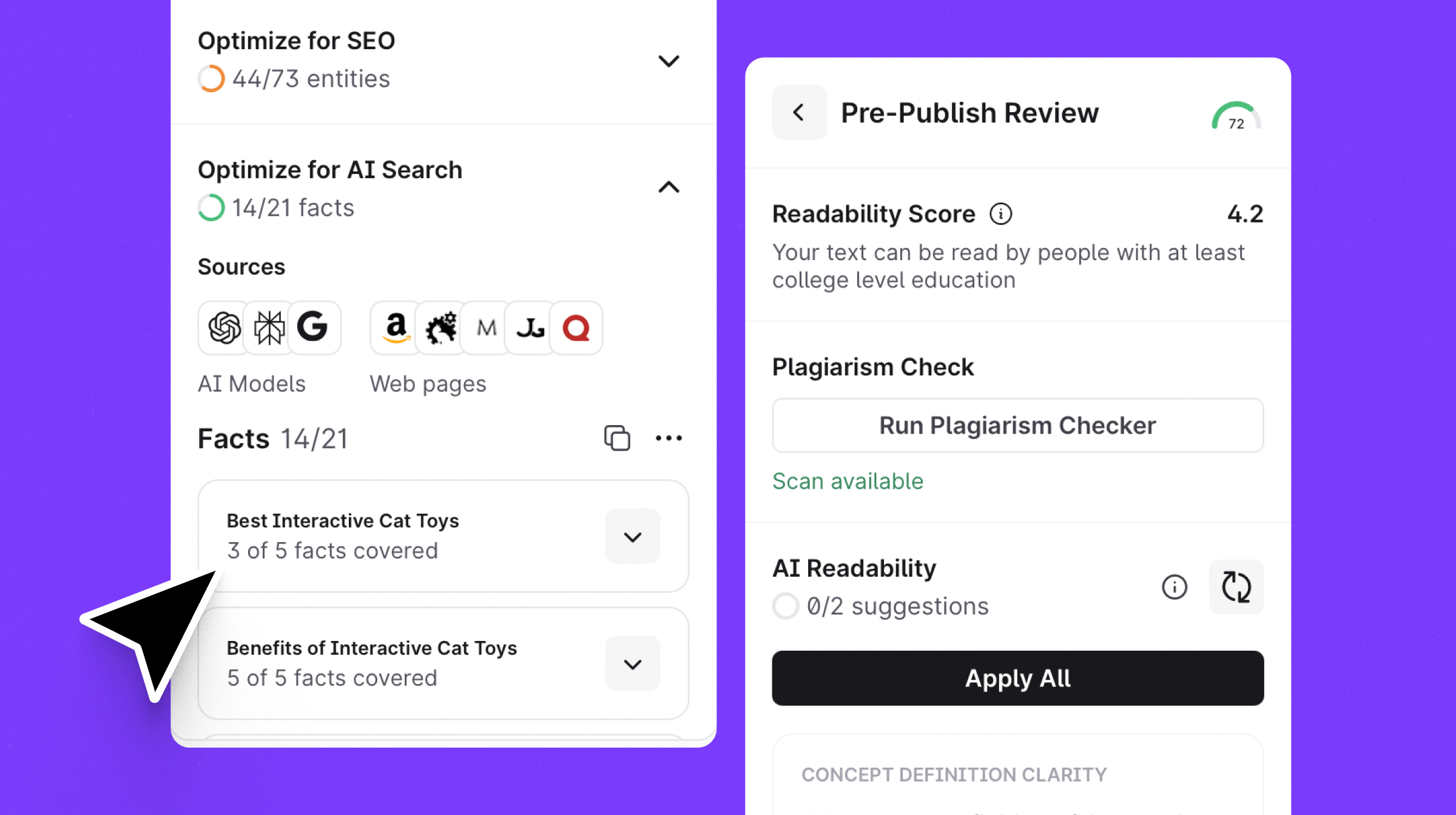
AI SEO content readability refers to the measure of how easily human readers can comprehend, process, and engage with content that artificial intelligence tools have produced or assisted in creating. This concept bridges two distinct worlds: the computational efficiency of language models and the cognitive preferences of human readers. Readability encompasses sentence structure, vocabulary complexity, logical flow, paragraph transitions, and the overall cognitive load required to extract value from the text.
Search engines like Google have evolved beyond simple keyword matching. Their algorithms now assess user engagement signals, dwell time, bounce rates, and scroll depth to determine whether content actually satisfies search intent. When AI-generated content lacks readability, users quickly abandon the page, sending negative signals that suppress rankings. Conversely, highly readable AI content keeps users engaged, encourages sharing, and earns natural backlinks, creating a virtuous cycle of improved search visibility.
The Evolution of Readability in Search Algorithms
Early search algorithms relied heavily on keyword density and meta tags. The landscape shifted dramatically with Google’s RankBrain and later BERT and MUM updates, which introduced natural language processing capabilities. These updates enabled search engines to understand context, semantics, and the subtle nuances of human communication. Content that reads mechanically or follows rigid AI patterns now triggers quality flags, while content that mirrors natural human expression receives preferential treatment.
The introduction of helpful content updates further cemented readability as a core ranking component. Google’s systems now evaluate whether content demonstrates first-hand expertise, provides original insights, and maintains a conversational tone that matches user expectations. AI-generated content that fails these readability assessments faces significant visibility challenges, regardless of its factual accuracy or keyword optimization.
Core Components of AI Content Readability
Several measurable elements contribute to the overall readability of AI-generated content. Understanding these components enables content creators to systematically improve their output and achieve better search performance.
Sentence Structure and Length Variation
Monotonous sentence patterns represent the most common readability failure in AI content. Language models often default to similar sentence constructions, creating a robotic rhythm that fatigues readers. Effective readability requires strategic variation between short, punchy statements and longer, more complex sentences that provide depth and context. This variation creates natural rhythm and maintains reader engagement throughout the piece.
Average sentence length should typically range between 15 and 20 words for general audiences. Technical topics may require slightly longer sentences to accommodate necessary terminology, but breaking complex ideas into digestible chunks remains essential. AI tools often produce excessively long sentences that combine multiple independent clauses, overwhelming readers and obscuring the central message.
Vocabulary Appropriateness and Lexical Diversity
Readability depends heavily on matching vocabulary to the target audience’s knowledge level. AI systems frequently generate sophisticated terminology that may alienate general readers or, conversely, oversimplify concepts for expert audiences. The optimal approach involves using precise, specific language while providing contextual clues that help readers understand unfamiliar terms without requiring external references.
Lexical diversity, or the variety of words used throughout the text, also influences readability. Repetitive vocabulary signals low-quality content to both readers and search engines. AI tools often overuse certain transitional phrases, power words, or industry jargon, creating a formulaic feel that undermines credibility. Strategic synonym usage and varied expression enhance readability while maintaining semantic clarity.
Paragraph Cohesion and Logical Flow
Well-structured paragraphs guide readers through the content’s argument or narrative arc. Each paragraph should focus on a single main idea, supported by relevant details, examples, or evidence. AI-generated content frequently struggles with topic drift, where paragraphs meander across multiple related but distinct concepts, confusing readers and diluting the central message.
Logical flow extends beyond individual paragraphs to the overall document structure. Clear transitions between sections, progressive development of ideas, and a coherent framework that builds toward a satisfying conclusion all contribute to readability. Readers should never wonder why a particular section exists or how it connects to the preceding content.
Measuring AI SEO Content Readability
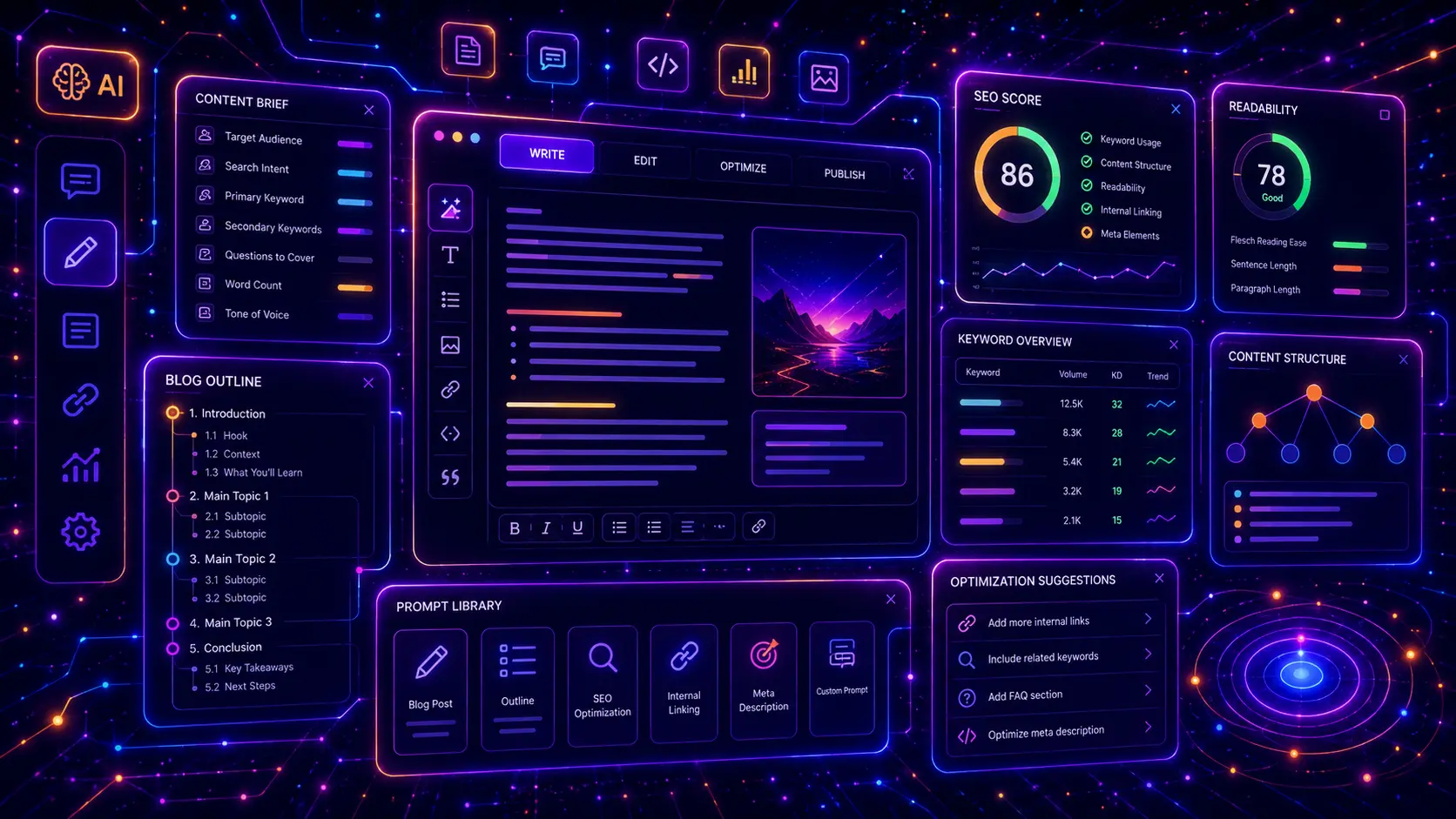
Quantifying readability enables content teams to track improvements and benchmark against competitors. Several established metrics provide valuable insights into how easily readers can process AI-generated content.
Standard Readability Formulas
The Flesch Reading Ease score remains the most widely recognized readability metric. This formula calculates readability based on average sentence length and average syllables per word, producing a score from 0 to 100. Higher scores indicate easier readability, with scores between 60 and 70 considered optimal for general audiences. The Flesch-Kincaid Grade Level translates this score into a U.S. school grade level, helping creators target specific education levels.
The Gunning Fog Index and SMOG Index provide alternative measurements that emphasize different linguistic features. The Gunning Fog Index focuses on sentence length and complex word usage, while the SMOG Index estimates the years of education required to understand the text. Combining multiple metrics offers a more comprehensive readability assessment than relying on any single formula.
AI-Specific Readability Tools
Modern SEO platforms have integrated readability analysis into their content optimization workflows. Tools like Clearscope, Surfer SEO, and MarketMuse now include readability scores alongside traditional keyword metrics. These platforms analyze AI-generated content against top-ranking competitors, providing specific recommendations for sentence restructuring, vocabulary simplification, and paragraph reorganization.
Natural language processing tools can also detect AI writing patterns that human readers find off-putting. These patterns include excessive passive voice, repetitive sentence openers, unnatural transitions, and inconsistent tone. Identifying these patterns enables content teams to refine AI outputs before publication, ensuring the final product reads naturally and authentically.
Practical Strategies for Improving AI Content Readability
Improving AI SEO content readability requires a systematic approach that combines prompt engineering, post-processing, and human oversight. The following strategies have proven effective across various industries and content types.
Advanced Prompt Engineering for Readability
The foundation of readable AI content begins with carefully crafted prompts that explicitly request readability features. Content creators should specify desired sentence length ranges, vocabulary complexity levels, paragraph structure, and tone guidelines. Providing examples of well-written content helps AI models understand the target style and replicate its characteristics.
Prompts should also instruct AI systems to vary sentence structures, use active voice predominantly, and incorporate transitional phrases that create logical connections between ideas. Requesting specific readability scores or grade levels gives AI tools measurable targets to achieve. Iterative refinement, where initial outputs are fed back into the system with readability feedback, produces progressively better results.
Human Editing and Enhancement Workflows
Even the most sophisticated AI systems benefit from human editorial oversight. Professional editors bring contextual understanding, brand voice awareness, and nuanced judgment that AI models cannot replicate. An effective workflow involves AI generating a first draft, followed by human editors reviewing for readability, accuracy, and engagement factors.
Editors should focus on breaking up overly long sentences, replacing jargon with accessible alternatives, and strengthening paragraph transitions. They should also verify that the content maintains a consistent voice throughout and that technical concepts receive adequate explanation for the target audience. This human-AI collaboration produces content that combines AI efficiency with human authenticity.
Formatting for Enhanced Readability
Visual formatting significantly impacts how readers perceive and process AI-generated content. Strategic use of headings, bullet points, numbered lists, and short paragraphs breaks content into scannable chunks that accommodate modern reading habits. Most readers scan content before committing to full engagement, and clear formatting facilitates this initial evaluation.
Bold text highlighting key terms and concepts helps readers identify important information quickly. Tables and infographics present complex data in accessible formats that text alone cannot achieve. White space between sections reduces cognitive load and creates a more inviting reading experience. These formatting elements work in concert with linguistic readability to create content that performs well across all engagement metrics.
Common Readability Mistakes in AI Content
Recognizing frequent readability failures enables content teams to avoid these pitfalls proactively. The following issues appear consistently in poorly optimized AI-generated content.
Overly Complex Sentence Construction
AI models frequently generate compound-complex sentences that stack multiple clauses, creating comprehension challenges. These sentences often contain nested dependent clauses, multiple conjunctions, and parenthetical asides that obscure the primary message. Readers must expend significant cognitive effort parsing these structures, leading to frustration and abandonment.
The solution involves breaking complex sentences into shorter, more focused statements. Each sentence should communicate a single idea clearly. Supporting details can appear in subsequent sentences, maintaining clarity without sacrificing depth or nuance.
Inconsistent Tone and Voice
AI-generated content sometimes shifts between formal and casual registers within the same piece, creating a jarring reading experience. This inconsistency often stems from training data that includes diverse writing styles. Readers perceive these shifts as unprofessional or confusing, undermining trust in the content’s authority.
Establishing clear tone guidelines before generating content helps maintain consistency. The chosen tone should align with brand identity, target audience expectations, and content purpose. Regular review during the editing process catches tone inconsistencies before publication.
Excessive Jargon and Technical Terminology
While technical content requires specialized vocabulary, excessive jargon alienates readers who lack domain expertise. AI systems often default to industry terminology without considering whether the target audience possesses the necessary background knowledge. This creates a barrier to comprehension that reduces engagement and increases bounce rates.
Content creators should define technical terms on first use and provide contextual explanations that help readers understand unfamiliar concepts. When possible, simpler alternatives should replace unnecessarily complex terminology. The goal remains clear communication rather than demonstrating vocabulary range.
Benefits of Optimizing AI Content Readability
Investing in readability optimization yields measurable benefits across multiple dimensions of content performance.
Improved Search Engine Rankings
Readable content generates stronger user engagement signals that directly influence search rankings. Lower bounce rates, longer dwell times, and higher scroll depth indicate to search engines that content satisfies user intent. These positive signals accumulate over time, building authority and improving visibility for target keywords.
Readable content also earns more natural backlinks as readers share valuable resources with their networks. Each backlink represents an endorsement that strengthens domain authority and improves ranking potential across the entire site.
Enhanced User Experience and Conversion Rates
Content that readers can easily process creates positive brand associations and encourages further engagement. Users who successfully extract value from content are more likely to explore additional pages, subscribe to newsletters, or make purchases. Readability directly impacts the bottom line by facilitating the user journey from discovery to conversion.
Accessible content also expands the potential audience by accommodating readers with varying literacy levels, language proficiency, and cognitive abilities. This inclusivity broadens market reach and demonstrates brand commitment to serving diverse user needs.
AI Readability vs. Traditional Content Readability
Understanding the differences between AI-generated and traditionally written content helps content teams identify unique challenges and opportunities.
| Characteristic | AI-Generated Content | Traditional Content |
|---|---|---|
| Sentence Variety | Often monotonous patterns | Natural variation |
| Vocabulary | May overuse certain terms | Contextually appropriate |
| Logical Flow | Can drift between topics | Typically coherent |
| Voice Consistency | May shift unexpectedly | Generally stable |
| Production Speed | Very fast | Time-intensive |
| Scalability | Highly scalable | Limited by human capacity |
| Brand Voice Alignment | Requires careful prompting | Naturally aligned |
AI content offers unprecedented scalability and speed, but traditional content often demonstrates superior natural readability. The optimal approach combines both strengths, using AI for initial drafting and human expertise for refinement and quality assurance.
Tools and Technologies for Readability Optimization
Numerous tools support readability improvement in AI content workflows. These technologies range from simple text analysis to sophisticated AI-powered editing assistants.
Readability Analysis Platforms
Hemingway Editor highlights complex sentences, passive voice, and adverb overuse, providing visual cues for simplification. Grammarly offers comprehensive writing suggestions including readability scores and clarity improvements. ProWritingAid provides detailed reports on sentence variation, transition usage, and structural issues.
These tools integrate with popular content management systems and browser extensions, enabling seamless workflow integration. Regular use of these platforms establishes quality benchmarks and tracks improvement over time.
AI-Powered Rewriting Tools
Advanced AI rewriting tools can transform complex AI-generated text into more readable versions while preserving meaning. These tools analyze sentence structures, vocabulary choices, and flow patterns, then generate alternative versions with improved readability characteristics. Content teams can compare multiple versions and select the optimal output.
However, these tools require careful oversight to ensure accuracy and maintain intended meaning. Automated rewriting sometimes introduces errors or subtle meaning shifts that human editors must catch during review.
Industry-Specific Readability Considerations
Readability requirements vary significantly across industries and content types. Understanding these variations enables appropriate optimization strategies.
Technical and B2B Content
Technical documentation and B2B content often require specialized vocabulary that necessarily increases reading difficulty. The target audience possesses domain expertise, making complex terminology appropriate. However, even expert audiences benefit from clear sentence structures and logical organization that reduce cognitive load.
Technical content should prioritize clarity over simplicity, ensuring that precise meaning takes precedence over ease of reading. Definitions, examples, and visual aids support comprehension without oversimplifying critical concepts.
Consumer and Marketing Content
Consumer-facing content demands maximum accessibility to reach the broadest possible audience. Marketing copy should target lower reading grade levels while maintaining engaging, persuasive qualities. Short sentences, familiar vocabulary, and clear calls to action optimize conversion potential.
This content type benefits from conversational tone that mirrors how target customers naturally speak and think. Avoiding corporate jargon and abstract concepts creates immediate connection and facilitates understanding.
Measuring Readability Impact on SEO Performance
Tracking readability improvements requires systematic measurement of relevant performance metrics. Content teams should establish baseline measurements before implementing readability changes, then monitor progress over defined time periods.
Key Performance Indicators
Organic traffic growth represents the ultimate measure of readability success, as improved rankings drive increased visibility. Engagement metrics including average time on page, pages per session, and bounce rate provide direct feedback on how well content resonates with readers. Conversion metrics reveal whether readability improvements translate into business outcomes.
Keyword rankings for target terms indicate whether search engines recognize improved content quality. Backlink acquisition rates demonstrate whether readers find content valuable enough to reference. Social shares and comments provide qualitative feedback on reader engagement.
Continuous Optimization Cycles
Readability optimization is not a one-time effort but an ongoing process. Search algorithms evolve, audience preferences shift, and competitive landscapes change. Regular content audits identify pages with declining readability scores or engagement metrics, prioritizing them for improvement.
A/B testing different readability approaches provides empirical data on what resonates with specific audiences. These experiments inform future content creation strategies and refine organizational standards for readability excellence.
Frequently Asked Questions About AI SEO Content Readability
What is the ideal readability score for SEO content?
The optimal Flesch Reading Ease score for general web content typically falls between 60 and 70, corresponding to approximately an 8th-grade reading level. However, the ideal score varies based on target audience and content purpose. Technical content for expert audiences may score lower, while consumer content should aim for higher accessibility.
How does AI content readability affect Google rankings?
Google’s algorithms use user engagement signals as indirect readability measurements. Content that readers find difficult to process generates higher bounce rates and shorter dwell times, which negatively impact rankings. Conversely, readable content keeps users engaged, signaling quality and relevance to search engines.
Can AI tools measure their own content readability?
Many AI writing tools include built-in readability analysis features that calculate standard metrics like Flesch Reading Ease and grade level scores. However, these measurements only capture quantitative aspects of readability. Qualitative factors like logical flow, voice consistency, and audience appropriateness require human judgment or more sophisticated analysis tools.
What are the most common readability mistakes in AI content?
The most frequent issues include monotonous sentence structures, excessive passive voice, overuse of transitional phrases, inconsistent tone, and inadequate paragraph transitions. AI systems also tend to generate overly complex vocabulary and abstract language that reduces accessibility for general audiences.
How can I make AI content sound more human?
Incorporate personal experiences, specific examples, and conversational language that reflects natural speech patterns. Vary sentence length and structure, use active voice predominantly, and include rhetorical devices that create engagement. Human editing remains essential for adding authentic perspective and emotional resonance that AI cannot replicate.
Does readability impact featured snippet opportunities?
Yes, readability significantly influences featured snippet selection. Google prioritizes content that directly answers user questions in clear, concise formats. Well-structured content with logical headings, short paragraphs, and straightforward language has higher chances of earning featured snippet positions.
Conclusion
AI SEO content readability represents the critical bridge between technological efficiency and human connection. As artificial intelligence continues transforming content production, the ability to generate material that reads naturally, engages authentically, and serves reader needs becomes the primary competitive differentiator. Organizations that master this balance achieve sustainable search visibility, build meaningful audience relationships, and drive measurable business results.
The strategies outlined in this guide provide a comprehensive framework for optimizing AI-generated content readability. From advanced prompt engineering to human editorial oversight, from quantitative measurement to qualitative refinement, every element contributes to content that performs across all dimensions. The future belongs to content teams that recognize readability not as a constraint but as an opportunity to create genuinely valuable resources in an increasingly automated landscape.
Successful implementation requires commitment to continuous improvement, willingness to experiment with new approaches, and dedication to understanding evolving audience preferences. By prioritizing readability in every AI content workflow, organizations position themselves for lasting success in search rankings and reader loyalty alike.
Xem thêm:
- AI SEO for Education: The Complete Guide to Dominating Search in 2025
- AI SEO Gemini Gems: The Complete Guide to Unlocking Hidden Search Potential
- AI SEO Keyword Modifiers: The Complete Guide to Smarter Search Optimization
- AI SEO Image Optimization: The Complete Guide to Boosting Rankings in 2025
- AI SEO SEO Automation with Make: The Complete Workflow Guide
Bài viết cùng chủ đề:

AI SEO SEO Automation with Make: The Complete Workflow Guide

AI SEO SEO Automation with Zapier: The Complete Workflow Guide

AI SEO SEO Automation with n8n: The Complete Workflow Guide
AI SEO SEO Automation with Gemini: The Complete Guide to Scaling Organic Growth

AI SEO SEO Automation with Claude: The Complete Guide to Scaling Content in 2025

AI SEO SEO Automation with ChatGPT: The Complete Playbook for 2025

AI SEO & SEO Automation for Affiliate Sites: The 2025 Playbook for Passive Income Growth
AI SEO & SEO Automation for Bloggers: The Complete Guide to Scaling Your Content

AI SEO & SEO Automation for Agencies: The Complete 2025 Playbook

AI SEO and SEO Automation for Ecommerce: The Complete Playbook for 2025

AI SEO & SEO Automation for WordPress: The Complete Playbook for 2025
AI SEO SEO Automation Strategy: The Complete Playbook for 2025

Mastering the AI SEO SEO Automation Process: A Complete Guide to Scaling Organic Growth
AI SEO SEO Automation System: The Complete Guide to Scaling Organic Growth in 2025
AI SEO SEO Automation Platform: The Complete Guide to Scaling Organic Growth in 2025
AI SEO SEO Automation Software: The Complete Guide to Scaling Organic Growth in 2025















