
No products in the cart.
AI SEO for Education: The Complete Guide to Dominating Search in 2025
31
Jul
Jul
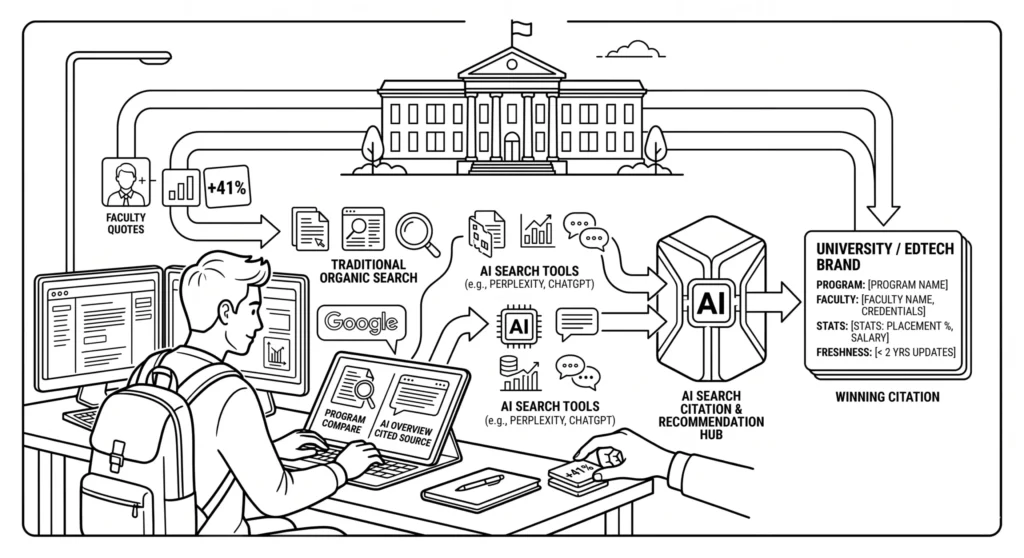
The education sector is undergoing a massive digital transformation, and the institutions that thrive are those that embrace AI SEO for Education. Traditional marketing methods are no longer sufficient to capture the attention of prospective students who begin their journey with a Google search. AI SEO for Education is not just about ranking higher; it is about understanding the nuanced intent of learners, parents, and educators, and delivering precise, valuable content at the exact moment they need it. This comprehensive guide explores how artificial intelligence is reshaping search engine optimization for universities, online course providers, and EdTech companies, offering a clear roadmap to sustainable organic growth.
Understanding AI SEO for Education: A New Paradigm

AI SEO for Education refers to the strategic application of machine learning algorithms and natural language processing to optimize educational content for search engines. Unlike traditional SEO, which relies heavily on manual keyword research and backlink building, this approach leverages AI to analyze vast datasets, predict user behavior, and automate technical optimizations. The core objective remains the same—visibility—but the methodology is fundamentally different. AI tools can now process millions of search queries to identify patterns that human analysts might miss, such as the rise of conversational search or the specific phrasing used by high school students versus adult learners. The shift is driven by changes in how search engines themselves operate. Google’s algorithms, particularly the Helpful Content Update and the integration of MUM (Multitask Unified Model), prioritize content that demonstrates deep expertise and genuine value. For educational institutions, this means that generic pages about “online degrees” are no longer competitive. Instead, AI SEO for Education focuses on creating topical authority through interconnected content clusters that answer specific questions about curriculum, career outcomes, faculty expertise, and financial aid.
The Core Components of an AI-Driven SEO Strategy for Schools and Universities
Implementing AI SEO for Education requires a multi-faceted approach that goes beyond simple content creation. The following components form the backbone of a successful strategy.
1. Predictive Keyword and Topic Clustering
Traditional keyword tools provide search volume and difficulty scores, but AI-powered platforms like Clearscope, MarketMuse, and Surfer SEO go several steps further. They analyze the top-ranking pages for any given query and extract the semantic entities, related questions, and content gaps. For an education provider, this means moving away from targeting “MBA programs” and instead building a comprehensive resource hub that covers “MBA vs. Master’s in Finance,” “MBA salary after graduation,” “online MBA accreditation,” and “MBA application timeline.” These tools use machine learning to suggest clusters of topics that, when published, signal authority to search engines.
2. Automated Technical SEO Audits
Educational websites are often massive, with thousands of program pages, faculty profiles, and event listings. Manually auditing such sites for broken links, slow loading speeds, or indexing issues is impractical. AI-driven crawlers can now simulate Googlebot and identify technical errors in real-time. They can also prioritize fixes based on the potential impact on rankings. For example, an AI audit might flag that 200 program pages have duplicate meta descriptions, and it will automatically suggest unique, data-driven title tags that include the program name, degree type, and location.
3. Personalized Search Intent Analysis
The user journey in education is long and complex. A prospective undergraduate student searches differently than a working professional looking for a certification. AI SEO for Education uses behavioral data to segment audiences and map content to specific stages of the funnel. Machine learning models can analyze click-through rates, dwell time, and bounce rates to determine whether a page is satisfying the user’s intent. If a “Financial Aid” page has a high bounce rate, the AI might suggest adding a calculator tool or a FAQ section to better engage users who are in the comparison stage.
4. Generative AI for Content Production and Optimization
While AI cannot replace the nuanced writing of a seasoned admissions counselor, it can significantly accelerate the content creation process. Large Language Models (LLMs) can generate first drafts of program descriptions, blog posts, and meta tags. However, the true power of AI SEO for Education lies in optimization. AI tools can analyze existing content and suggest improvements to readability, keyword density, and internal linking structure. They can also ensure that content aligns with E-E-A-T (Experience, Expertise, Authoritativeness, Trustworthiness) guidelines by flagging missing author bios, citations, or original research.
Benefits and Limitations of AI SEO for Education

Adopting AI in SEO offers substantial advantages, but it is not a silver bullet. Understanding the full picture helps institutions set realistic expectations.
The Key Benefits
- Scalability: AI can process and optimize thousands of pages simultaneously, something impossible for a human team. This is critical for large universities with extensive course catalogs.
- Data-Driven Decisions: AI eliminates guesswork. Every content recommendation is backed by data on search trends, competitor performance, and user behavior.
- Improved User Experience: By optimizing for search intent, AI helps create content that is more relevant and useful, leading to lower bounce rates and higher conversion rates.
- Competitive Advantage: Early adopters of AI SEO for Education can outrank competitors who are still using outdated, manual methods.
- Real-Time Adaptation: AI algorithms can monitor algorithm updates and adjust strategies in hours, not weeks.
- Lack of Human Nuance: AI can struggle with the emotional and aspirational aspects of education marketing. A page about “campus life” needs authentic student voices, not AI-generated text.
- Data Privacy Concerns: Using AI to analyze user behavior requires careful handling of student data, especially with regulations like FERPA and GDPR.
- Initial Investment: High-quality AI SEO tools are expensive, and they require skilled personnel to interpret the data and implement recommendations.
- Risk of Generic Content: Over-reliance on AI can lead to content that sounds robotic and lacks the unique voice of the institution.
- Algorithm Dependency: Search algorithms are constantly changing. What works today might not work tomorrow, and AI models need continuous retraining.
The Limitations and Challenges
AI SEO for Education vs. Traditional SEO: A Detailed Comparison
To fully grasp the impact of AI, it is helpful to compare it directly with traditional methods.
| Aspect | Traditional SEO | AI SEO for Education |
|---|---|---|
| Keyword Research | Manual analysis of search volume and difficulty using tools like Google Keyword Planner. | Automated discovery of semantic topics, question-based queries, and predictive trends using machine learning. |
| Content Creation | Human writers create content based on personal expertise and limited data. | AI assists in drafting, optimizing, and personalizing content at scale, with human oversight for quality. |
| Technical Audits | Manual crawling and checking of site health, often done quarterly. | Continuous, automated monitoring with prioritized fix lists and predictive impact analysis. |
| User Intent | Focus on matching keywords to pages, often leading to generic content. | Deep analysis of user behavior to map content to specific stages of the enrollment funnel. |
| Link Building | Outreach and manual guest posting to acquire backlinks. | AI identifies digital PR opportunities and analyzes competitor backlink profiles to find gaps. |
| Measurement | Monthly reports on rankings and traffic. | Real-time dashboards that track engagement, conversions, and predictive ROI. |
Practical Application: A Step-by-Step Guide to Implementing AI SEO for Education
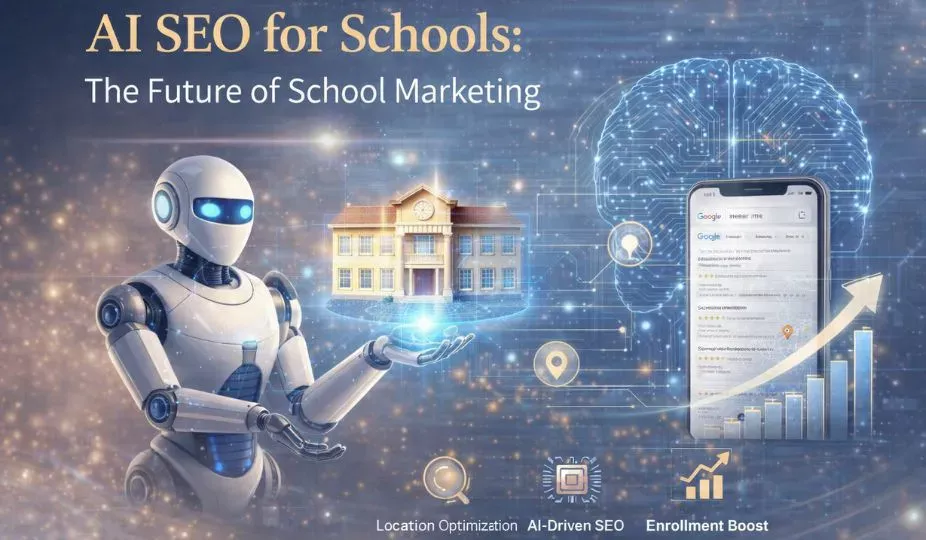
Implementing this strategy requires a structured approach.
Step 1: Audit Your Current Digital Footprint
Start by using an AI-powered tool to crawl your entire website. Identify pages that are underperforming, have high bounce rates, or are not indexed. Look for content gaps where you have programs but no dedicated landing pages. This audit provides the baseline data needed for the next steps.
Step 2: Build a Topic Cluster Strategy
Instead of targeting individual keywords, create “pillar” pages for your main program areas (e.g., “Engineering Degrees”). Then, create “cluster” content that covers specific subtopics (e.g., “Civil Engineering vs. Mechanical Engineering,” “What is the ABET Accreditation?”). Use AI tools to ensure that all clusters are interlinked and that the anchor text is optimized.
Step 3: Leverage AI for Content Briefs
Before writing any new content, generate a detailed AI brief. This brief should include the primary keyword, secondary keywords, related questions from “People Also Ask,” competitor analysis, and suggested word count. This ensures that your writers are creating content that has a high probability of ranking.
Step 4: Optimize for Voice and Conversational Search
Many prospective students use voice assistants to search for information. AI SEO for Education must account for long-tail, conversational queries like “What is the best online nursing program for working moms?” or “How long does it take to get a master’s degree in psychology?” Structure your content to directly answer these questions in a concise, featured-snippet-friendly format.
Step 5: Implement Schema Markup
Use AI tools to generate structured data markup for your courses, events, and faculty. This helps search engines understand your content better and can lead to rich snippets that display star ratings, tuition costs, and course durations directly in the search results. This significantly improves click-through rates.
Step 6: Monitor and Iterate with Machine Learning
Once your content is live, use AI analytics to monitor performance. Look for patterns in user behavior. If a specific blog post is driving a lot of traffic but few conversions, the AI might suggest adding a call-to-action or a lead magnet. The key is to treat SEO as a continuous loop of creation, measurement, and refinement.
Common Mistakes in AI SEO for Education and How to Avoid Them
Even with advanced technology, institutions often fall into traps that undermine their efforts.
Mistake 1: Relying Solely on AI for Content Creation
Publishing AI-generated content without human editing is a fast track to losing credibility. Search engines penalize unhelpful content, and students can spot generic writing instantly. The solution is to use AI as a research assistant and first-draft generator, but always have a human expert review, fact-check, and add unique institutional insights.
Mistake 2: Ignoring the Human Element of Search Intent
AI can tell you what people are searching for, but it cannot tell you why they are searching. A student searching for “college application deadlines” might be a senior in high school, or they might be a transfer student. Failing to address the specific context of the user leads to high bounce rates. Use AI to segment audiences, but use human empathy to craft the message.
Mistake 3: Focusing on Quantity Over Quality
The goal of AI SEO for Education is not to publish 1000 pages of mediocre content. It is to publish 100 pages of exceptional content that fully satisfies the user. Avoid the temptation to mass-produce articles. Instead, focus on creating comprehensive, authoritative resources that stand the test of time.
Mistake 4: Neglecting Local SEO
For many institutions, local search is critical. AI tools can help optimize for “near me” searches and local map packs, but this is often overlooked in favor of national or global keywords. Ensure your Google Business Profile is optimized and that your location pages contain unique, relevant content.
Mistake 5: Failing to Track Off-Site Signals
AI SEO is not just about on-page factors. It also involves analyzing your backlink profile and digital PR. Using AI to monitor brand mentions and identify link-building opportunities is essential. However, many institutions focus only on their own website and miss these external signals.
Important Notes on Ethics and Data Privacy in AI SEO
The use of AI in education marketing raises significant ethical questions. Institutions must be transparent about how they use AI to personalize content and track user behavior. Collecting data on minors, for example, requires strict adherence to COPPA (Children’s Online Privacy Protection Act) and FERPA. Furthermore, t If your AI models are trained on historical data that reflects past inequalities, they may inadvertently exclude certain demographics from your marketing efforts. It is crucial to regularly audit your AI tools for fairness and to ensure that your SEO strategy is inclusive and equitable. Always prioritize the user’s privacy and provide clear opt-out options for data collection.
Frequently Asked Questions (FAQ)
What is the difference between AI SEO and traditional SEO?
Traditional SEO relies on manual research and static rules, while AI SEO for Education uses machine learning to analyze large datasets, predict trends, and automate optimization tasks. AI SEO is more dynamic, scalable, and focused on user intent, whereas traditional SEO often focuses on keyword matching and link quantity.
Can AI replace human SEO experts in education?
No. AI is a powerful tool that enhances the capabilities of human experts, but it cannot replace the strategic thinking, creative writing, and relationship-building skills that are essential for success. Human experts are needed to interpret AI data, make ethical decisions, and create authentic content that resonates with students.
How much does it cost to implement AI SEO for a university?
Costs vary widely depending on the size of the institution and the tools chosen. Basic AI writing assistants can cost around $50 per month, while enterprise-level SEO platforms can cost thousands of dollars annually. The total cost also includes the time of skilled staff to manage the tools and implement recommendations.
What are the best AI tools for educational SEO?
Popular tools include MarketMuse and Clearscope for content optimization, Surfer SEO for on-page analysis, and Semrush or Ahrefs for comprehensive keyword and competitor research. For technical audits, tools like Sitebulb or Lumar (formerly DeepCrawl) offer AI-powered insights.
How long does it take to see results from AI SEO?
It depends on the current state of your website and the competitiveness of your keywords. Generally, you can expect to see improvements in rankings within 3 to 6 months, but significant traffic growth often takes 6 to 12 months. AI helps accelerate the process by identifying high-opportunity areas faster, but it does not guarantee instant results.
Is AI SEO for Education suitable for small online course creators?
Absolutely. Small creators can use AI tools to compete with larger institutions by identifying niche keywords with low competition. AI can help them create high-quality content quickly and optimize their limited resources effectively.
Conclusion: The Future of AI SEO for Education
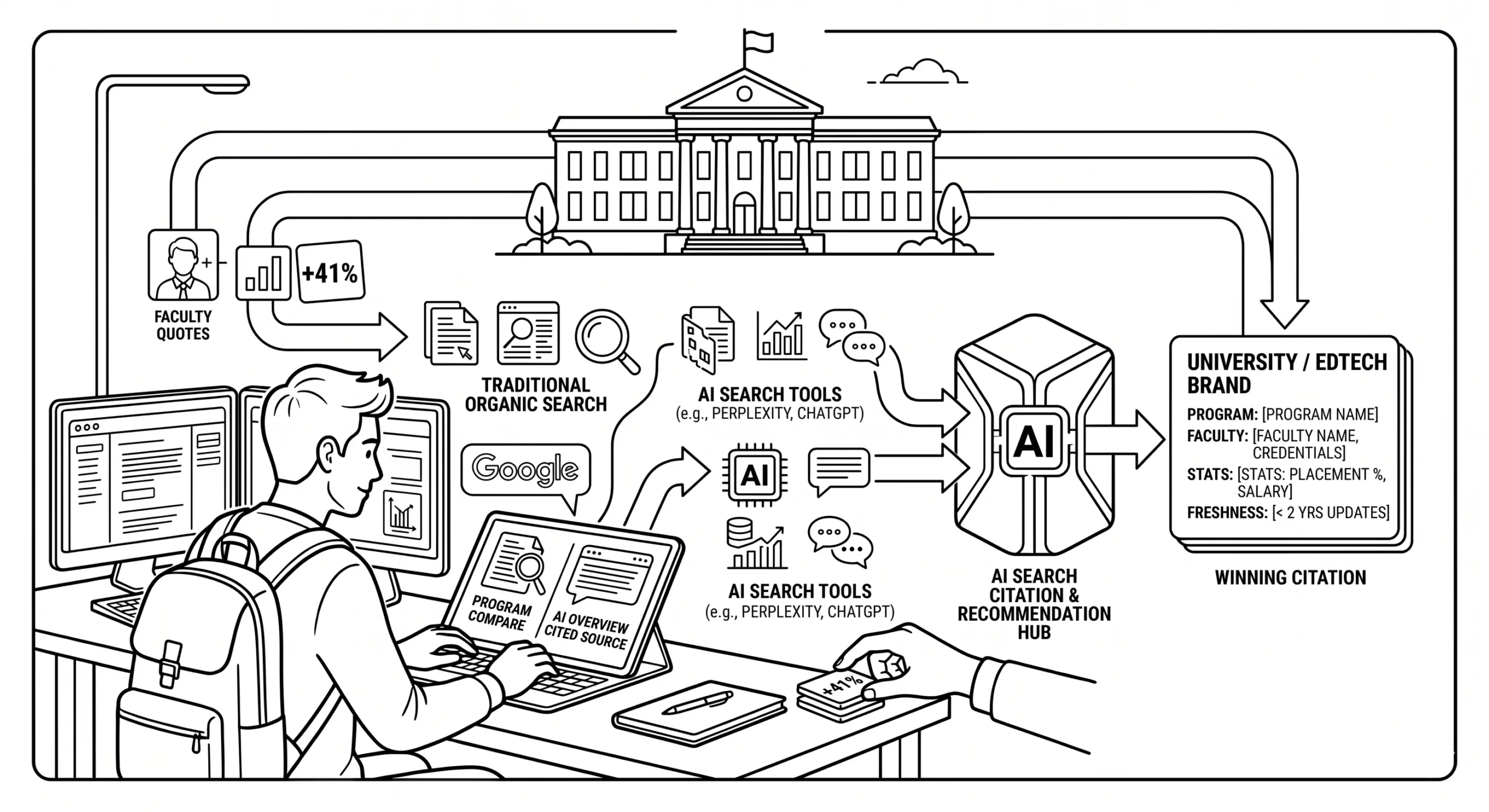
AI SEO for Education is not a passing trend; it is the new standard for digital visibility in the academic world. Institutions that fail to adopt these technologies will find themselves invisible to the modern, digitally-native student. The future will see even deeper integration of AI, with predictive analytics that can forecast enrollment trends and personalized search experiences that adapt to the individual user’s learning style. However, the core principle remains unchanged: provide genuine value to the user. AI is the engine, but the content—the stories of student success, the depth of research, the promise of a brighter future—is the fuel. By combining the analytical power of AI with the irreplaceable human touch of educators, institutions can build a powerful online presence that not only ranks well but also genuinely helps students make one of the most important decisions of their lives. The time to invest in AI SEO for Education is now, and the institutions that do will lead the way in shaping the future of learning.
Xem thêm:
- AI Rank Tracking: How Artificial Intelligence Revolutionizes SERP Monitoring
- Mastering AI EEAT Optimization: The Strategic Blueprint for Next-Level Search Authority
- AI SEO LLM Brand Mentions: The Complete Guide to Dominating AI Search Results
- WP Trove AI WordPress: The Complete Guide to AI-Powered Site Management
- AI SEO AI Search Strategy: The Complete Guide to Dominating Generative Search
Bài viết cùng chủ đề:

AI SEO SEO Automation with Make: The Complete Workflow Guide

AI SEO SEO Automation with Zapier: The Complete Workflow Guide

AI SEO SEO Automation with n8n: The Complete Workflow Guide
AI SEO SEO Automation with Gemini: The Complete Guide to Scaling Organic Growth

AI SEO SEO Automation with Claude: The Complete Guide to Scaling Content in 2025

AI SEO SEO Automation with ChatGPT: The Complete Playbook for 2025

AI SEO & SEO Automation for Affiliate Sites: The 2025 Playbook for Passive Income Growth
AI SEO & SEO Automation for Bloggers: The Complete Guide to Scaling Your Content

AI SEO & SEO Automation for Agencies: The Complete 2025 Playbook

AI SEO and SEO Automation for Ecommerce: The Complete Playbook for 2025

AI SEO & SEO Automation for WordPress: The Complete Playbook for 2025
AI SEO SEO Automation Strategy: The Complete Playbook for 2025

Mastering the AI SEO SEO Automation Process: A Complete Guide to Scaling Organic Growth
AI SEO SEO Automation System: The Complete Guide to Scaling Organic Growth in 2025
AI SEO SEO Automation Platform: The Complete Guide to Scaling Organic Growth in 2025
AI SEO SEO Automation Software: The Complete Guide to Scaling Organic Growth in 2025















