
No products in the cart.
AI SEO Customer Acquisition: The Complete Playbook for Sustainable Growth in 2025
31
Jul
Jul
Customer acquisition has fundamentally changed. The days of guessing which keywords will convert, manually auditing hundreds of pages, and hoping for backlinks are over. AI SEO customer acquisition is now the dominant strategy for brands that want predictable, scalable, and cost-effective growth. This approach combines machine learning, natural language processing, and predictive analytics to attract high-intent users before they even search. In this comprehensive guide, you will learn exactly how to build a system that uses AI to turn search traffic into a reliable revenue engine.
What Is AI SEO Customer Acquisition?
AI SEO customer acquisition is the practice of using artificial intelligence tools and algorithms to identify, attract, and convert potential customers through organic search channels. Unlike traditional SEO, which relies heavily on manual research and historical data, this approach uses real-time behavioral signals, search intent modeling, and automated content optimization to target users who are most likely to make a purchase.
The core difference lies in the feedback loop. Traditional SEO is reactive: you optimize, wait, and measure. AI-driven acquisition is proactive: the system learns from every click, scroll, and conversion, then automatically adjusts your content strategy, technical structure, and keyword targeting to improve performance continuously. This creates a compounding effect where your customer acquisition costs decrease while your conversion rates increase over time.
Why Traditional SEO Fails at Customer Acquisition
Most businesses still treat SEO as a traffic game. They chase high-volume keywords, publish generic blog posts, and measure success by page views. This approach fails because traffic is not the same as acquisition. A visitor who lands on your page and bounces within five seconds costs you money without returning any value.
Traditional SEO also struggles with the modern search landscape. Google now processes billions of queries daily, many of which are conversational and long-tail. Manual keyword research cannot keep up with the sheer volume of search variations. Furthermore, search algorithms now prioritize user engagement metrics like dwell time, click-through rate, and content relevance. If your content does not perfectly match the user’s intent, your rankings will suffer regardless of how many backlinks you have.
AI solves these problems by processing massive datasets in real time. It can analyze thousands of search queries, identify patterns in user behavior, and predict which content pieces will drive conversions. This is not about replacing human judgment; it is about augmenting it with data-driven insights that are impossible to derive manually.
Core Components of an AI SEO Customer Acquisition System
Building a successful system requires integrating several distinct components. Each one plays a critical role in the acquisition funnel, from discovery to conversion.
1. Predictive Keyword and Topic Clustering
AI tools like Clearscope, Surfer SEO, and MarketMuse analyze search engine results pages (SERPs) to identify semantic relationships between keywords. Instead of targeting isolated keywords, these tools group them into topical clusters based on user intent. For example, if you sell project management software, the A
This clustering allows you to create content hubs that cover entire topics comprehensively. Search engines reward this depth. A cluster of 20 interlinked articles that cover every aspect of a topic will outperform 20 unrelated blog posts every time.
2. Automated Content Generation and Optimization
AI writing assistants like Jasper and Copy.ai can generate first drafts of articles, product descriptions, and landing pages in seconds. However, the real power lies in optimization. Tools like Frase and Surfer SEO analyze the top-ranking pages for your target keyword and provide real-time recommendations for word count, heading structure, and semantic terms to include.
This is not about replacing human writers. It is about giving them a data-backed blueprint. A writer can then focus on adding unique insights, case studies, and expert opinions that AI cannot generate. The result is content that is both search-optimized and genuinely valuable to readers.
3. Technical SEO Automation
Crawling, indexing, and site architecture are the foundation of any SEO strategy. AI-powered platforms like Screaming Frog and Sitebulb now use machine learning to identify technical issues that impact crawlability and page speed. They can automatically detect broken links, duplicate content, missing meta descriptions, and schema markup errors across thousands of pages.
More advanced systems use AI to dynamically generate XML sitemaps, optimize internal linking structures, and even rewrite meta tags based on real-time click-through rate data. This automation frees up your technical team to focus on higher-level strategic initiatives.
4. User Intent Analysis and Personalization
Understanding why a user is searching is more important than what they are searching for. AI tools analyze search queries to determine the underlying intent: informational, navigational, commercial, or transactional. This analysis goes beyond simple keyword matching. Natural language processing (NLP) can detect nuances like urgency, comparison intent, and budget constraints.
For example, the query “best CRM for small business” indicates commercial intent with a specific audience segment. The query “how to choose a CRM” indicates informational intent. Your content strategy must differ for each. AI can automatically segment your audience based on these intent signals and serve personalized content recommendations, email sequences, and on-site messaging.
5. Predictive Analytics for Conversion Optimization
The ultimate goal of AI SEO customer acquisition is not just to attract visitors but to convert them into paying customers. Predictive analytics tools use historical data to score leads based on their likelihood to convert. They analyze factors like page views, time on site, content downloads, and email engagement to identify high-value prospects.
This data can then be used to automatically adjust your content strategy. If the AI identifies that visitors who read a specific comparison guide are 50% more likely to purchase, you can allocate more resources to creating similar content. You can also use this data to trigger personalized pop-ups, chat widgets, or email follow-ups at the exact moment a user shows high purchase intent.
Benefits of Using AI for Customer Acquisition
The advantages of integrating AI into your SEO strategy are tangible and measurable. Here are the key benefits that justify the investment.
- Reduced Customer Acquisition Cost (CAC): AI optimizes your content and targeting to attract high-intent users, reducing wasted ad spend and lowering your overall CAC.
- Faster Time-to-Market: Automated content generation and optimization reduce the time it takes to publish a new piece of content from weeks to days.
- Scalability: AI systems can analyze thousands of keywords and content pieces simultaneously, allowing you to scale your efforts without proportionally increasing your team size.
- Improved Conversion Rates: By targeting users based on intent and personalizing their experience, you can significantly increase the percentage of visitors who take a desired action.
- Data-Driven Decisions: AI removes the guesswork from SEO. Every decision, from keyword selection to content structure, is backed by real-time data and predictive models.
- Competitive Advantage: Businesses that adopt AI early gain a significant edge over competitors who still rely on manual, outdated SEO practices.
- Mistake 1: Relying on AI for 100% of Content Creation. The result is generic, low-quality content that fails to engage readers. Solution: Use AI for research and drafting, but always have a human expert review, edit, and add unique value.
- Mistake 2: Ignoring Search Intent. Targeting keywords without understanding the user’s stage in the buying journey leads to high bounce rates. Solution: Use AI to classify keywords by intent and create content that matches each stage.
- Mistake 3: Focusing Only on Rankings. Ranking #1 for a keyword that does not convert is useless. Solution: Track conversions and revenue, not just rankings and traffic.
- Mistake 4: Not Integrating AI with Your CRM. If your SEO data is siloed from your sales data, you cannot accurately measure acquisition. Solution: Connect your analytics and SEO tools directly to your CRM to track the full customer journey.
- Mistake 5: Expecting Instant Results. AI still requires time to learn and optimize. Solution: Set realistic expectations and give your system at least 3-6 months to show meaningful results.
Limitations and Challenges to Consider
While the benefits are substantial, it is important to acknowledge the limitations. AI is not a magic bullet, and there are several challenges you will face.
Data Quality Dependency: AI models are only as good as the data they are trained on. If your analytics tracking is broken or your historical data is sparse, the AI’s predictions will be inaccurate. You must invest in clean, comprehensive data collection before relying on AI insights.
Lack of Creativity and Empathy: AI cannot replicate human creativity, emotional intelligence, or brand voice. Content generated entirely by AI often sounds generic and lacks the unique perspective that builds trust with readers. You need human oversight to ensure quality and authenticity.
Algorithm Updates: Search engine algorithms are constantly evolving. An AI model that works perfectly today may become obsolete after a major Google update. You must continuously retrain and adjust your models to stay current.
Cost of Implementation: Advanced AI tools and platforms can be expensive. Small businesses may struggle to justify the cost of enterprise-level software, and the learning curve can be steep.
AI SEO vs. Traditional SEO: A Detailed Comparison
To understand the value of AI, it helps to see a direct comparison with traditional methods.
| Aspect | Traditional SEO | AI SEO Customer Acquisition |
|---|---|---|
| Keyword Research | Manual analysis of search volume and difficulty | Predictive modeling of intent and semantic clusters |
| Content Creation | Human writers based on personal experience | AI-assisted drafting with real-time SERP analysis |
| Technical Audits | Quarterly manual crawls and fixes | Continuous automated monitoring and self-healing |
| User Targeting | Broad audience segments based on demographics | Individual-level intent scoring and personalization |
| Performance Measurement | Monthly reports on rankings and traffic | Real-time dashboards with predictive revenue forecasts |
| Adaptability | Slow, reactive changes based on historical data | Fast, proactive adjustments based on live user behavior |
The table clearly shows that AI is not just an upgrade; it is a fundamental shift in how you approach search marketing. Traditional methods are still useful for baseline understanding, but they cannot compete with the speed and precision of AI-driven systems.
Practical Implementation: A Step-by-Step Guide
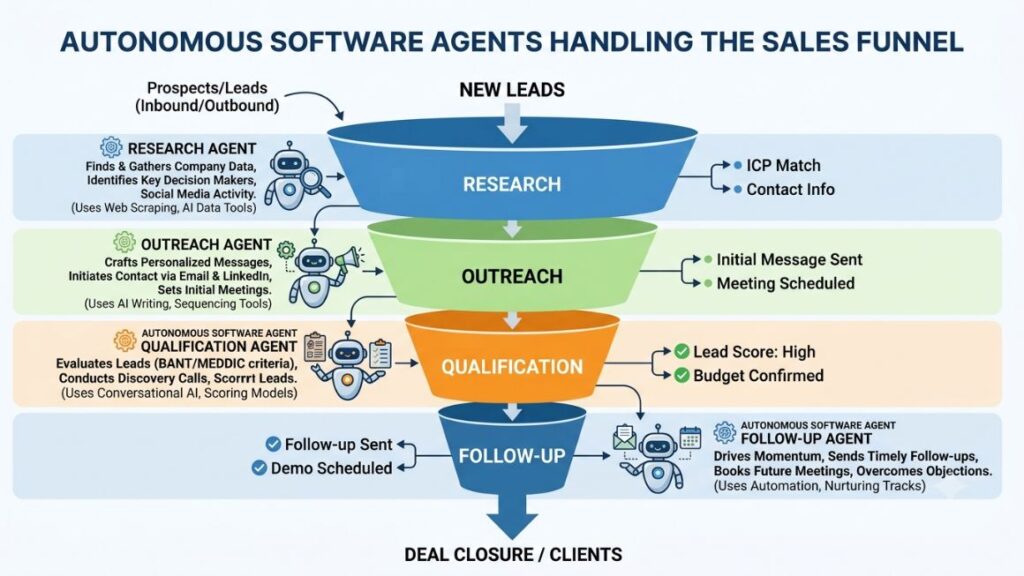
Implementing AI SEO customer acquisition requires a structured approach.
Step 1: Audit Your Current Data Infrastructure
Before you can use AI, you need reliable data. Ensure that Google Analytics, Google Search Console, and your CRM are properly integrated. Clean up any duplicate tracking codes and set up conversion tracking for all key actions, including form submissions, product purchases, and demo requests.
Step 2: Choose the Right AI Tools
Start with a core stack that covers your primary needs. For keyword research and content optimization, consider tools like Ahrefs (which now has AI features), Surfer SEO, or MarketMuse. For technical audits, use Sitebulb or Lumar. For content generation, explore Jasper or Copy.ai. For predictive analytics, look at platforms like Pathmonk or BrightEdge.
Step 3: Build Your Topic Clusters
Use your AI tool to generate a list of core topics relevant to your business. For each topic, the A Map these to different stages of your sales funnel. Create pillar pages for broad topics and supporting blog posts for specific subtopics.
Step 4: Generate and Optimize Content
Use your AI writing assistant to create a first draft. Then, use your optimization tool to compare your draft against the top-ranking pages for your target keywords. Adjust your headings, word count, and semantic terms based on the AI’s recommendations. Finally, have a human editor add unique insights, case studies, and a strong brand voice.
Step 5: Automate Technical Monitoring
Set up your technical SEO tool to crawl your site weekly. Configure alerts for critical issues like 404 errors, slow-loading pages, and broken schema markup. Use the AI’s recommendations to prioritize fixes based on their potential impact on revenue.
Step 6: Implement Intent-Based Personalization
Use a tool like Mutiny or Intellimize to create personalized website experiences. The A For example, a first-time visitor reading a blog post might see a lead magnet pop-up, while a returning visitor who has downloaded a case study might see a demo request form.
Step 7: Monitor, Learn, and Iterate
AI is not a set-and-forget solution. Review your analytics weekly to see which content pieces are driving conversions. Feed this data back into your AI tools so they can refine their models. Adjust your content calendar based on what is working and double down on high-performing topics.
Common Mistakes and How to Avoid Them
Many businesses fail to see results from AI SEO because they make avoidable mistakes. Here are the most common pitfalls and how to sidestep them.
Important Notes for Long-Term Success
To sustain success with AI SEO customer acquisition, keep these principles in mind.
E-E-A-T Matters More Than Ever: Google’s algorithms prioritize content that demonstrates Experience, Expertise, Authoritativeness, and Trustworthiness. AI can help you identify gaps in your content, but it cannot replace genuine expertise. Ensure that your content includes real-world examples, author bios with credentials, and citations from reputable sources.
User Experience is a Ranking Factor: AI can drive traffic, but if your website is slow, cluttered, or difficult to navigate, visitors will leave. Invest in a fast, mobile-responsive design and clear calls-to-action.
Voice Search is Growing: With the rise of smart speakers and voice assistants, more searches are conversational. Optimize your content for long-tail, question-based queries that AI tools can help you identify.
Privacy Regulations: As you collect more data for personalization, be aware of GDPR and CCPA regulations. Ensure you have proper consent mechanisms in place and that you are transparent about how you use user data.
Frequently Asked Questions
What is the difference between AI SEO and traditional SEO?
Traditional SEO relies on manual research, historical data, and static optimization. AI SEO uses machine learning algorithms to analyze real-time user behavior, predict search intent, and automatically optimize content and technical elements. The key difference is that AI systems continuously learn and adapt, while traditional methods are static and reactive.
How does AI improve customer acquisition costs?
AI improves customer acquisition costs by targeting users who are more likely to convert. It analyzes behavioral signals to identify high-intent prospects and serves them personalized content. This reduces wasted traffic and increases conversion rates, which lowers the overall cost per acquisition.
Can small businesses use AI for SEO?
Yes, small businesses can use AI for SEO. There are affordable tools like Surfer SEO, Frase, and Ahrefs that offer AI-powered features at various price points. Start with a single tool for content optimization and gradually expand your stack as your budget allows.
Will AI replace human SEO specialists?
A Specialists will shift from manual data analysis to strategic oversight, creative content development, and AI model management. The human element is still essential for understanding brand voice, building relationships, and making nuanced strategic decisions.
How long does it take to see results from AI SEO?
Results vary depending on your industry, competition, and current website authority. Most businesses see initial improvements in engagement metrics within 4-8 weeks. Significant improvements in rankings and conversions typically take 3-6 months as the AI models accumulate enough data to make accurate predictions.
What are the best AI tools for SEO in 2025?
The best tools depend on your specific needs. For comprehensive keyword research and rank tracking, Ahrefs and Semrush are industry standards. For content optimization, Surfer SEO and MarketMuse are highly effective. For technical audits, Sitebulb and Lumar are excellent choices. For predictive analytics and personalization, consider Pathmonk and Mutiny.
Conclusion
AI SEO customer acquisition is not a passing trend; it is the new standard for digital growth. The ability to analyze vast amounts of data, predict user behavior, and automate optimization tasks gives businesses a significant competitive advantage. By implementing the strategies outlined in this guide, you can reduce your acquisition costs, increase conversion rates, and build a sustainable pipeline of high-quality customers.
The key is to view AI as a powerful assistant, not a replacement for human expertise. Combine the analytical power of AI with the creativity, empathy, and strategic thinking of your team. Start small, measure your results, and continuously refine your approach. The businesses that embrace this technology now will be the market leaders of tomorrow.
Xem thêm:
- AI SEO Google Knowledge Graph: The Complete Guide to Dominating Search in 2025
- AI SEO Link Building Campaign: The Complete Playbook for 2025
- WP Trove Content AI Review: The Ultimate WordPress Content Creation Tool in 2025
- AI SEO Blog Outline Generator: The Complete Guide to Faster, Smarter Content Planning
- AI SEO CRO Strategy: The Complete Guide to Converting Search Traffic
Bài viết cùng chủ đề:

AI SEO SEO Automation with Make: The Complete Workflow Guide

AI SEO SEO Automation with Zapier: The Complete Workflow Guide

AI SEO SEO Automation with n8n: The Complete Workflow Guide
AI SEO SEO Automation with Gemini: The Complete Guide to Scaling Organic Growth

AI SEO SEO Automation with Claude: The Complete Guide to Scaling Content in 2025

AI SEO SEO Automation with ChatGPT: The Complete Playbook for 2025

AI SEO & SEO Automation for Affiliate Sites: The 2025 Playbook for Passive Income Growth
AI SEO & SEO Automation for Bloggers: The Complete Guide to Scaling Your Content

AI SEO & SEO Automation for Agencies: The Complete 2025 Playbook

AI SEO and SEO Automation for Ecommerce: The Complete Playbook for 2025

AI SEO & SEO Automation for WordPress: The Complete Playbook for 2025
AI SEO SEO Automation Strategy: The Complete Playbook for 2025

Mastering the AI SEO SEO Automation Process: A Complete Guide to Scaling Organic Growth
AI SEO SEO Automation System: The Complete Guide to Scaling Organic Growth in 2025
AI SEO SEO Automation Platform: The Complete Guide to Scaling Organic Growth in 2025
AI SEO SEO Automation Software: The Complete Guide to Scaling Organic Growth in 2025















