
No products in the cart.
AI SEO Google Knowledge Graph: The Complete Guide to Dominating Search in 2025
10
Aug
Aug
The digital landscape is shifting beneath our feet. Traditional SEO focused on keywords and backlinks, but the new frontier is entity-based optimization. At the center of this evolution lies the AI SEO Google Knowledge Graph connection. This relationship is not just a trend; it is the fundamental architecture of modern search. Understanding how artificial intelligence processes data to build the Knowledge Graph is the single most important skill for marketers who want to secure brand visibility, earn rich results, and future-proof their digital strategy. This guide breaks down the mechanics, the strategy, and the execution required to make your brand a recognized entity in Google’s vast database.
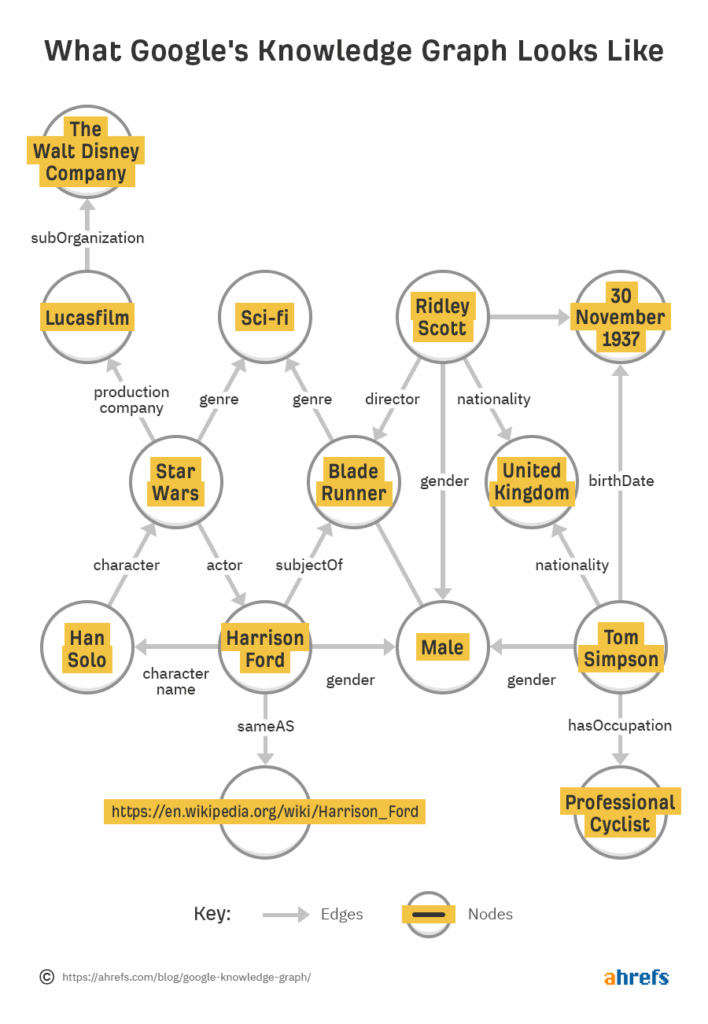
Understanding the Core: What is the Google Knowledge Graph?
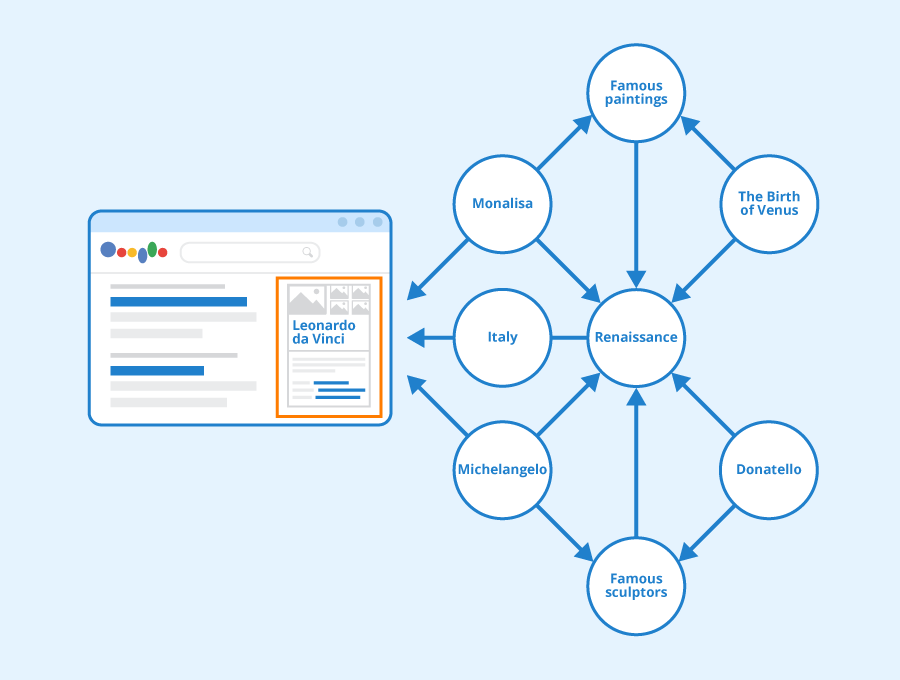
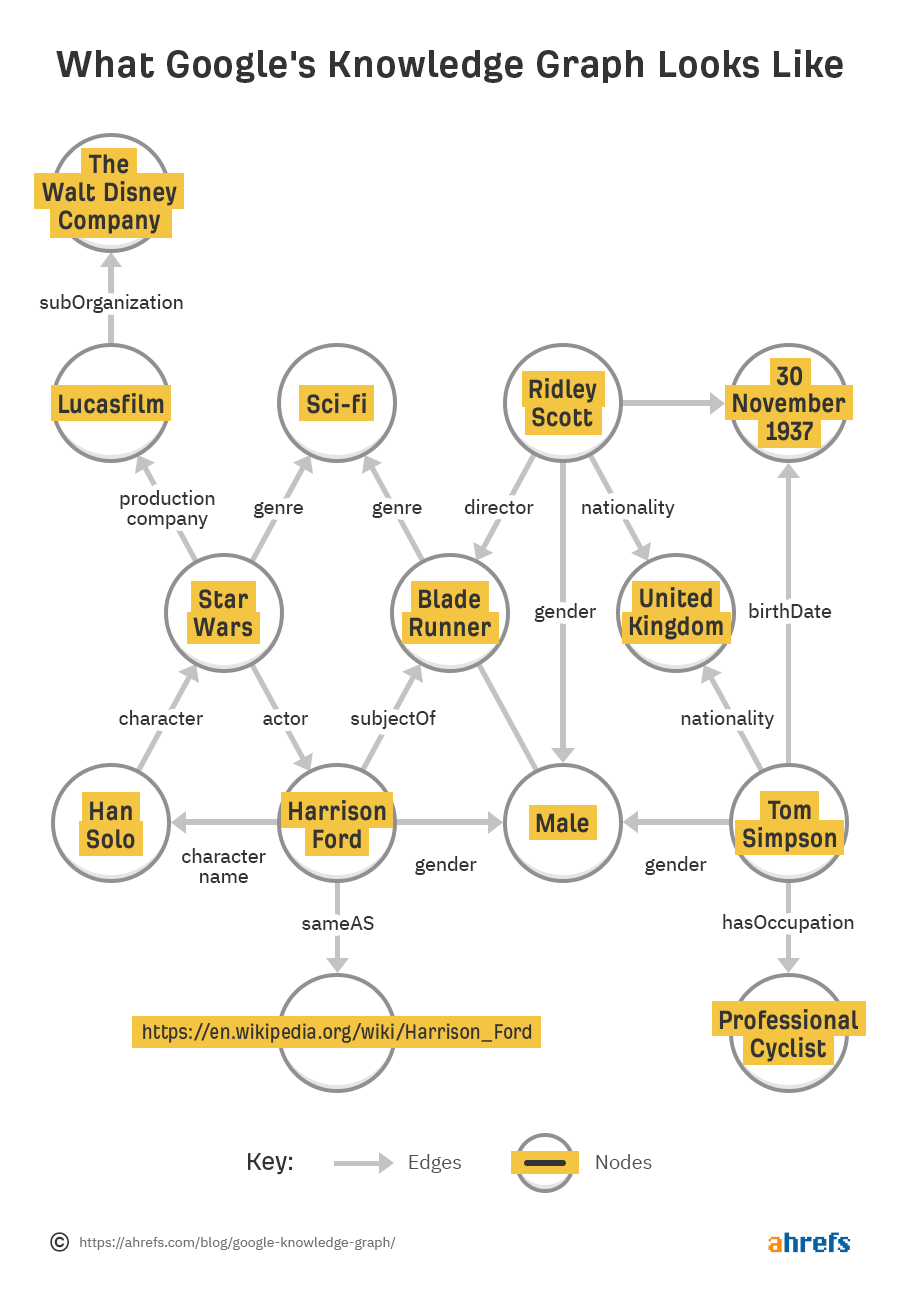
The Google Knowledge Graph is not a search index of web pages. It is a massive database of entities and the relationships between them. An entity can be a person, place, organization, thing, or even an abstract concept. Instead of matching strings of text, Google uses this graph to understand the context and meaning behind a search query. When you search for “Leonardo DiCaprio,” Google doesn’t just look for pages containing those words; it looks up the entity “Leonardo DiCaprio” in the Knowledge Graph and surfaces facts, images, and related people.
This system allows Google to move beyond keyword matching to semantic understanding. It connects the dots between “Barack Obama” and “Hawaii” or “Apple” the company versus “apple” the fruit. For SEO professionals, this means the goal is no longer to rank for a keyword, but to become a recognized entity that Google can confidently display in the Knowledge Panel and answer boxes.
The Role of AI in Knowledge Graph Construction
Artificial Intelligence is the engine that builds and maintains this massive web of data. Google uses machine learning models to extract entities from unstructured text across the web. These models analyze billions of pages to identify recurring names, dates, and concepts, then infer the relationships between them. This process, known as Knowledge Graph construction, is entirely automated and continuous.
AI algorithms also handle disambiguation. For example, the term “Mercury” could refer to a planet, a chemical element, or the Roman god. AI uses context clues from surrounding text to determine which entity is being discussed. This is where AI SEO Google Knowledge Graph strategies become critical. You must provide clear, structured signals so the AI can correctly identify your brand and categorize it without confusion.
How Machine Learning Classifies Entities
Machine learning models classify entities using a system of attributes and properties. For a business, these attributes include the founding date, the industry, the CEO, and the location. The AI reads your website, press releases, and review sites to populate these fields. The more consistent and structured this data is, the higher the confidence score the AI assigns to your entity. High confidence leads to a higher likelihood of appearing in the Knowledge Panel.
Why AI SEO and Knowledge Graph Optimization are Inseparable
You cannot optimize for the Knowledge Graph without understanding AI, and you cannot master AI SEO without targeting entities. The two are intrinsically linked. AI determines what data is valuable, and the Knowledge Graph stores that data. When you optimize for this system, you are essentially teaching the AI who you are. This is a shift from “page ranking” to “entity ranking.”
This synergy changes how we measure success. A high click-through rate on a generic keyword is less valuable than being the primary entity for your brand name. When Google recognizes you as an authority, it begins to trust you for related concepts. This expands your visibility across a wider range of queries without requiring a separate page for every variation.
Key Components of a Knowledge Graph Entity
To be featured in the graph, your brand must have a defined identity. This identity is built on several core components that AI looks for during the crawling and indexing process.
- Unique Name: A consistent brand name across all platforms. Avoid variations like “Company Inc.” vs. “Company Incorporated.”
- Description: A clear, concise summary of what you do. This is often pulled from Wikipedia or your official “About” page.
- Image: A high-resolution logo that is easily recognizable. Google uses this for the visual representation in the panel.
- Attributes: Specific data points like address, phone number, and founding date. These are often sourced from structured data markup.
- Relationships: Connections to other entities, such as your parent company, founders, or key clients.
- Increased Trust: A Knowledge Panel is a badge of authority. Users are more likely to click on a result that has been verified by Google.
- Higher Click-Through Rates: The panel takes up significant real estate on the page, pushing down competitors and capturing the majority of clicks.
- Brand Protection: You control the narrative. By claiming your panel, you can ensure that the correct logo and description are displayed, preventing misinformation.
- Voice Search Dominance: When users ask Siri or Google Assistant a question, the answer is often pulled from the Knowledge Graph. If you are not in the graph, you are invisible to voice search.
- Semantic Search Expansion: Once you are recognized as an entity, you start ranking for queries that are semantically related to your brand, even if you haven’t targeted those exact keywords.
Structured Data: The Language of AI
Structured data, specifically Schema.org markup, is the primary way to communicate with AI crawlers. By adding JSON-LD code to your HTML, you explicitly tell Google what your content means. For example, using the “Organization” schema type tells the AI that your website represents a business entity. Using “Person” schema tells it you are an individual. This removes the guesswork for the AI and accelerates the process of entity recognition.
Practical Guide: How to Optimize for the Knowledge Graph
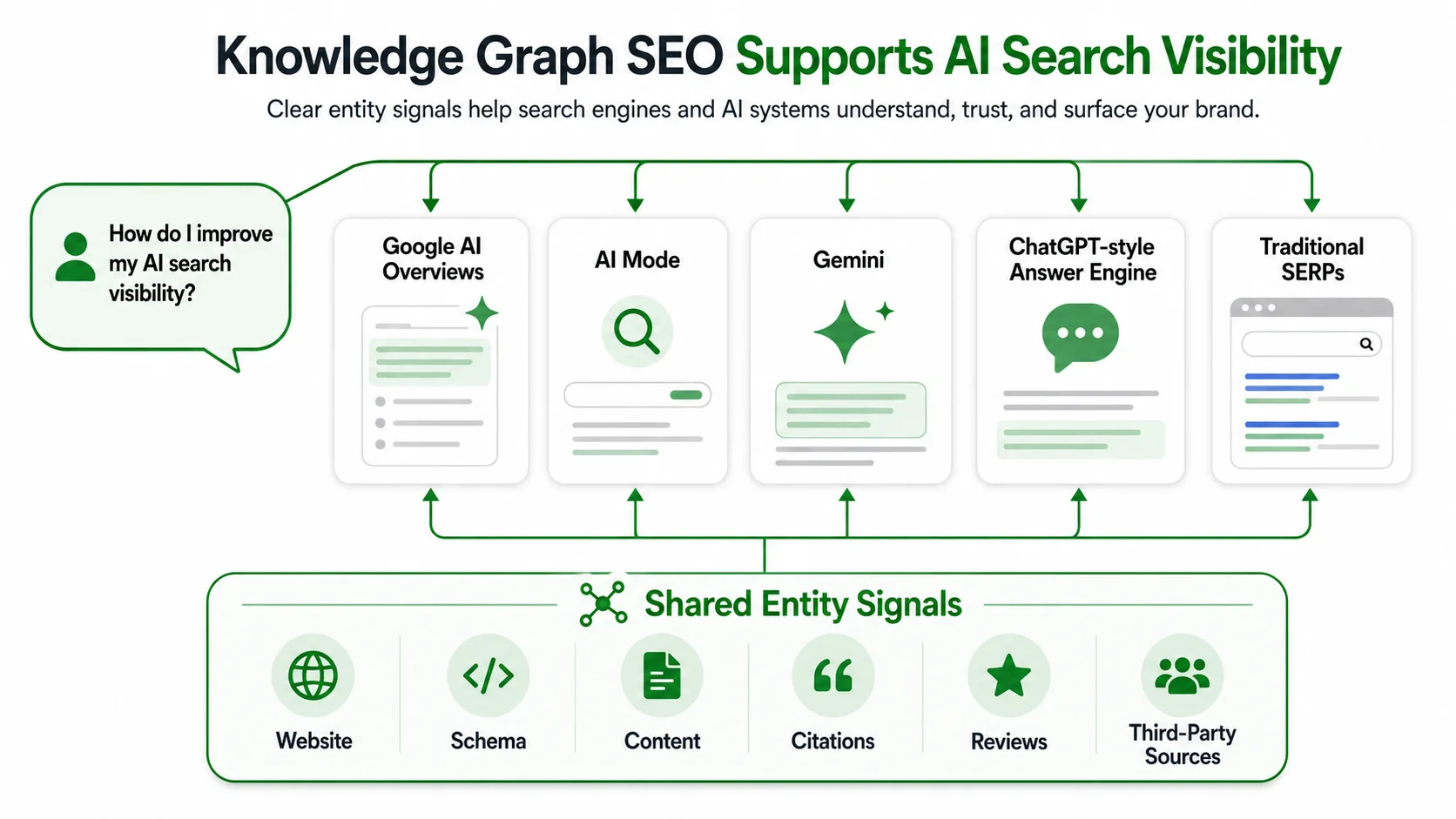
Optimizing for the AI SEO Google Knowledge Graph requires a multi-channel approach. It is not enough to just add code to your website. You must build a consistent digital footprint across the entire web.
Step 1: Claim and Verify Your Knowledge Panel
If you search for your brand and see a panel on the right side of the results, you can claim it. This allows you to suggest edits and ensure the information is accurate. If you do not have a panel yet, you need to build the foundation first. Search for your brand name to see if Google has already created an entity for you. If not, you must create enough high-quality signals for the AI to generate one.
Step 2: Implement High-Quality Schema Markup
Go beyond the basic Organization schema. Use specific types like “LocalBusiness,” “Corporation,” or “NGO.” Include properties for social profiles, logo, and contact points. Ensure that your schema matches the visible content on your page. If you claim to be a “Software Company” in your schema but your page talks about “Consulting,” the A
Step 3: Build a Consistent Citation Profile
Your Name, Address, and Phone Number (NAP) must be identical across all directories. This includes Yelp, Yellow Pages, LinkedIn, and industry-specific directories. AI crawlers cross-reference these sources. If they find discrepancies, they may assume there are multiple entities with the same name, diluting your authority.
Step 4: Leverage Wikipedia and Wikidata
Wikipedia is a primary source for the Knowledge Graph. If your brand is notable enough, having a Wikipedia page significantly increases your chances of getting a panel. Wikidata, the structured data behind Wikipedia, is even more critical. These platforms provide the factual backbone that Google trusts. Ensure your entries are neutral, cited, and up-to-date.
Step 5: Create Entity-Focused Content
Your content strategy must shift from “keyword targeting” to “entity targeting.” Write comprehensive articles about your industry, your founders, and your history. When you mention other entities (like partners or clients), link to their official websites. This helps the AI map the relationships between you and other nodes in the graph.
Benefits of Ranking as an Entity
The rewards of successful Knowledge Graph optimization go far beyond a pretty box on the search results page. It fundamentally changes how users perceive your brand and how Google ranks your content.
Limitations and Challenges of Knowledge Graph SEO
While the benefits are substantial, there are significant hurdles. The Knowledge Graph is a black box. Google does not provide a dashboard where you can see your entity score or track your progress. This makes it difficult to measure ROI.
Furthermore, the AI is not perfect. It can make mistakes in disambiguation, confusing your brand with a similarly named entity. It can also pull incorrect information from unverified sources. Correcting these errors can be a slow and frustrating process. Finally, not every brand will get a panel. Google typically only creates panels for entities it deems “notable.” Small businesses may struggle to gain the recognition required to trigger the AI’s algorithm.
AI SEO Google Knowledge Graph: Common Mistakes to Avoid
Many marketers make critical errors when trying to optimize for entities. Avoiding these pitfalls will save you time and prevent algorithmic penalties.
Inconsistent NAP Data
This is the most common mistake. If your business is listed as “123 Main St” on one site and “Suite 100, 123 Main St” on another, the AI may treat them as two different locations. Audit your citations regularly and standardize your format.
Ignoring Disambiguation
If your brand name is a common word, you must work harder to differentiate yourself. Use your logo consistently, include your trademark symbol, and constantly reinforce your specific industry context in your content. Without this, the AI might link you to the wrong entity.
Thin Content on Core Pages
Your “About Us” and “Homepage” are the most important pages for entity extraction. If these pages are sparse or filled with generic marketing fluff, the AI has nothing to work with. Provide detailed history, clear descriptions, and specific facts.
Over-Optimizing Schema
Do not stuff your schema with irrelevant properties. Only use markup that accurately describes your content. Misleading schema is a violation of Google’s guidelines and can lead to manual actions.
Important Notes on AI and Search Evolution
The integration of AI into search is accelerating. With the introduction of generative AI (like Google’s Search Generative Experience), the Knowledge Graph is becoming even more central. AI-generated answers are often built by pulling facts from the Knowledge Graph and synthesizing them. This means that if you are not an entity, you will not be cited in these AI overviews.
Focus on building a robust entity profile now. The algorithms will only get smarter. They will become better at detecting false signals and rewarding genuine authority. The brands that invest in entity clarity today will be the ones that dominate the AI-driven search results of tomorrow.
Comparison: Traditional SEO vs. Entity SEO
Understanding the difference between the old way and the new way is crucial for resource allocation. The table below highlights the key shifts in strategy.
| Aspect | Traditional SEO | Entity SEO (AI & Knowledge Graph) |
|---|---|---|
| Focus | Keywords and search volume | Entities and relationships |
| Primary Metric | Page rank and backlinks | Entity confidence and relevance |
| Content Strategy | Blog posts targeting specific phrases | Comprehensive topic clusters and factual data |
| Technical Setup | Meta tags and alt text | Schema markup and structured data |
| Success Signal | Ranking for a keyword | Appearing in the Knowledge Panel |
Practical Application: A Case Study Approach
Consider a local law firm named “Smith & Associates.” In the traditional model, they would create pages for “personal injury lawyer” and “divorce attorney.” In the entity model, they focus on establishing “Smith & Associates” as a recognized legal entity in their city.
They would implement “LegalService” schema, ensure their NAP is consistent across legal directories, and create a detailed “About” page listing their founding year and the names of their partners. They would also link to the state bar association (another entity). Over time, Google recognizes them not just as a page about law, but as a specific law firm. When users search for “Smith & Associates,” they get the panel. More importantly, when they search for “best lawyers in [city],” Google may surface this entity because it trusts its relationship with the location and the industry.
Frequently Asked Questions (FAQ)
How long does it take to get a Google Knowledge Panel?
T It depends on the notability of your brand and the consistency of your online presence. For established businesses with a strong Wikipedia presence, it can happen within weeks. For smaller brands, it may take months or may not happen at all until you gain significant external recognition and coverage.
Can I directly edit my Google Knowledge Graph information?
You cannot edit the graph directly, but you can claim your Knowledge Panel if you have one. Once claimed, you can suggest changes to the displayed information. However, Google has the final say on whether to accept those suggestions. The most reliable way to change the data is to change the sources that Google pulls from, such as your official website and Wikidata.
Is Schema markup the only way to get into the Knowledge Graph?
No, Schema markup is a strong signal, but it is not the only one. Google’s AI also extracts entities from natural language processing of your content, from Wikipedia, and from authoritative directories. Schema helps speed up the process and reduces ambiguity, but it is not a magic bullet. You need a combination of structured data, high-quality content, and external citations.
Does the Knowledge Graph affect local SEO?
Yes, significantly. For local businesses, the Knowledge Graph is often populated with data from Google Business Profile. Optimizing your GBP profile is a form of Knowledge Graph optimization. The AI uses this data to create the local panel that appears in map results. Ensuring your categories, services, and attributes are accurate is essential.
What is the difference between a Knowledge Panel and a Featured Snippet?
A Knowledge Panel is a box that appears on the right side of the search results (on desktop) that summarizes information about an entity. It is sourced from the Knowledge Graph. A Featured Snippet is a box at the top of the organic results that extracts a paragraph, list, or table from a specific web page to answer a query. You can optimize for Featured Snippets with content, but you must be an entity to get a Knowledge Panel.
Conclusion
The era of simple keyword matching is over. The AI SEO Google Knowledge Graph ecosystem represents the most sophisticated and accurate way to understand user intent. By shifting your focus from pages to entities, you align your strategy with the very algorithms that power modern search. This requires a commitment to data consistency, structured markup, and authoritative content. It is a long-term investment, but the payoff is immense: a verified digital identity that commands trust, drives voice search, and secures your place in the AI-driven future of discovery. Start building your entity profile today, and you will not just be found; you will be understood.
Xem thêm:
- AI SEO Dynamic Content: The Complete Guide to Automated Personalization That Ranks
- AI SEO for Content Teams: The Complete Playbook for 2025
- AI Technical SEO: The Ultimate Guide to Automating Site Audits, Crawl Optimization, and Indexing Strategies
- AI SEO Competitor Backlinks: The Complete Guide to Automated Link Gap Analysis
- Search Generative Experience SEO: How to Optimize for AI-Powered Search and Protect Your Rankings
Bài viết cùng chủ đề:

AI SEO SEO Automation with Make: The Complete Workflow Guide

AI SEO SEO Automation with Zapier: The Complete Workflow Guide

AI SEO SEO Automation with n8n: The Complete Workflow Guide
AI SEO SEO Automation with Gemini: The Complete Guide to Scaling Organic Growth

AI SEO SEO Automation with Claude: The Complete Guide to Scaling Content in 2025

AI SEO SEO Automation with ChatGPT: The Complete Playbook for 2025

AI SEO & SEO Automation for Affiliate Sites: The 2025 Playbook for Passive Income Growth
AI SEO & SEO Automation for Bloggers: The Complete Guide to Scaling Your Content

AI SEO & SEO Automation for Agencies: The Complete 2025 Playbook

AI SEO and SEO Automation for Ecommerce: The Complete Playbook for 2025

AI SEO & SEO Automation for WordPress: The Complete Playbook for 2025
AI SEO SEO Automation Strategy: The Complete Playbook for 2025

Mastering the AI SEO SEO Automation Process: A Complete Guide to Scaling Organic Growth
AI SEO SEO Automation System: The Complete Guide to Scaling Organic Growth in 2025
AI SEO SEO Automation Platform: The Complete Guide to Scaling Organic Growth in 2025
AI SEO SEO Automation Software: The Complete Guide to Scaling Organic Growth in 2025















