
No products in the cart.
AI SEO Dynamic Pages: The Complete Guide to Automated Search Optimization
31
Jul
Jul
AI SEO dynamic pages represent a fundamental shift in how websites approach search engine optimization. Instead of manually crafting each page for specific keywords, AI-powered systems generate and optimize pages in real time based on user intent, search trends, and behavioral data. This approach allows businesses to scale their content production exponentially while maintaining relevance and quality. The technology combines natural language processing, machine learning algorithms, and automated data integration to create pages that adapt to what users actually search for, not just what marketers guess they want.
Understanding AI SEO Dynamic Pages
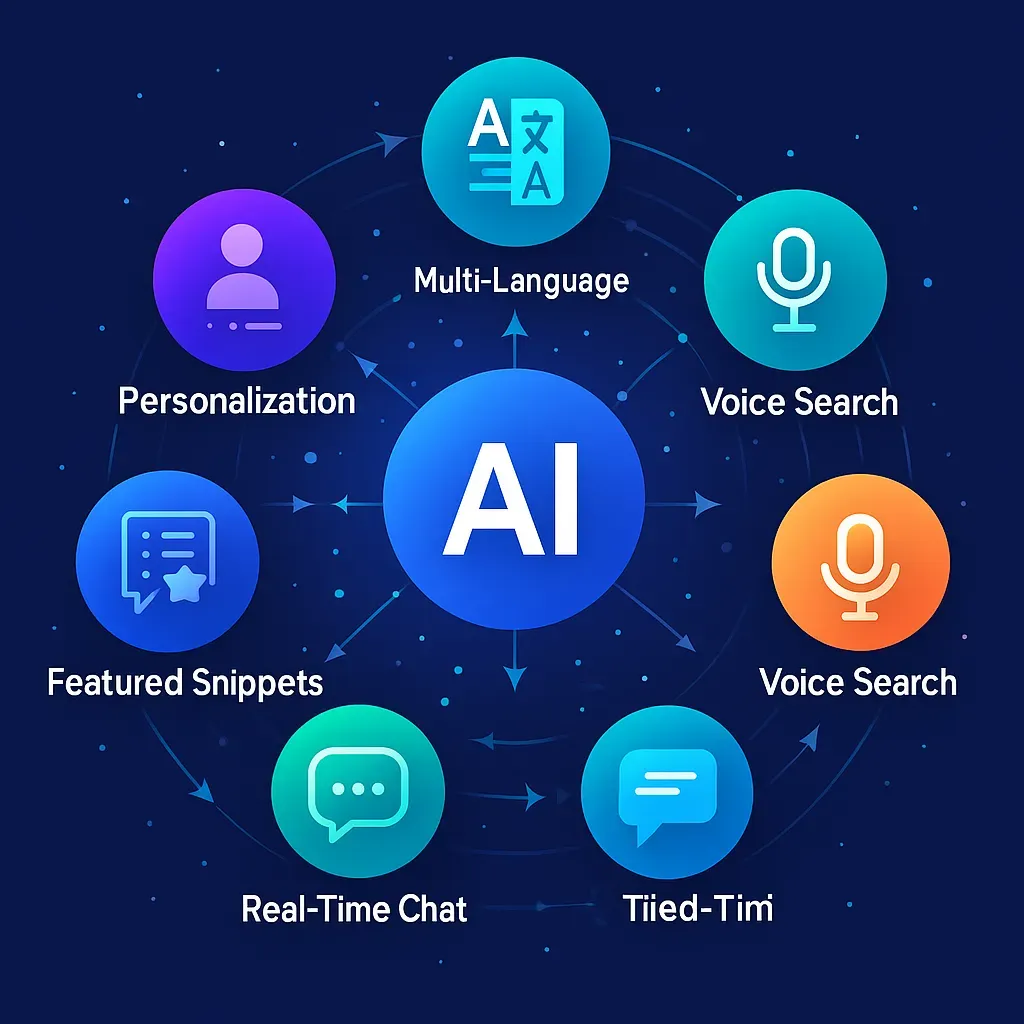
At its core, an AI SEO dynamic page is a web page that changes its content, metadata, and internal linking structure automatically based on data inputs. These inputs include search queries, user location, device type, browsing history, and real-time market trends. The AI system analyzes these signals and generates page elements that match the specific context of each visitor or search query.
Traditional static pages remain unchanged until a human edits them. Dynamic pages, however, continuously evolve. When Google updates its algorithms or user behavior shifts, the AI adjusts the page content accordingly. This creates a living document that stays aligned with search engine requirements and user expectations without requiring constant manual intervention.
How AI Generates Dynamic Page Content
The process begins with data collection. AI systems gather information from search engine result pages, competitor analysis, user engagement metrics, and internal site analytics. Natural language generation models then create headlines, body copy, meta descriptions, and even image alt text that targets specific keyword clusters.
For example, an e-commerce site selling running shoes might have a dynamic page for “trail running shoes.” The AI detects that searches for “waterproof trail running shoes” spike during rainy seasons. It automatically updates the page to emphasize waterproof features, adds relevant FAQs, and adjusts the title tag to capture that seasonal demand. When the season passes, the page reverts to broader content.
Core Components of AI SEO Dynamic Pages
Several technical and strategic elements work together to make AI-driven dynamic pages effective. Understanding these components helps marketers implement the technology correctly.
Real-Time Keyword Optimization
AI systems monitor keyword performance continuously. They track rankings, click-through rates, and conversion data for every keyword associated with a page. When certain terms lose traction, the AI substitutes them with emerging alternatives. This prevents pages from becoming stale and losing search visibility over time.
The system also identifies long-tail keyword opportunities that human researchers might miss. By analyzing search query patterns, AI can generate content variations that target hundreds of related phrases simultaneously, all within a single dynamic page structure.
Automated Metadata Generation
Title tags and meta descriptions are critical for click-through rates. AI SEO dynamic pages generate these elements dynamically based on the current search context. If a user searches for “best budget laptops,” the page displays a title tag emphasizing affordability. If another user searches for “gaming laptops under $1000,” the same page adjusts its metadata to highlight gaming performance and price point.
This level of personalization improves relevance signals, which search engines reward with higher rankings. It also increases user engagement because visitors see content that directly matches their query intent.
Dynamic Internal Linking Structures
Internal links help search engines understand page relationships and distribute authority. AI systems analyze which pages receive the most traffic and which links drive conversions. They then automatically adjust internal link placement within dynamic pages to optimize crawl paths and user navigation.
When a new blog post gains traction, the AI adds contextual links from high-authority dynamic pages to the new content. This accelerates indexing and boosts the new page’s ranking potential without manual link-building efforts.
Benefits of Implementing AI SEO Dynamic Pages

Businesses that adopt AI-driven dynamic pages gain significant competitive advantages. The benefits extend beyond simple time savings and touch on core business outcomes.
Massive Content Scaling
Creating thousands of unique, optimized pages manually is impossible for most teams. AI systems generate these pages at scale, covering every product variation, location, or use case. A real estate website, for instance, can create dynamic pages for every neighborhood in every city, each with unique property listings, local information, and SEO-optimized copy.
This scale allows websites to dominate long-tail search results. Instead of ranking for just a few broad keywords, they capture traffic from thousands of specific queries that competitors ignore.
Improved Search Engine Rankings
Search engines prioritize fresh, relevant content. Dynamic pages that update automatically signal to Google and Bing that a website is active and authoritative. The continuous optimization of keywords, metadata, and content structure leads to sustained ranking improvements over time.
Data from industry case studies shows that websites implementing AI dynamic pages often see a 30-50% increase in organic traffic within six months. The improvement comes from capturing more search queries and maintaining higher average positions for existing keywords.
Enhanced User Experience
Dynamic pages adapt to user behavior, showing content that matches individual preferences. A returning visitor who previously viewed budget products sees budget-focused recommendations. A new visitor from a different region sees localized content with relevant pricing and availability.
This personalization reduces bounce rates and increases time on page. Search engines interpret these engagement signals as indicators of quality, further boosting rankings.
Limitations and Challenges
Despite the advantages, AI SEO dynamic pages come with potential drawbacks that require careful management.
Risk of Duplicate Content
If the AI generates similar content across multiple pages, search engines may flag it as duplicate. This can lead to ranking penalties or deindexing. Proper canonical tags and unique data sources are essential to prevent this issue.
AI systems must be trained to produce sufficiently distinct content for each page. Using varied data points, different sentence structures, and unique examples helps maintain originality.
Technical Complexity
Implementing dynamic pages requires robust infrastructure. Websites need APIs to feed data into the AI system, content management systems that support dynamic rendering, and caching mechanisms to maintain page speed. Small businesses without technical resources may struggle with the initial setup.
Ongoing maintenance also demands attention. AI models need retraining as search algorithms evolve, and data sources must be monitored for accuracy.
Loss of Human Oversight
Automated systems can make mistakes. An AI might generate content that is factually incorrect, off-brand, or insensitive. Without human review processes, these errors can damage a company’s reputation and search standing.
Establishing approval workflows and quality checks is critical. AI should augment human expertise, not replace it entirely.
AI SEO Dynamic Pages vs Traditional Static Pages
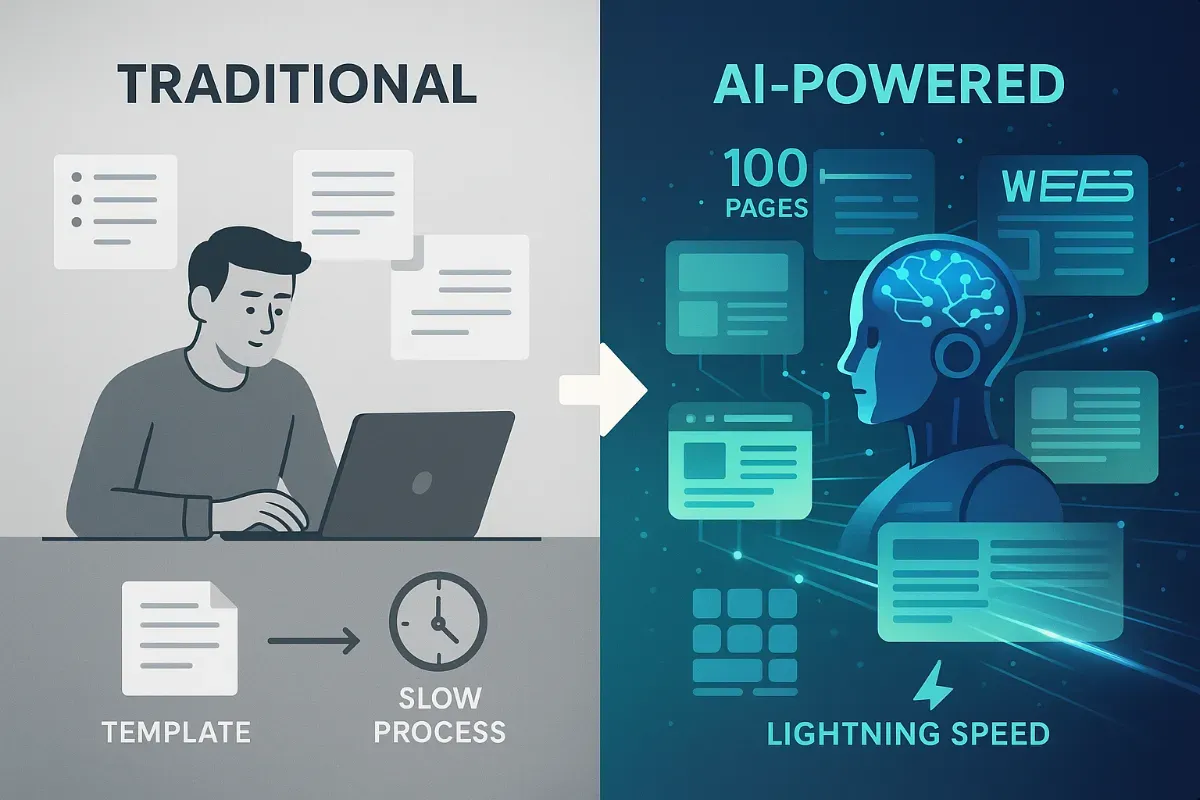
| Feature | AI Dynamic Pages | Traditional Static Pages |
|---|---|---|
| Content Updates | Automatic, real-time | Manual, scheduled |
| Keyword Targeting | Hundreds of variations | Limited to written copy |
| Personalization | Context-aware | One-size-fits-all |
| Scalability | Unlimited | Constrained by resources |
| Maintenance Cost | High initial, lower ongoing | Consistent manual effort |
| Risk of Errors | Automation bugs | Human mistakes |
| Speed to Market | Instant generation | Days or weeks |
Static pages still serve a purpose for evergreen content that rarely changes, such as company policies or core service descriptions. Dynamic pages excel in scenarios where data changes frequently, like pricing, inventory, or trending topics.
Practical Implementation Guide for AI SEO Dynamic Pages
Implementing this technology requires a structured approach. Following these steps ensures successful deployment and measurable results.
Step 1: Identify Data Sources
Determine what data will drive your dynamic pages. Common sources include product databases, location data, user behavior analytics, and search query logs. The quality of your data directly impacts the quality of generated content.
Ensure data is clean, structured, and accessible via APIs. Inconsistent or outdated data leads to poor page content and user confusion.
Step 2: Choose the Right AI Tools
Select platforms that specialize in SEO content generation. Options include custom-built solutions using GPT models, or SaaS products like Surfer SEO, Frase, or MarketMuse that offer dynamic page capabilities. Evaluate each tool based on integration ease, output quality, and cost.
Test multiple tools with sample data before committing. The best choice depends on your specific use case, content volume, and technical stack.
Step 3: Design Page Templates
Create flexible templates that the AI can populate with dynamic content. Templates should include placeholders for headlines, body text, FAQs, related products, and metadata. Design for readability and mobile responsiveness.
Include conditional elements that appear only when relevant data exists. For example, a weather-dependent page might show different content based on current conditions.
Step 4: Set Up Automated Workflows
Configure triggers that initiate content updates. These could be scheduled intervals, real-time data changes, or search trend alerts. Automation ensures pages stay fresh without manual intervention.
Monitor workflow performance regularly. Adjust triggers if pages update too frequently (causing crawl budget waste) or too rarely (leading to stale content).
Step 5: Establish Quality Control
Implement review checkpoints where human editors can approve or reject AI-generated content. This is especially important for pages that deal with sensitive topics or legal compliance.
Use automated plagiarism checks and readability scores to maintain standards. Set up alerts for unusual content patterns that might indicate AI errors.
Common Mistakes and How to Avoid Them
Many businesses fail to realize the full potential of AI SEO dynamic pages due to avoidable errors. Recognizing these pitfalls helps you sidestep them.
Ignoring User Intent
Some AI systems optimize purely for keywords, ignoring what users actually want. This results in content that ranks but fails to convert. Always train your AI on user behavior data, not just search volume.
Conduct regular intent analysis to ensure dynamic pages answer the questions users are asking. Update AI training data as user preferences evolve.
Over-Optimizing for Bots
Dynamic pages that exist solely for search engines, with no real user value, violate Google’s guidelines. These “doorway pages” can trigger manual penalties. Ensure every dynamic page provides genuine information or functionality.
Audit your dynamic pages regularly. Remove or improve any that have high bounce rates or low engagement metrics.
Neglecting Page Speed
Dynamic content generation can slow down page load times if not optimized. Slow pages hurt both user experience and rankings. Use caching, content delivery networks, and efficient code to maintain fast performance.
Test page speed across different devices and connection types. Optimize images and scripts that the AI generates.
Failing to Monitor Algorithm Updates
Search engine algorithms change frequently. What works today may not work tomorrow. AI systems need continuous retraining to stay aligned with current ranking factors.
Subscribe to search engine update announcements and adjust your AI models accordingly. Maintain flexibility in your content generation parameters.
Important Notes for Long-Term Success
AI SEO dynamic pages are not a set-and-forget solution. They require ongoing attention and strategic refinement to deliver sustained value.
Invest in analytics to track the performance of dynamic pages separately from static ones. Measure rankings, traffic, conversions, and revenue attribution. Use this data to guide AI training and template improvements.
Collaboration between marketing, IT, and data science teams is essential. Each department brings unique expertise that enhances the system’s effectiveness. Regular cross-functional meetings ensure alignment on goals and technical requirements.
Stay informed about AI content regulations. Some jurisdictions require disclosure when content is AI-generated. Ensure compliance to avoid legal issues.
Frequently Asked Questions
What are AI SEO dynamic pages?
AI SEO dynamic pages are web pages that automatically adjust their content, metadata, and structure based on real-time data such as search queries, user behavior, and market trends. Artificial intelligence systems generate and optimize these pages to target relevant keywords and match user intent without manual intervention.
How do AI dynamic pages improve search rankings?
They improve rankings by continuously optimizing for current search trends, generating content for hundreds of long-tail keywords, and maintaining freshness that search engines reward. The AI adjusts title tags, headings, and body content to match what users are actively searching for, increasing relevance signals and engagement metrics.
Are AI-generated dynamic pages considered duplicate content?
Not necessarily. Duplicate content issues arise when pages have substantially similar text. AI systems can generate unique content for each page by using different data points, sentence structures, and examples. Proper canonical tags and distinct data sources prevent duplication problems.
What is the cost of implementing AI SEO dynamic pages?
Costs vary widely based on the complexity of your setup. SaaS tools range from $100 to $500 per month. Custom AI development can cost $10,000 to $50,000 or more. Additional expenses include data infrastructure, hosting, and ongoing model training. Small businesses can start with affordable SaaS solutions.
Can small businesses benefit from AI dynamic pages?
Yes. Small businesses with limited content teams can use AI to create location pages, product variations, or service descriptions that would otherwise require significant time. Even a small e-commerce store with 100 products can generate unique, optimized pages for each item automatically.
How often should AI dynamic pages update?
Update frequency depends on your industry and data volatility. E-commerce sites might update daily based on inventory changes. News sites might update hourly. Service businesses might update weekly. Monitor crawl frequency and user engagement to find the optimal balance.
Conclusion
AI SEO dynamic pages represent the next evolution in search engine optimization. They combine the scalability of automation with the precision of data-driven targeting, enabling businesses to capture search traffic that was previously unreachable. The technology addresses the core challenge of modern SEO: producing relevant, fresh, and personalized content at scale.
Success requires more than just installing software. It demands quality data, thoughtful templates, continuous monitoring, and human oversight. Businesses that invest in these foundations will see substantial improvements in organic visibility, user engagement, and revenue. Those that ignore the shift toward dynamic content risk falling behind competitors who embrace automation.
The future of search is dynamic, and AI is the engine driving that change. Adopting AI SEO dynamic pages today positions your website to thrive in an increasingly competitive digital landscape. Start small, measure results, and scale what works. The technology is accessible, the benefits are proven, and the time to act is now.
Xem thêm:
- AI SEO Best Examples: How Leading Brands Use Artificial Intelligence to Conquer Search Rankings
- AI SEO & SEO Automation for Affiliate Sites: The 2025 Playbook for Passive Income Growth
- Mastering AI SEO Forecasting: Predict Rankings, Traffic, and Algorithm Shifts Before They Happen
- AI SEO Backlink Prospecting: The Complete Guide to Automating Link Building in 2025
- AI SEO Search Intent Mapping: The Complete Guide to Ranking in 2025
Bài viết cùng chủ đề:

AI SEO SEO Automation with Make: The Complete Workflow Guide

AI SEO SEO Automation with Zapier: The Complete Workflow Guide

AI SEO SEO Automation with n8n: The Complete Workflow Guide
AI SEO SEO Automation with Gemini: The Complete Guide to Scaling Organic Growth

AI SEO SEO Automation with Claude: The Complete Guide to Scaling Content in 2025

AI SEO SEO Automation with ChatGPT: The Complete Playbook for 2025

AI SEO & SEO Automation for Affiliate Sites: The 2025 Playbook for Passive Income Growth
AI SEO & SEO Automation for Bloggers: The Complete Guide to Scaling Your Content

AI SEO & SEO Automation for Agencies: The Complete 2025 Playbook

AI SEO and SEO Automation for Ecommerce: The Complete Playbook for 2025

AI SEO & SEO Automation for WordPress: The Complete Playbook for 2025
AI SEO SEO Automation Strategy: The Complete Playbook for 2025

Mastering the AI SEO SEO Automation Process: A Complete Guide to Scaling Organic Growth
AI SEO SEO Automation System: The Complete Guide to Scaling Organic Growth in 2025
AI SEO SEO Automation Platform: The Complete Guide to Scaling Organic Growth in 2025
AI SEO SEO Automation Software: The Complete Guide to Scaling Organic Growth in 2025















