
No products in the cart.
Mastering AI SEO Forecasting: Predict Rankings, Traffic, and Algorithm Shifts Before They Happen
29
Jul
Jul
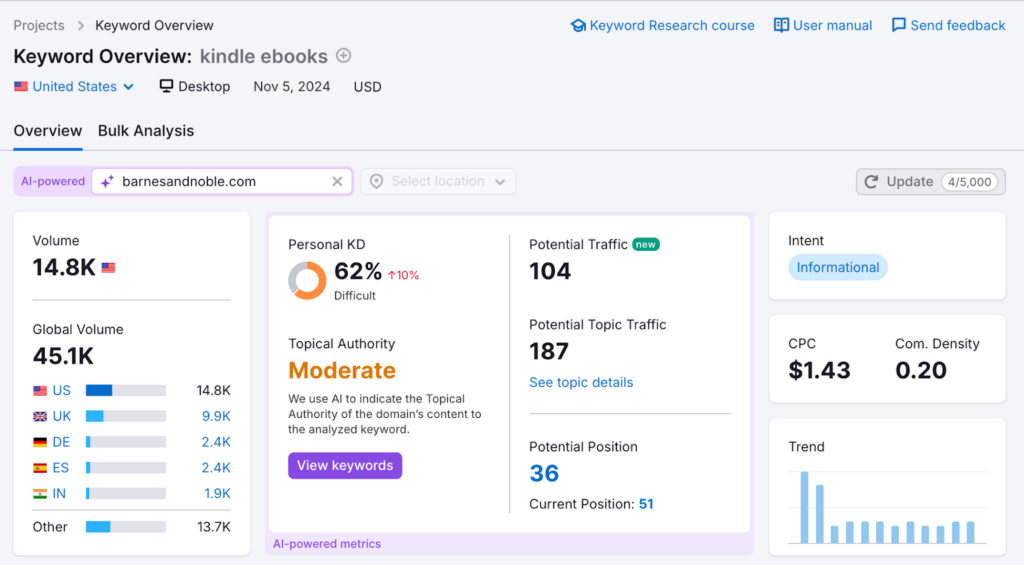
The SEO landscape has evolved from guesswork and manual spreadsheets to a data‑driven discipline where every decision can be backed by numbers. Yet even the most experienced optimizers have struggled with one stubborn challenge: forecasting. Traditional forecasting relies on historical trends, seasonality, and a dash of intuition. Those models break when Google pushes a core update or when a competitor suddenly ramps up content production. AI SEO forecasting changes the game entirely. By using machine learning, natural language processing, and massive datasets, it predicts organic rankings, traffic volumes, and even the likely impact of algorithm changes with a precision that was unimaginable five years ago. This article explains exactly how AI SEO forecasting works, what makes it different, and how to build a predictive engine that gives your brand a lasting advantage.
What Is AI SEO Forecasting?
AI SEO forecasting is the practice of using artificial intelligence and machine learning algorithms to predict future search engine performance metrics. Instead of relying on linear trendlines or simple moving averages, these systems ingest thousands of variables – keyword data, backlink velocity, content quality signals, user behaviour metrics, competitor movements, and even real‑time search console anomalies. The goal is to produce forecasts that adapt as new information arrives, allowing SEO teams to anticipate ranking changes, traffic dips, or content gaps before they materialise.
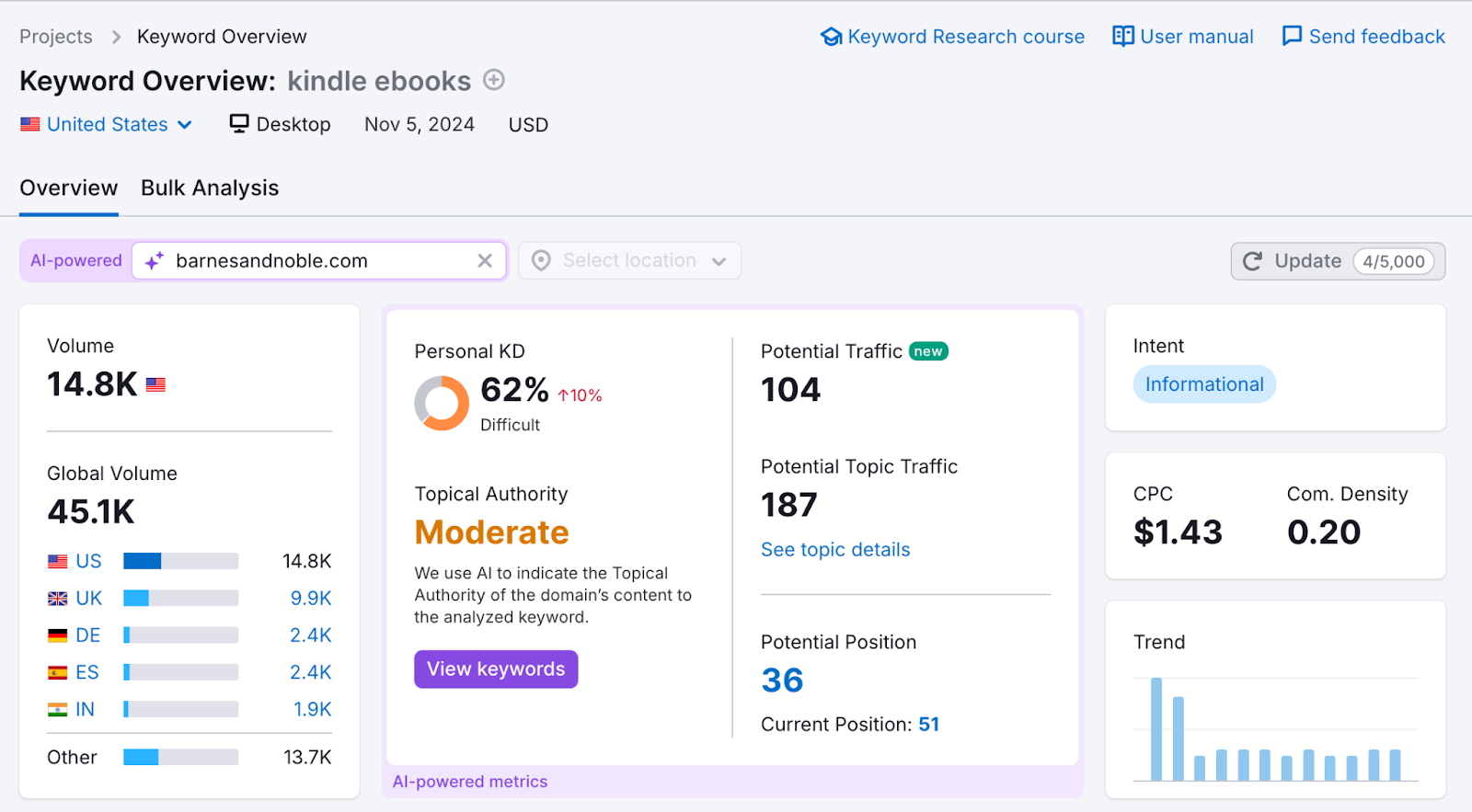
At its core, AI SEO forecasting treats the search ecosystem as a complex, dynamic system. A sudden spike in impressions for a new query, a drop in click‑through rate due to a featured snippet switch, or a competitor’s aggressive link acquisition campaign all feed into the model. The output is not just a single number but often a probability distribution that shows best‑case, worst‑case, and most likely scenarios. This gives marketers the power to make proactive decisions – re‑optimising content before a seasonal peak, shifting budget to high‑opportunity keywords, or even anticipating a site‑wide ranking hit from an upcoming algorithm update.
The Core Components of an AI SEO Forecasting System
Data Ingestion and Integration
The foundation of any forecasting model is data. AI SEO forecasting pulls from multiple sources simultaneously. Google Search Console provides impression, click, and position data at the query level. Analytics platforms add session counts, conversion rates, and user engagement metrics. Third‑party SEO tools contribute keyword difficulty scores, backlink counts, domain authority trends, and SERP feature landscape changes. Additional layers can include news sentiment analysis, social media buzz, and even economic indicators when modelling for industries sensitive to consumer confidence.
Data quality determines the model’s reliability. Missing timestamps, inconsistent URL parameters, and sampling errors in analytics can distort predictions. The ingestion pipeline must clean, normalise, and align all data points to a uniform time axis. For example, a forecasting model that predicts weekly traffic per landing page needs to reconcile daily Search Console rows with session‑level analytics and align them exactly, otherwise the training data will contain misleading gaps.
Feature Engineering for Search Predictions
Raw data rarely translates directly into accurate predictions. Feature engineering is the process of creating meaningful variables that the machine learning algorithm can learn from. In AI SEO forecasting, critical features include rolling averages of click‑through rate over different windows, the rate of keyword ranking change (position velocity), the freshness of the top‑ranking content for a query, and the historical volatility of a SERP measured by average position shifts per week.
External features are equally powerful. An indicator of an impending Google core update – perhaps derived from sensor data like the Semrush Sensor or MozCast – can be turned into a binary flag that tells the model to expect a systemic ranking shake‑up. Similarly, the number of new pages a competitor publishes per month becomes a leading indicator for potential traffic cannibalisation. Without thoughtfully engineered features, even the most sophisticated algorithm sees little more than noise.
Algorithm Selection and Model Architecture
Modern AI SEO forecasting leans heavily on time‑series models that can handle multiple seasonalities and abrupt shifts. Prophet, developed by Facebook’s Core Data Science team, remains a popular baseline for its ability to decompose time series into trend, weekly and yearly seasonality, and holiday effects. However, Prophet can be slow to react to sudden changes unless changepoints are tuned aggressively.
For teams dealing with rapid volatility, Long Short‑Term Memory (LSTM) networks offer a distinct advantage. These recurrent neural networks learn to remember patterns over long sequences while forgetting irrelevant noise. An LSTM trained on three years of daily keyword‑level impressions can learn that a sharp Tuesday dip followed by a Thursday spike is not an anomaly but a recurring pattern linked to a specific industry’s behaviour. More recently, gradient‑boosted trees like LightGBM have proven highly effective when structured as a supervised learning task: use the past 90 days of features to predict the next 30 days of traffic.
Uncertainty Quantification
One of the most overlooked yet vital components is the model’s ability to express uncertainty. A forecast that simply says “traffic will be 10,234 visits next month” is dangerous if it carries no confidence interval. AI SEO forecasting, when done properly, provides prediction intervals – for instance, a 90% chance that traffic will land between 9,800 and 10,600 visits. This allows marketing directors to understand risk and prepare contingency plans. Bayesian methods or quantile regression forests are frequently employed to generate these intervals without assuming a normal distribution of errors.
How AI SEO Forecasting Works: A Step‑by‑Step Process

Implementing a forecasting system is as much about process as it is about technology. The typical workflow involves six phases, each building on the previous one.
- Goal definition: Clarify what exactly needs to be predicted – total organic sessions, keyword‑level clicks, conversions, or newly indexed pages.
- Data collection: Pull historical data from Search Console, Google Analytics, Ahrefs, and internal databases, aiming for at least 18‑24 months of granular information.
- Exploratory analysis: Map seasonal patterns, detect anomalies, and understand the relationship between external events and ranking fluctuations.
- Feature construction: Create lagged variables, rolling statistics, competitor indices, and update flags that turn raw metrics into predictive signals.
- Model training and validation: Split data chronologically, train multiple candidate models, and backtest their predictions against actual outcomes to choose the best performer.
- Deployment and monitoring: Expose the model through a dashboard or API, feed it daily updates, and continuously measure forecast error to retrain when drift exceeds a threshold.
Each step requires close collaboration between SEO strategists and data engineers. The strategists understand the context – why a certain ranking drop was seasonal rather than algorithmic – while the engineers translate that context into mathematical representations the model can absorb.
Key Benefits of AI SEO Forecasting
Shifting from reactive monitoring to proactive prediction unlocks benefits that cascade across an organisation. The most immediate advantage is the ability to allocate resources with confidence. Knowing that a set of middle‑funnel keywords will see a 25% traffic surge in the next quarter allows content teams to prioritise refreshing those pages now, rather than scrambling after the spike has already passed.
Financial planning also becomes significantly more precise. CFOs and marketing heads can use AI‑driven organic traffic forecasts to model revenue, set realistic growth targets, and justify SEO investment without relying on vague promises of “we expect to rank higher.” When a forecast is backed by a quantifiable confidence interval, the conversation changes from gut feel to data‑backed projection.
Algorithm resilience is another powerful benefit. No model can perfectly predict every Google update, but an AI forecasting system that continually monitors SERP volatility sensors can detect early warning signs. If the model’s underlying parameters begin to shift – perhaps the relationship between backlinks and rankings weakens – the system flags this as potential update activity. SEO teams can then pause major changes, audit their sites, and prepare communications for stakeholders before the full impact is visible in their own data.
Competitive forecasting takes this a step further. By training models on competitor domain data, an organisation can predict where a rival is likely to gain or lose traffic. This intelligence feeds pre‑emptive content strategies, allowing a brand to capture valuable SERP real estate before the competitor even realises the opportunity exists.
Limitations and Real‑World Challenges

Despite its transformative potential, AI SEO forecasting is no silver bullet. The biggest limitation is the inherent unpredictability of Google’s black‑box algorithms. A core update can fundamentally alter the ranking factors overnight in ways that no amount of historical data can anticipate. Forecasting models will always carry a residual error that spikes during these periods, and the only mitigation is to incorporate real‑time sensor feeds that shorten the detection lag.
Data availability poses a practical hurdle. Smaller websites with thin keyword portfolios or limited historical depth simply lack the signal density required for robust predictions. A site that gets a few thousand visits a month may find that the noise in its data exceeds the pattern, making forecasts erratic. Similarly, industries with extremely long buying cycles – like enterprise B2B software – face a situation where a single contract can skew conversion forecasts for an entire quarter, a reality no model can easily account for.
Resource intensity cannot be ignored. Building and maintaining an AI forecasting pipeline demands skills in data engineering, machine learning ops, and SEO analytics. The cost of infrastructure – storing years of granular data, training neural networks, and serving predictions in real time – can be substantial. For many mid‑sized companies, a pragmatic middle ground is to use the forecasting modules embedded in enterprise SEO platforms rather than building a bespoke system from scratch.
Traditional SEO Forecasting vs AI SEO Forecasting
| Aspect | Traditional Forecasting | AI SEO Forecasting |
|---|---|---|
| Data inputs | Limited to historical traffic and basic seasonality | Thousands of signals: ranking shifts, competitor moves, update sensors, content freshness, SERP features |
| Adaptability | Static once the forecast is set; requires manual overwrites | Dynamic; retrains as new data arrives, adjusts to anomalies in near real‑time |
| Uncertainty handling | Typically point estimates with no confidence interval | Probability distributions and prediction intervals show best/worst cases |
| Algorithm update detection | Reactive – noticed only after traffic drops | Proactive – anomaly detection on SERP volatility sensors triggers alerts early |
| Scalability | Difficult to forecast thousands of keywords individually | Natively handles thousands of time series in parallel without extra effort |
| Typical error margin | Often 20‑40% deviation from actuals | Under stable conditions, 5‑15% deviation for aggregate traffic, with wider intervals during disruption |
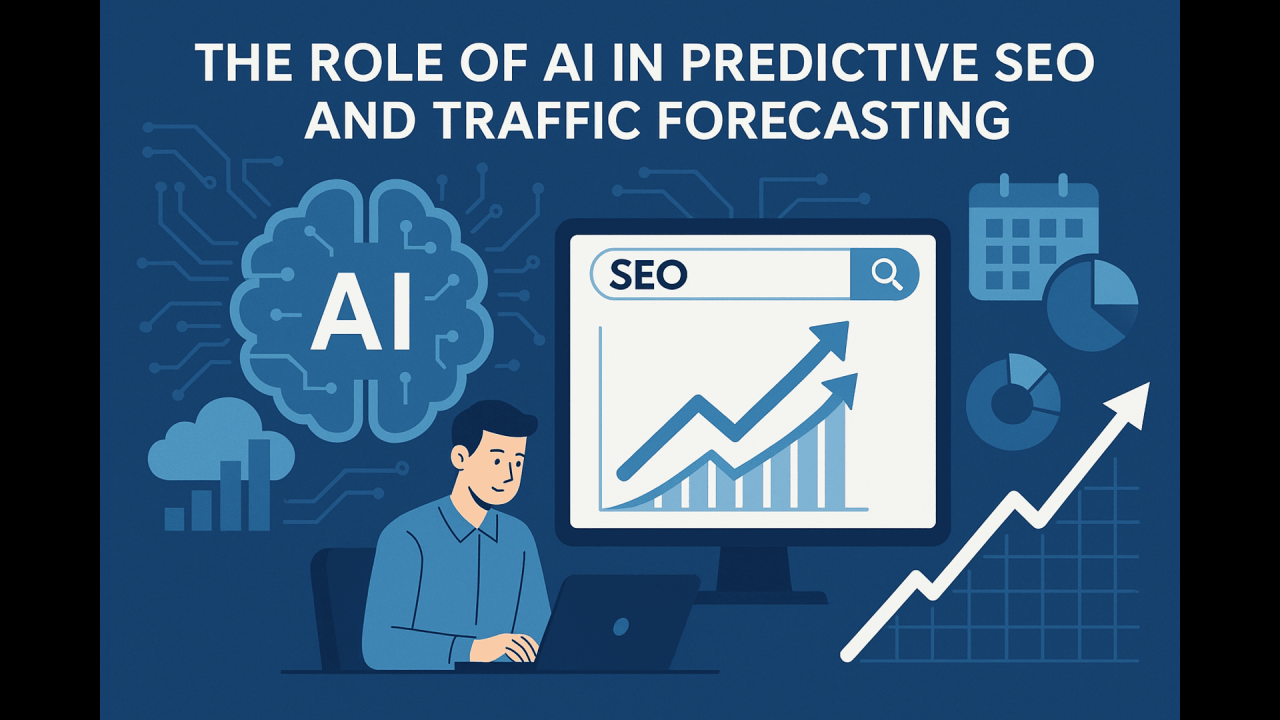
Practical Guide: Implementing AI SEO Forecasting Step by Step
Step 1: Build a Centralised Data Lake
Begin by aggregating at least two years of API‑level data from Google Search Console (using the bulk data export if available), Google Analytics 4 or an alternative analytics platform, and your chosen backlink index. Store this data in a warehouse like BigQuery or Snowflake, keeping raw grain intact. Clean only what is necessary – unified URL formats, timezone alignment, and removal of bot traffic. The richer your historical record, the easier it is to train models that understand seasonality and slow‑moving trends.
Step 2: Identify Your Primary Forecasting Entities
Decide whether to forecast at the domain level, folder level, or individual keyword level. Domain‑level forecasts are easier and more stable, masking the noise of individual queries. Keyword‑level forecasts deliver granular insights for content planning but require a significantly larger volume of reliable data per keyword. A hybrid approach works best for many organisations: forecast top‑tier money keywords individually, then model segment‑ and domain‑level aggregates to cover the long tail.
Step 3: Engineer a Rich Feature Set
Create time‑series features that capture momentum and change. Essential features include 7‑day, 28‑day, and 90‑day rolling averages of clicks and impressions; week‑over‑week ranking position change; number of days since last significant content update on a given URL; and competitor’s content cadence measured by newly published pages in the same topic cluster. Additionally, bring in Google Trends data for brand versus non‑brand query volume and external data such as MozCast temperature readings to flag algorithmic turbulence.
Step 4: Select and Train the Model
Start simple. A well‑tuned Prophet model with custom seasonalities often outperforms more complex architectures when data is clean and seasonality is the dominant pattern. If Prophet’s error rates are too high, graduate to an LSTM or a LightGBM regression on lagged features. Always split your data chronologically: train on 80% of the early timeframe, validate on the next 10%, and hold out the most recent 10% for testing. Use mean absolute percentage error (MAPE) as the primary metric, but pay special attention to directional accuracy – does the model correctly predict the direction of change, even if the magnitude is slightly off?
Step 5: Deploy with Monitoring and Retraining Triggers
Wrap the model in a lightweight API or connect it directly to a Looker Studio dashboard. Each night, the pipeline fetches the previous day’s data, appends it to the dataset, and the model generates an updated 30‑, 60‑, or 90‑day forecast. Set automated alerts that trigger when the forecast error over the trailing 14 days exceeds two standard deviations of the historical training error. This signals model drift and prompts a retraining cycle that may include new features or hyperparameter adjustments. The entire process must be as hands‑off as possible to truly deliver the promise of real‑time predictive SEO.
Common Mistakes in AI SEO Forecasting and How to Avoid Them
- Ignoring data quality checks: Feeding the model sessions that include internal traffic, bot hits, or missing UTM parameters inflates noise. Implement rigorous filtering and anomaly detection before training.
- Overfitting to the past: Building a model that perfectly memorises the calm period of 2022 will fail miserably when a volatile 2024 arrives. Use regularisation, dropout in neural networks, and cross‑validation that mimics real‑world deployment conditions.
- Treating all keywords equally: A forecasting model that lumps branded and non‑branded keywords together loses critical signal. Brand queries follow different drivers – TV ad spend, PR mentions – that have little to do with ranking factors. Always separate brand and non‑brand in your forecasts.
- Neglecting macroeconomic and seasonal shocks: A model that has never seen a Black Friday surge or a recessionary dip in demand will produce wildly inaccurate predictions. Create holiday and economic‑event features, and if historical data is sparse, use synthetic data or borrow patterns from similar markets.
- Setting unrealistic expectations: Presenting an AI forecast as “the answer” without communication of uncertainty erodes trust when the prediction misses. Always display confidence bands and educate stakeholders that the model’s value lies in narrowing the range of possible outcomes, not in pinpoint accuracy.
Important Notes for Long‑Term Success
AI SEO forecasting is not a set‑and‑forget tool. The algorithms that drive Google change, and so must the models that predict its behaviour. A model trained on pre‑Helpful Content Update data will misjudge the importance of thin content signals. Schedule a full model review at least quarterly, and always after a confirmed broad core algorithm update. During these reviews, assess feature importance shifts – if backlink signals suddenly lose predictive power, it may signal a major ranking factor evolution that the model must account for.
Privacy and data sovereignty also matter. If your organisation operates in a jurisdiction with strict data regulations, ensure that any user‑level data ingested into the forecasting pipeline is aggregated and anonymised. The power of AI forecasting does not require personally identifiable information; aggregated session and click data is both sufficient and compliant.
Finally, treat AI SEO forecasting as an augment to human expertise, not a replacement. The model excels at identifying patterns across vast datasets, but it cannot understand the cultural moment that shifts search intent or the strategic nuance of a rebranding campaign. The best results come from a partnership where the AI surfaces anomalies and predictions, and experienced SEOs interpret them within the full business context.
Frequently Asked Questions
How accurate is AI SEO forecasting?
Under stable algorithmic conditions and with sufficient historical data, AI SEO forecasting can achieve a 5‑15% error margin on aggregate traffic predictions. The accuracy decreases during major core updates or for low‑volume keywords where noise dominates the signal. Accuracy also varies by metric: branded traffic is easier to forecast than volatile long‑tail non‑brand terms. The strength of AI forecasting lies more in providing reliable probability ranges than perfect point predictions.
What data do I need to start AI SEO forecasting?
At minimum, you need daily or weekly level data from Google Search Console (queries, clicks, impressions, average position) and a web analytics tool (sessions, conversions). Eighteen months of history is recommended to capture annual seasonality. To enrich the model, add backlink index data, Google Trends, and SERP feature sensor feeds. The more variables you can connect to ranking and traffic outcomes, the more robust the forecast becomes.
Can small businesses benefit from AI SEO forecasting?
Yes, but with calibrated expectations. A small business with a few hundred keywords and modest traffic may find off‑the‑shelf tools like the forecasting modules in Semrush or Ahrefs sufficient. These platforms use aggregated industry data to compensate for sparse site‑specific signals. Custom machine learning models typically become cost‑effective only when there are several thousand keywords and the value of improved accuracy justifies the engineering investment.
Which tools offer built‑in AI SEO forecasting?
Multiple platforms now integrate predictive features. Semrush’s Traffic Analytics shows projected traffic curves, while Ahrefs uses Content Explorer and historical ranking data to estimate content potential. The Google Search Console bulk data export combined with Looker Studio and BigQuery offers a do‑it‑yourself approach for those with data science skills. Enterprise‑grade SEO suites like BrightEdge and Conductor include forecasting modules powered by proprietary AI, often tied to revenue modelling.
How does AI SEO forecasting handle Google algorithm updates?
Pure historical models cannot predict an update they have not seen before, but they can detect its onset rapidly. By ingesting third‑party SERP volatility sensors that measure real‑time ranking fluctuations across thousands of domains, the model flags statistical anomalies hours or days before a site’s own traffic reflects the change. Some advanced systems incorporate “what‑if” scenario modelling, allowing SEOs to simulate the impact of a hypothetical ranking factor shift and prepare mitigation plans in advance.
Conclusion
AI SEO forecasting moves the discipline of search engine optimisation from a reactive posture to a genuinely predictive one. By fusing machine learning with the vast array of signals available through Search Console, analytics, and SERP intelligence, modern SEO teams can see the road ahead with startling clarity. They know which content investments will pay off, when to expect seasonal lifts, and – crucially – when turbulence is about to strike. The technology is not infallible, but the gap between a well‑tuned AI forecast and a traditional spreadsheet is now so wide that any organisation serious about sustained organic growth cannot afford to ignore it. The future of SEO belongs to those who predict, not just react.
Xem thêm:
- AI SEO Entity Relationships: The Complete Guide to Semantic Search Dominance
- AI SEO LLM Rankings: The Complete Guide to Winning AI Search in 2025
- AI Robots.txt: The Complete Guide to Controlling AI Crawlers on Your Website
- AI Landing Page Optimization: Transform Your Conversion Rates with Smart Technology
- AI SEO Semrush: The Complete Guide to Automating Your Search Rankings in 2025
Bài viết cùng chủ đề:

AI SEO SEO Automation with Make: The Complete Workflow Guide

AI SEO SEO Automation with Zapier: The Complete Workflow Guide

AI SEO SEO Automation with n8n: The Complete Workflow Guide
AI SEO SEO Automation with Gemini: The Complete Guide to Scaling Organic Growth

AI SEO SEO Automation with Claude: The Complete Guide to Scaling Content in 2025

AI SEO SEO Automation with ChatGPT: The Complete Playbook for 2025

AI SEO & SEO Automation for Affiliate Sites: The 2025 Playbook for Passive Income Growth
AI SEO & SEO Automation for Bloggers: The Complete Guide to Scaling Your Content

AI SEO & SEO Automation for Agencies: The Complete 2025 Playbook

AI SEO and SEO Automation for Ecommerce: The Complete Playbook for 2025

AI SEO & SEO Automation for WordPress: The Complete Playbook for 2025
AI SEO SEO Automation Strategy: The Complete Playbook for 2025

Mastering the AI SEO SEO Automation Process: A Complete Guide to Scaling Organic Growth
AI SEO SEO Automation System: The Complete Guide to Scaling Organic Growth in 2025
AI SEO SEO Automation Platform: The Complete Guide to Scaling Organic Growth in 2025
AI SEO SEO Automation Software: The Complete Guide to Scaling Organic Growth in 2025















