
No products in the cart.
AI SEO GEO Tools: The Complete Guide to Generative Engine Optimization in 2025
10
Aug
Aug
The digital marketing landscape has shifted dramatically. Traditional search engine optimization focused on Google’s blue links. Today, a new frontier demands attention: Generative Engine Optimization (GEO). As users increasingly turn to AI chatbots like ChatGPT, Perplexity, and Google’s AI Overviews for answers, the tools we use must evolve. This is where AI SEO GEO Tools come into play. These platforms bridge the gap between classic ranking factors and the new reality of AI-driven discovery, ensuring your brand becomes the cited source, not just a link on page two.
What Are AI SEO GEO Tools?
AI SEO GEO Tools are specialized software platforms designed to optimize content for visibility within AI-generated answers. Unlike traditional SEO tools that track keywords and backlinks, these tools analyze how AI models perceive, extract, and cite information from your website. They focus on entity recognition, semantic relevance, and citation probability.
These tools help you understand what an AI engine “sees” when it crawls your content. They simulate queries against large language models (LLMs) to determine if your brand is mentioned, how often, and in what context. The goal is to become a primary source in the AI’s knowledge base, driving referral traffic from chat interfaces and AI search panels.
The Core Difference Between SEO and GEO
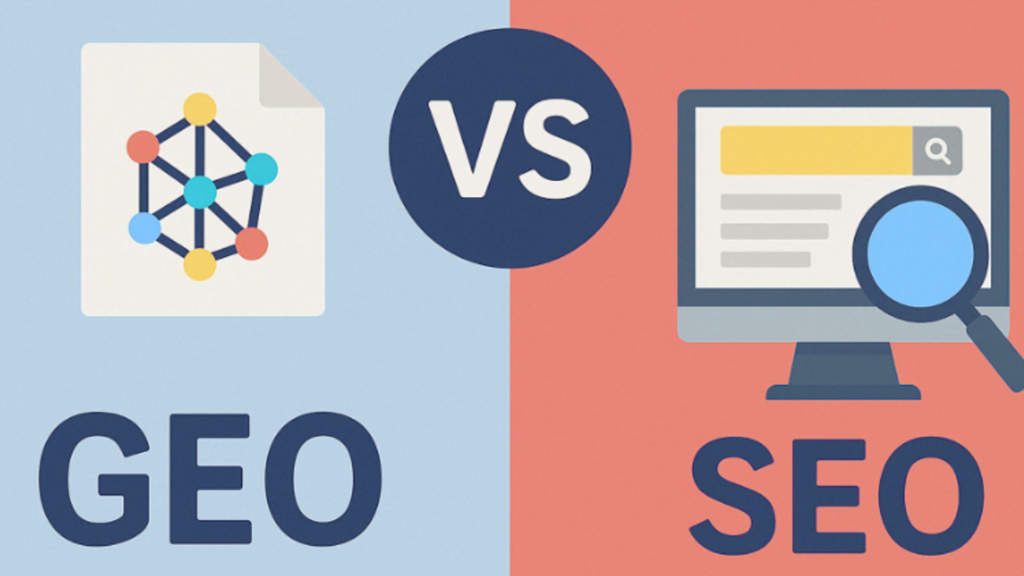
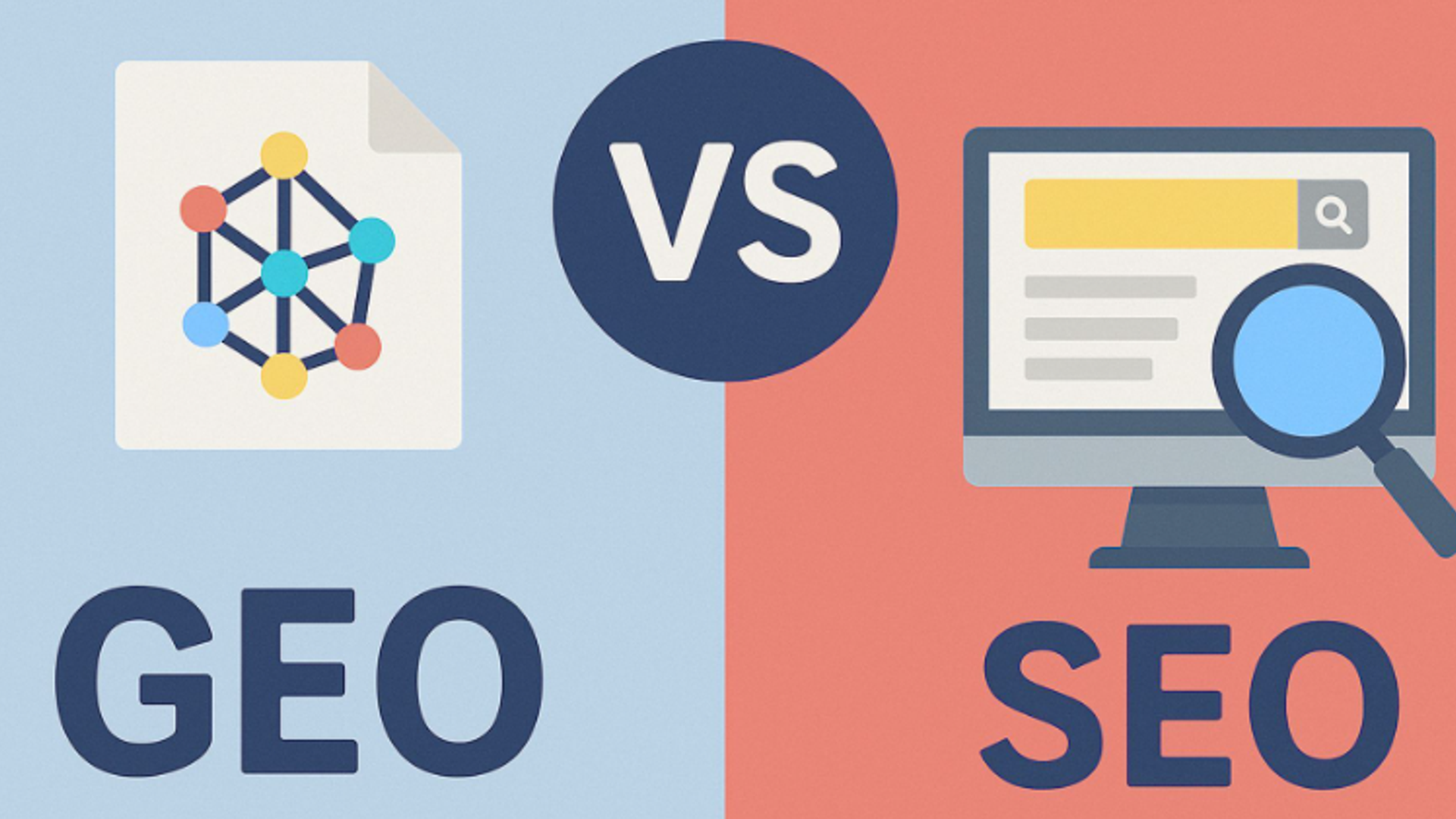
To understand the value of these tools, you must grasp the fundamental shift. Traditional SEO targets a search engine results page (SERP). GEO targets a synthesized answer. When a user asks an AI “What is the best CRM for small businesses?”, the AI does not just list links. It reads dozens of articles, extracts key points, and writes a summary. If your content is not structured for extraction, you are invisible.
AI SEO GEO Tools analyze your content’s “extractability.” They check if your paragraphs are concise, if your data is cited, and if your entity definitions are clear. They move the focus from keyword density to information density and authority signals.
Why You Need AI SEO GEO Tools for Your Strategy
The rise of zero-click searches is accelerating. Users get answers directly in the AI interface, never visiting your website. Without GEO optimization, your traffic from AI sources will remain zero. These tools are no longer optional; they are essential for maintaining digital visibility.
Furthermore, the algorithms behind AI search are opaque. You cannot manually reverse-engineer how ChatGPT ranks sources. AI SEO GEO Tools provide the necessary transparency, offering a dashboard that shows your current visibility score across multiple AI platforms. This data allows for iterative improvement based on actual AI behavior, not guesswork.
Key Features of Effective AI SEO GEO Tools
Not all software is created equal. When evaluating AI SEO GEO Tools, look for these critical features to ensure you are getting actionable data rather than vanity metrics.
AI Visibility Tracking
This feature monitors your brand’s presence in responses generated by major LLMs. You input a list of target keywords, and the tool queries ChatGPT, Claude, Gemini, and Perplexity. It then reports whether your domain is mentioned, how prominently, and whether the mention is positive, neutral, or negative.
Citation Probability Scoring
Advanced tools use machine learning to predict the likelihood of your content being cited. They analyze your content’s structure, authority signals, and topical depth. This score helps prioritize which pages need immediate GEO optimization.
Entity Extraction and Analysis
AI models rely on entities (people, places, concepts, products). These tools extract the entities from your content and compare them against the entities the AI expects for a given query. If your content lacks the core entities, the A
Content Optimization Suggestions
Beyond analytics, the best tools provide specific recommendations. They might suggest adding a definition table, including specific statistics, or restructuring a paragraph to be more direct. This moves the tool from a reporting dashboard to an active optimization partner.
Top AI SEO GEO Tools to Consider in 2025
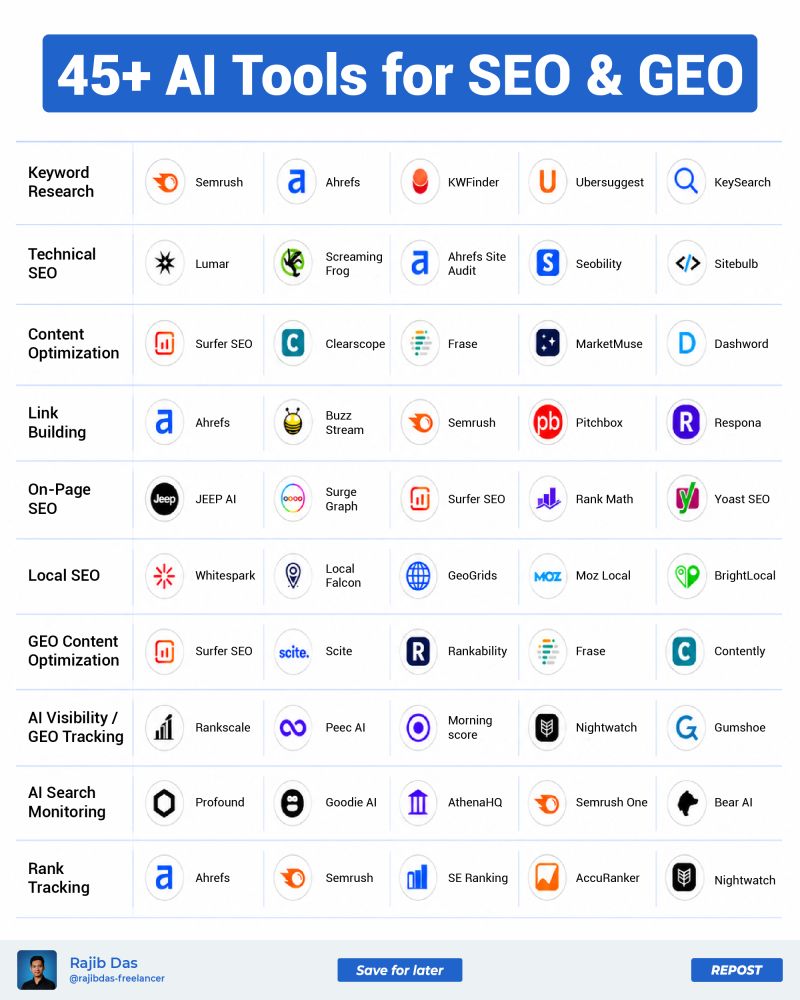
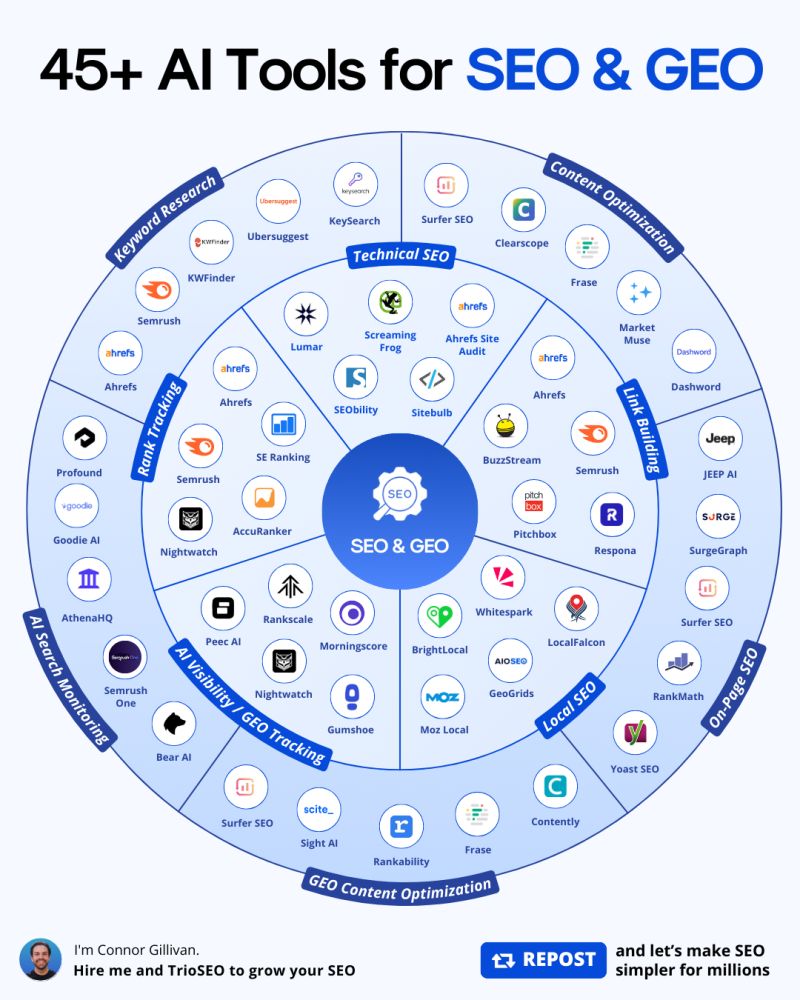
The market is expanding rapidly. Each offers a unique approach to solving the GEO puzzle.
1. Profound (by SEO.AI)
Profound is a dedicated GEO platform that focuses on “Answer Engine Optimization.” It allows you to track your visibility in ChatGPT and Perplexity. Its standout feature is the “GEO Score,” which predicts how likely you are to be cited. It also offers a “Competitor Clash” feature to see how your content stacks up against rivals in AI responses.
2. Otterly.ai
Otterly.ai specializes in automated tracking. It monitors AI search results continuously, providing alerts when your brand mentions change. It is particularly strong in analyzing the “share of voice” in AI-generated answers, helping you understand which competitors are dominating the conversation.
3. Scalenut (with GEO Module)
Scalenut has integrated GEO capabilities into its broader SEO suite. It uses NLP to analyze content against AI models. The platform helps you create content briefs that are optimized for both traditional search and AI extraction, making it a good all-in-one solution for content teams.
4. SE Ranking (AI Overviews Monitor)
While primarily a traditional SEO tool, SE Ranking has added a specific feature to track Google AI Overviews. This is crucial because Google’s AI Overviews are the most significant driver of AI traffic. The tool shows you which keywords trigger AI Overviews and whether your site appears in them.
5. Brand24 (AI Mentions)
Brand24, a social listening tool, has pivoted to include AI monitoring. It scans ChatGPT and other platforms for brand mentions. While not a full GEO optimizer, it is excellent for reputation management within AI ecosystems, alerting you to negative or false information being generated about your brand.
How to Implement AI SEO GEO Tools: A Step-by-Step Guide
Purchasing a tool is only the first step. To see results, you must integrate the data into your workflow.
- Audit Your Current Visibility: Start by running a baseline audit. Input your top 20 revenue-driving keywords into the tool. Record your current citation rate and visibility score. This is your starting point.
- Identify Content Gaps: Look at the AI answers for your keywords. What sources are being cited? What information is included? Compare this to your content. Are you missing definitions? Do you lack specific data points? This gap analysis is your roadmap.
- Restructure for Extractability: Use the tool’s suggestions to rewrite your content. Break down complex ideas into short, standalone paragraphs. Use tables for comparisons. Ensure your key statistics are in plain text, not inside images or PDFs.
- Build Entity Authority: Ensure your content clearly defines who you are and what you do. Use consistent naming conventions. Link to your own authoritative pages (internal linking) to help AI models understand your site’s structure.
- Monitor and Iterate: GEO is not a set-and-forget strategy. AI models update frequently. Run weekly checks using your tool to see if your visibility has changed. Adjust your content based on the new data.
Benefits of Using AI SEO GEO Tools
The advantages of adopting this technology extend beyond just getting cited. They fundamentally improve your content quality and brand authority.
- Future-Proofing: As AI search grows, you are already positioned for visibility, while competitors are still stuck in 2015 SEO tactics.
- Improved Content Clarity: The optimization process forces you to write more clearly and concisely, which improves user experience for all readers, not just AI.
- Competitive Intelligence: You gain insight into who the AI trusts in your niche. You can analyze their content structure and replicate their success.
- Reputation Management: You can detect false or negative AI-generated information about your brand early and take corrective action.
Limitations and Challenges of GEO Tools
It is important to approach these tools with realistic expectations. They are not a magic bullet. There are inherent limitations to the technology.
First, AI models are “black boxes.” The tools can show you correlations, but they cannot guarantee causation. A high GEO score does not guarantee a citation. Second, the data is volatile. AI answers change daily, so a snapshot from Tuesday might be outdated by Thursday. Finally, these tools do not replace the need for genuine authority. If your brand is not well-known or your content is thin, no tool will make the AI cite you.
AI SEO GEO Tools vs. Traditional SEO Tools: A Comparison
Understanding the difference is crucial for budget allocation.
| Feature | Traditional SEO Tools | AI SEO GEO Tools |
|---|---|---|
| Primary Focus | Keyword rankings on Google/Bing | Brand citations in AI answers |
| Data Source | Search engine crawlers | Large Language Models (LLMs) |
| Optimization Target | Meta tags, backlinks, page speed | Entity clarity, content structure, data extraction |
| Success Metric | Click-through rate (CTR) & Impressions | Mention volume & Sentiment in AI responses |
| Update Frequency | Daily/Weekly | Hourly/Daily (AI models change rapidly) |
While traditional tools are still necessary for e-commerce and transactional queries, GEO tools are essential for informational queries and brand building. A comprehensive strategy uses both in tandem.
Common Mistakes to Avoid When Using GEO Tools
Many marketers fail to see results because they repeat the same errors. Avoid these pitfalls to maximize your investment.
- Treating it like traditional SEO: Do not stuff keywords. AI models penalize spammy content. Focus on semantic depth and answering the question fully.
- Ignoring the “Why”: If a tool says you have low visibility, dig into the reason. Is it a lack of authority? Poor structure? Just tweaking words without understanding the root cause will not help.
- Focusing only on ChatGPT: Users are spreading across Perplexity, Gemini, and Claude. Ensure your tool tracks multiple platforms to get a holistic view.
- Neglecting Traditional SEO: GEO tools do not replace the need for backlinks and technical health. AI models still crawl the web, and they still value authoritative domains.
Important Notes on Data Privacy and AI Bias
When using these tools, remember that AI models have inherent biases. They tend to favor well-known, mainstream sources. This means smaller brands may struggle to get cited even with perfect optimization. The tools cannot fix this bias; they can only highlight it.
Additionally, be cautious about the data you input into these platforms. Some tools may use your queries to train their own models. Avoid entering proprietary or confidential business information into GEO tracking dashboards.
Frequently Asked Questions (FAQ)
What is the difference between SEO and GEO?
SEO (Search Engine Optimization) optimizes for ranking in a list of links. GEO (Generative Engine Optimization) optimizes for being cited as a source within an AI-generated text answer. GEO focuses on making content easy for AI to extract and summarize.
Are AI SEO GEO Tools worth the investment?
Yes, for businesses that rely on organic traffic for leads or sales. As AI Overviews reduce click-through rates to traditional links, having visibility in those overviews is critical. The tools provide the necessary data to achieve that visibility, saving time and resources compared to guesswork.
Can I do GEO optimization without a tool?
You can manually query ChatGPT and Perplexity to see if your brand appears. However, this is time-consuming and not scalable. Tools provide automated tracking, competitor analysis, and specific recommendations that are impossible to replicate manually at scale.
How long does it take to see results from GEO tools?
Results vary. If you fix structural issues on high-authority pages, you might see changes within a few weeks. If you are building authority from scratch, it can take several months. Consistency is key, as AI models re-crawl and re-index content regularly.
Do GEO tools work for local businesses?
Yes, but with a caveat. AI models are increasingly providing local recommendations. GEO tools can help you optimize your Google Business Profile and local content to be cited in AI answers for “near me” queries. However, the data is less mature than for national/international queries.
Conclusion
The shift to AI-driven search is not a passing trend; it is the new standard. AI SEO GEO Tools are the essential instruments for navigating this landscape. They provide the visibility, analytics, and optimization guidance needed to ensure your brand is not left behind in the age of generative engines. By integrating these tools into your workflow, focusing on extractability, and monitoring your AI presence, you secure your digital footprint for the future. The time to adapt is now, as the algorithms that dictate online visibility are changing faster than ever before.
Xem thêm:
- AI SEO and SEO Automation for Ecommerce: The Complete Playbook for 2025
- AI SEO GPT Tools: The Complete Guide to Automating Your Search Rankings in 2025
- AI SEO Natural Language Search: The Complete Guide to Ranking in the Conversational Era
- AI SEO for Agencies: The Complete Blueprint to Scale, Automate, and Dominate Search Rankings
- AI SEO Landing Page Testing: The Complete Guide to Data-Driven Conversion Optimization
Bài viết cùng chủ đề:

AI SEO SEO Automation with Make: The Complete Workflow Guide

AI SEO SEO Automation with Zapier: The Complete Workflow Guide

AI SEO SEO Automation with n8n: The Complete Workflow Guide
AI SEO SEO Automation with Gemini: The Complete Guide to Scaling Organic Growth

AI SEO SEO Automation with Claude: The Complete Guide to Scaling Content in 2025

AI SEO SEO Automation with ChatGPT: The Complete Playbook for 2025

AI SEO & SEO Automation for Affiliate Sites: The 2025 Playbook for Passive Income Growth
AI SEO & SEO Automation for Bloggers: The Complete Guide to Scaling Your Content

AI SEO & SEO Automation for Agencies: The Complete 2025 Playbook

AI SEO and SEO Automation for Ecommerce: The Complete Playbook for 2025

AI SEO & SEO Automation for WordPress: The Complete Playbook for 2025
AI SEO SEO Automation Strategy: The Complete Playbook for 2025

Mastering the AI SEO SEO Automation Process: A Complete Guide to Scaling Organic Growth
AI SEO SEO Automation System: The Complete Guide to Scaling Organic Growth in 2025
AI SEO SEO Automation Platform: The Complete Guide to Scaling Organic Growth in 2025
AI SEO SEO Automation Software: The Complete Guide to Scaling Organic Growth in 2025















