
No products in the cart.
AI SEO Natural Language Search: The Complete Guide to Ranking in the Conversational Era
10
Aug
Aug
The way people search has fundamentally changed. Typing fragmented keywords like “best pizza NYC” is giving way to full conversational queries such as “what is the best pizza place open now near Central Park?” This shift is driven by AI SEO Natural Language Search, a paradigm where search engines use machine learning to understand the intent behind human speech patterns. For businesses and content creators, adapting to this reality is no longer optional; it is the primary determinant of organic visibility. This guide breaks down exactly how natural language processing (NLP) and generative AI are reshaping rankings and how to optimize your content to win these conversational queries.
What is AI SEO Natural Language Search?
AI SEO Natural Language Search refers to the application of artificial intelligence, specifically natural language processing (NLP) and large language models (LLMs), to interpret search queries in the same way a human would understand a spoken sentence. Unlike traditional keyword matching, this technology analyzes the context, semantics, entities, and user intent behind a query. It allows search engines to move beyond exact-match keywords and deliver results that answer the underlying question, even if the webpage does not contain the exact phrasing of the search.
This evolution is powered by models like Google’s BERT and MUM, and more recently, by generative AI features like the Search Generative Experience (SGE) and AI Overviews. These systems parse the relationship between words in a sentence, understanding nuances like prepositions and modifiers. For example, a search for “books about AI for beginners” is now understood differently than “beginner AI books,” even though the core words are similar. The engine recognizes the specific intent for introductory material versus general literature.
The Shift from Keywords to Entities and Context
In the old SEO paradigm, a page optimized for “car insurance” would need that exact phrase repeated multiple times. In the AI-driven model, the engine identifies “car insurance” as an entity. It then looks at the context of the query—such as “cheapest for a new driver in Texas”—to match the page against a broader set of semantic signals. This means your content must cover topics comprehensively, using related terms, synonyms, and natural phrasing that a human expert would use, rather than stuffing a specific keyword phrase.
Why Natural Language Processing is Critical for SEO
The primary reason NLP is critical is the rise of voice search and digital assistants. When users speak to Siri, Alexa, or Google Assistant, they use full sentences. They ask, “How do I fix a leaking faucet?” rather than typing “faucet repair.” To capture this traffic, your content must be structured to answer these long-tail, question-based queries directly. Furthermore, Google’s ranking systems use NLP to assess content quality. Pages that read naturally, answer questions clearly, and demonstrate topical authority are favored over those that feel robotic or keyword-stuffed.
Another critical factor is the zero-click search. With AI Overviews, users often get their answer directly on the search results page. To be featured in these AI-generated summaries, your content must be exceptionally clear, factual, and structured in a way that AI can easily parse and cite. This involves using concise definitions, bullet points, and straightforward tables that provide immediate value.
How AI Search Engines Understand User Intent
Modern search engines categorize intent into four main types: informational, navigational, transactional, and commercial investigation. AI SEO Natural Language Search excels at distinguishing between these. For instance, the query “What is the best time to visit Japan?” is informational. The engine knows the user is not ready to book a flight yet. Conversely, “Buy Tokyo Disneyland tickets” is transactional. AI models analyze the syntax and semantics to determine which category a query falls into, ensuring that the results match the user’s stage in the buying cycle.
This understanding extends to “do” and “know” queries. A query like “compare iPhone 15 vs Samsung S24” implies a desire for a comparison table. A query like “how to change a tire” implies a need for step-by-step instructions. By using NLP, search engines can prioritize pages that contain the specific format that matches the query’s intent, whether it is a list, a video, or a detailed guide.
Key Components of Optimizing for Natural Language Search
Optimizing for this new landscape requires a holistic approach that goes beyond traditional on-page tactics. You must focus on semantic relevance, structured data, and content depth. The goal is to become the most authoritative source on a given topic, not just a page that ranks for a single phrase.
Semantic Keyword Clustering
Instead of targeting one keyword, you must build clusters of related terms. If your main topic is “home workout routines,” your cluster includes “bodyweight exercises,” “no-equipment workouts,” “beginner fitness plans,” and “calorie burn exercises.” By covering all these related concepts in a single comprehensive guide, you signal to the AI that your page is a topical authority. This helps you rank for hundreds of variations of your main keyword.
Structured Data and Schema Markup
Schema markup is the code that helps search engines understand the context of your content. For natural language search, implementing FAQPage schema, HowTo schema, and Article schema is vital. This structured data explicitly tells the AI what your content is about, making it easier for the engine to pull your information into rich snippets and AI Overviews. Without schema, the AI has to guess the structure of your page; with it, you are providing a clear map.
Content Formatting for Featured Snippets
AI models love lists and tables. When optimizing for natural language queries, format your answers to be easily extractable. Use an H2 or H3 heading that matches the query, followed by a concise paragraph (40-60 words) that provides the direct answer. Then, expand with a bulleted list or table. This “direct answer” format is the most likely to be pulled into position zero or an AI-generated summary.
Practical Strategies for AI SEO Natural Language Search
To implement these concepts, you need a concrete action plan. This involves auditing your current content, rewriting for conversational tone, and building a strategy that targets questions rather than just keywords.
1. Conduct a “People Also Ask” and Question-Based Audit
Start by mining the “People Also Ask” boxes on Google for your target topic. These boxes are goldmines of natural language queries. For example, if you are writing about “solar panels,” the PAA box might reveal questions like “Do solar panels work in winter?” or “How long do solar panels last?” Create content sections that directly answer these questions. Use tools like AnswerThePublic to find prepositions and comparisons that users are searching for.
2. Write in a Conversational Tone
Your writing style must shift from academic or promotional to conversational. Use “you” and “we” naturally. Break down complex ideas into simple sentences. Read your content out loud; if it sounds like a robot, rewrite it. The AI is looking for content that mimics human speech patterns, so your prose should be fluid, engaging, and easy to digest.
3. Optimize for Voice Search Locally
Voice searches are often local. Queries like “W Ensure your Google Business Profile is up to date and that your content includes local landmarks and phrases. Use phrases like “near me” naturally in your copy, but also include specific city names and neighborhoods to capture the hyper-local intent of voice users.
Benefits and Limitations of AI-Driven Search Optimization
Understanding the pros and cons of this shift helps set realistic expectations for your SEO strategy.
| Benefits | Limitations |
|---|---|
| Higher quality traffic: You attract users with high purchase intent because you answer their specific questions. | Increased competition: Ranking for broad terms is harder; you must niche down to specific subtopics. |
| Improved user experience: Content that reads naturally keeps users on the page longer, reducing bounce rates. | Zero-click results: Users may get answers without clicking your site, reducing direct traffic. |
| Long-tail keyword opportunities: You can rank for thousands of specific queries without stuffing keywords. | Constant algorithm updates: AI models change frequently, requiring continuous content refreshes. |
| Better voice search visibility: You capture the growing market of smart speaker and mobile voice users. | Technical complexity: Implementing schema and NLP-friendly structures requires more technical skill. |
Common Mistakes in Natural Language Optimization
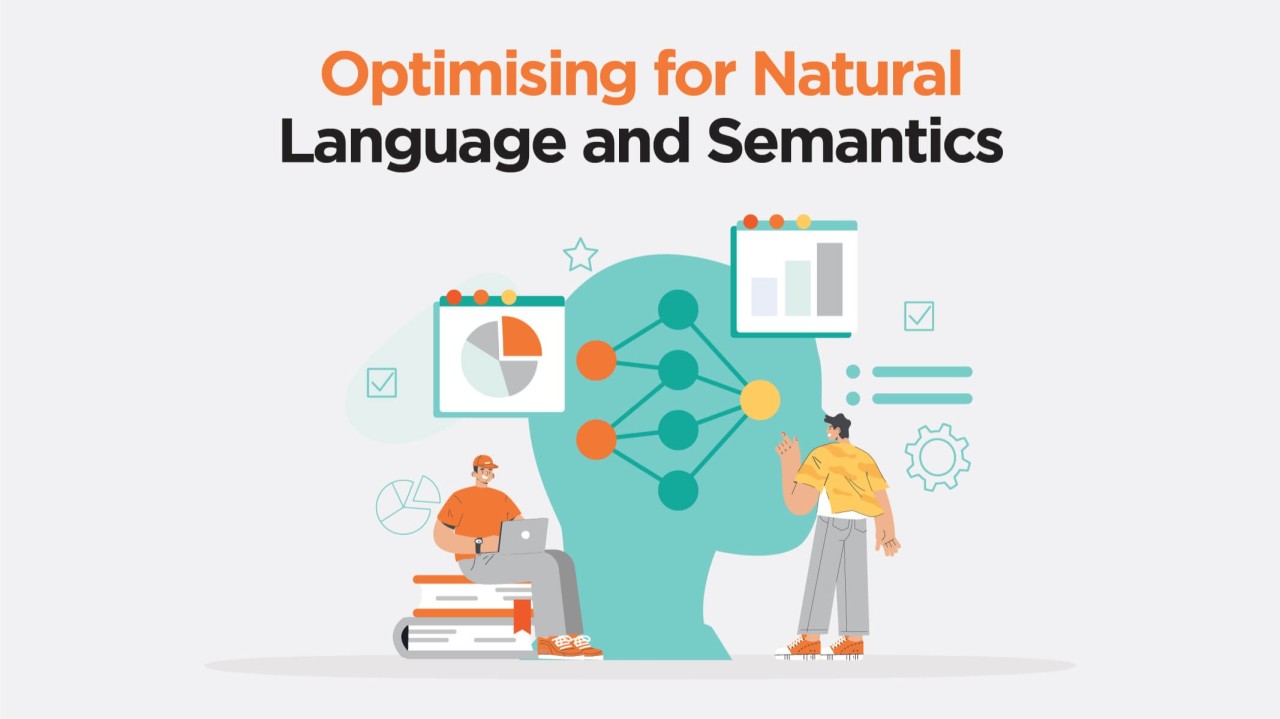
Many SEO professionals fail to adapt because they cling to outdated tactics. Avoiding these common pitfalls is essential for success in the AI era.
Keyword Stuffing in a Conversational Era
Repeating the exact target keyword ten times in a page is a surefire way to get penalized. The AI recognizes this as unnatural. Instead of forcing the keyword, use variations and synonyms. Write for the reader first; the A Focus on the “topic” rather than the “phrase.”
Ignoring the “Why” Behind the Query
If you only answer the literal question without addressing the underlying need, your content will fail. For example, if someone asks “How to lose weight,” they are not looking for a definition of weight loss. They want a plan, meal ideas, and exercise tips. Your content must anticipate the next question the user will ask and answer it proactively. This creates a comprehensive resource that the AI deems valuable.
Neglecting Entity Optimization
Entities are specific people, places, things, or concepts. If you write about “Apple,” the AI needs to know if you mean the fruit or the tech company. Use clear context, link to authoritative sources, and define your entities clearly. This helps the AI disambiguate your content and show it to the right audience.
Important Notes on AI Content and E-E-A-T
While AI can help generate content, Google’s guidelines emphasize the importance of E-E-A-T (Experience, Expertise, Authoritativeness, and Trustworthiness). Content written entirely by AI without human oversight often lacks the nuance and real-world experience that ranks well. You must add personal insights, case studies, and data from your own experience to stand out. The AI can draft the structure, but the human touch—the specific examples, the unique perspective—is what builds trust with both users and search engines.
Furthermore, fact-checking is non-negotiable. AI models can hallucinate or provide outdated information. Before publishing, verify all statistics and claims. A single factual error can destroy your credibility and cause the AI to stop citing your content in future search results.
Practical Guide: Step-by-Step Implementation
- Audit Existing Content: Use tools like Google Search Console to identify pages that are losing impressions. Check if your top pages answer questions directly.
- Rewrite Introductions: Ensure your first paragraph clearly states the answer to the main query. Do not bury the lead.
- Add an FAQ Section: Create a dedicated FAQ section at the bottom of your articles. Use the exact phrasing of the questions users are asking.
- Implement Schema: Add FAQPage and HowTo schema to your HTML. Test it using Google’s Rich Results Test tool.
- Build Topical Clusters: Create pillar pages that link out to detailed cluster posts. This establishes your site as an authority on the broader subject.
- Monitor AI Overviews: Track when your content appears in AI Overviews. If it disappears, analyze what changed and update your content to be more specific.
Frequently Asked Questions (FAQ)
What is the difference between keyword search and natural language search?
Keyword search relies on matching exact words or phrases in a query to words on a webpage. Natural language search uses AI to understand the meaning and intent behind a full sentence or question, allowing it to match content that is semantically related, even if the exact words are not present.
How does AI SEO Natural Language Search affect voice search?
Voice search is the primary driver of natural language queries. Since users speak in full sentences, optimizing for conversational phrases and question-based queries is essential to appear in voice search results. Content must be structured to provide quick, concise answers.
Do I need to stop using keywords entirely?
No. Keywords are still important as anchors for your topic. However, you must stop relying on exact-match density. Use your primary keyword in the title, first paragraph, and one or two subheadings, but rely on LSI keywords and synonyms throughout the rest of the content to build semantic relevance.
How long does it take to see results from natural language optimization?
Results vary, but typically you can see improvements in 4 to 8 weeks. The AI needs time to crawl, index, and re-evaluate your content. Consistency is key; updating old content and publishing new, comprehensive guides regularly will accelerate the process.
Can AI-generated content rank well in natural language search?
Yes, but only if it is heavily edited and supplemented with human expertise. Pure AI output often lacks the depth and unique insights required to establish E-E-A-T. You must add original data, personal experience, and expert commentary to make the content trustworthy.
Conclusion
The era of AI SEO Natural Language Search is here, and it demands a fundamental shift in how we approach content creation. The focus has moved from manipulating algorithms with keywords to genuinely understanding and answering user queries. By focusing on semantic relevance, structured data, and conversational writing, you can position your website to thrive in this new landscape. The future of search is not about tricking the machine; it is about communicating with it clearly and providing the best possible answer to the human on the other side of the screen. Start implementing these strategies today to build a resilient, future-proof SEO strategy that captures the full potential of conversational search.
Xem thêm:
- AI SEO Keyword Semantics: The Complete Guide to Search Intent Optimization
- AI SEO Outbound Link Strategy: The Complete Guide to Building Authority in 2025
- AI SEO Content Quality: The Complete Guide to Publishing Content That Ranks in 2025
- AI SEO SEO Automation Strategy: The Complete Playbook for 2025
- AI SEO Pillar Content: The Complete Blueprint for Dominating Search Rankings in 2025
Bài viết cùng chủ đề:

AI SEO SEO Automation with Make: The Complete Workflow Guide

AI SEO SEO Automation with Zapier: The Complete Workflow Guide

AI SEO SEO Automation with n8n: The Complete Workflow Guide
AI SEO SEO Automation with Gemini: The Complete Guide to Scaling Organic Growth

AI SEO SEO Automation with Claude: The Complete Guide to Scaling Content in 2025

AI SEO SEO Automation with ChatGPT: The Complete Playbook for 2025

AI SEO & SEO Automation for Affiliate Sites: The 2025 Playbook for Passive Income Growth
AI SEO & SEO Automation for Bloggers: The Complete Guide to Scaling Your Content

AI SEO & SEO Automation for Agencies: The Complete 2025 Playbook

AI SEO and SEO Automation for Ecommerce: The Complete Playbook for 2025

AI SEO & SEO Automation for WordPress: The Complete Playbook for 2025
AI SEO SEO Automation Strategy: The Complete Playbook for 2025

Mastering the AI SEO SEO Automation Process: A Complete Guide to Scaling Organic Growth
AI SEO SEO Automation System: The Complete Guide to Scaling Organic Growth in 2025
AI SEO SEO Automation Platform: The Complete Guide to Scaling Organic Growth in 2025
AI SEO SEO Automation Software: The Complete Guide to Scaling Organic Growth in 2025















