
No products in the cart.
AI SEO GPT Tools: The Complete Guide to Automating Your Search Rankings in 2025
31
Jul
Jul
The digital marketing landscape has shifted dramatically with the introduction of generative AI. At the center of this transformation are AI SEO GPT tools, which combine the conversational power of large language models with the data-driven precision of search engine optimization. These platforms are no longer experimental add-ons; they are essential infrastructure for agencies, e-commerce brands, and content teams aiming to scale organic growth without sacrificing quality. This guide breaks down how these tools work, where they excel, and where they still need human oversight.
What Are AI SEO GPT Tools?
AI SEO GPT tools are software platforms that integrate Generative Pre-trained Transformers (GPT) with SEO workflows. Unlike traditional SEO software that only analyzes keywords or backlinks, these tools generate, optimize, and structure content based on real-time search data. They use natural language processing to understand user intent, then produce drafts, meta descriptions, schema markup, and even internal linking suggestions.
The core difference lies in their generative capability. A standard SEO tool tells you that a keyword has low difficulty. An AI SEO GPT tool writes a complete article targeting that keyword, includes the right semantic variations, and formats it for featured snippets. This automation reduces the time from keyword research to published draft from days to minutes.
How AI SEO GPT Tools Work Under the Hood
To use these tools effectively, understanding their architecture helps. Most platforms follow a three-stage pipeline:
- Data Ingestion: The tool crawls search engine results pages (SERPs), analyzes top-ranking pages, and pulls structured data like word count, headings, and entity mentions.
- Intent Mapping: Using GPT models, the tool classifies the query into informational, transactional, or navigational intent. It then extracts entities (people, places, concepts) that must be covered to match topical authority.
- Content Generation: The model writes original text, but critically, it references the SERP analysis to match the depth and format that Google currently rewards. This includes generating FAQ sections, comparison tables, and step-by-step guides.
- Factual Hallucinations: GPT models can generate confident but false information. Always verify statistics, quotes, and technical specifications before publishing.
- Lack of Original Experience: Google’s E-E-A-T guidelines reward content that demonstrates first-hand experience. AI cannot test a product, visit a location, or interview an expert. You must add these elements manually.
- Generic Writing Patterns: Without proper training, AI output can sound robotic and repetitive. This leads to high bounce rates and low dwell time, which indirectly hurts rankings.
- Plagiarism Risks: While GPT generates original text, it can sometimes mirror the structure of top-ranking articles too closely. Use plagiarism checkers as a safety net.
- Link Building: Use AI to generate outreach emails and guest post pitches, but the actual relationship building requires human effort.
- Technical Audits: AI tools can flag missing schema markup or duplicate meta tags, but you still need a developer to fix the underlying code.
- Local SEO: Generate location-specific landing pages with AI, but verify the business hours, addresses, and phone numbers manually.
- Video SEO: Use AI to write YouTube descriptions and timestamps, but the video content itself must be original and engaging.
Advanced tools also connect to Google Search Console and Google Analytics. This allows them to refresh underperforming pages, identify content gaps, and suggest internal links based on actual user behavior rather than guesswork.
Top AI SEO GPT Tools Compared

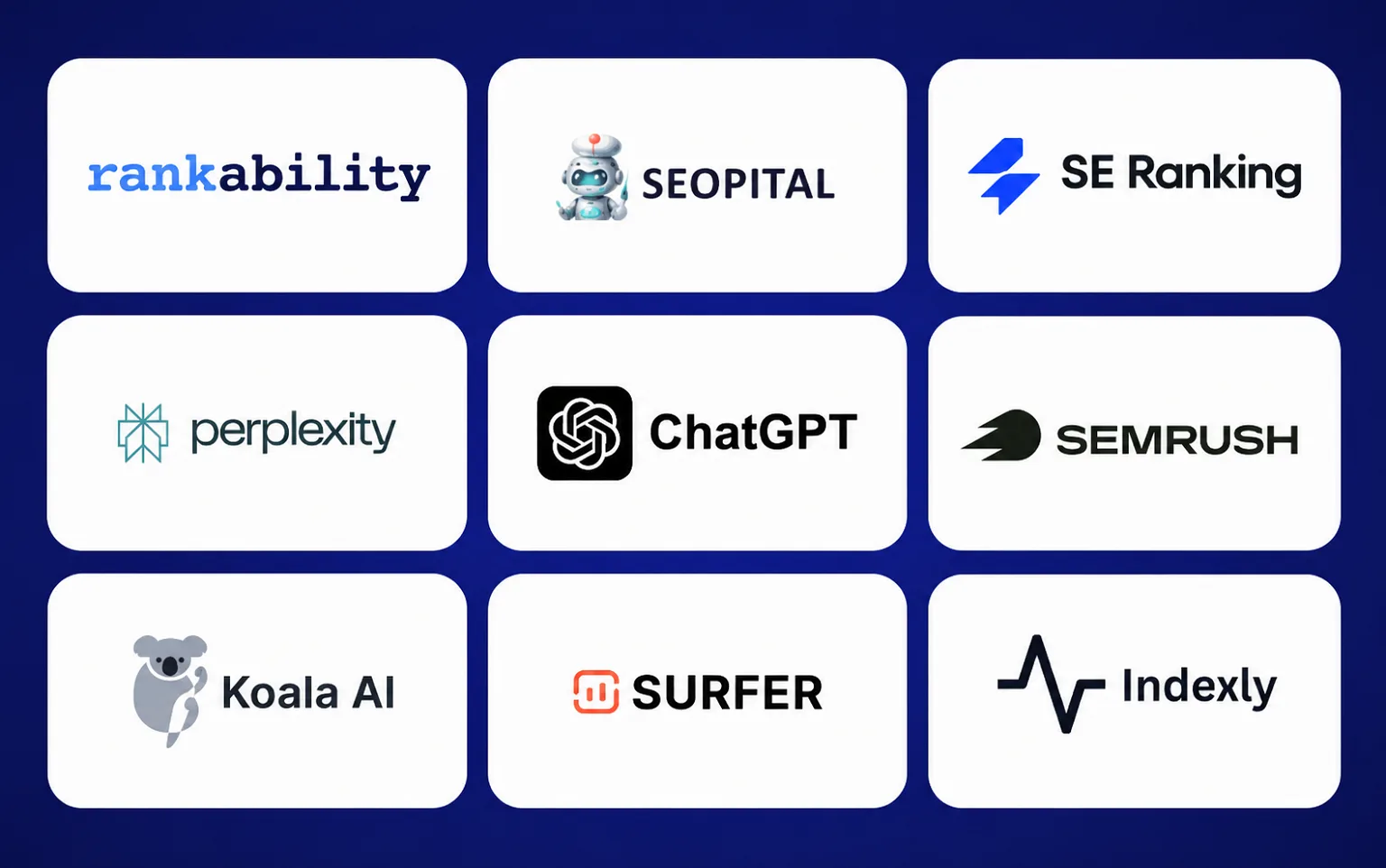
The market is crowded, but a few platforms have established clear leadership. Below is a comparison based on features, pricing, and output quality.
| Tool | Best For | Key Feature | Pricing Model |
|---|---|---|---|
| Surfer AI | On-page optimization | Real-time content score against SERP competitors | Credit-based, starting at $29/month |
| Jasper (with SEO mode) | Brand voice consistency | Custom knowledge bases for tone and style | Flat monthly subscription |
| Frase.io | Content briefs and FAQs | Generates briefs from top 20 results automatically | Tiered plans from $15/month |
| Copy.ai (SEO workflow) | Bulk content production | Bulk generation for e-commerce product descriptions | Usage-based credits |
| Neuronwriter | Semantic analysis | NLP-based entity extraction from Google autocomplete | One-time fee plus updates |
When selecting a tool, consider the learning curve. Surfer AI requires understanding its content score metric, while Frase is more intuitive for beginners. For enterprise teams, Jasper offers better collaboration features, but the cost scales quickly with seat count.
Key Benefits of Using AI SEO GPT Tools
The advantages go beyond speed. These tools fundamentally change how content teams allocate resources.
1. Scalable Content Production
A single writer can produce 10 optimized articles per day with AI assistance, compared to 2-3 manually. This is critical for websites targeting long-tail keywords across multiple product categories or service areas.
2. Consistent On-Page Optimization
GPT tools automatically handle title tags, meta descriptions, header structure, and image alt text. This eliminates the common mistake of forgetting to update metadata, which often happens during manual content creation.
3. Semantic Keyword Coverage
Instead of targeting one keyword, these tools generate content that covers related terms and synonyms. This helps search engines understand the depth of your content, improving rankings for a cluster of keywords rather than just one.
4. Data-Driven Content Refresh
Old articles that have lost rankings can be re-optimized. The AI compares your existing content against current top performers and suggests specific paragraphs to rewrite, new sections to add, and outdated statistics to replace.
Limitations and Risks You Must Know
Despite the hype, AI SEO GPT tools have significant drawbacks that can harm your site if ignored.
Practical Guide: How to Use AI SEO GPT Tools Effectively
To get the best results, follow this step-by-step workflow that combines automation with human judgment.
Step 1: Define Your Content Cluster
Start with a pillar page for a broad topic, then create supporting articles for specific subtopics. Use the AI tool to generate a list of 20-30 long-tail keywords related to your pillar. For example, if your pillar is “email marketing,” your cluster includes “email deliverability tips,” “cold email templates,” and “newsletter design best practices.”
Step 2: Generate a Data-Backed Brief
Use a tool like Frase or Surfer to analyze the current top 10 results for your target keyword. The brief should include the average word count, common headings, and questions people also ask. Do not skip this step. It grounds the AI in reality.
Step 3: Draft with AI, Edit with Human Insight
Let the AI write the first draft. Then, your job is to inject experience. Add a personal anecdote, a specific case study, or a screenshot from your own data. Replace generic examples with real numbers from your business. This is what separates your content from the thousands of other AI-generated articles.
Step 4: Optimize for Entities, Not Just Keywords
Use the tool’s NLP features to identify entities that Google associates with your topic. For a piece on “keto diet,” entities include “ketosis,” “macronutrients,” “MCT oil,” and “glycemic index.” Ensure these terms appear naturally in your headings and body text.
Step 5: Internal Linking Automation
Many AI SEO tools now suggest internal links based on semantic relevance. Review these suggestions carefully. Link to your money pages using descriptive anchor text, but avoid over-optimizing with exact-match anchors every time.
Common Mistakes and How to Avoid Them
Even experienced marketers make errors when adopting these tools. Here are the most frequent pitfalls.
Publishing AI Output Without Editing
This is the number one mistake. Google’s spam policies explicitly target “scaled content abuse.” Publishing raw AI text across hundreds of pages can lead to a manual action. Always edit for flow, accuracy, and uniqueness.
Ignoring Search Intent
An AI tool might generate a detailed guide when the user actually wants a quick comparison. Check the current SERP. If the top results are listicles or videos, your long-form article will not rank well.
Keyword Cannibalization
Using AI to quickly produce articles on similar topics can result in multiple pages targeting the same keyword. Use a tool to track your existing rankings and consolidate overlapping content before generating new pieces.
Neglecting Technical SEO
AI SEO GPT tools generate text, not technical fixes. If your site has slow loading times, broken links, or poor mobile responsiveness, no amount of AI-generated content will save your rankings.
Important Notes on Google’s Stance
Google has clarified that AI-generated content is not inherently against its guidelines. The key factor is quality and usefulness. Content created with AI is acceptable if it demonstrates E-E-A-T (Experience, Expertise, Authoritativeness, Trustworthiness). This means you must add original research, expert quotes, and unique perspectives.
However, Google’s March 2024 core update specifically targeted “scaled content abuse.” This includes using AI to generate large volumes of unhelpful pages. The algorithm now looks for signals of human oversight, such as bylines, author bios, and editorial review dates. Make sure your AI-assisted content has clear authorship and a transparent review process.
Integrating AI SEO GPT Tools with Other SEO Practices
These tools work best when combined with traditional SEO methods.
Measuring the ROI of AI SEO GPT Tools
To justify the subscription cost, track these metrics over a 90-day period:
| Metric | Baseline (Without AI) | Target (With AI) |
|---|---|---|
| Articles published per month | 10 | 30 |
| Average time to rank (new keywords) | 6 months | 3 months |
| Organic traffic growth | 5% month-over-month | 15% month-over-month |
| Content production cost per article | $500 | $150 |
If your traffic does not improve after three months, reassess your keyword selection. The tool may be generating content for keywords with no commercial value or search volume.
Future Trends in AI SEO GPT Tools
The next generation of these tools will move beyond text generation. Expect to see deeper integration with visual search, voice search optimization, and predictive analytics. Some platforms are already testing features that automatically generate internal link graphs based on user journey mapping. Others are incorporating real-time SERP volatility tracking to adjust content strategy on the fly.
Another emerging trend is the use of custom GPT models trained on your specific niche. Instead of using a generic model, you will be able to upload your top-performing articles and let the AI learn your brand’s unique style and argumentation patterns. This will reduce the “generic AI feel” that currently plagues many outputs.
Frequently Asked Questions
Are AI SEO GPT tools worth the cost for small businesses?
Yes, but only if you use them strategically. A small business with a local service area can use these tools to generate service pages and blog posts targeting local long-tail keywords. The cost of one tool subscription is often less than the cost of hiring a single freelance writer. However, you must invest time in editing and fact-checking.
Can Google detect AI-generated content?
Google does not specifically flag content as “AI-generated.” Instead, its algorithms assess quality signals like originality, usefulness, and user engagement. If AI content is well-edited and provides unique value, it ranks normally. If it is thin and repetitive, it will be demoted regardless of how it was created.
What is the best AI SEO GPT tool for beginners?
Frase.io is often recommended for beginners because of its user-friendly interface and clear content briefs. It guides you through the process of creating an outline and then generates a draft that matches the brief. Surfer AI has a steeper learning curve but offers more granular control over optimization.
How do I avoid duplicate content when using AI tools?
Always run your final draft through a plagiarism checker like Copyscape or Grammarly Premium. Additionally, edit the introduction and conclusion manually to ensure they reflect your unique perspective. Adding original data, screenshots, and personal examples significantly reduces the risk of duplication.
Will AI SEO tools replace human SEO specialists?
No. These tools automate repetitive tasks like keyword clustering and meta tag generation, but they cannot replace strategic thinking, relationship building, or technical problem-solving. SEO specialists who use AI tools become more efficient, but they are still needed to interpret data and make judgment calls.
Conclusion
AI SEO GPT tools represent a significant leap forward in content production efficiency. They allow marketers to scale output, maintain consistency, and cover semantic topics comprehensively. However, they are not a substitute for human expertise. The most successful strategies combine AI-generated drafts with human editing, original research, and genuine subject matter knowledge. By understanding the capabilities and limitations of these tools, you can integrate them into your workflow without falling into the trap of mass-producing low-quality content. Start with a single content cluster, measure the results, and refine your process before scaling up.
Xem thêm:
- AI SEO LLM Traffic: The Complete Guide to Capturing AI Search Visibility
- AI SEO Short Tail Keywords: The Complete Guide to High-Volume Search Domination
- AI SEO Roadmap: The Complete 12-Month Strategy for 2025 and Beyond
- AI SEO Templates: Build a Smarter, Faster Search Strategy With Automated Workflows
- AI SEO AI Search Monitoring: The Complete Guide to Tracking Your Brand in the Age of Generative Engines
Bài viết cùng chủ đề:

AI SEO SEO Automation with Make: The Complete Workflow Guide

AI SEO SEO Automation with Zapier: The Complete Workflow Guide

AI SEO SEO Automation with n8n: The Complete Workflow Guide
AI SEO SEO Automation with Gemini: The Complete Guide to Scaling Organic Growth

AI SEO SEO Automation with Claude: The Complete Guide to Scaling Content in 2025

AI SEO SEO Automation with ChatGPT: The Complete Playbook for 2025

AI SEO & SEO Automation for Affiliate Sites: The 2025 Playbook for Passive Income Growth
AI SEO & SEO Automation for Bloggers: The Complete Guide to Scaling Your Content

AI SEO & SEO Automation for Agencies: The Complete 2025 Playbook

AI SEO and SEO Automation for Ecommerce: The Complete Playbook for 2025

AI SEO & SEO Automation for WordPress: The Complete Playbook for 2025
AI SEO SEO Automation Strategy: The Complete Playbook for 2025

Mastering the AI SEO SEO Automation Process: A Complete Guide to Scaling Organic Growth
AI SEO SEO Automation System: The Complete Guide to Scaling Organic Growth in 2025
AI SEO SEO Automation Platform: The Complete Guide to Scaling Organic Growth in 2025
AI SEO SEO Automation Software: The Complete Guide to Scaling Organic Growth in 2025















