
No products in the cart.
AI SEO Content Gap Analysis: The Complete Guide to Outranking Your Competitors in 2025

10
Aug
Aug
AI SEO Content Gap Analysis has transformed how digital marketers approach organic growth. This strategic process uses machine learning algorithms to identify missing topics, keywords, and content formats that your competitors rank for but your website does not. By leveraging artificial intelligence, you can uncover high-value opportunities that manual research would take weeks to find. This comprehensive guide explains everything you need to know about implementing AI-driven gap analysis to boost your search visibility, attract qualified traffic, and outperform your competition.
What Is AI SEO Content Gap Analysis?

AI SEO Content Gap Analysis is the systematic process of using artificial intelligence tools to compare your website’s content inventory against your competitors’ published material. The analysis identifies specific keywords, subtopics, questions, and content types that your competitors rank for, yet your site lacks entirely or covers insufficiently. Traditional gap analysis relied on manual spreadsheet comparisons and basic keyword tools. Modern AI-powered solutions automate this process, processing millions of data points across search engine results pages, backlink profiles, and user intent signals.
The core value proposition lies in speed and accuracy. AI algorithms can crawl thousands of competitor pages, extract semantic entities, cluster related keywords, and prioritize opportunities based on search volume, difficulty, and relevance. This enables content teams to focus their resources on the highest-impact gaps rather than guessing which topics might resonate with their audience.
How AI Differs from Traditional Gap Analysis
Traditional methods typically involved exporting keyword lists from tools like Ahrefs or SEMrush and manually comparing them. This approach suffers from several limitations. It only captures exact-match keywords, misses semantic variations, fails to understand user intent nuances, and cannot process large-scale competitor sets efficiently. AI-powered analysis uses natural language processing to understand topic clusters, identifies entity relationships, and predicts content performance based on historical data patterns.
Machine learning models can also detect content quality signals, such as word count benchmarks, readability scores, and structural elements that correlate with top rankings. This means the analysis goes beyond simple keyword matching to provide actionable recommendations about content depth, format, and optimization strategies.
Why AI SEO Content Gap Analysis Matters for Modern SEO
Search engines have evolved dramatically, prioritizing topical authority and comprehensive coverage over individual keyword optimization. Google’s algorithms, particularly BERT and MUM, understand context and semantic relationships between concepts. This shift means that having a single article targeting a primary keyword is no longer sufficient. You need to cover entire topic clusters comprehensively to demonstrate expertise and authority.
AI SEO Content Gap Analysis directly addresses this requirement by mapping out the full topical landscape. It reveals not just which keywords you are missing, but which related concepts, subtopics, and questions your content should address to build complete topical coverage. This approach aligns perfectly with Google’s emphasis on E-E-A-T (Experience, Expertise, Authoritativeness, Trustworthiness), particularly for YMYL (Your Money Your Life) topics.
Additionally, the competitive landscape has intensified. Nearly every industry has established players with substantial content libraries. Competing head-on for high-difficulty keywords is often impractical for smaller sites. Gap analysis helps identify underserved niches and long-tail opportunities where competition is lower but conversion potential remains high.
Core Components of an Effective AI Content Gap Analysis
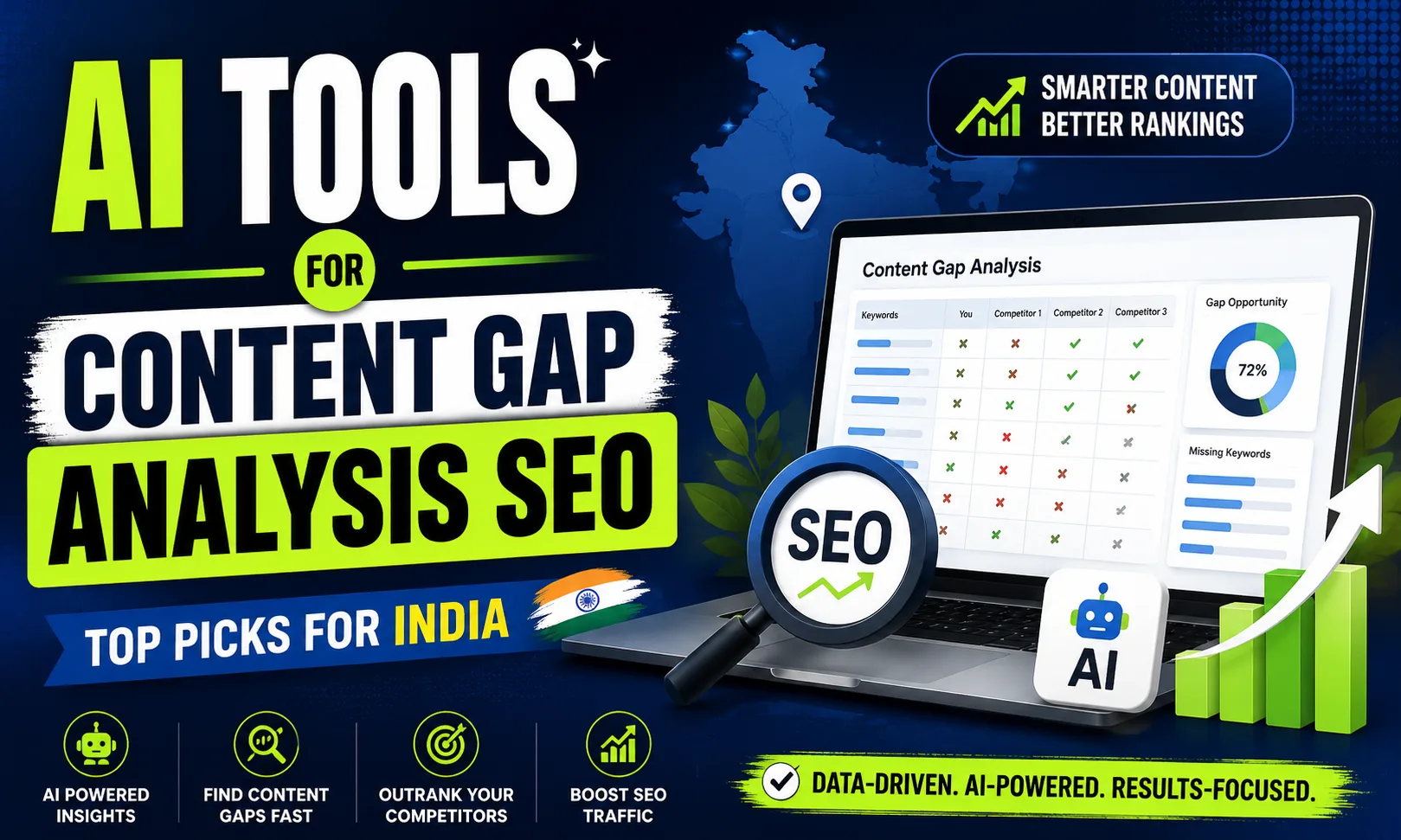
A robust AI-driven gap analysis process involves several interconnected components that work together to produce actionable insights. Understanding these elements helps you evaluate tools and implement the methodology effectively.
Competitor Identification and Selection
The first step involves identifying your true online competitors, which may differ from your business competitors. AI tools analyze search engine results pages for your target keywords and identify domains that consistently rank for relevant terms. These tools also consider factors like domain authority, content freshness, and topical overlap to build a relevant competitor set. Typically, you should analyze between five and ten competitors for meaningful insights, though AI tools can handle larger sets if needed.
Keyword and Topic Clustering
Once competitors are identified, AI algorithms extract all keywords and topics their pages rank for. Advanced natural language processing groups these keywords into semantic clusters based on shared intent and meaning. For example, keywords like “best running shoes,” “top running sneakers,” and “running shoe reviews” would be clustered together because they share the same user intent. This clustering prevents redundant content creation and ensures comprehensive topic coverage.
Content Quality and Depth Assessment
Modern AI gap analysis tools evaluate the quality of existing content, not just its existence. They assess word count, readability, use of multimedia, internal linking structure, and engagement metrics. This analysis reveals whether your competitors’ content is thin and easily surpassable or comprehensive and authoritative. The output helps you decide whether to create new content or significantly update existing pages to close the gap.
Opportunity Prioritization
Not all gaps are worth pursuing. AI tools assign scores to each identified opportunity based on search volume, keyword difficulty, relevance to your business, and estimated traffic potential. This prioritization ensures that content teams focus on gaps that offer the best return on investment. Some tools also incorporate predictive analytics to estimate the likelihood of ranking for specific keywords based on your site’s current authority.
How to Perform AI SEO Content Gap Analysis: Step-by-Step Guide
Implementing AI SEO Content Gap Analysis requires a structured approach. The following steps outline a proven methodology that combines AI tool capabilities with strategic human oversight.
Step 1: Define Your Content Universe
Begin by mapping your existing content inventory. Export all your published pages, blog posts, and landing pages into a centralized database. Include metadata such as target keywords, publication dates, word counts, and current rankings. This baseline data is essential for identifying what you already cover and where your coverage is weak. AI tools can automate this inventory process by crawling your entire domain and extracting relevant information.
Step 2: Select and Configure Competitor Sets
Choose competitors that genuinely compete for your target audience’s attention. Use AI tools to discover competitors you might not have considered. Configure your analysis parameters, including geographic targeting, language settings, and search engine preferences. For local businesses, include local competitors; for e-commerce, include both direct product competitors and content-focused sites that rank for commercial keywords.
Step 3: Run the Gap Analysis
Execute the analysis using your chosen AI tool. Most tools provide a dashboard where you can view the results in various formats. The typical output includes a list of keywords your competitors rank for but you do not, a comparison of topical coverage across your sites, and content quality benchmarks. Some advanced tools also generate content briefs automatically, complete with suggested headings, questions to answer, and related entities to include.
Step 4: Analyze and Interpret Results
Raw data requires interpretation. Review the identified gaps and categorize them based on relevance to your business goals. Some gaps may be irrelevant to your products or services. Others may represent valuable opportunities. Look for patterns in the data, such as clusters of related keywords that suggest a broader topic you should cover comprehensively. Pay attention to gaps where your competitors have high rankings but relatively weak content, as these represent quick wins.
Step 5: Create a Content Roadmap
Transform your analysis into an actionable content plan. Prioritize opportunities based on the scores provided by your AI tool, but apply your business judgment as well. Consider factors like sales funnel position, seasonality, and resource availability. Create a content calendar that schedules new content creation and existing content updates. Assign clear ownership and deadlines to ensure execution.
Step 6: Implement and Monitor
Execute your content plan, ensuring that each piece follows SEO best practices and provides genuine value to readers. After publication, monitor your rankings and organic traffic. AI tools can track your progress and alert you to new gaps as your competitors publish fresh content. Continuous monitoring ensures that your content strategy remains competitive over time.
Top AI Tools for SEO Content Gap Analysis
Several powerful tools dominate the AI SEO Content Gap Analysis landscape. Each offers unique features and capabilities suited to different needs and budgets.
| Tool | Key Features | Best For | Pricing Model |
|---|---|---|---|
| Ahrefs Content Gap | Competitor keyword comparison, intersection analysis, difficulty scores | Comprehensive SEO professionals | Subscription-based |
| SEMrush Topic Research | AI-powered content briefs, semantic clustering, SERP analysis | Content marketers | Subscription-based |
| Surfer SEO | Content optimization scores, NLP entity extraction, competitor benchmarking | On-page optimization | Subscription-based |
| Clearscope | AI-driven content recommendations, real-time grading, keyword expansion | Enterprise content teams | Subscription-based |
| MarketMuse | Topical authority mapping, content inventory analysis, opportunity scoring | Large-scale content programs | Subscription-based |
| Frase.io | AI content generation, SERP analysis, question extraction | Small to medium businesses | Subscription-based |
When selecting a tool, consider your team’s technical expertise, the scale of your content operations, and your budget. Many tools offer free trials, allowing you to test their capabilities before committing. The best approach often involves combining multiple tools to leverage their respective strengths.
Benefits of AI SEO Content Gap Analysis
The advantages of implementing AI-driven gap analysis extend far beyond simple keyword discovery. Organizations that adopt this approach consistently report significant improvements in their organic search performance.
Accelerated Content Strategy Development
Manual gap analysis can take weeks, especially for large websites with extensive content libraries. AI tools compress this timeline dramatically, often delivering comprehensive results within hours. This speed enables content teams to respond quickly to market changes and competitor moves, maintaining a competitive edge.
Improved Resource Allocation
By identifying the highest-value opportunities, AI gap analysis ensures that content creation resources are directed toward projects with the greatest potential return. This eliminates the guesswork from content planning and reduces the risk of investing in topics that will not generate meaningful traffic or conversions.
Enhanced Topical Authority
Comprehensive coverage of topic clusters signals expertise to search engines. AI gap analysis helps you identify all the subtopics and related concepts you need to cover to establish authority in your niche. Over time, this comprehensive coverage improves your site’s overall relevance and ranking potential across a wide range of related queries.
Data-Driven Decision Making
AI tools provide quantitative data that supports strategic decisions. Instead of relying on intuition or anecdotal evidence, content teams can base their choices on search volume data, difficulty scores, and predictive performance metrics. This data-driven approach leads to more consistent and defensible content strategies.
Limitations and Challenges

While AI SEO Content Gap Analysis offers substantial benefits, it is not without limitations. Understanding these challenges helps you use the tools more effectively and avoid common pitfalls.
Data Accuracy and Freshness
AI tools rely on data from search engine crawls and third-party databases. This data can become outdated, particularly in fast-moving industries. Search volumes fluctuate, competitors publish new content, and algorithm updates change ranking dynamics. Regular re-analysis is necessary to maintain accurate insights.
Over-Reliance on Quantitative Metrics
AI tools excel at processing quantitative data but struggle with qualitative factors. They cannot fully assess brand relevance, audience preferences, or content quality nuances. Human judgment remains essential for interpreting results and making final decisions about which opportunities to pursue.
Competitor Blind Spots
Gap analysis focuses on what competitors are doing, which inherently limits your perspective. This approach may cause you to miss entirely new opportunities that no competitor has exploited yet. Combining gap analysis with original research and audience feedback helps overcome this limitation.
Implementation Costs
Premium AI SEO tools can be expensive, particularly for small businesses and individual content creators. The subscription costs, combined with the time required to learn and use these tools effectively, may outweigh the benefits for very small operations. Free or lower-cost alternatives exist but offer reduced functionality.
Common Mistakes to Avoid in AI Content Gap Analysis
Many organizations fail to realize the full potential of AI gap analysis due to common implementation errors. Recognizing these mistakes helps you avoid them and achieve better results.
Analyzing Too Many Competitors
Including too many competitors in your analysis dilutes the results and makes prioritization difficult. Focus on a manageable set of five to ten competitors that genuinely represent your competitive landscape. Quality of analysis matters more than quantity of data.
Ignoring Search Intent
Not all keywords with high search volume are worth targeting. Some may have commercial intent that does not align with your offerings, while others may be informational and unlikely to convert. Always evaluate the search intent behind each identified gap before committing resources.
Creating Thin Content to Fill Gaps
Rushing to fill gaps with low-quality content damages your site’s reputation and ranking potential. Each piece of content should provide genuine value, comprehensive information, and a positive user experience. It is better to create fewer, higher-quality pieces than many mediocre ones.
Neglecting Existing Content Updates
Gap analysis often reveals that existing content is outdated or incomplete. Updating and improving current pages can be more efficient than creating new content from scratch. Prioritize content refreshes alongside new content creation to maximize your return on investment.
Failing to Monitor Progress
Content gap analysis is not a one-time activity. Competitors continuously publish new content, and search trends evolve. Establish a regular cadence for re-running your analysis and monitoring your rankings. Monthly or quarterly reviews keep your strategy current and effective.
Practical Applications Across Different Industries
AI SEO Content Gap Analysis delivers value across diverse sectors, though the specific application varies by industry context.
E-Commerce and Retail
Online retailers use gap analysis to identify product-related keywords, comparison terms, and buying guides that competitors rank for. This analysis informs category page optimization, product description enhancements, and the creation of supporting content like size guides and material explanations. AI tools also help identify gaps in long-tail keywords that indicate high purchase intent.
SaaS and Technology
Software companies leverage gap analysis to map out feature-related keywords, integration queries, and use-case content. This approach helps them create comprehensive documentation, tutorial content, and comparison pages that address user questions throughout the customer journey. AI tools also identify competitor weaknesses in technical content that can be exploited.
Healthcare and Medical
Medical content requires exceptional accuracy and authority. Gap analysis helps healthcare organizations identify patient questions and concerns that are not adequately addressed by existing content. AI tools assist in structuring content to meet Google’s strict quality standards for YMYL topics, ensuring that information is accurate, well-sourced, and trustworthy.
Finance and Insurance
Financial services firms use gap analysis to identify educational content opportunities, product comparison queries, and regulatory information needs. The analysis helps them build topical authority in a highly competitive and regulated space. AI tools also flag content that may be outdated due to regulatory changes or market shifts.
Integrating AI Gap Analysis with Your Overall SEO Strategy
AI SEO Content Gap Analysis works best when integrated into a broader, holistic SEO strategy. The insights gained from gap analysis should inform not just content creation but also technical SEO, link building, and user experience optimization.
Content identified through gap analysis should be designed to attract natural backlinks. Comprehensive, data-rich content that fills genuine information gaps tends to earn links from other websites. Coordinate your gap analysis findings with your link-building outreach to maximize the impact of your content investments.
Technical SEO considerations also come into play. New content should be properly structured with clean URLs, appropriate internal linking, and fast loading times. Ensure that your site architecture supports the expansion of your content library without creating crawlability issues.
User experience remains paramount. Content created to fill gaps must be genuinely useful and easy to consume. Use clear headings, bullet points, images, and tables to enhance readability. Monitor user engagement metrics to identify content that may need further optimization.
Important Notes for Successful Implementation
Several key considerations can significantly enhance the effectiveness of your AI SEO Content Gap Analysis efforts.
- Always combine AI insights with human expertise. AI tools provide data, but experienced content strategists provide context and judgment.
- Focus on quality over quantity. Filling gaps with exceptional content outperforms creating many mediocre pieces.
- Track your results meticulously. Document which gaps you address and measure the impact on rankings and traffic over time.
- Stay updated on AI tool capabilities. The technology evolves rapidly, and new features can provide competitive advantages.
- Align gap analysis with business goals. Not every traffic opportunity supports your revenue objectives. Prioritize gaps that align with your commercial strategy.
- Consider user feedback and search queries from your own analytics. These provide insights that competitor analysis cannot reveal.
Frequently Asked Questions
What is the difference between keyword research and content gap analysis?
Keyword research focuses on identifying keywords that are relevant to your business and have sufficient search volume to be worth targeting. Content gap analysis specifically compares your existing content against competitors to identify what you are missing. While keyword research is broad, gap analysis is comparative and competitive in nature.
How often should I perform AI SEO Content Gap Analysis?
Most experts recommend conducting a comprehensive gap analysis quarterly. This frequency balances the need for current data with the practical constraints of content production. However, you should also run targeted analyses when you launch new products, enter new markets, or notice significant competitor activity.
Can AI SEO Content Gap Analysis work for small websites?
Yes, the methodology works for websites of all sizes. Small websites may need to focus on a smaller competitor set and prioritize long-tail opportunities where competition is lower. Many AI tools offer tiered pricing that makes them accessible to smaller operations.
How long does it take to see results from content gap analysis?
Results depend on several factors, including your site’s authority, the competitiveness of your niche, and the quality of content you produce. Some improvements may appear within weeks, particularly for low-competition keywords. More significant gains typically materialize over three to six months as search engines crawl and index your new content.
What metrics should I track to measure the success of gap analysis?
Track organic traffic growth, keyword rankings for targeted terms, conversion rates from organic visitors, and the number of new keywords your site ranks for. Also monitor engagement metrics like time on page and bounce rate to assess content quality. Compare these metrics against your baseline data to quantify the impact of your gap-filling efforts.
Is AI SEO Content Gap Analysis worth the investment?
For most organizations with active content marketing programs, the answer is yes. The time savings alone often justify the cost of AI tools. More importantly, the strategic insights provided by gap analysis help ensure that your content investments generate meaningful returns. The alternative, creating content without competitive analysis, often results in wasted resources and missed opportunities.
Conclusion
AI SEO Content Gap Analysis has become an indispensable tool for modern content marketers and SEO professionals. The ability to rapidly identify competitive opportunities, prioritize high-value topics, and create comprehensive content that satisfies user intent provides a significant competitive advantage. As search engines continue to evolve and competition intensifies, the organizations that leverage AI-driven insights will be best positioned to achieve and maintain top rankings.
The key to success lies in combining the analytical power of AI with human creativity and strategic judgment. Use AI tools to process data and identify opportunities, but rely on your expertise to create content that genuinely serves your audience. By adopting a systematic approach to gap analysis, integrating it into your broader SEO strategy, and continuously monitoring your progress, you can build a content library that drives sustainable organic growth and establishes your brand as an authority in your industry.
Start implementing AI SEO Content Gap Analysis today to uncover the opportunities hiding in your competitive landscape. The insights you gain will transform your content strategy and deliver measurable improvements in search visibility, traffic, and conversions.
Xem thêm:
- AI SEO Ranking Improvements: The Complete Guide to Future-Proofing Your Search Strategy
- AI SEO JSON-LD Generator: The Complete Guide to Automated Structured Data
- AI SEO for Digital Agencies: The Complete Playbook for Scaling Client Results
- AI SEO Navigation: The Complete Guide to Smarter Site Architecture in 2025
- AI Headline Generator: Craft High-Converting Titles in Seconds
Bài viết cùng chủ đề:

AI SEO SEO Automation with Make: The Complete Workflow Guide

AI SEO SEO Automation with Zapier: The Complete Workflow Guide

AI SEO SEO Automation with n8n: The Complete Workflow Guide
AI SEO SEO Automation with Gemini: The Complete Guide to Scaling Organic Growth

AI SEO SEO Automation with Claude: The Complete Guide to Scaling Content in 2025

AI SEO SEO Automation with ChatGPT: The Complete Playbook for 2025

AI SEO & SEO Automation for Affiliate Sites: The 2025 Playbook for Passive Income Growth
AI SEO & SEO Automation for Bloggers: The Complete Guide to Scaling Your Content

AI SEO & SEO Automation for Agencies: The Complete 2025 Playbook

AI SEO and SEO Automation for Ecommerce: The Complete Playbook for 2025

AI SEO & SEO Automation for WordPress: The Complete Playbook for 2025
AI SEO SEO Automation Strategy: The Complete Playbook for 2025

Mastering the AI SEO SEO Automation Process: A Complete Guide to Scaling Organic Growth
AI SEO SEO Automation System: The Complete Guide to Scaling Organic Growth in 2025
AI SEO SEO Automation Platform: The Complete Guide to Scaling Organic Growth in 2025
AI SEO SEO Automation Software: The Complete Guide to Scaling Organic Growth in 2025















