
No products in the cart.
AI SEO Competitor Content Analysis: The Complete Playbook for 2025

10
Aug
Aug
AI SEO competitor content analysis has transformed how digital marketers approach search rankings. Instead of manually auditing dozens of pages, modern teams leverage machine learning to uncover content gaps, keyword opportunities, and structural weaknesses in rival websites. This comprehensive guide explains how to use AI-powered tools and frameworks to dissect competitor strategies, reverse-engineer their success, and build content that outperforms them in search results.
What Is AI SEO Competitor Content Analysis?
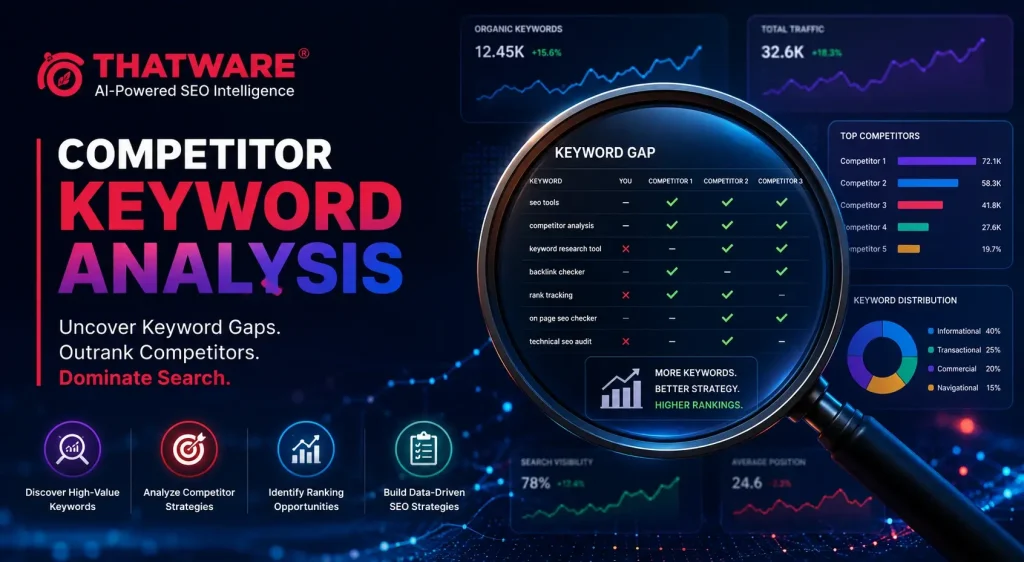
AI SEO competitor content analysis is the process of using artificial intelligence algorithms to systematically evaluate the content strategies of competing websites. It goes beyond simple keyword matching. AI models analyze semantic relevance, entity usage, content depth, readability patterns, internal linking structures, and even user engagement signals across thousands of pages simultaneously.
Traditional competitor analysis relied on manual spreadsheet comparisons and gut feeling. AI-driven analysis processes data at scale, identifying patterns that human analysts would miss. The result is a data-backed roadmap for creating content that satisfies both search engine algorithms and user intent more effectively than existing competitor pages.
Why AI-Powered Competitor Analysis Matters for SEO
Search engines have evolved from keyword matching to understanding complex user intent. Google’s algorithms now prioritize topical authority, comprehensive coverage, and genuine helpfulness. AI SEO competitor content analysis helps you understand exactly what Google considers authoritative in your niche.
When you analyze competitors with AI, you gain several critical advantages. You discover which topics they cover that you miss. You identify their weakest pages that rank despite thin content. You learn their internal linking patterns that distribute authority effectively. Most importantly, you see the semantic entities and related concepts they include, which helps you build more complete topical clusters.
The Shift from Manual Audits to Machine Learning
Manual audits typically involve checking word counts, meta descriptions, and basic keyword usage. AI systems go deeper. They analyze natural language processing (NLP) signals, named entity recognition (NER), and latent semantic indexing (LSI) relationships. This means you can see not just what keywords competitors target, but how they structure their arguments, what questions they answer, and which subtopics they connect.
Machine learning models also track content freshness and update frequency. They monitor how competitors respond to algorithm updates and industry changes. This temporal analysis helps you predict when to refresh your own content to maintain or gain rankings.
Core Components of AI SEO Competitor Content Analysis

Understanding the components of AI-driven competitor analysis helps you choose the right tools and interpret their outputs correctly. Each component addresses a different aspect of content performance.
Semantic Keyword Gap Analysis
AI tools extract thousands of keywords from competitor pages, then cluster them by topic and intent. This reveals not just the exact-match keywords but the long-tail variations and question-based queries that drive traffic. The semantic layer shows you related concepts that Google associates with your target topic, even if competitors never use those exact words.
Content Structure and Depth Assessment
Algorithms evaluate heading hierarchies, paragraph lengths, list usage, and multimedia integration. They measure content depth by analyzing word count relative to topic complexity. AI can determine whether a competitor’s 2,000-word article genuinely covers the topic or simply pads with fluff. This helps you create content that is appropriately comprehensive without unnecessary verbosity.
Entity and Topic Modeling
AI systems identify the key entities (people, places, products, concepts) mentioned in competitor content. They map the relationships between these entities to build a topic graph. This graph reveals which secondary topics you need to cover to establish complete topical authority. For example, an article about “coffee brewing” might need entities like “water temperature,” “grind size,” “extraction time,” and “brew ratio” to rank well.
User Intent Classification
Machine learning models classify competitor pages by search intent: informational, navigational, commercial, or transactional. This classification helps you understand which content formats work for each stage of the buyer journey. You can then align your content strategy to target the intents that offer the highest conversion potential.
How to Perform AI SEO Competitor Content Analysis: Step-by-Step
Executing a successful AI-driven competitor analysis requires a structured approach. Follow these steps to build a repeatable process that delivers actionable insights.
Step 1: Identify Your True Competitors
Start by listing your organic search competitors, not just business rivals. Use tools like Ahrefs, Semrush, or SE Ranking to see which domains rank for your target keywords. Filter by relevance and domain authority. Your true competitors are the ones who consistently appear in the top 10 for your most valuable queries, regardless of whether they sell the same products.
Create a competitor set of 5 to 10 domains. Include a mix of high-authority industry leaders and smaller niche players who rank well for specific long-tail keywords. This diversity gives you a complete picture of what works at different scale levels.
Step 2: Crawl and Collect Competitor Content Data
Use AI-powered crawlers like Screaming Frog with machine learning plugins or dedicated tools like ContentKing to collect all URLs from competitor sites. Focus on their blog sections, resource centers, and service pages. For each URL, collect the title tag, meta description, H1-H6 headings, body text, image alt attributes, internal links, and external links.
Store this data in a structured format. Many advanced SEO platforms automatically store and organize this information. If you are working with raw data, use a spreadsheet or database to maintain consistency across multiple analysis rounds.
Step 3: Run AI Content Gap Analysis
Upload your collected data into an AI analysis tool. Platforms like Frase, Surfer SEO, and MarketMuse excel at this task. These tools compare your content library against your competitors’ libraries. They generate a list of topics and subtopics that your competitors cover but you do not.
Prioritize these gaps by search volume, relevance to your business goals, and the authority of the competitors ranking for them. Focus first on gaps where multiple competitors have high-ranking content, as this signals strong user demand and clear search intent.
Step 4: Analyze Content Quality Metrics
AI tools score competitor content on readability, comprehensiveness, and topical relevance. Look for patterns in the top-ranking pages. Do they use more examples? Do they include statistics? Are they written at a specific grade level? Do they use short paragraphs or long-form sections?
Pay special attention to the use of structured data. AI can detect if competitors use FAQ schema, HowTo schema, or Article schema. These markup elements can influence rich snippets and featured snippet eligibility, giving competitors an edge in click-through rates.
Step 5: Evaluate Internal Linking Strategies
AI analysis reveals how competitors link between their own pages. Identify their pillar pages and cluster pages. See which pages receive the most internal links and anchor text patterns. This shows you their topical hierarchy and which pages they consider most important.
Use this information to design your own internal linking structure. Ensure your cornerstone content receives the most internal links. Use descriptive, keyword-rich anchor text that helps search engines understand the context of linked pages.
Step 6: Monitor Content Performance and Updates
Set up ongoing monitoring of your competitor set. AI tools can track when competitors publish new content, update existing pages, or change their internal linking structures. They can also estimate traffic changes based on ranking fluctuations.
This continuous monitoring helps you react quickly to competitor moves. If a competitor publishes a comprehensive guide that outranks your content, you know immediately and can plan a response. If they update a page and lose rankings, you can learn from their mistakes.
Top AI Tools for Competitor Content Analysis
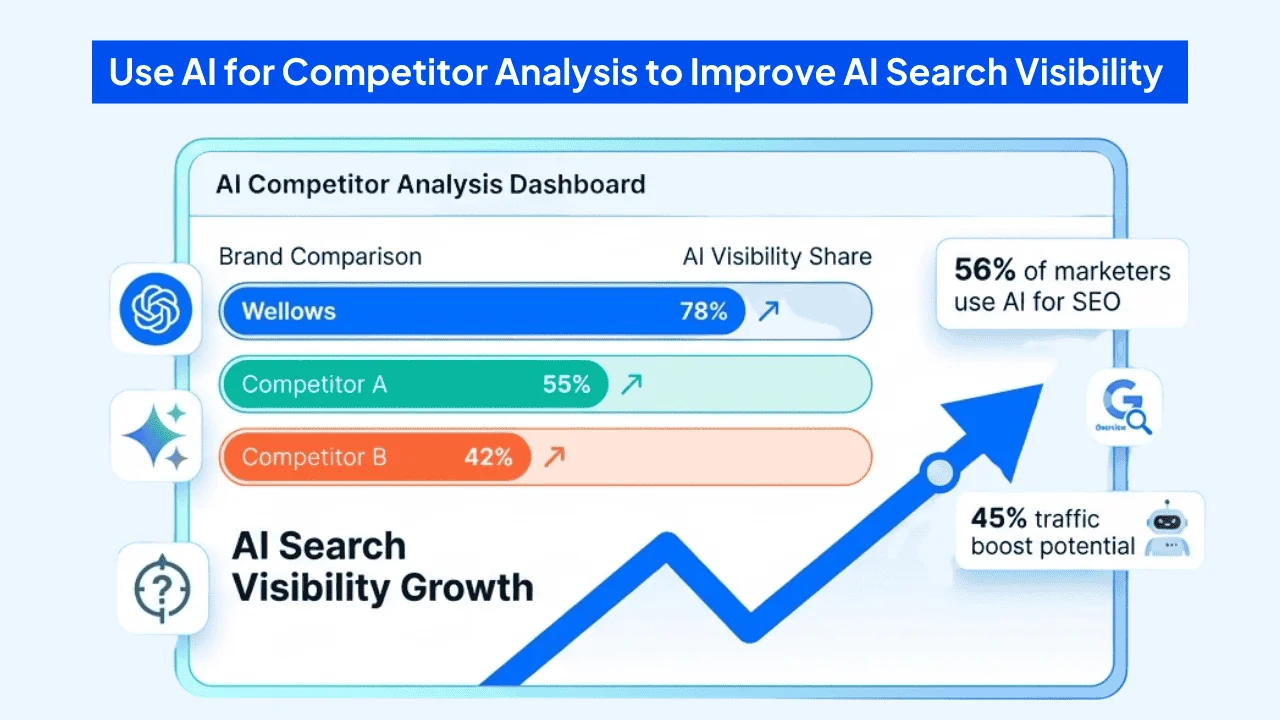
Several powerful tools dominate the AI SEO competitor analysis space. Each offers unique features suited to different needs and budgets.
| Tool | Key Features | Best For |
|---|---|---|
| Semrush | Content Audit, Keyword Gap, Topic Research, AI Writing Assistant | Comprehensive SEO suites and competitive intelligence |
| Ahrefs | Content Gap, Top Pages, Keyword Explorer, Site Audit | Backlink analysis and keyword research |
| Frase | Content Briefs, SERP Analysis, NLP Keyword Extraction | Creating data-driven content briefs quickly |
| Surfer SEO | Content Editor, SERP Analyzer, Audit | On-page optimization and content scoring |
| MarketMuse | Content Inventory, Optimization, Research | Enterprise-level content strategy and topical authority |
| Clearscope | Content Briefs, Keyword Discovery, Content Scoring | High-quality content optimization for agencies |
Choose tools that integrate with your existing workflow. Many platforms offer browser extensions and CMS integrations that streamline the process from research to publication.
Benefits of AI SEO Competitor Content Analysis
The advantages of implementing AI-driven competitor analysis extend beyond simple ranking improvements. Organizations that adopt this approach see measurable gains across multiple dimensions.
Faster Content Production
AI-generated content briefs eliminate the guesswork from writing. Instead of spending hours researching a topic, writers receive a detailed outline with recommended keywords, questions to answer, and structural guidelines. This reduces production time by up to 50% while improving content quality.
Higher Search Visibility
By targeting the exact gaps and weaknesses in competitor strategies, you create content that fills unmet user needs. Search engines reward this relevance with higher rankings. Many businesses report significant traffic increases within 60 to 90 days of implementing AI-driven analysis.
Improved Content ROI
AI analysis ensures you invest resources in topics with proven demand. You avoid creating content that no one searches for. You also identify opportunities to update existing underperforming pages instead of creating new ones from scratch, maximizing the value of your existing assets.
Competitive Agility
Continuous monitoring means you never fall behind. When competitors change strategies, you know immediately. This allows you to adapt your content plan proactively rather than reactively, maintaining your competitive edge in dynamic markets.
Limitations and Challenges
AI SEO competitor content analysis is not a magic bullet. Understanding its limitations helps you use it effectively without over-relying on flawed outputs.
Data Accuracy Issues
AI tools rely on crawled data that may be incomplete or outdated. Some competitor pages may be blocked by robots.txt or require JavaScript rendering that crawlers cannot execute. Always validate AI-generated insights with manual spot checks before making major strategic decisions.
Over-Optimization Risks
Following AI recommendations too literally can lead to over-optimized content that reads unnaturally. Search engines increasingly penalize content that appears machine-generated or stuffed with keywords. Use AI outputs as guidance, not gospel. Always prioritize human readability and genuine value.
Context Blindness
AI models lack understanding of your specific business context, brand voice, or unique value proposition. They analyze competitors in isolation, missing nuances like pricing strategies, target demographics, or regional differences. Combine AI insights with your own market knowledge for the best results.
Common Mistakes in AI Competitor Analysis
Many teams make avoidable errors when implementing AI-driven competitor analysis. Recognizing these pitfalls helps you build a more effective process.
Analyzing the Wrong Competitors
Focusing on business competitors rather than search competitors leads to wasted effort. A company that sells the same products but targets different keywords or audiences is not your SEO competitor. Always base your competitor set on actual search engine results pages (SERPs).
Copying Content Instead of Improving It
AI analysis reveals what competitors do, but copying their structure and topics verbatim creates duplicate content issues. The goal is to outperform them, not replicate them. Add unique data, original research, better examples, and more comprehensive coverage to genuinely surpass existing content.
Ignoring User Intent
Some analysts focus solely on keywords and word counts, missing the underlying user intent. A page that ranks for “best running shoes” might target buyers ready to purchase, while another targets researchers comparing features. Align your content with the specific intent that matches your conversion goals.
Neglecting Content Updates
AI analysis is not a one-time project. Search landscapes change constantly. Competitors publish new content, algorithms update, and user behavior shifts. Schedule regular analysis at least quarterly to stay current and maintain your competitive position.
Practical Application: Building a Winning Content Strategy

Translating AI insights into a concrete content plan requires a systematic approach. Follow this framework to turn analysis into rankings.
Create Data-Driven Content Briefs
Use your AI tools to generate comprehensive briefs for each target topic. Include the recommended word count, primary and secondary keywords, entities to mention, questions to answer, and structural elements like tables or lists. Share these briefs with your writers to ensure consistency and completeness.
Prioritize Topical Clusters
Group your target keywords into clusters around core topics. Build a pillar page for each cluster that provides a broad overview. Create cluster content that dives deep into specific subtopics. Interlink all pages within the cluster to establish topical authority and distribute link equity.
Leverage Featured Snippet Opportunities
AI analysis identifies which competitor pages hold featured snippets. Analyze the format of these snippets. Are they paragraphs, lists, or tables? Create content that directly answers the target query in a format optimized for snippet capture. Use clear, concise answers within the first 100 words of your content.
Monitor and Iterate
After publishing, track your rankings and traffic. Use AI tools to compare your performance against competitors. Identify pages that underperform and update them with additional information, better examples, or improved structure. Continuous iteration is the key to long-term SEO success.
Important Notes for Effective Implementation
Several best practices ensure your AI SEO competitor content analysis delivers maximum value.
- Combine AI insights with human expertise. AI identifies patterns, but experienced marketers understand the strategic implications.
- Focus on quality over quantity. Creating 10 excellent pages beats publishing 50 mediocre ones.
- Maintain a consistent publishing schedule. Search engines favor regularly updated sites.
- Track your own performance metrics to measure the ROI of your analysis efforts.
- Stay informed about AI and SEO trends to adapt your approach as technology evolves.
Frequently Asked Questions
How often should I run AI SEO competitor content analysis?
Run a comprehensive analysis quarterly to track major shifts. Supplement this with monthly monitoring of your top 10 competitors for new content and ranking changes. Weekly checks are useful in highly competitive niches where strategies change rapidly.
Can AI SEO competitor content analysis replace human SEO experts?
No. AI tools provide data and insights, but human experts interpret these findings within the context of business goals, brand identity, and market conditions. The best results come from combining AI efficiency with human strategic thinking.
What is the difference between keyword gap analysis and AI competitor analysis?
Keyword gap analysis focuses specifically on identifying keywords competitors rank for that you do not. AI competitor analysis is broader, examining content quality, structure, entities, user intent, and linking patterns. AI analysis includes keyword gap analysis as one component.
How long does it take to see results from AI-driven competitor analysis?
Initial insights are available immediately after running the analysis. However, seeing ranking improvements requires time for search engines to crawl and index your new or updated content. Expect meaningful results within 60 to 90 days, depending on your site’s authority and the competitiveness of your niche.
Is AI SEO competitor content analysis suitable for small businesses?
Yes. Many AI tools offer affordable plans suitable for small businesses. Even free tools like Google Search Console and Google Trends provide basic competitive insights. Small businesses can start with limited competitor sets and expand as their budgets grow.
Conclusion
AI SEO competitor content analysis represents a fundamental shift in how digital marketers approach search optimization. By leveraging machine learning to understand competitor strategies at scale, you gain actionable insights that drive higher rankings, more traffic, and better conversion rates. The key to success lies in combining AI efficiency with human judgment, focusing on user intent, and continuously iterating based on performance data.
Start by identifying your true search competitors, selecting the right AI tools, and building a repeatable analysis process. Use the insights to create content that genuinely outperforms existing pages through superior depth, relevance, and user experience. With consistent effort and strategic application, AI-driven competitor analysis becomes your most powerful weapon in the ongoing battle for search visibility.
Xem thêm:
- AI SEO Schema Markup Generator: The Complete Guide to Automated Structured Data
- AI SEO Experience Optimization: The Complete Guide to Boosting Engagement and Rankings
- AI Competitor Analysis: Master Market Intelligence With Automated Precision
- AI SEO AI Overview Sources: The Complete Guide to Earning Visibility in Google’s AI Search
- Google AI Mode SEO: A Complete Guide to Optimizing for Google’s AI‑Powered Search Shift
Bài viết cùng chủ đề:

AI SEO SEO Automation with Make: The Complete Workflow Guide

AI SEO SEO Automation with Zapier: The Complete Workflow Guide

AI SEO SEO Automation with n8n: The Complete Workflow Guide
AI SEO SEO Automation with Gemini: The Complete Guide to Scaling Organic Growth

AI SEO SEO Automation with Claude: The Complete Guide to Scaling Content in 2025

AI SEO SEO Automation with ChatGPT: The Complete Playbook for 2025

AI SEO & SEO Automation for Affiliate Sites: The 2025 Playbook for Passive Income Growth
AI SEO & SEO Automation for Bloggers: The Complete Guide to Scaling Your Content

AI SEO & SEO Automation for Agencies: The Complete 2025 Playbook

AI SEO and SEO Automation for Ecommerce: The Complete Playbook for 2025

AI SEO & SEO Automation for WordPress: The Complete Playbook for 2025
AI SEO SEO Automation Strategy: The Complete Playbook for 2025

Mastering the AI SEO SEO Automation Process: A Complete Guide to Scaling Organic Growth
AI SEO SEO Automation System: The Complete Guide to Scaling Organic Growth in 2025
AI SEO SEO Automation Platform: The Complete Guide to Scaling Organic Growth in 2025
AI SEO SEO Automation Software: The Complete Guide to Scaling Organic Growth in 2025















