
No products in the cart.
AI SEO SEO Automation Workflow: The Complete Guide to Scaling Organic Growth in 2025
10
Aug
Aug
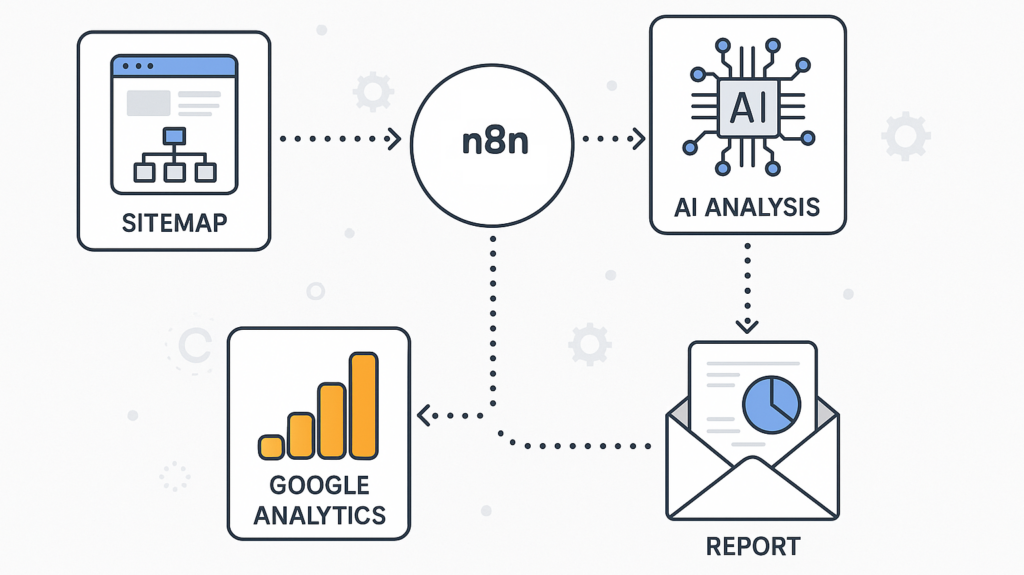
The digital marketing landscape has shifted dramatically. Teams that once relied on manual keyword research, spreadsheet tracking, and repetitive reporting are now adopting an AI SEO SEO Automation Workflow to reclaim hundreds of hours each month. This approach combines artificial intelligence with automated processes to handle the heavy lifting of technical audits, content optimization, and rank tracking. By implementing a structured workflow, businesses can scale their organic visibility without proportionally increasing their headcount or budget. This guide breaks down the exact components, tools, and step-by-step processes needed to build a system that works while you sleep.
What is an AI SEO Automation Workflow?
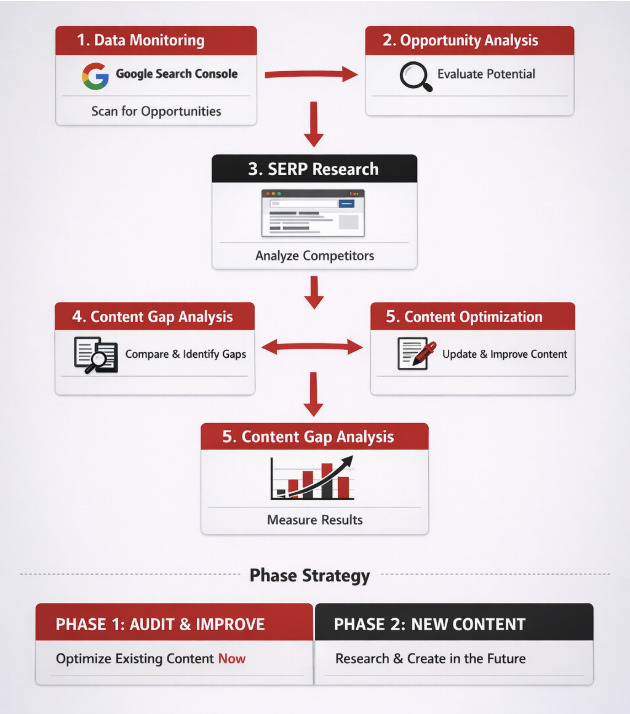
An AI SEO Automation Workflow is a systematic sequence of tasks that leverages machine learning algorithms and software integrations to execute search engine optimization activities with minimal human intervention. It moves beyond simple scheduling tools. Instead, it uses AI to make decisions—like which keywords to target, which pages to update, or which backlinks to pursue—based on real-time data patterns.
The core difference between traditional SEO and an automated workflow lies in the feedback loop. Traditional methods involve a human discovering a drop in rankings, analyzing the cause, and implementing a fix. An automated system detects the drop, runs a diagnostic, suggests a fix, and in some cases, implements it automatically. This shift from reactive to proactive management is what makes modern SEO scalable.
The Core Components of a Modern Automation Stack
To build a functional workflow, you need to understand the three pillars that support it: data ingestion, AI processing, and action execution. Each component plays a distinct role in the ecosystem.
- Data Ingestion Layer: This involves pulling data from Google Search Console, Google Analytics, CRM systems, and crawling tools like Screaming Frog or Sitebulb. APIs connect these sources to your central hub.
- AI Processing Engine: This is where natural language processing (NLP) models analyze content gaps, predict click-through rates, and classify search intent. Tools like OpenAI’s GPT models or specialized SEO platforms like Surfer SEO and Clearscope fall into this category.
- Automation Orchestrator: This is the glue that connects everything. Platforms like Zapier, Make (formerly Integromat), or custom Python scripts trigger actions based on AI outputs. For example, if the AI detects a thin content page, the orchestrator creates a task in Asana for a writer.
- Trigger: A page drops from position 5 to position 15 in Google Search Console.
- AI Action: The AI analyzes the page content against the current top 3 competitors.
- Automated Action: The system generates a list of missing keywords and sends a notification to the content manager with a draft update.
Why Your Business Needs an AI SEO Automation Workflow
The volume of data generated by a single website is overwhelming. A site with 10,000 pages generates millions of data points daily regarding impressions, clicks, and user behavior. Manually analyzing this is impossible. An automated workflow provides several distinct advantages that directly impact the bottom line.
Eliminating Repetitive Manual Tasks
Consider the time spent on generating weekly PDF reports. A workflow can compile these automatically, email them to stakeholders, and highlight anomalies using AI anomaly detection. Similarly, checking for broken links or duplicate meta descriptions can be automated to run nightly, with alerts sent only when issues are found. This frees up senior strategists to focus on creative ideation and high-level link building.
Accelerating Content Production Cycles
AI does not replace writers, but it supercharges them. An automated workflow can generate a content brief in seconds. It analyzes the top 10 ranking pages for a keyword, extracts the entities they cover, suggests a word count, and even drafts an outline. The writer then focuses on adding unique insights and experience, cutting production time by up to 50%.
Improving Accuracy and Reducing Human Error
When you manually update 500 meta descriptions, mistakes happen. You might copy the wrong URL or misspell a keyword. Automation ensures consistency. The AI applies the same rules to every page, ensuring that every title tag is within the pixel limit and every alt text is descriptive. This consistency is critical for large enterprise sites.
How to Build an AI SEO Automation Workflow: Step-by-Step Guide
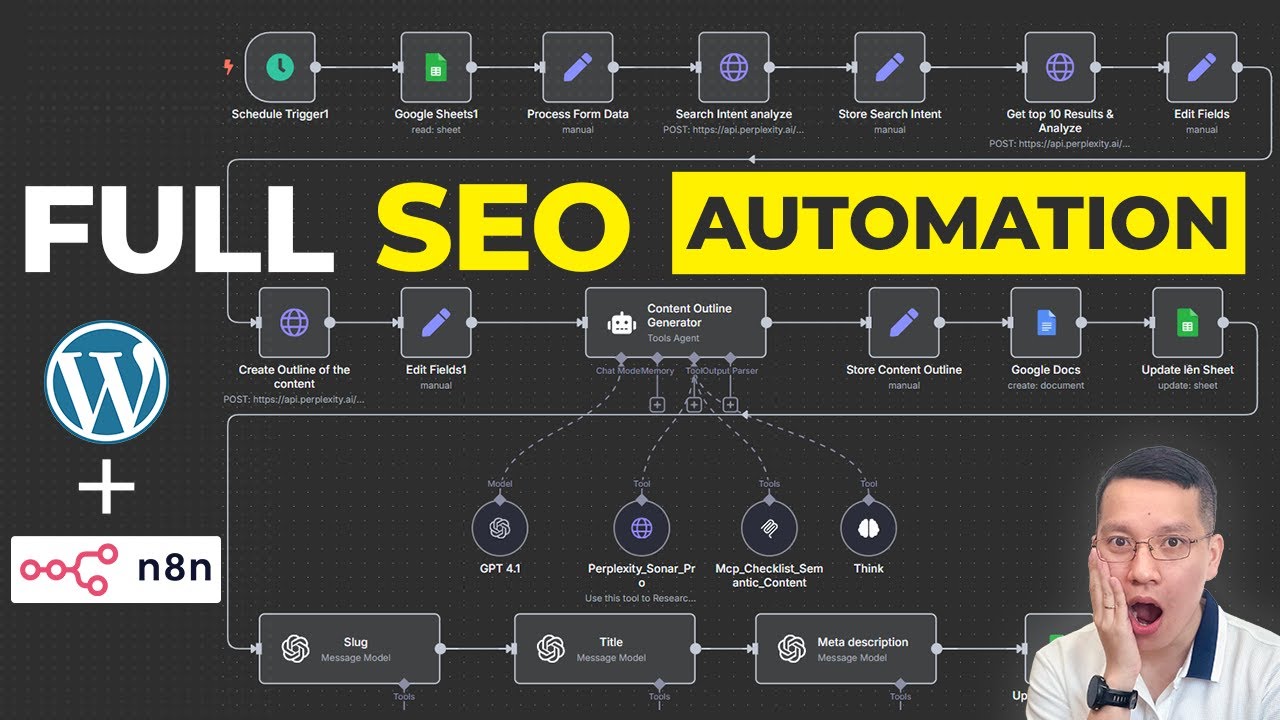
Building this system requires a strategic approach. You cannot simply buy a tool and expect results. You must map out your processes first.
Step 1: Audit Your Current SEO Processes
List every task your team performs weekly. Categorize them into three buckets: repetitive, analytical, and creative. Repetitive tasks like rank checking and log file analysis are prime candidates for automation. Analytical tasks like competitor gap analysis can be assisted by AI. Creative tasks like writing thought leadership pieces should remain human-led but AI-assisted.
Step 2: Select the Right AI Tools and Integrations
T You need a stack. For content optimization, tools like Frase or MarketMuse are excellent. For technical audits, Sitebulb offers automation features. For rank tracking, tools like AccuRanker or Ahrefs provide APIs. The key is to ensure these tools can communicate. Check if they have native integrations with Zapier or if they offer robust APIs for custom development.
Step 3: Define Your Trigger Events and Actions
Automation requires “If-This-Then-That” logic. For example:
Defining these triggers clearly prevents the system from making unwanted changes. You should start with “suggest” mode before moving to “auto-implement” mode.
Step 4: Implement a Feedback Loop for Continuous Learning
The workflow is not a set-and-forget system. You must review the AI’s suggestions weekly. Did the AI’s recommended content update actually improve rankings? If not, adjust the parameters. The more feedback you provide, the smarter the system becomes. This is where your expertise as an SEO professional adds value that the machine cannot replicate.
Key Use Cases for AI-Driven SEO Automation
Understanding the theoretical framework is good, but seeing practical applications helps solidify the concept. Here are the most impactful areas where this workflow delivers immediate ROI.
Automated Technical SEO Auditing and Issue Resolution
Technical SEO is the most logical starting point for automation. Crawling a website is already automated, but analyzing the crawl data is not. An AI workflow can prioritize issues based on impact. It can distinguish between a missing title tag on a 404 page (low priority) and a canonical tag error on a money page (high priority). Some advanced systems can even generate the correct code fix and submit it to your development team’s ticketing system.
Dynamic Content Optimization at Scale
For e-commerce sites with thousands of product pages, writing unique meta descriptions manually is impossible. An AI workflow can generate unique, compelling meta descriptions for every product based on its features, price, and reviews. It can also dynamically update internal links. When a new blog post is published, the AI can automatically find old, relevant posts and add contextual links to the new one, boosting its authority.
Intelligent Competitor Monitoring
Monitoring competitors is tedious but essential. An automated system can track competitor content updates, backlink acquisitions, and keyword ranking changes. When a competitor publishes a new page targeting a keyword you care about, the AI can alert you immediately. It can even summarize the competitor’s content strategy and suggest a counter-strategy for your team.
Benefits and Limitations of Automation in SEO
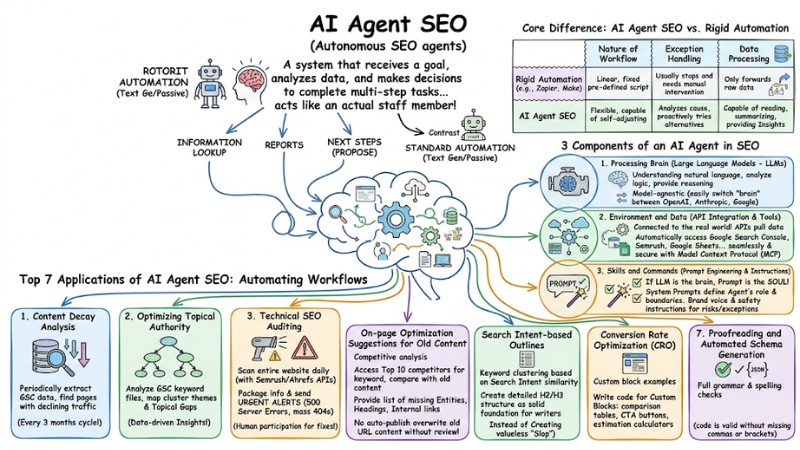
While the benefits are substantial, it is crucial to maintain a balanced perspective. Automation is a powerful tool, but it is not a silver bullet. Understanding its limitations prevents costly mistakes.
The Advantages: Speed, Scale, and Consistency
| Benefit | Impact on Business |
|---|---|
| Speed of Execution | Tasks that took hours are completed in minutes, allowing for rapid iteration. |
| Scalability | Manage 10,000 pages with the same effort as 100 pages. |
| Data-Driven Decisions | Eliminates gut-feel decisions, replacing them with algorithmic insights. |
| 24/7 Monitoring | Alerts are triggered instantly, even at 3 AM, minimizing downtime. |
The Limitations: Context and Creativity Gaps
AI lacks the ability to understand brand voice nuances or cultural context fully. An AI might generate a grammatically perfect meta description that sounds robotic and off-brand. Furthermore, automation cannot build relationships. Link building, for instance, relies on human outreach and rapport. You cannot automate a personalized email to a journalist effectively without risking spam filters. Finally, AI models can be wrong. They rely on historical data, which might not predict future algorithm updates accurately.
Common Mistakes to Avoid When Implementing Automation
Many businesses fail to see results from automation because they make critical errors during implementation. Avoiding these pitfalls will save you time and resources.
Mistake 1: Automating a Broken Process
If your current manual SEO process is flawed, automating it will only make you fail faster. You will be generating bad reports and poor content at scale. Fix the process first. Ensure your keyword mapping is correct and your site architecture is sound before introducing AI.
Mistake 2: Ignoring the Human Review Layer
Trusting the AI blindly is dangerous. You need a “human-in-the-loop” system. This means that while the AI can generate content drafts or suggest code changes, a human must approve them before they go live. This is especially critical for YMYL (Your Money or Your Life) topics like health and finance, where accuracy is paramount.
Mistake 3: Over-Automating Link Building
Using automated tools to spam forums or buy links violates Google’s Webmaster Guidelines. This can lead to a manual penalty. Use automation for prospecting (finding potential link partners) but keep the outreach and relationship building human. Personalization is the key to successful digital PR.
Important Notes on Data Privacy and Algorithm Updates
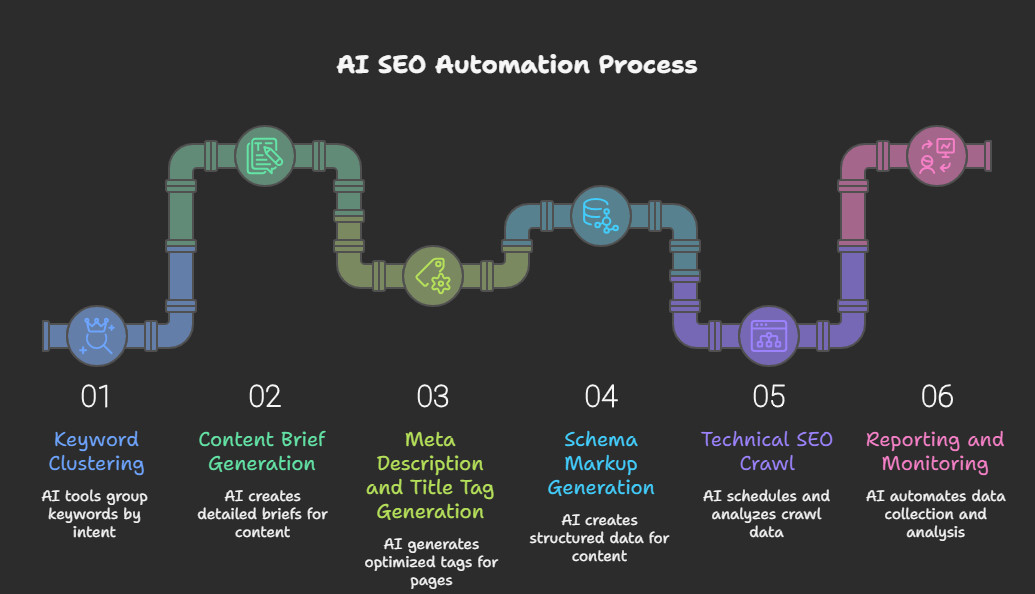
When using AI tools, you are sending your data to third-party servers. Ensure that your chosen tools are GDPR and CCPA compliant. Do not send sensitive customer data to AI models unless you are certain about their data retention policies. Additionally, remember that Google’s algorithms change frequently. An automation workflow that works today might not work tomorrow. You must monitor the quality of your automated outputs regularly, especially after major core updates.
Frequently Asked Questions (FAQ)
What is the difference between AI SEO and traditional SEO?
Traditional SEO relies heavily on manual analysis and human intuition to optimize websites. AI SEO uses machine learning algorithms to analyze vast datasets, predict outcomes, and automate repetitive tasks. The key difference is the speed and scale of data processing. AI can identify patterns that humans might miss, but it still requires human oversight for strategy and creative direction.
Will AI replace SEO professionals?
No, A The focus shifts from executing manual tasks to strategizing and managing AI systems. Professionals who learn to leverage A The human element remains crucial for understanding user intent, building relationships, and creating authentic content.
How much does it cost to implement an AI SEO workflow?
The cost varies significantly based on the tools you choose and the scale of your operations. A basic setup using Zapier, a content optimization tool, and Google Search Console API can cost around $200-$500 per month. Enterprise-level solutions with custom AI models and dedicated APIs can cost thousands of dollars per month. It is advisable to start small and scale up as you prove the ROI.
What are the best AI tools for SEO automation?
The best tools depend on your specific needs. For content optimization, Surfer SEO and Frase are popular. For technical audits, Sitebulb and Lumar (formerly Deepcrawl) offer strong automation features. For rank tracking and data analysis, Ahrefs and Semrush provide comprehensive APIs. For workflow orchestration, Zapier and Make are the industry standards.
How long does it take to see results from SEO automation?
Results depend on the current state of your website and the competitiveness of your niche. Technical fixes implemented through automation can show improvements in crawling and indexing within a few weeks. Content optimization results typically take 2-3 months to reflect in rankings. The compounding effect of consistent automation usually becomes visible within 6 months.
Conclusion: The Future of SEO is Automated Intelligence
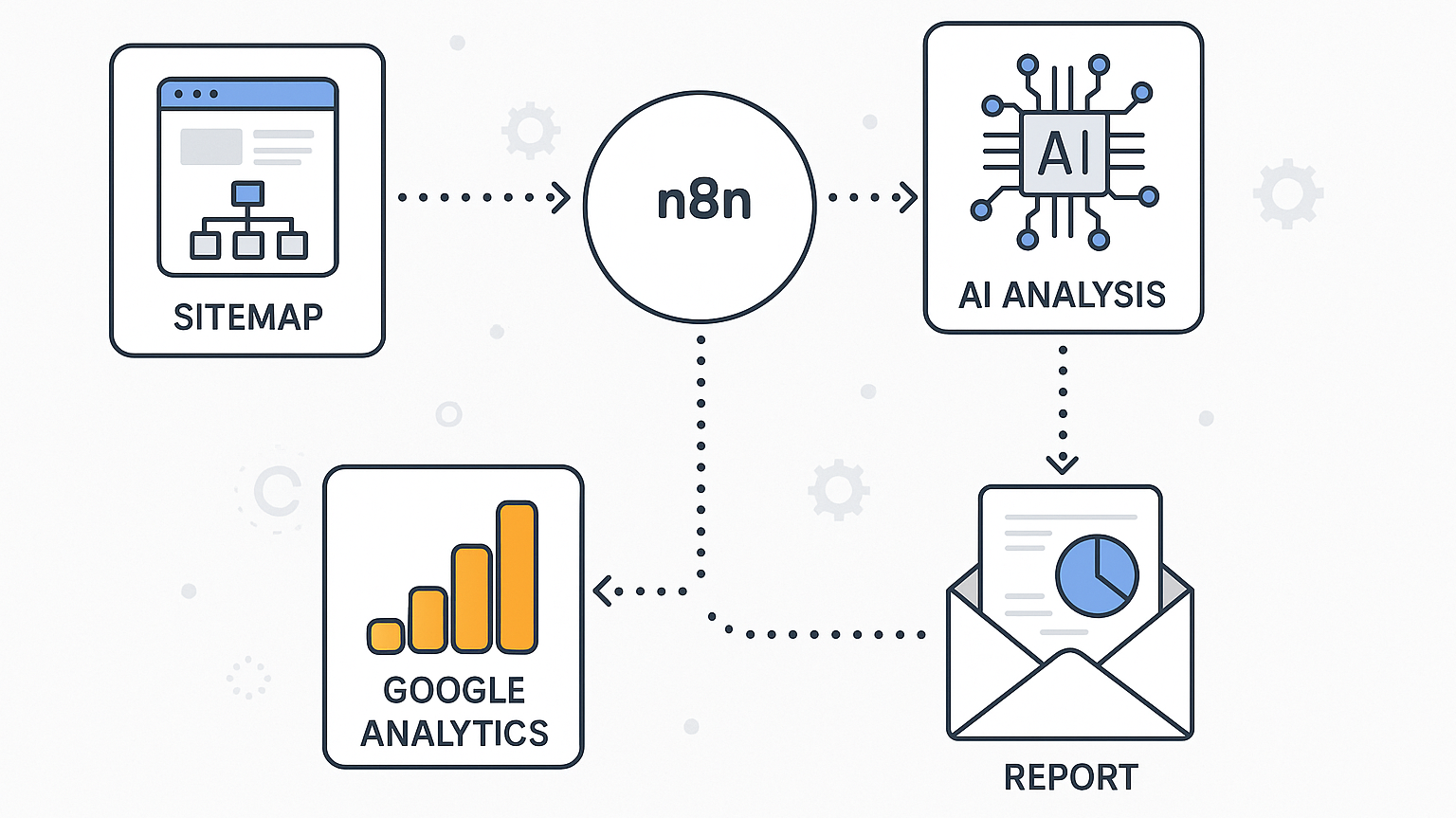
The integration of AI into SEO is not a passing trend; it is the evolution of the industry. An AI SEO Automation Workflow is no longer a luxury for enterprise brands—it is becoming a necessity for any business that wants to remain competitive. By automating the mundane, analyzing the complex, and augmenting human creativity, this workflow allows you to focus on what truly matters: delivering value to your audience.
Start by auditing your current processes. Identify one repetitive task that consumes the most time and build a small automation for it. Measure the time saved and the accuracy improved. Once you see the tangible benefits, expand the workflow to other areas. The journey requires an investment of time and resources, but the payoff is a scalable, efficient, and data-driven SEO operation that is ready for the future of search.
Xem thêm:
- AI SEO Ubersuggest: The Complete Guide to Smarter Keyword Research in 2025
- AI SEO SERP Scraping: The Complete Guide to Automated Rank Tracking in 2025
- AI SEO Semantic Entity SEO: The Complete Guide to Future-Proof Rankings
- AI SEO Influencers: The New Architects of Search Visibility in an Era of Machine Intelligence
- Perplexity SEO: How to Rank in AI‑Powered Search Engines and Get Cited
Bài viết cùng chủ đề:

AI SEO SEO Automation with Make: The Complete Workflow Guide

AI SEO SEO Automation with Zapier: The Complete Workflow Guide

AI SEO SEO Automation with n8n: The Complete Workflow Guide
AI SEO SEO Automation with Gemini: The Complete Guide to Scaling Organic Growth

AI SEO SEO Automation with Claude: The Complete Guide to Scaling Content in 2025

AI SEO SEO Automation with ChatGPT: The Complete Playbook for 2025

AI SEO & SEO Automation for Affiliate Sites: The 2025 Playbook for Passive Income Growth
AI SEO & SEO Automation for Bloggers: The Complete Guide to Scaling Your Content

AI SEO & SEO Automation for Agencies: The Complete 2025 Playbook

AI SEO and SEO Automation for Ecommerce: The Complete Playbook for 2025

AI SEO & SEO Automation for WordPress: The Complete Playbook for 2025
AI SEO SEO Automation Strategy: The Complete Playbook for 2025

Mastering the AI SEO SEO Automation Process: A Complete Guide to Scaling Organic Growth
AI SEO SEO Automation System: The Complete Guide to Scaling Organic Growth in 2025
AI SEO SEO Automation Platform: The Complete Guide to Scaling Organic Growth in 2025
AI SEO SEO Automation Software: The Complete Guide to Scaling Organic Growth in 2025















