
No products in the cart.
AI XML Sitemap: Transforming Search Engine Crawling with Intelligent Automation
29
Jul
Jul
An AI XML sitemap is no longer a futuristic concept. It represents the natural evolution of technical SEO, merging decades of crawl data with real-time machine learning to give search engines exactly what they need. This intelligent system moves far beyond a static list of URLs. The AI XML sitemap dynamically curates, prioritizes, and updates the roadmap of your website, ensuring every crawl request leads to high-value, indexable content. For sites managing thousands or millions of pages, the difference between a traditional sitemap and an AI-driven one is the difference between wasted crawl budget and exponential organic growth. This guide unpacks every layer of AI XML sitemaps, from foundational principles to advanced implementation, so you can build a crawl strategy that matches the speed of modern search.
What Exactly Is an AI XML Sitemap?
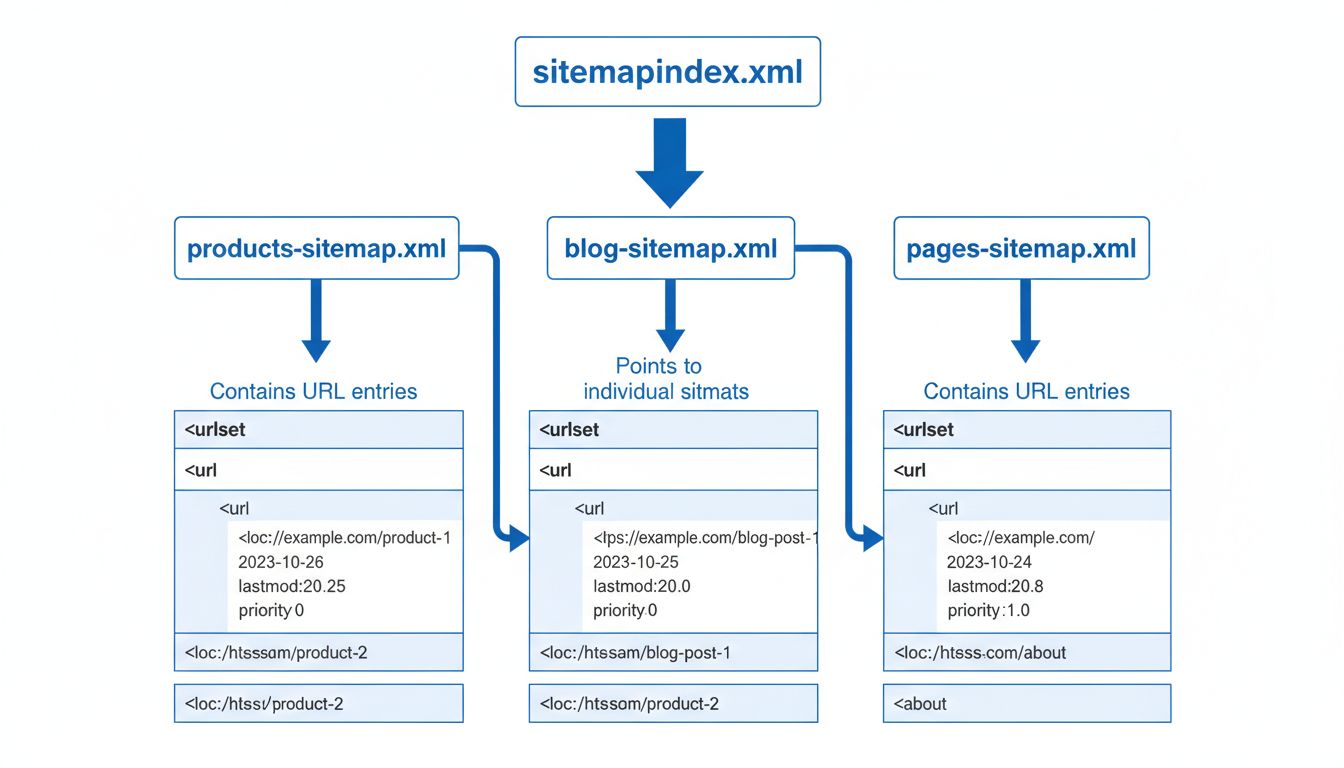
An XML sitemap is a file that lists URLs together with metadata like last modification date, change frequency, and priority. It helps search engines discover and index pages. An AI XML sitemap takes this concept and injects intelligence. It uses machine learning algorithms, natural language processing, and continuous data feedback loops to determine which URLs deserve to be in the sitemap, how they should be grouped, and when they should be recrawled.
Traditional sitemaps are often generated by crawling the site and dumping every found URL. This approach includes staging pages, parameter-based duplicates, or outdated articles that no longer drive value. The AI alternative analyzes engagement signals, conversion data, search query performance, and site architecture to filter out noise. It only includes indexable pages that genuinely contribute to user acquisition and retention. The result is a lean, highly focused sitemap that communicates the core structure of the site directly to Googlebot and other crawlers.
The intelligence does not stop at filtering. AI XML sitemaps adapt in near real-time. When a product goes out of stock or a blog post gets a significant content refresh, the sitemap updates the lastmod timestamp or removes the URL entirely. This dynamic behavior aligns crawling activity with actual content importance, a massive improvement over the stale, monthly sitemap refreshes that many enterprises still rely on.
The Core Technologies Driving AI Sitemap Solutions
Machine Learning for Content Value Assessment
At the heart of any AI XML sitemap is a classification or regression model trained on historical performance data. The model ingests metrics like organic traffic, click-through rate, bounce rate, average time on page, and conversion events. It learns to predict which pages are likely to yield the highest user satisfaction and business impact. URLs falling below a dynamically adjusted threshold are excluded from the sitemap, freeing crawl budget for more promising candidates.
Reinforcement learning is sometimes used to continuously refine inclusion rules. As search engines process the sitemap and feedback arrives via server logs, the AI observes which included pages actually got indexed and which still experienced crawling delays. The system self-corrects, becoming more accurate over time without manual intervention.
Natural Language Processing for Topic Clustering
Modern AI sitemaps leverage NLP to understand the semantic relationship between pages. Instead of listing URLs in a flat structure, the system clusters content into topical silos. It identifies pillar pages, supporting articles, and product variations. This clustering ensures that the sitemap mirrors the site’s information hierarchy, making it easier for crawlers to understand context and authority flow.
For multilingual websites, NLP automatically detects language and region variants, generating accurate hreflang annotations within the sitemap. This eliminates the common human error of mismatched hreflang tags that lead to incorrect page indexing in international search results.
Real-Time Data Integration Engines
An AI XML sitemap cannot live in isolation. It requires pipes to the CMS, e-commerce platform, analytics suite, and search console APIs. When a new promotional landing page is published, the CMS webhook triggers an immediate sitemap inclusion request. The AI model quickly evaluates the page type, compares it with similar past URLs, and decides where to place it – often before a scheduled crawl even begins.
Log file analysis becomes a foundational data source. By monitoring 404 errors, redirect chains, and stagnant crawl patterns, the integration engine alerts the AI to prune problematic URLs. The sitemap stays clean and crawl-friendly without anyone manually auditing hundreds of error reports each month.
Why Traditional Sitemaps Fall Short Today
Search engine crawl budget is finite. For large sites, Googlebot might only crawl a fraction of the available URLs each day. A static sitemap that serves 500,000 URLs indiscriminately forces the crawler to waste time on faceted navigation duplicates, outdated press releases, or thin content pages. Important new product pages can sit in the queue for weeks, costing real revenue.
Manual sitemap tuning is not scalable. SEO teams can manually set priority tags or filter certain URL patterns, but the thresholds soon become outdated as content evolves. A blog that once drove 10,000 visits might lose relevance after an algorithm update. A manual system rarely flags the change. The AI XML sitemap notices the traffic drop, recategorizes the page, and may demote it from the core sitemap file to a lower-priority index. This dynamism alone makes the traditional approach obsolete for any site operating at scale.
Additionally, the rapid pace of content creation on news, e-commerce, and user-generated platforms demands instant indexing. Manual sitemap regeneration every few hours already lags behind. AI-driven generation, tied to content lifecycle events, pushes URLs into the sitemap seconds after publication, dramatically reducing the time-to-index.
Key Benefits of Adopting an AI XML Sitemap
- Maximised crawl efficiency: Search engines spend their precious crawl budget on pages that matter, leading to faster indexing of high-value content.
- Accelerated new content discovery: New products, articles, and landing pages appear in search results within hours instead of days.
- Reduction of duplicate and low-quality content signals: By omitting near-duplicates and thin pages from the sitemap, you reduce the risk of algorithm demotions.
- Better index coverage for deep pages: Orphan pages or those buried many clicks from the homepage get surfaced through intelligent sitemap inclusion, improving their chances of being crawled.
- Automated hreflang management: AI verification of alternate language pages eliminates one of the most complex and error-prone tasks in international SEO.
- Continuous adaptation: The sitemap evolves with your user behavior, content quality shifts, and seasonal trends without manual reboots.
- Audit your current indexation landscape. Crawl the site completely and pull search console index coverage data. Identify existing crawl waste: pages indexed that should not be, and missing pages that should be indexed.
- Define business value metrics. Work with stakeholders to decide what qualifies as a high-value page. This might be organic traffic, conversions, revenue, or a weighted combination. These metrics will train the AI model.
- Connect data sources. Integrate your CMS, analytics platform, server logs, and search console API into a centralized data warehouse. Clean the data rigorously—remove bot traffic and internal IPs to avoid poisoning the signals.
- Build or adopt an AI model for URL scoring. Use a cloud AI service or a custom-built model using gradient boosting or neural networks to predict a URL’s quality score. Start with a conservative threshold to avoid excluding too many pages.
- Set up segmentation logic. Design sitemap index structure: separate files for products, articles, category pages, and media. Define rules for how many URLs per file, based on your site scale.
- Automate sitemap generation. Develop a service that queries the model daily or event-driven. The service compiles the XML sitemap files, respecting the URL limits and lastmod accuracy.
- Submit sitemap index to search engines. Add the sitemap location to robots.txt and Google Search Console. Monitor the “Sitemaps” report for parsing errors.
- Establish a feedback loop. After a few weeks, compare the model’s predictions with actual crawl behavior and indexation changes. Retrain the model periodically to improve precision. Maintain a manual allowlist and blocklist to correct edge cases.
- Over-excluding borderline pages. Setting the quality threshold too high can remove pages that still get a trickle of long-tail traffic. Remedy: run a shadow comparison for two weeks, letting the AI sitemap run alongside a full sitemap and compare traffic loss statistics.
- Ignoring lastmod integrity. AI tools might incorrectly set lastmod to the current date for all pages, misleading crawlers. Verify that the system uses the actual date of meaningful content update, not just the regeneration date.
- Forgetting to handle non-200 status codes. Ensure the sitemap generator checks the HTTP status of each URL before inclusion. AI can inadvertently suggest 404 or redirected pages if the crawl data lags.
- Neglecting mobile and AMP sitemaps. If your site uses separate mobile URLs or AMP, the AI must also manage those specialized sitemaps, keeping them in sync with canonical pages.
- Assuming AI replaces all SEO hygiene. An AI sitemap will not fix deeper issues like broken internal linking, slow server response, or canonical misconfigurations. It is a component of a broader SEO strategy, not a standalone cure.
- Always comply with the XML sitemap protocol: files must be UTF-8, under 50MB uncompressed, and contain no more than 50,000 URLs each. Use sitemap index files for larger sets.
- Keep the model’s decision logs transparent. SEO teams should be able to audit why a particular URL was excluded, enabling quick correction of false negatives.
- Regularly sync with content editors and product managers. An AI model may not understand a strategic decision to promote a low-traffic but high-margin product. Human input remains crucial.
- Test your AI sitemap on a staging environment first. Simulate the impact on crawl budget using log analysis before rolling out to production.
- Use the “sitemap ping” feature cautiously; prefer letting Google discover updates naturally via periodic recrawls rather than bombarding them with pings on every minor change.
- Monitor the indexed pages count versus sitemap submitted count. A significant discrepancy signals an issue with crawl efficiency or sitemap coverage.
Limitations and Situations Where AI Sitemaps May Not Fit
While powerful, AI XML sitemaps are not a universal fix. Small brochure websites with a few dozen pages simply do not need this level of automation. The overhead of setting up data pipelines and training a model outweighs the negligible crawl budget gain.
Relying entirely on AI without human oversight can backfire. A machine learning model may misinterpret a temporary traffic spike from a social media campaign as a signal of permanent value and over-include promotional pages. If the model is trained purely on conversion data, it might completely exclude important informational content that indirectly supports purchase decisions. A hybrid approach with human-defined inclusion rules and an override list remains essential.
Data quality is the bedrock. If your analytics tracking is broken or server logs are incomplete, the AI model will make poor decisions. Garbage in, garbage out applies severely here. Finally, the initial implementation requires substantial technical SEO expertise and development resources, which can be a barrier for lean teams.
AI XML Sitemap vs. Traditional Sitemap: A Side-by-Side Comparison
| Feature | Traditional XML Sitemap | AI XML Sitemap |
|---|---|---|
| URL Selection | Includes all known URLs, often with no quality filter | Dynamically includes only high-value, indexable pages |
| Update Cadence | Periodic (daily, weekly) via cron job or manual push | Real-time, event-driven based on content changes |
| Priority Management | Manual priority tags, typically ignored by search engines | AI-driven scoring that influences inclusion and crawling cadence |
| Hreflang Accuracy | Manually set, prone to errors | Automatically verified with cross-checks against actual page versions |
| Crawl Budget Impact | Often wastes crawls on duplicates and thin pages | Directs crawlers to profit- and traffic-driving pages |
| Scalability | Breaks down above 100,000 URLs without strict manual rules | Easily handles millions of URLs with automated segmentation |
| Orphan Page Detection | Requires separate audit tools | Built-in detection and optional inclusion flagged for review |
Practical Applications Across Different Website Types
Enterprise E-Commerce with Massive Inventory
A global electronics retailer carries 450,000 product SKUs, with daily inventory fluctuations. The old sitemap listed every product page regardless of stock status. Googlebot wasted a significant portion of its crawl on out-of-stock items and filtered parameter URLs. Switching to an AI XML sitemap, the system excluded discontinued products and variants that received no organic search impressions in the last 90 days. It automatically promoted new product launches by pushing them to a dedicated high-priority sitemap index. Within three months, indexed product pages rose by 22%, while crawl rate on the main product category pages increased due to better crawl budget allocation.
News Publishing with High Velocity Content
A digital newsroom publishing over 300 articles per day struggled with Google News indexing delays. Their manually generated news sitemap was refreshed hourly, but many breaking stories missed the rapidly cycling crawl window. An AI-driven system connected directly to the CMS API, triggering sitemap entry population the moment an editor hit publish. The model also evaluated article freshness and search trend data, dynamically moving time-sensitive pieces into a “hot” sitemap that updated every 30 seconds. This slashed the average time from publication to indexed appearance from 45 minutes to under 8 minutes.
Large Media and Blog Networks
A network spanning 15 publications with 2 million combined articles used an AI xml sitemap to consolidate and manage the entire portfolio. The system clustered articles by contextual similarity, ensuring that each sitemap file represented a coherent topical blueprint. It also identified aging content that had lost traffic but could be republished with updates, automatically inserting revised URLs with fresh lastmod values. The result was a 17% lift in traffic to updated legacy content, directly attributable to faster recrawling.
A Step-by-Step Guide to Implementing AI XML Sitemaps
Common Mistakes When Using AI XML Sitemaps and How to Avoid Them
Important Notes for Long-Term AI Sitemap Success
Frequently Asked Questions
What exactly is an AI XML sitemap?
An AI XML sitemap is an intelligent, self-updating sitemap file that uses machine learning to automatically decide which URLs to include, how to prioritize them, and when to update their metadata, based on real-time user engagement signals and content performance data.
Does Google officially recognize AI-generated sitemaps?
Google does not have a separate protocol for AI sitemaps. As long as the generated file adheres to the standard XML sitemap format, it is perfectly acceptable. The “AI” part is a method of generation, not a new standard.
Can an AI XML sitemap replace manual SEO audits?
No. An AI sitemap optimizes crawling, but it cannot detect deeper technical SEO issues like incorrect canonical tags, slow load times, or poor content quality. It should complement regular audits, not replace them.
How quickly can an AI XML sitemap improve indexing?
Results vary, but many large sites observe faster indexing of new content within the first few weeks. A well-tuned system can reduce the time from publish to index from days to hours, especially for news and e-commerce pages.
What kind of data does the AI model need?
The model typically requires organic search traffic, click-through rate, bounce rate, conversion data, and content freshness signals. Server log data and search console performance reports are also valuable to understand actual crawl and search behavior.
Is an AI XML sitemap necessary for small websites?
Not typically. If your site has fewer than 500 pages and a flat architecture, a standard sitemap generated by your CMS is sufficient. AI sitemaps provide the most value when managing thousands of URLs or complex, dynamic content structures.
Can the AI accidentally block important pages from being crawled?
Yes, that is a known risk. That’s why a manual exclusion override list and regular monitoring are essential. A safe implementation starts with conservative thresholds and gradually tightens them while watching index coverage reports.
Conclusion: The Sitemap That Thinks
The shift from static sitemaps to AI-driven sitemaps is not a luxury for forward-thinking brands. It is a practical necessity in a world where crawl efficiency directly determines search visibility
Xem thêm:
- AI SEO Clearscope: The Definitive Guide to Data-Driven Content Optimization
- AI SEO for Restaurants: The Complete Guide to Dominating Local Search in 2025
- WP Trove AI Articles: The Complete Guide to Automated Content Creation
- AI SEO Forums: The Hidden Hubs Where Search Strategy Gets Rewired by Machine Intelligence
- AI Featured Snippets: How Artificial Intelligence Is Redefining Position Zero
Bài viết cùng chủ đề:

AI SEO SEO Automation with Make: The Complete Workflow Guide

AI SEO SEO Automation with Zapier: The Complete Workflow Guide

AI SEO SEO Automation with n8n: The Complete Workflow Guide
AI SEO SEO Automation with Gemini: The Complete Guide to Scaling Organic Growth

AI SEO SEO Automation with Claude: The Complete Guide to Scaling Content in 2025

AI SEO SEO Automation with ChatGPT: The Complete Playbook for 2025

AI SEO & SEO Automation for Affiliate Sites: The 2025 Playbook for Passive Income Growth
AI SEO & SEO Automation for Bloggers: The Complete Guide to Scaling Your Content

AI SEO & SEO Automation for Agencies: The Complete 2025 Playbook

AI SEO and SEO Automation for Ecommerce: The Complete Playbook for 2025

AI SEO & SEO Automation for WordPress: The Complete Playbook for 2025
AI SEO SEO Automation Strategy: The Complete Playbook for 2025

Mastering the AI SEO SEO Automation Process: A Complete Guide to Scaling Organic Growth
AI SEO SEO Automation System: The Complete Guide to Scaling Organic Growth in 2025
AI SEO SEO Automation Platform: The Complete Guide to Scaling Organic Growth in 2025
AI SEO SEO Automation Software: The Complete Guide to Scaling Organic Growth in 2025















