
No products in the cart.
AI Affiliate SEO: How Artificial Intelligence Is Reshaping Affiliate Search Rankings
29
Jul
Jul
The landscape of affiliate marketing is experiencing a tectonic shift. Traditional SEO tactics that once guaranteed top rankings now struggle to keep pace with Google’s ever-evolving algorithms. Enter AI Affiliate SEO – a powerful fusion of artificial intelligence and search optimization that enables affiliate marketers to scale content creation, unearth hidden keyword opportunities, and build authority faster than ever before. This approach doesn’t replace human expertise; it amplifies it, turning weeks of manual research into hours of strategic execution. For affiliates who depend on organic traffic to drive commissions, understanding how to weave AI into every layer of the SEO workflow has become a critical competitive advantage.
What Exactly Is AI Affiliate SEO?
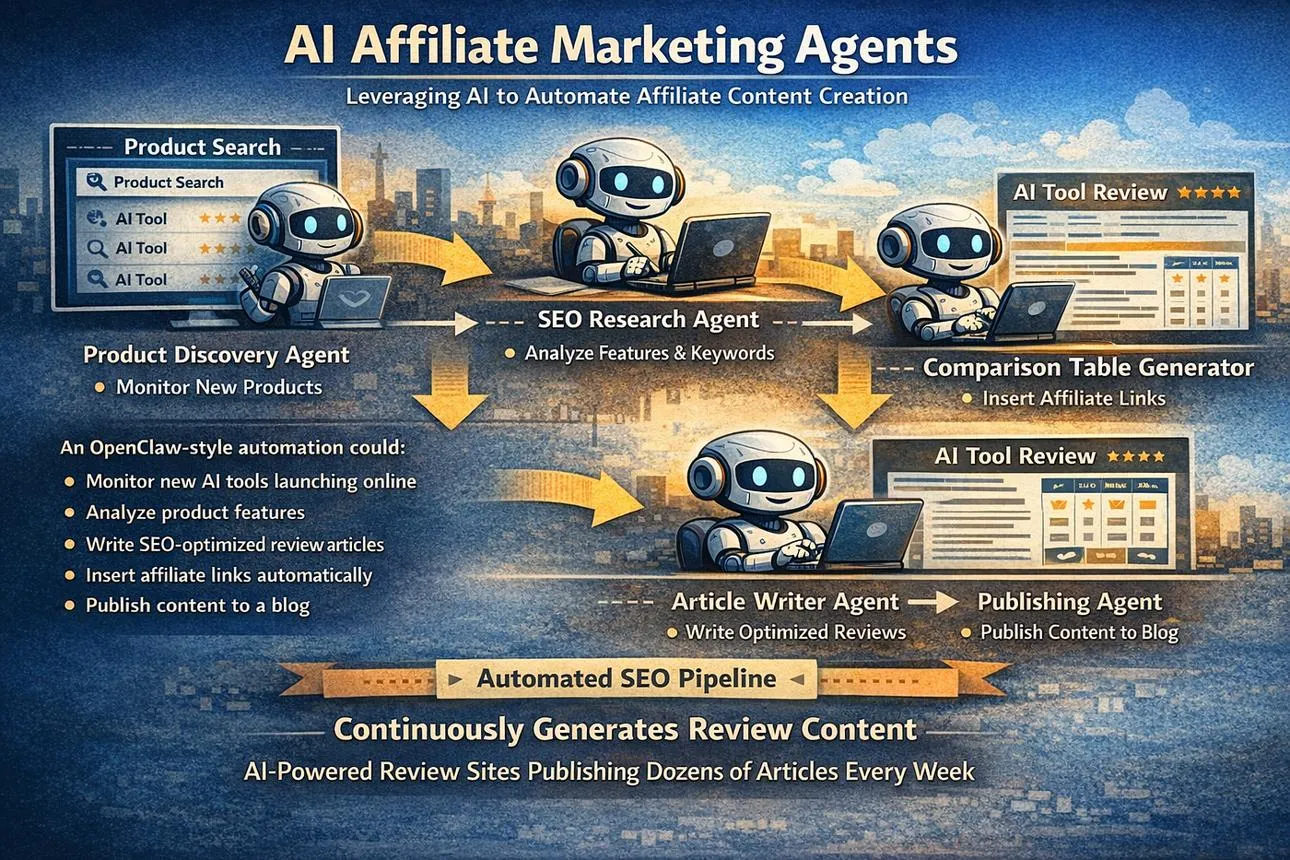
AI Affiliate SEO refers to the systematic use of artificial intelligence tools and machine learning algorithms to plan, execute, and optimize search engine optimization strategies specifically for affiliate websites. These sites monetize through product recommendations, and their business model depends entirely on attracting high-intent organic visitors. In practice, AI Affiliate SEO covers everything from algorithm-powered keyword discovery and competitor gap analysis to AI-generated content briefs, on-page optimization, internal linking suggestions, and even predictive analytics that forecast which affiliate pages are likely to convert. The core premise is straightforward: let AI handle the repetitive data-crunching and pattern recognition, freeing the affiliate marketer to focus on strategy, relationship building, and authentic expertise that Google’s E-E-A-T guidelines demand.
The Evolution from Manual to AI-Driven Affiliate SEO
Just five years ago, an affiliate SEO workflow looked drastically different. Marketers opened spreadsheets, manually sifted through keyword tools, and wrote every word of content from scratch. On-page optimization meant checking title tags and meta descriptions one page at a time. Today, neural networks process millions of data points in seconds, identifying content gaps that would take a human weeks to surface. AI models trained on search data can now detect user intent nuances, seasonal trend shifts, and even the semantic relationships between entities that Google’s Knowledge Graph prioritizes. This evolution means that AI Affiliate SEO is not merely a faster way to do old tasks – it’s a fundamentally different approach that allows for content strategies built on precise, real-time data rather than gut feeling.
Core Components of an AI Affiliate SEO Strategy
A robust AI-powered affiliate SEO framework consists of several interconnected layers. Each layer leverages specific AI capabilities, and together they create a compounding effect on organic visibility. Successful affiliates do not rely on a single tool; they build a tech stack where AI handles distinct parts of the funnel, all aligned with the goal of matching user queries to high-converting affiliate content.
1. AI-Driven Keyword Research and Topic Clustering
Traditional keyword research often stops at volume and difficulty metrics. AI Affiliate SEO digs deeper. Natural language processing tools analyze the top-ranking pages for a given query cluster, extract the entities they cover, and map out the full semantic landscape a page must address to be considered authoritative. Instead of targeting isolated keywords like “best running shoes,” AI tools suggest a comprehensive cluster that includes “best running shoes for flat feet,” “lightweight running shoes for marathons,” “running shoes under $100,” and supporting informational topics like “how to choose running shoe size.” The AI identifies content hubs and pillar page opportunities, ensuring that affiliate sites build topical authority rather than disjointed thin content that Google devalues.
2. AI Content Generation and Optimization
The most visible application of AI in affiliate SEO is content creation, but effective usage goes far beyond pressing a “write for me” button. Smart affiliates use AI to generate structured outlines based on top-performing competitor formats, to draft product comparison tables that update dynamically, and to produce first-draft reviews that are then heavily edited for unique insights. On the optimization side, AI-powered editors analyze existing copy against the top 20 ranking pages and provide real-time recommendations: add a specific LSI keyword, expand a section to match search intent depth, insert a FAQ schema markup, or improve the reading score for mobile users. This optimization layer ensures every piece of content is as thorough as possible without guesswork.
3. Automated Technical SEO and Site Audits
Affiliate sites, especially large ones with hundreds of product reviews, easily accumulate technical debt. AI crawlers simulate search engine bots and detect issues that impact core web vitals, mobile usability, and indexability. More advanced AI systems go further: they recognize crawl budget waste patterns unique to affiliate sites, such as thin manufacturer description pages getting indexed over unique content, or pagination loops that trap bots. They automatically prioritize fixes based on potential traffic uplift, turning a daunting list of hundreds of technical issues into a clear, ROI-focused action plan.
4. Predictive Link Building and Digital PR
Earning backlinks remains a cornerstone of affiliate SEO, but outreach is resource-intensive. AI transforms this by analyzing backlink profiles of competitors and surfacing link prospects with the highest probability of responding. Natural language models personalize outreach emails at scale, while machine learning algorithms predict which topics or data-driven studies are most likely to attract editorial links. Some teams use AI to identify broken link opportunities at scale across thousands of resource pages, saving hundreds of manual prospecting hours. The result is a link building cadence that aligns directly with the queries affiliate pages are trying to rank for.
Benefits and Limitations of Using AI in Affiliate SEO
Like any technological advancement, AI Affiliate SEO brings a spectrum of advantages and an equal number of pitfalls that marketers must navigate with discipline. The key is understanding precisely where AI excels and where human oversight is irreplaceable.
The Transformative Benefits
- Velocity of content production: Affiliates can publish comprehensive buyer’s guides in days, not weeks, capturing seasonal traffic spikes that would otherwise be missed.
- Scalable data analysis: SERP analysis that once took a week per niche can now be completed in minutes, allowing affiliates to enter multiple verticals simultaneously.
- Consistent on-page hygiene: AI never forgets to include a canonical tag, optimize an image alt text, or insert internal links – tasks humans frequently overlook on large sites.
- Intent matching precision: By mapping user journeys, AI helps create content that satisfies informational, commercial, and transactional queries within the same silo, boosting overall site engagement metrics.
- Cost efficiency: Strategic deployment of AI reduces the need for large content teams, link building specialists, and technical SEO consultants, improving profit margins for affiliate site owners.
- Generic output risk: AI models trained on the open web often generate text that lacks original anecdotes, fresh testing data, and nuanced opinion – precisely the elements that differentiate an affiliate site and align with Google’s helpful content system.
- Algorithm dependency: Over-reliance on a single AI tool creates fragility. If that tool’s data sources degrade or its API costs skyrocket, the entire workflow collapses.
- Factual inaccuracies: Large language models can confabulate specifications, prices, and product features. In affiliate marketing, where recommendations carry financial consequences for the reader, such errors destroy trust.
- E-E-A-T compliance gaps: AI cannot demonstrate first-hand product testing, author credentials, or genuine experience – the signals Google uses to rank YMYL (Your Money Your Life) and high-stakes commercial content.
- Ethical and regulatory risks: Undisclosed AI-generated content may violate FTC guidelines in the United States, especially if it creates the impression of a human endorsement where none exists.
- Treating AI output as final publishable copy. Even the most advanced models lack real product usage context. Google’s algorithms increasingly detect regurgitated specification sheets. Always add proprietary insights, whether from hands-on testing or aggregated user feedback analysis.
- Ignoring content cannibalization. AI can easily generate dozens of pages targeting nearly identical queries. Without a human-defined content hierarchy, these pages compete against each other, diluting rankings. Use AI’s clustering ability to consolidate, not fragment, topical authority.
- Neglecting conversion rate optimization. High rankings mean nothing if the affiliate content doesn’t convert. AI that writes reviews often misses subtle persuasion cues, call-to-action placement, and trust-building elements that a skilled human copywriter refines.
- Using AI to game reviews. Fabricating customer reviews or creating “best of” lists based solely on Amazon star ratings with AI-generated fluff violates FTC guidelines and, increasingly, Google’s spam policies. The risk of manual action is severe.
- Stale automation. Setting up an AI content pipeline and forgetting about it leads to dated information – old pricing, discontinued products, outdated comparisons. AI can help schedule updates, but a human must verify the triggers are accurate.
The Inescapable Limitations
AI Affiliate SEO vs. Traditional Affiliate SEO: A Detailed Comparison
The following table illustrates the practical differences across key SEO dimensions. This comparison assumes the AI-driven approach is executed with proper human oversight, not as a fully automated set-and-forget system.
| Dimension | Traditional Affiliate SEO | AI Affiliate SEO (with Human Guidance) |
|---|---|---|
| Keyword Research | Manual list building with tools like Ahrefs or SEMrush; limited to pre-existing keyword ideas. | AI clusters generate thousands of semantically related long-tails and question-queries from SERP analysis, search suggestions, and forum scraping. |
| Content Creation | Writers produce every word, often inconsistently (10–20 hours per long-form piece). | AI drafts complete outlines and 70% of body content; human writers inject original testing data, personal stories, and product comparisons (3–5 hours per piece after briefing). |
| On-Page Optimization | Manual review of metadata, heading structure, and internal links; prone to errors at scale. | AI continuously audits every published URL against SERP features and competitive benchmarks, flagging under-optimized pages automatically. |
| Link Building | Manual prospect list building, template-based email outreach, low response rates. | AI identifies high-probability prospects, extracts contact details, and drafts personalized pitches; response rates improve due to relevance matching. |
| Performance Tracking | Weekly rank tracking and basic traffic analysis in GA4. | Predictive models correlate ranking shifts with specific updates, forecast seasonal traffic, and recommend proactive content refreshes before decay begins. |
| Compliance & Trust | Entirely dependent on author diligence. | AI cannot replace genuine expertise, but it can highlight compliance gaps (missing disclaimers, outdated claims) for human review. |
Practical Application: Building Your AI Affiliate SEO Workflow
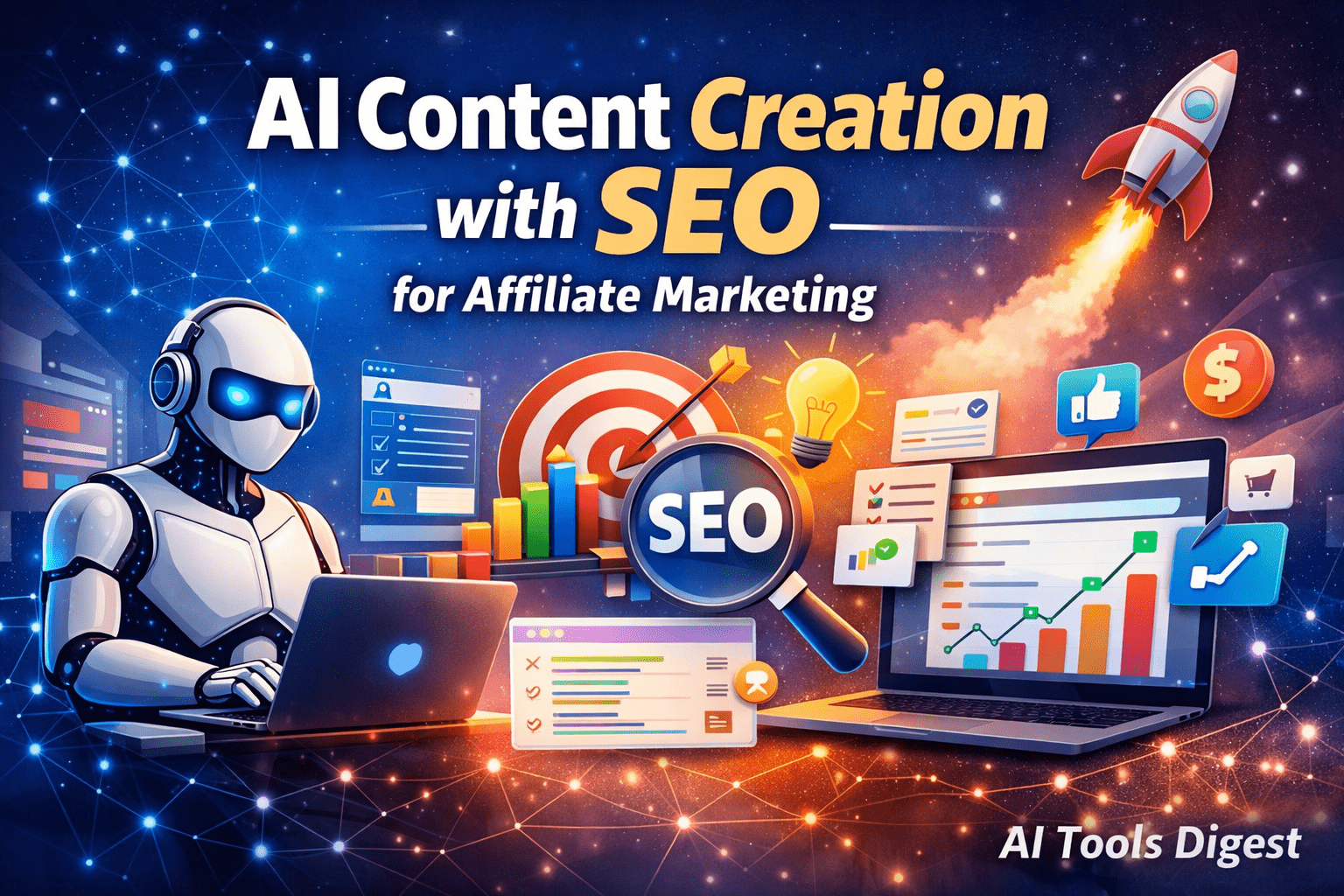
Implementing AI into an existing affiliate site does not require a complete overhaul overnight. The most sustainable approach is to integrate AI into one stage at a time, validate the output quality, and then expand. Below is a practical, step-by-step blueprint that balances AI efficiency with human editorial control.
Step 1: Map Your Entire Niche with AI Topic Research
Start by feeding a broad seed keyword into an AI-powered SEO tool such as Surfer SEO’s topical map feature, MarketMuse, or Jasper’s topic mode. Let the AI generate a complete content plan covering informational, commercial investigation, and transactional intent pages. For an affiliate site reviewing kitchen appliances, this map would include “how to buy a stand mixer,” “stand mixer buying guide,” individual model reviews, comparison pages, and “stand mixer attachment uses.” The AI’s value
Step 2: Generate AI-Assisted Content Briefs, Not Just Content
For each assigned URL, create a detailed brief using AI. The brief should contain: the primary and secondary keywords extracted from top 10 SERP analysis, the recommended word count range, a list of semantically related terms that must appear, the subheadings the top pages use, and any visual assets (comparison tables, infographics) common to ranking pages. This brief acts as a guardrail for the writer or AI content generator, ensuring the final output aligns with what Google expects to see for that query.
Step 3: Draft with AI, Polish with Human Experience
Allow an AI writing assistant to produce a first draft based on the brief. This draft will be structurally sound and keyword-optimized but often lacks voice and first-hand experience. The human expert then overlays critical layers: real product testing notes, side-by-side photo comparisons, peculiar use cases discovered only through hands-on use, and a distinct brand perspective. This hybrid method satisfies both search engines (comprehensive content) and users (authentic, useful content that deserves a recommendation).
Step 4: Implement Continuous Optimization Loops
Deploy an AI content optimizer (like Frase or Clearscope) on published pages to monitor for ranking opportunities. When a page drops from position 3 to position 7 for its main keyword, the AI analyzes what newly ranking pages now include that your page might lack. It then suggests specific enhancements – a new subheading, a product alternative that has gained popularity, or an updated statistic. The system can trigger an alert so your team refreshes the page before the decay becomes severe, maintaining traffic stability across hundreds of affiliate pages.
Step 5: Scale Internal Linking with AI
Affiliate sites often suffer from prune pages – high-quality reviews that get buried because no internal links point to them. AI-powered internal linking tools (Link Whisper, or inbuilt features in Ahrefs) crawl your site and suggest relevant anchor text and link placements automatically. This distributes link equity efficiently, helps search engines discover new content, and improves the user journey by connecting related product reviews and guides.
Step 6: Monitor and Enhance E-E-A-T Signals
AI cannot create experience, but it can audit how well your site projects it. Use AI to scan all author pages, about pages, and review content. Does each review clearly state how the product was tested? Is the author’s relevant qualification visible? Are the date and evidence of testing prominently displayed? AI can flag pages missing these trust signals, enabling systematic improvement that boosts credibility in the eyes of both users and search quality raters.
Common Mistakes When Implementing AI Affiliate SEO
The road to AI-assisted rankings is littered with sites that took shortcuts. Avoiding these mistakes separates profitable, resilient affiliate sites from those that vanish after a core update.
Important Considerations Before Diving into AI Affiliate SEO
Adopting AI is not merely a tool purchase; it demands a mindset shift and procedural restructuring. First, budget for both AI software costs and increased editorial oversight. The most successful AI-assisted teams hire editors who are domain experts, not generalists. A domain expert can instantly spot when AI hallucinates a product feature, which protects the site’s reputation.
Second, maintain a robust content attribution system. If multiple AI models and freelancers contribute to a single review, the editorial chain must be traceable so that accountability for accuracy is never blurred. This becomes especially important for affiliate sites operating in health, finance, or legal niches where YMYL standards apply strictly.
Third, always test AI recommendations against organic user behavior. Just because an AI tool suggests a page should be 3,000 words doesn’t mean users in that niche prefer that length. Validate with time-on-page metrics, scroll depth, and conversion data. AI gives you a hypothesis; your analytics validate it.
Finally, stay informed about search engine policies regarding AI-generated content. Google’s current stance focuses on content quality and helpfulness regardless of production method, but this can evolve. The affiliate site that documents its human refinement process and transparently demonstrates experience will be far more defensible than one that hides fully automated generation.
The Intersection of AI Affiliate SEO and User Experience Signals
Google’s ranking systems increasingly weigh user interaction signals. AI can assist here in a surprisingly effective way. By analyzing heatmap data and session recordings with machine learning, affiliate site owners can identify where users drop off, where they hesitate before clicking an affiliate link, and which comparison table layouts drive the highest click-through to merchant sites. This data feeds back into an AI content optimizer that can then suggest rearranging sections, adding a “quick verdict” box above the fold, or simplifying technical jargon. The improvement loop touches both SEO and conversion rate optimization simultaneously, creating a site that not only attracts visitors but also compels them to act.
Frequently Asked Questions About AI Affiliate SEO
Can Google detect AI-generated affiliate content and penalize it?
Google evaluates content based on quality, helpfulness, and E-E-A-T, not on whether it was drafted by AI or a human. However, raw AI content that lacks originality, first-hand experience, or factual accuracy is more likely to be classified as unhelpful, especially after updates like the Helpful Content System. The safest path is always substantial human refinement and the addition of unique value that AI alone cannot provide.
Which AI tools are best for affiliate keyword research?
The ideal tool depends on your budget and niche complexity. Surfer SEO excels at generating semantic keyword clusters from live SERP data. MarketMuse uses AI to analyze content depth and identify missing subtopics. More affordable options like LowFruits or Keyword Insights AI use machine learning to spot low-competition long-tail queries perfect for newer affiliate sites. For advanced users, combining a traditional tool like Ahrefs with its AI-powered content explorer reveals trending topics ripe for affiliate content.
Is AI Affiliate SEO only for large sites, or can small affiliates benefit?
Small affiliates and solopreneurs arguably benefit the most. AI levels the playing field by automating time-intensive tasks that large teams handle with manpower. A solo affiliate can use AI to research an entire niche, produce content outlines, and optimize dozens of pages without hiring a single employee. The critical factor is not site size but the discipline to maintain high editorial standards and avoid the temptation of publishing unedited AI content.
How do I ensure my AI-written affiliate reviews remain trustworthy?
Trust is built through transparency and demonstrable expertise. Include clear author bios with relevant credentials. Add a section in every review detailing your testing methodology, duration of use, and specific scenarios you tested. Insert original photographs or videos of the product in use, which AI cannot fabricate. Update reviews regularly with date stamps showing currency. Finally, disclose if AI assisted in drafting the content, focusing on the value-added human expertise that finalized it.
Does AI help with E-E-A-T for affiliate sites in YMYL niches?
AI does not create experience or expertise, but it can help you structure content to highlight existing expertise more effectively. For a health-related affiliate site, AI can recommend adding citations to medical studies, suggest formatting for expert review panels, and ensure the content addresses the “who, how, and why” behind every recommendation. The expertise itself must come from qualified humans; AI simply ensures that expertise is impossible for visitors and search engines to overlook.
What is the biggest risk of relying too heavily on AI for affiliate SEO?
The greatest risk is creating a site that appears authoritative to algorithms on the surface but fails to deliver genuine value to visitors. Such sites often enjoy short-term ranking boosts before being caught by quality updates that demote thin, aggregated content. The affiliate business model depends on repeat visitors, email sign-ups, and word-of-mouth – none of which result from content that feels robotic or drab. Long-term sustainability requires that AI be a tool for efficiency, not a replacement for the human connection that drives purchases.
Conclusion
AI Affiliate SEO represents a monumental shift in how affiliate marketers approach organic growth. It condenses the research-to-publication cycle, uncovers ranking opportunities invisible to manual methods, and enforces optimization discipline at scale. However, the technology is not a silver bullet. The affiliate sites that will dominate the search results in the coming years will be those that master the symbiosis of machine efficiency and human authenticity – using AI to handle the drudgery of data analysis while reserving the creative, experiential, and strategic layers for people. Affiliate marketers who invest in this hybrid model, who document real product interactions, who build brands that readers trust, and who view AI as a force multiplier rather than a hands-off solution, will find themselves occupying the top spots their competitors abandoned when they chose the path of full automation. The future of affiliate SEO is intelligent, adaptive, and profoundly human at its core.
Xem thêm:
- AI SEO & SEO Automation for WordPress: The Complete Playbook for 2025
- AI SEO Editorial Workflow: The Complete Guide to Scaling Content Production
- AI SERP Features: The Complete Guide to Understanding and Optimizing for AI-Driven Search Results
- Mastering AI SEO Techniques: How Artificial Intelligence Transforms Search Optimization
- AI SEO Screaming Frog: The Complete Guide to Smarter Technical Audits
Bài viết cùng chủ đề:

AI SEO SEO Automation with Make: The Complete Workflow Guide

AI SEO SEO Automation with Zapier: The Complete Workflow Guide

AI SEO SEO Automation with n8n: The Complete Workflow Guide
AI SEO SEO Automation with Gemini: The Complete Guide to Scaling Organic Growth

AI SEO SEO Automation with Claude: The Complete Guide to Scaling Content in 2025

AI SEO SEO Automation with ChatGPT: The Complete Playbook for 2025

AI SEO & SEO Automation for Affiliate Sites: The 2025 Playbook for Passive Income Growth
AI SEO & SEO Automation for Bloggers: The Complete Guide to Scaling Your Content

AI SEO & SEO Automation for Agencies: The Complete 2025 Playbook

AI SEO and SEO Automation for Ecommerce: The Complete Playbook for 2025

AI SEO & SEO Automation for WordPress: The Complete Playbook for 2025
AI SEO SEO Automation Strategy: The Complete Playbook for 2025

Mastering the AI SEO SEO Automation Process: A Complete Guide to Scaling Organic Growth
AI SEO SEO Automation System: The Complete Guide to Scaling Organic Growth in 2025
AI SEO SEO Automation Platform: The Complete Guide to Scaling Organic Growth in 2025
AI SEO SEO Automation Software: The Complete Guide to Scaling Organic Growth in 2025















