
No products in the cart.
AI SERP Features: The Complete Guide to Understanding and Optimizing for AI-Driven Search Results
29
Jul
Jul
The way people interact with search engines has changed forever. Traditional blue links are no longer the only destination on a results page. AI SERP features have emerged as the most disruptive force in modern search, blending large language models, knowledge graphs, and real-time indexing to answer queries instantly, often without requiring a single click. Understanding these features is no longer optional for marketers and content creators—it is the foundation of visibility in a world where zero-click searches dominate and user expectations evolve by the day. This article unpacks every critical layer of AI SERP features, from how they work and which types exist, to advanced optimization tactics that align with the principles of Experience, Expertise, Authoritativeness, and Trustworthiness.
What Are AI SERP Features?

AI SERP features refer to any element on a search engine results page that is generated, ranked, or assembled using artificial intelligence and machine learning algorithms, rather than purely through traditional crawl-and-index pipelines. They often appear above or alongside standard organic listings and are designed to provide direct answers, summaries, interactive tools, or predictive suggestions. These features can draw from multiple data sources simultaneously, including web pages, structured data, user behavior patterns, and large language models trained on enormous corpora.
The shift began with simpler enhancements like featured snippets and knowledge panels, but the introduction of generative AI has accelerated transformation dramatically. Modern AI SERP features include AI-generated overviews, dynamic follow-up questions, voice-friendly answer boxes, and even full conversation threads within the search interface. What ties them all together is their core purpose: to satisfy user intent with minimal friction, often by synthesizing information rather than simply linking to it.
For search engine optimization practitioners, the rise of these features marks a fundamental redefinition of what a “ranking” means. Visibility no longer relies solely on securing the top blue link. It now depends on being the authoritative source that feeds the AI layer, appearing inside a featured answer, a knowledge panel, or a generative summary while still maintaining enough value to earn the click when deeper investigation is needed.
How AI Powers Modern Search Results
To grasp the full scope of AI SERP features, it is essential to understand the underlying mechanisms. For years, Google’s RankBrain introduced machine learning into the query interpretation and ranking process. Since then, systems like BERT, MUM, and the newer generative models have expanded the role of AI from a ranking assistant to a content creator on the results page itself.
BERT allows the search engine to grasp context and nuance within long-tail queries by analyzing words in relation to one another bidirectionally. MUM goes further, understanding and generating information across text, images, and even language barriers simultaneously. These models feed the AI SERP features in two main ways: first, by extracting the most relevant information from trusted sources; second, by generating original summaries, comparisons, and answers that might never have existed in a single source before the query was made. The search engine becomes not just a librarian but a synthesizer and an author.
Large language models are also used to predict user intent beyond the literal query. If someone types “best way to reduce churn in SaaS,” the AI layer may offer a short checklist, a video snippet, and a link to a detailed guide all within a single feature. This intent-matching capability is what separates AI SERP features from static answer boxes of the past.
Key Types of AI SERP Features
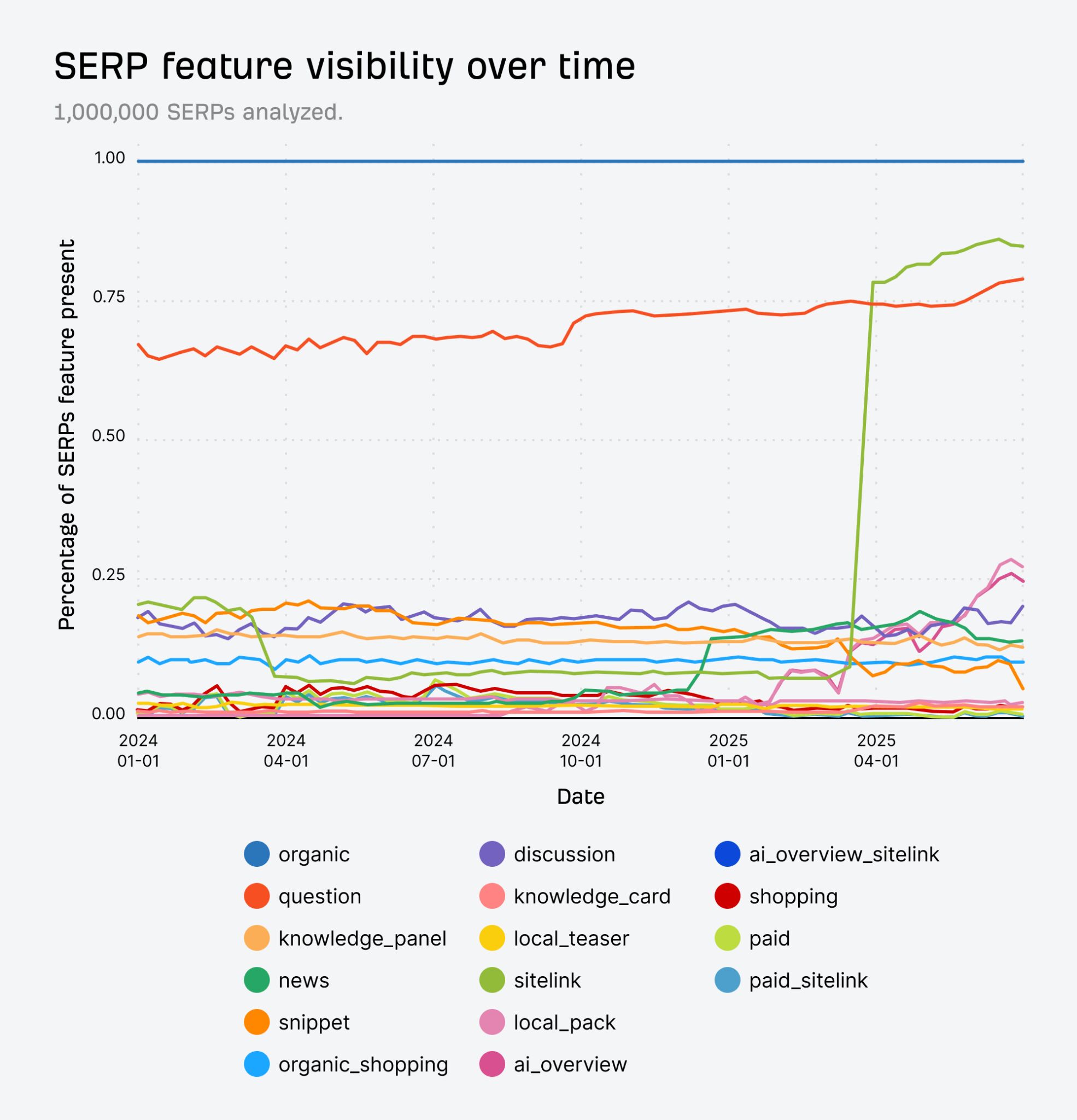
AI SERP features are not a monolith. They appear in numerous formats, each with distinct optimization requirements. Recognizing these variations is the first step toward a targeted strategy. Below are the most impactful types currently appearing on major search engines.
AI-Generated Overviews and Summaries
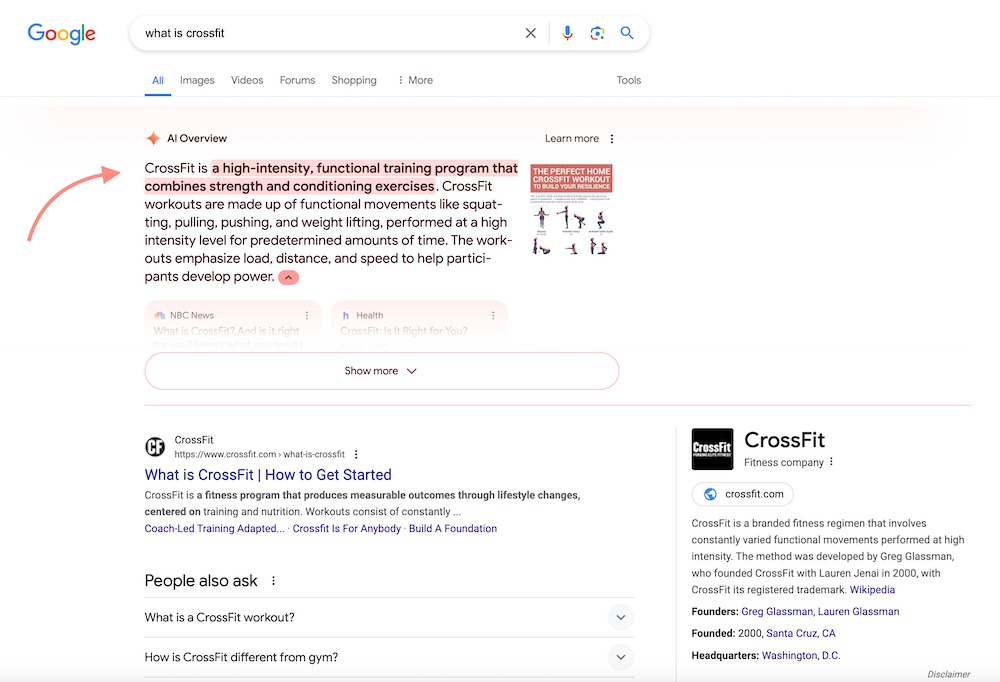
Generative AI summaries, sometimes called Search Generative Experience (SGE) snapshots, appear at the very top of the results for informational and transactional queries. They synthesize content from multiple high-authority pages into a concise narrative that answers the user’s question. Links to source pages are usually included in a carousel or dropdown, but the summary often satisfies intent on its own. These features are dynamic and can include product comparisons, step-by-step guides, and pros-and-cons lists, all formatted in natural language without explicitly matching any single page from the index.
Featured Snippets Enhanced by AI
Featured snippets existed before large language models dominated headlines, but their generation has become far more sophisticated with AI. Modern snippets are no longer simple extracts of text. They can present tables, ordered lists, and hybrid formats that combine a concise answer with a “people also ask” carousel directly below. AI determines not only which passage to extract but also how to structure it for maximum clarity. In many cases, the snippet is rewritten to improve grammar or completeness, making it a truly synthesized piece of content.
Knowledge Panels and Entity Cards
Knowledge panels are built from the search engine’s Knowledge Graph, a massive database of entities and their interconnections. AI continually enriches these panels by validating facts, cross-referencing the web, and predicting what information a user most likely needs. For a brand, a knowledge panel can display headquarters, founder names, social profiles, recent news, and related entities—all without a single piece of on-page markup if trust signals are sufficiently strong. However, structured data markup like organization schema remains a powerful tool to reinforce accuracy.
People Also Ask (PAA) Dynamic Clusters
The “People Also Ask” box has evolved from a static list of questions into a context-aware, infinitely expanding cluster of interconnected queries. AI predicts which questions to show based on the initial query and subsequent user behavior across sessions. Selecting one answer often triggers a cascade of new, more specific questions generated in real time. This feature is strongly influenced by natural language processing and a deep understanding of topic hierarchies, making it a critical target for content that definitively answers tightly related question pairs.
AI-Driven Image and Video Packs
Visual search features are now infused with machine learning capable of understanding objects, scenes, and even the sentiment within multimedia content. AI SERP features can pull a keyframe from a video as the primary result thumbnail or surface a specific image with an overlaid descriptive label generated on the fly. For complex how-to queries, YouTube chapters are algorithmically selected and displayed as expandable segments within the results, allowing users to jump directly to the most relevant moment. Image factuality and alt-text accuracy have never played a larger role.
Interactive Tools and Calculators
Search engines have started embedding interactive utilities—mortgage calculators, currency converters, color pickers, or even meta-description-length counters—directly into the results page. These tools are AI-powered in the sense that they adapt to the user’s input and may pull live data from trusted databases. While many are hard-coded by the search engine for popular use cases, websites can trigger similar features through rich results like recipe cards, job postings, and event listings, all of which rely on structured data parsed by AI algorithms.
Benefits and Limitations of AI SERP Features
These features reshape the traffic landscape dramatically, offering both opportunities and significant challenges for content publishers. A balanced perspective is essential for strategic decision-making.
| Benefits | Limitations |
|---|---|
| Instant Authority Visibility: Appearing within an AI-generated overview or featured snippet elevates a brand’s perceived expertise even without a click. | Zero-Click Growth: Users often get complete answers within the SERP, reducing click-through rates for sites that supply the underlying information. |
| Enhanced Brand Association: Being cited as a source in AI snapshots puts your name in front of high-intent audiences repeatedly, building mental availability. | Attribution Ambiguity: Links may be collapsed or delayed, making it hard for users to identify the original source and weakening direct referral traffic. |
| Long-Tail Optimization at Scale: AI features pull together niche answers from diverse content, rewarding comprehensive topical coverage rather than isolated keyword targeting. | Content Commoditization: When AI summaries synthesize dozens of articles, the unique value of any single piece can be diluted unless the content provides exclusive data, original research, or interactive depth. |
| Voice and Visual Search Integration: AI summaries feed voice assistant answers and visual search results, opening new channels beyond the text-based SERP. | Algorithmic Opacity: Exact ranking factors for AI features remain undisclosed, making targeted optimization more reliant on pattern recognition than confirmed signals. |
How AI SERP Features Compare to Traditional Organic Listings
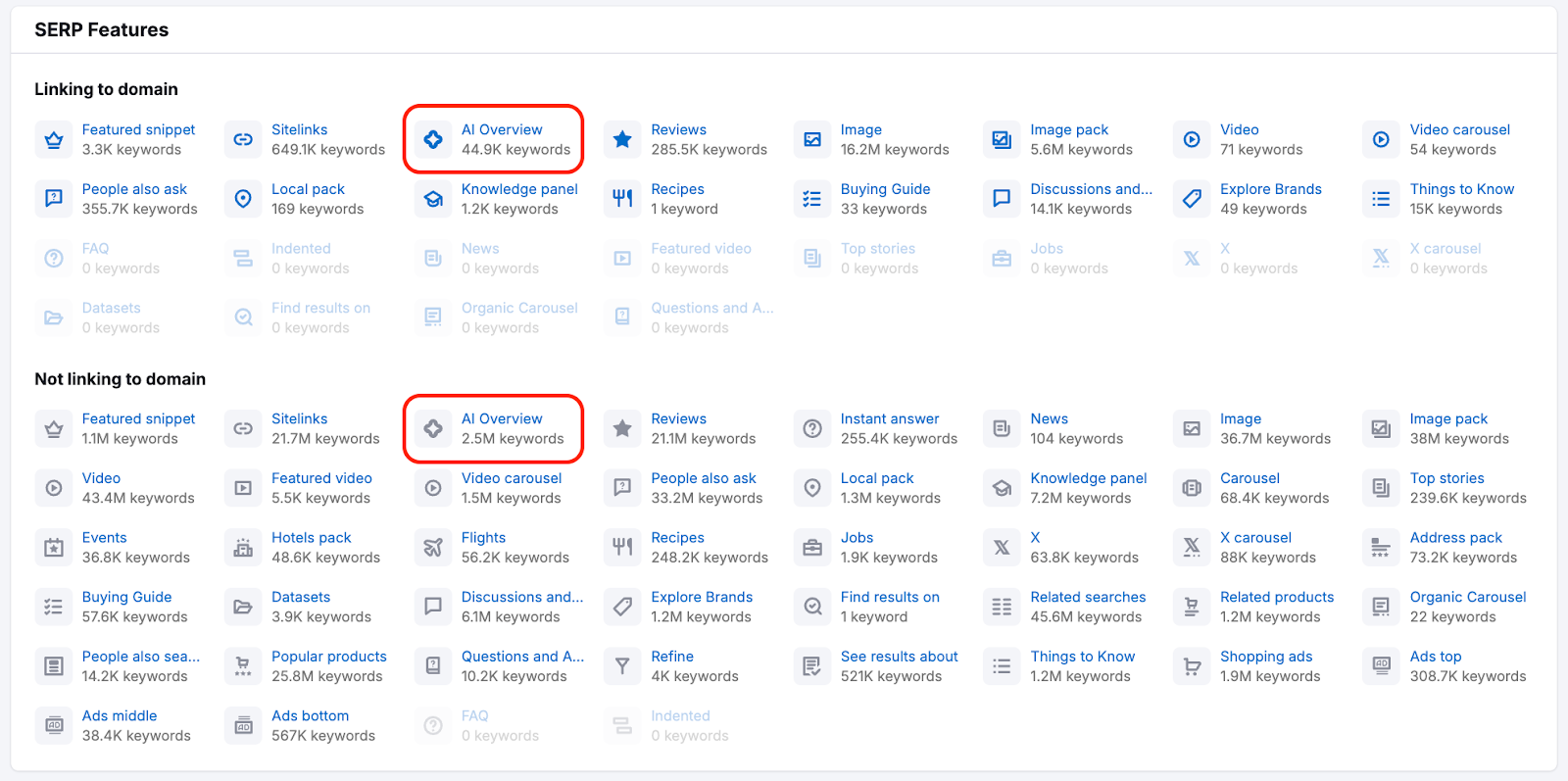
The coexistence of AI SERP features and the classic ten blue links represents the most significant tension in SEO today. Their relationship is not a simple replacement but a reordering of visual hierarchy and user attention.
Traditional organic listings rely on meta tags, content relevance, backlinks, and page experience signals to earn a prominent position. They give users clear attribution and the promise of deeper exploration. AI SERP features, by contrast, aggregate and condense information from multiple sources, often pushing organic results further down the fold. A page ranked number one organically may sit partially obscured beneath a generative snapshot, a people also ask box, and a video carousel. The click curve is no longer linear; it is fragmented across many feature types.
From a user perspective, AI features serve immediate-gratification intent extremely well. When someone searches for “how to reset a router password,” an AI summary with exact steps is superior to scrolling through a 3,000-word guide. However, for research-heavy or transactional queries, AI features frequently lack the nuance, trust signals, and persuasive copy that a well-crafted landing page provides. The result is a symbiotic yet competitive ecosystem where the same content must satisfy both the algorithm’s extraction engine and the human visitor who does click through.
Practical Optimization for AI SERP Features
Optimizing for AI SERP features demands a shift away from isolated keyword ranking toward entity-based authority and extreme content clarity. The following tactics align with how AI parses and selects information.
Build Unassailable Topical Authority
AI models are trained to favor sources that demonstrate comprehensive coverage of a subject area. Instead of publishing one-off posts, develop deep content clusters interconnected through clear internal linking. A central pillar page should broadly answer the main topic, while cluster pages address every nuance, sub-question, and related semantic angle. When AI encounters a cluster with strong signals—backlinks, consistent entity mentions, and coherent structure—it is far more likely to pull snippets, summaries, and suggested questions from that set of pages.
Structure Content for Machine Reading
- Use precise, descriptive headings that mirror query language.
- Place a concise direct answer immediately after each heading, then expand with supporting detail.
- Employ ordered and unordered lists for steps, comparisons, and takeaways.
- Add clear “What is X?” and “How does X work?” sections, as AI features frequently extract from definitional statements.
- Incorporate tables with proper table tags and captions, as they are prime candidates for featured snippet extraction.
- Vague or Metaphorical Headings: Clever wordplay confuses AI extraction. Headings should state exactly what the section contains. Replace “The Magic Behind the Curtain” with “How AI Powers Featured Snippets.”
- Missing the Definitional Statement: AI often pulls from a simple, one-sentence definition early in the content. Omitting this or burying it after three paragraphs of background reduces snippet eligibility.
- Ignoring the Long-Tail Question Journey: Creating content that only answers the main query without addressing the 5–7 follow-up questions a typical user asks weakens PAA and generative snapshot coverage.
- Inconsistent Entity Information Across the Web: Discrepancies in company name, address, or official URL across directories and social signals erode the AI’s confidence and can result in an incorrect or missing knowledge panel.
- Content Cannibalization Without Clear Clustering: Multiple pages targeting near-identical intent split authority and confuse the AI model, which may then favor a competitor with a single definitive resource.
- Neglecting Visual and Multimedia Optimization: Images without descriptive alt text, file names, and surrounding context miss the opportunity to appear in AI-curated image packs or video highlights. AI uses visual understanding to index and surface the most relevant visual element.
- Chasing Random AI Feature Appearances: Optimizing only after seeing a competitor’s sudden feature presence without understanding the underlying entity authority leads to fragile, short-lived gains.
Leverage Structured Data and Schema Markup
Structured data is not a direct ranking signal for most AI SERP features, but it acts as a declarative layer that confirms entity relationships, facts, and organizational details. Use Organization, LocalBusiness, Article, FAQ, HowTo, and Product schema where relevant. When AI models validate data extracted from text against structured markup, the confidence level increases. For knowledge panels, consistent schema across your about page, social profiles, and trusted directories solidifies entity association.
Claim and Optimize Knowledge Panels
Knowledge panels are often automatically generated. To influence or claim one, verify your entity with Google’s Knowledge Graph claiming process. Then ensure that your official website, Wikipedia page (if applicable), and authoritative data sources contain consistent, accurate information. Regularly update any public database entries for your organization. The AI that assembles knowledge panels places heavy weight on factual consistency across high-trust sources.
Optimize for Generative Summaries
Generative AI summaries favor content that is credible, well-sourced, and uniquely insightful. Include original statistics, survey results, or case study data that AI cannot easily synthesize from elsewhere. These data points increase citability. Use clear attribution and date stamps to signal freshness. Moreover, mention key entities (people, brands, products, concepts) in unambiguous terms, as entity recognition is central to how AI builds its response.
Capture “People Also Ask” Opportunities
Identify high-volume question clusters using keyword research tools and then create dedicated sub-sections that answer each question concisely. Format the question as an H2 or H3, immediately followed by a short, plain-language answer (40–60 words). Then provide expanded analysis. This pattern aligns perfectly with how PAA data is extracted. Do not rely on FAQ schema alone; the on-page structure is what AI reads.
Common Mistakes When Targeting AI SERP Features
Pursuing visibility in AI-driven features requires strategic precision. Many well-intentioned efforts fail because of fundamental missteps that reduce entity clarity or signal mixed intent to search algorithms.
Important Notes for Sustained Success
Succeeding with AI SERP features is a long-term investment in brand credibility and user-first content. Several strategic principles should guide every decision.
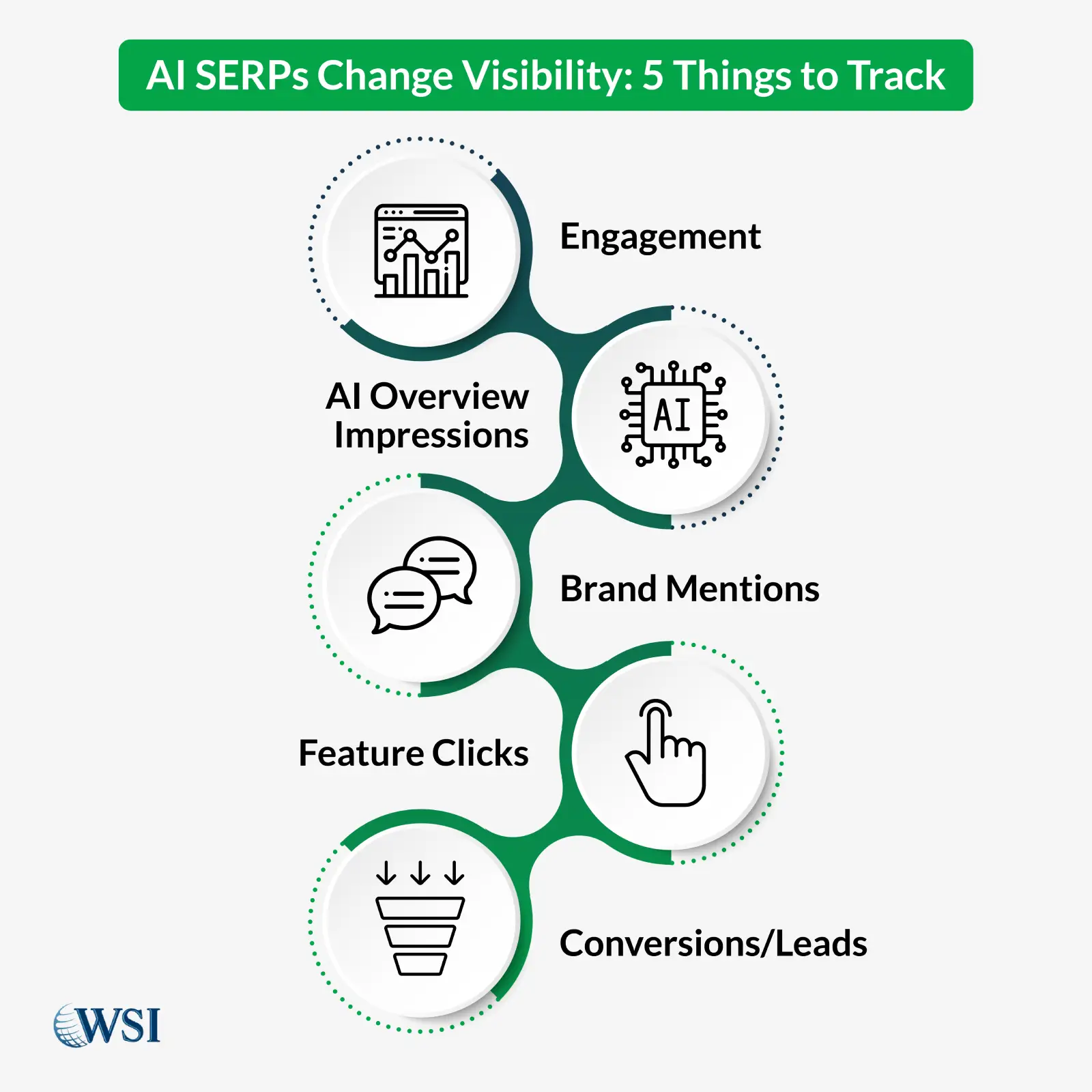
First, prioritize E-E-A-T signals. Authorship pages with verified expertise, transparent editorial policies, and citations from authoritative external sources (like scholarly articles, government data, or established industry bodies) strengthen the AI’s trust layer. Second, regularly audit how your content appears in SERPs using rank tracking tools that separate organic links from feature appearances. Track impression and click data at the feature level when possible. Third, accept that some informational queries will never yield high click-through rates, but that a strong feature presence still builds the brand’s associative memory, which pays dividends in later transactional searches.
Fourth, do not sacrifice page experience for AI optimization. Core Web Vitals, mobile-first design, and fast load speeds remain indirect but important signals that affect overall crawl efficiency and user satisfaction. Fifth, stay informed about generative AI policy changes, as attribution models, link presentation, and opt-out mechanisms are evolving. Content that currently fuels AI summaries could be treated differently in future updates, making adaptability a core competency.
Frequently Asked Questions About AI SERP Features
What exactly are AI SERP features?
AI SERP features are results page elements such as generative summaries, featured snippets, knowledge panels, and dynamic question boxes that are assembled or generated by artificial intelligence rather than purely traditional indexing. They aim to answer queries directly within the search results using machine learning, natural language processing, and large language models to synthesize and format information.
How do AI SERP features affect organic traffic?
They can both increase and decrease organic traffic. Appearing inside an AI overview or snippet builds brand visibility and can increase clicks for trusted sources, but many queries are fully answered without a click, leading to reduced traffic for informational terms. Sites that adapt by providing unique, in-depth information often maintain stronger click-through rates from accompanying links.
Can small websites appear in AI-generated summaries?
Yes, small websites can appear if they demonstrate deep expertise on a specific topic, provide original data, and build strong topical authority through well-structured content and authentic citation signals. AI models prioritize relevance and trustworthiness over domain size. Niche sites with unique insights frequently win placements over larger, more generic publishers.
Will structured data guarantee an AI SERP feature?
No, structured data alone does not guarantee an AI SERP feature. It helps search engines understand content semantics and entity relationships, which can increase eligibility and accuracy. However, the AI algorithm ultimately selects sources based on content quality, authority signals, user engagement patterns, and contextual relevance. Schema is an enabler, not a direct ranking factor for features like generative snapshots.
How often do AI SERP features change?
AI SERP features change constantly. A single query may show a generative summary today and revert to a traditional featured snippet tomorrow as algorithms update, confidence levels shift, and new content is published. Seasonal intent, breaking news, and user behavior feedback loops all trigger real-time adjustments to which features appear and how they are formatted.
What is the difference between an AI snippet and a featured snippet?
A traditional featured snippet is a specific block extracted verbatim or nearly verbatim from a single page to directly answer a query. An AI snippet (or AI-generated overview) is synthesized by generative models, combining information from multiple sources into an original explanatory text that may not exist in that form anywhere on the web. AI snippets are typically more conversational and comprehensive, often including comparisons and multi-part responses.
Conclusion
AI SERP features have moved beyond experimental phases to become the default experience for a large share of search queries. Their influence spans brand visibility, traffic dynamics, and the very definition of what constitutes a successful content strategy. For any organization serious about digital presence, understanding and optimizing for these features is not a niche tactic—it is the core discipline of modern search marketing.
The roadmap to success involves building genuine topical authority, structuring content for machine clarity, reinforcing entity signals across the web, and relentlessly focusing on providing value that even the most advanced AI model cannot replicate. As search technology continues to evolve, the brands that earn the role of primary cited source inside AI SERP features will be those that combine deep human expertise with precise technical implementation. The opportunity is here, and it rewards those who treat every query as a chance to demonstrate unmatched trustworthiness and relevance.
Xem thêm:
- How to Create SEO Briefs with AI: A Step-by-Step System for Faster, Smarter Content Planning
- AI SEO Authority Building: The Complete Playbook for Dominating Search in 2025
- AI SEO Organic Rankings: The Complete Guide to Dominating Search in 2025
- AI SEO AI Mention Tracking: The Complete Guide to Monitoring Brand Visibility in the Age of Generative Search
- AI Search vs Google Search: The Complete Guide to How Modern Query Engines Actually Work
Bài viết cùng chủ đề:

AI SEO SEO Automation with Make: The Complete Workflow Guide

AI SEO SEO Automation with Zapier: The Complete Workflow Guide

AI SEO SEO Automation with n8n: The Complete Workflow Guide
AI SEO SEO Automation with Gemini: The Complete Guide to Scaling Organic Growth

AI SEO SEO Automation with Claude: The Complete Guide to Scaling Content in 2025

AI SEO SEO Automation with ChatGPT: The Complete Playbook for 2025

AI SEO & SEO Automation for Affiliate Sites: The 2025 Playbook for Passive Income Growth
AI SEO & SEO Automation for Bloggers: The Complete Guide to Scaling Your Content

AI SEO & SEO Automation for Agencies: The Complete 2025 Playbook

AI SEO and SEO Automation for Ecommerce: The Complete Playbook for 2025

AI SEO & SEO Automation for WordPress: The Complete Playbook for 2025
AI SEO SEO Automation Strategy: The Complete Playbook for 2025

Mastering the AI SEO SEO Automation Process: A Complete Guide to Scaling Organic Growth
AI SEO SEO Automation System: The Complete Guide to Scaling Organic Growth in 2025
AI SEO SEO Automation Platform: The Complete Guide to Scaling Organic Growth in 2025
AI SEO SEO Automation Software: The Complete Guide to Scaling Organic Growth in 2025















