
No products in the cart.
AI Conclusion Generator: Generate Powerful Closing Paragraphs in Seconds
29
Jul
Jul
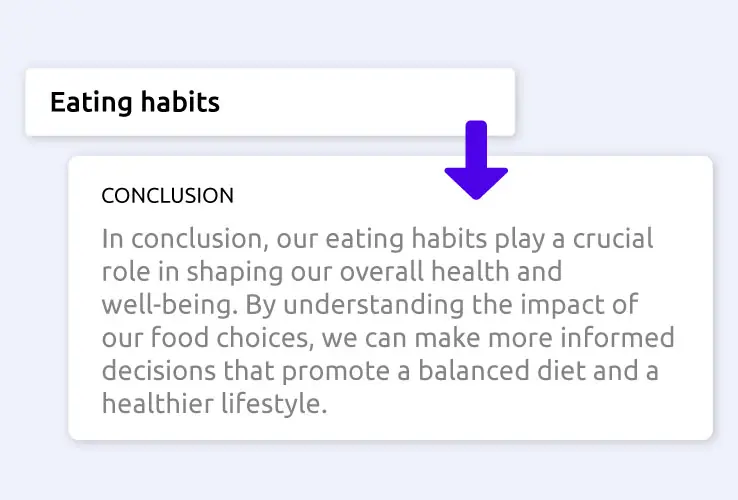
An AI Conclusion Generator is a specialized writing tool that uses artificial intelligence to automatically produce final paragraphs for essays, articles, reports, blog posts, and other written content. In an era where content velocity matters, writers, students, and professionals turn to these generators to overcome conclusion fatigue, maintain a consistent tone, and save valuable time. By analyzing the main arguments and key points you provide, an AI conclusion generator crafts a concise, coherent ending that reinforces the central message without introducing new ideas. This article explores every facet of the technology—from how it works under the hood to practical workflows and ethical considerations—so you can decide whether an AI conclusion maker fits into your writing process.
What Is an AI Conclusion Generator?
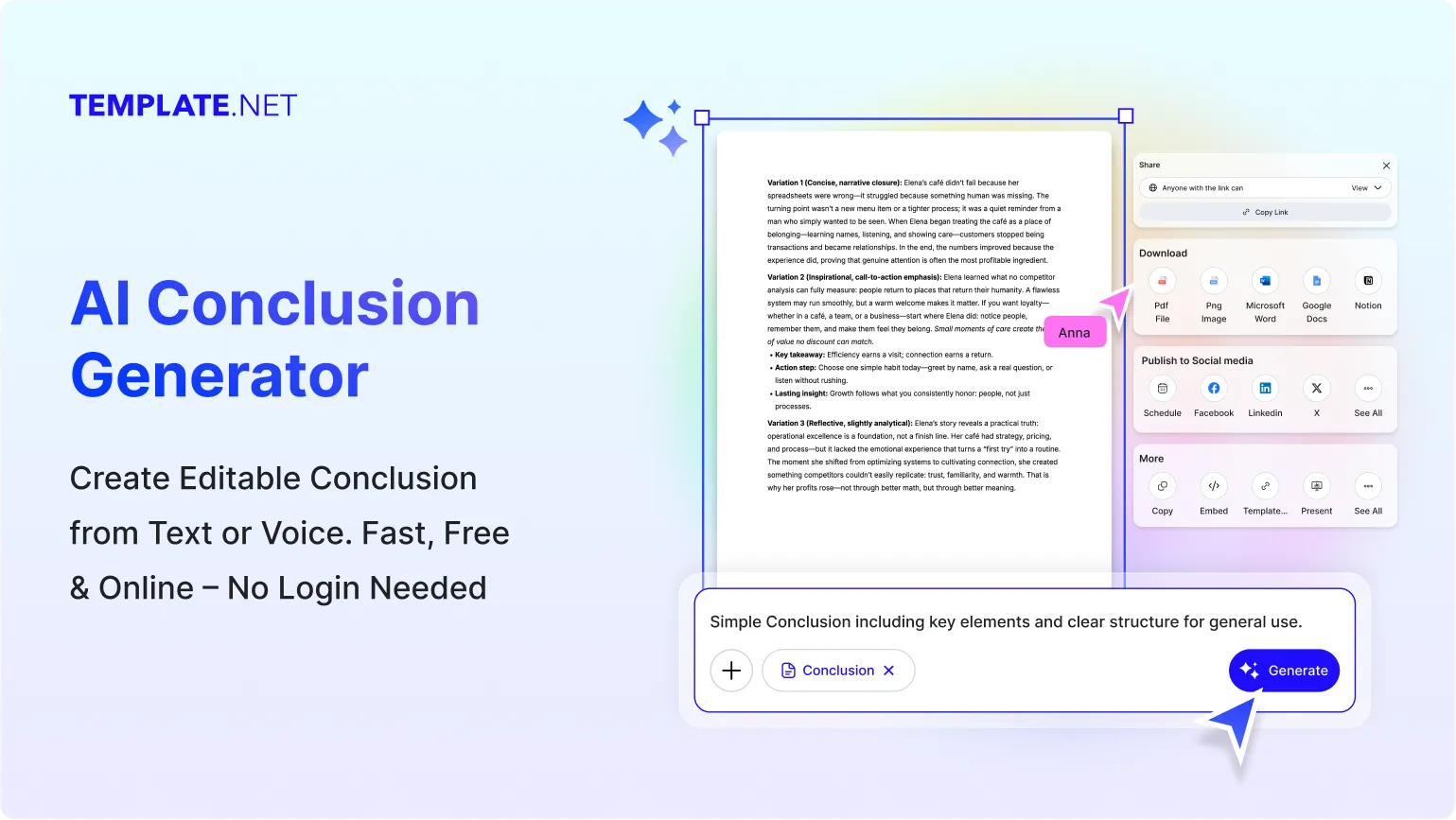
An AI conclusion generator is a software application, often web-based, that receives input about your written work and returns a ready-to-use concluding paragraph or several variant conclusions. The tool does not simply stitch together a generic closing sentence; modern systems parse the semantic meaning of your topic, thesis, and supporting points to produce a logically structured ending. The output typically includes a restatement of the thesis, a summary of key arguments, and a final thought or call to action, all tailored to the context you supply.
These generators belong to the broader category of AI writing assistants. They leverage large language models trained on vast corpora of high-quality conclusions from academic papers, newspaper editorials, marketing copy, and creative nonfiction. This training enables them to mimic the patterns of effective concluding paragraphs—transition phrases, summative language, and impactful closing lines—while adapting to diverse subject matters. Whether you need a conclusion for a persuasive essay, a research paper, a business proposal, or a YouTube video script, the AI conclusion generator adjusts its style accordingly.
Core Capabilities of an AI Conclusion Generator
- Thesis restatement: Rephrases the original thesis without sounding repetitive, using synonyms and altered sentence structure.
- Key point synthesis: Distills the main arguments into one or two sentences that capture the essence of the body content.
- Closing impact: Adds a thought-provoking statement, a prediction, a recommendation, or a rhetorical flourish that leaves a lasting impression.
- Tone matching: Aligns the conclusion with the requested tone—formal, conversational, persuasive, academic, or neutral.
- Length control: Generates conclusions of a specified word count or paragraph count to meet assignment or publication guidelines.
- Natural Language Processing (NLP): Tokenization, part-of-speech tagging, and dependency parsing help the model recognize syntactic roles.
- Transfer learning: Pre-trained weights from general text are adapted to the domain of concluding paragraphs through additional fine-tuning.
- Attention mechanisms: Self-attention layers weigh the importance of each word in the input relative to every other word, enabling long-range dependency capture.
- Reinforcement learning from human feedback (RLHF): Some models are further refined with human evaluators ranking generated conclusions, improving fluency and appropriateness.
- Providing insufficient context: Inputting only the topic without a thesis or points leads to bland, circular conclusions. Always supply a full thesis and at least three supporting arguments to ground the AI.
- Assuming the conclusion is ready to publish: Every AI‑generated text needs human scrutiny. Check for logical flow, factual accuracy, and coherence with the preceding content.
- Over‑reliance on a single tool: Different generators have different strengths. Cross‑checking among two or three free or paid tools can reveal which model best handles your domain.
- Neglecting plagiarism checks: Even though direct copying is rare, running the output through Copyscape or Turnitin adds a layer of safety.
- Using the same conclusion for every article: If the tool defaults to a generic pattern—“In conclusion, this paper has discussed…” —rework the opening transition to keep it fresh.
- Ignoring citation requirements: In academic work, conclusions often reference earlier citations. An AI conclusion generator does not insert proper in‑text citations. Writers must manually add them where appropriate.
How an AI Conclusion Generator Works
Behind every AI conclusion generator is a transformer-based language model, such as GPT-4, Claude, or LLaMA, fine-tuned on summarization and text generation tasks. When you provide input—the article’s title, thesis, main points, and desired tone—the model encodes this information into vectors, attends to the most relevant tokens, and decodes a sequence of words that forms the conclusion. The process involves several layers of computation to ensure coherence, relevance, and grammatical accuracy.
Advanced generators employ prompt engineering and retrieval-augmented generation to keep the conclusion tightly bound to the source material. Instead of hallucinating unrelated facts, the system references the supplied information and avoids introducing new evidence. Some tools allow you to paste the entire body of your article; the AI then builds a conclusion by analyzing every paragraph. Others ask for bullet points, which the model expands into fluid prose. Regardless of the input method, the underlying goal is to compress the document’s core message into a self-contained, forward-looking ending.
The Technology Stack
Types of AI Conclusion Generators
AI conclusion generators arrive in different packages, each suited to particular workflows. Understanding the landscape helps writers choose a tool that aligns with their budget, technical comfort, and output needs.
Free Online Conclusion Generators
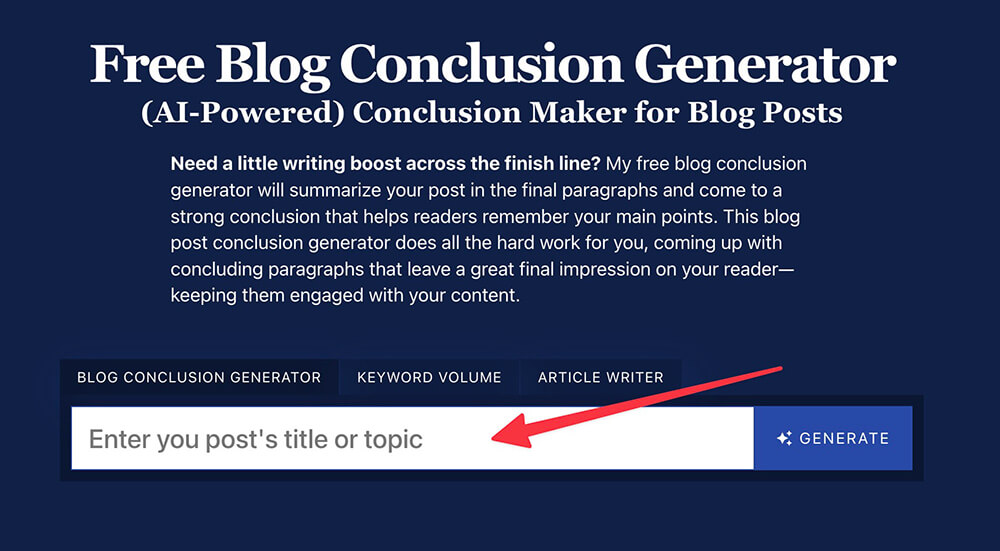
These are browser-based tools that require no sign‑up and offer a set number of free generations per day or month. They typically accept a short topic description or a few bullet points and return a conclusion paragraph. Examples include small utility sites built on open‑source models. While convenient, free generators often impose character limits, lack advanced tone control, and may serve advertisements. They work best for casual use, such as a quick school essay or a low‑stakes social media post.
Premium AI Writing Platforms with Conclusion Features
Comprehensive platforms like Jasper, Writesonic, Copy.ai, and Rytr integrate conclusion generation as one of many templates. Users can access long‑form document editors, tone presets, and plagiarism checkers. These tools maintain context across an entire article, so the conclusion naturally follows from the previous sections. Subscription plans unlock unlimited generations, team collaboration, and integration with content management systems. Premium platforms prioritize data privacy and often allow custom brand voice training.
Specialized Academic Conclusion Generators
A growing niche focuses exclusively on scholarly writing. These AI conclusion generators are fine‑tuned on academic papers, dissertations, and journal articles. They emphasize formal language, adherence to style guides (APA, MLA, Chicago), and proper citation integration—though the writer must still verify and insert actual references. Some are embedded in research writing suites that help structure entire papers, from abstract to conclusion.
API-Based Conclusion Services
Developers can integrate conclusion generation into their own applications via REST APIs from providers like OpenAI, Anthropic, and Cohere. This allows content management systems, educational platforms, and writing apps to offer a native “Generate Conclusion” button. API access provides maximum flexibility—developers control the prompt, output length, temperature, and fine‑tuning datasets—making it the choice for enterprises building custom writing assistants.
Benefits of Using an AI Conclusion Generator
The rise of the AI conclusion generator is not solely about speed; it addresses genuine writing friction points. Writers across domains report measurable improvements when they complement their skills with AI.
Time Efficiency
Crafting a compelling conclusion often takes as long as writing an entire body section because it demands synthesis and stylistic finesse. An AI conclusion generator delivers a polished draft in under ten seconds, freeing up time for research, editing, or producing more content. For content marketers producing multiple long‑form articles per week, this translates to saving hours that can be redirected toward strategy and promotion.
Consistency in Tone and Structure
Maintaining a uniform voice across a multi‑author blog or a large academic project is challenging. The AI conclusion generator, when configured with clear tone guidelines, ensures every conclusion adheres to the same structural pattern—restated thesis, summary, final thought. This consistency reinforces brand identity or academic rigor and gives the reader a predictable, satisfying closure experience.
Overcoming Writer’s Block
Even experienced writers occasionally stare at a blank screen when it is time to wrap up. The AI conclusion generator breaks the paralysis by providing a starting point. Writers can then edit, expand, or combine the generated paragraphs, using them as a springboard rather than a final product. The mere act of seeing a plausible conclusion can reactivate creative flow.
Quick Summarization of Lengthy Content
For long‑form technical reports or legal documents, summarizing hundreds of pages into a concise executive summary is daunting. An AI conclusion generator can ingest the document’s abstract and key findings, producing a summary paragraph that highlights the most critical outcomes. This is invaluable for busy executives who need a snapshot without reading the entire document.
Multilingual Capabilities
Many AI conclusion generators support dozens of languages. A researcher who writes a paper in French can generate a conclusion in English for an international journal submission, or a business can localize conclusions for different markets without hiring multiple translators. The AI maintains argument integrity while adapting linguistic nuances.
Limitations and When Not to Use an AI Conclusion Generator
Despite the impressive capabilities, an AI conclusion generator is not a universal substitute for human judgment. Recognizing its boundaries prevents misuse and preserves writing quality.
Risk of Shallow or Generic Output
If the input is vague—a simple topic like “climate change” without any specific thesis or arguments—the generated conclusion may become a collection of platitudes. The AI needs substantive information to produce a meaningful ending. Writers must supply a clear thesis and at least three supporting points to guide the model toward a substantive conclusion.
Lack of True Creativity and Original Insight
AI conclusion generators excel at pattern replication, not genuine originality. For thought‑leadership pieces, personal essays, or literary works where a unique voice is paramount, an AI‑generated paragraph can feel sterile. The tool cannot draw from lived experience, emotional depth, or novel perspectives. In such cases, the conclusion should remain human‑crafted, perhaps with AI used only for proofreading.
Potential for Unintentional Plagiarism
Because language models are trained on existing texts, t While direct plagiarism is rare, similarity detection software may flag some passages. Writers should always run AI‑generated text through a plagiarism checker and revise any suspect segments.
Ethical and Academic Integrity Concerns
Submitting an entirely AI‑written conclusion without disclosure may violate academic honor codes or publisher policies. Institutions increasingly treat undetected AI use as misconduct. Writers must check their organization’s guidelines; many require that AI assistance be acknowledged, and the final work must represent the student’s own understanding. The AI conclusion generator is best used as a drafting aid, not a final submission.
Comparison: AI Conclusion Generator vs. Manual Conclusion Writing
| Factor | AI Conclusion Generator | Manual Writing |
|---|---|---|
| Speed | Seconds, regardless of text length | 10–30 minutes per conclusion, depending on complexity |
| Consistency | High, always follows defined structure and tone | Variable, subject to writer fatigue and mood |
| Creativity | Moderate; relies on learned patterns | High; can introduce novel metaphors, emotional arcs |
| Input required | Needs clear thesis and key points | Full understanding of the entire document |
| Cost | Free to subscription‑based ($10–$80/month) | Time cost only |
| Risk of plagiarism | Low but present; requires checking | None if properly cited |
| Best for | High‑volume content, first drafts, repetitive formats | Thought pieces, literary works, high‑stakes academic work |
How to Use an AI Conclusion Generator Effectively
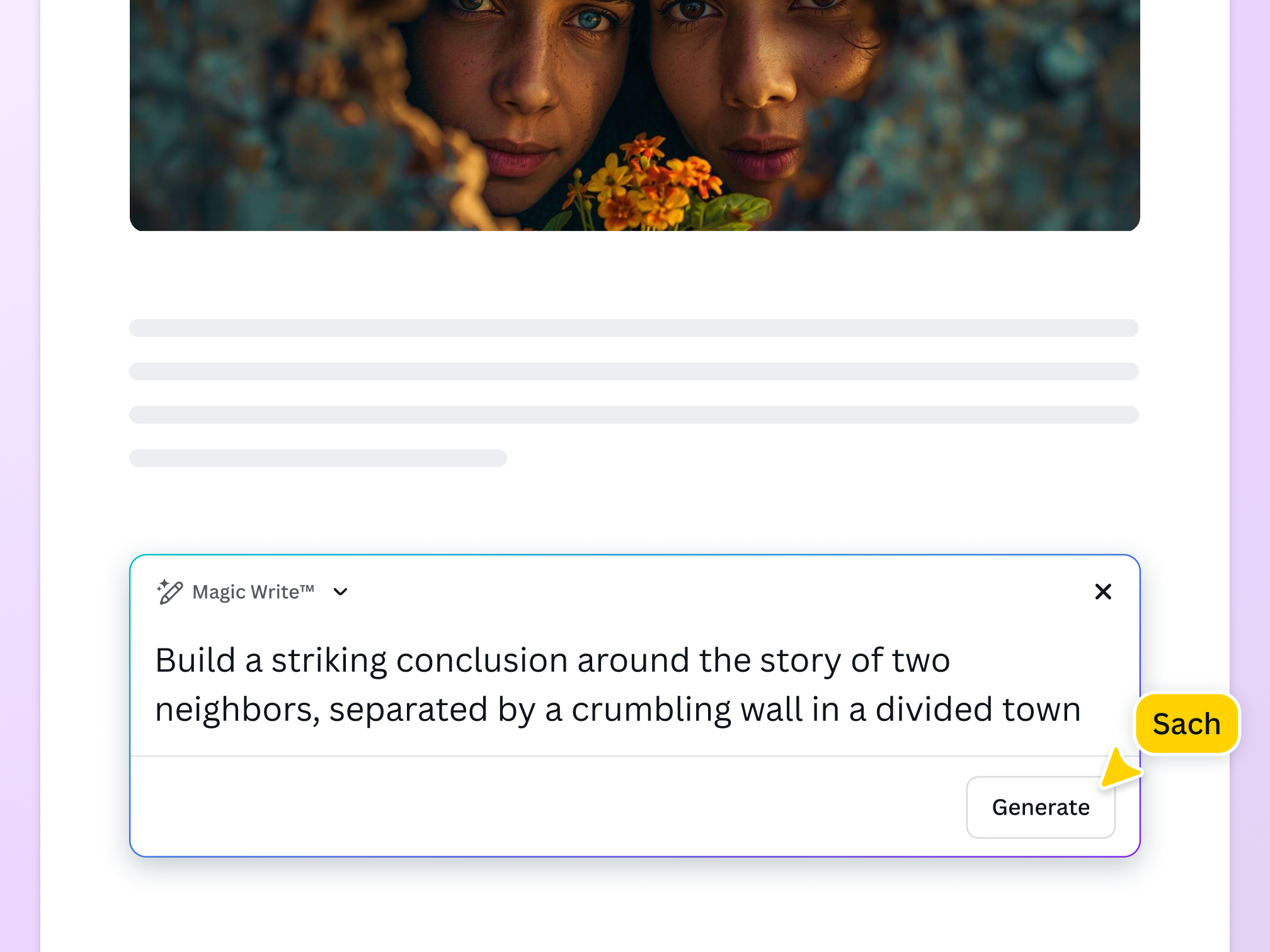
Getting the most out of an AI conclusion generator requires more than pasting a topic and hoping for brilliance. A structured workflow ensures the final output is both unique and aligned with your document’s intent.
Step 1: Prepare a Clear Thesis Statement
Before opening any tool, distill your paper’s central argument into one or two sentences. For example, instead of “renewable energy,” write “Investing in offshore wind farms reduces carbon emissions more cost‑effectively than solar farms in northern climates.” The more specific the thesis, the more focused the AI‑generated conclusion will be.
Step 2: List Your Main Supporting Points
Extract three to five key arguments from your body paragraphs. Format them as concise bullet points. If your article discusses economic, environmental, and political aspects, list each with a brief descriptor. Avoid dumping entire paragraphs; the AI needs digestible signals, not raw text noise.
Step 3: Select the Appropriate Tone and Style
Most AI conclusion generators let you choose a tone—academic, persuasive, conversational, formal, or professional. Match this to your target audience. A blog post about mental health might require a compassionate, informal tone, while a legal memorandum demands precise, dispassionate language. Some advanced platforms accept custom tone descriptions, such as “empathetic but authoritative.”
Step 4: Generate Multiple Variants
Generate at least three different conclusions. Slight variations in wording and structure emerge when you re‑run the same prompt due to the probabilistic nature of language models. Compare the options and identify which one best captures the spirit of your work. Often, the ideal conclusion is a hybrid: the best sentence from variant A combined with the closing line from variant B.
Step 5: Edit and Personalize
Treat the AI output as a sophisticated draft, not a final product. Adjust phrasing to match your voice, insert specific data points or quotes, and ensure the conclusion does not introduce new concepts. Reading aloud can highlight awkward cadences. The human touch transforms a generic paragraph into a memorable ending.
Common Mistakes When Using an AI Conclusion Generator (and How to Avoid Them)
Important Notes for Ethical and Professional Use
Transparency is critical. When writing for a journal, a university assignment, or a client who expects original work, disclose the use of AI tools if required. Many institutions now include AI usage policies. Even if not mandatory, acknowledging AI assistance builds trust with readers and demonstrates integrity. Additionally, never use an AI conclusion generator to circumvent learning the skill of writing conclusions. The tool should augment your abilities, not replace the cognitive process of synthesis. Regularly practicing manual conclusion writing hones critical thinking, which in turn makes you a better prompter and editor of AI outputs.
Data privacy matters. Free online generators may store your input for model training. If you are working on confidential business proposals or unpublished research, opt for a paid platform with a strict no‑training‑on‑user‑data policy. Read the terms of service to confirm how your content is handled.
Frequently Asked Questions About AI Conclusion Generators
What is an AI conclusion generator?
An AI conclusion generator is a digital tool powered by large language models that automatically produces a concluding paragraph for a given piece of writing. Users provide the main topic, thesis statement, and key arguments, and the AI synthesizes them into a coherent ending that restates the central idea and offers final insights.
Can I use an AI conclusion generator for academic papers?
Yes, but with caution. An AI conclusion generator can help draft a summary of your research findings, but you must verify factual accuracy, add proper citations, and ensure the conclusion reflects your own understanding. Many universities now require students to disclose any AI assistance, so check your institution’s academic integrity policy before submitting AI‑assisted work.
Are AI-generated conclusions detectable by plagiarism checkers?
While AI‑generated text is not plagiarized in the traditional sense, some AI detection tools (like GPTZero or Turnitin’s AI indicator) can flag content that exhibits patterns typical of language models. To reduce false positives, always edit the generated conclusion substantially—rephrase sentences, inject personal style, and verify all facts. The final text should feel human‑written and unique.
How much does an AI conclusion generator cost?
Prices range from completely free (with limited daily uses) to premium subscriptions between $10 and $80 per month for unlimited generations and advanced features. Some enterprise API solutions charge per token (roughly $0.02 per 1,000 words). For casual users, free versions are sufficient; professionals handling high volumes may benefit from paid plans that offer no ads, better data security, and higher output quality.
Will an AI conclusion generator replace human writers?
No. While these tools excel at generating structurally sound conclusions quickly, they lack the deep insight, emotional resonance, and creative flair that human writers bring. The most effective approach combines AI efficiency with human oversight—the generator provides a strong first draft, and the writer refines it to meet the specific demands of the audience and purpose.
Conclusion
The AI conclusion generator has evolved from a novelty into a practical addition to any writer’s toolkit. It streamlines the often‑dreaded task of wrapping up a document, reduces mental fatigue, and helps maintain a consistent closing rhythm across dozens of projects. From students racing against deadlines to content agencies pushing daily volumes, the ability to generate a tailored, articulate conclusion in seconds is undeniably valuable. Yet the technology’s true power emerges only when paired with human judgment. The writer who learns to feed precise, context‑rich prompts, critically evaluate the output, and infuse the final text with original flair will unlock a new level of both productivity and quality. As AI models continue to advance, the line between assisted and authored will blur further, but the responsible, ethical use of an AI conclusion generator ensures that the human voice remains the defining element of every great ending.
Xem thêm:
- WP Trove AI Templates: The Complete Guide to Smarter WordPress Design
- AI SEO Roadmap: The Complete 12-Month Strategy for 2025 and Beyond
- AI SEO Knowledge Panel Optimization: The Complete Guide to Dominating Search in 2025
- AI SEO Content Scaling: The Complete Playbook for 2025 and Beyond
- AI SEO Documentation: The Complete Guide to Building Smarter Search Strategies
Bài viết cùng chủ đề:

AI SEO SEO Automation with Make: The Complete Workflow Guide

AI SEO SEO Automation with Zapier: The Complete Workflow Guide

AI SEO SEO Automation with n8n: The Complete Workflow Guide
AI SEO SEO Automation with Gemini: The Complete Guide to Scaling Organic Growth

AI SEO SEO Automation with Claude: The Complete Guide to Scaling Content in 2025

AI SEO SEO Automation with ChatGPT: The Complete Playbook for 2025

AI SEO & SEO Automation for Affiliate Sites: The 2025 Playbook for Passive Income Growth
AI SEO & SEO Automation for Bloggers: The Complete Guide to Scaling Your Content

AI SEO & SEO Automation for Agencies: The Complete 2025 Playbook

AI SEO and SEO Automation for Ecommerce: The Complete Playbook for 2025

AI SEO & SEO Automation for WordPress: The Complete Playbook for 2025
AI SEO SEO Automation Strategy: The Complete Playbook for 2025

Mastering the AI SEO SEO Automation Process: A Complete Guide to Scaling Organic Growth
AI SEO SEO Automation System: The Complete Guide to Scaling Organic Growth in 2025
AI SEO SEO Automation Platform: The Complete Guide to Scaling Organic Growth in 2025
AI SEO SEO Automation Software: The Complete Guide to Scaling Organic Growth in 2025















