
No products in the cart.
AI SEO Roadmap: The Complete 12-Month Strategy for 2025 and Beyond
31
Jul
Jul
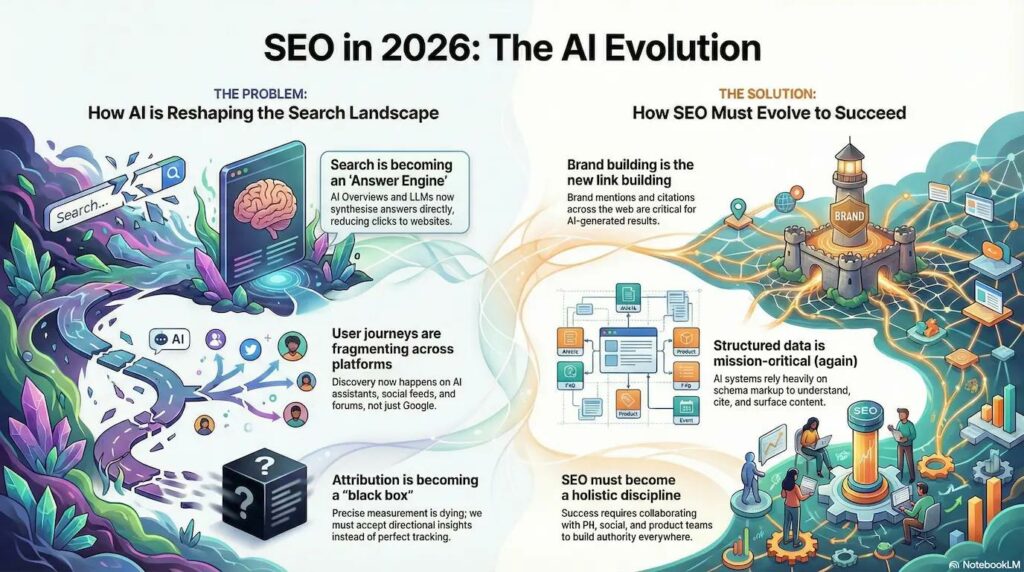
The digital marketing landscape has shifted beneath our feet. Traditional SEO tactics that worked in 2020 are now generating diminishing returns. The new frontier is an AI SEO roadmap—a structured, data-driven approach that leverages machine learning, natural language processing, and predictive analytics to dominate search rankings. This guide provides a comprehensive, month-by-month blueprint for integrating artificial intelligence into every facet of your search optimization strategy, from keyword research to content creation and technical audits.
What is an AI SEO Roadmap?
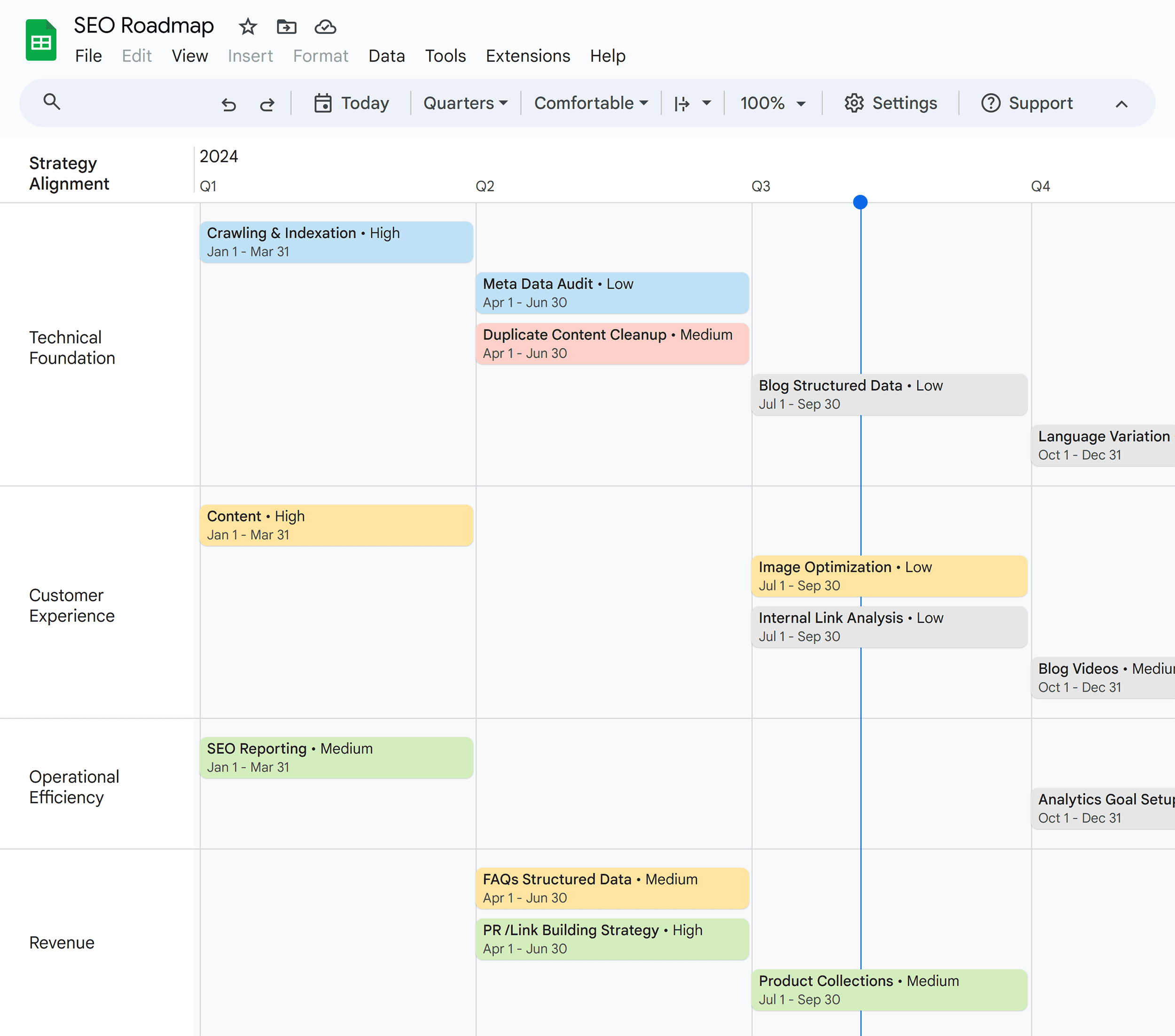
An AI SEO roadmap is a strategic plan that outlines how to use artificial intelligence tools and algorithms to improve a website’s visibility in search engine results pages (SERPs). Unlike traditional SEO, which relies heavily on manual analysis and historical data, an AI-driven roadmap focuses on predictive analysis, real-time adaptation, and automation. It involves using machine learning models to understand search intent, generate content briefs, optimize for entity-based search, and predict algorithm updates before they happen.
This roadmap is not about replacing human expertise. It is about augmenting it. The core principle is to let AI handle the heavy lifting of data processing and pattern recognition, freeing up SEO professionals to focus on creative strategy, brand authority, and user experience. The goal is to build a self-optimizing system that continuously learns from user behavior and search engine feedback.
Why Traditional SEO Fails Without an AI Component
Google’s algorithms, particularly RankBrain and the more recent MUM (Multitask Unified Model), are now deeply integrated with AI. These systems are designed to understand the nuance of language, the relationship between concepts, and the context behind a query. A traditional SEO approach that focuses solely on exact-match keywords and backlink quantity is fundamentally misaligned with how modern search engines evaluate content.
Consider the shift toward zero-click searches and featured snippets. AI-powered search engines are now capable of providing direct answers without requiring a user to click through to a website. To capture these positions, your content must be structured in a way that AI models can easily parse and extract. This requires a roadmap that prioritizes semantic relevance, structured data, and topical authority over simple keyword density.
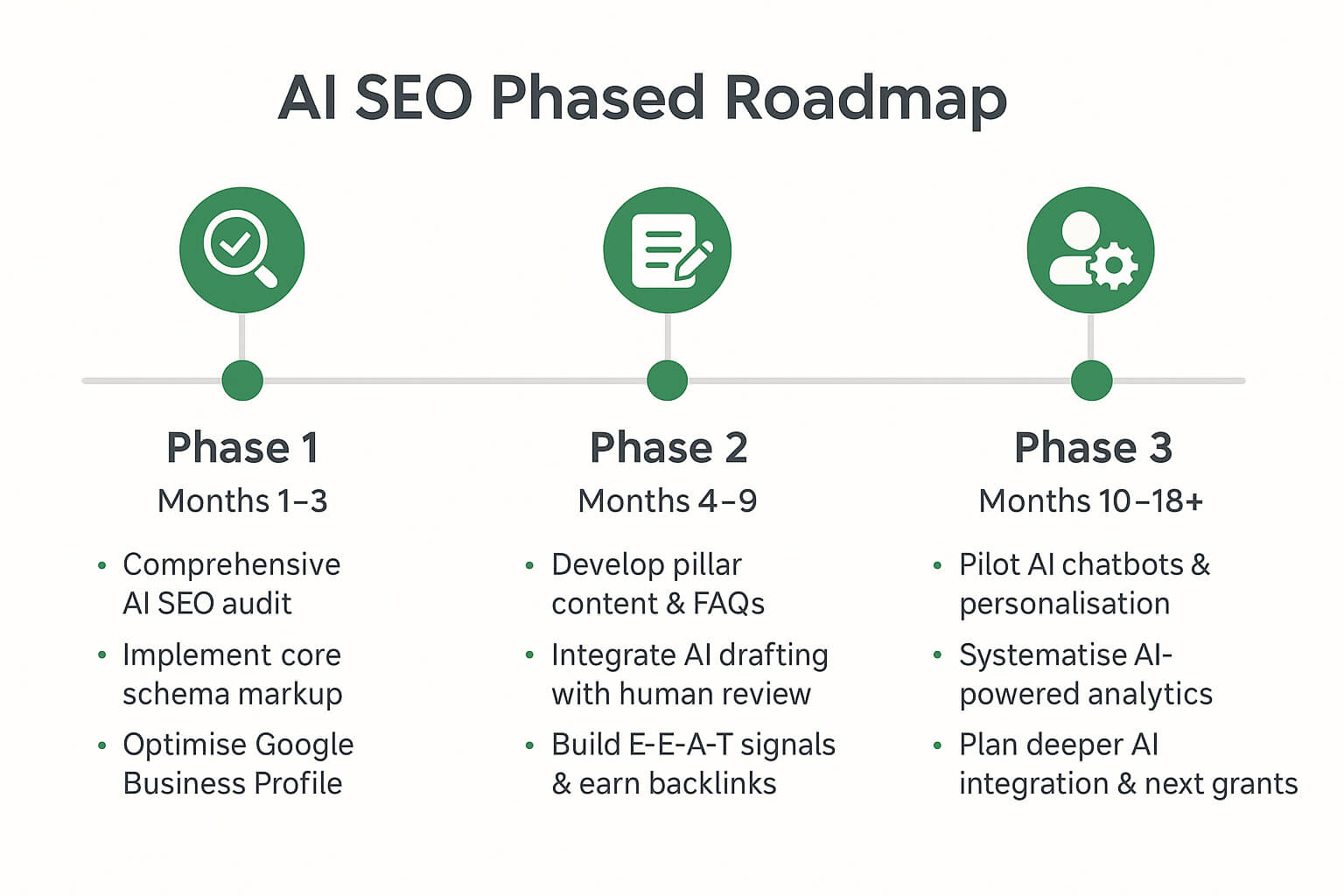
Phase 1: Foundation and AI Readiness (Months 1-3)
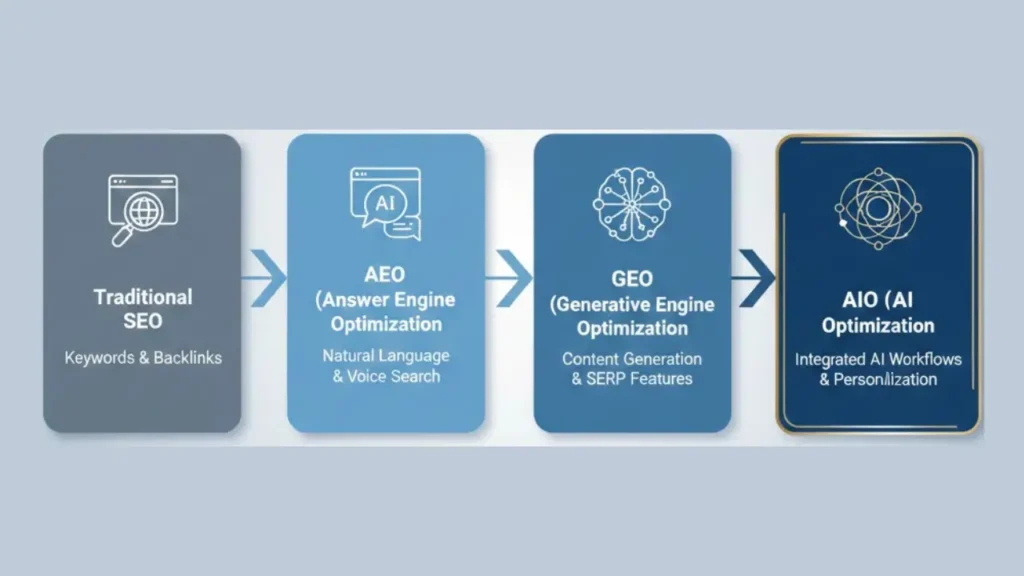
The first phase of any successful AI SEO roadmap is about preparation. You cannot effectively use AI if your technical foundation is weak. This phase focuses on auditing your current digital footprint and setting up the necessary infrastructure for AI integration.
Technical SEO Audit with AI Tools
Start by running a comprehensive technical audit using AI-powered platforms like Sitebulb or Lumar. These tools use machine learning to identify crawlability issues, rendering problems, and indexation errors that a manual review might miss. The AI can prioritize these issues based on their potential impact on organic traffic, allowing you to focus on high-impact fixes first.
Key areas to analyze include:
- Core Web Vitals (LCP, INP, CLS) and mobile usability
- Site architecture and internal linking depth
- Schema markup implementation and validation
- Log file analysis to understand Googlebot behavior
- Duplicate content and canonical tag issues
- Writing concise answers (40-60 words) directly after your H2 headings
- Using structured data (FAQPage, HowTo, Article) to help AI parse your content
- Creating comparison tables with clear data points
- Ensuring your content directly answers the query without ambiguity
- Scalability: AI can analyze millions of data points and generate content briefs in minutes, allowing you to scale your efforts exponentially.
- Accuracy: Machine learning models can identify patterns in user behavior and search engine updates that humans often miss.
- Efficiency: Automating repetitive tasks like rank tracking, reporting, and basic content generation frees up time for strategic thinking.
- Predictive Insights: AI can forecast the potential performance of a piece of content before you even publish it, allowing you to prioritize high-impact topics.
- Data Dependency: AI models are only as good as the data they are trained on. If your historical data is poor, the AI’s predictions will be flawed.
- Lack of Creativity: AI cannot replicate the human touch of storytelling, emotional connection, or original research. Content that relies solely on AI often feels generic.
- Cost: Advanced AI SEO tools can be expensive, and the learning curve for using them effectively is steep.
- Algorithm Volatility: Search engines are constantly updating their algorithms. An AI model trained on last year’s data may not be effective for next year’s search landscape.
Establishing an AI-Powered Keyword Universe
Move beyond simple keyword lists. Use AI clustering tools like Keyword Insights or MarketMuse to group keywords into topical clusters based on semantic similarity. This helps you understand the full scope of a topic, not just individual search terms. The AI analyzes search engine results pages (SERPs) to identify gaps in your content that competitors are covering.
This process involves analyzing the “People Also Ask” boxes, related searches, and the top-ranking pages for your target terms. The A This becomes the blueprint for your content calendar.
Phase 2: AI-Driven Content Engineering (Months 4-6)
With a solid technical foundation and a clear understanding of your keyword universe, you can now move into the content creation phase. This is where AI transforms the entire workflow, from ideation to optimization.
Using NLP for Content Briefs and Outlines
Natural Language Processing (NLP) tools can analyze the top 10 ranking pages for any given keyword and extract the entities, sentiment, and semantic structure that Google considers relevant. Tools like Frase and Surfer SEO generate detailed content briefs that include recommended headings, word count, and related terms. This ensures your content is comprehensive and aligned with search intent.
For example, if you are writing about “best running shoes,” the NLP analysis will reveal that top-ranking pages include sections on pronation, arch support, and shoe durability. Your content brief will automatically include these subtopics, ensuring you do not miss critical information that the AI search engine expects.
Generative AI for Drafting and Ideation
Large Language Models (LLMs) like GPT-4 can generate initial drafts, create multiple headline variations, and suggest analogies or examples. However, the output is a starting point, not a finished product. The human editor’s role is to inject real-world experience, verify facts, and add unique insights that AI cannot replicate. The roadmap should include a strict editorial process to ensure factual accuracy and brand voice consistency.
Use AI to scale your content production for “programmatic SEO” pages. These are pages that target long-tail keywords with slight variations, such as “best coffee shops in [city].” AI can generate the base template, and you can populate it with verified local data. This approach can help you capture thousands of niche search queries that would be impossible to write manually.
Phase 3: Predictive Analytics and SERP Feature Targeting (Months 7-9)
As your AI systems collect data on content performance, you can begin to use predictive analytics to forecast trends and optimize for specific SERP features. This is where the roadmap moves from reactive to proactive.
Optimizing for AI Overviews and Featured Snippets
Google’s AI Overviews (formerly Search Generative Experience) are changing the click landscape. To appear in these overviews, your content must be structured in a clear, concise, and authoritative manner. Use AI tools to analyze the format of current AI Overviews for your target keywords. Often, they favor listicles, tables, and short definitions.
Implement a strategy to target “position zero” by:
Competitor Gap Analysis with Machine Learning
Use AI tools to continuously monitor your competitors’ content strategies. Platforms like Ahrefs and Semrush now integrate AI to highlight content gaps. The system can identify keywords your competitors rank for that you do not, and more importantly, it can analyze the sentiment and angle of their content to help you differentiate yours.
This phase also involves analyzing user behavior metrics (click-through rate, dwell time, pogo-sticking) to refine your content. AI can correlate these metrics with specific sections of your pages, telling you exactly where users lose interest. This allows for surgical content updates rather than full rewrites.
Phase 4: Automation and Continuous Optimization (Months 10-12)
The final phase of the AI SEO roadmap is about creating a self-sustaining ecosystem. The goal is to automate repetitive tasks and build a system that continuously tests and learns.
Automated Internal Linking and Site Architecture
AI tools can now automatically suggest internal links based on semantic relevance. Instead of manually checking every page, the AI analyzes your entire content library and identifies where contextual links should be placed. This improves crawlability and distributes link equity more effectively. Tools like Link Whisper use AI to analyze your content and suggest relevant links during the writing process.
Dynamic Content Personalization
While not directly a ranking factor, user engagement is. AI allows you to personalize the on-page experience based on user intent signals. For example, if a user arrives from a mobile device searching for “near me,” the AI can dynamically adjust the content layout to prioritize location information and click-to-call buttons. This improves user satisfaction, which indirectly signals quality to search engines.
This phase also includes setting up automated reporting dashboards. AI can generate weekly reports that highlight changes in rankings, visibility, and traffic, and even suggest the next set of actions. This removes the guesswork from SEO management and allows you to scale your efforts without scaling your headcount.
Benefits and Limitations of an AI SEO Roadmap
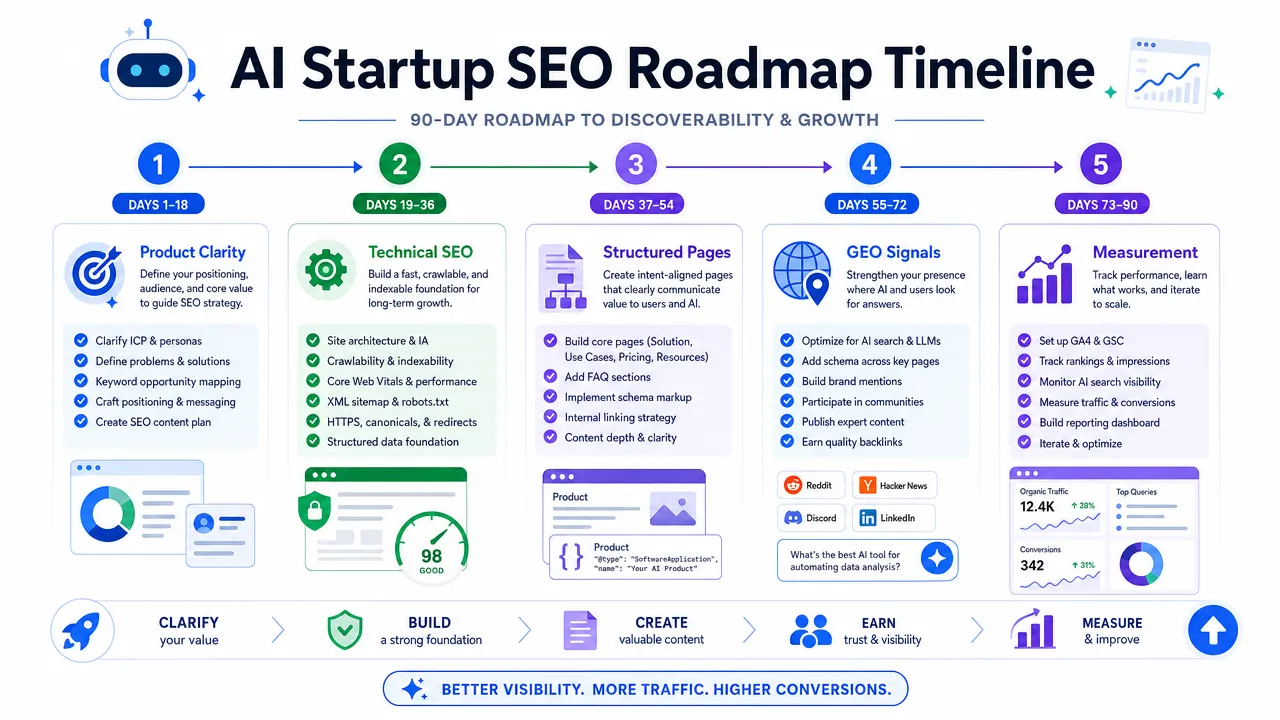
Adopting an AI-driven approach offers significant advantages, but it is not without its challenges. Understanding both sides is crucial for setting realistic expectations.
Key Benefits
Critical Limitations
AI SEO Roadmap vs. Traditional SEO: A Comparison
| Aspect | Traditional SEO | AI SEO Roadmap |
|---|---|---|
| Keyword Research | Manual analysis of volume and difficulty | Semantic clustering and intent prediction |
| Content Creation | Human writing based on experience | AI-assisted drafting and NLP optimization |
| Technical Audits | Periodic manual crawls | Continuous automated monitoring |
| Link Building | Outreach and manual prospecting | Predictive analysis of link value |
| Adaptation Speed | Slow, reactive to updates | Fast, proactive to trends |
| Data Analysis | Historical reporting | Predictive forecasting |
Common Mistakes and How to Avoid Them
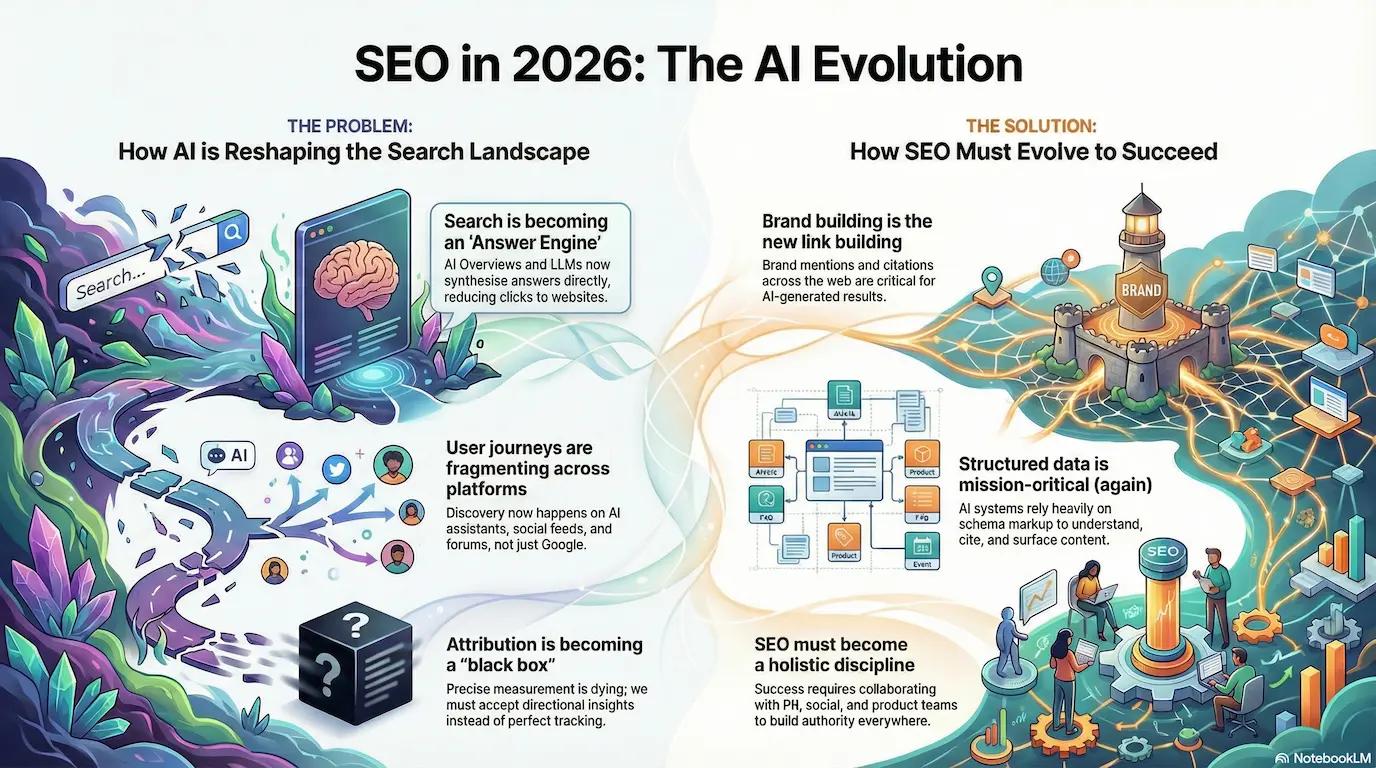
Many businesses fail to see results from AI SEO because they make critical errors during implementation. Here are the most common pitfalls and strategies to avoid them.
Mistake 1: Over-Reliance on AI-Generated Content
Publishing raw, unedited AI text is a fast track to losing rankings. Google’s spam policies specifically target “scaled content abuse.” The AI is a tool for efficiency, not a replacement for editorial judgment. Always have a human expert review, fact-check, and add unique value to every piece of AI-generated content.
Mistake 2: Ignoring User Intent Data
AI tools can tell you what keywords to target, but they cannot tell you why a user is searching. Focusing solely on keyword data without analyzing the search intent (informational, transactional, navigational) will lead to high bounce rates. Use AI to analyze the SERP layout to determine intent, but apply human logic to align your content with the user’s stage in the buying journey.
Mistake 3: Neglecting the Human Element of E-E-A-T
Experience, Expertise, Authoritativeness, and Trustworthiness (E-E-A-T) are critical ranking factors. AI cannot demonstrate real-world experience. If your content lacks personal anecdotes, original research, or expert quotes, it will struggle to rank for YMYL (Your Money or Your Life) topics. Ensure your roadmap includes a process for injecting human expertise into the content.
Mistake 4: Failing to Update the AI Models
An AI SEO roadmap is not a set-and-forget strategy. The models you use must be retrained with new data regularly. If you are using a custom machine learning model, schedule monthly retraining sessions. If you are using third-party tools, ensure you are using the latest versions and features.
Important Notes for Implementation
Before you begin, there are several critical factors to keep in mind. First, data privacy regulations like GDPR and CCPA affect how you can collect and use user data for AI training. Ensure your data collection methods are compliant.
Second, the integration of AI into your SEO workflow requires a cultural shift within your organization. Team members may resist using AI tools, fearing job displacement. The roadmap should include training sessions to demonstrate how AI augments their roles rather than replaces them.
Third, always maintain a human oversight loop. AI can make mistakes, especially when interpreting sarcasm, cultural nuances, or breaking news. A human editor must have the final say on all published content and strategic decisions.
Frequently Asked Questions
How long does it take to see results from an AI SEO roadmap?
Typically, you can expect to see initial improvements in technical health and content efficiency within the first 3 months. However, significant ranking improvements for competitive keywords usually take 6 to 12 months. The predictive analytics phase often yields the most dramatic results, as you begin to anticipate search trends before they peak.
Do I need to be a data scientist to implement AI SEO?
No. Most AI SEO tools are designed for marketers, not engineers. Platforms like Semrush, Ahrefs, and Surfer SEO have user-friendly interfaces that abstract away the complex machine learning algorithms. You need to understand the strategy and the output, not the underlying code.
Will AI replace SEO professionals?
A The role is shifting from manual execution to strategic oversight. The demand for skills in prompt engineering, data interpretation, and AI tool management is growing rapidly.
What is the best AI tool for SEO in 2025?
T The optimal stack depends on your specific needs. For content optimization, tools like Frase and MarketMuse are excellent. For technical audits, Sitebulb and Lumar are leaders. For rank tracking and competitor analysis, Ahrefs and Semrush are industry standards. A comprehensive roadmap often involves using a combination of these tools.
How does AI handle voice search optimization?
AI is critical for voice search because voice queries are conversational and long-tail. AI models analyze natural language patterns to understand these queries. Your roadmap should include a focus on question-based keywords and featured snippet optimization, as these are the primary sources for voice assistant responses.
Conclusion
The AI SEO roadmap is not a luxury; it is a necessity for staying competitive in the modern search landscape. The days of manual keyword stuffing and link schemes are over. Search engines are now sophisticated AI systems that reward content that is comprehensive, authoritative, and user-centric. By following this 12-month roadmap, you can transform your SEO operations from a reactive, manual process into a proactive, automated system that continuously learns and adapts.
The journey requires investment in tools, training, and a shift in mindset. However, the payoff is substantial: higher rankings, sustainable organic traffic, and a significant competitive advantage. Start with the technical audit, build your AI-powered content engine, and commit to continuous optimization. The future of search is intelligent, and your strategy should be too.
Xem thêm:
- AI SEO Extensions: The Smart Way to Automate and Supercharge Your Search Rankings
- AI SaaS SEO: The Ultimate Guide to Dominating Organic Growth in 2025
- AI SEO Content Ideation: The Complete Guide to Smarter Topic Discovery
- How to Rank in AI Overviews: The Complete Guide to Appearing in Google’s Generative Search Results
- AI SEO Regional SEO: The Complete Guide to Dominating Local Search in 2025
Bài viết cùng chủ đề:

AI SEO SEO Automation with Make: The Complete Workflow Guide

AI SEO SEO Automation with Zapier: The Complete Workflow Guide

AI SEO SEO Automation with n8n: The Complete Workflow Guide
AI SEO SEO Automation with Gemini: The Complete Guide to Scaling Organic Growth

AI SEO SEO Automation with Claude: The Complete Guide to Scaling Content in 2025

AI SEO SEO Automation with ChatGPT: The Complete Playbook for 2025

AI SEO & SEO Automation for Affiliate Sites: The 2025 Playbook for Passive Income Growth
AI SEO & SEO Automation for Bloggers: The Complete Guide to Scaling Your Content

AI SEO & SEO Automation for Agencies: The Complete 2025 Playbook

AI SEO and SEO Automation for Ecommerce: The Complete Playbook for 2025

AI SEO & SEO Automation for WordPress: The Complete Playbook for 2025
AI SEO SEO Automation Strategy: The Complete Playbook for 2025

Mastering the AI SEO SEO Automation Process: A Complete Guide to Scaling Organic Growth
AI SEO SEO Automation System: The Complete Guide to Scaling Organic Growth in 2025
AI SEO SEO Automation Platform: The Complete Guide to Scaling Organic Growth in 2025
AI SEO SEO Automation Software: The Complete Guide to Scaling Organic Growth in 2025















