
No products in the cart.
AI Knowledge Graph: The Complete Guide to Intelligent Data Networks
29
Jul
Jul
Modern enterprises generate staggering volumes of disconnected information – customer records, transaction logs, product catalogs, research documents – yet the true value of data lies not in isolated facts but in the relationships between them. An AI knowledge graph addresses this challenge by weaving disparate data points into a dynamic, queryable fabric of meaning. Powered by artificial intelligence, this technology goes far beyond static storage; it continuously extracts entities, detects hidden connections, and infers new insights without constant human intervention. In this guide, we will explore how AI knowledge graphs work, their architectural components, practical implementation steps, and the real-world impact they deliver across industries.
What is an AI Knowledge Graph?
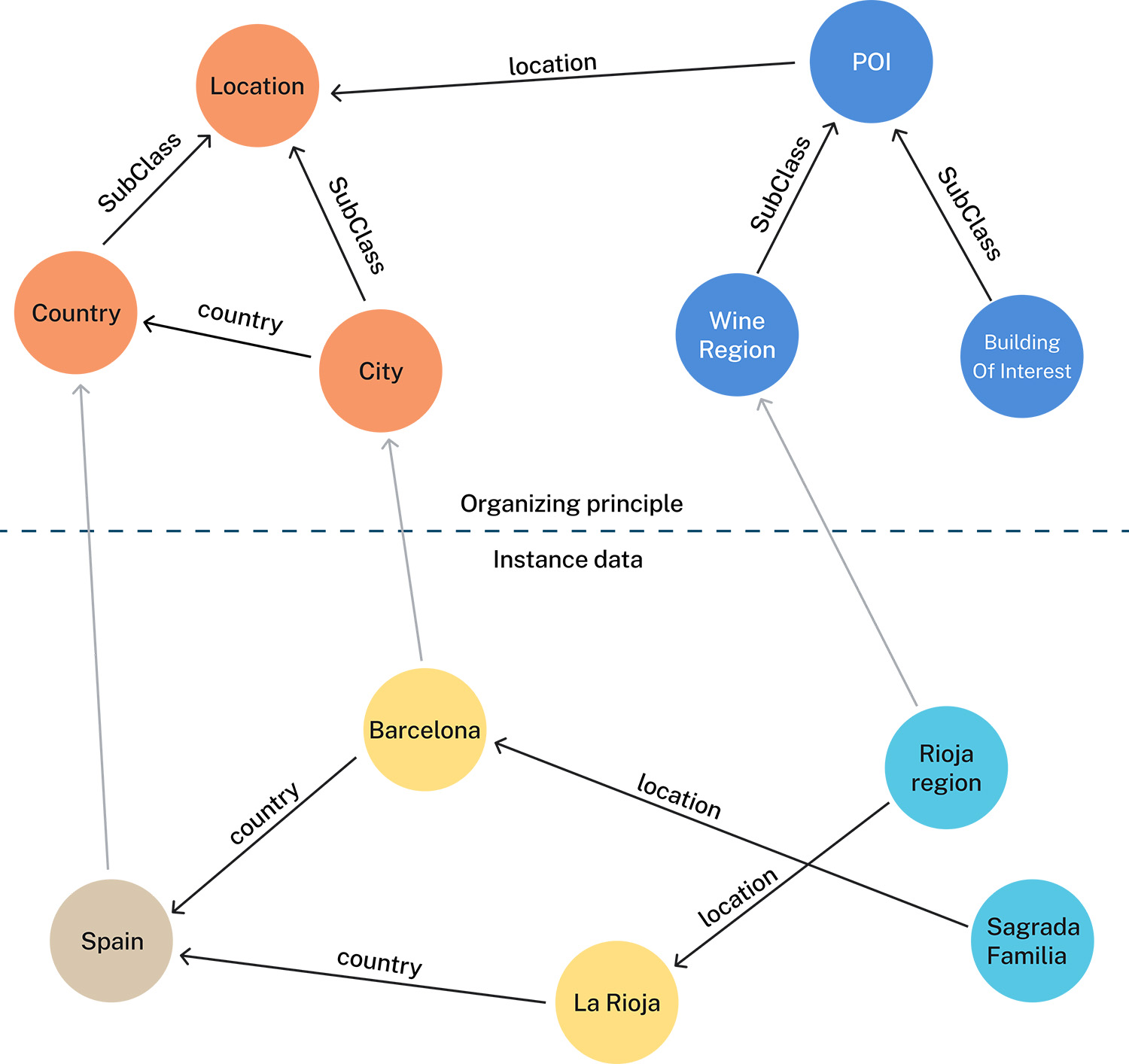
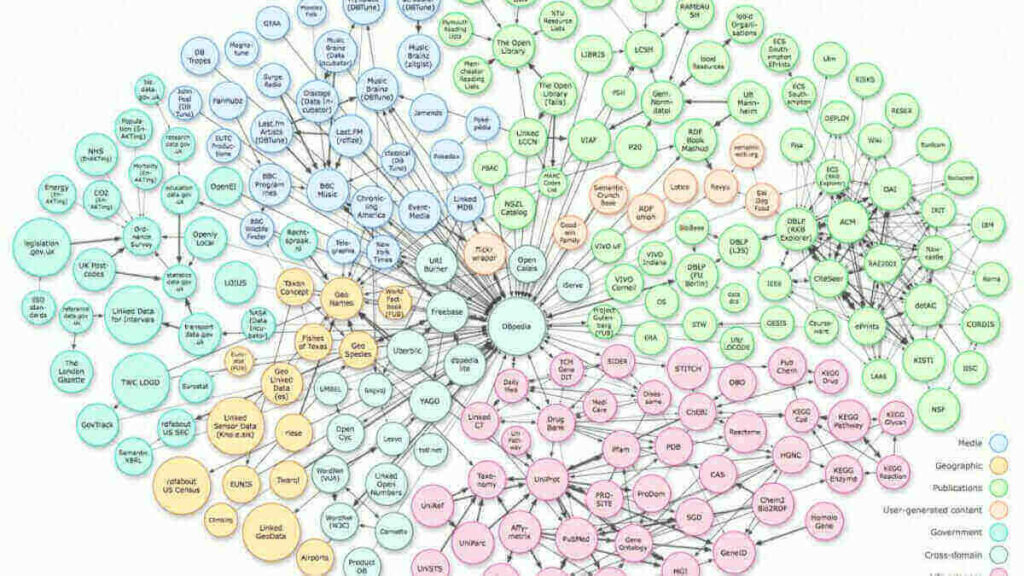
A knowledge graph is a structured representation of facts, where entities (people, places, concepts, objects) are nodes and the relationships between them are edges. What makes an AI knowledge graph distinct is the layer of machine intelligence that automates construction, enrichment, and reasoning. Traditional knowledge graphs often rely on manual curation and fixed rules. An AI knowledge graph uses natural language processing to extract entities from text, machine learning to predict missing links, and inference algorithms to derive logical consequences from existing data. The result is a living information network that evolves with new data, uncovers non-obvious patterns, and supports complex semantic queries.
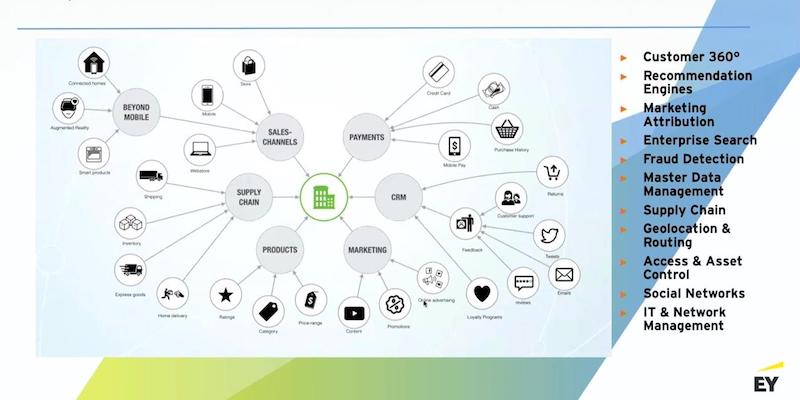
Think of a large e-commerce site. A conventional product database stores titles, prices, and categories. An AI knowledge graph connects products to brands, related accessories, customer preferences, seasonal trends, and even sentiment from reviews – all automatically learned and updated. When a user searches for “lightweight hiking boots for summer,” the graph understands the intent, cross-references attributes, and delivers results that a keyword match would miss.
How AI Supercharges Knowledge Graphs
Artificial intelligence transforms a static graph into an intelligent assistant capable of understanding context, disambiguating entities, and generating hypotheses. The integration typically involves several AI disciplines working together.
Automated Entity Extraction with Natural Language Processing
One of the greatest bottlenecks in building knowledge graphs is populating them with entities from unstructured text. AI knowledge graphs employ named entity recognition (NER) and relationship extraction models trained on vast corpora. These models scan documents, emails, medical records, and web pages to identify people, organizations, locations, dates, and domain-specific terms, then link them to existing nodes or create new ones. For example, a pharmaceutical knowledge graph can read clinical trial descriptions and automatically extract drugs, diseases, genetic markers, and their interactions.
Relationship Prediction through Machine Learning
Even after extraction, many connections remain hidden. Graph neural networks and embedding models like TransE or RotatE predict missing links by learning the latent representations of entities and relationships. If a graph knows that a certain gene is associated with a protein and that protein is implicated in a disease, a predictive model can suggest a novel gene–disease association for further investigation. These predictions are then validated and incorporated, making the AI knowledge graph a discovery engine.
Reasoning and Inference with Symbolic AI
Symbolic reasoning adds deductive power. Using ontologies and rule engines (for instance, OWL inference with SWRL rules), an AI knowledge graph can infer new facts. If an ontology states that “all CEOs are executives” and the graph knows “Alice is the CEO of CorpX,” the system automatically infers “Alice is an executive.” When combined with probabilistic reasoning, the graph can handle uncertainty and contradictory evidence, ranking inferred facts by confidence.
Dynamic Updating from Unstructured Data Streams
Static knowledge bases become stale quickly. An AI knowledge graph continuously monitors data streams – news feeds, social media, sensor data – and updates entities and relationships in near real time. Change detection algorithms trigger re-extraction only when relevant new information appears, ensuring freshness without requiring complete rebuilds.
Core Components and Architecture of an AI Knowledge Graph
Understanding the architecture helps in planning implementation. While details vary by tool, the following layers are fundamental.
| Component | Function | AI Role |
|---|---|---|
| Graph Storage Engine | Persists nodes, edges, and properties, often using a graph database like Neo4j, Amazon Neptune, or JanusGraph. | AI does not directly influence storage, but the engine must support fast traversals for real-time inference and learning. |
| Ontology & Schema Layer | Defines classes, relationships, and constraints. Can be expressed in RDFS, OWL, or a label property graph schema. | Machine learning can suggest schema refinements based on data patterns; ontology alignment tools use embeddings to merge schemas. |
| Entity Resolution & Linking | Deduplicates and links mentions to canonical entities across data sources. | Deep learning models compute similarity scores; clustering and active learning reduce manual review. |
| Extraction Pipeline | Processes unstructured data sources to pull out entities and relationships. | NLP models (transformers, BERT variants) perform NER, relation extraction, and coreference resolution. |
| Inference Engine | Applies logical rules or probabilistic models to derive new knowledge. | Symbolic reasoners and graph neural networks infer missing facts; probabilistic soft logic handles uncertainty. |
| Query & API Interface | Exposes graph data to applications via SPARQL, Cypher, or REST APIs. | Natural language query interfaces translate human questions into structured graph queries using semantic parsing. |
Types of AI Knowledge Graphs
Not all AI knowledge graphs are built the same. They can be categorized by scope and purpose.
General-Purpose Knowledge Graphs
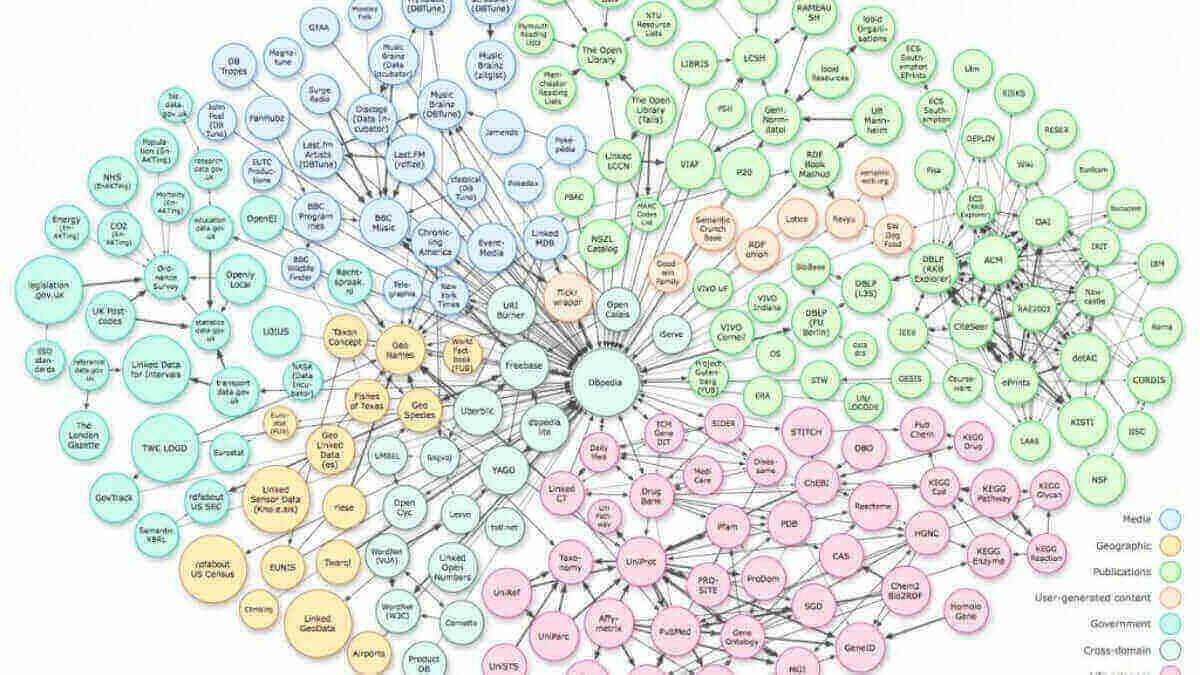
These cover a wide array of human knowledge. The most famous example is Google’s Knowledge Graph, which powers its search engine panels. Wikidata and DBpedia also fall here. These graphs aggregate facts from Wikipedia and other sources, using AI for entity linking and type classification. While they are massively broad, their depth in specialized domains may be limited.
Enterprise Knowledge Graphs
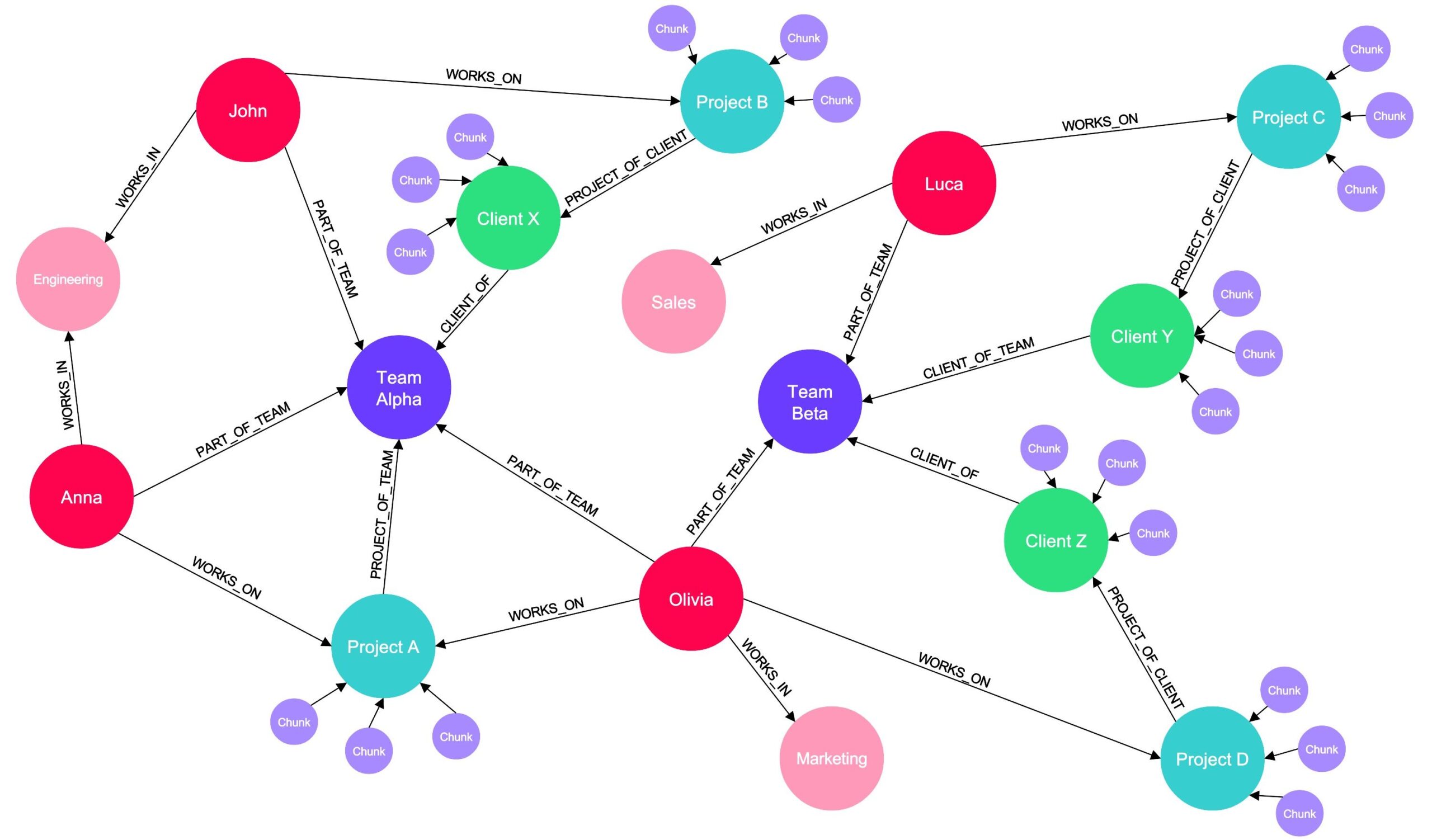
Organizations build internal graphs to unify siloed data: customer relationship management (CRM), enterprise resource planning (ERP), human resources, and log files. An AI knowledge graph in this context can connect a customer complaint email to a support ticket, the responsible agent, the product batch, and manufacturing data, enabling root-cause analysis that was previously impossible. Tools like Stardog, Anzo, or native graph database solutions are common choices.
Domain-Specific Knowledge Graphs
These focus on a narrow field with deep semantics. In biomedicine, graphs like Hetionet integrate drugs, diseases, genes, and side effects to accelerate drug discovery. Legal knowledge graphs encode statutes, cases, and arguments to assist in legal research. Financial graphs link companies, suppliers, news events, and transactions for fraud detection and compliance. The AI component is tailored to the domain’s jargon and ontologies.
Key Benefits of Implementing an AI Knowledge Graph
- Semantic search and discovery: Queries retrieve results based on meaning, not keywords. An AI knowledge graph understands that “Paris” the city and “Paris” the mythological figure are different entities, avoiding confusion.
- Data integration without massive ETL: Instead of forcing all data into a rigid relational schema, entities and relationships are mapped flexibly. AI helps reconcile entities from disparate sources, reducing manual mapping effort.
- Inference of hidden insights: The ability to deduce new facts leads to discoveries such as potential new uses for existing drugs or identifying supply chain vulnerabilities before they cause disruptions.
- Contextual personalization: Recommendation systems powered by AI knowledge graphs consider user history, item attributes, real-time behavior, and social connections to deliver hyper-relevant suggestions.
- Explainability and trust: Unlike many black-box ML models, graph walks can be traced, showing exactly why a recommendation or decision was made. This is critical in finance and healthcare.
- Scalable maintenance: Through automation, the graph stays current as data grows, without proportional increases in manual curation costs.
- Data quality and noise: Automated extraction from messy text can introduce errors. Entity resolution errors – merging two distinct entities or failing to merge matching ones – propagate false connections throughout the graph.
- Scalability of reasoning: Complex inference over a graph with billions of edges can be computationally expensive. Tuning reasoners and using approximation algorithms becomes necessary, which may sacrifice completeness.
- Ontology design bottleneck: While AI can suggest schema, domain experts must still define a coherent ontology. A poorly designed ontology leads to weak inference and confusing query results.
- Cold start problem: Initial graph creation requires a substantial investment in data collection, training extraction models, and entity resolution before value becomes visible.
- Interpretability vs. complexity: While graph paths are traceable, large probabilistic graphs with thousands of weighted relationships can still overwhelm users seeking clear explanations.
- Privacy and governance: When graphs connect personal data across multiple systems, they increase the risk of re-identification and must be managed under strict access controls and regulations like GDPR.
- Skipping ontology design: Jumping directly to data loading without a coherent schema leads to a tangled mess where queries become unpredictable and inference is meaningless.
- Over-automation without human validation: Trusting AI extraction entirely often results in noisy graphs filled with spurious connections. Implement human-in-the-loop checks, especially for critical domains.
- Ignoring entity resolution quality: Duplicate entities and false merges are among the most damaging errors. Invest in strong entity resolution, and regularly audit entity clusters.
- Treating the graph as a one-time project: Knowledge graphs decay. Without updating pipelines and ongoing curation, the graph becomes an outdated snapshot that teams stop using.
- Building a monolith: Attempting to model every aspect of the enterprise at once leads to project paralysis. Start with a well-defined use case, demonstrate value, and expand incrementally.
- Underestimating performance tuning: Graph queries with deep traversals can slow down. Design the graph with query patterns in mind, create indexes, and consider materialized paths for common queries.
Challenges and Limitations
Despite the promise, deploying an AI knowledge graph comes with hurdles that require careful planning.
AI Knowledge Graphs vs. Traditional Relational Databases
Understanding the contrast helps clarify when to adopt a graph approach.
| Aspect | Relational Database | AI Knowledge Graph |
|---|---|---|
| Data Model | Tables with rows and columns, predefined schema, foreign key joins. | Nodes and edges with flexible properties; schema can evolve dynamically. |
| Relationship Handling | Joins are computed at query time; deep joins become expensive and slow. | Relationships are first-class citizens, stored directly; traversal is constant time per hop. |
| Semantic Understanding | Limited to column names and constraints; no inherent meaning. | Ontologies and vocabularies provide rich semantics; AI can interpret context. |
| Integration of Unstructured Data | Requires ETL to extract structured data; text remains largely unusable. | NLP pipelines continuously ingest text, images, and other unstructured formats. |
| Inference and Discovery | Only explicit data is stored; no built-in reasoning. | Reasoners and graph neural networks derive new knowledge from existing facts. |
| Use Cases | Transaction processing, operational reporting, strict schema requirements. | Knowledge discovery, recommendation, fraud detection, context-rich search. |
Practical Guide: Building an AI Knowledge Graph Step by Step
Constructing an AI knowledge graph is an iterative process. The following steps provide a roadmap suitable for most enterprise environments.
Step 1: Define the Scope and Questions
Start by identifying the business problems the graph must solve. Are you trying to improve product search, accelerate research, or detect compliance violations? Clearly articulate the critical questions the graph will answer. This drives ontology design and data source selection.
Step 2: Identify and Ingest Data Sources
Gather structured databases, spreadsheets, documents, logs, and public datasets. For each source, determine its format, update frequency, and access permissions. Initial ingestion often involves batch loading; later, set up streaming pipelines for ongoing updates. Tools like Apache Kafka or AWS Kinesis help manage real-time feeds.
Step 3: Design the Ontology
Collaborate with domain experts to model the key entity types, their attributes, and relationship types. For example, in a media graph you might have Entities: Article, Author, Topic, Organization; Relationships: wrote, mentions, belongsTo. Use standards like schema.org where possible. Start simple and refine based on usage data and AI suggestions.
Step 4: Implement the AI Extraction Pipeline
Select and train NLP models for entity extraction and relation extraction. Often, transfer learning from pre-trained transformers (e.g., BERT, RoBERTa) with fine-tuning on domain data yields good results. Integrate entity linking to map extracted mentions to canonical graph nodes, using similarity measures and disambiguation models.
Step 5: Load and Link Data into the Graph Store
Choose a graph database (Neo4j, ArangoDB, Amazon Neptune, etc.) and load the extracted entities and relationships. The AI knowledge graph at this stage will contain raw facts. Run entity resolution algorithms – such as fuzzy matching on names, embeddings-based similarity, and rule-based deduplication – to merge duplicate representations and create a clean, connected graph.
Step 6: Activate Reasoning and Inference
Configure the inference layer. If using an RDF-based store with OWL, enable standard reasoning (subclass, transitivity). For property graphs, deploy graph neural networks for link prediction or a rules engine for business logic. Validate inferred facts against ground truth before exposing them to end users.
Step 7: Expose Graph Capabilities to Applications
Develop APIs for graph queries, visualization, and management. For many use cases, a natural language interface allows non-technical users to ask questions in plain English. Tools like LangChain combined with LLMs can convert natural language to Cypher or SPARQL, making the AI knowledge graph accessible across the organization.
Step 8: Establish a Feedback Loop and Continuous Learning
An AI knowledge graph must learn from user interactions and corrections. Implement active learning where flagged errors get reviewed and fed back into training data. Monitor data drift and retrain extraction models periodically. The graph evolves, becoming more accurate and comprehensive over time.
Common Mistakes to Avoid
Important Notes for Long-Term Success
To sustain an AI knowledge graph, treat it as a living product rather than a static dataset. Establish data governance that covers provenance, quality metrics, and access policies. Regularly review the ontology as business needs evolve – a rigid schema can hold back the value of AI-driven insights. Involve stakeholders from IT, data science, and business units to ensure adoption. Finally, measure success beyond technical accuracy: track how the graph improves key performance indicators like search conversion rates, research output, or fraud detection speed.
Frequently Asked Questions
What exactly is an AI knowledge graph?
An AI knowledge graph is a semantic network of entities and their relationships that uses artificial intelligence to automatically build, enrich, and reason over data. It combines graph databases with machine learning and natural language processing to turn disconnected information into a queryable web of meaning that grows and improves over time.
How does an AI knowledge graph improve search?
It enables semantic search by understanding the intent behind queries and the context of entities. Instead of matching keywords, the graph connects the search term to related concepts, attributes, and synonyms. For example, a search for “companies that make electric car batteries” retrieves results based on the relationship between manufacturers, products, and materials, not just text mentions.
What is the difference between a knowledge graph and a knowledge base?
A knowledge base is a broad term for any organized collection of information, often consisting of documents, FAQs, or articles. A knowledge graph is a specific type of knowledge base where information is represented as interconnected entities with explicit semantics. An AI knowledge graph further differentiates itself by using AI to automate construction and inference, while a static knowledge base might rely on manual creation.
How do you build an AI knowledge graph?
Building an AI knowledge graph involves defining scope, collecting data sources, designing an ontology, implementing NLP extraction pipelines, loading data into a graph database, performing entity resolution, setting up reasoning and inference, and creating APIs for access. The process is iterative and requires continuous feedback and updating to maintain accuracy.
What role does machine learning play in an AI knowledge graph?
Machine learning powers the extraction of entities and relationships from unstructured text, predicts missing links via graph embeddings, performs entity resolution to deduplicate nodes, and enables probabilistic inference. It transforms the graph from a static store into a dynamic system capable of learning from new data and user interactions.
Is Google’s Knowledge Graph an AI knowledge graph?
Yes, Google’s Knowledge Graph is a prime example of a large-scale AI knowledge graph. It uses AI techniques to extract facts from the web, link entities, and continuously update the graph to serve rich information panels. Machine learning helps resolve ambiguous entities and improves the relevance of results over time.
What are the best tools for creating an AI knowledge graph?
Popular choices include Neo4j (with APOC and GDS libraries) for property graphs, Amazon Neptune and Stardog for RDF graphs, and Anzo for enterprise data integration. For NLP extraction, spaCy, Hugging Face Transformers, and OpenAI models are widely used. The right stack depends on whether you need native inference, scalability, or ease of integration with existing infrastructure.
What are the limitations of AI knowledge graphs?
They face challenges with data quality and noise from automatic extraction, scalability of reasoning on massive graphs, the difficulty of ontology design, and the cold start problem of creating an initial graph. Additionally, maintaining accuracy over time requires ongoing computational resources and human oversight, and privacy risks increase when connecting sensitive data.
Conclusion
An AI knowledge graph represents a fundamental shift in how we organize, connect, and activate enterprise data. By merging structured knowledge with the adaptive power of artificial intelligence, it unearths insights that remain invisible to traditional databases and fragmentation. From semantic search to drug discovery, the technology is already reshaping industries and enabling smarter, context-aware applications. Success lies not in a single giant graph but in a pragmatic approach: start with a clear problem, leverage AI to automate the heavy lifting, and nurture the graph as a dynamic asset. When executed well, an AI knowledge graph becomes the connective tissue that turns raw data into a strategic advantage, driving decisions with clarity and foresight.
Xem thêm:
- AI WordPress SEO: Your Complete Blueprint for Automated Organic Growth
- AI SEO for Portfolio Websites: The Complete Guide to Getting Found in 2025
- AI SEO AI Overview Sources: The Complete Guide to Earning Visibility in Google’s AI Search
- AI SEO Link Building Automation: The Complete 2025 Playbook for Scalable Growth
- AI SEO Anchor Text Generator: The Complete Guide to Smarter Internal Linking
Bài viết cùng chủ đề:

AI SEO SEO Automation with Make: The Complete Workflow Guide

AI SEO SEO Automation with Zapier: The Complete Workflow Guide

AI SEO SEO Automation with n8n: The Complete Workflow Guide
AI SEO SEO Automation with Gemini: The Complete Guide to Scaling Organic Growth

AI SEO SEO Automation with Claude: The Complete Guide to Scaling Content in 2025

AI SEO SEO Automation with ChatGPT: The Complete Playbook for 2025

AI SEO & SEO Automation for Affiliate Sites: The 2025 Playbook for Passive Income Growth
AI SEO & SEO Automation for Bloggers: The Complete Guide to Scaling Your Content

AI SEO & SEO Automation for Agencies: The Complete 2025 Playbook

AI SEO and SEO Automation for Ecommerce: The Complete Playbook for 2025

AI SEO & SEO Automation for WordPress: The Complete Playbook for 2025
AI SEO SEO Automation Strategy: The Complete Playbook for 2025

Mastering the AI SEO SEO Automation Process: A Complete Guide to Scaling Organic Growth
AI SEO SEO Automation System: The Complete Guide to Scaling Organic Growth in 2025
AI SEO SEO Automation Platform: The Complete Guide to Scaling Organic Growth in 2025
AI SEO SEO Automation Software: The Complete Guide to Scaling Organic Growth in 2025















