No products in the cart.
AI Readability Optimization: How Smart Algorithms Transform Content for Human Readers and Search Engines
29
Jul
Jul
Content creators spend hours polishing sentences, yet readers still bounce after the first paragraph. AI readability optimization solves this disconnect by using machine learning to assess and enhance how easily your text is consumed. Unlike basic spell checkers, these tools analyze sentence structure, vocabulary load, passive voice, and even the rhythm of your prose. The result is content that not only ranks higher but also keeps visitors reading, sharing, and converting. This guide unpacks the entire framework—from what AI readability optimization actually measures to how you can implement it across blogs, product pages, and email sequences without losing your brand voice.
What Is AI Readability Optimization?
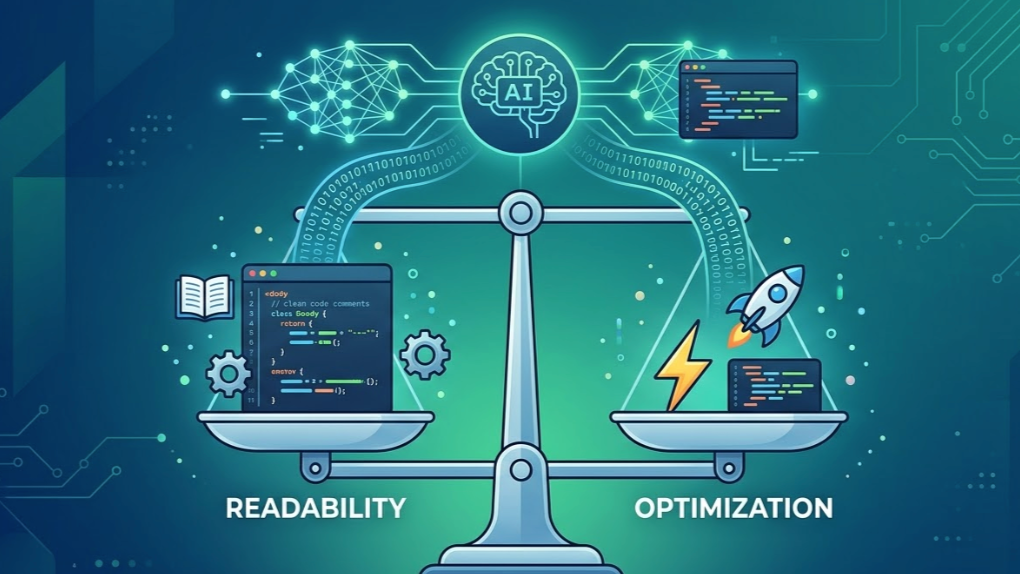
AI readability optimization is the use of artificial intelligence to evaluate and improve the ease with which a reader can process written content. Traditional readability formulas like Flesch-Kincaid or Gunning Fog count syllables and sentence lengths, offering a static score. AI-driven tools go deeper by applying natural language processing (NLP) to understand context, tone, transition logic, and cognitive load. They can flag dense jargon that a human editor might miss and suggest simpler alternatives while preserving meaning.
At its core, this technology treats readability as a dynamic, multi-dimensional problem. It doesn’t stop at word length; it considers syntactic complexity, lexical diversity, conceptual density, and even the emotional tone of a passage. By training on millions of high-performing pages, AI models learn patterns that correlate with longer dwell time, lower bounce rates, and better comprehension scores. That makes readability optimization a direct ranking signal amplifier, not just a cosmetic fix.
Modern AI readability optimization platforms combine rule-based checks with deep learning. They score your text against readability benchmarks optimized for specific audiences—6th-grade level for general consumer content, 10th-grade for technical explainers, and even custom models for niche industries. The output is a granular report that pinpoints exactly which sentences need shortening or which paragraphs introduce too many new concepts at once.
Why Traditional Readability Scores No Longer Suffice
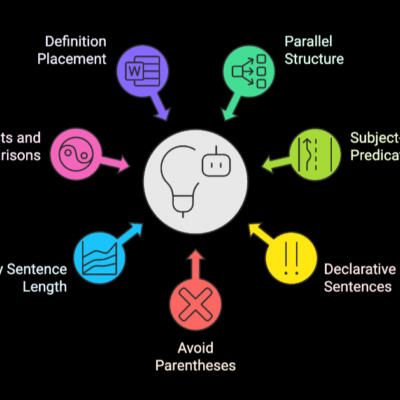
Decades-old formulas like the Flesch-Kincaid Grade Level and the SMOG Index rely heavily on surface-level metrics: average sentence length and syllable count per word. While useful as a baseline, they fail to capture how language is processed by the human brain. A text with short sentences can still be confusing if ideas are disconnected, pronouns are ambiguous, or key terms are never defined. Traditional scores also ignore visual readability elements such as paragraph chunking, bullet point usage, and heading hierarchy—all of which AI can analyze holistically.
Another limitation is that static formulas treat all complex words equally. The word “photosynthesis” in a biology article is necessary terminology, not a readability flaw. Human editors understand this through context; AI readability optimization now does the same by incorporating semantic understanding from transformer models. It can distinguish between jargon that adds value and jargon that merely inflates difficulty.
Search engines have evolved beyond simple keyword matching. Google’s BERT and MUM updates evaluate content quality through the lens of user satisfaction, which heavily depends on readability. Pages that force users to re-read sentences, look up definitions, or struggle with dense walls of text perform poorly in engagement metrics. AI readability tools align your content with these user-first algorithms, turning readability into a measurable SEO lever.
How AI Readability Optimization Works: Core Components
Natural Language Processing (NLP) Analysis
The backbone of any AI readability engine is NLP. The system parses text into tokens, identifies parts of speech, builds dependency trees, and extracts entities. This allows it to measure syntactic complexity—not just counting words in a sentence but evaluating how many subordinate clauses, prepositional phrases, or nested ideas exist. Advanced models like GPT-4 and BERT-based classifiers can assign a “cognitive load” score per sentence, predicting the mental effort required to parse it.
Advanced Readability Formulas Enhanced by AI
AI doesn’t throw out traditional formulas; it augments them. A tool might start with the Flesch Reading Ease score but then weight it against AI-detected discourse coherence, word familiarity rankings from massive corpora, and sentence unity. The result is a composite readability index that correlates more strongly with actual user comprehension tests. Some enterprise platforms even allow you to train the model on your own high-performing content to learn what “readable” means for your specific audience.
Contextual thesaurus and simplification engines
When AI identifies a word or phrase that spikes difficulty, it doesn’t just provide a generic synonym. It considers the surrounding context, the intended tone, and the required technical accuracy before suggesting a replacement. For example, it might change “utilize” to “use” in a casual blog post but keep “utilize” in a legal document where it’s a term of art. This contextual awareness prevents the dumbing down of content that manual simplification often causes.
Visual and structural evaluation
Readability isn’t only about text. AI models now analyze document structure: the ratio of text to white space, heading frequency, list usage, and paragraph length variance. A page with ten consecutive 200-word paragraphs scores poorly, even if each sentence is technically short. AI flags these formatting issues and recommends breakpoints where subheadings or bullet points would improve scanability.
Key Metrics Used in AI Readability Optimization
While each platform has proprietary scoring, most AI readability tools track a blend of established and novel metrics. Understanding these helps you interpret suggestions and prioritize edits.
| Metric | What It Measures | AI Enhancement |
|---|---|---|
| Flesch Reading Ease | Words per sentence and syllables per word | Weighted by conceptual density |
| Flesch-Kincaid Grade Level | US school grade needed for comprehension | Adjusted for domain-specific vocabulary |
| Cognitive Load Score | Mental effort to parse syntax and ideas | Derived from neural network predictions |
| Lexical Diversity Index | Range of unique words used | Mapped to audience expectations |
| Transition Flow | Logical connection between sentences | Calculated via discourse analysis |
| Passive Voice Percentage | Use of passive constructions | Flagged only when it obscures clarity |
Benefits of Using AI Readability Optimization
Improved On-Page SEO Performance
Search engines directly and indirectly reward readability. Content that’s easier to parse leads to longer dwell time, lower pogo-sticking, and higher scroll depth—all positive engagement signals. Google’s ranking algorithms also extract meaning more accurately from well-structured, clear text. AI readability optimization helps you land featured snippets because the tool ensures answer targets are concise and grammatically straightforward.
Higher Conversion Rates and User Trust
Visitors make snap judgments about credibility based on how quickly they can understand your value proposition. Awkward phrasing, convoluted benefits, and unnecessary complexity create friction. AI-optimized content reduces cognitive friction, allowing the reader’s brain to focus on your message rather than decoding your language. This directly lifts email sign-ups, trial starts, and e-commerce transactions.
Content Personalization at Scale
Large enterprises can’t manually tailor readability for every audience segment. AI tools can automatically adapt the same core content to different grade levels: a summary for social media, an 8th-grade version for broad newsletters, and a technical deep-dive for specialist blogs. This ensures each reader gets a version that matches their background knowledge, maximizing relevance and engagement.
Consistent Brand Voice With Better Clarity
Writers often confuse complexity with authority. AI readability optimization reins in this tendency without making everything sound robotic. It can be calibrated to preserve a brand’s distinct tone—whether witty, professional, or empathetic—while still trimming verbal fat. The result is a clear, recognizable voice that doesn’t alienate newcomers.
Limitations and Risks of AI Readability Optimization
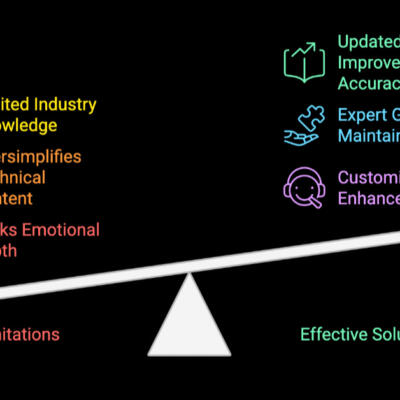
- Over-simplification risk: Aggressive optimization can strip nuance from legal, medical, or financial content, potentially creating compliance issues or misleading readers.
- Loss of stylistic flair: Literary devices, intentional repetition, and creative wordplay may be flagged as errors. Always review AI suggestions with a human editorial eye.
- Context-blind corrections: Despite advances, AI sometimes misreads sarcasm, idiomatic expressions, or culturally specific phrases, proposing changes that alter meaning.
- Metric myopia: Chasing a perfect readability score can produce technically correct but soulless prose. The ultimate goal is effective communication, not a dashboard number.
- Data privacy concerns: Cloud-based AI tools process your content on external servers. For sensitive industries, an on-premise or zero-retention solution is mandatory.
- Blindly accepting every suggestion: AI is a co-pilot, not the captain. Some flagged “complex” words are load-bearing. Deleting them can distort accuracy.
- Ignoring the visual layer: Even perfectly optimized sentences fail when crammed into a single, scrolling block of text. Use formatting as part of readability.
- Optimizing in isolation: A single page with excellent readability won’t compensate for a site-wide structure that confuses navigation. Cohesion matters.
- Obsessing over a single score: Readability is multi-faceted. A slight drop in Flesch score may be worth it if the content becomes more compelling and persuasive.
- Skipping the context setup: Failing to configure the AI tool for your industry or audience results in generic, unhelpful advice.
AI Readability Optimization vs Traditional Readability Checkers
| Feature | AI Readability Optimization | Traditional Checkers (e.g., Hemingway, Word) |
|---|---|---|
| Analysis depth | Semantic, syntactic, structural, cognitive | Syllable count, sentence length, passive voice |
| Context awareness | Understands jargon necessity by topic | Treats all complex words equally |
| Suggestion quality | Contextual rephrasing, tone-aware | Generic synonym swaps, hard-to-read flags |
| Visual formatting checks | Paragraph size, heading balance, scannability | None or minimal |
| Audience personalization | Custom grade-level targets and industry models | One-size-fits-all grade level |
| Integration | API, CMS plugins, real-time editing | Standalone copy-paste analysis |
Practical Guide: Implementing AI Readability Optimization in Your Workflow
Step 1: Choose the Right AI Readability Tool
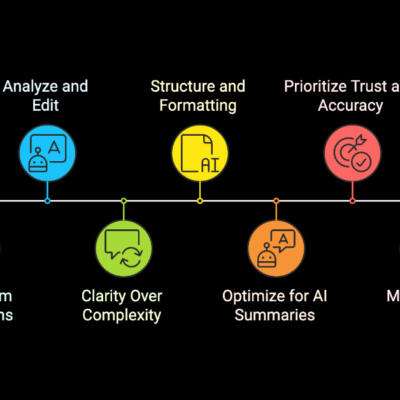
Options range from dedicated platforms like Grammarly’s readability scores (enhanced by AI), ProWritingAid’s contextual thesaurus, and MarketMuse’s content difficulty analysis to all-in-one SEO suites such as SurferSEO or Frase that incorporate readability AI. For teams, enterprise solutions like Acrolinx or Writer provide governance alongside readability checks. Evaluate based on your industry, audience grade-level needs, and integration with your existing CMS.
Step 2: Set Your Target Readability Baseline
Not all content should target an 8th-grade reading level. Research your audience’s demographic data and look at competitor content that ranks well for your target keywords. Use the AI tool’s content analyzer to reverse-engineer successful pages and determine a realistic range. For a general consumer blog, aim for a Flesch Reading Ease between 60 and 70; for B2B technical content, 40 to 55 may be acceptable.
Step 3: Integrate AI Checks Into Drafting and Editing
Activate the AI readability layer while you write. Most modern tools offer browser extensions or direct integration with Google Docs and Word. Pay attention to real-time highlights: long sentences, overuse of adverbs, lexical heaviness, and missing transitions. Treat the editing phase as a collaboration—accept clear improvements, but question suggestions that alter your intended meaning.
Step 4: Optimize Structure and Formatting
Run the AI structural report. Ensure no paragraph exceeds three to four lines on mobile view. Use descriptive subheadings every 150 to 200 words. Convert sequences of words into numbered or bulleted lists. The A
Step 5: Validate With Human Testing
AI optimization gets you 85% of the way; the remaining 15% requires human judgment. Run your final draft past a colleague from a different department or use a user-testing service to watch real readers navigate the page. If they pause, re-read, or misinterpret a section, adjust accordingly—regardless of what the AI score indicates.
Common Mistakes When Using AI Readability Optimization
Important Notes for Sustainable AI Readability Optimization
First, treat readability as an ongoing process, not a one-time fix. As your audience grows and content ages, re-evaluate top-performing pages with updated AI models—language evolves, and so do comprehension expectations. Second, never sacrifice accuracy for simplicity. In YMYL (Your Money or Your Life) niches such as health or finance, clarity must coexist with precision. Use the AI to highlight sentences where the balance tips too far toward jargon, then manually rewrite to preserve facts. Third, balance AI insights with brand style guides. Create a list of “do not simplify” terms—product names, proprietary methodologies, culturally significant phrases—and feed this into the tool where possible. Finally, remember that accessibility is a legal and ethical consideration. AI readability optimization aligns naturally with WCAG guidelines: clear language benefits users with cognitive disabilities, dyslexic readers, and non-native speakers. By making your content more readable, you’re making the web more inclusive.
Frequently Asked Questions
What exactly does AI readability optimization do that a human editor cannot?
AI processes thousands of linguistic patterns per second, providing data-driven insights a human might miss: subtle passive voice creep, inconsistent grade-level drift across a long article, and statistical comparisons against millions of high-performing pages. It removes personal bias and fatigue, but a human editor adds creative empathy and contextual judgment. The two work best together.
Can AI readability optimization hurt my SEO if I overuse it?
Yes. Over-optimizing to a very low grade level can make content seem robotic, shallow, or insincere. Search engines value depth and expertise. If simplification strips out necessary detail, users may bounce, signaling low-quality content. Always preserve substantive information and your unique perspective.
Which readability score matters most for SEO in 2025?
T Flesch Reading Ease remains a useful benchmark, but AI-enhanced tools now prioritize a combination of Flesch score, cognitive load, and reading time vs. engagement predictions. Focus on meeting your audience’s expectations and monitoring engagement metrics in Google Analytics rather than chasing a perfect score.
How do I convince my team to adopt AI readability optimization?
Present a side-by-side A/B test: one page with traditional editing, one page optimized with AI readability. Measure dwell time, scroll depth, and conversion rate. Also, demonstrate time savings in the editing cycle. When editors spend less time policing sentence length and more on substantive ideation, productivity rises.
Is it safe to use AI readability tools with confidential content?
Not all tools are equal. Check the provider’s data handling policy. Look for enterprise-grade options that offer on-premise deployment, zero data retention, and encryption both in transit and at rest. For sensitive industries, avoid free, cloud-only tools that may use your content to train their models.
Conclusion
AI readability optimization moves content strategy from guesswork to precision. By pairing the analytical muscle of NLP models with the nuance of human judgment, you create pages that search engines can interpret effortlessly and real people can enjoy. The technology shouldn’t be treated as a shortcut but as a feedback layer that reveals where your writing loses clarity, momentum, or connection. As algorithms continue to prioritize user experience, integrating AI-driven readability into your content development workflow is one of the smartest investments you can make. Start with small iterations, monitor the performance shifts, and refine your approach until every sentence works as hard as your SEO strategy demands.
Xem thêm:
- AI Semantic SEO: Mastering the Next Evolution of Search Engine Optimization
- AI SEO Server Logs: The Complete Guide to Unlocking Hidden Search Insights
- AI SEO HARO Alternatives: 10 Powerful Platforms to Secure High-Authority Backlinks in 2025
- AI SEO Ahrefs: The Complete Guide to Smarter Search Optimization
- DeepSeek SEO: The Ultimate Guide to AI-Powered Search Optimization in 2025
Bài viết cùng chủ đề:

AI SEO SEO Automation with Make: The Complete Workflow Guide

AI SEO SEO Automation with Zapier: The Complete Workflow Guide

AI SEO SEO Automation with n8n: The Complete Workflow Guide
AI SEO SEO Automation with Gemini: The Complete Guide to Scaling Organic Growth

AI SEO SEO Automation with Claude: The Complete Guide to Scaling Content in 2025

AI SEO SEO Automation with ChatGPT: The Complete Playbook for 2025

AI SEO & SEO Automation for Affiliate Sites: The 2025 Playbook for Passive Income Growth
AI SEO & SEO Automation for Bloggers: The Complete Guide to Scaling Your Content

AI SEO & SEO Automation for Agencies: The Complete 2025 Playbook

AI SEO and SEO Automation for Ecommerce: The Complete Playbook for 2025

AI SEO & SEO Automation for WordPress: The Complete Playbook for 2025
AI SEO SEO Automation Strategy: The Complete Playbook for 2025

Mastering the AI SEO SEO Automation Process: A Complete Guide to Scaling Organic Growth
AI SEO SEO Automation System: The Complete Guide to Scaling Organic Growth in 2025
AI SEO SEO Automation Platform: The Complete Guide to Scaling Organic Growth in 2025
AI SEO SEO Automation Software: The Complete Guide to Scaling Organic Growth in 2025