
No products in the cart.
AI SEO AI Mention Tracking: The Complete Guide to Monitoring Brand Visibility in the Age of Generative Search
10
Aug
Aug
The digital marketing landscape has shifted dramatically with the rise of generative AI platforms like ChatGPT, Perplexity, and Google’s AI Overviews. Traditional SEO metrics no longer tell the full story of brand visibility. This is where AI SEO AI Mention Tracking becomes an essential practice. It involves monitoring how, where, and when your brand appears in AI-generated responses, ensuring your business remains visible in a search ecosystem that is rapidly moving away from the classic blue link list.
This guide provides a comprehensive breakdown of AI mention tracking, its importance, the tools available, and how to build a strategy that keeps your brand relevant in AI-driven search results.
What is AI Mention Tracking in SEO?
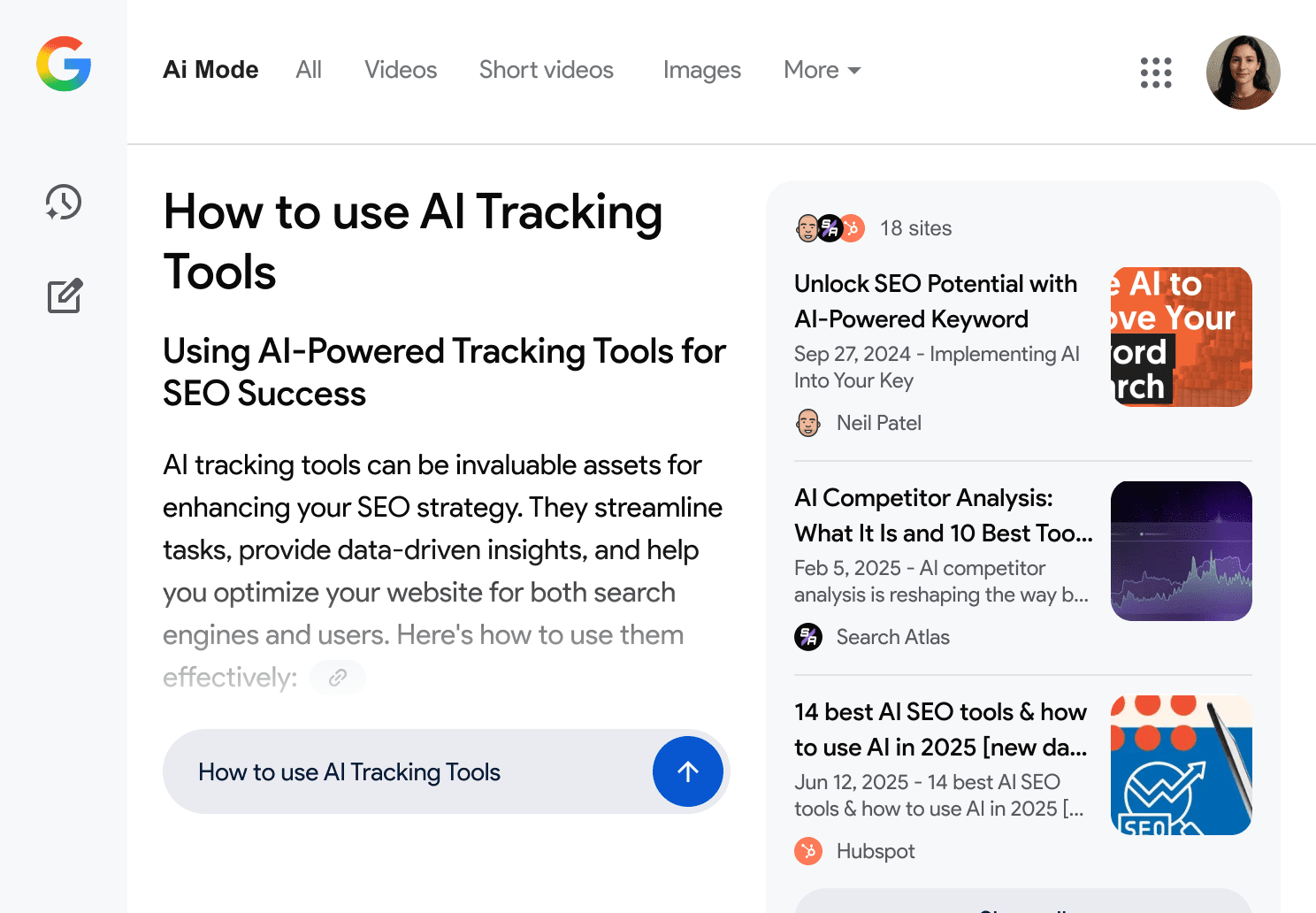
AI mention tracking is the process of systematically monitoring AI-generated outputs to identify when your brand, products, or key personnel are referenced. Unlike traditional social listening or backlink monitoring, this practice focuses specifically on the responses generated by large language models (LLMs) and AI search engines.
When a user asks ChatGPT “What are the best project management tools?” or asks Perplexity “Which CRM is best for small businesses?”, the AI compiles an answer based on its training data and real-time web searches. If your brand is not mentioned in these responses, you are effectively invisible to a growing segment of your target audience.
The Difference Between Traditional SEO Tracking and AI Tracking
Traditional SEO tracking focuses on rankings, organic traffic, and backlinks. AI mention tracking focuses on brand presence within AI-generated narratives. The key differences are:
- Data Source: Traditional tracking uses search engine result pages (SERPs); AI tracking uses LLM outputs.
- User Intent: Traditional search often involves browsing; AI search provides direct answers.
- Content Format: Traditional results are lists of links; AI results are synthesized paragraphs.
- Optimization Target: Traditional SEO targets algorithms; AI tracking targets semantic relevance and citation patterns.
- Training Data Prevalence: How often your brand appears in high-quality, authoritative web content that was used to train the model.
- Real-Time Web Indexing: For models with browsing capabilities, the freshness and authority of your current web content matter.
- Entity Recognition: How clearly search engines and AI models understand your brand as a distinct entity (e.g., your brand name, logo, and attributes).
- Source Authority: Mentions from high-authority domains (like Forbes, TechCrunch, or industry-specific publications) carry more weight than obscure blogs.
- Consistency of Information: Conflicting information about your brand (e.g., different addresses or product names) confuses AI models and reduces the likelihood of a mention.
- Focusing Only on Volume: Tracking how many times you are mentioned without analyzing the context or sentiment is a common pitfall. A negative mention can be worse than no mention.
- Ignoring Competitors: Tracking only your brand gives you a narrow view. You must track competitor mentions to understand your relative SOV.
- Using Static Keyword Lists: AI queries evolve. Your keyword list should be updated regularly based on new customer questions and market trends.
- Treating AI Tracking Like Traditional Rank Tracking: AI responses are dynamic and conversational. They do not have a fixed “rank” like traditional search results. Focus on presence and context, not position.
- Neglecting Prompt Variations: The same question can be phrased in dozens of ways. Tracking only one phrasing will give you incomplete data.
- Early Warning System: Identifies negative brand sentiment in AI responses before it impacts customer perception.
- Competitive Intelligence: Reveals which competitors are dominating AI conversations and why.
- Content Gap Analysis: Shows you which topics you need to cover to be mentioned for specific queries.
- ROI Measurement: Provides a tangible metric to measure the impact of your digital PR and content marketing efforts.
- Lack of Standardization: T
- Model Volatility: AI models are updated frequently, and a mention today might disappear tomorrow without warning.
- Data Privacy: Some AI platforms do not allow third-party tracking, limiting the scope of monitoring.
- Contextual Ambiguity: AI responses can be nuanced, and determining the exact sentiment of a mention can be subjective.
Why AI SEO AI Mention Tracking Matters in 2025
The adoption of AI search tools has reached a critical mass. Studies indicate that a significant percentage of users now prefer AI search for complex queries, product comparisons, and research tasks. This shift has profound implications for brand visibility.
The Rise of Zero-Click Searches
AI Overviews in Google and standalone chatbots provide answers directly on the page. Users often do not click through to websites. If your brand is not part of that AI-generated answer, you lose the opportunity for both traffic and brand association. AI mention tracking helps you understand whether you are part of that conversation.
Brand Sentiment in AI Responses
It is not enough to be mentioned; the context of the mention matters. An AI might mention your brand in a positive light, a neutral comparison, or a negative context based on online reviews and news articles. Tracking these mentions allows you to manage your AI reputation proactively.
How AI Search Engines Decide Which Brands to Mention
To effectively track and improve your AI mentions, you must understand the underlying mechanics. AI models do not randomly select brands. They rely on a combination of factors:
Key Metrics in AI Mention Tracking
Tracking AI mentions involves more than just counting how many times your name appears. A robust tracking strategy involves several distinct metrics.
Share of Voice (SOV) in AI Responses
This metric measures how often your brand appears compared to competitors for a specific set of AI prompts. For example, if you ask an AI about “enterprise accounting software,” and it mentions your brand in 3 out of 10 responses, your SOV is 30%. This is a direct indicator of your AI market presence.
Mention Sentiment
Analyzing whether the AI response is positive, negative, or neutral. This requires reading the context of the mention. A brand mentioned as a “budget alternative” has a different sentiment than one mentioned as the “industry leader.”
Citation Frequency
Some AI tools provide citations or links to sources. Tracking how often your domain is cited as a source for AI answers is a strong indicator of your content’s authority and usefulness.
Prompt Coverage
This refers to the number of relevant queries (prompts) for which your brand appears. You might have a high SOV for one specific query but zero coverage for another important one. Tracking prompt coverage helps identify gaps in your AI visibility.
Top Tools for AI SEO AI Mention Tracking
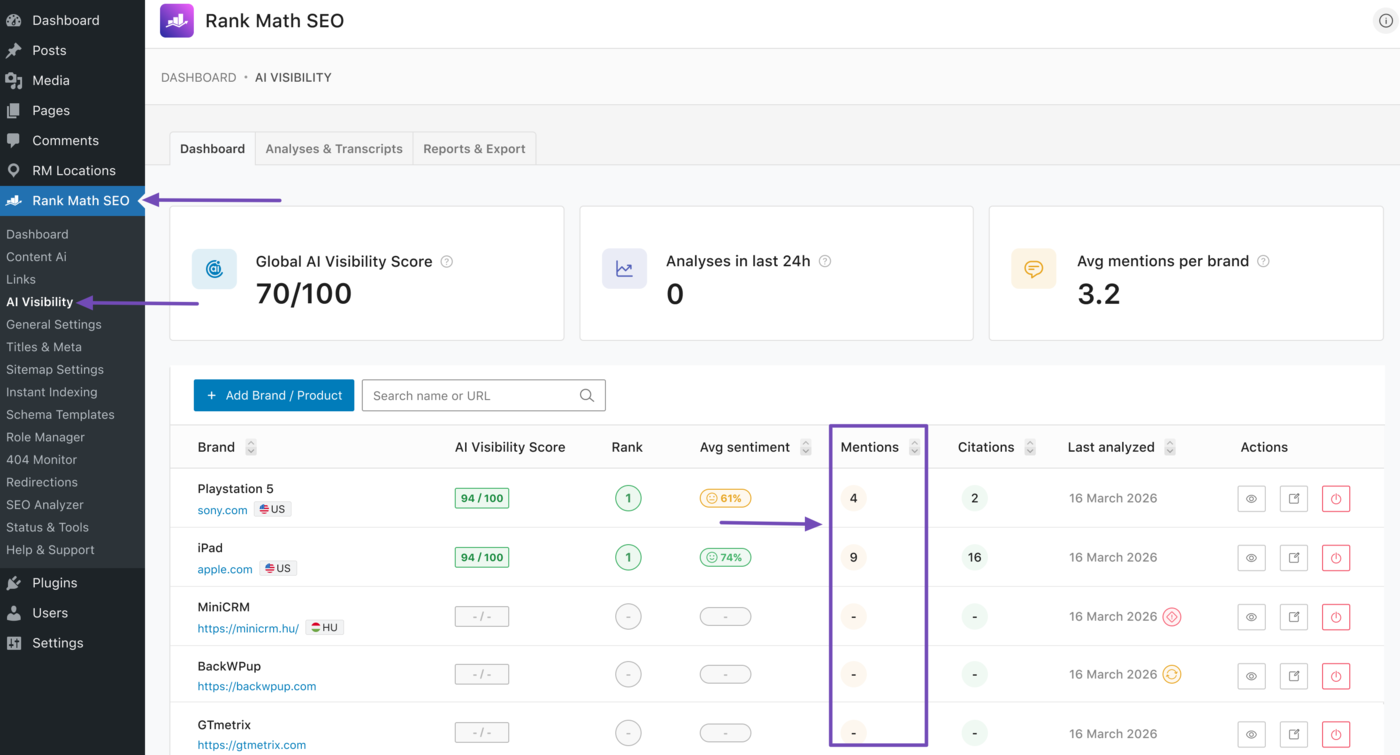
The market for AI tracking tools is evolving rapidly. While no single tool is perfect, several platforms offer robust features for monitoring AI brand presence.
Dedicated AI Tracking Platforms
These are specialized tools designed specifically for this purpose. They typically allow you to input a list of keywords and track which AI platforms mention your brand.
| Tool | Key Features | Best For |
|---|---|---|
| Brand24 | Tracks mentions across ChatGPT, Perplexity, and Google AI Overviews. Provides sentiment analysis and share of voice metrics. | Comprehensive brand monitoring across multiple AI platforms. |
| Determ | Focuses on AI search visibility. Tracks which brands are mentioned for specific queries and provides competitor benchmarking. | Enterprise-level competitive analysis. |
| Mention | Expanded to include AI search monitoring. Offers real-time alerts for brand mentions in AI-generated content. | Real-time alerts and social listening integration. |
| Semrush | Has introduced AI content and visibility features, including tracking how often your domain appears in AI Overviews. | All-in-one SEO and content marketing suites. |
Manual Tracking Methods
For small businesses or those on a budget, manual tracking is still viable. This involves regularly querying AI chatbots with your target keywords and recording the results. While time-consuming, it provides a baseline understanding of your visibility.
How to Build an AI Mention Tracking Strategy
Implementing a successful tracking strategy requires a structured approach.
Step 1: Define Your Core Brand Terms and Queries
Start with your brand name and variations (including common misspellings). Then, list the top 20-50 queries your customers would ask an AI assistant. These should include “best
-93%
Security Plugins
Original price was: 69,00$.4,49$Current price is: 4,49$.
-93%
Security Plugins
Original price was: 69,00$.4,49$Current price is: 4,49$.
Step 2: Select Your Tracking Tools
Choose a tool that fits your budget and technical requirements. For a comprehensive view, a dedicated platform like Determ or Brand24 is recommended. For a quick start, manual tracking with a spreadsheet can work.
Step 3: Establish a Baseline
Before you start optimizing, run your initial queries and record your current mentions. This baseline helps you measure the impact of your optimization efforts over time.
Step 4: Set Up Regular Monitoring
AI models update frequently. Set up a schedule to run your tracking queries at least weekly. Daily monitoring is recommended for high-competition industries.
Step 5: Analyze and Report
Do not just collect data; analyze it. Look for trends. Are your mentions increasing? Is the sentiment shifting? Create a monthly report that tracks your SOV, sentiment, and citation frequency.
Optimizing Your Content to Increase AI Mentions
Tracking is only half the battle. The ultimate goal is to improve your AI visibility. This requires a shift in content strategy.
Create Entity-Focused Content
AI models rely on entities (people, places, things, concepts). Create content that clearly defines your brand as an entity. This includes having a clear “About Us” page, consistent NAP (Name, Address, Phone) data, and structured data markup (Schema.org) on your website.
Target Question-Based Keywords
AI queries are often phrased as questions. Optimize your content to answer specific questions directly. Use FAQ sections, “how-to” guides, and comparison tables. The clearer your answer, the more likely an A
Build High-Authority Backlinks
AI models trust content from authoritative sources. Earning backlinks from reputable industry publications, news sites, and educational institutions increases your brand’s credibility in the eyes of AI algorithms.
Maintain Consistent Brand Information
Ensure your brand name, product names, and key facts are consistent across all web properties. Inconsistencies confuse AI models and reduce the confidence they have in mentioning you.
Publish Original Research and Data
AI models love unique data. Publishing original studies, surveys, or industry reports makes your content a valuable source for AI to cite. This is a powerful way to earn mentions and citations.
Common Mistakes in AI Mention Tracking
Many businesses make critical errors when starting with AI tracking. Avoiding these mistakes will save time and resources.
Benefits and Limitations of AI Mention Tracking
Understanding what this practice can and cannot do is crucial for setting realistic expectations.
Key Benefits
Limitations to Consider
Practical Applications: Case Scenarios
To understand the real-world value, consider these scenarios where AI mention tracking provides actionable insights.
Scenario 1: The E-commerce Brand
An online retailer sells sustainable clothing. They use AI tracking and discover that for the prompt “best sustainable fashion brands,” the AI mentions three competitors but not them. They analyze the competitors’ content and realize they all have detailed “sustainability reports” and “material sourcing” pages. The retailer creates similar content, and within two months, their AI SOV increases by 40%.
Scenario 2: The B2B SaaS Company
A project management software company tracks mentions for “best tools for remote teams.” They find they are mentioned, but always as a “budget option.” This sentiment is hurting their premium positioning. They launch a PR campaign highlighting their enterprise features and security certifications. Subsequent tracking shows the AI sentiment shifting to “robust enterprise solution.”
Important Notes for Long-Term Success
AI mention tracking is not a one-time project. It requires ongoing commitment and adaptation.
First, the AI landscape is changing monthly. New models emerge, and existing ones update their algorithms. Your tracking strategy must be flexible enough to incorporate new AI platforms as they gain traction.
Second, integrate AI tracking data with your broader marketing analytics. Connect your AI SOV data with your website traffic, lead generation, and sales data to understand the true business impact of your AI visibility.
Third, focus on the quality of your digital PR. Earning mentions from high-authority sites is the most sustainable way to improve your AI presence. This is a long-term strategy that compounds over time.
Frequently Asked Questions (FAQ)
What is the difference between AI mention tracking and social listening?
Social listening monitors conversations on social media platforms. AI mention tracking monitors responses generated by AI chatbots and AI search engines. While both involve brand monitoring, the data sources and the nature of the content are fundamentally different. AI mentions are synthesized answers, while social mentions are user-generated posts.
How often should I run AI mention tracking queries?
For most businesses, a weekly check is sufficient to stay on top of trends. For high-competition industries or during major product launches, daily monitoring is recommended. The key is consistency. Regular tracking allows you to spot sudden changes in sentiment or visibility quickly.
Can I track AI mentions for free?
Yes, you can manually query AI chatbots like ChatGPT, Claude, and Perplexity with your target keywords and record the responses. This is a viable option for small businesses with limited budgets. However, it is time-consuming and does not scale well. Paid tools offer automation, historical data, and competitor benchmarking.
Does having a strong Google ranking guarantee AI mentions?
No. While t Google’s algorithm and AI models use different processes. A brand can rank well in traditional search but be absent from AI responses, and vice versa. This is why dedicated AI tracking is necessary.
How long does it take to see results from AI SEO optimization?
It depends on the current state of your content and authority. If you have a strong domain with high-quality content, you might see changes within a few weeks. If you are starting from scratch, it could take several months. Consistency in publishing authoritative content and building backlinks is the fastest path to improvement.
Conclusion
AI SEO AI Mention Tracking is no longer an experimental tactic; it is a fundamental component of modern digital visibility. As users increasingly turn to AI assistants for answers, your brand’s presence in those responses directly impacts your market share. By implementing a structured tracking strategy, analyzing the data, and optimizing your content for AI consumption, you position your brand to thrive in the generative search era.
The brands that succeed will be those that treat AI visibility as a core business metric, not an afterthought. Start tracking today, build your baseline, and commit to the ongoing process of earning your place in the AI conversation. The future of search is conversational, and your brand needs to be part of that dialogue.
Xem thêm:
- Perplexity vs Google Search: Which One Truly Understands Your Questions in 2025?
- AI Content Marketing: Transform Your Strategy Without Losing the Human Touch
- AI SEO Web Scraping: The Complete Guide to Automating Search Insights in 2025
- WP Trove AI Landing Pages: The Complete Guide to High-Converting WordPress Pages
- AI SEO for Nonprofits: The Complete Guide to Boosting Visibility and Donations
Bài viết cùng chủ đề:

AI SEO SEO Automation with Make: The Complete Workflow Guide

AI SEO SEO Automation with Zapier: The Complete Workflow Guide

AI SEO SEO Automation with n8n: The Complete Workflow Guide
AI SEO SEO Automation with Gemini: The Complete Guide to Scaling Organic Growth

AI SEO SEO Automation with Claude: The Complete Guide to Scaling Content in 2025

AI SEO SEO Automation with ChatGPT: The Complete Playbook for 2025

AI SEO & SEO Automation for Affiliate Sites: The 2025 Playbook for Passive Income Growth
AI SEO & SEO Automation for Bloggers: The Complete Guide to Scaling Your Content

AI SEO & SEO Automation for Agencies: The Complete 2025 Playbook

AI SEO and SEO Automation for Ecommerce: The Complete Playbook for 2025

AI SEO & SEO Automation for WordPress: The Complete Playbook for 2025
AI SEO SEO Automation Strategy: The Complete Playbook for 2025

Mastering the AI SEO SEO Automation Process: A Complete Guide to Scaling Organic Growth
AI SEO SEO Automation System: The Complete Guide to Scaling Organic Growth in 2025
AI SEO SEO Automation Platform: The Complete Guide to Scaling Organic Growth in 2025
AI SEO SEO Automation Software: The Complete Guide to Scaling Organic Growth in 2025















