
No products in the cart.
AI SEO AI Overview Visibility: The Complete Playbook for 2025
10
Aug
Aug
The search landscape has shifted beneath the feet of digital marketers. Google’s AI Overviews, powered by the Gemini model, now sit at the top of billions of search results pages, answering queries before a user ever clicks a traditional link. This transformation has created a new battleground where AI SEO AI Overview visibility determines whether your brand gets seen or gets skipped. Understanding how to optimize for these generative answer boxes is no longer a future-proofing strategy; it is a survival requirement for organic traffic. This guide breaks down the mechanics of AI Overviews and provides a concrete, actionable framework to secure your place within them.
What is AI Overview Visibility in SEO?
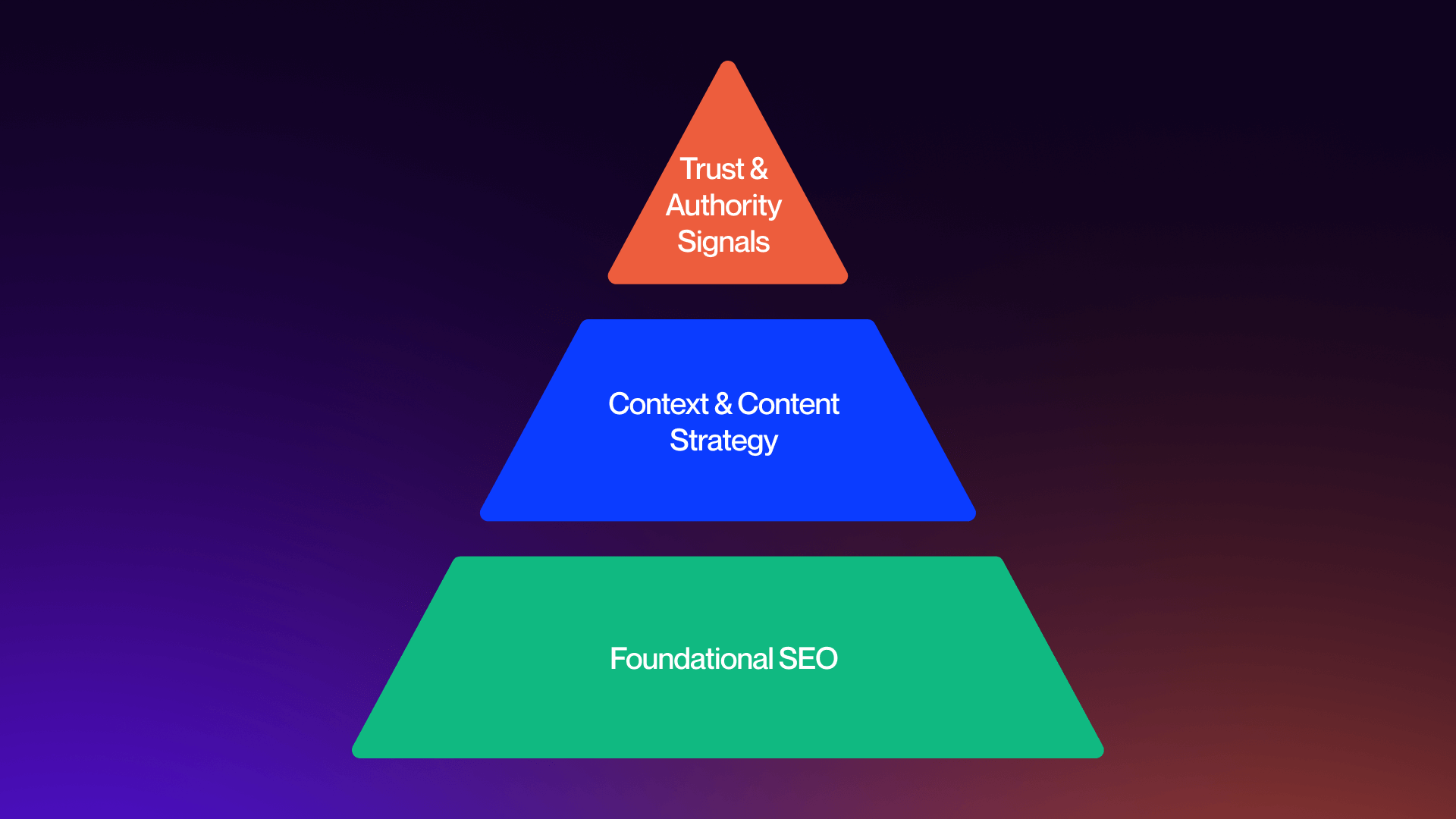
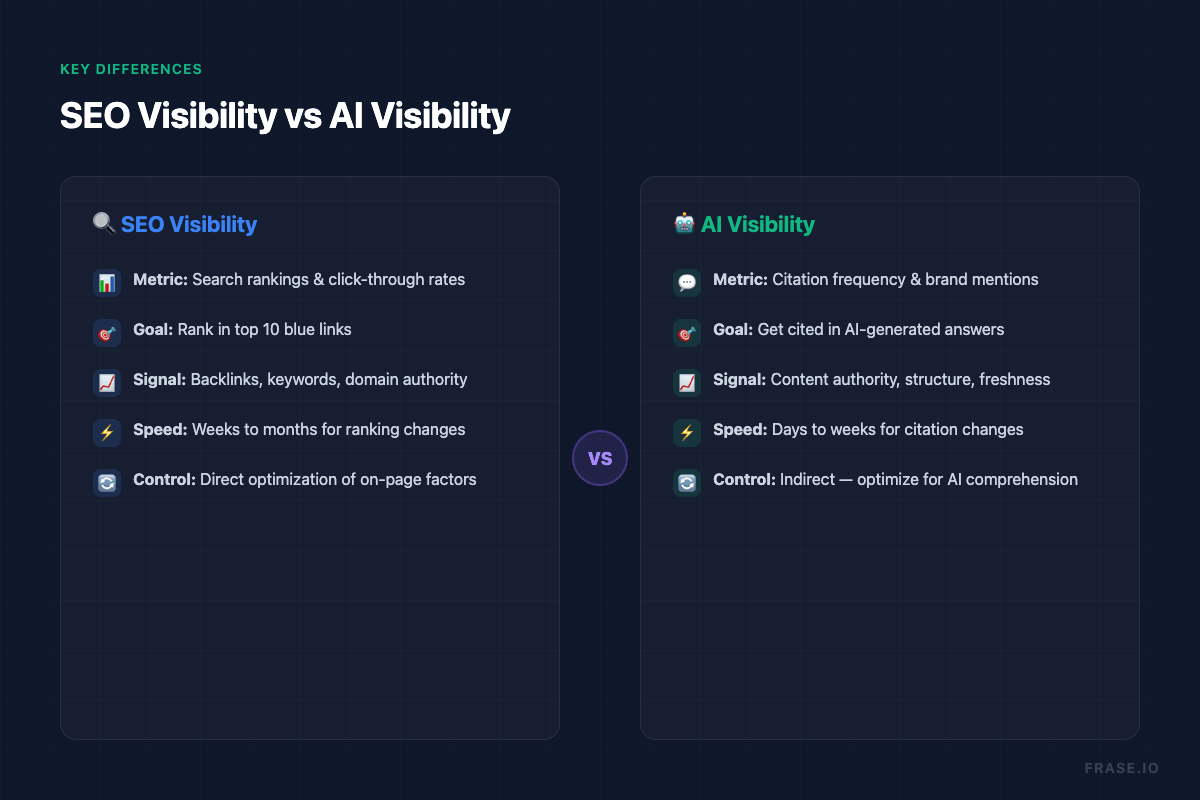
AI Overview visibility refers to the likelihood and frequency with which your website’s content is cited, referenced, or summarized within Google’s AI-generated answer blocks. Unlike traditional SEO, where you optimize for a list of blue links, AI Overview visibility requires optimizing for a single, synthesized paragraph that pulls information from multiple sources. When your content is used as a source for this synthesis, you gain “visibility” even if the user does not click through to your site. This is a distinct metric from impressions or clicks, focusing instead on brand presence within the generative answer itself.
The shift is profound. In the pre-AI era, ranking #1 for a keyword meant a 27% click-through rate. Today, if an AI Overview occupies the top of the page, that #1 organic result might only receive a 10% click-through rate. However, if your content is the primary source for that AI Overview, your brand name appears in the answer, building authority and trust even without a direct visit. The goal of AI SEO is to become the “source of truth” that Google’s model trusts for a given topic cluster.
Why Traditional SEO Fails to Capture AI Overview Visibility
Traditional SEO focuses on keyword density, backlinks, and domain authority. While these factors still influence rankings, they do not directly dictate whether an AI Overview will cite your work. Google’s generative models evaluate content differently than the classic crawler. They prioritize clarity, factual accuracy, and the structural ability to extract a direct answer. A page with 5,000 words of fluff and a high domain rating might lose to a concise, well-structured 800-word article from a smaller site if the latter provides a more direct answer.
Furthermore, traditional SEO often targets “informational” keywords with long-form content. AI Overviews are designed to eliminate the need for that long-form reading. They want the answer in 40-60 words. If your content buries the lede, the AI model will skip it in favor of a source that states the answer immediately. The core issue is that classic SEO optimizes for the “search results page,” while AI SEO optimizes for the “answer extraction process.” These are two different algorithms with different preferences.
The Shift from Page Ranking to Entity Ranking
AI Overviews rely heavily on entity recognition. Google’s model does not just read your text; it identifies the entities (people, places, concepts, data points) and the relationships between them. To gain AI Overview visibility, your content must clearly define these entities. If you are writing about “protein synthesis,” the AI needs to see that you clearly define “ribosomes,” “mRNA,” and “amino acids” as distinct entities with a logical connection. Vague pronouns and implied context confuse the model, reducing your chances of being selected as a source.
How Google Selects Sources for AI Overviews
Understanding the selection criteria is the first step toward optimization. While Google does not publish the exact algorithm, analysis of thousands of AI Overviews reveals consistent patterns. The model prioritizes sources that demonstrate high “information gain.” This means your content must offer something unique that is not present in the top 10 organic results. Simply rewriting the same Wikipedia summary will not work. You need to add a new data point, a unique case study, or a specific statistic that the AI can use to enrich its answer.
Source diversity is also critical. Google rarely pulls from a single domain for an AI Overview. It typically synthesizes information from 3-5 different websites. If your content is the only one discussing a specific sub-topic, you have a high chance of being included. This is why niche expertise is more valuable than general authority in the AI era. A specialized blog with unique proprietary data will outrank a generalist news site that merely aggregates information.
The Role of Structured Data and Schema Markup
Structured data acts as a direct communication channel to the AI model. Implementing schema markup (such as FAQPage, HowTo, Article, and Dataset) helps Google’s crawler understand the context of your content. While schema is not a guaranteed ranking factor for AI Overviews, it significantly improves the “crawlability” of your key points. For example, marking up a table with “Table” schema allows the AI to extract that data more accurately than if it were an image or a complex HTML layout. Prioritize schema that matches your content type to increase the chances of accurate extraction.
Core Strategies to Boost AI SEO AI Overview Visibility
Optimizing for AI Overviews requires a fundamental change in content creation. You must write for extraction, not just for reading. This means structuring your content in a way that allows a machine to easily isolate the answer to a specific query. The following strategies are proven to increase your chances of being cited.
1. Direct Answer Formatting (The “Zero-Click” Paragraph)
Place the direct answer to the target query within the first 50-100 words of your article. Do not use a lengthy introduction. Start with a clear, declarative sentence that answers the question. For example, if your keyword is “how to bake a cake,” your first sentence should be “To bake a cake, preheat the oven to 350°F and combine flour, sugar, and eggs.” This immediate answer gives the AI model a clean extractable snippet. Follow this with a brief explanation, but never bury the answer below the fold.
2. Leverage the “People Also Ask” Data
The “People Also Ask” (PAA) boxes are a goldmine for AI Overview optimization. These questions represent the exact sub-queries that the AI model is trying to answer. Create dedicated H2 sections for each PAA question. Use the exact question as the heading, and then provide a 40-60 word answer directly beneath it. This mirrors the structure of the AI Overview itself, making it easy for the model to map your content to the query.
3. Cite Specific Data and Statistics
AI Overviews love numbers. When you include specific statistics, dates, or percentages, you provide the model with “hard facts” it can use to build trust. Ensure these statistics are accurate and, if possible, original. If you cite a study, name the study and the year. For example, “According to a 2024 Gartner study, 78% of…” is far more likely to be extracted than “Many experts believe…” Original data is the highest-value currency in AI SEO.
4. Optimize for Visual Content Extraction
While AI Overviews are text-based, they often pull data from tables and lists. Ensure your tables are simple, with clear headers and no merged cells. Use bullet points for lists of three or more items. The AI model can parse these formats more efficiently than dense paragraphs. If you have a chart or graph, include a text summary of the key takeaway directly below it, as the AI cannot read the text inside the image file.
Content Structure: The Blueprint for AI Extraction
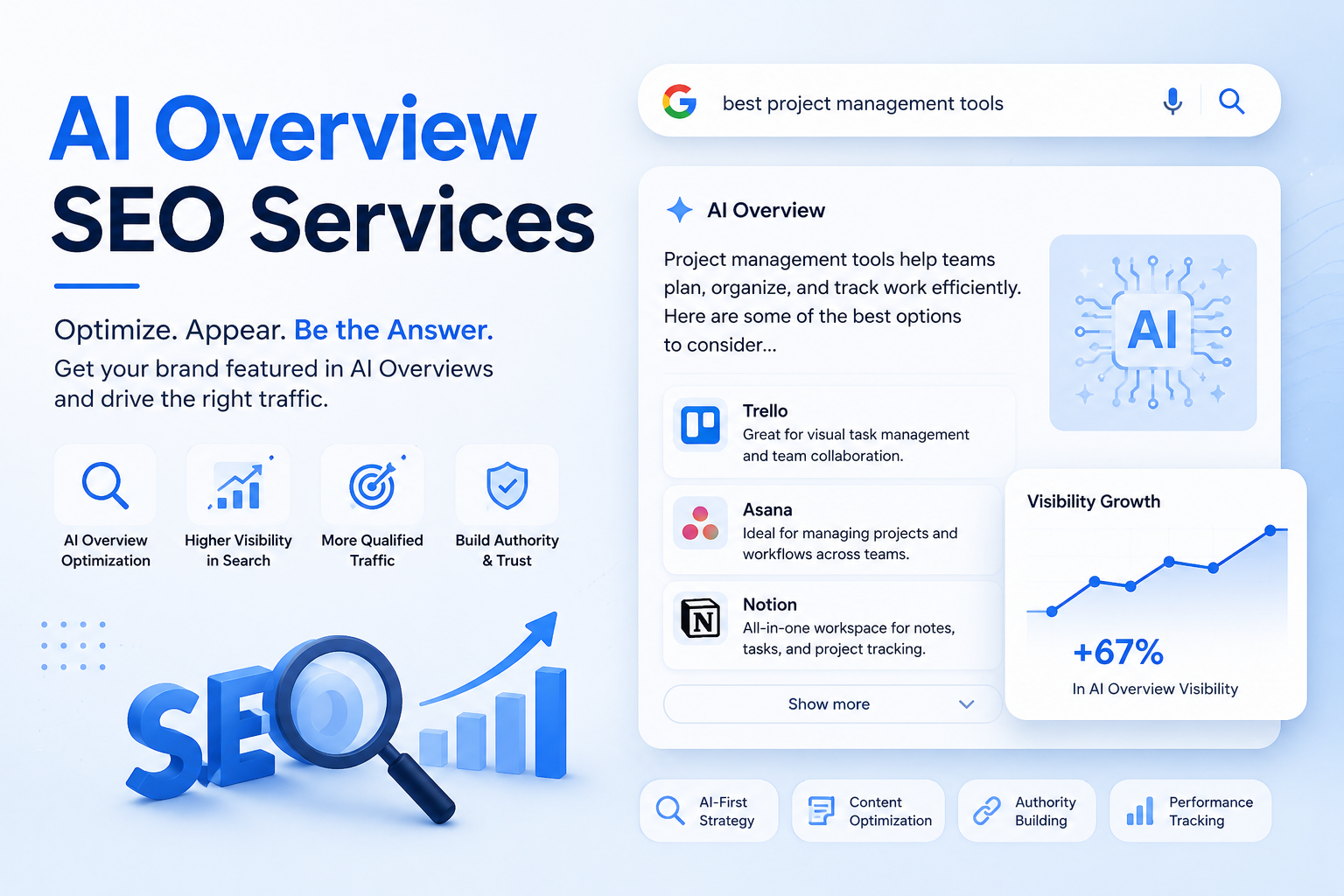
The architecture of your page determines its extractability. A standard blog post with a long intro, a story, and a conclusion is the worst possible format for AI Overview visibility. You need to adopt an “inverted pyramid” structure where the most critical information is at the top, followed by supporting details. This is a reversal of the narrative style that dominated SEO for the past decade.
Use H2 and H3 tags to create clear semantic boundaries. Each H2 should represent a distinct concept or question. The text under each H2 should be self-contained, meaning it can be understood without reading the rest of the article. This “modular content” approach allows the AI to pull a single section without needing the context of the entire page. Think of your page as a collection of mini-answers rather than one long essay.
The Role of Entity Consistency
Maintain consistent terminology throughout your content. If you refer to “AI Overviews” in one paragraph and “Search Generative Experience” in another, the AI might treat them as different entities. Choose your primary keyword and stick to it. Use synonyms sparingly and only when they are clearly defined. This consistency helps the model build a coherent knowledge graph around your content, increasing your authority on the subject.
Technical SEO Factors for AI Overview Visibility
Technical health is the foundation upon which AI visibility is built. If Googlebot cannot crawl and render your page, the AI model has no chance to analyze it. Core Web Vitals are now more important than ever. A slow page load time signals to Google that your content is low quality, reducing the likelihood of selection. Focus on Largest Contentful Paint (LCP) under 2.5 seconds and Cumulative Layout Shift (CLS) under 0.1.
JavaScript rendering is another critical factor. If your content is loaded dynamically via JavaScript, ensure that the server-side rendering or prerendering is configured correctly. The AI model needs to see the final HTML output. If your content is hidden behind a “load more” button or a tab, it may not be visible to the crawler. Use static HTML for your most important paragraphs to guarantee extraction.
Indexing Strategy: Quality over Quantity
Having 10,000 thin pages on your site dilutes your authority. Google’s AI models look for topical depth. Instead of publishing 10 short articles on related keywords, publish one comprehensive pillar page that covers the topic in depth. This pillar page should be the authoritative source. Then, link out to specific cluster pages for detailed sub-topics. This creates a clear hierarchy that the AI model can navigate, establishing your site as the “hub” for that niche.
Measuring Your AI Overview Visibility
You cannot improve what you do not measure. Tracking AI Overview visibility requires a different set of tools than traditional rank tracking. Standard rank trackers will show you your position for a keyword, but they often fail to show whether an AI Overview is present and whether you are cited within it. You need to use tools that specifically monitor the SERP features.
Manual checks are still the most accurate method. Perform a search in an incognito window for your target keywords. Look for the AI Overview box. Scroll through the text and see if your domain is listed as a source. Document this manually for your top 20 keywords. For automated tracking, tools like Semrush and Ahrefs have started rolling out AI Overview tracking features, but they are still in their infancy. Combine automated data with manual audits for the most accurate picture.
Key Metrics to Monitor
Focus on two primary metrics: “AI Overview Presence” (how often an AI Overview appears for your target keywords) and “Source Citation Rate” (how often your domain is cited within those Overviews). A high presence with low citation means you are targeting the right keywords but your content is not optimized for extraction. A low presence means you are targeting keywords that are not triggering AI Overviews, which might be an opportunity or a sign to pivot your strategy.
Common Mistakes That Kill Your AI Overview Visibility
Many SEO professionals are making critical errors in their rush to adapt. The most common mistake is trying to “trick” the AI with keyword stuffing. The model is sophisticated enough to detect unnatural language. If you write for the machine instead of the human, you will be penalized. The AI wants to provide a good user experience; if your content reads like a robot wrote it, it will be ignored.
Another frequent error is ignoring the “why” behind the search. AI Overviews are designed to answer complex, conversational queries. If you are only targeting short-tail keywords like “best coffee,” you are missing the point. You need to target long-tail, question-based queries like “what is the best coffee for a French press with a light roast profile?” These specific queries are where AI Overviews thrive, and where your content can provide the most value.
Ignoring the “Zero-Click” Reality
Many marketers panic when they see click-through rates drop due to AI Overviews. They respond by trying to make their snippets more clickable, which is the wrong approach. The goal is not to get the click; the goal is to be the source. If you are the source, you build brand awareness. Users who see your brand in the AI Overview are more likely to search for you directly later. Focus on brand impression metrics, not just CTR. The long-term value of being the “cited authority” outweighs the short-term loss of a click.
Practical Guide: Optimizing Your Existing Content
You do not need to rewrite your entire website. Start with your top 20 performing pages. For each page, follow this audit process. First, identify the primary query the page targets. Second, search that query in Google and see if an AI Overview appears. Third, analyze the sources cited in that Overview. What are they doing that you are not? Are they more concise? Do they have better data?
Once you have identified the gaps, rewrite the introduction of your page to include a direct answer. Break up long paragraphs into bullet points. Add a “Key Takeaways” section at the top of the page. Ensure that your H2 tags match the exact phrasing of common questions related to your topic. This is a surgical approach that yields results without requiring a full content overhaul.
Comparison: AI Overview Visibility vs. Traditional Rankings
| Feature | Traditional SEO | AI Overview Visibility |
|---|---|---|
| Primary Goal | Rank #1 in organic results | Be cited as a source in the AI answer |
| Content Length | Long-form (1500+ words) | Concise, modular (40-100 words per section) |
| Keyword Strategy | Exact match and partial match | Conversational, question-based, entity-focused |
| Success Metric | Click-through rate (CTR) | Brand impression and source citation |
| Content Structure | Narrative with intro and conclusion | Inverted pyramid, direct answers first |
| Data Usage | Supporting evidence | Primary extractable asset |
Important Notes on AI Overview Accuracy and Trust
AI Overviews are not always accurate. They can hallucinate or misinterpret data. This is a risk for your brand. If your content is cited in an AI Overview that contains a factual error, the user may associate that error with your brand. To mitigate this, ensure your content is factually bulletproof. Double-check every statistic and claim. If you are citing a study, link to the original source. This transparency builds trust with both the AI model and the end user.
Also, note that AI Overviews are constantly evolving. Google updates the Gemini model regularly, which can change how it selects sources. A strategy that works today might not work next month. Stay agile. Monitor the SERPs weekly. Subscribe to SEO news sources. The only constant in AI SEO is change.
Frequently Asked Questions
How long does it take to see results from AI SEO optimization?
Unlike traditional SEO which can take 3-6 months, AI Overview visibility can change much faster. Because the AI model re-evaluates sources frequently, you can see your content cited within 1-2 weeks of publishing a well-optimized, direct-answer page. However, building the authority to be consistently cited takes 2-3 months of consistent publishing and updating.
Does having a high Domain Authority guarantee AI Overview visibility?
No. Domain Authority is a third-party metric that Google does not use in its ranking algorithm. While authoritative sites are often cited, the AI model prioritizes information gain and clarity over domain metrics. A small, niche blog with unique data can easily outrank a high-DA site that has generic content.
Should I block AI Overviews from scraping my content?
Blocking Googlebot is a bad idea. If you block the crawler, you lose both organic rankings and AI Overview visibility. The goal is to be included. If you are concerned about content theft, focus on adding unique value and proprietary data that cannot be easily replicated. Being cited is a form of attribution that builds your brand.
What is the ideal word count for AI Overview optimization?
T The focus is on section length, not total page length. Each H2 section should be 100-200 words. The total page can be 1,000 or 3,000 words. The key is that each section is self-contained and provides a direct answer. Do not pad content with fluff to reach a word count.
Can AI Overviews help with local SEO visibility?
Yes. For local queries, AI Overviews often pull data from Google Business Profiles and local review sites. To optimize, ensure your Google Business Profile is complete and accurate. Encourage reviews that mention specific services or products. Create local-specific content that answers questions like “best pizza in [city]” with specific details about your business.
Conclusion
The era of the blue link is fading. AI SEO AI Overview visibility is the new frontier of search. The brands that succeed will be those that adapt their content strategy to serve the machine’s need for clear, factual, and structured answers. This is not about gaming the system; it is about creating better content that is easier to understand. By focusing on direct answers, entity clarity, and modular structure, you position your brand as the authoritative source that Google’s AI trusts. The transition requires effort, but the reward is a dominant presence in the most visible element of the modern search results page. Start auditing your top content today, and you will be well ahead of the competition in the race for AI-driven visibility.
Xem thêm:
- AI Keyword Research: The New Standard for Search Intent Discovery and Content Strategy
- WP Trove AI Plugin: The Complete Guide to Automating Your WordPress Content Workflow
- Gemini SEO: Mastering Search Optimization in Google’s AI-First Era
- AI Multilingual SEO: The Complete Guide to Dominating Global Search in the Age of Machine Translation
- AI SEO Landing Page Testing: The Complete Guide to Data-Driven Conversion Optimization
Bài viết cùng chủ đề:

AI SEO SEO Automation with Make: The Complete Workflow Guide

AI SEO SEO Automation with Zapier: The Complete Workflow Guide

AI SEO SEO Automation with n8n: The Complete Workflow Guide
AI SEO SEO Automation with Gemini: The Complete Guide to Scaling Organic Growth

AI SEO SEO Automation with Claude: The Complete Guide to Scaling Content in 2025

AI SEO SEO Automation with ChatGPT: The Complete Playbook for 2025

AI SEO & SEO Automation for Affiliate Sites: The 2025 Playbook for Passive Income Growth
AI SEO & SEO Automation for Bloggers: The Complete Guide to Scaling Your Content

AI SEO & SEO Automation for Agencies: The Complete 2025 Playbook

AI SEO and SEO Automation for Ecommerce: The Complete Playbook for 2025

AI SEO & SEO Automation for WordPress: The Complete Playbook for 2025
AI SEO SEO Automation Strategy: The Complete Playbook for 2025

Mastering the AI SEO SEO Automation Process: A Complete Guide to Scaling Organic Growth
AI SEO SEO Automation System: The Complete Guide to Scaling Organic Growth in 2025
AI SEO SEO Automation Platform: The Complete Guide to Scaling Organic Growth in 2025
AI SEO SEO Automation Software: The Complete Guide to Scaling Organic Growth in 2025















