
No products in the cart.
AI SEO AI SEO Audit Tool: The Complete Guide to Automated Site Optimization
10
Aug
Aug
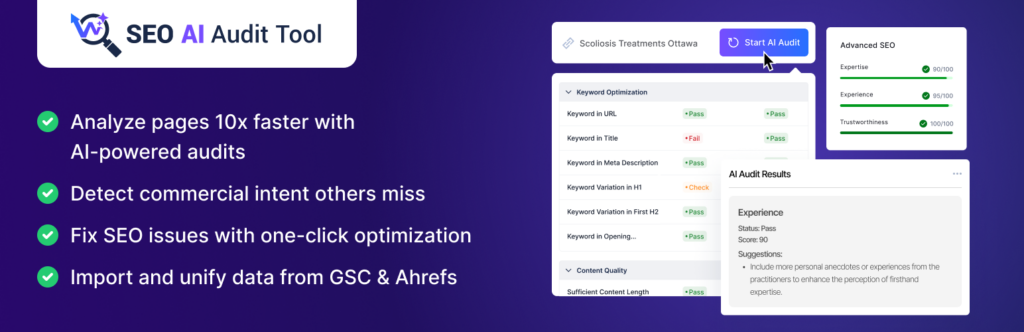
An AI SEO AI SEO Audit Tool represents the most significant shift in technical website optimization since the introduction of algorithmic search ranking. These intelligent platforms combine machine learning, natural language processing, and predictive analytics to identify and resolve SEO issues that would take human teams weeks to uncover. The modern digital landscape demands speed and precision, and AI-powered auditing delivers both by analyzing thousands of data points simultaneously, from crawl frequency to semantic relevance. This comprehensive guide examines how these tools work, what they offer, and how to leverage them for measurable ranking improvements.
What Is an AI SEO Audit Tool and How Does It Differ from Traditional Audits?
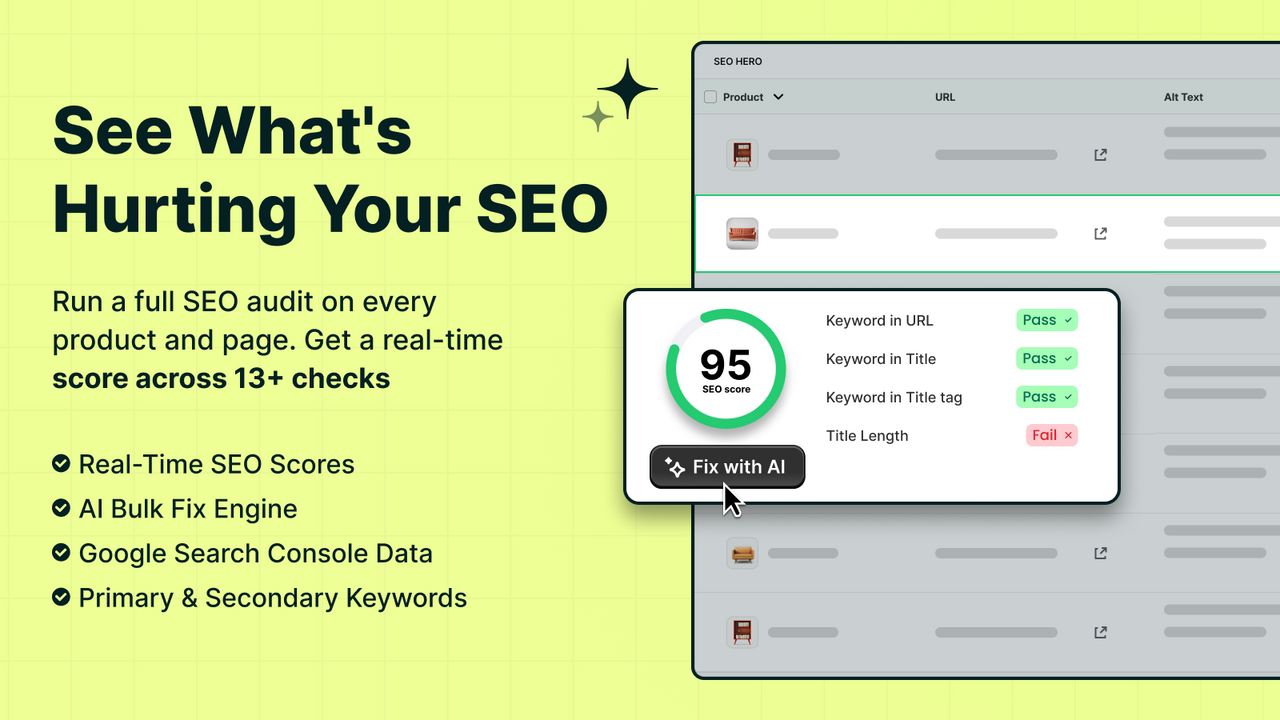
Traditional SEO audits rely on manual checks, static rule sets, and human interpretation of data. An AI SEO AI SEO Audit Tool elevates this process by using algorithms that learn from millions of indexed pages, user behavior patterns, and ranking signals. Instead of simply flagging missing meta descriptions, AI tools understand context, user intent, and content quality at a semantic level.
The core difference lies in the depth of analysis. Standard tools check for technical errors like broken links or duplicate titles. AI-powered platforms go further by evaluating entity relationships, topical authority, and predictive ranking potential. They simulate search engine crawlers but also mimic human reading patterns to assess readability, engagement likelihood, and content completeness.
Key Capabilities of Modern AI Audit Platforms
- Predictive SERP Analysis: Forecasts how changes will impact rankings before implementation
- Natural Language Processing: Evaluates content against top-ranking pages for semantic similarity
- Automated Error Prioritization: Ranks issues by potential traffic impact rather than just severity
- Competitive Gap Detection: Identifies content and technical advantages held by competitors
- Continuous Monitoring: Tracks changes in real-time and alerts to algorithm updates
- Crawling Engine: Simulates search engine bots to map your entire site structure
- Machine Learning Models: Trained on millions of high-ranking pages to identify winning patterns
- Semantic Analysis Module: Evaluates content relevance against search intent and entity relationships
- Predictive Scoring System: Assigns priority scores based on potential traffic and revenue impact
- Actionable Recommendation Engine: Generates specific, step-by-step fixes rather than generic advice
- Ignoring Context: Implementing every recommendation without considering user experience or brand voice can harm engagement
- Focusing Only on Technical Issues: Technical fixes matter, but content quality and backlink profile remain crucial ranking factors
- Running One-Time Audits: SEO is continuous; a single audit provides a snapshot, not a long-term strategy
- Neglecting Mobile-Specific Insights: Many tools provide separate mobile analysis; ignoring this data misses a significant traffic source
- Failing to Track Changes: Without baseline data, you cannot measure the effectiveness of your optimizations
- Data Accuracy: Ensure your website analytics are correctly configured so the AI tool has reliable data to analyze
- Regular Scheduling: Run audits at least monthly, or weekly for sites with frequent content updates
- Team Training: Invest time in training your team to interpret and act on AI recommendations effectively
- Customization: Configure the tool to understand your industry, target audience, and specific business objectives
- Human Oversight: Always have an experienced SEO professional review AI suggestions before implementation
The Evolution from Manual Audits to AI-Driven Optimization
The journey from spreadsheet-based audits to AI-driven systems mirrors the evolution of search engines themselves. Early SEO relied on keyword density and exact-match domains. The introduction of RankBrain and BERT forced a shift toward semantic understanding, making traditional audit methods obsolete. An AI SEO AI SEO Audit Tool emerged as the solution to this complexity, offering insights that align with modern search algorithms.
Today’s AI tools process terabytes of data from search engine results pages, user interaction metrics, and website architecture. They identify patterns that indicate why a page ranks third instead of first, considering factors like dwell time, bounce rate, and internal linking structure. This level of analysis was previously impossible without a dedicated data science team.
Core Components of an AI-Powered Audit System
Understanding what happens behind the scenes helps you maximize the value of these tools. The most effective platforms share several foundational components:
Benefits of Using an AI SEO AI SEO Audit Tool for Your Website
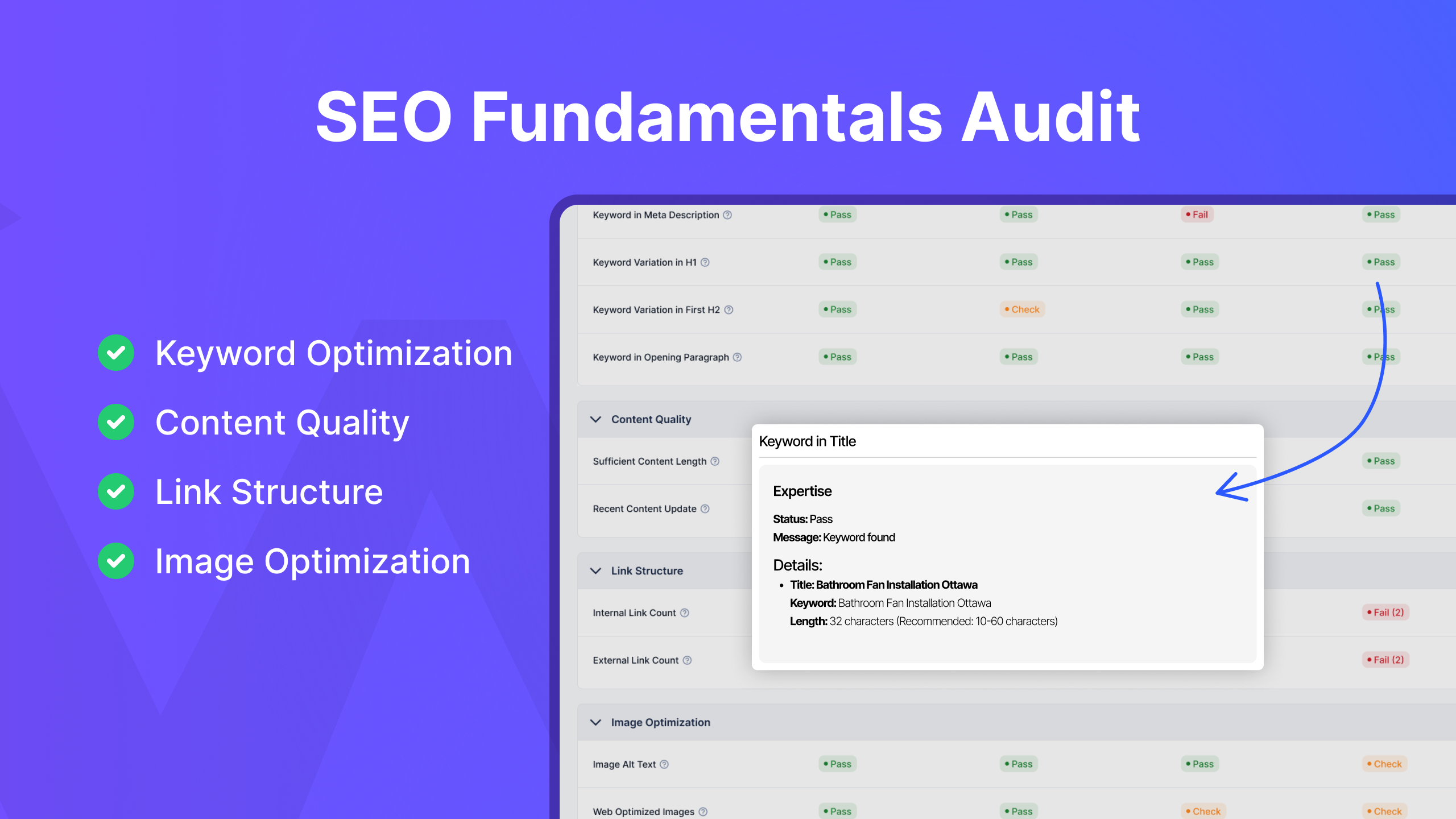
The advantages of AI-driven auditing extend far beyond time savings. These tools provide a level of insight that transforms SEO from a reactive discipline into a proactive strategy. The most impactful benefits include:
Unmatched Speed and Scalability
Manual audits of large e-commerce sites with thousands of product pages can take months. AI tools complete comprehensive crawls and analyses in hours, allowing for rapid iteration and implementation. This speed proves critical during algorithm updates when quick adjustments can preserve rankings.
Deep Semantic Understanding
AI tools evaluate whether your content truly answers the questions users ask. They compare your page against the top ten results for any keyword, analyzing word usage, concept coverage, and structural elements like headers and schema markup. This goes beyond simple keyword matching to assess topical depth and authority.
Predictive Recommendations
Instead of telling you what is wrong, AI tools predict what will happen if you fix it. They estimate traffic gains, keyword ranking improvements, and even revenue potential for each recommended action. This allows you to prioritize tasks based on business impact rather than technical severity.
Continuous Learning and Adaptation
As search algorithms evolve, AI audit tools evolve with them. The machine learning models update based on new ranking data, ensuring your optimization strategy remains current. This continuous learning cycle keeps you ahead of competitors still relying on static checklists.
Limitations and Considerations When Using AI Audit Tools
While powerful, AI-driven auditing is not without constraints. Understanding these limitations helps you set realistic expectations and combine tools with human expertise effectively.
| Limitation | Impact | Mitigation Strategy |
|---|---|---|
| Data Interpretation Gaps | AI may flag issues that are actually intentional design choices | Review recommendations with human context before implementation |
| Cost of Advanced Features | Full-featured platforms can be expensive for small businesses | Start with free tiers or limited audits for key pages |
| Over-Reliance on Automation | May miss creative opportunities that require human judgment | Use AI for data analysis, humans for strategy and content creation |
| Algorithm Transparency | Some tools do not explain why they made certain predictions | Choose platforms that offer clear reasoning for recommendations |
How to Perform an Effective AI-Powered SEO Audit: Step-by-Step Guide
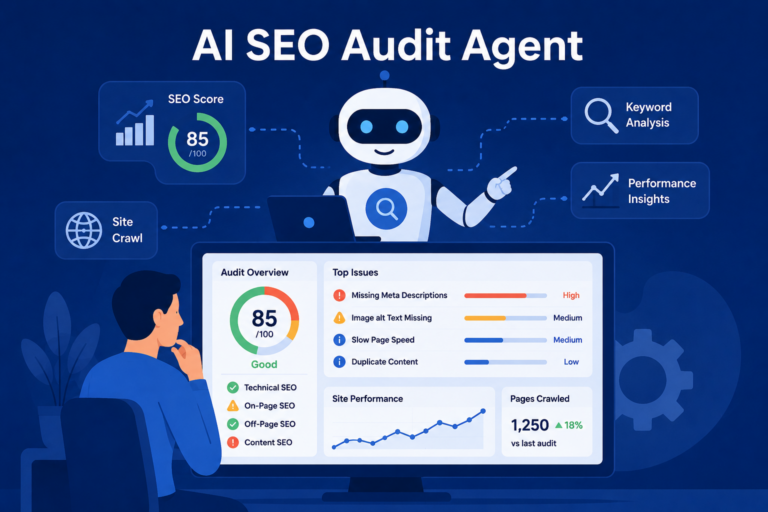
Implementing an AI SEO AI SEO Audit Tool requires a structured approach to maximize results. Follow this practical guide to conduct a thorough audit and implement actionable improvements.
Step 1: Configure Your Crawl Settings
Begin by setting up your audit parameters. Specify the number of URLs to crawl, the crawl speed, and whether to include subdomains or parameter-based URLs. For large sites, consider segmenting the audit by section to avoid overwhelming the system and to get more focused insights.
Step 2: Analyze Technical Health Scores
Review the overall technical health score provided by the tool. This aggregate metric typically includes page speed, mobile responsiveness, HTTPS implementation, and crawlability. Address critical errors first, as these directly impact search engine access to your content.
Step 3: Evaluate On-Page Optimization
Examine the AI-generated recommendations for title tags, meta descriptions, header structure, and internal linking. The tool will highlight pages with thin content, missing schema markup, or suboptimal keyword usage. Prioritize pages with high traffic potential or existing rankings that are underperforming.
Step 4: Review Content Quality and Semantic Relevance
Use the semantic analysis features to compare your content against top-ranking pages. Look for gaps in topic coverage, missing entities, or outdated information. The AI tool will suggest related terms and concepts to include for improved topical authority.
Step 5: Implement Changes and Monitor Results
Apply the recommended changes in batches, starting with the highest-priority items. After implementation, run a follow-up audit to verify improvements. Monitor your rankings and organic traffic over the following weeks to measure the impact of your changes.
Common Mistakes to Avoid When Using AI SEO Audit Tools
Even with advanced technology, users often fall into predictable traps that limit their results. Being aware of these common errors helps you get the most from your investment.
Comparing Popular AI SEO Audit Tools in the Market
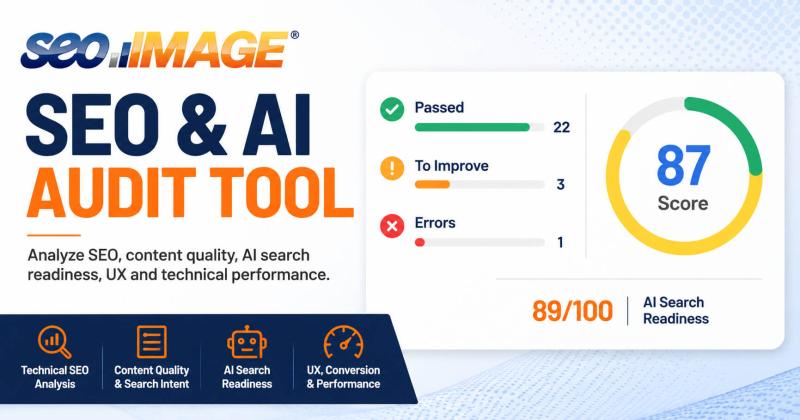
The market offers several robust platforms, each with unique strengths. Understanding the differences helps you select the right tool for your specific needs.
| Tool Name | Key Strengths | Best For | Pricing Model |
|---|---|---|---|
| Surfer SEO | Content optimization, SERP analysis, real-time suggestions | Content teams focused on on-page ranking | Subscription-based with tiers |
| Semrush | Comprehensive site audit, competitor analysis, keyword tracking | Full-service SEO agencies and in-house teams | Monthly plans with varying limits |
| Ahrefs | Backlink analysis, site explorer, content gap identification | Link building and competitive research | Tiered subscriptions |
| Frase.io | AI content briefs, topic research, content optimization | Writers and content strategists | Monthly subscription |
| Sitebulb | Visual site auditing, crawl visualization, issue explanations | Technical SEO specialists | One-time license or subscription |
Integrating AI Audit Insights with Your Overall SEO Strategy
An AI SEO AI SEO Audit Tool works best when integrated into a broader digital marketing strategy. The insights from these tools should inform content creation, link building, and technical development decisions across your organization.
For content teams, AI audit data reveals which existing pages need updates and what topics your audience expects you to cover. For developers, the technical recommendations provide a clear roadmap for site architecture improvements. For leadership, the predictive analytics offer a data-driven justification for SEO investments and resource allocation.
Aligning Audit Findings with Business Goals
Translate technical SEO improvements into business metrics. If the audit identifies page speed issues, estimate the impact on conversion rates and revenue. If content gaps are detected, project the potential traffic from filling those gaps. This alignment ensures SEO efforts receive the support and budget they require.
Important Notes for Maximizing Your AI Audit Tool Investment
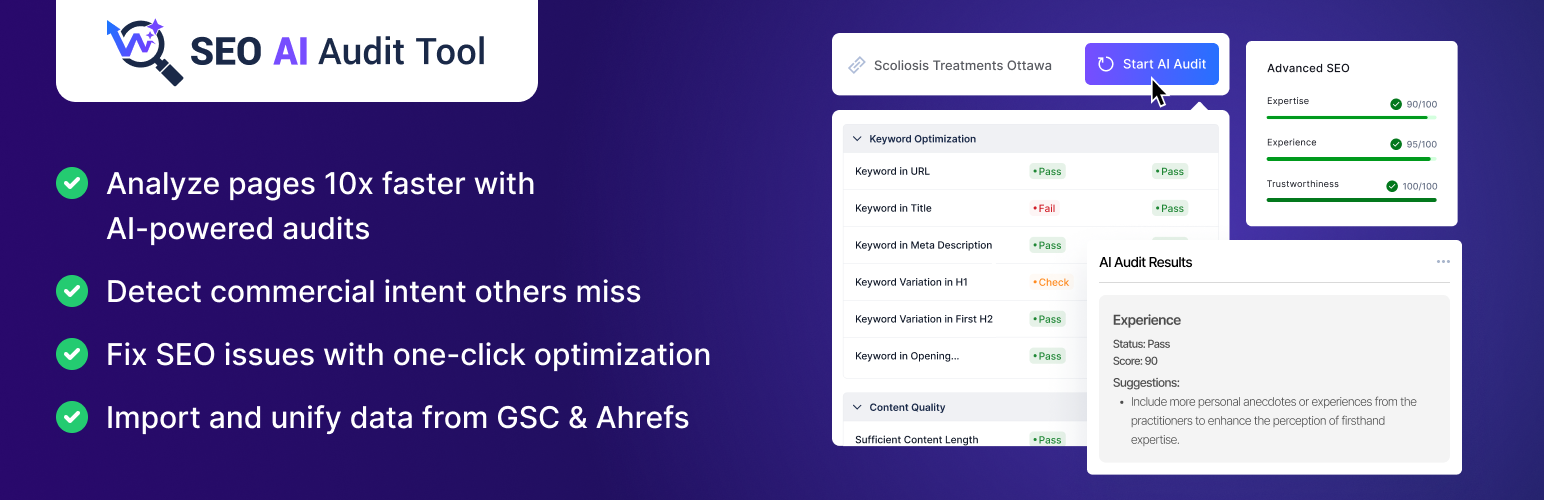
To truly benefit from AI-powered auditing, consider these essential factors:
Frequently Asked Questions About AI SEO Audit Tools
What is the difference between a free SEO audit tool and an AI-powered one?
Free tools typically provide basic checks for common issues like missing titles, broken links, and duplicate content. AI-powered tools go deeper by analyzing semantic relevance, predicting ranking potential, and providing prioritized recommendations based on business impact. They also learn from data patterns to offer more accurate and contextual advice.
How often should I run an AI SEO audit?
For most websites, a monthly audit provides a good balance between staying current and allowing time for changes to take effect. High-traffic sites or those in competitive niches may benefit from weekly audits. After major algorithm updates or significant site changes, run an immediate audit to assess impact.
Can AI SEO audit tools replace human SEO experts?
No, these tools augment human expertise rather than replace it. AI excels at data processing, pattern recognition, and scalability. Human experts provide strategic direction, creative problem-solving, and understanding of brand voice and user experience that AI cannot replicate. The best results come from combining AI insights with human judgment.
Are AI SEO audit tools suitable for small businesses?
Yes, many platforms offer entry-level plans or free versions with limited features. Small businesses can use these tools to identify quick wins and prioritize their limited resources effectively. Starting with a free audit can reveal critical issues that, when fixed, provide significant competitive advantages.
How long does it take to see results from AI-driven SEO recommendations?
Results vary based on the severity of issues, competition level, and how quickly changes are implemented. Technical fixes like page speed improvements may show impact within days. Content and authority-building changes typically take several weeks to months to reflect in rankings. Consistency and ongoing optimization are key to sustained results.
Conclusion: Embracing AI for Sustainable SEO Success
The adoption of an AI SEO AI SEO Audit Tool represents a strategic investment in your website’s long-term visibility and performance. These platforms transform complex data into actionable insights, enabling faster decision-making and more effective resource allocation. While they do not replace the need for skilled SEO professionals, they dramatically enhance their capabilities and productivity.
The digital landscape continues to evolve, with search engines placing greater emphasis on user experience, semantic relevance, and content quality. AI-powered auditing aligns your optimization efforts with these priorities, ensuring your website remains competitive in an increasingly sophisticated search environment. By integrating these tools into your regular workflow, understanding their outputs, and combining them with human expertise, you position your website for sustained organic growth and measurable business results.
Xem thêm:
- AI SEO Content Silos: The Complete Guide to Building Topical Authority in 2025
- AI SEO Keyword Database: The Complete Guide to Smarter Search Rankings
- Generative Engine Optimization: The Ultimate Guide to Winning AI-Powered Search
- AI SEO Regional SEO: The Complete Guide to Dominating Local Search in 2025
- AI SEO Entity Mapping: The Complete Guide to Future-Proofing Your Search Rankings
Bài viết cùng chủ đề:

AI SEO SEO Automation with Make: The Complete Workflow Guide

AI SEO SEO Automation with Zapier: The Complete Workflow Guide

AI SEO SEO Automation with n8n: The Complete Workflow Guide
AI SEO SEO Automation with Gemini: The Complete Guide to Scaling Organic Growth

AI SEO SEO Automation with Claude: The Complete Guide to Scaling Content in 2025

AI SEO SEO Automation with ChatGPT: The Complete Playbook for 2025

AI SEO & SEO Automation for Affiliate Sites: The 2025 Playbook for Passive Income Growth
AI SEO & SEO Automation for Bloggers: The Complete Guide to Scaling Your Content

AI SEO & SEO Automation for Agencies: The Complete 2025 Playbook

AI SEO and SEO Automation for Ecommerce: The Complete Playbook for 2025

AI SEO & SEO Automation for WordPress: The Complete Playbook for 2025
AI SEO SEO Automation Strategy: The Complete Playbook for 2025

Mastering the AI SEO SEO Automation Process: A Complete Guide to Scaling Organic Growth
AI SEO SEO Automation System: The Complete Guide to Scaling Organic Growth in 2025
AI SEO SEO Automation Platform: The Complete Guide to Scaling Organic Growth in 2025
AI SEO SEO Automation Software: The Complete Guide to Scaling Organic Growth in 2025















