
No products in the cart.
AI SEO Entity Mapping: The Complete Guide to Future-Proofing Your Search Rankings
10
Aug
Aug
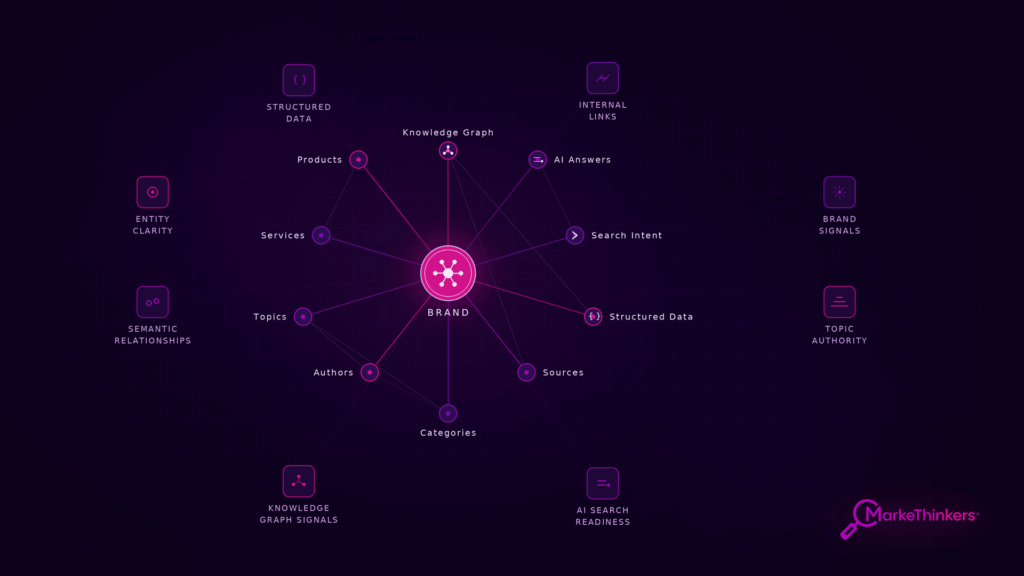
AI SEO Entity Mapping has transformed how search engines interpret content, moving beyond simple keyword matching to a sophisticated understanding of people, places, things, and their relationships. As Google’s algorithms increasingly rely on knowledge graphs and semantic search, mastering entity mapping has become essential for brands seeking sustainable visibility. This comprehensive guide explains what AI SEO Entity Mapping is, why it matters, and how to implement it effectively in your digital strategy.
Understanding AI SEO Entity Mapping
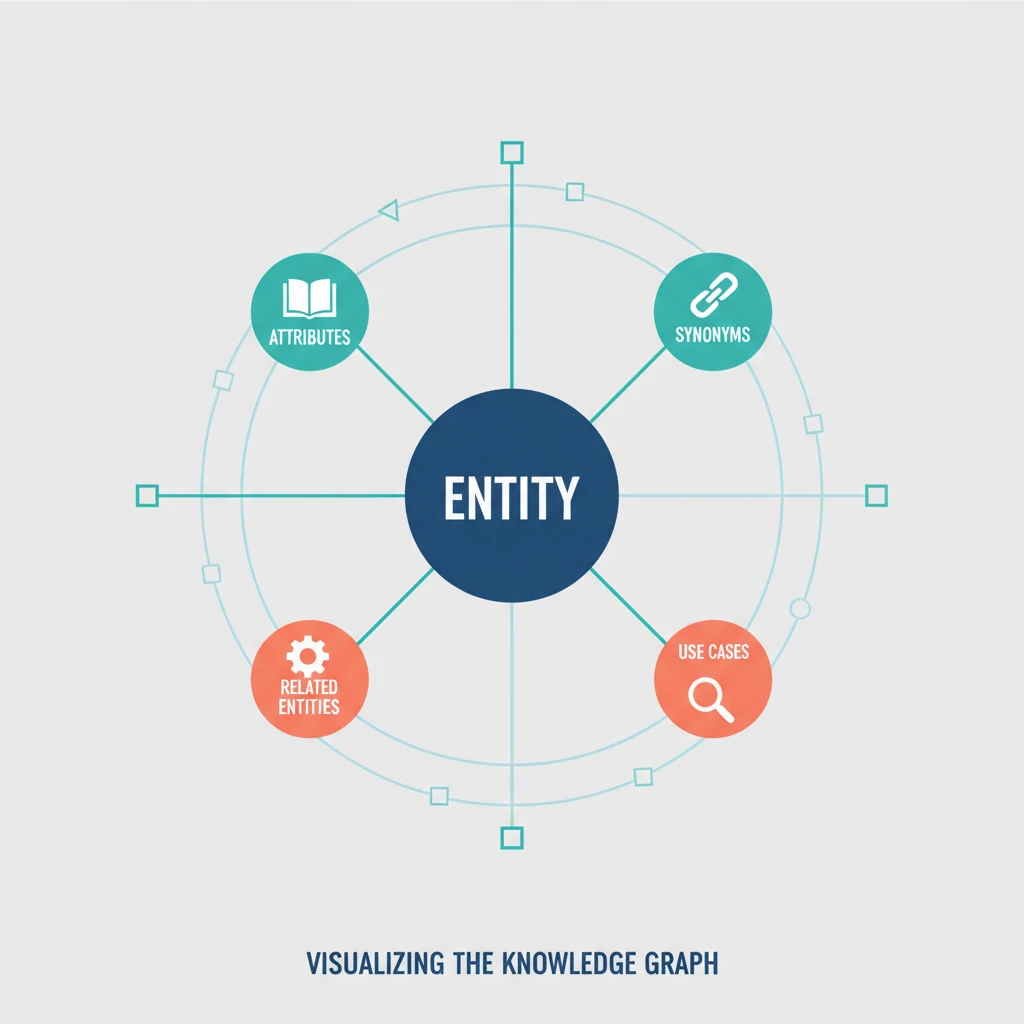
AI SEO Entity Mapping refers to the process of identifying, organizing, and connecting the key entities within your content ecosystem to help search engines understand your subject matter expertise. An entity is any distinct object, concept, person, place, or organization that can be uniquely identified. In the context of search, entities form the building blocks of Google’s Knowledge Graph, which powers rich results, knowledge panels, and more accurate search responses.
Traditional SEO focused on keywords and phrases. AI SEO Entity Mapping shifts the focus to meaning and relationships. When you map entities correctly, you signal to search engines that your content provides comprehensive, authoritative information about a specific topic cluster. This approach aligns perfectly with Google’s E-E-A-T guidelines and helps your pages rank for a broader range of relevant queries.
Why AI SEO Entity Mapping Matters in Modern Search
Google processes billions of searches daily, and its algorithms have evolved to prioritize understanding over simple text matching. The Hummingbird update introduced semantic search, and subsequent updates like RankBrain and BERT have made natural language processing central to ranking decisions. AI SEO Entity Mapping directly addresses these algorithmic shifts by providing the structured context that machine learning models need to categorize and rank your content.
When you implement entity mapping, you achieve several critical SEO benefits. Your content becomes more discoverable for long-tail queries that mention related concepts. You increase your chances of appearing in Google’s knowledge panels and featured snippets. You build topical authority that strengthens your entire domain’s relevance. Most importantly, you future-proof your SEO strategy against continued advances in AI-driven search.
Core Components of AI SEO Entity Mapping
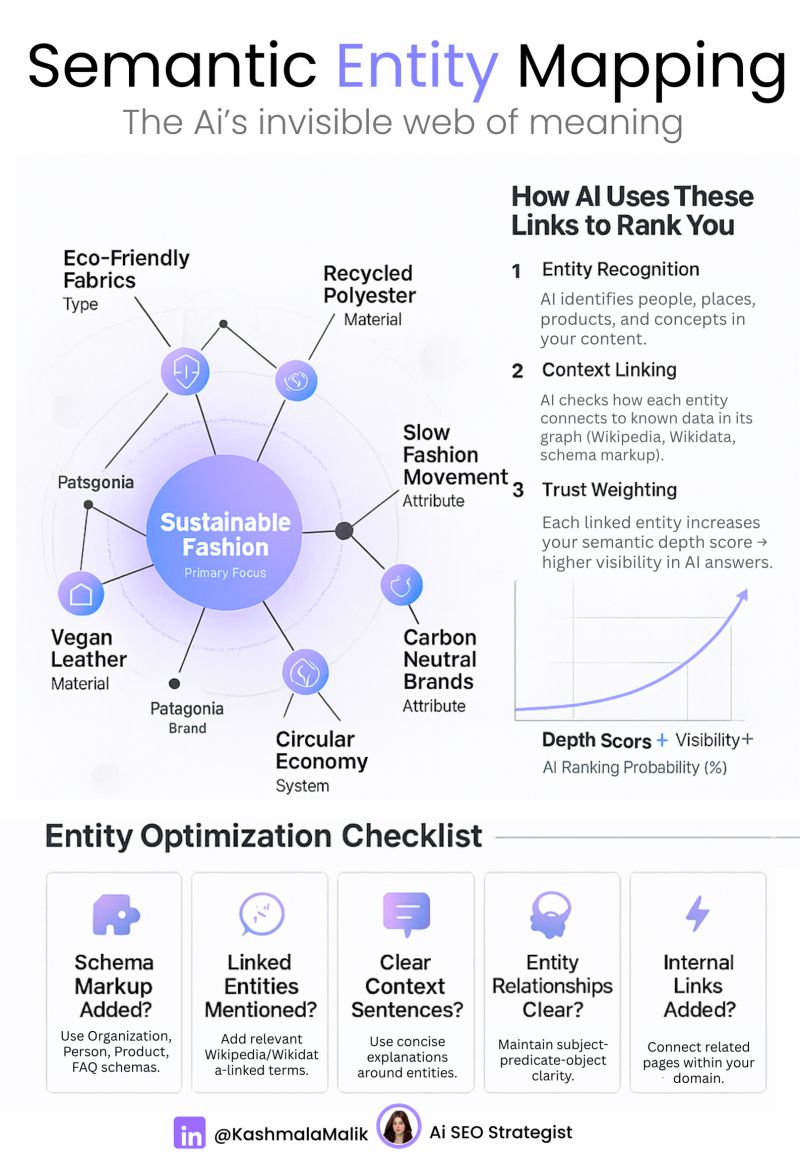
Successful AI SEO Entity Mapping requires attention to several interconnected elements. Each component contributes to the overall clarity and machine-readability of your content.
Entity Identification and Extraction
The first step involves identifying the primary and secondary entities within your content. Primary entities are the main subjects you discuss, while secondary entities include related concepts, brands, people, locations, and products. For example, an article about electric vehicles might identify Tesla, lithium-ion batteries, charging infrastructure, and environmental regulations as key entities.
Entity Relationship Mapping
Once you identify entities, you must define how they relate to each other. These relationships can be hierarchical, associative, or causal. Using the electric vehicle example, you would map that Tesla manufactures electric vehicles, that lithium-ion batteries power them, and that charging infrastructure supports their use. These relationship signals help search engines understand the context and depth of your content.
Knowledge Graph Integration
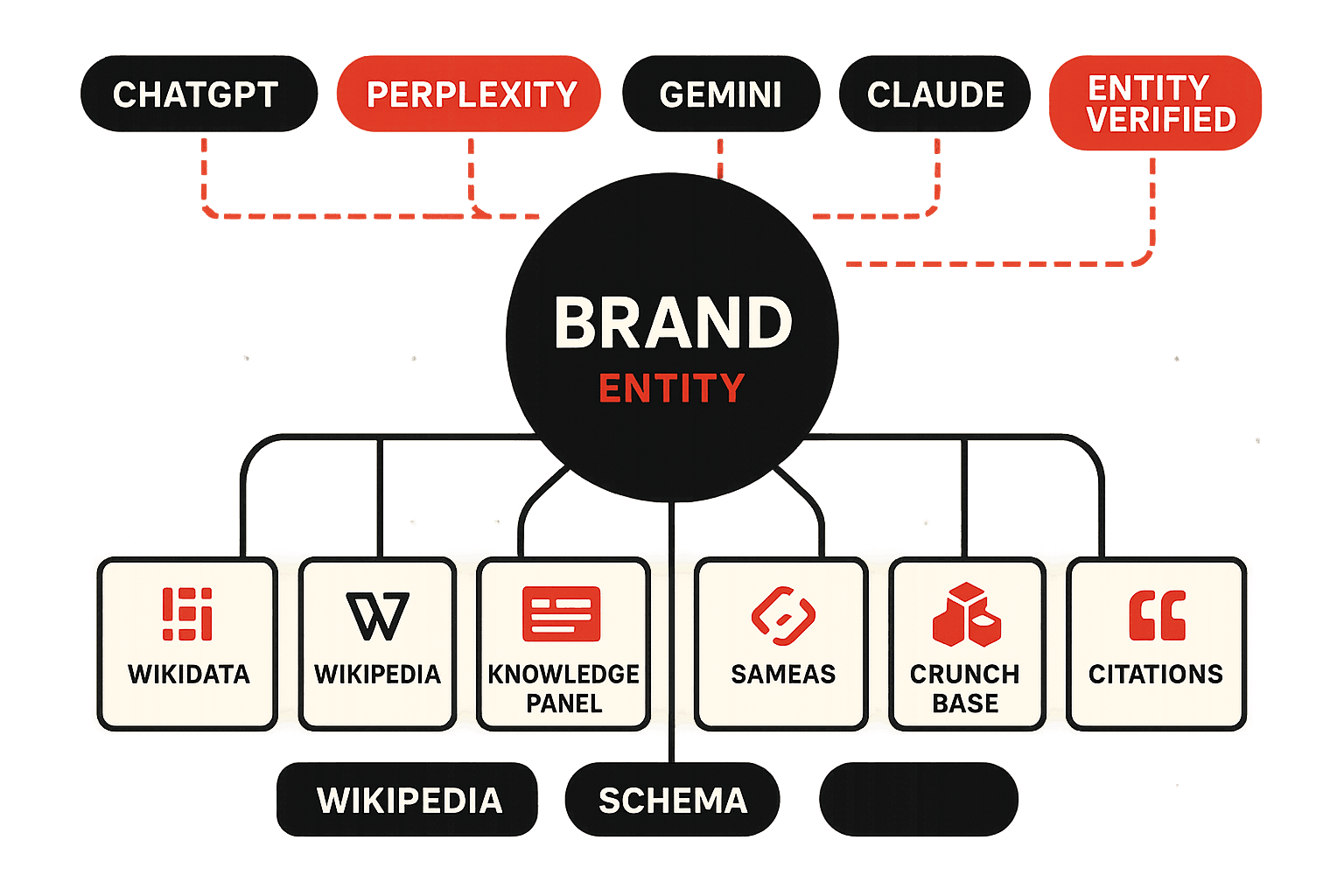
Google’s Knowledge Graph contains billions of facts about entities and their relationships. AI SEO Entity Mapping involves aligning your content with existing knowledge graph entries. This means using consistent naming conventions, referencing official entity identifiers where possible, and ensuring your content aligns with established facts about the entities you discuss.
Schema Markup Implementation
Structured data provides explicit signals about entity types and relationships. Schema.org vocabulary offers specific types like Person, Organization, Product, Event, and Place. Implementing schema markup helps search engines parse your content more accurately and can enable rich results that increase click-through rates.
The Process of Implementing AI SEO Entity Mapping
Implementing AI SEO Entity Mapping requires a systematic approach that combines content analysis, technical optimization, and ongoing refinement. The following process outlines the key steps for successful implementation.
Step 1: Conduct an Entity Audit
Begin by auditing your existing content to identify which entities you currently cover and how well you cover them. Use tools like Google’s Natural Language API or specialized SEO platforms that offer entity extraction. This audit reveals gaps in your topical coverage and highlights opportunities for expansion.
Step 2: Build Your Entity Knowledge Base
Create a comprehensive database of entities relevant to your industry. Include primary entities, related concepts, and the relationships between them. This knowledge base serves as your editorial roadmap, guiding content creation and ensuring comprehensive coverage of your topic clusters.
Step 3: Optimize Content Structure
Structure your content to clearly present entities and their relationships. Use descriptive headings that mention entities, include entity-rich paragraphs, and create internal links that connect related entity pages. This structure helps both search engines and users navigate your content ecosystem.
Step 4: Implement Technical Markup
Add appropriate schema markup to your pages. Use JSON-LD format for easier implementation. Mark up your primary entities with relevant schema types, and ensure your markup accurately reflects the relationships between entities on each page.
Step 5: Monitor and Refine
Entity mapping is not a one-time task. Monitor your search performance, track which entities generate visibility, and continuously refine your approach based on data. As your industry evolves, update your entity knowledge base to reflect new concepts and relationships.
Benefits of AI SEO Entity Mapping
The advantages of implementing AI SEO Entity Mapping extend across multiple dimensions of search performance and brand authority.
- Improved Search Relevance: Entity mapping helps search engines match your content to a wider range of relevant queries, including those that don’t contain your exact target keywords.
- Enhanced Featured Snippet Opportunities: Clear entity relationships increase your chances of earning position zero for informational queries.
- Stronger Topical Authority: Comprehensive entity coverage signals expertise and helps you rank for broader topic clusters.
- Better Voice Search Optimization: Voice queries are conversational and entity-focused, making entity mapping essential for voice search visibility.
- Increased Brand Recognition: Consistent entity usage helps Google associate your brand with specific topics and industries.
- Future-Proofing Against AI Updates: As search engines become more sophisticated, entity-based optimization becomes increasingly important.
Limitations and Challenges of AI SEO Entity Mapping
While AI SEO Entity Mapping offers substantial benefits, it also presents certain challenges that require careful consideration.
Implementation complexity ranks among the primary challenges. Entity mapping requires a deep understanding of both your industry and search engine algorithms. Small teams with limited resources may struggle to implement comprehensive entity strategies. Additionally, entity mapping requires significant content investment. Creating comprehensive coverage of multiple entities demands substantial time and resources.
Another challenge involves keeping entity data current. Industries evolve, new entities emerge, and relationships change. Maintaining an accurate entity knowledge base requires ongoing effort. Finally, measuring the direct impact of entity mapping on rankings can be difficult, as search algorithms consider hundreds of factors simultaneously.
AI SEO Entity Mapping vs Traditional Keyword SEO
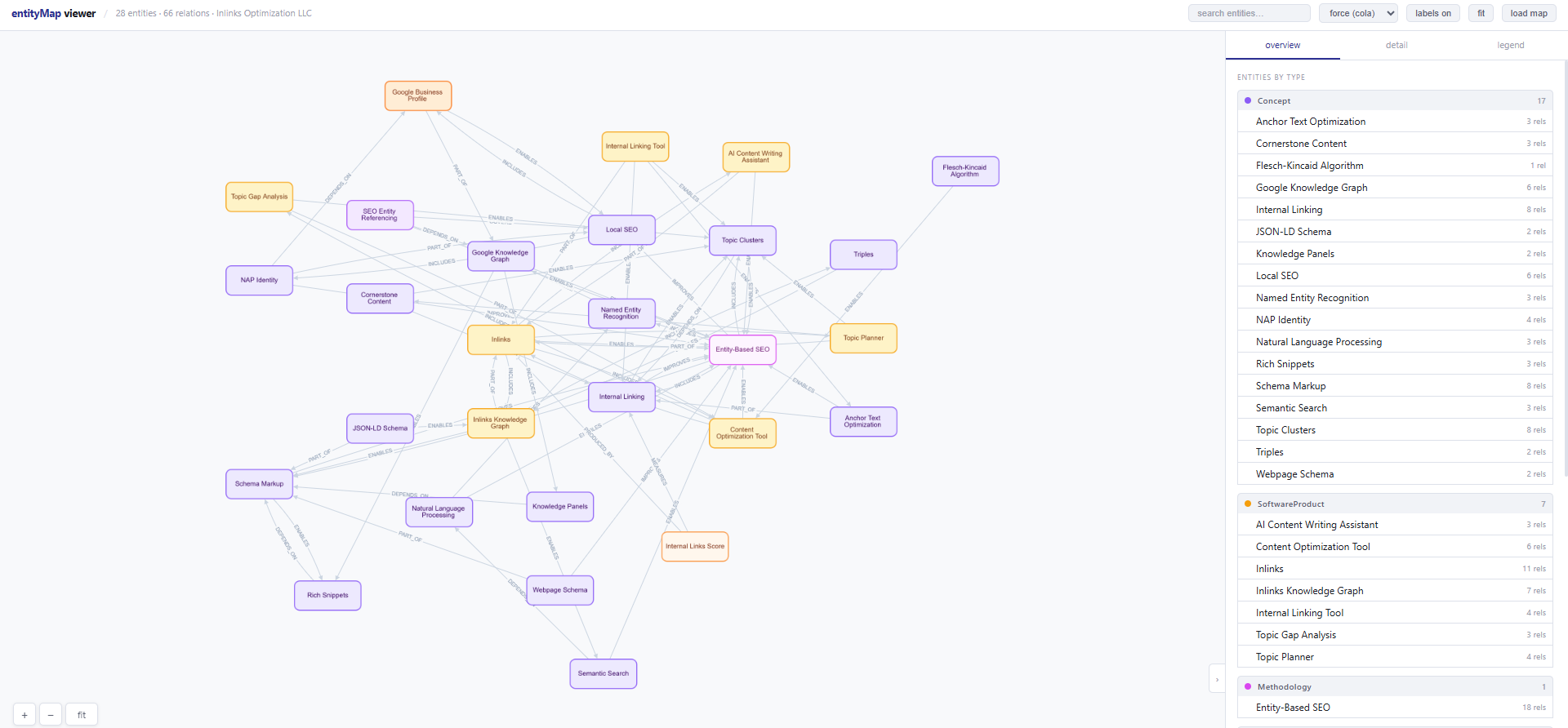
Understanding the differences between entity mapping and traditional keyword optimization helps clarify why this approach matters for modern search success.
| Aspect | Traditional Keyword SEO | AI SEO Entity Mapping |
|---|---|---|
| Primary Focus | Exact match keywords and phrases | Concepts, entities, and relationships |
| Content Approach | Optimizing for specific search terms | Comprehensive topical coverage |
| Search Intent Handling | Matching keyword patterns | Understanding user context and meaning |
| Algorithm Alignment | Older keyword-based algorithms | Modern semantic and AI-driven algorithms |
| Content Structure | Keyword-dense headings and text | Entity-rich, relationship-focused structure |
| Measurement | Keyword rankings and density | Entity coverage and topical authority |
Modern SEO strategies should integrate both approaches. Keywords still matter for understanding user intent, but entity mapping provides the semantic depth that drives sustainable rankings.
Practical Applications of AI SEO Entity Mapping
AI SEO Entity Mapping applies across various content types and industries. Understanding these applications helps you identify where to focus your optimization efforts.
Content Creation and Optimization
When creating new content, use your entity knowledge base to ensure comprehensive coverage. Include related entities naturally within your content, and structure your articles to clearly demonstrate how entities relate to each other. This approach creates content that satisfies both users and search engines.
Internal Linking Strategy
Entity mapping informs your internal linking decisions. Link between pages that discuss related entities, using anchor text that includes entity names. This creates a semantic web within your domain that search engines can easily crawl and understand.
Digital PR and Brand Building
Entity mapping extends beyond your website. Ensure consistent entity usage across your social media profiles, business listings, and press mentions. This consistency helps search engines associate your brand with your target entities and topics.
E-commerce Product Optimization
For online stores, entity mapping helps connect products with related categories, brands, and use cases. This improves product visibility for a wider range of search queries and enhances the shopping experience through better product recommendations.
Common Mistakes in AI SEO Entity Mapping
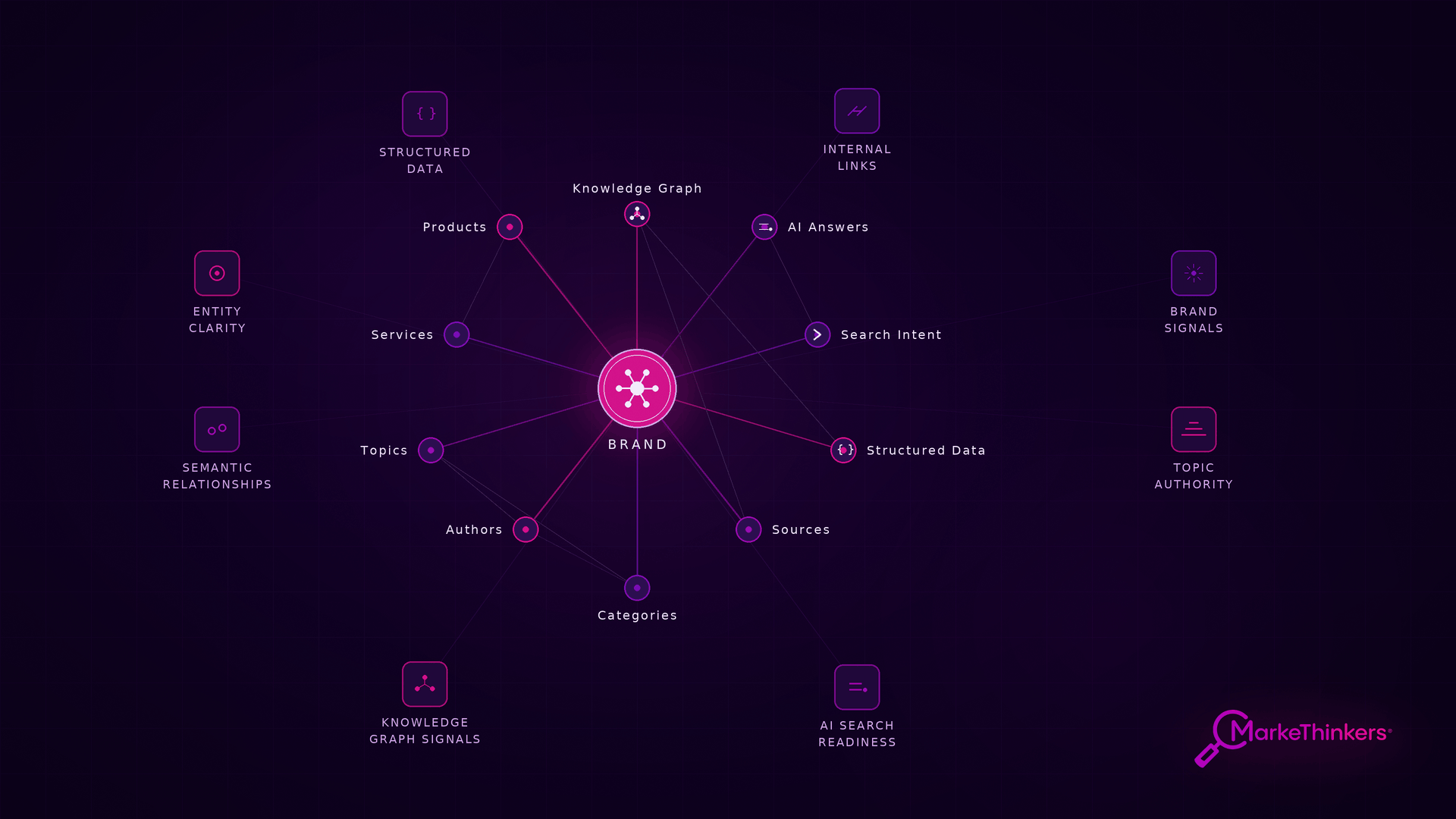
Avoiding common pitfalls can significantly improve your entity mapping results. The following mistakes frequently undermine otherwise solid strategies.
Focusing Only on Primary Entities: Many marketers optimize for their main topic but neglect secondary entities that provide important context. Comprehensive mapping requires attention to all relevant entities within your content ecosystem.
Inconsistent Entity Naming: Using different names for the same entity confuses search engines. Establish standard naming conventions and use them consistently across all content.
Ignoring Relationship Clarity: Simply mentioning entities without clearly demonstrating their relationships provides limited value. Your content should explicitly explain how entities connect to each other.
Neglecting Schema Markup: Without structured data, search engines must infer entity relationships from text alone. Proper schema implementation removes ambiguity and improves understanding.
Creating Isolated Entity Pages: Entity pages that don’t link to related content fail to build the semantic network that drives topical authority. Ensure your entity pages connect through thoughtful internal linking.
Important Notes for Successful Implementation
Several key considerations can make the difference between successful entity mapping and wasted effort. Keep these notes in mind as you develop your strategy.
Entity mapping works best when integrated into your overall content strategy rather than treated as a separate optimization task. Your editorial team should understand entity concepts and incorporate them into their writing naturally. Additionally, entity mapping requires patience. Results typically emerge over months as search engines crawl, index, and understand your updated content.
Quality remains paramount. Entity mapping cannot compensate for thin or low-quality content. Focus on creating genuinely useful, comprehensive resources that naturally incorporate entity relationships. Finally, stay informed about search engine updates and evolving entity-based features. The landscape continues to change as AI technology advances.
Tools and Technologies for AI SEO Entity Mapping
Several tools can assist with entity identification, relationship mapping, and implementation. Google’s Natural Language API provides entity extraction and sentiment analysis. TextRazor offers detailed entity recognition with relationship extraction. Screaming Frog SEO Spider includes entity analysis features. Various AI-powered SEO platforms now offer entity mapping capabilities as part of their content optimization suites.
For schema markup implementation, Google’s Structured Data Markup Helper simplifies the process. Schema.org provides the complete vocabulary reference. Testing tools like Google’s Rich Results Test validate your implementation. Combining these tools with your entity knowledge base creates a powerful optimization workflow.
Measuring the Impact of AI SEO Entity Mapping
Tracking the effectiveness of your entity mapping efforts requires attention to both direct and indirect metrics. Monitor your rankings for target entity-related queries. Track organic traffic growth to entity-focused pages. Watch for increases in featured snippet appearances and knowledge panel visibility. Analyze your topical authority metrics, such as the number of keywords you rank for within your entity clusters.
Additionally, monitor engagement metrics like time on page and bounce rate for entity-rich content. Improved entity mapping often leads to better user engagement as content becomes more relevant and comprehensive. Compare performance against your baseline data to identify which entity mapping initiatives deliver the strongest results.
Frequently Asked Questions
What is the difference between an entity and a keyword in SEO?
An entity is a distinct, identifiable concept, person, place, or thing, while a keyword is a specific word or phrase users type into search engines. Entities represent meaning and relationships, while keywords represent query patterns. Entity-based optimization focuses on comprehensive topical coverage, whereas keyword optimization targets specific search terms.
How does Google use entities in search rankings?
Google uses entities to understand the meaning and context of content. The Knowledge Graph stores entity information and relationships, which helps Google match content to user queries more accurately. Entities also power rich results like knowledge panels and featured snippets, and they help Google assess topical authority and expertise.
Do I need to replace keyword research with entity mapping?
No, entity mapping complements rather than replaces keyword research. Keywords help you understand user intent and search demand, while entity mapping helps you structure content for semantic understanding. The most effective strategies integrate both approaches, using keywords to identify topics and entities to build comprehensive coverage.
How long does it take to see results from AI SEO Entity Mapping?
Results typically appear within three to six months of consistent implementation. Search engines need time to crawl and re-index your updated content. The timeline depends on your site’s authority, the competitiveness of your industry, and the quality of your entity mapping implementation.
Can small websites benefit from entity mapping?
Yes, small websites can benefit significantly from entity mapping. While comprehensive entity coverage requires effort, even basic entity optimization helps search engines understand your content better. Focus on your core topic areas and build entity coverage gradually as your content library grows.
What role does schema markup play in entity mapping?
Schema markup provides explicit structured data that helps search engines identify entities and their relationships. It removes ambiguity and ensures consistent interpretation of your content. Schema markup is a technical component of entity mapping that enhances the semantic signals in your content.
Conclusion
AI SEO Entity Mapping represents the evolution of search optimization from keyword matching to semantic understanding. By identifying, organizing, and connecting the entities within your content ecosystem, you align your website with how modern search engines process and rank information. The approach delivers tangible benefits including improved relevance, enhanced visibility, and stronger topical authority.
Successful implementation requires a systematic approach that combines content analysis, technical optimization, and ongoing refinement. While challenges exist, the competitive advantages of entity mapping make it essential for brands seeking sustainable search performance. Start by auditing your current entity coverage, build your knowledge base, and gradually integrate entity principles into your content creation and optimization processes. As search engines continue to advance their AI capabilities, entity mapping will only grow in importance, making early adoption a strategic advantage.
Xem thêm:
- AI SEO GEO Content: The Complete Guide to Generative Engine Optimization
- WP Trove Content AI Review: The Ultimate WordPress Content Creation Tool in 2025
- AI SEO Chatbots: The Complete Guide to Automating Search Optimization With Conversational Intelligence
- AI SEO Keyword Prioritization: The Complete Guide to Smarter Content Planning
- AI Outline Generator: The Complete Guide to Structuring Content in Seconds
Bài viết cùng chủ đề:

AI SEO SEO Automation with Make: The Complete Workflow Guide

AI SEO SEO Automation with Zapier: The Complete Workflow Guide

AI SEO SEO Automation with n8n: The Complete Workflow Guide
AI SEO SEO Automation with Gemini: The Complete Guide to Scaling Organic Growth

AI SEO SEO Automation with Claude: The Complete Guide to Scaling Content in 2025

AI SEO SEO Automation with ChatGPT: The Complete Playbook for 2025

AI SEO & SEO Automation for Affiliate Sites: The 2025 Playbook for Passive Income Growth
AI SEO & SEO Automation for Bloggers: The Complete Guide to Scaling Your Content

AI SEO & SEO Automation for Agencies: The Complete 2025 Playbook

AI SEO and SEO Automation for Ecommerce: The Complete Playbook for 2025

AI SEO & SEO Automation for WordPress: The Complete Playbook for 2025
AI SEO SEO Automation Strategy: The Complete Playbook for 2025

Mastering the AI SEO SEO Automation Process: A Complete Guide to Scaling Organic Growth
AI SEO SEO Automation System: The Complete Guide to Scaling Organic Growth in 2025
AI SEO SEO Automation Platform: The Complete Guide to Scaling Organic Growth in 2025
AI SEO SEO Automation Software: The Complete Guide to Scaling Organic Growth in 2025















