
No products in the cart.
AI SEO Assistant: The Ultimate Guide to Automating and Scaling Your Organic Growth
29
Jul
Jul
An AI SEO assistant rewrites the rules of search engine optimization by merging real-time data analysis with content generation and task automation. These tools do not simply suggest keywords; they build topical clusters, restructure entire pages, and monitor rankings while you focus on strategic decisions. For marketers, agencies, and business owners, understanding how an AI SEO assistant operates means the difference between falling behind the algorithm shifts and staying comfortably ahead of competitors who still rely on manual checklists.
What Is an AI SEO Assistant?
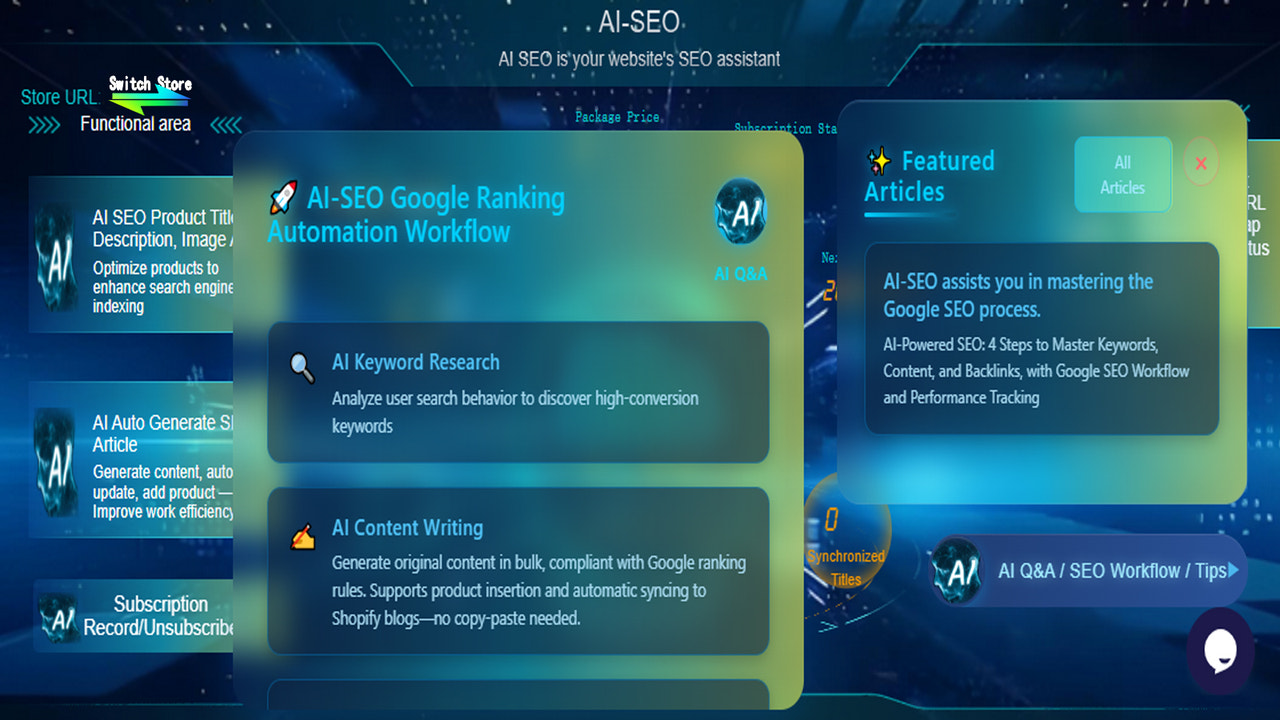
An AI SEO assistant is a software platform that uses machine learning, natural language processing, and large language models to perform, guide, or automate search optimization tasks. Unlike traditional SEO tools that provide static data reports, an AI SEO assistant interprets that data, generates actionable recommendations, and often executes changes directly inside content management systems. It acts as a virtual strategist capable of analyzing thousands of data points in seconds and producing content briefs, meta tags, internal linking suggestions, and even full article drafts optimized for user intent.
These assistants ingest signals from Google’s APIs, SERP layouts, competitor content patterns, and semantic relationships. By continuously learning from performance outcomes, the most advanced systems refine their suggestions so that every iteration moves closer to what search engines reward. The result is a dynamic workflow where keyword research, content creation, technical audits, and performance tracking happen within a single intelligent layer.
How an AI SEO Assistant Works Under the Hood
At the core of any effective AI SEO assistant sits a suite of interconnected models trained on historical ranking data, user behavior metrics, and linguistic patterns. When a user enters a primary topic, the assistant breaks it into entities, identifies related concepts, and compares them against the top-performing pages. This process, known as semantic content modeling, maps out exactly which subtopics, questions, and media elements must appear to satisfy Google’s quality thresholds.
Simultaneously, the assistant analyzes the current SERP features: featured snippets, People Also Ask boxes, image packs, and video carousels. It then reverse-engineers the structure that winning pages use, from heading hierarchy to paragraph length and tone. Some assistants go further by scanning the user’s existing content catalog, identifying cannibalization risks, and recommending merges or de-optimization steps that manual audits routinely miss.
Data Ingestion and Entity Extraction
An AI SEO assistant begins its process by crawling a target URL or receiving a seed keyword. It extracts main entities—people, places, concepts—and builds a knowledge graph that matches what search engines already associate with the topic. This phase ensures that every piece of content aligns with the semantic expectations of Google’s Knowledge Graph and Helpful Content System.
Competitive Content Deconstruction
After understanding the topic landscape, the assistant deconstructs the top ten ranking pages. It measures word count ranges, readability scores, image frequency, heading distribution, and the exact phrasing of meta descriptions. These metrics form a blueprint the user can follow or let the assistant automatically apply when generating a new draft.
Content Generation and Optimization
Using large language models fine-tuned on factual accuracy and brand safety, the assistant produces content that naturally includes LSI keywords, related entities, and proper internal linking anchors. More importantly, it optimizes for engagement signals by adjusting the tone, adding expandable sections, and placing call-to-action elements where heatmap data suggests maximum impact.
Real-Time Performance Feedback
Once content goes live, the assistant tracks ranking movement for the target keyword cluster and related long-tail variations. If a page drops from position four to seven, the system immediately scans recent algorithm updates, competitor changes, and on-page metric shifts. It then recommends precise fixes—perhaps strengthening a specific H2 or adding a statistical reference—instead of vague advice like “improve content quality.”
Key Features That Define a Powerful AI SEO Assistant
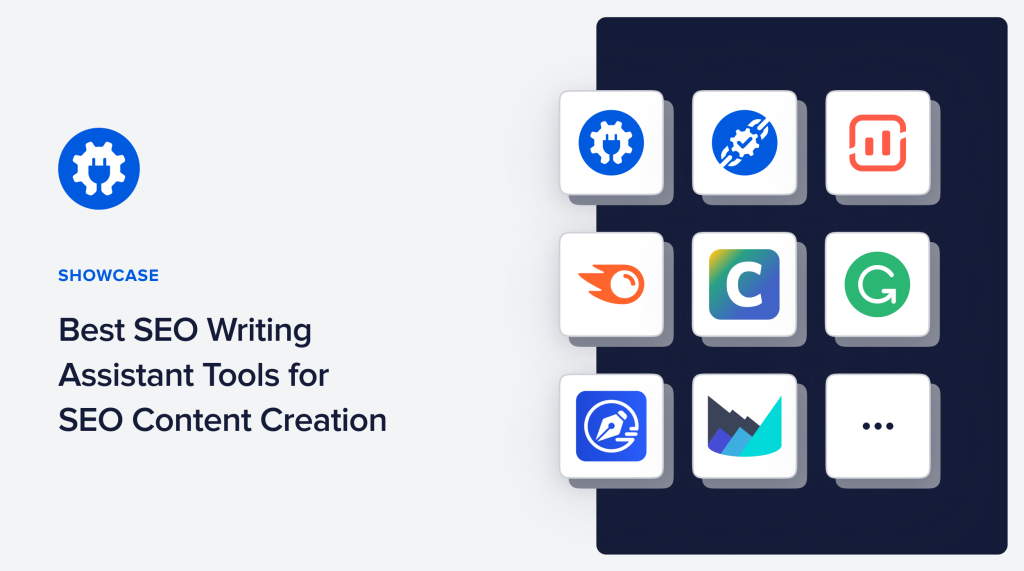
Not every tool marketed as an AI SEO assistant delivers the same level of sophistication. The most impactful solutions combine several core capabilities that directly reduce the manual labor traditionally required for SEO campaigns.
- Automated keyword clustering and intent mapping: The assistant groups thousands of keywords by parent topic and search intent (informational, commercial, transactional) without manual spreadsheet work.
- AI-driven content briefs: Instead of generic outlines, the tool produces briefs that specify word count targets, questions to address, authoritative sources to cite, and NLP-friendly structures.
- On-page optimization scoring: A real-time grade that updates as the user writes, highlighting missing entities, over-optimized anchors, and readability issues.
- Internal link automation: The assistant scans the entire site and suggests or inserts contextual links between related pages, strengthening topic clusters.
- SERP feature targeting: Specific guidance on formatting content to win featured snippets, FAQ schema, and other rich results.
- Technical SEO audits: Crawl analysis that identifies broken links, slow-loading pages, and indexation problems, then provides priority-based fix lists.
- Performance dashboards with anomaly detection: Instead of static rank trackers, the assistant alerts users to unusual ranking volatility and correlates it with possible causes.
- Time compression: Tasks that previously took days—such as creating a comprehensive content brief—now complete in under two minutes. This compression allows small teams to compete with enterprise-level content machines.
- Consistent quality at scale: When producing 500 product descriptions or 50 blog posts per month, maintaining uniform optimization across every piece becomes humanly impossible. The assistant enforces minimum quality thresholds automatically.
- Deeper competitive insight: A human can analyze three competitor pages in an hour. An AI SEO assistant can analyze thirty in seconds, identifying structural patterns invisible to manual review.
- Algorithm resilience: Because the assistant bases recommendations on machine-readable search engine patterns rather than outdated tactics, pages built with AI guidance tend to hold rankings better through core updates.
- Reduced cognitive load: Marketers shift mental energy from remembering on-page rules to creative storytelling and audience understanding, while the assistant handles technical precision.
- Generic content traps: AI-generated text can become templated and lack the unique perspective, data, or personal stories that differentiate high-EEAT content.
- Factual inaccuracies: Large language models occasionally hallucinate statistics, quotes, or product specifications. Every output requires human fact-checking against primary sources.
- Brand voice leakage: Without careful prompt engineering and custom fine-tuning, the assistant’s output may sound indistinguishable from competitors using the same tool.
- Over-optimization signals: Aggressively following AI suggestions can lead to exact-match keyword stuffing, unnaturally dense entity use, and pattern detection by search engines designed to identify machine-generated text.
- Data privacy concerns: Uploading proprietary content or customer data into third-party AI tools may conflict with GDPR or internal security policies unless enterprise-grade contracts are in place.
- Publishing unedited AI output: Google’s helpful content system explicitly targets content created primarily for search engines. A raw AI draft, however optimized, lacks the human experience signals that sustain rankings.
- Ignoring brand search intent: The assistant might suggest informational content for a term that actually signals commercial intent in a specific niche. Teams must validate intent manually for high-stakes keywords.
- Neglecting topic depth for breadth: Chasing the assistant’s suggestion to cover many shallow topics instead of fully owning a few deep topic clusters dilutes authority and confuses search engines about the site’s expertise.
- Overwriting historically valuable content: Blindly “optimizing” old pages that rank well for niche terms can strip out the unique phrasing that originally earned those rankings. Change management protocols must guard legacy winners.
- Forgetting conversion optimization: An AI SEO assistant can drive traffic, but it does not inherently design persuasive calls-to-action, lead magnets, or checkout flows. Traffic without conversion architecture is wasted investment.
Types of AI SEO Assistants Available Today
The market segments into three broad categories, each serving different user profiles and technical comfort levels.
| Type | Primary Function | Best For | Examples |
|---|---|---|---|
| Content-First Assistants | Generate and optimize blog posts, landing pages, and product descriptions based on SERP data. | Content teams, bloggers, affiliate marketers | Surfer AI, Frase, Jasper |
| All-in-One SEO Platforms with AI Layers | Combine traditional rank tracking, technical audits, and AI content recommendations in one interface. | Agencies, enterprise SEO managers | Semrush with ContentShake AI, Ahrefs with AI suggestions, SE Ranking |
| Developer-Centric Automation Tools | Use APIs and code generation to bulk-create SEO-optimized pages, meta tags, and structured data. | Large e-commerce sites, programmatic SEO projects | WordLift, custom GPT-4 integrations via Python |
The Transformative Benefits of Using an AI SEO Assistant
Adopting an AI SEO assistant shifts the entire content production engine from reactive to proactive. Teams stop guessing which topics will drive traffic and instead follow predictive models grounded in actual SERP data.
Limitations and Risks You Must Acknowledge
Despite the remarkable capabilities, an AI SEO assistant is not a replacement for human judgment. Over-reliance leads to serious content issues that harm brand reputation and long-term trust.
AI SEO Assistant vs. Traditional SEO Tools: A Direct Comparison
Many professionals wonder whether upgrading from established platforms to an AI-powered workflow is worth the investment. The distinction lies in decision-making speed and the depth of actionable output.
| Aspect | Traditional SEO Tool | AI SEO Assistant |
|---|---|---|
| Data Presentation | Raw numbers, charts, and lists | Interpreted insights with direct tasks |
| Content Guidance | Keyword density suggestions | Full content briefs and real-time grading based on top-ranking pages |
| Action Execution | Manual changes required | Can auto-insert internal links, generate meta tags, and rewrite sections |
| Learning Ability | Static rule sets | Adapts to ranking outcomes and algorithm shifts |
| Scalability | Limited by human bandwidth | Processes thousands of pages simultaneously |
Traditional tools remain essential for deep backlink analysis and large-scale technical crawls. However, the gap narrows as AI assistants integrate those capabilities into unified workflows.
Practical Application: Building a Full Content Strategy with an AI SEO Assistant
To ground the concept in daily operations,
Step 1: Topic Discovery and Prioritization
Start by entering a broad business category into the assistant’s keyword research module. The tool returns hundreds of topic ideas grouped by search volume, difficulty, and intent. Using AI-driven prioritization, the assistant highlights topics where the domain already has topical authority and can realistically rank within three to six months.
Step 2: Content Brief Creation
For the selected topic “AI SEO assistant best practices,” the tool generates a brief that includes the exact word count range of high-performing competitors, a list of semantically related terms, the critical questions Google displays in People Also Ask, and suggested external links to authoritative domains. The brief also specifies that the article must include original data or a unique framework to outperform the first page.
Step 3: AI-Assisted Drafting with Human Editing
A writer uses the assistant’s content editor, which highlights in real time whether the draft covers all necessary entities and maintains appropriate readability. After the AI generates the first draft, the human editor injects proprietary case studies, client anecdotes, and brand-specific terminology. This hybrid approach protects against generic output.
Step 4: Automated On-Page Finalization
Before publishing, the assistant scans for internal linking opportunities, suggests the optimal meta title and description based on CTR data, and automatically inserts FAQ schema markup. The tool also checks that images have compressed file sizes and descriptive alt text containing relevant entities.
Step 5: Performance Monitoring and Iteration
Thirty days after publication, the assistant reports that the article ranks for the primary keyword and sixteen long-tail variations. It flags that a secondary competitor recently added a detailed statistics section, recommending the team update the post with a fresh chart or industry survey to maintain position. The assistant creates a task and assigns it to the content calendar.
Common Mistakes When Deploying an AI SEO Assistant
Even seasoned professionals make critical errors when integrating these tools into existing processes. Awareness of these pitfalls prevents traffic loss during the transition.
Important Notes for Long-Term Success with AI SEO Assistants
Integrating an AI SEO assistant into a workflow requires a deliberate shift in team training and quality control. The assistant works best as a force multiplier for skilled practitioners, not as an entry-level replacement.
First, establish a human-in-the-loop rule for every piece of content. Even when the AI writes 80% of the draft, a subject matter expert must review for accuracy, add original insights, and verify that the tone aligns with editorial standards. This combination creates content that satisfies both algorithmic requirements and real reader expectations.
Second, treat the assistant’s optimization suggestions as hypotheses, not commands. Test different meta descriptions through A/B experiments; validate that suggested internal links improve time-on-site metrics rather than just adding link volume. Data from actual user behavior provides the ultimate quality signal.
Third, maintain a diversified tool stack. No single AI SEO assistant excels at every function equally. Serious operators often pair a content-focused assistant with a technical crawler and a separate backlink analysis platform, then manually synthesize insights in a centralized dashboard.
Frequently Asked Questions About AI SEO Assistants
What exactly does an AI SEO assistant do?
An AI SEO assistant automates keyword research, generates content optimization recommendations, creates full drafts, suggests internal linking structures, and monitors ranking changes. It uses machine learning to understand search intent and provide actionable steps that previously required extensive manual analysis.
Can an AI SEO assistant replace a human SEO specialist?
No. The assistant handles repetitive analytical and drafting tasks at scale, but human specialists remain essential for strategy, creative direction, fact-checking, brand voice consistency, and interpreting nuanced market contexts that algorithms cannot fully grasp.
Will Google penalize content created with an AI SEO assistant?
Google does not penalize AI-assisted content inherently. Penalties only apply when the content is low-quality, unoriginal, misleading, or created purely for manipulating rankings without real user value. When a human editor enhances AI output with expertise and original information, it aligns with Google’s quality guidelines.
How much does an AI SEO assistant typically cost?
Pricing varies dramatically. Basic content optimization assistants start around $50 per month for individuals. Enterprise-grade platforms with full automation, API access, and team collaboration features range from $500 to over $2000 monthly depending on usage volume and integrations.
Which AI SEO assistant is best for small businesses?
For small businesses balancing cost and capability, Frase and Surfer AI offer straightforward interfaces that generate content briefs and optimize existing pages without steep learning curves. They connect directly to Google Search Console, allowing performance measurement without additional tools.
How does an AI SEO assistant handle technical SEO issues?
Many assistants include site audit features that crawl websites to identify broken links, missing meta tags, slow page speed, mobile usability problems, and schema markup gaps. They prioritize issues by severity and often provide one-click fix options or generate the correct code snippets.
Can I use an AI SEO assistant for local SEO?
Absolutely. Advanced assistants can analyze local pack ranking factors, suggest localized content topics, optimize Google Business Profile descriptions, and build location-specific landing page templates that include proper NAP consistency and geo-relevant entities.
The Road Ahead: AI SEO Assistants and the Future of Search
Search engines themselves are rapidly evolving into AI answer engines, with Google’s Search Generative Experience reshaping the SERP landscape. In this environment, an AI SEO assistant becomes essential for understanding how generative AI summarizes content and for optimizing pages to be the source those summaries cite. The assistants of the near future will not only optimize for keywords but for inclusion in AI snapshots, voice answers, and multimodal results.
Teams that build institutional knowledge around these tools now—documenting which prompts produce the most EEAT-compliant content, which internal linking patterns boost crawl budget efficiency, and how to layer human expertise on top of machine efficiency—will create durable competitive moats. The technology removes the busywork, but strategic thinking remains irreplaceable.
An AI SEO assistant, used with clear protocols and a commitment to genuine user value, transforms organic search from a guessing game into a systematic, scalable growth channel. The convergence of data science and content craftsmanship defines the next chapter of search optimization, and those who embrace it with discipline will write the playbook.
Xem thêm:
- AI Content Planner: Revolutionize Your Content Strategy with Intelligent Automation
- AI SEO JSON-LD Generator: The Complete Guide to Automated Structured Data
- AI SEO Predictive Analytics: The Complete Guide to Forecasting Search Performance
- AI SEO Gemini Gems: The Complete Guide to Unlocking Hidden Search Potential
- AI SEO Training: How to Dominate Search Rankings with Artificial Intelligence
Bài viết cùng chủ đề:

AI SEO SEO Automation with Make: The Complete Workflow Guide

AI SEO SEO Automation with Zapier: The Complete Workflow Guide

AI SEO SEO Automation with n8n: The Complete Workflow Guide
AI SEO SEO Automation with Gemini: The Complete Guide to Scaling Organic Growth

AI SEO SEO Automation with Claude: The Complete Guide to Scaling Content in 2025

AI SEO SEO Automation with ChatGPT: The Complete Playbook for 2025

AI SEO & SEO Automation for Affiliate Sites: The 2025 Playbook for Passive Income Growth
AI SEO & SEO Automation for Bloggers: The Complete Guide to Scaling Your Content

AI SEO & SEO Automation for Agencies: The Complete 2025 Playbook

AI SEO and SEO Automation for Ecommerce: The Complete Playbook for 2025

AI SEO & SEO Automation for WordPress: The Complete Playbook for 2025
AI SEO SEO Automation Strategy: The Complete Playbook for 2025

Mastering the AI SEO SEO Automation Process: A Complete Guide to Scaling Organic Growth
AI SEO SEO Automation System: The Complete Guide to Scaling Organic Growth in 2025
AI SEO SEO Automation Platform: The Complete Guide to Scaling Organic Growth in 2025
AI SEO SEO Automation Software: The Complete Guide to Scaling Organic Growth in 2025















