
No products in the cart.
AI SEO JSON-LD Generator: The Complete Guide to Automated Structured Data
10
Aug
Aug
An AI SEO JSON-LD Generator is transforming how websites implement structured data markup. This technology combines artificial intelligence with schema.org vocabulary to automatically create, validate, and deploy JSON-LD snippets that help search engines understand page content. For digital marketers and web developers, mastering this tool means faster indexing, richer search results, and a significant edge in competitive rankings. This guide explores every aspect of AI-powered JSON-LD generation, from fundamental concepts to advanced implementation strategies.
What Is an AI SEO JSON-LD Generator?
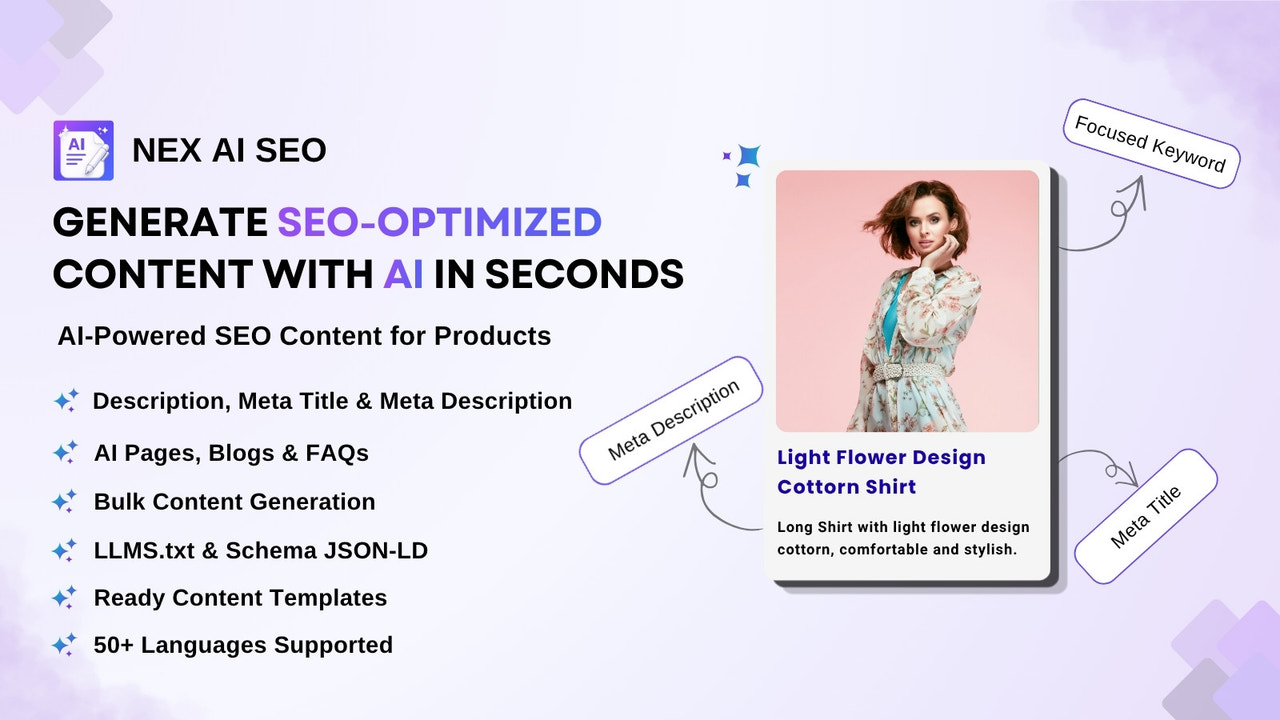
An AI SEO JSON-LD Generator is a software solution that uses machine learning algorithms to produce structured data markup in JSON-LD format. JSON-LD, which stands for JavaScript Object Notation for Linked Data, is Google’s preferred method for implementing schema markup. The AI component analyzes webpage content, identifies entities, relationships, and context, then generates appropriate schema types automatically.
Traditional JSON-LD generators require manual input of every property value. AI-powered versions extract information directly from the page content, recognize patterns, and suggest or apply the most relevant schema types. This automation reduces human error and speeds up the implementation process dramatically.
How AI Enhances Traditional JSON-LD Generation
Standard generators work from templates. You select a schema type, fill in fields, and copy the output. AI generators take a different approach. They read the actual content, understand the semantic meaning, and construct markup that accurately represents the information. For example, an AI generator can distinguish between a recipe, a product review, and a news article simply by analyzing the text structure and vocabulary.
The machine learning models powering these tools are trained on millions of schema.org examples. They recognize patterns in how different content types are structured and can infer missing properties based on context. This capability proves especially valuable for large websites with thousands of pages where manual markup creation is impractical.
Why Structured Data Matters for SEO in 2024 and Beyond
Search engines rely on structured data to interpret page content with greater accuracy. While traditional crawling reads text, JSON-LD provides explicit signals about what each element represents. This clarity leads to enhanced search results including rich snippets, knowledge panels, and carousel displays.
Websites with proper structured data enjoy several measurable advantages. Click-through rates increase when search results display stars, prices, images, or event dates. Voice search assistants use schema data to provide direct answers. E-commerce sites benefit from product schema that displays availability and pricing directly in search results.
Google has confirmed that structured data is not a direct ranking factor. However, the indirect benefits are substantial. Higher CTR signals relevance to search algorithms, and the improved user engagement metrics often correlate with better rankings over time.
Core Features of Modern AI SEO JSON-LD Generators
Contemporary AI-powered schema generators offer capabilities far beyond basic template filling. Understanding these features helps you select the right tool and maximize its potential.
Automatic Content Analysis
The AI scans your webpage, identifies the primary topic, and determines which schema types apply. A product page triggers Product schema, an article triggers Article schema, and a local business page triggers LocalBusiness schema. The analysis considers headings, meta descriptions, image alt text, and body content.
Entity Recognition and Extraction
Advanced natural language processing identifies named entities such as people, organizations, locations, and products. The generator extracts these entities and maps them to appropriate schema properties. For instance, a review page mentioning “John Smith” and “Acme Corporation” automatically populates the author and publisher fields.
Validation and Error Detection
AI generators continuously validate output against Google’s structured data guidelines. They flag missing required properties, incorrect data types, and formatting issues. Many tools integrate with Google’s Rich Results Test API to provide real-time validation feedback.
Dynamic Schema Recommendation
Based on content analysis, the AI suggests multiple schema types that could apply. A page might qualify for both Article and FAQPage schema. The generator explains the benefits of each option and helps you decide which to implement.
Popular AI JSON-LD Generator Tools Compared
| Tool | AI Capabilities | Best For | Pricing Model |
|---|---|---|---|
| Merlin AI | Full content analysis, auto-schema selection | Enterprise websites | Subscription |
| Schema App | Entity extraction, validation | E-commerce platforms | Tiered plans |
| WordLift | Knowledge graph building, NLP | WordPress sites | Monthly subscription |
| Rank Math PRO | Schema suggestions, content AI | WordPress users | Annual license |
| JSON-LD Generator by TechnicalSEO | Template-based with AI assistance | Developers | Free |
Each tool approaches AI integration differently. Some focus on fully automated generation, while others provide AI suggestions within a manual workflow. Your choice depends on technical expertise, website platform, and content volume.
Step-by-Step Guide to Using an AI SEO JSON-LD Generator
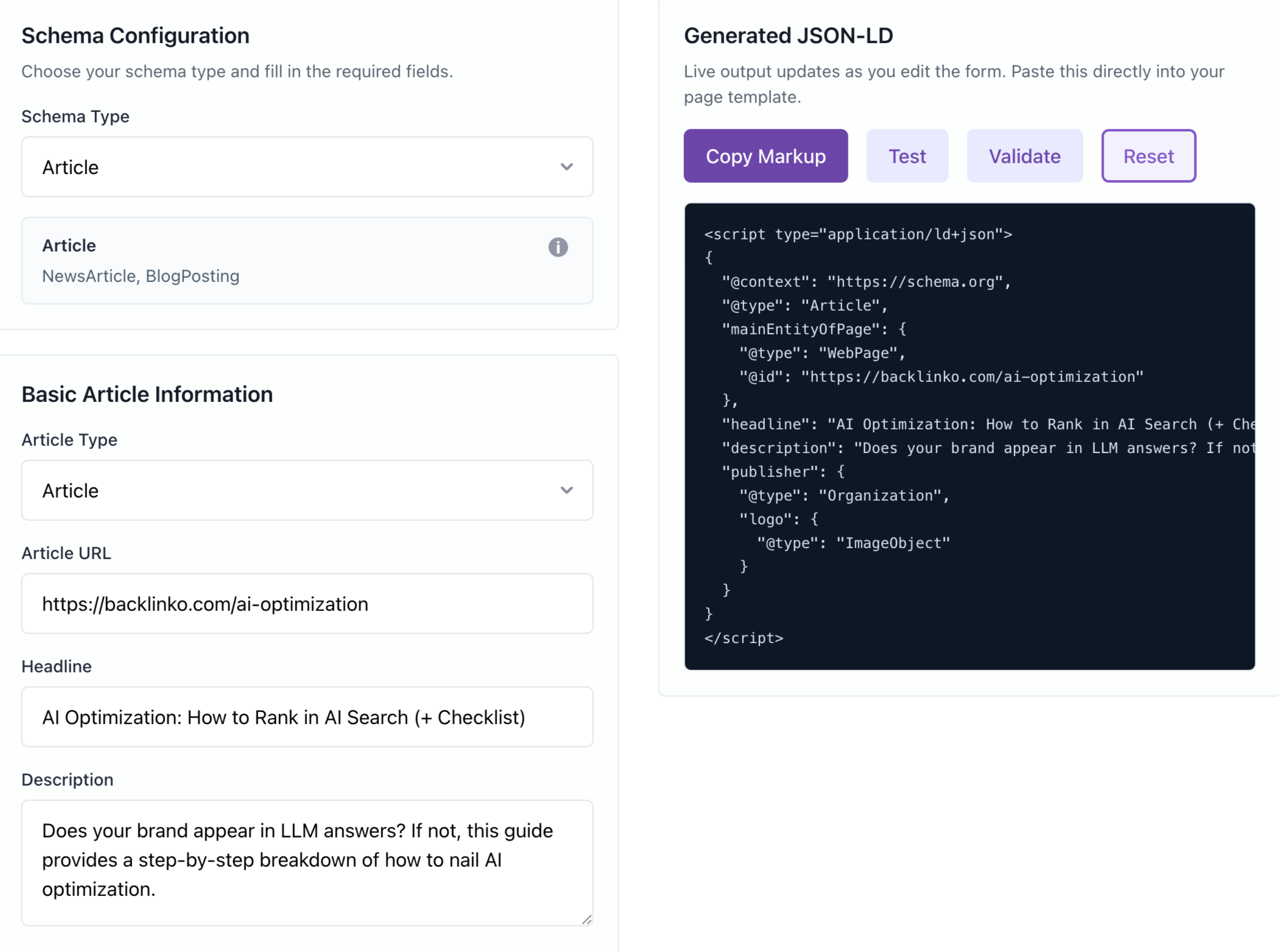
Implementing AI-powered structured data follows a systematic process. These steps ensure accurate markup that search engines can process without issues.
Step 1: Identify Your Primary Schema Types
Start by determining which schema types matter most for your content. Product pages need Product schema. Blog posts benefit from Article schema. Local businesses require LocalBusiness schema. The AI generator can suggest types, but you should understand your content categories first.
Step 2: Prepare Your Content
AI generators work best with clean, well-structured content. Ensure your pages have descriptive headings, proper meta tags, and clear entity mentions. Remove duplicate or conflicting information that might confuse the AI analysis.
Step 3: Run the Generator
Input your URL or paste your content into the generator. The A Review the generated JSON-LD carefully. Check that all properties are accurate and complete. Most tools allow manual editing before finalizing.
Step 4: Validate the Output
Use Google’s Rich Results Test to verify your JSON-LD. This tool shows exactly how Google interprets your markup and flags any errors. The AI generator should produce valid markup, but validation catches edge cases and platform-specific issues.
Step 5: Implement on Your Website
Add the JSON-LD script to your page’s head section or use a plugin for CMS platforms. WordPress users can insert code via theme files or SEO plugins. Ensure the markup is present on the final rendered page, not just in the source code.
Step 6: Monitor Performance
Track how your structured data affects search performance. Use Google Search Console to monitor rich result impressions and clicks. Compare CTR before and after implementation to measure the impact.
Benefits of Using AI for JSON-LD Generation
The advantages of AI-powered schema generation extend beyond simple time savings. These tools fundamentally improve the quality and consistency of structured data across your entire website.
- Scalability: Generate markup for thousands of pages in minutes, not weeks
- Accuracy: Reduce human errors in property values and data types
- Consistency: Maintain uniform schema implementation across all pages
- Adaptability: Automatically update markup when content changes
- Compliance: Stay current with evolving schema.org specifications
- Competitive Edge: Implement advanced schema types that competitors miss
AI generators also learn from your corrections. When you manually fix an error, the system remembers the pattern and applies the correction to future generations. This continuous improvement cycle enhances accuracy over time.
Limitations and Challenges of AI JSON-LD Generators

Despite their power, AI generators have limitations that require human oversight. Understanding these constraints prevents over-reliance on automation.
AI models sometimes misinterpret ambiguous content. Sarcasm, industry jargon, or highly technical language can confuse the entity recognition. The generator might assign incorrect schema types or extract wrong property values. Human review remains essential for complex or nuanced content.
Schema.org vocabulary evolves continuously. AI models trained on older data might suggest outdated schema types. Regular tool updates mitigate this issue, but staying informed about schema changes is still necessary.
Custom schema types and nested structures often require manual creation. AI generators excel at standard types but struggle with highly specialized or proprietary schemas. Developers working on custom solutions may need to write JSON-LD manually.
Common Mistakes When Using AI JSON-LD Generators
Even with AI assistance, websites frequently make structured data errors that hurt their search performance. Recognizing these mistakes helps you avoid them.
Overusing Schema Types
Applying multiple schema types to a single page dilutes the semantic signal. An AI generator might suggest Article, BlogPosting, and NewsArticle for one page. Choose the most specific and relevant type rather than stacking them.
Ignoring Required Properties
Each schema type has required properties. Omitting them makes the markup invalid for rich results. AI generators flag missing properties, but users sometimes dismiss these warnings. Always include all required fields.
Using Incorrect Data Types
Schema properties expect specific data types. A date field requires a date format, not a text string. An image property needs a URL, not an HTML tag. AI generators handle this correctly, but manual edits can introduce type errors.
Failing to Update Markup
When page content changes, structured data must change too. An AI generator that runs once and never again leaves stale markup. Set up recurring generation or integrate the tool with your content management system.
Neglecting Mobile Testing
Google primarily uses mobile crawling. Test your structured data on mobile devices to ensure proper rendering. Some AI tools only test desktop versions, missing mobile-specific issues.
Best Practices for AI JSON-LD Implementation
Following established best practices maximizes the SEO value of your structured data while minimizing technical issues.
Always maintain a single source of truth for your structured data. If you use an AI generator, keep the generated code in a central location. Avoid manually editing the markup in multiple places, as this creates version conflicts.
Implement structured data on your most important pages first. Product pages, service pages, and high-traffic blog posts deliver the greatest ROI. Expand to secondary pages after establishing a working pattern.
Document your schema implementation strategy. Record which schema types you use, why you chose them, and how they map to your content. This documentation helps new team members understand your approach and facilitates troubleshooting.
Regularly audit your structured data. Use Google Search Console’s enhancements reports to identify errors and warnings. Schedule quarterly audits to catch issues before they impact search performance.
Integrating AI JSON-LD Generators with Popular CMS Platforms
Content management systems offer varying levels of support for AI-driven structured data. Understanding these integrations helps you choose the right approach for your platform.
WordPress Integration
WordPress benefits from numerous AI schema plugins. Rank Math PRO and Schema Pro offer AI-powered suggestions directly in the editor. These plugins analyze your content as you write and generate appropriate JSON-LD automatically. The integration happens in real-time, ensuring markup always matches content.
Shopify Integration
Shopify stores can use AI JSON-LD generators through apps or custom code. The platform’s product structure lends itself well to automated schema generation. AI tools can extract product names, prices, availability, and reviews directly from Shopify’s data model.
Custom Websites
Developers building custom sites can integrate AI JSON-LD generators via API. This approach allows complete control over the generation process. The AI runs server-side, analyzes content, and outputs JSON-LD that gets injected into the page template.
Measuring the Impact of AI-Generated Structured Data
Quantifying the SEO benefits of AI-generated JSON-LD requires systematic tracking. Focus on metrics that directly reflect structured data performance.
Google Search Console provides the most relevant data. The Performance report shows clicks and impressions for rich results. The Enhancements report displays errors and valid items for each schema type. Monitor these metrics before and after implementing AI-generated markup.
Track your organic CTR separately for pages with and without structured data. A significant CTR difference indicates that rich snippets are improving your search presence. Use URL parameters or custom segments to isolate structured data effects.
Monitor your crawl budget utilization. Properly implemented structured data helps search engines understand your site more efficiently, potentially reducing crawl waste. Check your crawl stats in Search Console for improvements.
Future Trends in AI and Structured Data
The intersection of AI and structured data continues to evolve rapidly. Staying informed about emerging trends positions your website for future search developments.
Natural language processing improvements will make AI generators even more accurate at entity extraction. Future tools will understand context better, reducing the need for human review. This advancement will make structured data accessible to non-technical users.
Integration with generative AI chatbots will enable conversational schema creation. Instead of using a form-based interface, you will describe your content in natural language, and the A This development will further lower the barrier to entry.
Real-time schema updates will become standard. AI generators will monitor content changes and update structured data instantly. This capability ensures search engines always see current information, improving freshness signals.
Frequently Asked Questions About AI SEO JSON-LD Generators
Is an AI SEO JSON-LD Generator worth the investment?
For websites with more than 50 pages, AI generators save significant time and reduce errors. The investment pays for itself through improved search visibility and reduced manual labor. Small sites with few pages might manage with free manual generators.
Can AI JSON-LD generators handle all schema types?
Most AI generators support the common schema types including Article, Product, Event, LocalBusiness, FAQ, and Review. Highly specialized or custom schema types may require manual creation. Check the tool’s documentation for supported types.
Will AI-generated structured data guarantee rich snippets?
No tool can guarantee rich snippets. Google decides whether to display rich results based on content quality, relevance, and user experience. AI generators ensure your markup is technically correct, but rich snippet eligibility depends on many factors.
How often should I run the AI JSON-LD generator?
Run the generator whenever you publish new content or significantly update existing pages. For dynamic sites with frequent changes, consider automated generation that runs on a schedule or triggers on content updates.
Does AI-generated JSON-LD work with all search engines?
JSON-LD is a W3C standard supported by Google, Bing, Yahoo, and other major search engines. AI generators produce standard-compliant markup that works across platforms. Some search engines have specific requirements, so test your markup on each platform.
Conclusion
An AI SEO JSON-LD Generator represents a significant advancement in structured data implementation. These tools combine the precision of schema.org standards with the efficiency of machine learning, enabling websites of any size to implement comprehensive structured data without extensive manual effort. The benefits extend from improved search visibility to enhanced user engagement through rich results.
Success with AI-generated JSON-LD requires understanding both the technology and the underlying SEO principles. Choose the right tool for your platform, follow implementation best practices, and monitor performance regularly. The investment in AI-powered structured data pays dividends through sustained search performance improvements.
As search engines continue to rely more heavily on structured data for understanding and ranking content, AI generators will become increasingly essential. Websites that adopt these tools early gain a competitive advantage that becomes harder to overcome as the technology becomes standard practice.
Xem thêm:
- AI SERP Features: The Complete Guide to Understanding and Optimizing for AI-Driven Search Results
- AI SEO Planning Workflow: The Complete Guide to Scaling Organic Growth in 2025
- AI SEO Edge SEO: The Complete Guide to Gaining a Competitive Advantage in 2025
- AI SEO Multi Agent Systems: The Complete Guide to Autonomous Search Optimization
- AI SEO AI Visibility Audit: The Complete Guide to Dominating Search in 2025
Bài viết cùng chủ đề:

AI SEO SEO Automation with Make: The Complete Workflow Guide

AI SEO SEO Automation with Zapier: The Complete Workflow Guide

AI SEO SEO Automation with n8n: The Complete Workflow Guide
AI SEO SEO Automation with Gemini: The Complete Guide to Scaling Organic Growth

AI SEO SEO Automation with Claude: The Complete Guide to Scaling Content in 2025

AI SEO SEO Automation with ChatGPT: The Complete Playbook for 2025

AI SEO & SEO Automation for Affiliate Sites: The 2025 Playbook for Passive Income Growth
AI SEO & SEO Automation for Bloggers: The Complete Guide to Scaling Your Content

AI SEO & SEO Automation for Agencies: The Complete 2025 Playbook

AI SEO and SEO Automation for Ecommerce: The Complete Playbook for 2025

AI SEO & SEO Automation for WordPress: The Complete Playbook for 2025
AI SEO SEO Automation Strategy: The Complete Playbook for 2025

Mastering the AI SEO SEO Automation Process: A Complete Guide to Scaling Organic Growth
AI SEO SEO Automation System: The Complete Guide to Scaling Organic Growth in 2025
AI SEO SEO Automation Platform: The Complete Guide to Scaling Organic Growth in 2025
AI SEO SEO Automation Software: The Complete Guide to Scaling Organic Growth in 2025















