
No products in the cart.
AI SEO Predictive Analytics: The Complete Guide to Forecasting Search Performance
31
Jul
Jul
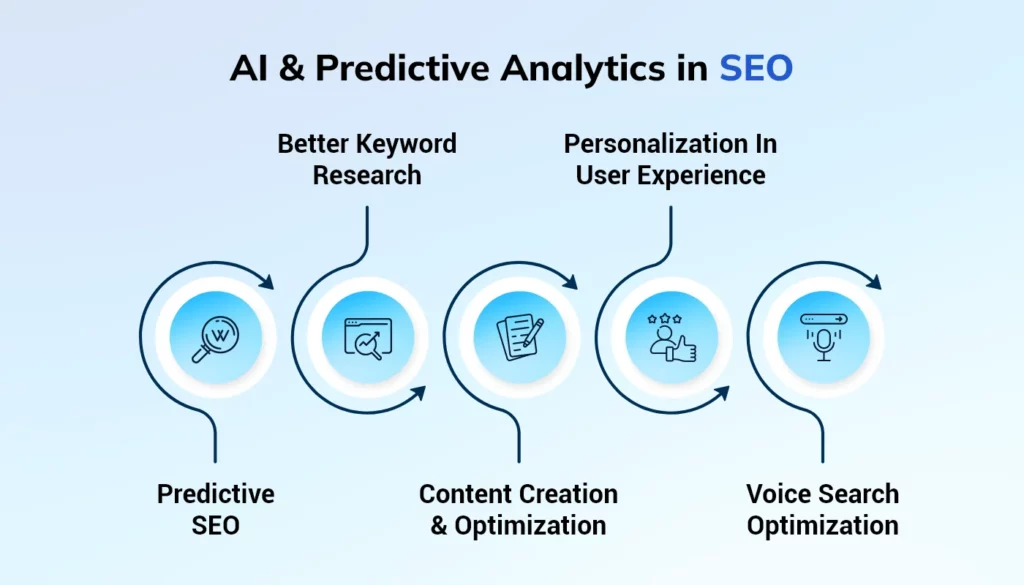
AI SEO predictive analytics is transforming how digital marketers approach search engine optimization. Instead of reacting to algorithm updates and ranking fluctuations after they happen, forward-thinking teams now use machine learning models to forecast traffic, identify ranking opportunities, and prevent performance drops before they occur. This guide explains everything you need to know about leveraging predictive analytics for SEO, from core concepts to practical implementation strategies that deliver measurable results.
What Is AI SEO Predictive Analytics?
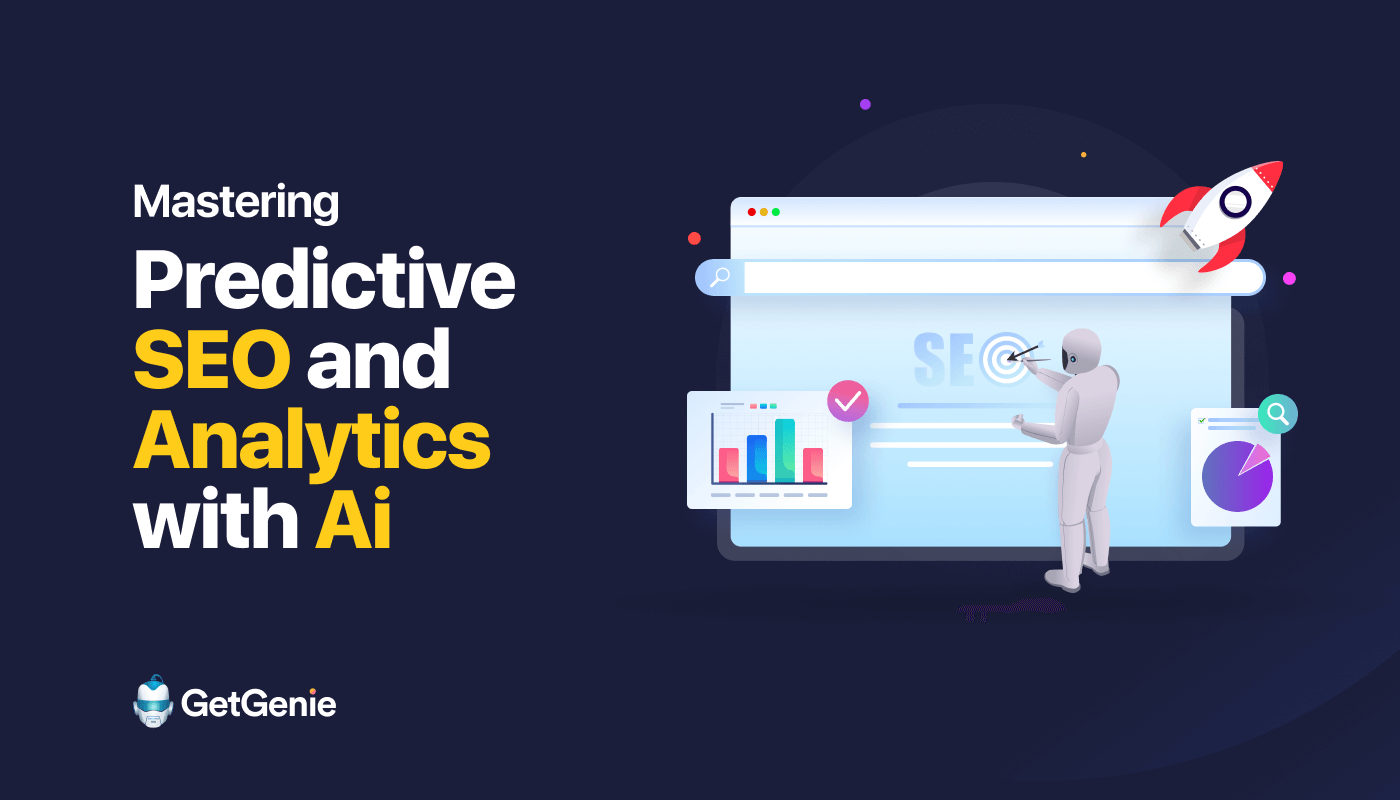
AI SEO predictive analytics combines artificial intelligence, machine learning, and historical search data to forecast future SEO outcomes. It moves beyond traditional reporting that looks backward at what happened, instead using statistical models and pattern recognition to answer what will happen next. These systems analyze thousands of variables including keyword rankings, click-through rates, backlink profiles, content engagement metrics, and search engine results page (SERP) features to generate accurate predictions about organic search performance.
The core value proposition is simple: predictive analytics gives SEO professionals a forward-looking lens. Rather than guessing which content topics will perform well, predictive models analyze search volume trends, competitor activity, and user behavior patterns to identify opportunities with high probability of success. This shifts SEO from a reactive discipline to a proactive strategy.
How AI Predictive Analytics Works in SEO
Understanding the mechanics behind AI SEO predictive analytics helps you trust and act on the insights it generates. The process typically involves several distinct stages that work together to produce actionable forecasts.
Data Collection and Integration
Predictive models require massive amounts of data to function effectively. The data collection phase pulls information from multiple sources including Google Search Console, Google Analytics, keyword research tools, rank tracking software, and even social media platforms. This data includes historical rankings, organic traffic patterns, conversion rates, page load speeds, and content freshness signals. The more comprehensive the dataset, the more accurate the predictions become.
Pattern Recognition and Model Training
Machine learning algorithms process the collected data to identify patterns and correlations. For example, the model might discover that pages with a certain word count, internal linking structure, and load speed consistently rank higher for transactional keywords. These patterns form the basis of the predictive model. The system continuously trains on new data, refining its predictions as search engine algorithms evolve and user behaviors shift.
Forecasting and Scenario Analysis
Once trained, the model generates forecasts for various SEO metrics. It can predict how much organic traffic a new piece of content will receive, which keywords will gain or lose rankings, and how algorithm updates might impact overall site visibility. Advanced systems also run scenario analyses, showing how different actions like building backlinks or improving page speed would affect future performance.
Key Components of AI SEO Predictive Analytics Systems
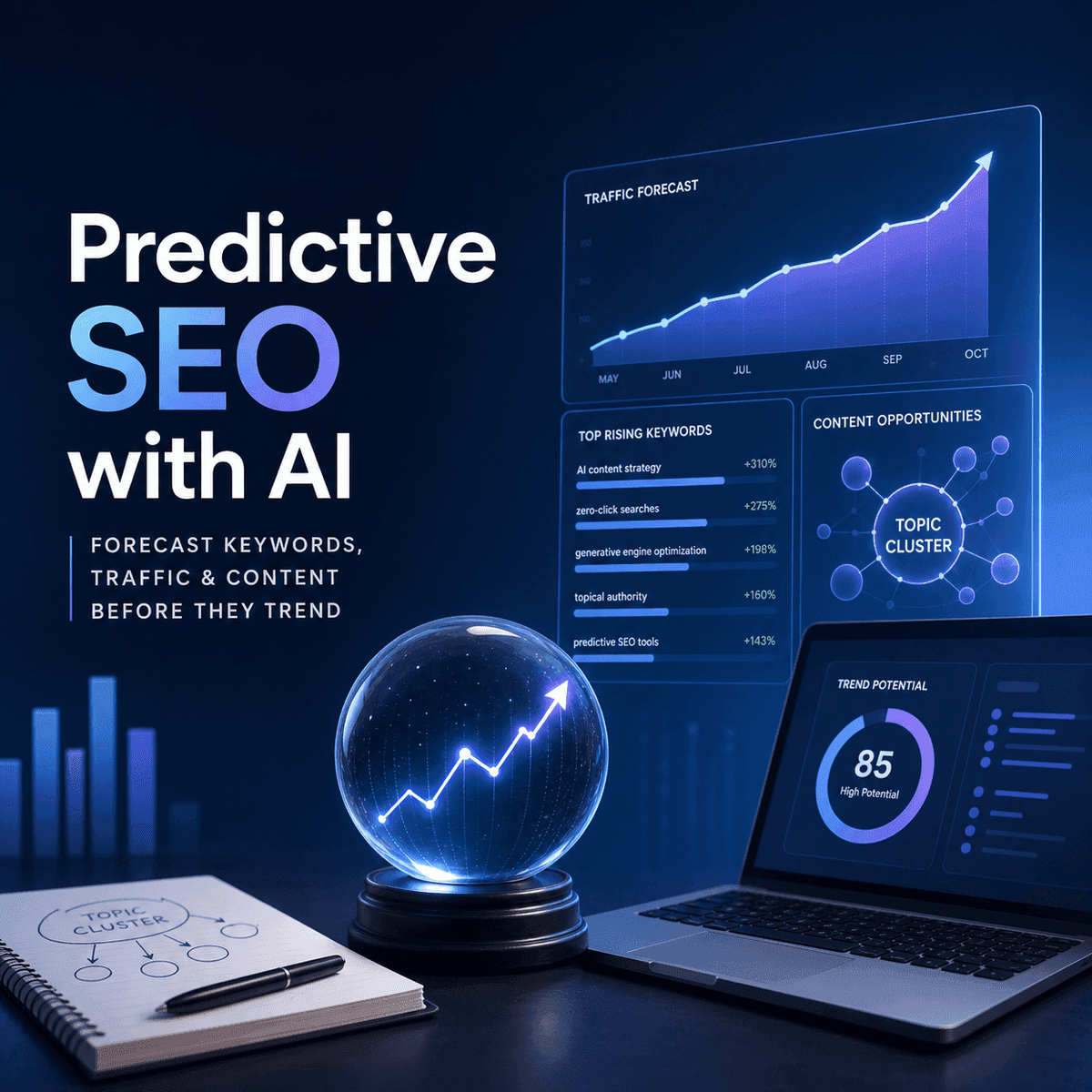
Modern predictive analytics platforms for SEO share several common components that work together to deliver insights. Understanding these building blocks helps you evaluate different tools and build your own predictive capabilities.
- Historical Data Warehouse: A centralized repository storing years of SEO performance data, including rankings, traffic, and engagement metrics
- Machine Learning Engine: The core algorithm that processes data and identifies predictive patterns
- Natural Language Processing (NLP): Analyzes content relevance, semantic relationships, and search intent matching
- Competitor Intelligence Module: Tracks competitor rankings, content strategies, and backlink acquisition patterns
- Alerting and Notification System: Flags significant deviations from predicted performance, enabling rapid response
- Reporting Dashboard: Visualizes predictions and actual performance side-by-side for easy comparison
- Over-reliance on predictions: Treating forecasts as certainties rather than probabilities leads to poor decisions when reality deviates
- Ignoring qualitative factors: Predictive models cannot capture everything, including brand sentiment or user experience nuances
- Using insufficient historical data: Models trained on less than a year of data often produce unreliable forecasts
- Failing to validate predictions: Not comparing predicted versus actual performance means you cannot improve model accuracy
- Neglecting external context: Ignoring industry trends, economic conditions, or competitive actions reduces prediction reliability
- Implementing without stakeholder buy-in: Without organizational support, predictive insights often go unused
Benefits of Using AI Predictive Analytics for SEO
The advantages of implementing AI SEO predictive analytics extend far beyond simple forecasting. Organizations that embrace this technology gain significant competitive advantages in their search marketing efforts.
Proactive Risk Management
Predictive models can identify pages at risk of losing rankings before it happens. By analyzing patterns that historically preceded ranking drops, the system alerts you to potential issues with content freshness, backlink quality, or technical health. This early warning enables preventive action, protecting valuable organic traffic streams.
Resource Allocation Optimization
SEO teams often struggle with prioritizing tasks across limited resources. Predictive analytics provides data-driven guidance on where to focus efforts. If the model forecasts that updating ten existing pages will generate more traffic than creating five new articles, you can allocate resources accordingly. This maximizes return on investment for every hour spent on SEO.
Content Strategy Enhancement
Predictive analytics transforms content planning from guesswork into science. Models analyze search volume trends, keyword difficulty scores, and content performance patterns to recommend topics with high potential. This reduces the risk of creating content that fails to attract search traffic, saving both time and money.
Budget Justification and Planning
For SEO professionals who need to secure budget from stakeholders, predictive analytics provides compelling evidence. Forecasts showing expected traffic growth from specific initiatives make it easier to justify expenditures on content creation, link building, or technical improvements. This data-driven approach builds credibility for SEO within the broader organization.
Limitations and Challenges of Predictive Analytics in SEO
While powerful, AI SEO predictive analytics has limitations that practitioners must understand to use it effectively. Being aware of these challenges prevents over-reliance on predictions and encourages balanced decision-making.
| Challenge | Impact | Mitigation Strategy |
|---|---|---|
| Data quality issues | Inaccurate predictions from incomplete or dirty data | Regular data audits and validation processes |
| Algorithm volatility | Search engine updates can invalidate existing models | Continuous model retraining and monitoring |
| Black box problem | Difficulty explaining why predictions were made | Use tools with explainable AI features |
| Overfitting | Models perform well on historical data but fail on new data | Regular testing against holdout datasets |
| External factors | Economic changes or global events disrupt patterns | Incorporate external data sources into models |
AI SEO Predictive Analytics vs Traditional SEO Tools
Understanding the difference between traditional SEO software and predictive analytics platforms helps you determine what your organization needs. Both have value, but they serve different purposes in the SEO workflow.
| Feature | Traditional SEO Tools | AI Predictive Analytics |
|---|---|---|
| Primary function | Reporting on current performance | Forecasting future performance |
| Data orientation | Historical and real-time data | Historical data plus predictive models |
| Decision support | Shows what happened | Shows what will likely happen |
| Actionability | Requires manual interpretation | Provides automated recommendations |
| Learning capability | Static rules and thresholds | Continuous machine learning |
| Use case | Monitoring and reporting | Strategy and planning |
Most mature SEO operations use both types of tools in tandem. Traditional tools provide the ground truth about current performance, while predictive analytics offers strategic guidance for future initiatives.
Practical Applications of AI Predictive Analytics in SEO
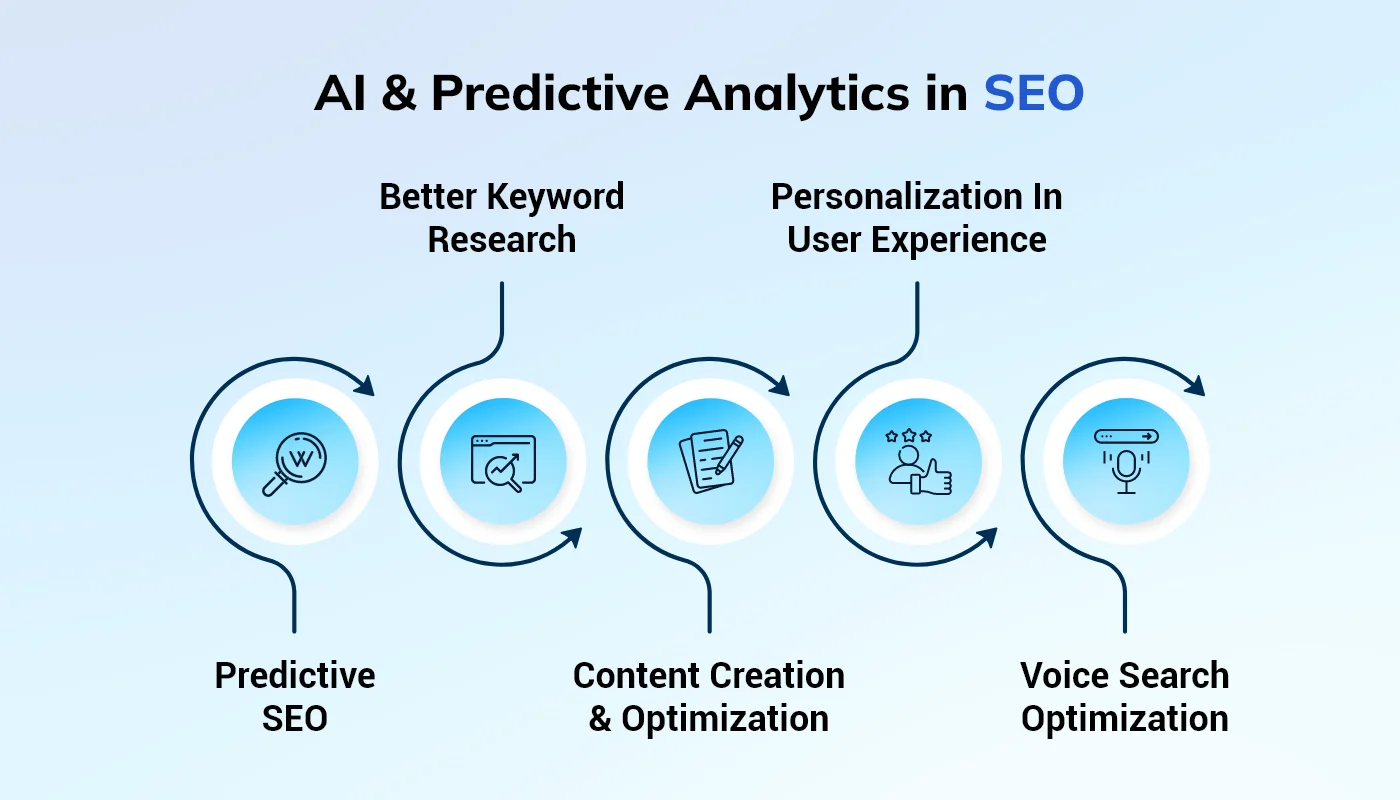
Implementing predictive analytics requires understanding the specific use cases where it delivers the most value. These practical applications demonstrate how the technology translates into real business outcomes.
Keyword Opportunity Identification
Predictive models analyze search volume trends to identify keywords that are gaining momentum. By spotting rising queries early, you can create content before competitors, establishing authority and capturing traffic as demand grows. This first-mover advantage can be substantial for seasonal products or emerging trends.
Content Performance Forecasting
Before investing in content production, predictive analytics can estimate expected traffic, engagement, and conversion metrics. This allows you to prioritize topics with the highest projected return. The models consider factors like current rankings, domain authority, and content quality signals to generate these forecasts.
Algorithm Update Impact Assessment
When search engines announce core updates, predictive analytics can simulate potential impacts. By comparing your site’s characteristics to patterns that historically performed well or poorly in similar updates, the model provides an early warning of vulnerability. This enables proactive adjustments before the update fully rolls out.
Backlink Strategy Optimization
Predictive models can evaluate the likely impact of acquiring backlinks from specific domains. Instead of pursuing links based solely on domain authority, the system considers relevance, traffic potential, and historical link performance to prioritize targets with the highest expected value.
How to Implement AI SEO Predictive Analytics in Your Workflow
Adopting predictive analytics for SEO requires a structured approach. Following these steps ensures successful implementation and meaningful results.
Step 1: Audit Your Current Data Infrastructure
Start by evaluating the quality and completeness of your existing SEO data. Predictive models are only as good as the data they train on. Ensure you have at least 12-24 months of consistent historical data covering rankings, traffic, conversions, and technical metrics. Identify any gaps in data collection and address them before proceeding.
Step 2: Choose the Right Tools
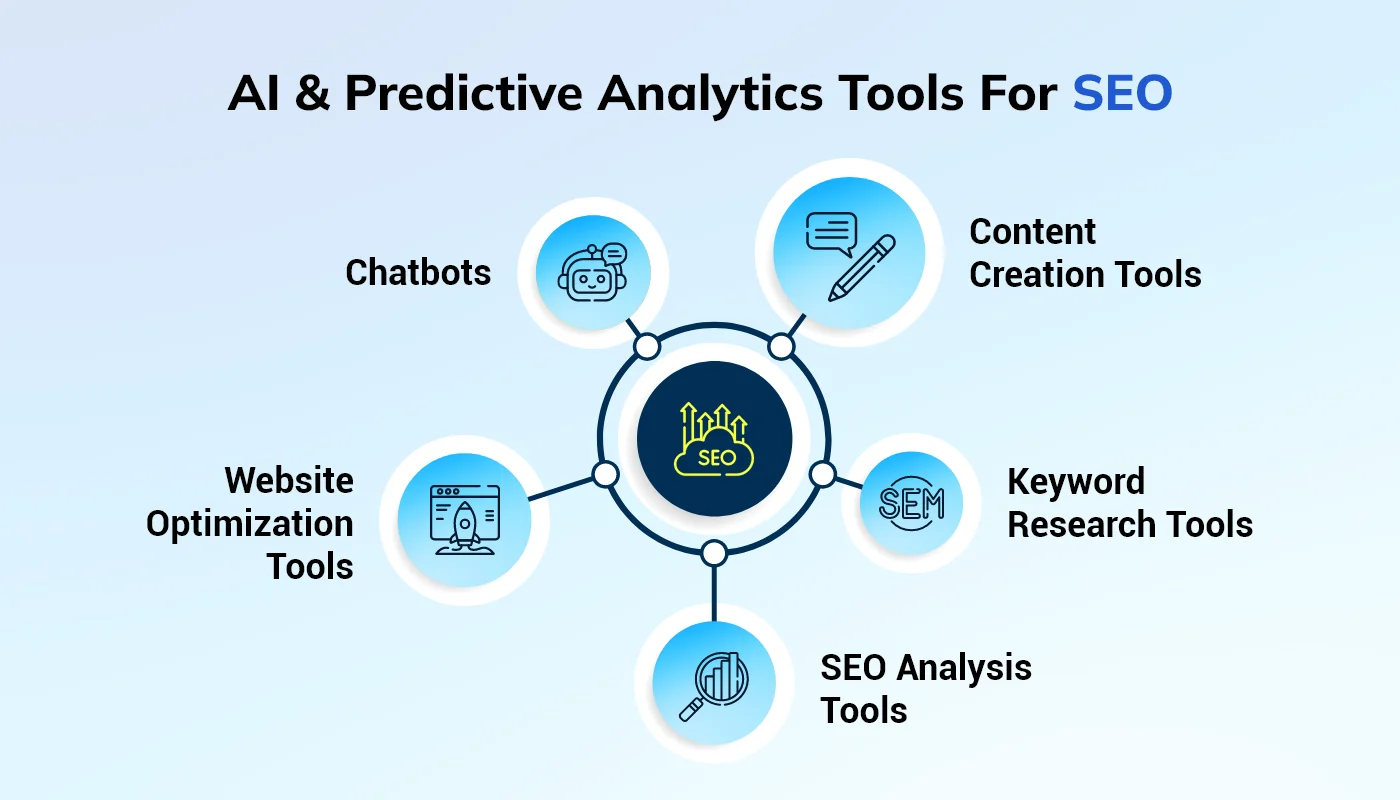
Several platforms offer AI SEO predictive analytics capabilities. Evaluate options based on your team size, technical expertise, and budget. Enterprise solutions like BrightEdge and Conductor offer comprehensive predictive features, while smaller teams might start with tools like Ahrefs or SEMrush that have introduced predictive elements. Consider starting with a pilot project to test effectiveness before committing to a full deployment.
Step 3: Define Clear Objectives and KPIs
Predictive analytics works best when tied to specific business goals. Define what you want to predict, whether it is organic traffic growth, keyword ranking improvements, or conversion rate optimization. Establish baseline metrics and target outcomes so you can measure the accuracy and value of your predictive models.
Step 4: Integrate Predictions into Decision-Making
Create workflows that incorporate predictive insights into your regular SEO processes. For example, use forecasted content performance to prioritize your editorial calendar. Review prediction accuracy monthly and refine your models based on where they deviate from actual results.
Step 5: Continuously Refine and Improve
Predictive models require ongoing maintenance. As search algorithms evolve and user behaviors change, your models must adapt. Schedule regular reviews of model performance, incorporate new data sources, and retrain algorithms to maintain accuracy over time.
Common Mistakes When Using AI SEO Predictive Analytics
Even experienced SEO professionals make errors when implementing predictive analytics. Recognizing these common pitfalls helps you avoid them and get better results from your investment.
Important Considerations for Successful Implementation
Beyond avoiding mistakes, several important factors contribute to successful predictive analytics adoption in SEO. Paying attention to these considerations maximizes the value you derive from the technology.
Data privacy and governance should be a top priority. Ensure your data collection and storage practices comply with regulations like GDPR and CCPA. Predictive models that use personal data require careful handling to maintain compliance and user trust.
Transparency in how predictions are generated matters for team adoption. When team members understand the logic behind forecasts, they are more likely to act on them. Choose tools that offer explainable AI features or invest in training to help your team interpret model outputs.
Predictive analytics should complement, not replace, human expertise. The most effective SEO teams combine data-driven predictions with experienced judgment. Use predictions to inform decisions, but rely on your team’s knowledge of your specific industry, audience, and competitive landscape to make final choices.
Frequently Asked Questions About AI SEO Predictive Analytics
What is the difference between AI SEO predictive analytics and traditional SEO reporting?
Traditional SEO reporting shows what has already happened, such as past rankings, traffic, and conversions. AI SEO predictive analytics uses machine learning to forecast what will happen in the future, including expected traffic from new content, potential ranking changes, and the impact of algorithm updates. Predictive analytics is forward-looking while traditional reporting is backward-looking.
How accurate are AI predictions for SEO performance?
Accuracy varies based on data quality, model sophistication, and market stability. Well-trained models using comprehensive historical data can achieve 70-90% accuracy for short-term predictions. Long-term forecasts are less accurate due to algorithm changes and external factors. The best approach is to use predictions as directional guidance rather than exact numbers.
Do I need technical skills to use AI SEO predictive analytics tools?
Modern predictive analytics platforms are designed for accessibility. Many tools offer user-friendly dashboards that present predictions in plain language without requiring data science expertise. However, a basic understanding of statistics and machine learning concepts helps you interpret results more effectively and communicate insights to stakeholders.
Can small businesses benefit from AI SEO predictive analytics?
Yes, small businesses can benefit from predictive analytics, though they may need to start with more affordable tools or simplified approaches. Even basic predictive insights about keyword opportunities and content performance can help smaller teams allocate limited resources more effectively. Many SEO platforms now offer predictive features at various price points.
How often should I update my predictive SEO models?
Models should be retrained regularly to maintain accuracy. Monthly retraining is common for most SEO applications, but you may need more frequent updates during periods of significant algorithm changes or market shifts. Monitor prediction accuracy continuously and retrain whenever you notice performance degradation.
What data sources are most important for accurate SEO predictions?
The most critical data sources include Google Search Console for actual search performance, Google Analytics for user behavior and conversions, rank tracking data for keyword positions, and backlink data for link profile analysis. Combining these sources provides the comprehensive view needed for accurate predictions.
Conclusion
AI SEO predictive analytics represents a fundamental shift in how search optimization is approached. Instead of reacting to performance changes after they occur, forward-thinking marketers now forecast outcomes and act proactively. The technology enables better resource allocation, more effective content strategies, and earlier identification of risks and opportunities.
Success with predictive analytics requires quality data, appropriate tools, and a commitment to integrating insights into daily workflows. While challenges exist, including model accuracy limitations and the need for continuous refinement, the benefits far outweigh the difficulties. Organizations that embrace AI SEO predictive analytics gain a significant competitive advantage in the increasingly complex world of search engine optimization.
Start small by identifying one area where predictions could improve your decision-making, whether that is content planning, keyword targeting, or risk management. Build experience with the technology, validate its accuracy in your specific context, and expand usage as you gain confidence. The future of SEO belongs to those who can see it coming, and predictive analytics provides exactly that vision.
Xem thêm:
- AI SEO SERP Scraping: The Complete Guide to Automated Rank Tracking in 2025
- How to Use Gemini for SEO: The Ultimate Guide to Boosting Rankings with AI
- AI SEO Accessibility: The Complete Guide to Inclusive Search Optimization
- AI SEO Automated SEO Audit: The Complete Guide to Continuous Optimization
- AI SEO Standard Operating Procedures: The Definitive Playbook for 2025
Bài viết cùng chủ đề:

AI SEO SEO Automation with Make: The Complete Workflow Guide

AI SEO SEO Automation with Zapier: The Complete Workflow Guide

AI SEO SEO Automation with n8n: The Complete Workflow Guide
AI SEO SEO Automation with Gemini: The Complete Guide to Scaling Organic Growth

AI SEO SEO Automation with Claude: The Complete Guide to Scaling Content in 2025

AI SEO SEO Automation with ChatGPT: The Complete Playbook for 2025

AI SEO & SEO Automation for Affiliate Sites: The 2025 Playbook for Passive Income Growth
AI SEO & SEO Automation for Bloggers: The Complete Guide to Scaling Your Content

AI SEO & SEO Automation for Agencies: The Complete 2025 Playbook

AI SEO and SEO Automation for Ecommerce: The Complete Playbook for 2025

AI SEO & SEO Automation for WordPress: The Complete Playbook for 2025
AI SEO SEO Automation Strategy: The Complete Playbook for 2025

Mastering the AI SEO SEO Automation Process: A Complete Guide to Scaling Organic Growth
AI SEO SEO Automation System: The Complete Guide to Scaling Organic Growth in 2025
AI SEO SEO Automation Platform: The Complete Guide to Scaling Organic Growth in 2025
AI SEO SEO Automation Software: The Complete Guide to Scaling Organic Growth in 2025















