
No products in the cart.
AI Content Planner: Revolutionize Your Content Strategy with Intelligent Automation
29
Jul
Jul
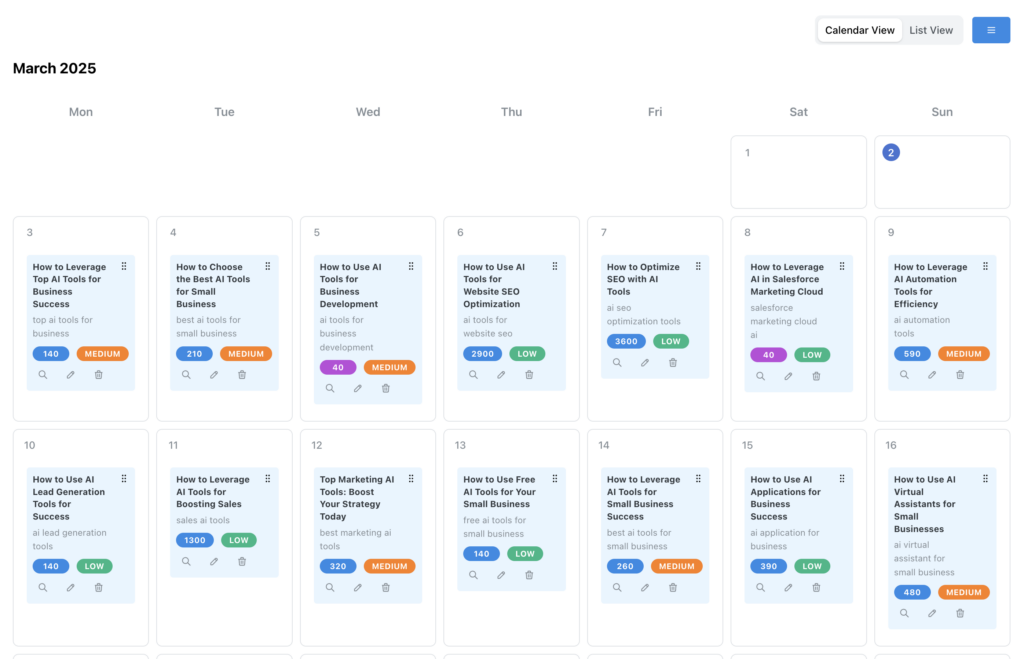
The way brands build editorial calendars has shifted dramatically. An AI Content Planner takes the guesswork out of content operations by analyzing audience data, search trends, and past performance to automatically generate topic clusters, schedule publish dates, and even outline full articles. Instead of relying on spreadsheets and gut instinct, marketing teams now orchestrate entire content production pipelines through a single intelligent interface. This technology does more than save time—it turns content planning into a data-driven science that consistently delivers measurable results.
What Is an AI Content Planner?
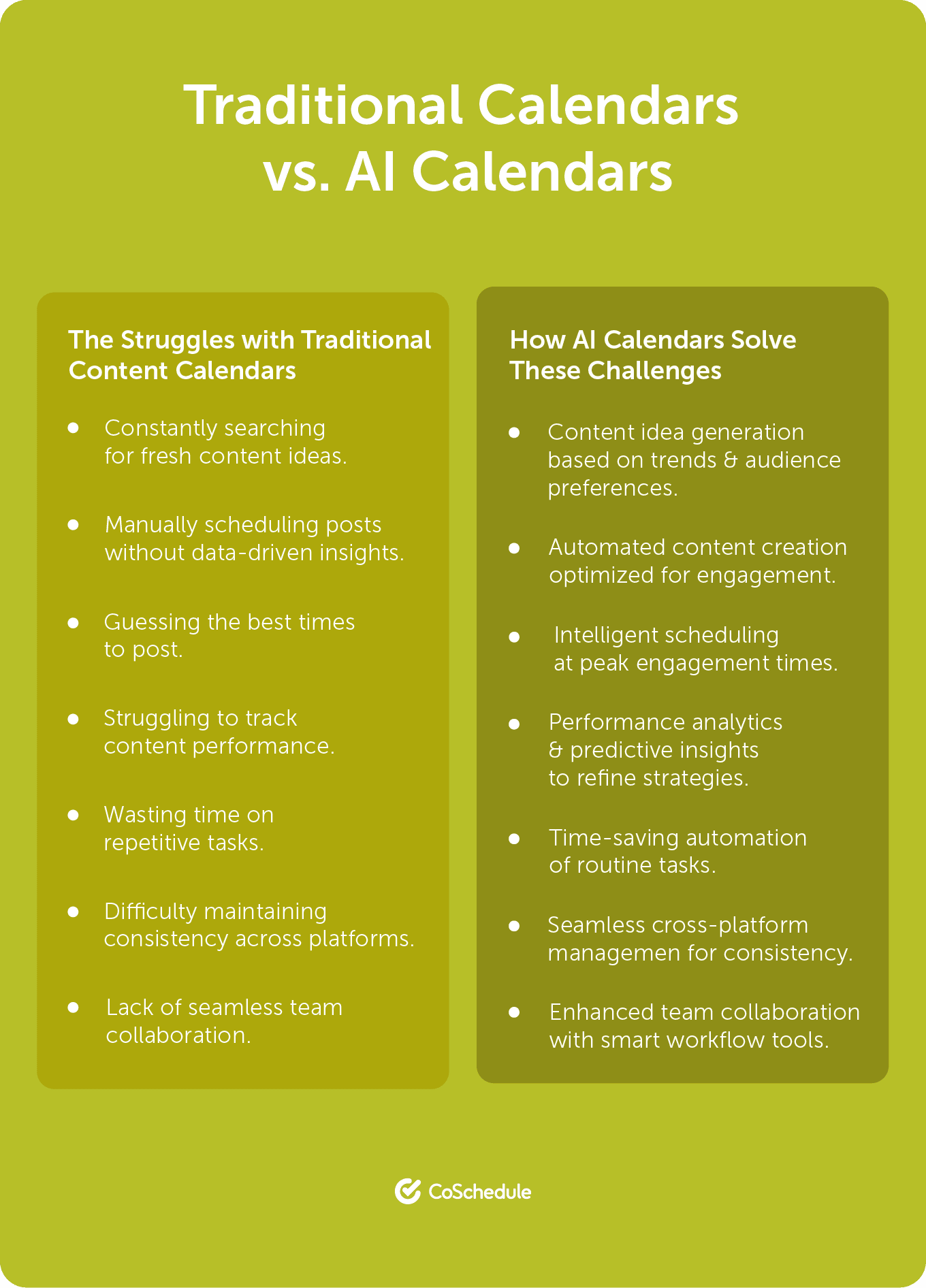
An AI Content Planner is a software platform that uses machine learning, natural language processing, and predictive analytics to automate and optimize the editorial planning process. Unlike a static calendar where humans manually fill in dates and titles, the AI-powered version continuously ingests real-time data—competitor publishing patterns, seasonal search volume shifts, social media conversations, and internal performance metrics—to suggest what to publish, when to publish, and how to structure the content for maximum reach.
Think of it as a strategic co-pilot. A traditional content planner holds your topics; an AI content planner actively proposes new angles you haven’t considered, predicts the traffic potential of a headline before it goes live, and rearranges your schedule if a sudden trend emerges. The output is not just a list but a dynamic, evolving roadmap aligned with both business goals and audience intent.
The Core Components of an AI Content Planning System
Every robust AI content planner rests on a few interconnected modules. Understanding these components helps separate genuine intelligent platforms from simple scheduling tools with an AI label.
- Semantic Topic Discovery Engine: Scours thousands of data points—Google’s “People Also Ask” boxes, Reddit threads, industry forums, and news cycles—to surface high-demand subtopics that fill your editorial gaps.
- Predictive Performance Scoring: Assigns a traffic and engagement forecast to each proposed piece, often with confidence intervals, so editors can prioritize content with the highest potential ROI.
- Automated Content Clustering: Groups related articles, videos, and social posts into pillar-and-cluster structures, creating topical authority that search engines reward.
- Intelligent Scheduling Algorithm: Determines optimal publish dates and times based on historical audience behavior, time zones, and content type.
- Integrated Brief Generator: Translates the plan into actionable briefs that include target keywords, suggested headings, internal links, and word count guidelines, ready for writers.
- Data-Driven Decision Making: Gut feelings are replaced by predictive analytics, leading to more consistent traffic growth and lower bounce rates.
- Consistent Brand Voice Across Channels: Because all briefs originate from the same AI-guided framework, blog posts, emails, and social captions maintain a unified tone and message architecture.
- Faster Time-to-Market: When a news event or trend breaks, the AI can instantly adjust the calendar and generate a brief, allowing your team to publish within hours instead of days.
- Enhanced SEO Performance: The planner ensures you cover topic clusters comprehensively, avoiding content gaps and building the kind of topical depth that Google’s algorithms now prioritize.
- Scalable Content Operations: Whether you manage one blog or a network of international domains, an AI planner scales effortlessly, maintaining quality and consistency across regions.
- Natural Language Query Support: You should be able to type a question like “What cybersecurity content can I publish that CompetingBrand hasn’t covered?” and receive actionable suggestions.
- Competitor Content Gap Analysis: The tool must scan rival domains and identify exactly which high-value topics they rank for that you don’t, then propose specific articles to close that gap.
- Integration with Existing MarTech Stack: A planner that syncs with your CMS, analytics, social scheduling tools, and project management software eliminates manual data transfer.
- Custom Brand Voice Profiles: The AI should be trainable on your existing content to replicate tone, terminology, and formatting style in generated briefs.
- Multilingual and Multi-Region Support: For global teams, the planner must handle keyword research and scheduling logic across different languages and cultural calendars.
- Content Refresh Alerts: Beyond new content, it should flag declining pages that need updates, helping you protect existing organic traffic.
- Define Your Content OKRs: Before touching the software, align on what success looks like. Is the goal to double organic traffic, reduce content production costs, or expand into video? The AI needs clear target metrics to optimize against.
- Connect All Data Sources: Integrate Google Search Console, analytics, CRM, email marketing platforms, and any existing content repositories. The richer the data, the smarter the planner’s recommendations will be from day one.
- Seed the System with Existing Content: Upload your best-performing articles, landing pages, and whitepapers. The AI uses these as positive examples to model your brand’s voice and preferred content structure.
- Run a Pilot on One Content Pillar: Choose a single high-priority topic, like a new product category or core service page, and let the planner build a quarter’s worth of supporting content. Measure results against your previous manual approach.
- Establish a Human-AI Review Cadence: Designate an editor who will approve, reject, or modify every AI-generated brief and schedule suggestion. This step trains the model over time and ensures quality control.
- Scale Gradually: Once the pilot pillar shows positive ROI, expand to additional topics, then to different content formats (podcast outlines, video scripts, email sequences). Resist the urge to flip the switch for everything at once.
- Ignoring First-Party Data: Relying solely on the planner’s generic public data leads to “average” content that fails to differentiate. The true competitive edge comes from feeding in unique customer insights—support tickets, sales call recordings, NPS survey comments.
- Forgetting Editorial Judgment: AI can suggest a topic that aligns with search trends but clashes with your brand values or current positioning. Always layer a human governance check. No algorithm can judge brand safety perfectly.
- Neglecting Content Distribution Planning: A brilliant editorial plan means nothing if distribution isn’t baked in from the start. Ensure the AI planner’s briefs include social media snippets, newsletter subject lines, and influencer promotion suggestions.
- Setting Unrealistic Volume Expectations: Some teams see the planner’s high topic output and attempt to publish everything. Quality erodes quickly. Use the AI to prioritize, not to flood the calendar.
- Skipping Ongoing Model Training: The planner gets smarter only when you regularly feed back what worked and what didn’t. Treat it like a new team member that needs consistent coaching.
How AI Content Planners Transform Editorial Workflows
Most editorial teams suffer from a chronic disconnect between strategy and execution. The strategy lives in a quarterly deck; execution happens in a chaotic Slack channel. An AI Content Planner bridges that gap by making the strategy executable in real time. It continuously monitors performance signals and suggests mid-course corrections, effectively turning a rigid quarterly plan into a living document that adapts to audience behavior.
For example, if the AI detects that a competitor’s blog on “best email subject lines” suddenly spiked in shares, it can recommend reprioritizing your own email marketing content and even offer a unique angle that differentiates your brand. The planner also prevents content cannibalization by flagging overlaps between upcoming pieces and already published URLs, ensuring every new asset adds net new value to your site.
From Ideation to Publication: The AI-Driven Process
To fully appreciate the shift, consider a typical workflow powered by an AI content planner. The process starts with a brand entering its core topics and business objectives. The tool then crawls the web, analyzes competitor content structures, and identifies underserved keyword clusters. It generates a list of 50 to 100 content ideas within hours—a task that would take a human strategist weeks.
Next, each idea receives a priority score based on search volume difficulty, trend momentum, and alignment with product launches. The planner automatically slots high-priority pieces into the editorial calendar, spacing them to avoid fatigue. For each scheduled item, it produces a detailed brief: primary and secondary keywords, LSI terms, recommended media types, internal linking opportunities, and even a content outline. Writers, editors, and designers pull their assignments directly from the platform, and the system tracks progress against the plan. After publication, performance data feeds back into the algorithm, refining future recommendations.
Key Benefits of Using an AI Content Planner
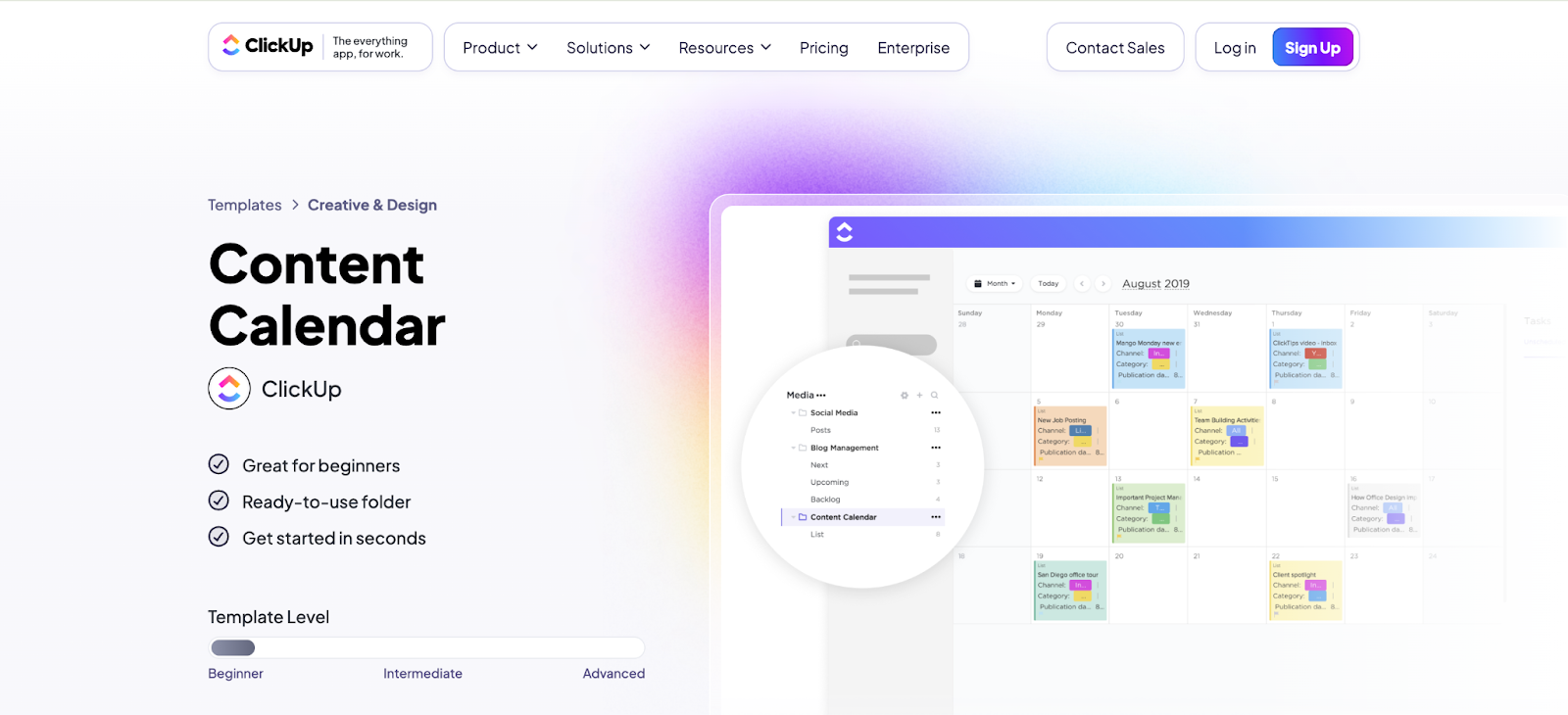
The most immediate advantage is a massive reduction in the manual labor of research and planning. Teams report reclaiming 15 to 20 hours per week that were previously spent identifying topics, vetting keywords, and updating spreadsheets. But the benefits extend far beyond time savings.
Potential Limitations and How to Overcome Them
No technology is a magic wand. An AI Content Planner can misstep if you treat it as a replacement for human editorial judgment. The most common pitfall is an over-reliance on automated recommendations, leading to a portfolio of content that is algorithmically perfect but lacks a distinctive voice or brand storytelling. AI sees patterns; it cannot (yet) understand emotional nuance, humor, or cultural context with the subtlety of an experienced editor.
Another limitation surfaces when training data is sparse. For niche B2B industries with limited online content, the planner may struggle to find enough benchmarking signals, producing suggestions that feel generic. To overcome this, teams must rigorously train the model by connecting their own performance data—Google Analytics, CRM data, and sales call transcripts—so the AI learns the unique language of their market. Always treat the planner as an advisor, not a dictator. A human must review and curate every recommendation, adding creative spark and strategic alignment that the algorithm cannot provide.
AI Content Planner vs. Traditional Content Calendar: A Detailed Comparison
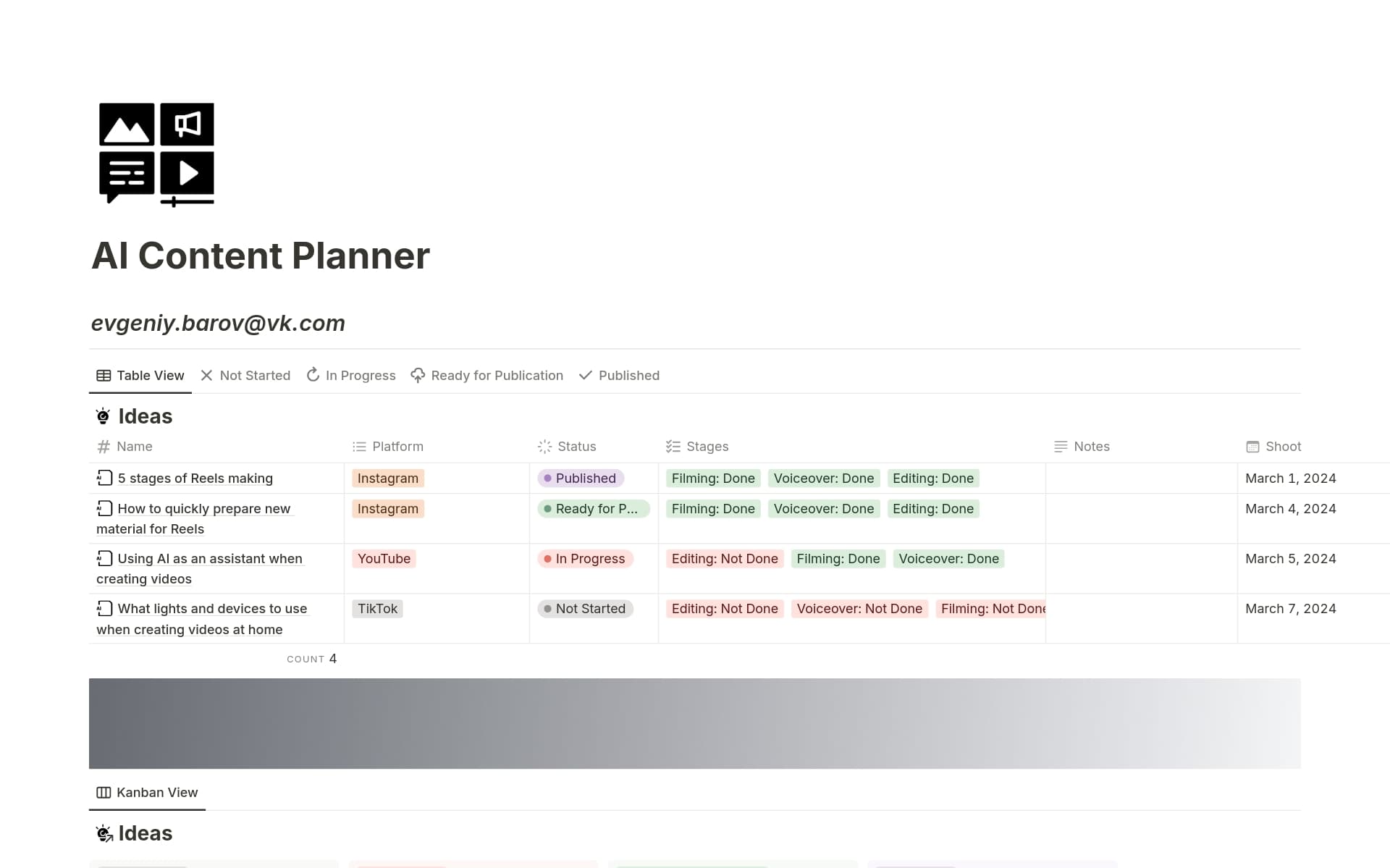
To clarify the operational difference, the table below contrasts a standard spreadsheet-based editorial calendar with an AI-driven content planning system across key dimensions.
| Feature | Traditional Content Calendar | AI Content Planner |
|---|---|---|
| Topic Ideation | Manual brainstorming, often sporadic | Automated, data-backed topic discovery from search and social trends |
| Scheduling Logic | Based on team availability and gut feel | Predictive scheduling based on audience behavior and performance forecasting |
| Adaptability | Static; changes require manual reshuffling | Dynamic; real-time adjustments when trends or performance metrics shift |
| Content Briefs | Created manually by strategists, time-intensive | Auto-generated briefs with keyword maps, outlines, and linking suggestions |
| Performance Feedback Loop | Post-mortem analysis, often disconnected from planning | Continuous learning loop where publish data refines future plans |
| Scalability | Linear effort increase per piece of content | Exponential efficiency gains; more content does not mean proportionally more planning time |
How to Choose the Right AI Content Planner for Your Business
Selecting an AI Content Planner requires matching its capabilities to your specific content maturity level. A startup with a single blog needs a different toolset than a media company publishing 200 articles a month. Begin by auditing your current process: where does your team lose the most time? Is it ideation, research, or distribution to multiple channels? That pain point should guide your feature priorities.
Essential Features to Look For
When evaluating platforms, these capabilities separate genuine AI planners from gimmicks.
Step-by-Step Guide to Implementing an AI Content Planner
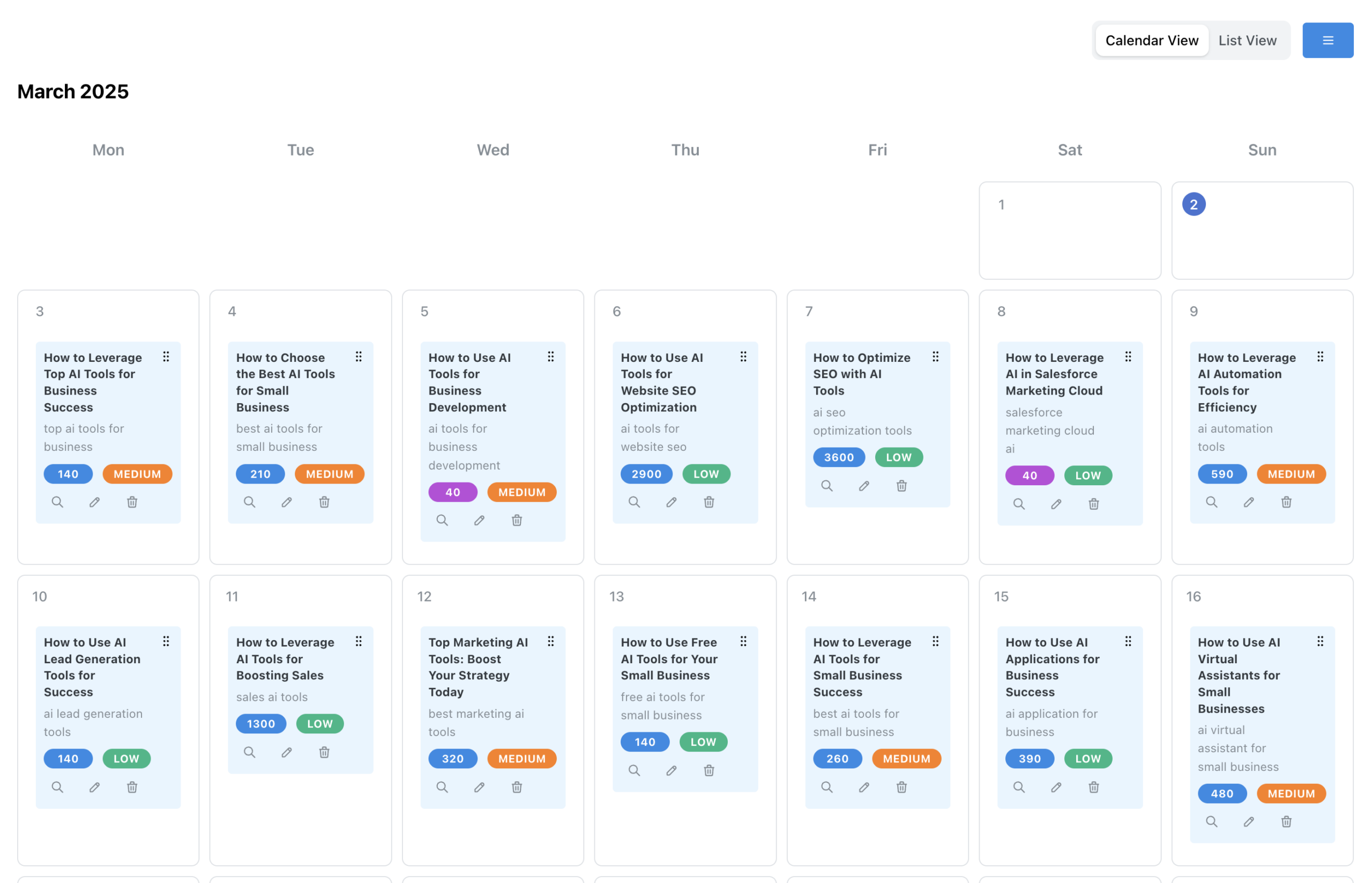
Adopting an AI content planner is a change management exercise as much as a technical one. Without a clear rollout strategy, enthusiastic adoption can fizzle within weeks. The following sequence, refined from dozens of enterprise implementations, minimizes friction and accelerates time to value.
Common Mistakes When Adopting AI Content Planning
Even seasoned content leaders stumble when introducing AI into editorial workflows. Recognizing these pitfalls in advance can save months of frustration.
Frequently Asked Questions
Can an AI Content Planner replace a human content strategist?
No. An AI content planner excels at data processing, pattern recognition, and repetitive tasks, but a human strategist brings creative vision, emotional intelligence, and deep industry knowledge. The most effective content operations combine both, with the strategist setting the direction and the AI optimizing execution. The planner surfaces opportunities; the human decides which opportunities align with brand purpose and long-term narrative.
How does AI content planning improve SEO performance?
AI content planners improve SEO by systematically identifying topic clusters that build topical authority, a factor search engines increasingly reward. They analyze keyword difficulty, search intent, and competitor coverage to propose content that fills precise gaps. Post-publish, the AI monitors ranking fluctuations and suggests updates or additional internal links, creating a continuous optimization loop that a static editorial calendar cannot replicate.
Is an AI Content Planner suitable for small businesses?
Absolutely. Many modern AI content planning tools offer tiered pricing that scales with usage. A small business can start with core features—automated topic research and social media calendar generation—without the complexity enterprise teams need. The time reclaimed from manual planning allows lean teams to compete with larger brands by publishing high-quality, strategically aligned content more consistently.
What types of content can an AI planner handle?
A sophisticated AI content planner can orchestrate blog posts, YouTube video scripts, podcast episode outlines, email newsletter sequences, social media carousels, and even downloadable lead magnets. The key is configuring the tool with format-specific templates and guidelines. Some planners also generate image alt text, meta descriptions, and tweet-length promotional copy for each asset, drastically reducing the administrative overhead of multi-channel campaigns.
How long does it take to see results from implementing an AI Content Planner?
Most teams notice operational efficiency gains within the first two weeks—fewer hours lost in research, faster brief creation, smoother editorial meetings. Measurable performance improvements in organic traffic, engagement rates, or conversion typically materialize after one full content cycle of 8 to 12 weeks, as the AI learns from the initial performance data and refines its recommendations. Patience and consistent human feedback accelerate this maturity curve significantly.
Conclusion
The AI Content Planner represents a fundamental upgrade to how content teams think, create, and measure. By automating the heavy lifting of research, scheduling, and performance analysis, it liberates strategists and writers to focus on what humans do best: tell compelling stories that resonate on a deeper level. Success, however, depends on treating the tool as an intelligent partner rather than a set-and-forget solution. Feed it rich data, apply rigorous editorial judgment, and maintain a feedback loop that trains the system toward your unique definition of quality. When all those elements align, the result is a content operation that doesn’t just keep up with the market—it leads it.
Xem thêm:
- Unlock the Power of AI Prompt Templates: A Complete Guide to Crafting Perfect Prompts Every Time
- AI SEO Keyword Relevance: The Complete Guide to Smarter Search Rankings
- AI SEO LLM Content: The Complete Guide to Ranking in the Age of Generative Search
- AI SEO Bounce Rate: The Complete Guide to Decoding User Intent in 2025
- AI SEO Generative Search Ranking: The Complete Playbook for 2025
Bài viết cùng chủ đề:

AI SEO SEO Automation with Make: The Complete Workflow Guide

AI SEO SEO Automation with Zapier: The Complete Workflow Guide

AI SEO SEO Automation with n8n: The Complete Workflow Guide
AI SEO SEO Automation with Gemini: The Complete Guide to Scaling Organic Growth

AI SEO SEO Automation with Claude: The Complete Guide to Scaling Content in 2025

AI SEO SEO Automation with ChatGPT: The Complete Playbook for 2025

AI SEO & SEO Automation for Affiliate Sites: The 2025 Playbook for Passive Income Growth
AI SEO & SEO Automation for Bloggers: The Complete Guide to Scaling Your Content

AI SEO & SEO Automation for Agencies: The Complete 2025 Playbook

AI SEO and SEO Automation for Ecommerce: The Complete Playbook for 2025

AI SEO & SEO Automation for WordPress: The Complete Playbook for 2025
AI SEO SEO Automation Strategy: The Complete Playbook for 2025

Mastering the AI SEO SEO Automation Process: A Complete Guide to Scaling Organic Growth
AI SEO SEO Automation System: The Complete Guide to Scaling Organic Growth in 2025
AI SEO SEO Automation Platform: The Complete Guide to Scaling Organic Growth in 2025
AI SEO SEO Automation Software: The Complete Guide to Scaling Organic Growth in 2025















