
No products in the cart.
AI SEO Automated Content Optimization: The Complete 2025 Playbook for Higher Rankings
10
Aug
Aug
AI SEO automated content optimization has fundamentally changed how websites achieve search visibility. Instead of manually tweaking meta tags and guessing at keyword density, modern marketers now deploy intelligent systems that analyze, refine, and enhance content at scale. This shift is not about replacing human creativity but about augmenting it with data-driven precision. The result is faster rankings, better user engagement, and a significant competitive edge for those who adopt these tools early.
What Is AI SEO Automated Content Optimization?
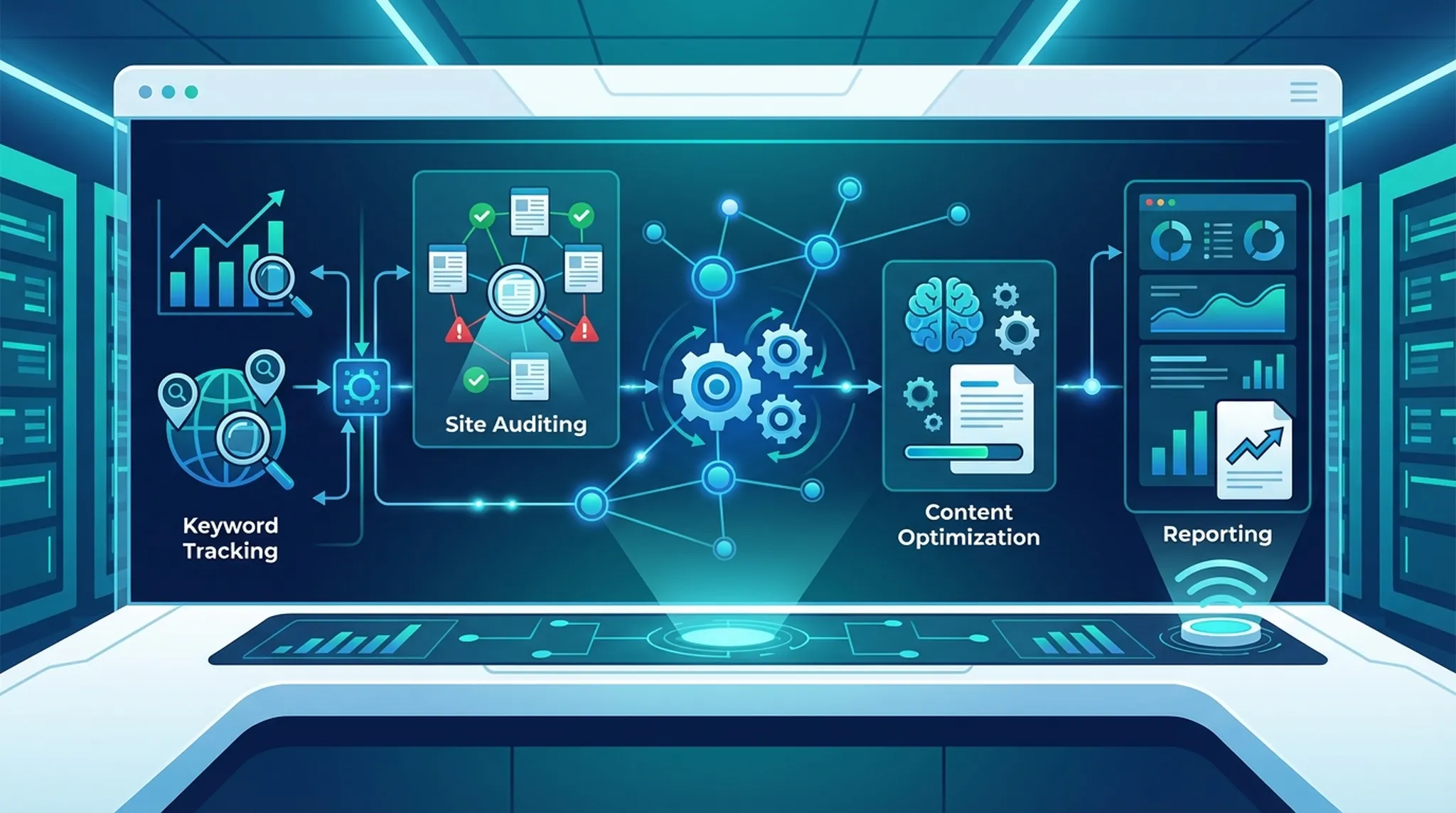
AI SEO automated content optimization refers to the use of machine learning algorithms and natural language processing (NLP) to improve a webpage’s relevance and authority for specific search queries. Unlike traditional SEO, which relies on manual audits and rule-based checklists, this approach continuously learns from search engine behavior, user interaction signals, and competitor performance.
The core function involves analyzing existing content against thousands of ranking factors. The AI then provides actionable recommendations—or directly implements changes—to improve topical coverage, readability, semantic relevance, and technical structure. This process covers everything from keyword placement and internal linking to schema markup and content freshness.
How It Differs from Traditional SEO Tools
Traditional tools like basic keyword planners or rank trackers show you where you stand. AI-powered systems tell you exactly what to change and why. They process massive datasets in seconds, identifying patterns that a human editor might miss over weeks of analysis. For instance, an AI can detect that your article lacks a crucial subtopic that every top-ranking page covers, then suggest the exact phrasing and structure to fill that gap.
Furthermore, these systems are predictive. They don’t just react to current rankings; they forecast which content updates will yield the highest return based on historical data and evolving search algorithms. This proactive stance is what separates automated optimization from simple content editing.
Why Automated Content Optimization Is Critical for Modern SEO
Search engines like Google now prioritize entities, context, and user satisfaction over exact-match keywords. This complexity makes manual optimization inefficient and often inaccurate. AI SEO automated content optimization addresses these challenges head-on by aligning content with the nuanced way search engines interpret queries.
The sheer volume of content published daily demands automation. To stay visible, you must update existing pages regularly and create new ones that outperform competitors. Doing this manually for a large site is impossible. Automation provides the scalability needed to maintain a competitive edge without expanding your team exponentially.
The Shift from Keyword Matching to Semantic Search
Modern search algorithms understand synonyms, related concepts, and user intent. An AI system maps out the entire semantic field around your target topic. It ensures your content answers not just the primary query but also the “People Also Ask” questions and long-tail variations. This comprehensive coverage signals expertise to search engines, boosting your authority for the entire topic cluster.
For example, if your target keyword is “AI SEO automated content optimization,” the A” It then weaves these naturally into your text, creating a web of relevance that ranks for hundreds of related queries.
Core Components of an AI SEO Automation Workflow
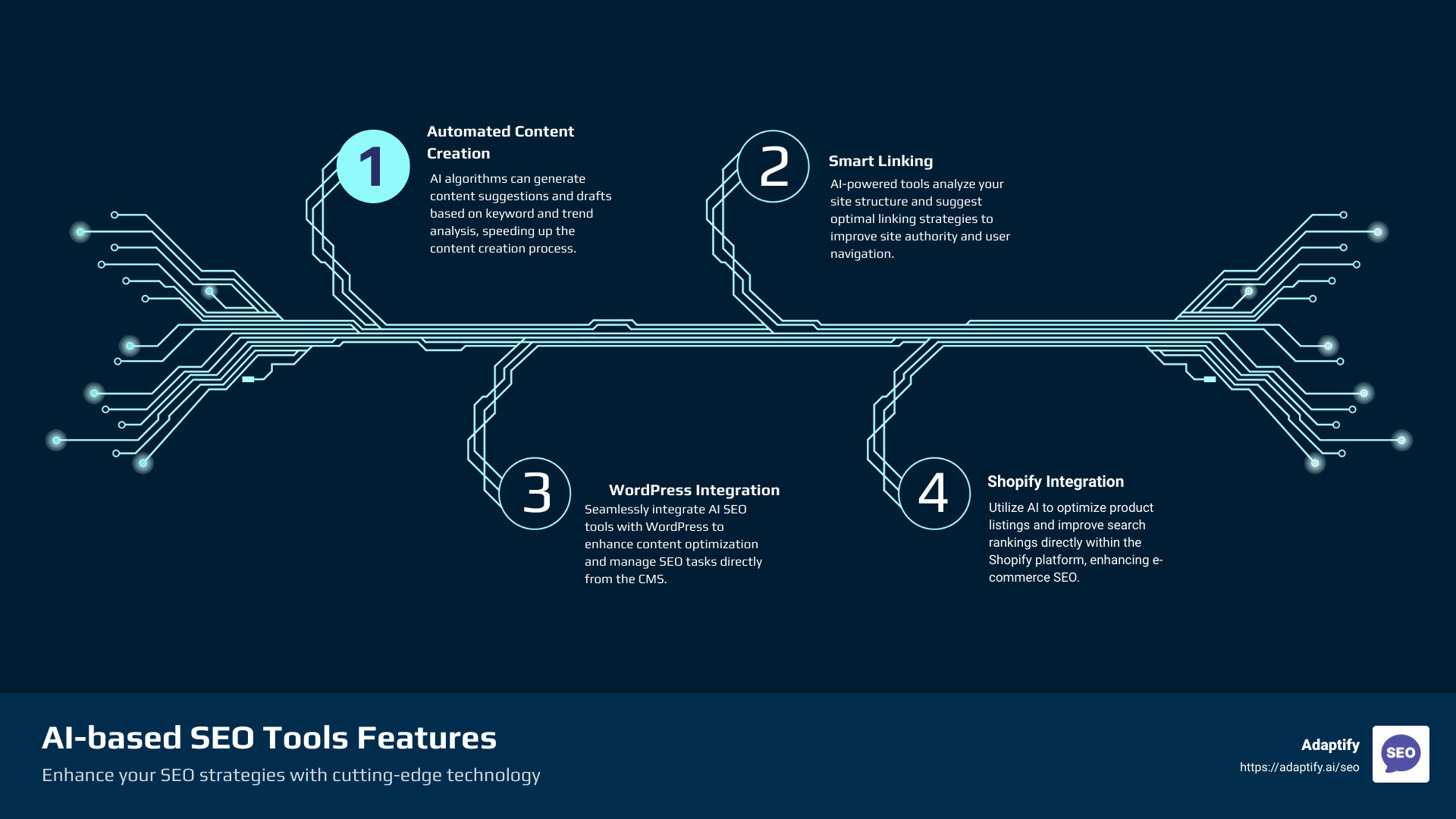
Implementing this technology involves several distinct stages. Understanding each component helps you choose the right tools and set realistic expectations for your workflow.
1. Automated Content Auditing and Gap Analysis
The first step is a deep crawl of your existing content. The AI evaluates each page against your target keywords and competitor pages. It identifies missing sections, weak headings, thin paragraphs, and outdated statistics. This audit goes beyond surface-level checks to assess topical depth and information completeness.
The output is a prioritized list of updates. High-value pages with strong backlinks but declining traffic get flagged first. The system calculates the potential traffic gain from each optimization, allowing you to focus on changes that move the needle.
2. Real-Time Keyword and Entity Optimization
Once gaps are identified, the AI suggests precise keyword placements. It doesn’t just tell you to “use the keyword more.” It recommends where to place it—in the H1, first paragraph, image alt text, or conclusion—based on what is working for current top-ranking pages. It also suggests related entities to include, such as specific tools, case studies, or statistical references that add credibility.
This process is dynamic. As search trends shift, the AI updates its recommendations. A page optimized in January might receive new suggestions in March to maintain its relevance. This continuous loop keeps your content fresh without requiring a full rewrite.
3. Automated Readability and UX Enhancement
User experience signals are now direct ranking factors. The AI analyzes sentence length, paragraph structure, transition words, and passive voice usage. It simplifies complex sentences and breaks up large blocks of text into scannable sections. The goal is to reduce bounce rates and increase time on page, both of which signal quality to search engines.
Beyond text, the system checks for mobile responsiveness, page speed indicators, and internal link opportunities. It can automatically insert links to other relevant pages on your site, distributing authority and guiding users through your content funnel.
Benefits of Implementing AI-Driven Content Optimization
The advantages extend far beyond higher rankings. Businesses that adopt this technology report improvements across the entire digital marketing spectrum.
- Significant Time Savings: What takes a human editor days, the AI completes in minutes. This frees your team to focus on strategy, creative writing, and relationship building.
- Improved Content Quality: The AI enforces a consistent standard of depth and clarity across all your pages, eliminating weak spots that drag down overall site authority.
- Faster Indexing and Ranking: Optimized content is easier for search engine crawlers to understand, leading to quicker indexing and faster time-to-rank for new pages.
- Data-Backed Decisions: Every recommendation is based on real performance data, removing guesswork and personal bias from the optimization process.
- Scalability: You can optimize hundreds of pages in a single day, making it feasible to maintain a large, high-performing website with a small team.
- Blindly Following All Suggestions: AI recommendations are based on statistical probabilities, not absolute truths. Some suggestions may not fit your brand or audience. Use judgment, not just automation.
- Ignoring Search Intent: The AI can optimize for keywords, but it cannot determine if your page actually satisfies what the user wants. Ensure your content matches the intent—informational, transactional, or navigational—before optimizing.
- Neglecting Content Quality: Optimization is not a substitute for good writing. If your content is thin or inaccurate, no amount of AI tweaking will make it rank. Start with solid, valuable content.
- Over-Optimizing for Keywords: Stuffing every suggested keyword into the text makes it unreadable. The AI may suggest a high volume of terms, but you must prioritize natural flow over keyword count.
- Failing to Update Regularly: Search trends change. A page optimized once will lose relevance over time. Schedule quarterly reviews to refresh your content with new data and insights.
Limitations and Challenges to Consider
While powerful, this technology is not a silver bullet. Understanding its limitations prevents unrealistic expectations and poor implementation.
AI lacks true human creativity and emotional intelligence. It can structure an argument logically, but it cannot inject humor, personal anecdotes, or unique brand voice. Over-reliance on AI can lead to homogenized content that sounds like every other AI-generated page on the internet.
Additionally, the initial setup requires a learning curve. You must train the AI on your brand guidelines, target audience, and specific goals. Poorly configured systems can make incorrect changes that harm your rankings. Always maintain a human review step for critical pages.
AI SEO Automated Content Optimization vs. Manual Optimization: A Comparison

| Aspect | AI Automated Optimization | Manual Optimization |
|---|---|---|
| Speed | Processes hundreds of pages per hour | Handles 5-10 pages per day |
| Data Analysis | Analyzes millions of data points | Limited to visible metrics |
| Scalability | Unlimited with cloud computing | Limited by team size |
| Creativity | Structured and formulaic | Unique and brand-specific |
| Cost | Subscription fees, high upfront | Labor hours, ongoing salary |
| Adaptability | Updates instantly with algorithm changes | Requires manual research and training |
| Error Rate | Low for data tasks, high for nuance | High for consistency, low for nuance |
The table illustrates a clear trade-off. For large-scale, data-driven tasks, AI wins decisively. For nuanced, high-level strategy and brand storytelling, human expertise remains essential. The best approach is a hybrid model where AI handles the heavy lifting and humans provide the final creative polish.
Practical Guide: How to Implement AI SEO Automated Content Optimization
Implementing this system requires a structured approach. Follow these steps to integrate automation into your existing workflow successfully.
Step 1: Choose the Right Platform
Evaluate tools based on your specific needs. Some platforms specialize in on-page analysis, while others focus on content generation or technical SEO. Look for features like competitor benchmarking, NLP-based recommendations, and integration with your CMS. Popular options include Surfer SEO, Clearscope, and Frase, but the market evolves quickly. Request demos and test with a small batch of pages before committing.
Step 2: Define Your Content Standards
Set clear parameters for the AI to follow. Define your target audience, preferred tone, and mandatory sections for each content type. Provide examples of your best-performing pages as benchmarks. The more context you give the system, the more accurate its recommendations will be.
Step 3: Run a Baseline Audit
Before making changes, let the AI analyze your current top 20 pages. This establishes a performance baseline and identifies quick wins. Focus on pages that rank on page two of search results—these are closest to the first page and will benefit most from optimization.
Step 4: Apply Recommendations in Batches
Do not rewrite your entire site overnight. Start with a batch of 10-15 pages. Apply the AI’s suggestions, but have a human editor review the changes for flow and accuracy. Publish the updates and monitor rankings for two weeks. This controlled testing phase helps you calibrate the system’s settings before scaling up.
Step 5: Monitor and Iterate
Automation is not a set-and-forget solution. Review the AI’s performance reports monthly. Track which pages improved and which did not. Feed this data back into the system to refine its future recommendations. Over time, the AI learns what works for your specific niche and audience.
Common Mistakes to Avoid with AI Content Optimization
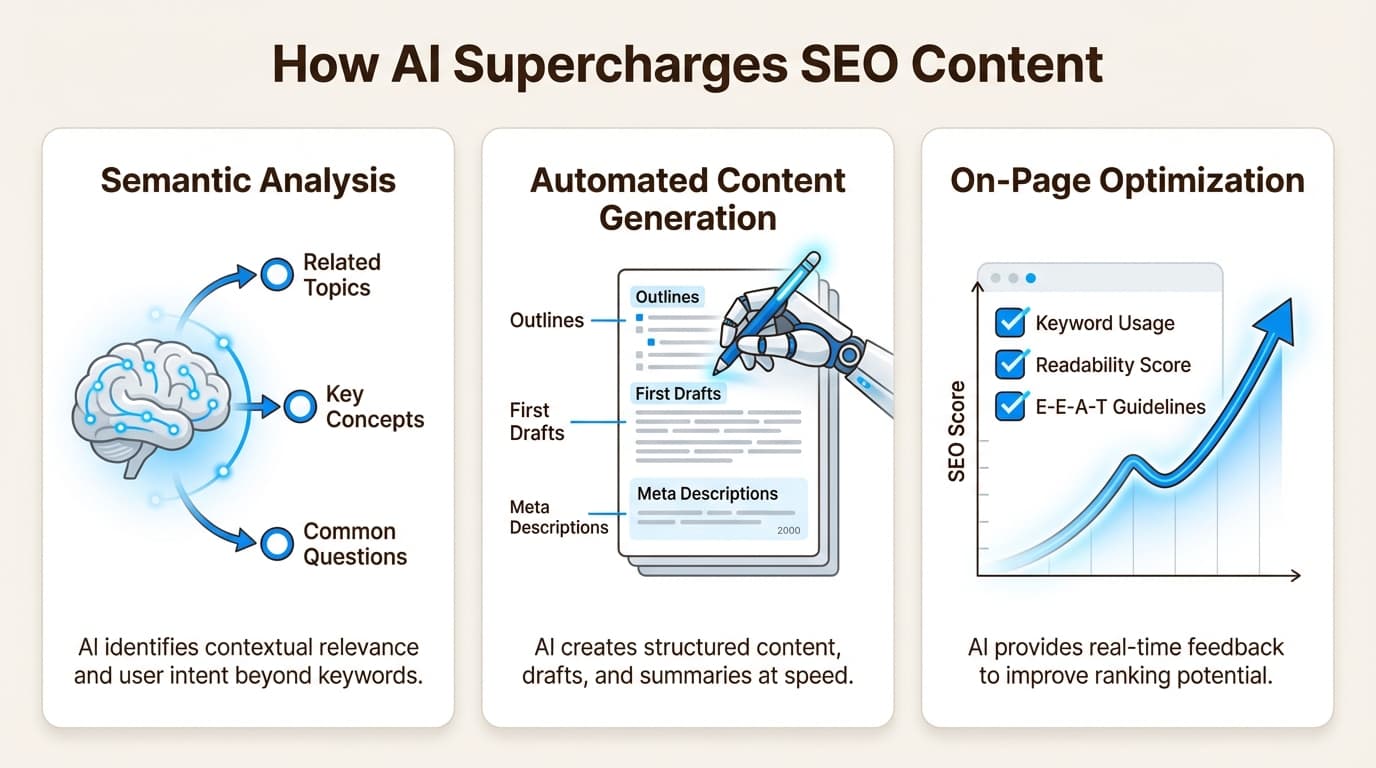
Many businesses fail to see results because they make avoidable errors during implementation. Recognizing these pitfalls saves time and prevents ranking drops.
Important Notes on Data Privacy and Algorithm Updates
When using AI tools, be mindful of data security. Ensure the platform you choose complies with GDPR and other privacy regulations. Your content strategy and performance data are proprietary assets; read the terms of service carefully to understand how your data is used.
Search engine algorithms are constantly evolving. What works today may not work next year. However, the principles of relevance, authority, and user experience remain constant. AI SEO automated content optimization helps you stay aligned with these principles, even as the specific ranking factors change. The key is to focus on creating genuinely useful content and let the AI handle the technical alignment.
Frequently Asked Questions
Is AI SEO automated content optimization suitable for small websites?
Yes. While the technology is powerful for large sites, small websites benefit significantly from the competitive intelligence it provides. It levels the playing field by giving small teams the same data analysis capabilities as large enterprises. Start with a free trial or a low-tier plan to test its impact on your niche.
Will AI replace human SEO specialists?
No. AI automates repetitive tasks and data analysis, but it cannot replace strategic thinking, creative problem-solving, or relationship building. SEO specialists who use AI as a tool become more valuable because they can focus on high-level strategy and execution. The role shifts from manual labor to oversight and interpretation.
How long does it take to see results from automated optimization?
Results vary based on your site’s authority, competition level, and the extent of changes. Some pages see improvements within two weeks, while others take two to three months. The AI’s predictive analytics can give you a timeline estimate, but patience is essential. Consistent, incremental improvements compound over time.
Can AI optimize content for voice search and featured snippets?
Yes. Modern AI tools are trained on natural language patterns and question-based queries. They can structure content to target featured snippet positions by using clear headings, concise answers, and list formats. This also improves visibility for voice search, which relies on the same featured snippet data.
What is the cost of implementing AI SEO automation?
Costs range from $50 to $500 per month for standard tools, with enterprise solutions costing more. The return on investment is typically high when you consider the labor hours saved and the traffic gains. Calculate the value of one additional hour of your team’s time to determine the right budget.
Conclusion
AI SEO automated content optimization is no longer a futuristic concept; it is a practical necessity for competing in today’s search landscape. By leveraging machine learning to analyze, refine, and enhance your content, you achieve higher rankings, better user engagement, and significant operational efficiency. The technology handles the heavy lifting of data analysis and technical alignment, allowing your team to focus on creativity and strategy.
The key to success lies in a balanced approach. Use AI to inform your decisions, but rely on human judgment for final execution. Start with a clear plan, choose the right tools, and commit to continuous iteration. As search engines become smarter, your optimization strategy must evolve too. Embracing this automation today positions your website for sustained visibility and growth in the years ahead.
Xem thêm:
- AI SEO Keywords Everywhere: The Complete Guide to Smarter Keyword Research in 2025
- AI SEO SEO Automation Platform: The Complete Guide to Scaling Organic Growth in 2025
- AI SEO for Fashion: The Complete Guide to Dominating Search in 2025
- AI Product Description Generator: Create Compelling Listings That Sell in Seconds
- AI SEO Guest Post Outreach: The Complete Guide to Scaling Link Building in 2025
Bài viết cùng chủ đề:

AI SEO SEO Automation with Make: The Complete Workflow Guide

AI SEO SEO Automation with Zapier: The Complete Workflow Guide

AI SEO SEO Automation with n8n: The Complete Workflow Guide
AI SEO SEO Automation with Gemini: The Complete Guide to Scaling Organic Growth

AI SEO SEO Automation with Claude: The Complete Guide to Scaling Content in 2025

AI SEO SEO Automation with ChatGPT: The Complete Playbook for 2025

AI SEO & SEO Automation for Affiliate Sites: The 2025 Playbook for Passive Income Growth
AI SEO & SEO Automation for Bloggers: The Complete Guide to Scaling Your Content

AI SEO & SEO Automation for Agencies: The Complete 2025 Playbook

AI SEO and SEO Automation for Ecommerce: The Complete Playbook for 2025

AI SEO & SEO Automation for WordPress: The Complete Playbook for 2025
AI SEO SEO Automation Strategy: The Complete Playbook for 2025

Mastering the AI SEO SEO Automation Process: A Complete Guide to Scaling Organic Growth
AI SEO SEO Automation System: The Complete Guide to Scaling Organic Growth in 2025
AI SEO SEO Automation Platform: The Complete Guide to Scaling Organic Growth in 2025
AI SEO SEO Automation Software: The Complete Guide to Scaling Organic Growth in 2025















